5 mark 1948
About This Note
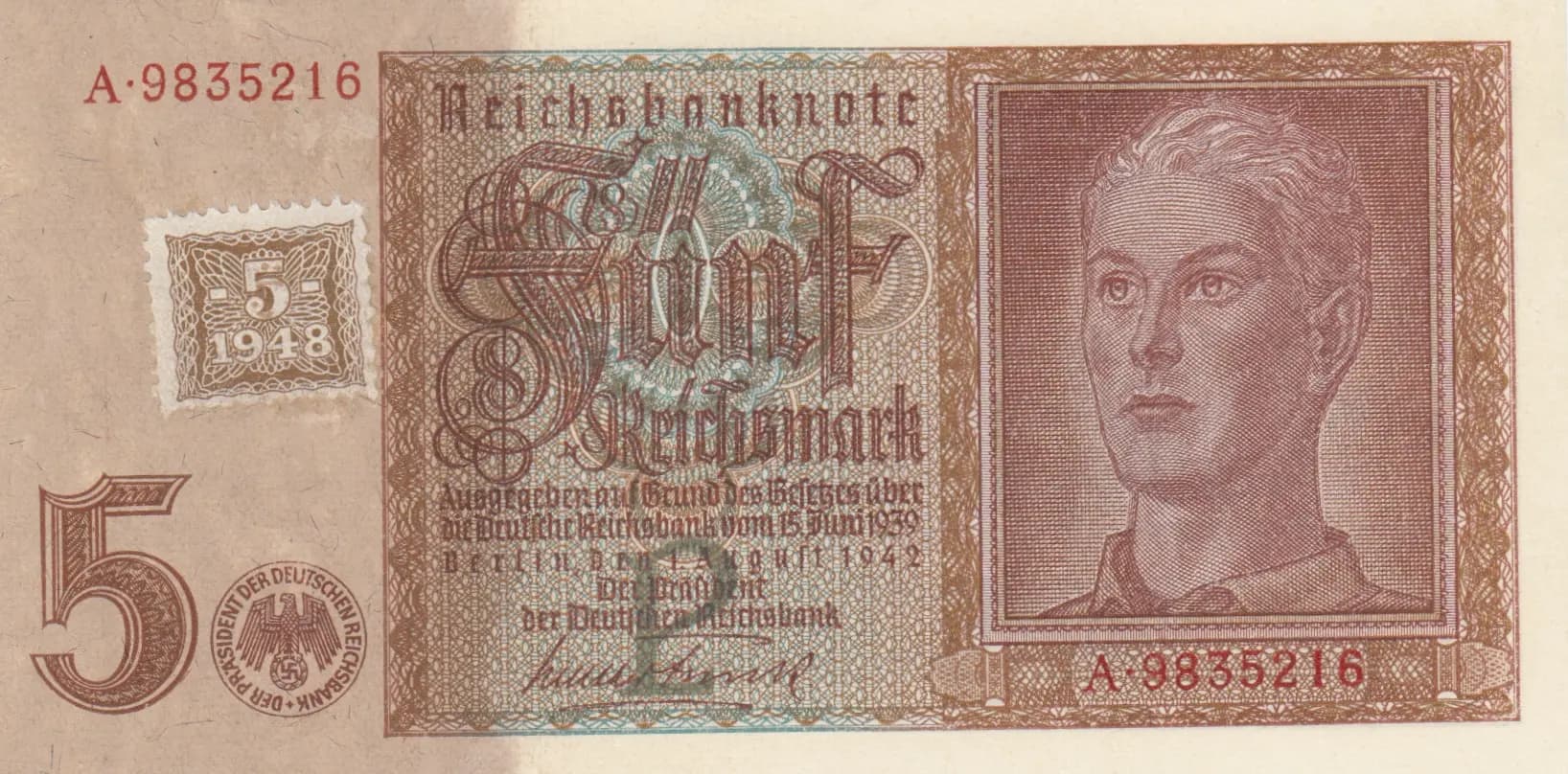
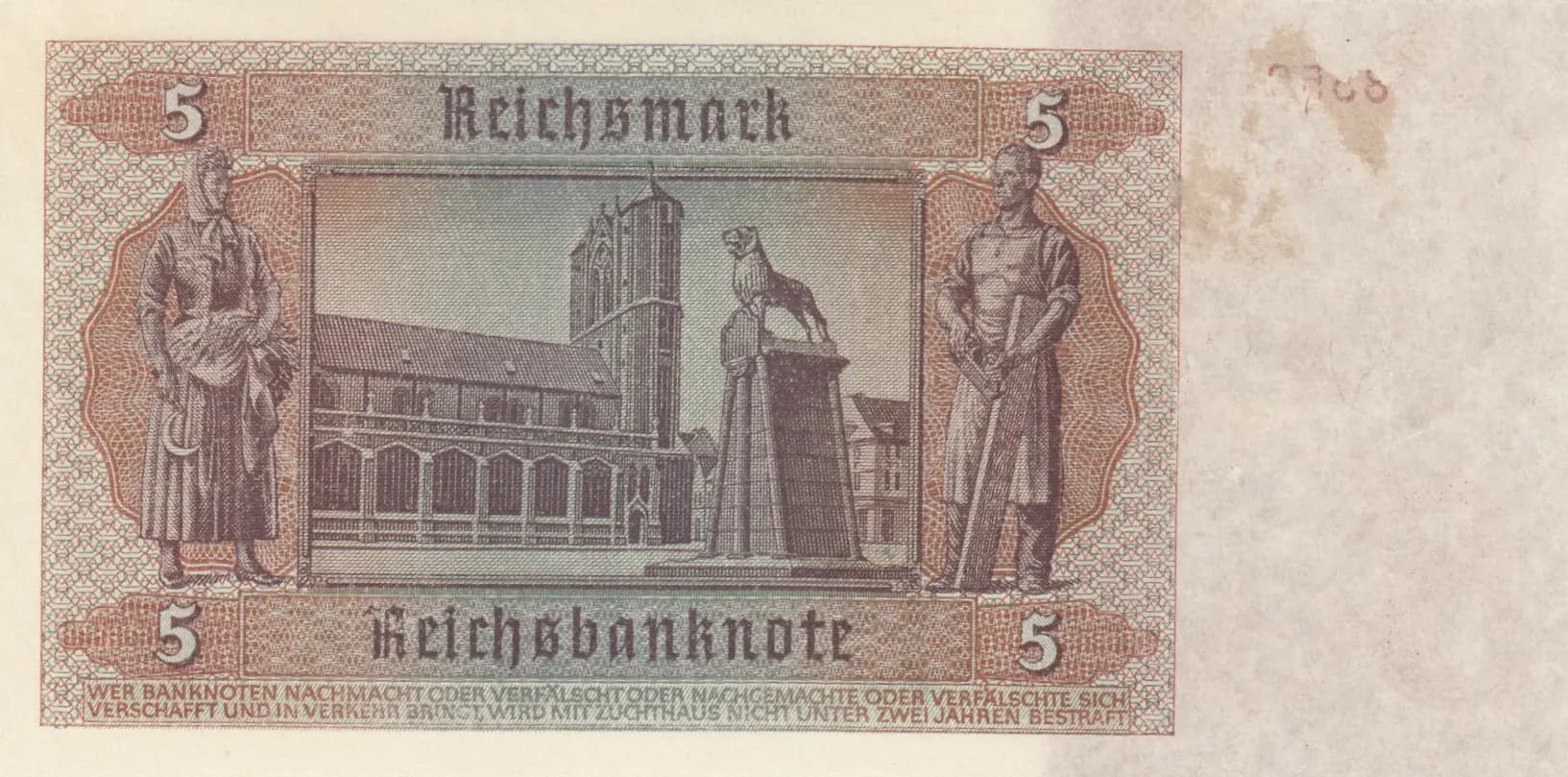
This is a 5 Reichsmark banknote from the 1948 Soviet occupation zone of Germany, featuring a brown/tan color scheme with fine-line engraving throughout. The obverse displays a male portrait in profile facing right with decorative geometric borders and a postage stamp-like design dated 1948, while the reverse showcases a Gothic cathedral flanked by standing figures in a symmetrical composition. Despite visible aging consistent with its 76-year history, the note presents well with no major tears, displaying the intricate security features characteristic of this transitional-period currency.
Common. The 1948 5 Reichsmark (Pick 3) was issued in substantial quantities during the Soviet occupation zone period and remains readily available in the modern market. No major print run restrictions, recalls, or scarcity factors apply to this denomination and year. Notes in circulated to uncirculated condition are regularly encountered by collectors.
Issued during the Soviet occupation zone period immediately following World War II, this 5 Reichsmark note represents a crucial moment in German monetary history—the brief transition between the Nazi-era Reichsmark and the eventual Deutsche Mark. The Gothic cathedral depicted on the reverse symbolizes German cultural heritage and institutional continuity, while the formal engraving style and security warnings reflect post-war efforts to prevent counterfeiting of this economically significant currency during a period of occupation and reconstruction.
The obverse features a formal portrait of a historical male figure shown in right-facing profile, rendered in the classical engraving style typical of high-denomination German currency. The portrait is framed within a rectangular ornamental border with geometric patterns. A large numeral '5' appears on the left side, accompanied by a postage stamp-like design dated 1948. The reverse presents an architectural centerpiece—a prominent Gothic cathedral with pointed arches—flanked symmetrically by two standing figures in period dress, with a robed figure visible near the cathedral. Large numerals '5' appear in all four corners. The entire composition is rendered in fine-line engraving with intricate geometric background patterns and ornate decorative borders characteristic of Reich-era currency design.
FRONT: Serial number 'A·9835216' (appears top left and bottom right); 'REICHSMARK' (denomination name); '5' (numerical value); '1948' (year of issue); decorative ornate script text at center top (partially obscured). BACK: 'Reichsmark' (denomination); '5' (numerical value in all four corners); 'Reichsbanknote' (bank note designation); Criminal statute warning: 'WER BANKNOTEN NACHM[ACH]T ODER VERFALSCH[T] ODER MEHRGEMACHTE VERSCHAFFT UND IN VERKEHR BRINGT WIRD MIT ZUCHTHAUS NICHT UNTER ZWEI JAHREN BESTRAFT' translates to 'Whoever counterfeits or falsifies banknotes or procures or puts into circulation counterfeited or falsified notes will be punished with imprisonment of not less than two years.'
Intaglio engraving (steel plate engraving), the standard security printing method for Reichsmark currency. The fine-line geometric patterns, detailed portraiture, and complex ornamental borders are all signatures of classical intaglio production. The printer for this specific Pick number (P-3) would have been a state-authorized German security printer, likely continuing pre-war production facilities under Soviet occupation oversight.
Serial number variety noted: 'A·9835216' with single-letter prefix 'A' followed by seven digits. The 1948 issue has known serial number variations by prefix letter. The postage stamp-like design element dated 1948 is characteristic of the Soviet occupation zone issue. No overprints or additional markings beyond standard denomination and security text are observed on this specimen.