50 000 000 000 mark 1923
Market Prices
4 salesAbout This Note
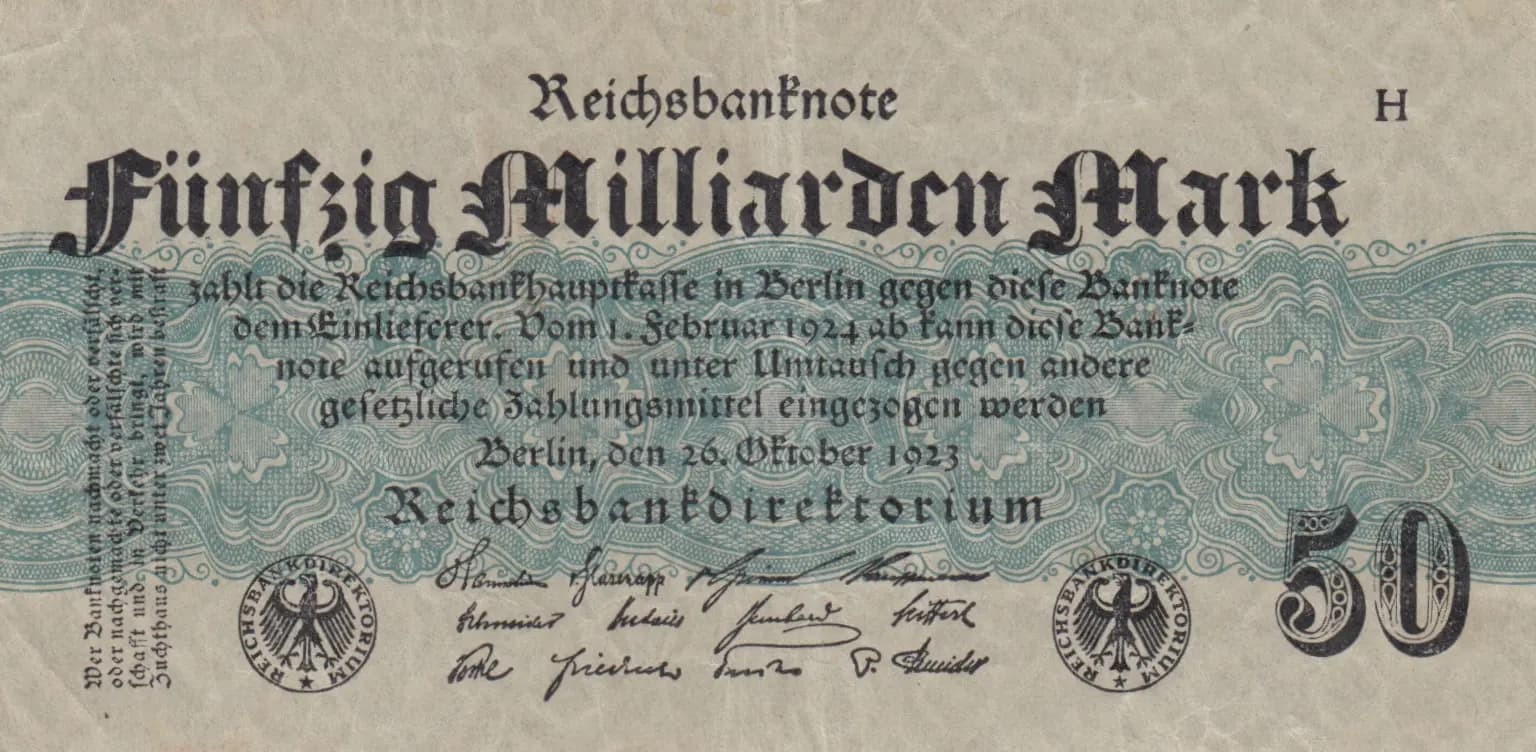
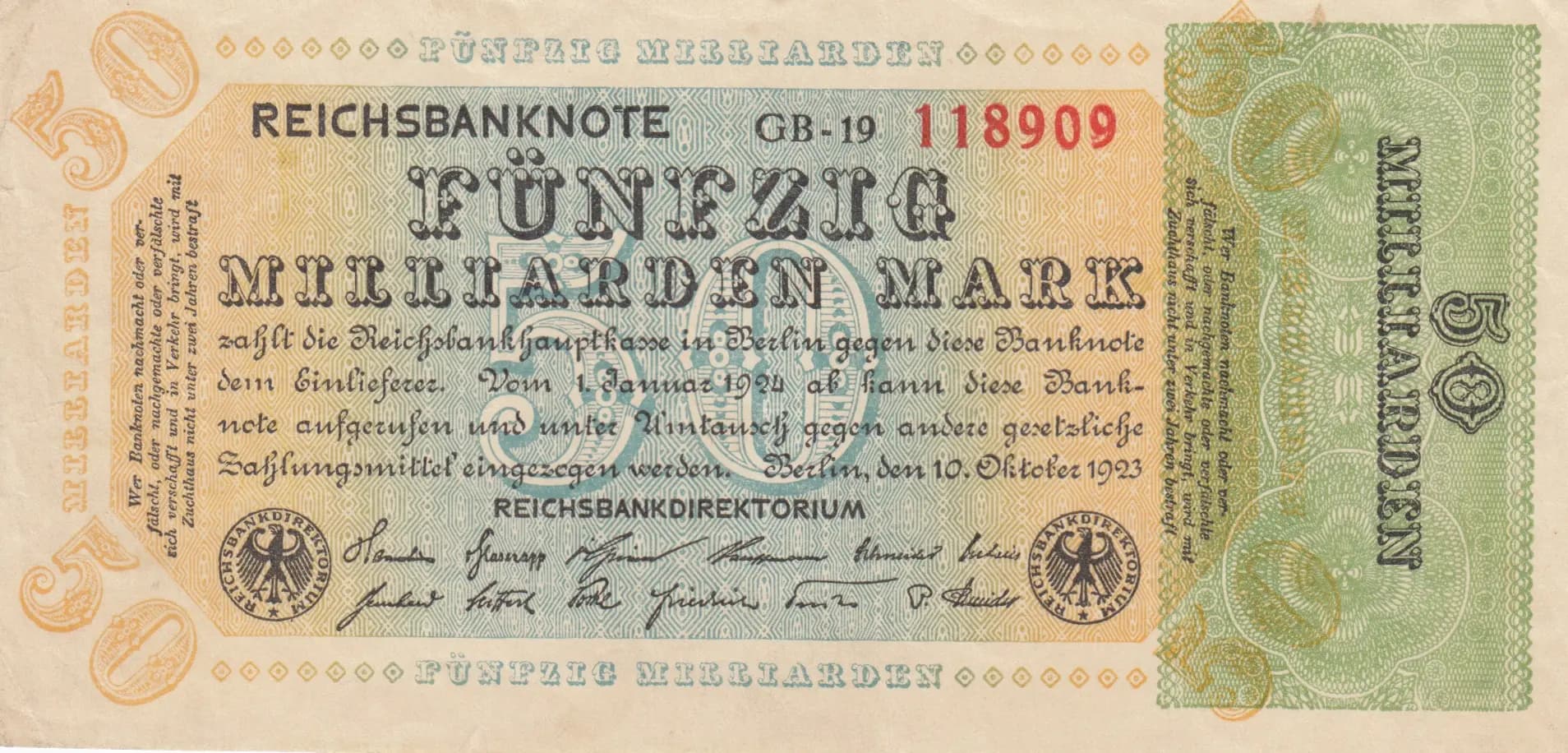
This is a Pick-120b fifty billion mark (Fünfzig Milliarden Mark) Reichsbanknote from October 10, 1923, representing one of the most visually striking products of Germany's hyperinflation crisis. The note features a distinctive uniface design with ornamental geometric patterns, eagle and shield medallions in orange circular frames on the left, and a prominent green rectangular panel on the right, all rendered in black, orange, blue, and green inks. In VF condition, the note shows expected age-related patina, light creasing, and foxing consistent with a 100-year-old document, making it an excellent representative example of this iconic hyperinflation-era currency.
Common. This note remains readily available in the modern collector market, as evidenced by the eBay price history showing regular sales across multiple condition grades, with VF examples selling in the $12.60–$31 range between 2012 and 2021, and 2016 catalog values placing VF at $40. The high print runs characteristic of emergency hyperinflation currency, combined with the widespread survival of these notes (due to their later-recalled status and preservation as historical artifacts), ensure common availability. No numismatic records indicate restricted print runs, short-lived issuance windows, or significant recalls that would elevate rarity for this specific variety.
Issued by the Reichsbank on October 10, 1923, at the peak of the German hyperinflation crisis, this note represents the government's desperate attempt to manage a monetary collapse that rendered previously issued currency worthless within days. The elaborate ornamental design—featuring traditional German imperial symbols including the eagle and shield medallions—reflects efforts to maintain confidence in the currency through visual authority, even as the denomination itself (50 billion marks) demonstrates the complete breakdown of monetary value. The printed redemption clause, noting the note's validity only until January 1, 1924, underscores the temporary, crisis-management nature of this issuance, which would be replaced by the Rentenmark stabilization currency just weeks later.
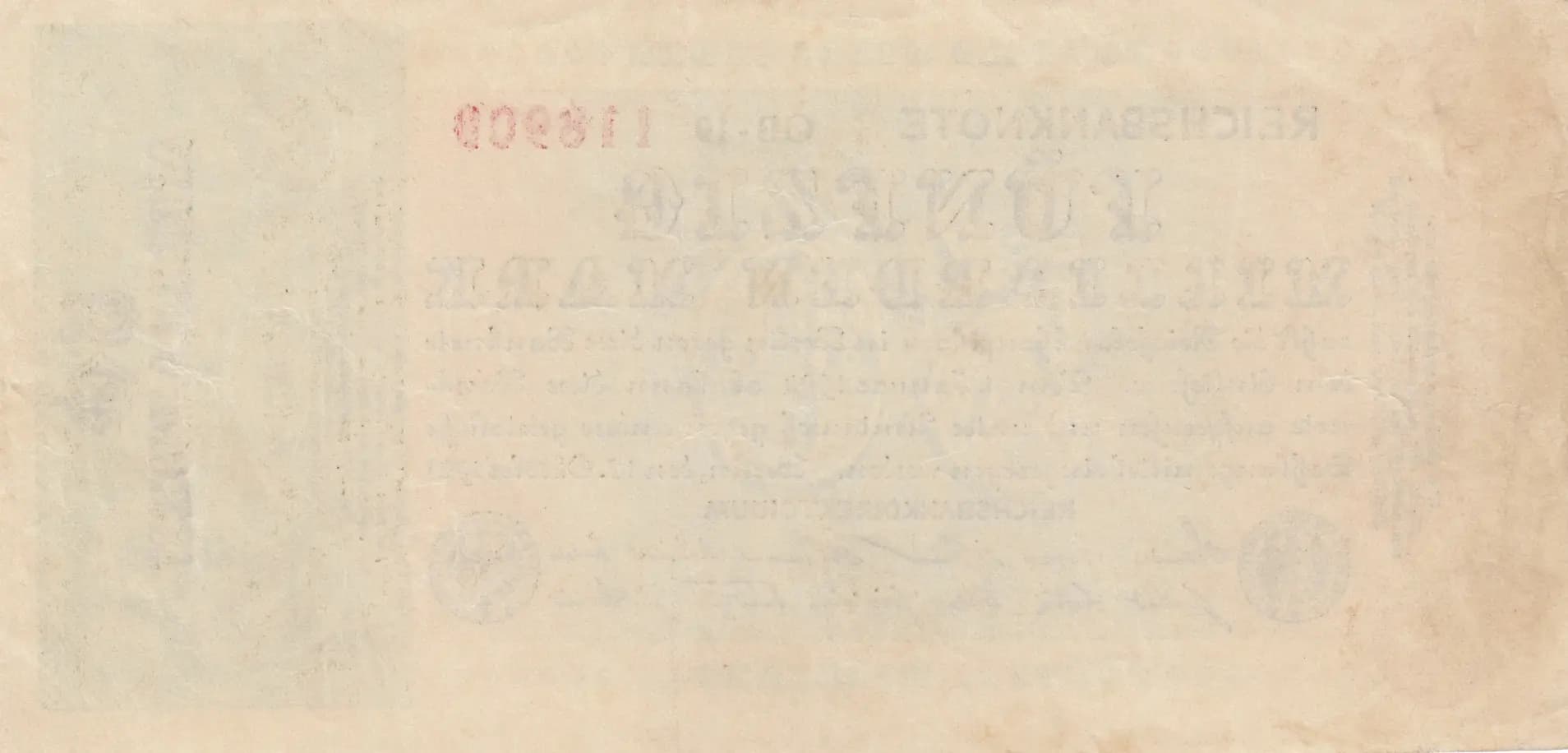
The obverse presents a uniface design composed entirely of geometric and ornamental elements with no portraits or specific landmarks depicted. The left side features two circular orange/tan medallions containing stylized eagles displayed on shields—traditional symbols of German imperial authority and the Reichsbank's institutional legitimacy. The upper and lower borders are formed by repeating diamond-shaped geometric patterns rendered in black line work, creating a frame effect. The central area displays the denomination text 'FÜNFZIGMILLIARDEN' in large cursive script with decorative scrollwork flourishes interspersed throughout. The right side is distinguished by a prominent green rectangular panel with ornamental designs that likely contained the watermark area. The color palette of black text, orange/beige circular elements, dark blue/navy accents, and the green panel creates a visually complex yet organized hierarchy typical of emergency currency design. The reverse is primarily blank with only the serial number printed in red/pink ink, a characteristic cost-saving measure during the hyperinflation period.
FRONT SIDE: 'FÜNFZIGMILLIARDEN REICHSBANKNOTE' (Fifty Billion Reich Bank Note); 'MILLIARDENMARK' (Billion Mark); 'FÜNFZIG MILLIARDEN' (Fifty Billion); Serial designation 'GB-19' and serial number '118909'; Signature line: 'REICHSBANKDIREKTORIUM' (Reich Bank Directorate) and 'Reichsbanker' (Reich Banker); Redemption text: 'The Reichsbank headquarters in Berlin pays against this banknote to the depositor. From January 1, 1924, this banknote can be called in and exchanged for other legal tender. Berlin, October 10, 1923.' BACK SIDE: Serial number '118909' printed in red/pink ink; additional faint markings too obscured to definitively translate.
The note was produced using intaglio (copperplate) printing, evidenced by the crisp, fine-line geometric patterns, detailed ornamental borders with diamond motifs, and the precise execution of the scrollwork and eagle imagery. The multi-color printing incorporating black, orange, blue, and green inks required multiple printing passes typical of security-conscious currency production. The watermark (small circles with 'L' designation) was incorporated during paper manufacture. For this Pick-120 series issued in 1923, the Reichsbank contracted with major German security printers; however, specific printer attribution for P-120b is not distinctly identifiable from the visual characteristics alone. The reverse printing in red/pink ink appears to have been applied as a separate, lighter impression.
This is catalogued as Pick-120b, the 'b' variety designation indicating it is the variant with a green rectangular underprint at right, distinguishing it from the P-120a (without the green panel). The serial number observed on this example is '118909' with prefix 'GB-19', indicating it belongs to the German-circulated portion of the October 10, 1923 issue. No other notable overprints, date variations, or signature varieties are apparent on this specimen; the Reichsbank directorate signatures present are standard for this issue date.