1000 mark 1922
Market Prices
13 salesAbout This Note
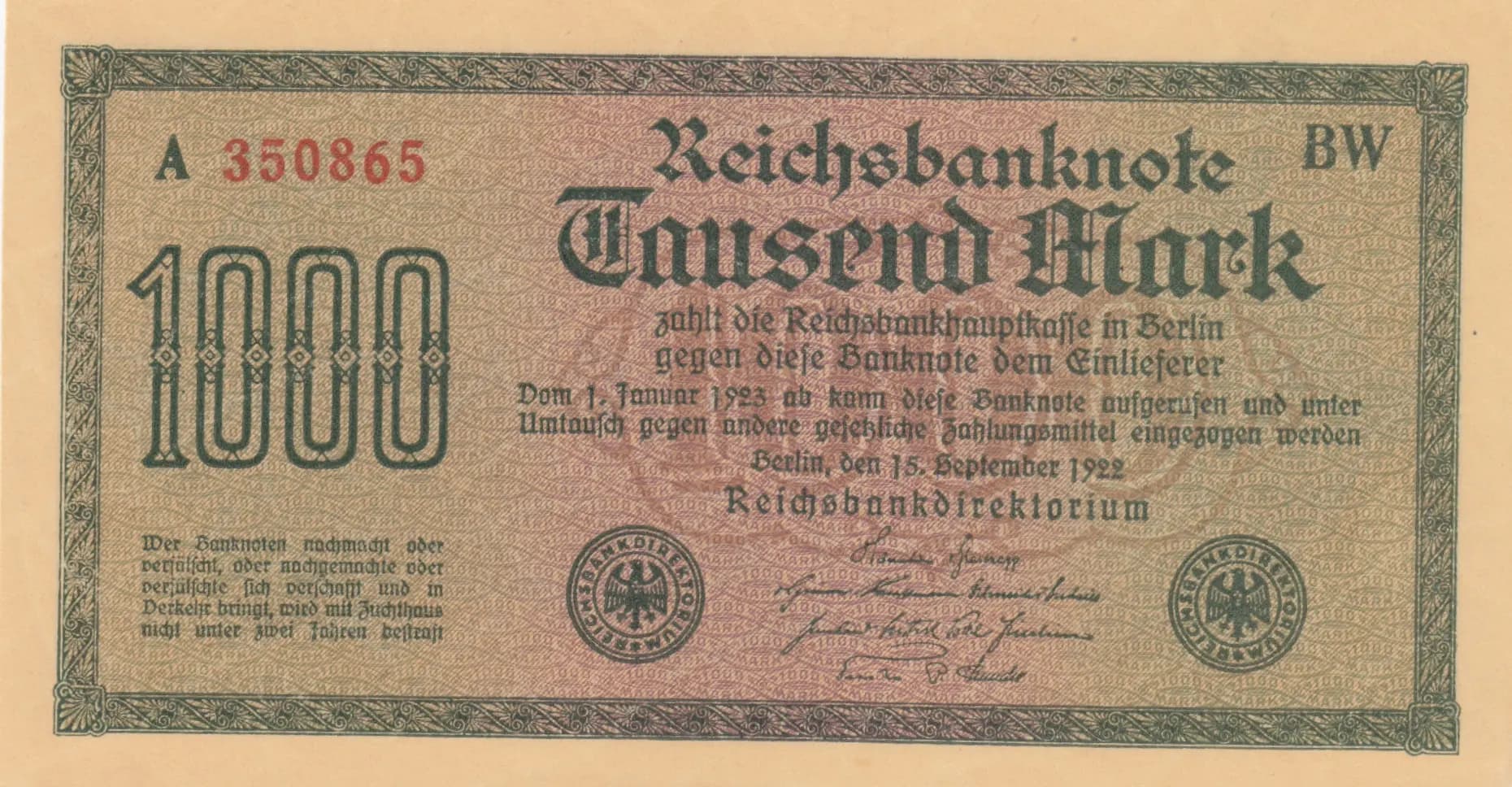
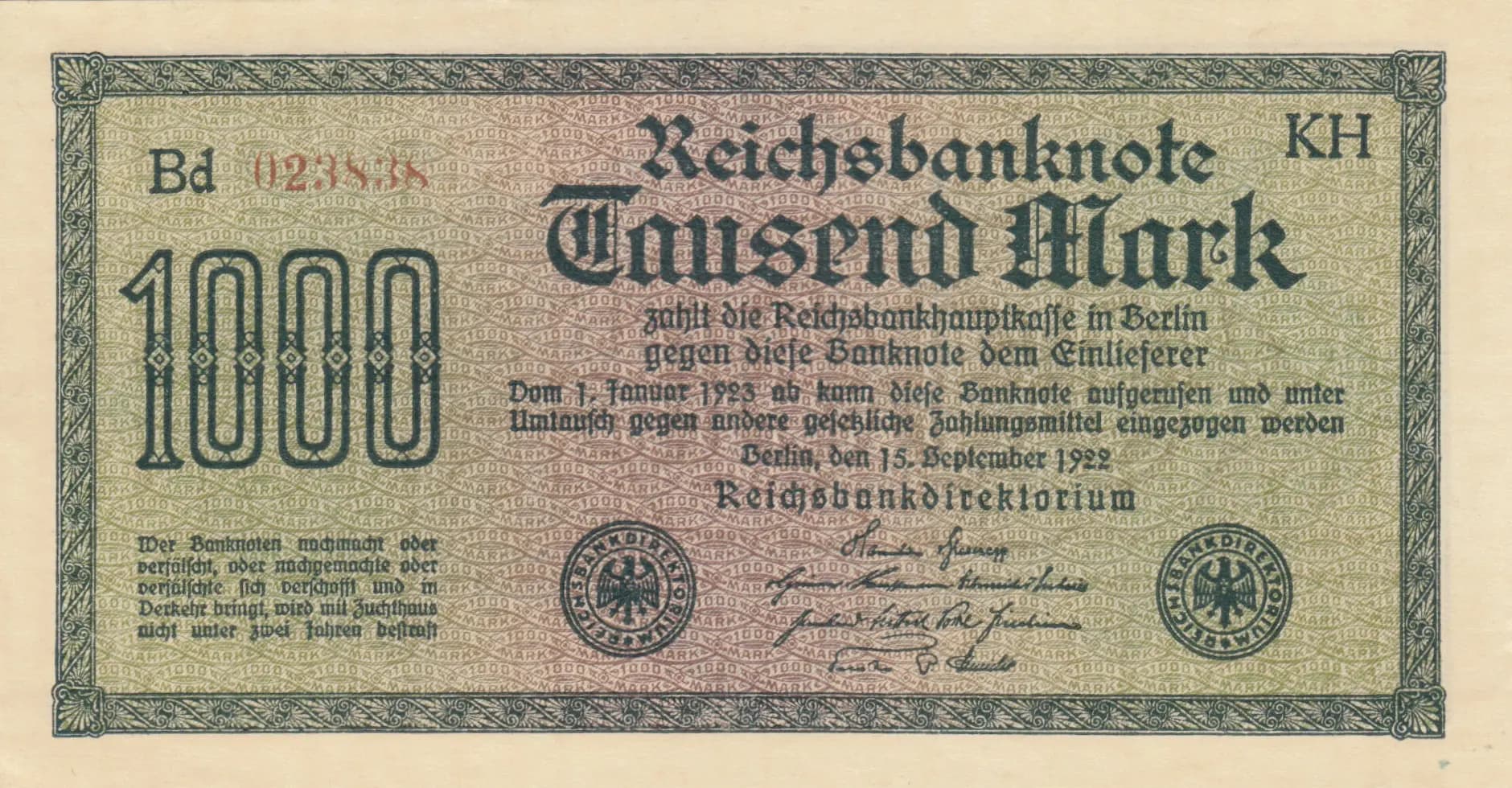
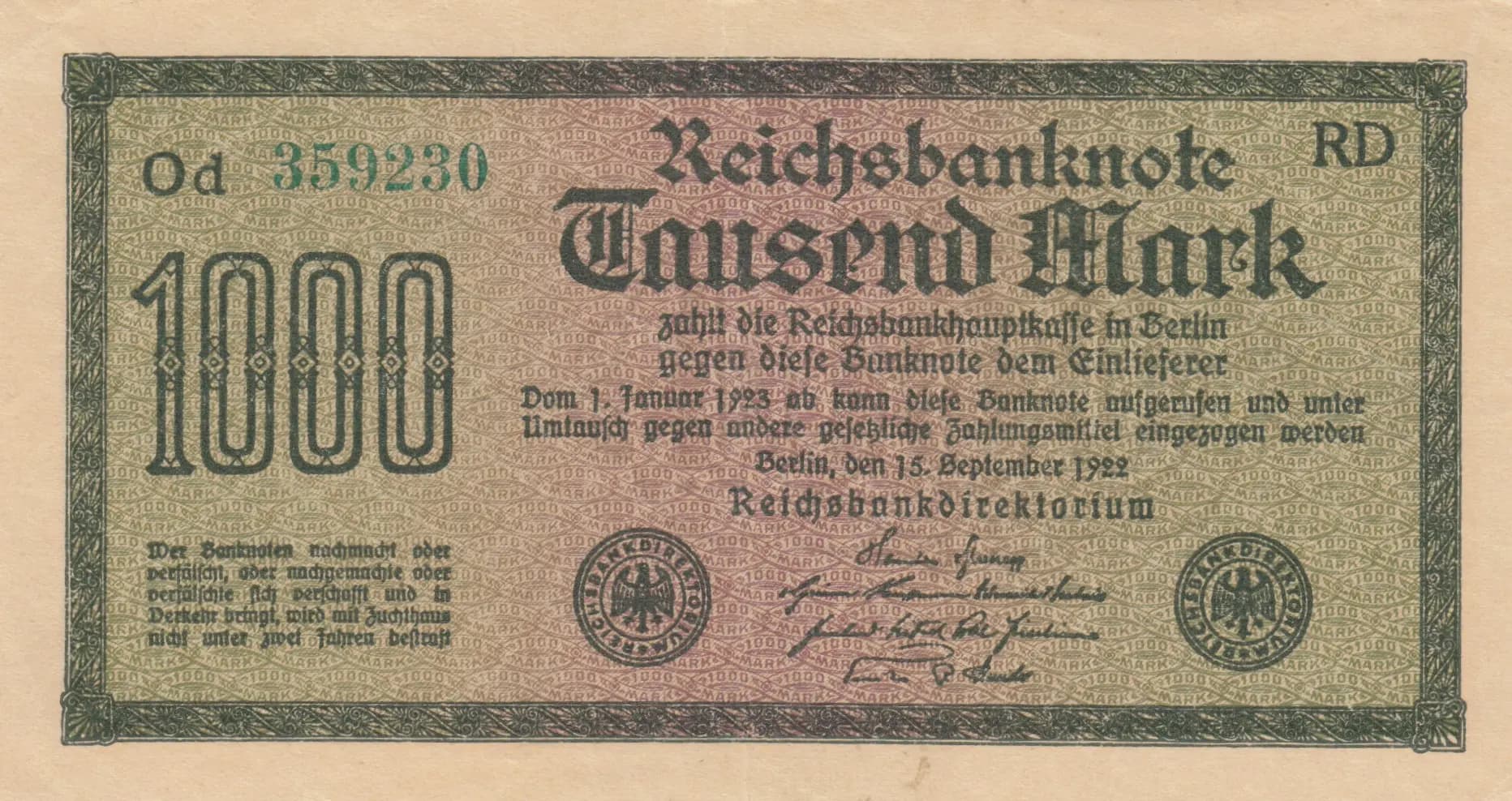
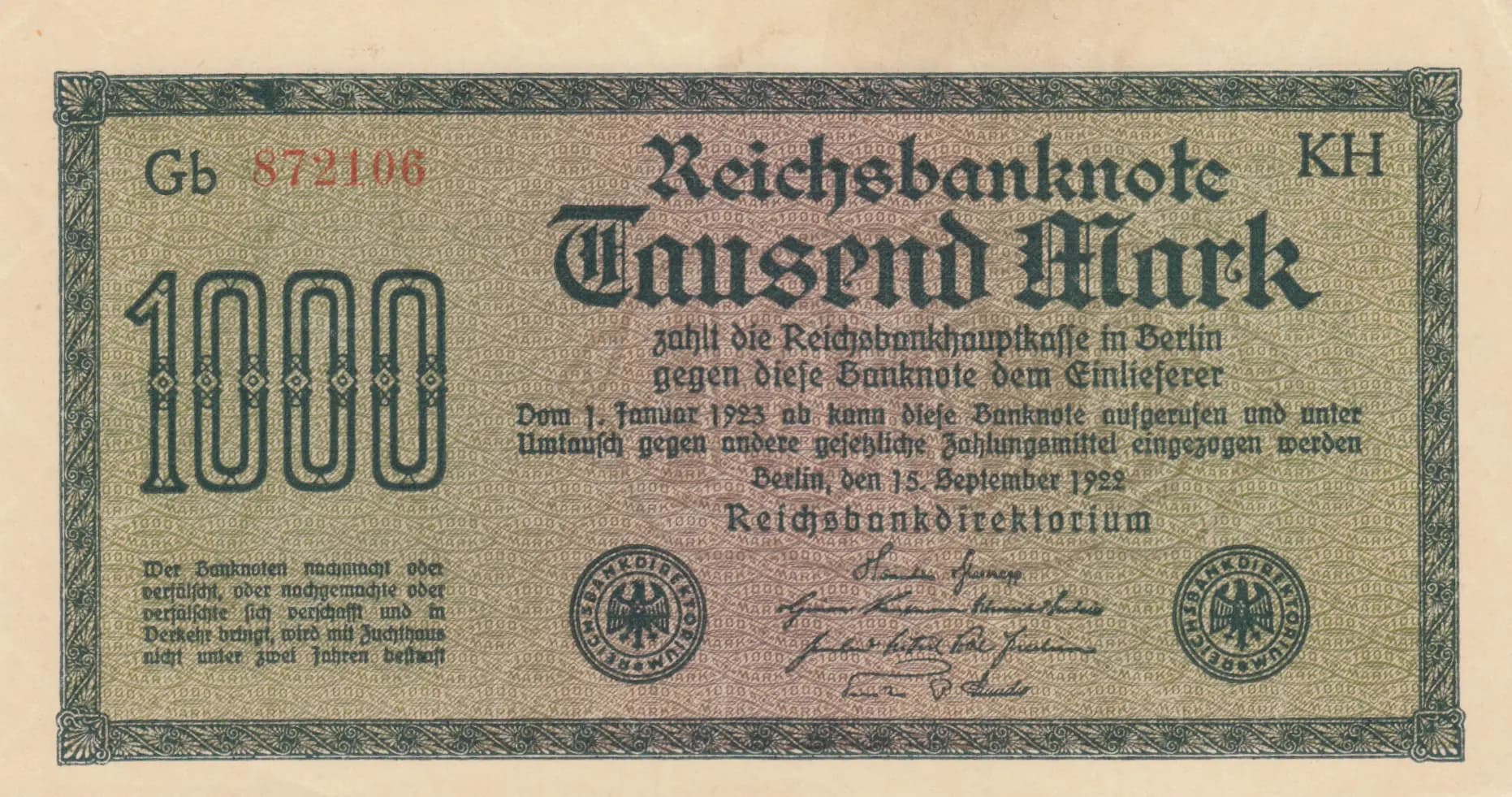
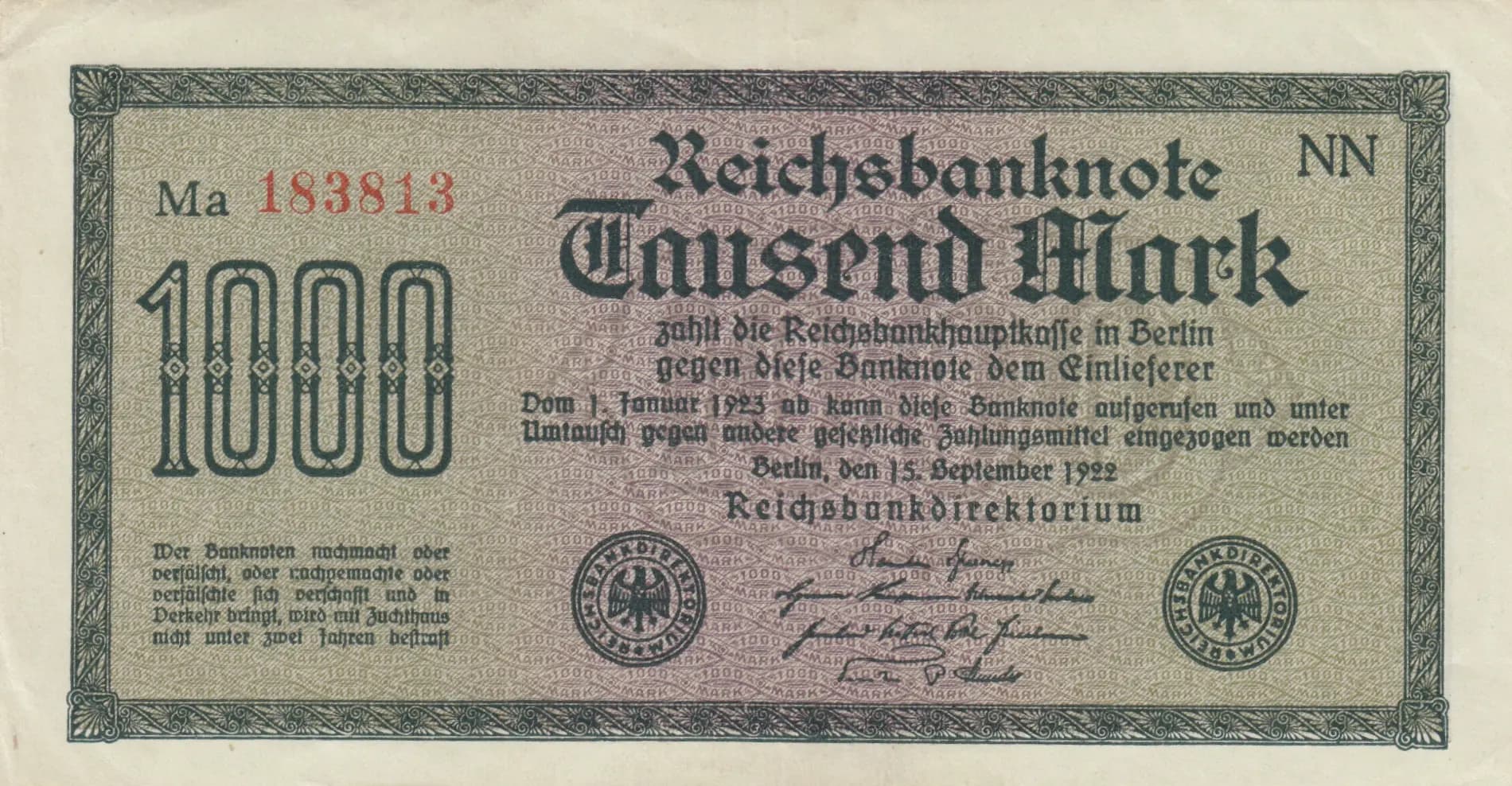
This is a German 1000 Mark banknote from September 1922, issued during the Reichsbank's final period before the hyperinflation crisis of late 1922-1923. The note features elegant Art Nouveau-influenced design with ornate geometric borders, imperial eagle seals, and detailed fine-line engraving throughout. In VF condition, this example shows minimal wear with consistent aging patina typical of the period, making it a representative specimen of German Weimar-era currency.
Common. This Pick 76g variant was issued in substantial quantities during September 1922 as a regular issue of the Reichsbank. The eBay market data strongly confirms commonness, with consistent sales in the $0.85–$8.50 range for VF examples over multiple years, and catalog values of only $2 for VF condition (2016 data). The 2025 sale at $1.80 for VF reinforces this assessment. These notes survive in large numbers as they were not subject to the extreme rarity conditions of emergency issues or very short print runs.
Issued just weeks before the catastrophic hyperinflation that would render German currency nearly worthless by November 1923, this September 1, 1922 banknote represents the Reichsbank's attempt to maintain confidence in its currency during economic crisis. The text references January 1, 1923 as a redemption deadline, reflecting the mounting instability. The imperial eagle seals and formal Gothic typography echo the authority of the pre-war German state, even as that authority was rapidly eroding in the face of reparations demands and fiscal collapse.
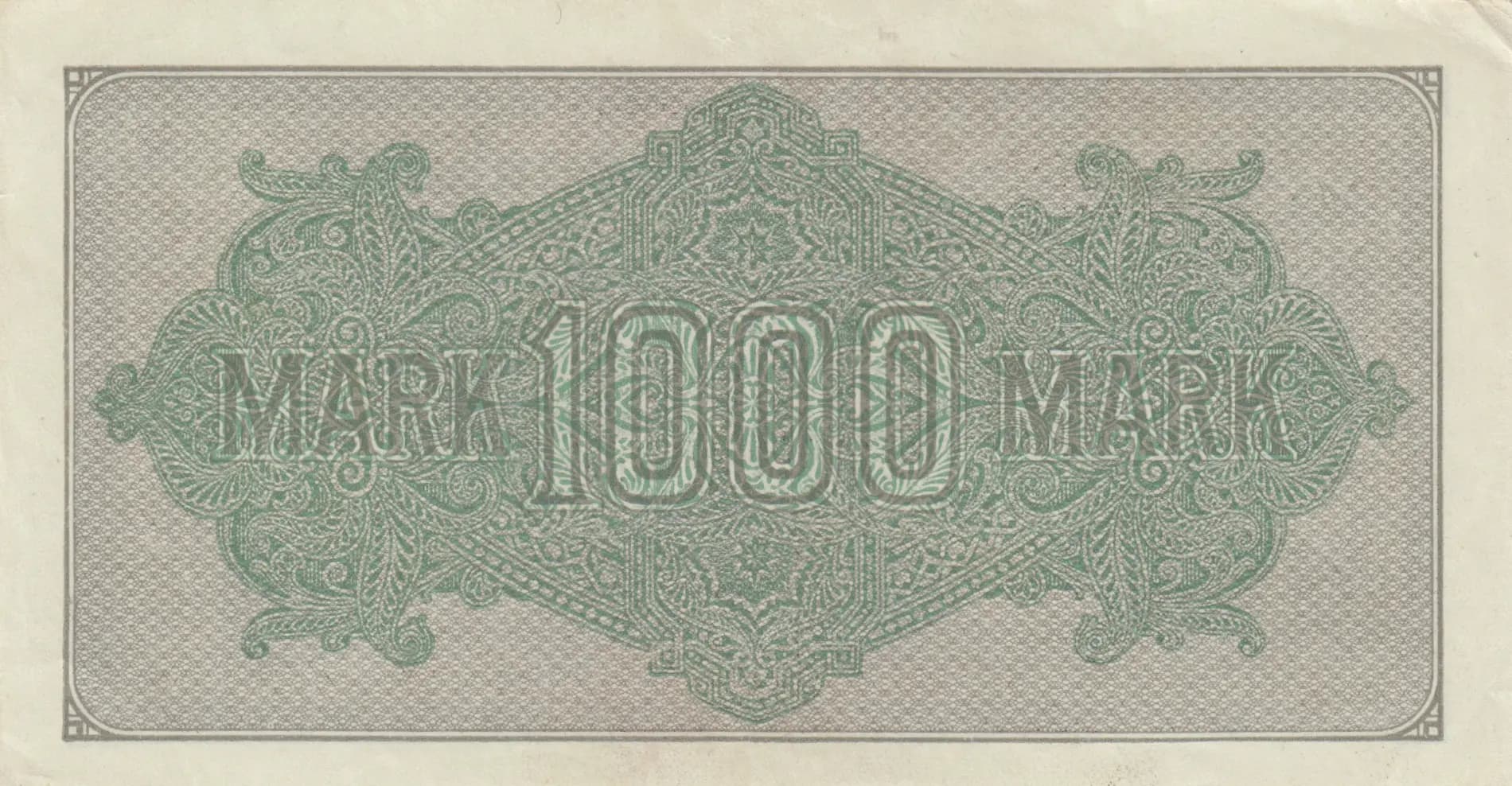
The note employs a classical symmetrical design typical of German Imperial currency. The obverse features the denomination 1000 in large ornamental numerals on the left side, with the full title 'Reichsbanknote' and 'Eintausend Mark' prominently displayed in the center. Two circular seals bearing the imperial eagle (Reichsadler) are positioned at the bottom left and right, representing the state authority behind the currency. The design is framed by an intricate geometric border with repeating patterns and fine-line filigree work. The reverse displays an elaborate baroque-style cartouche centered on the note, with the denomination 1000 within an ornamental frame topped by a crown-like element, surrounded by symmetrical floral and geometric motifs. The entire composition emphasizes imperial authority and artistic craftsmanship through its intricate ornamentation.
Front: 'Reichsbanknote' (Reichsbank Note); 'Eintausend Mark' (One Thousand Mark); Serial number prefix 'Ma 183843'; 'Zahlk. die Reichsbankhauptk asse in Berlin' (Payable at the Reichsbank headquarters in Berlin); 'gegen diese Banknote dem Einlieferer' (against this banknote to the depositor); 'Dom 1. Januar 1923 ab Kurm diese Banknote aufgerufen und unter Umtausch gegen andere geschliche Zahlungsmittel eingezogen werden' (From January 1, 1923, this banknote will be called in and withdrawn in exchange for other legal means of payment); 'Berlin, den 1. September 1922' (Berlin, September 1, 1922); 'Reichsbankdirektorium' (Reichsbank Directorate); Counterfeiting warning: 'Der Banknoten magimacal oder verfaltscht, oder hochgemachte oder verfalsche sich verschaft und ihr verkehrt bringt, wird mit Zuchthaus nicht unter zwei Jahren bestraft' (Whoever counterfeits or alters this banknote, or knowingly brings counterfeited or altered currency into circulation, is punished with imprisonment of not less than two years). Back: '1000 MARK' (One Thousand Mark).
Intaglio engraving (recess printing), the standard security printing method for German banknotes of the Weimar era. The fine-line engraving visible throughout the design, the sharp detail in the border geometrics, imperial seals, and decorative filigree are characteristic of intaglio work. The repeating MARK watermark pattern visible in the background indicates paper watermarking as an additional security feature. The serial number in red ink appears to have been applied via letterpress or similar technique.
Pick 76g is one of three documented variants (76c, 76g, 76h) for the 1000 Mark 1922 denomination. The specific variety designation 'g' suggests this is a later printing or a variant within the 1922 series, though exact distinguishing characteristics (such as signature variations, subtle overprint differences, or serial number ranges) would require comparison with other documented varieties in the PMG population database. The observed serial number prefix 'Ma' is consistent with regular issue variants from this period.