1000 mark 1922
Market Prices
21 salesAbout This Note
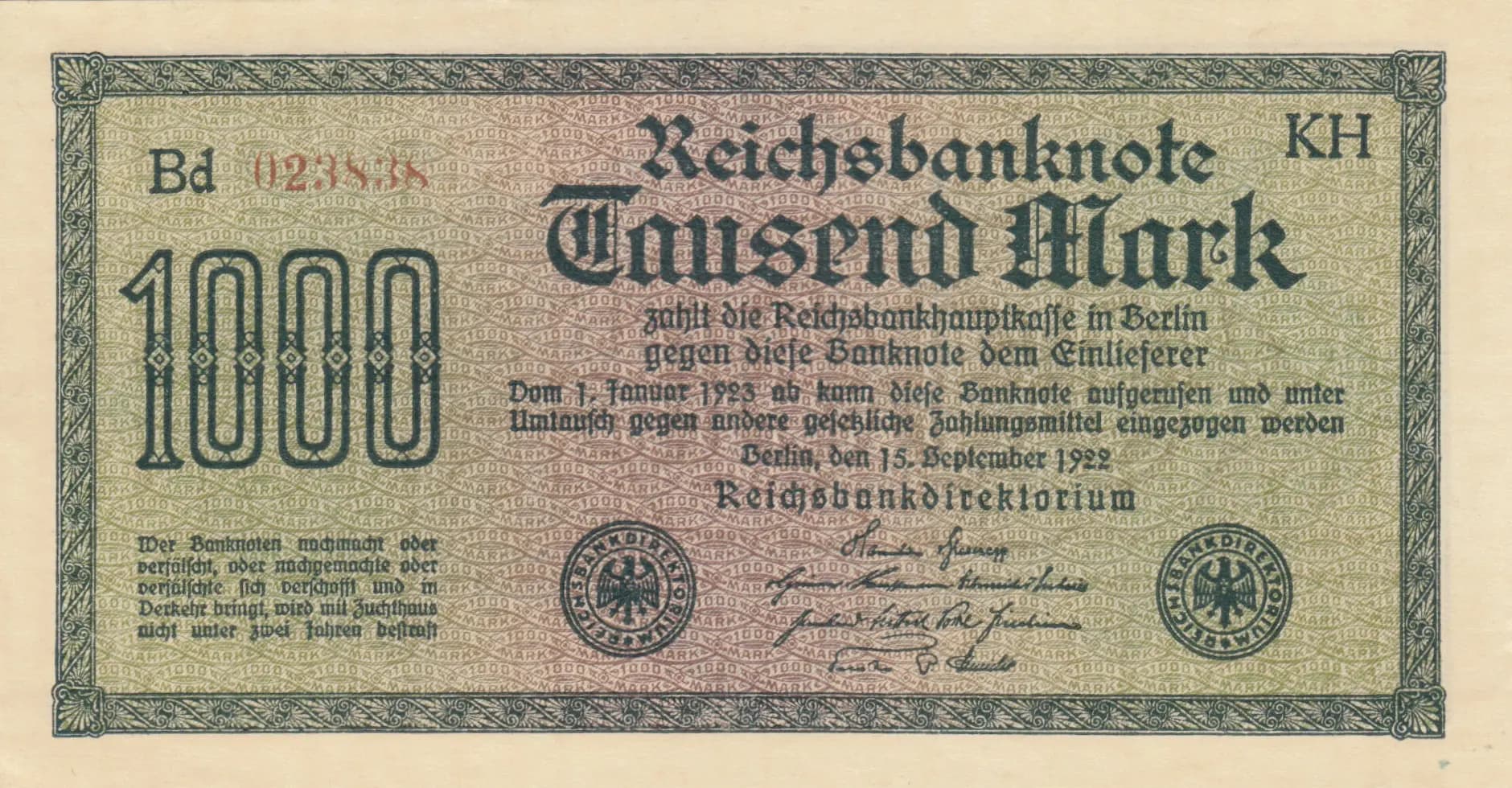
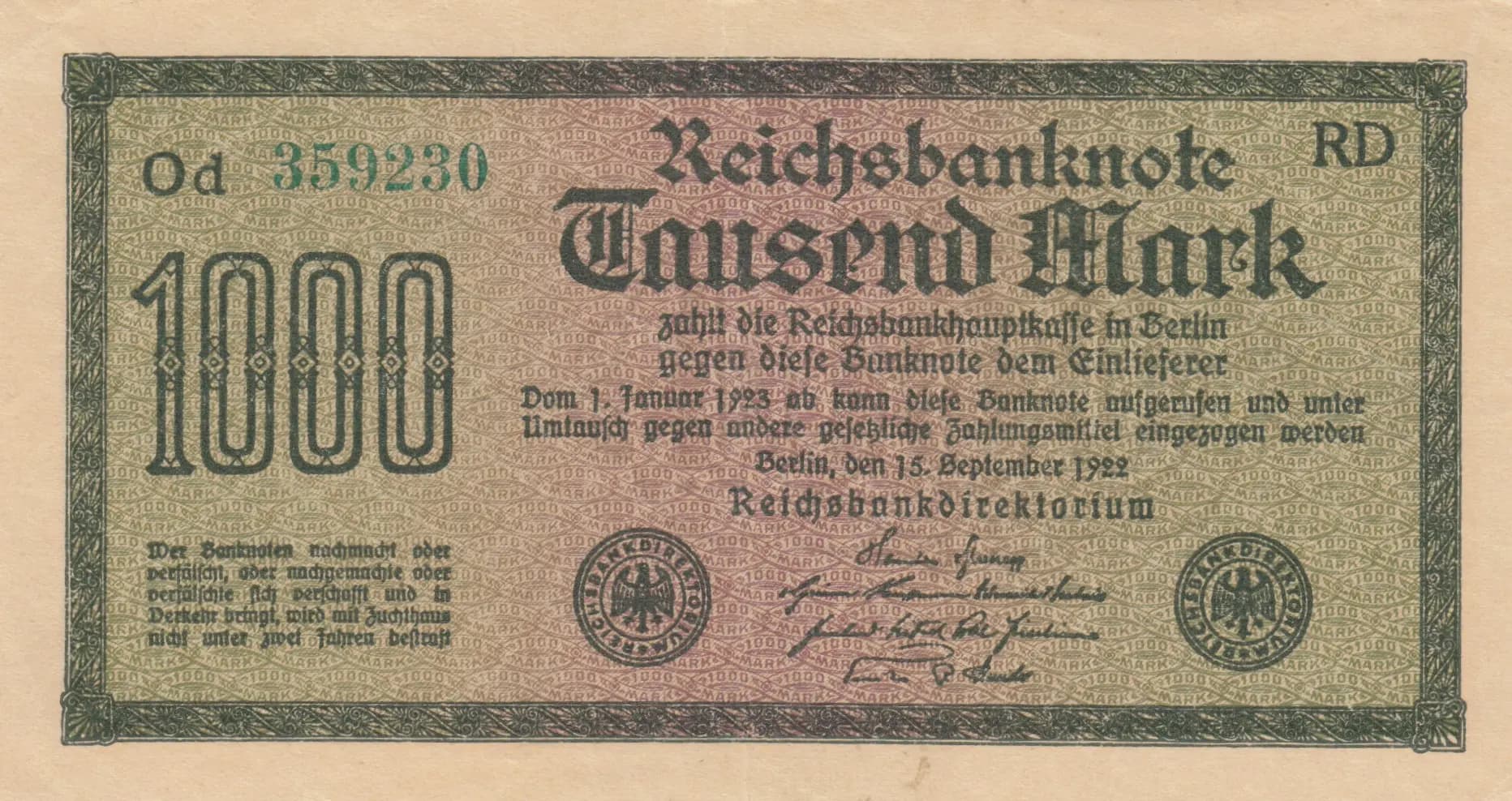
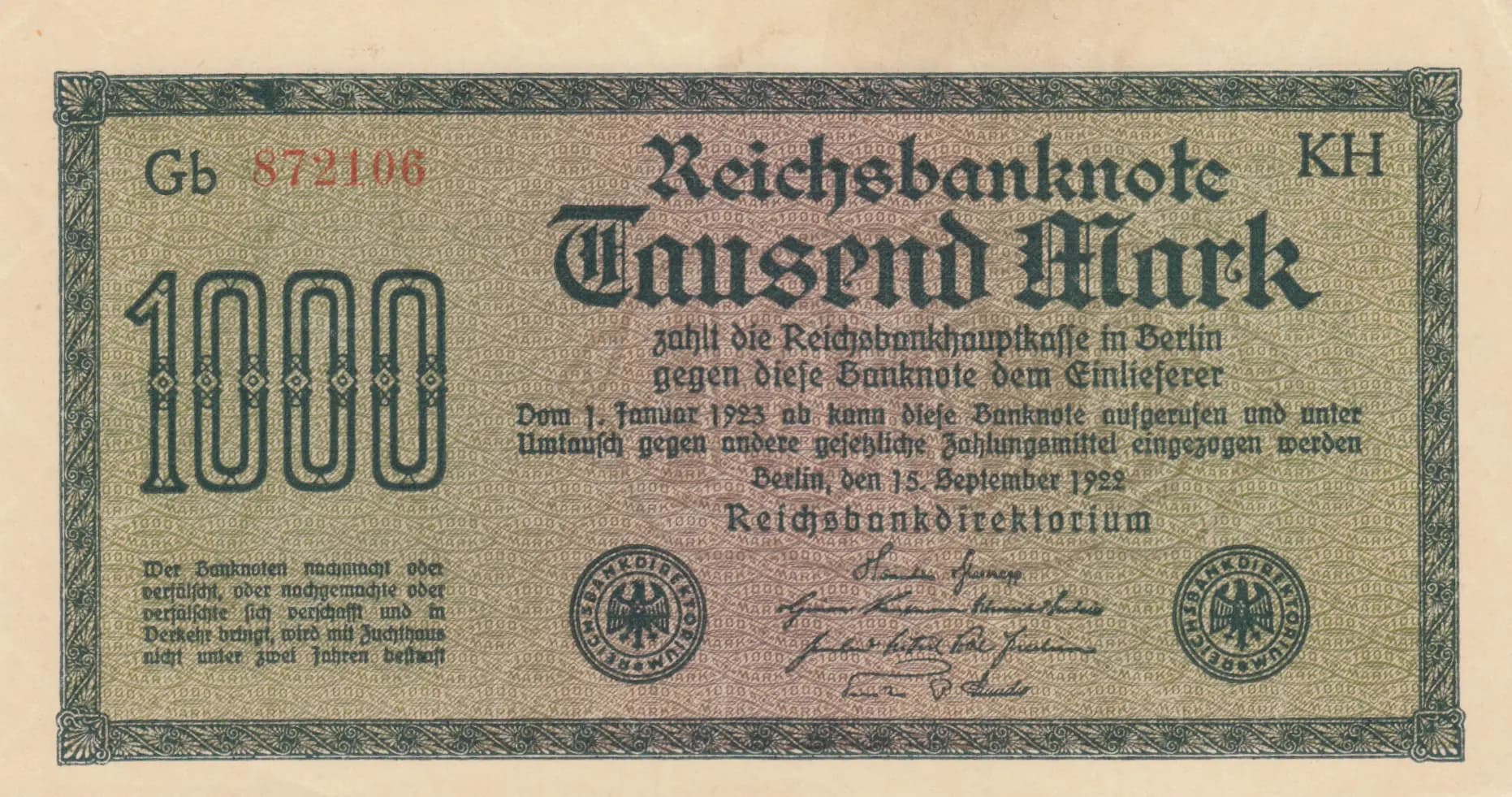
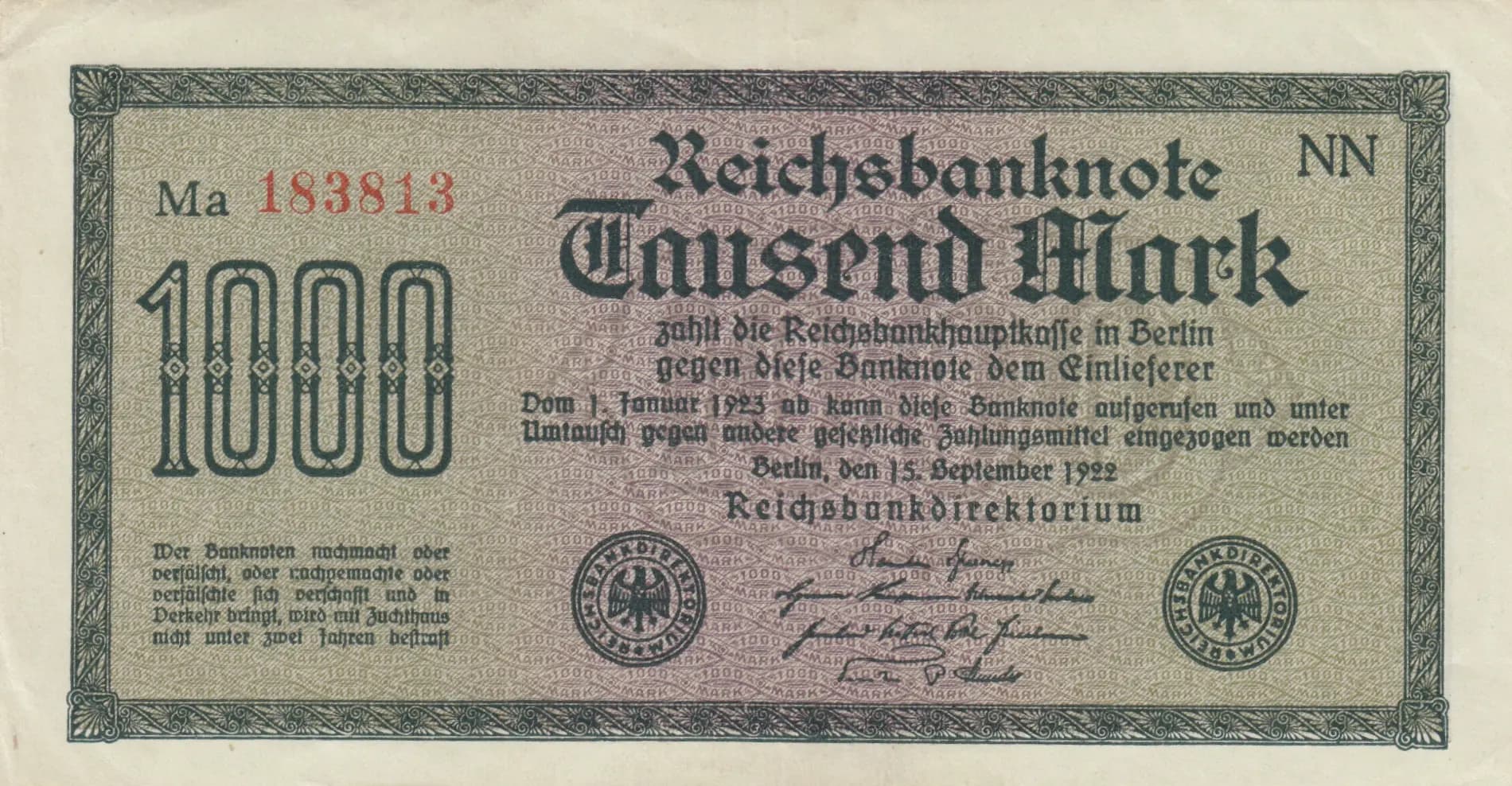
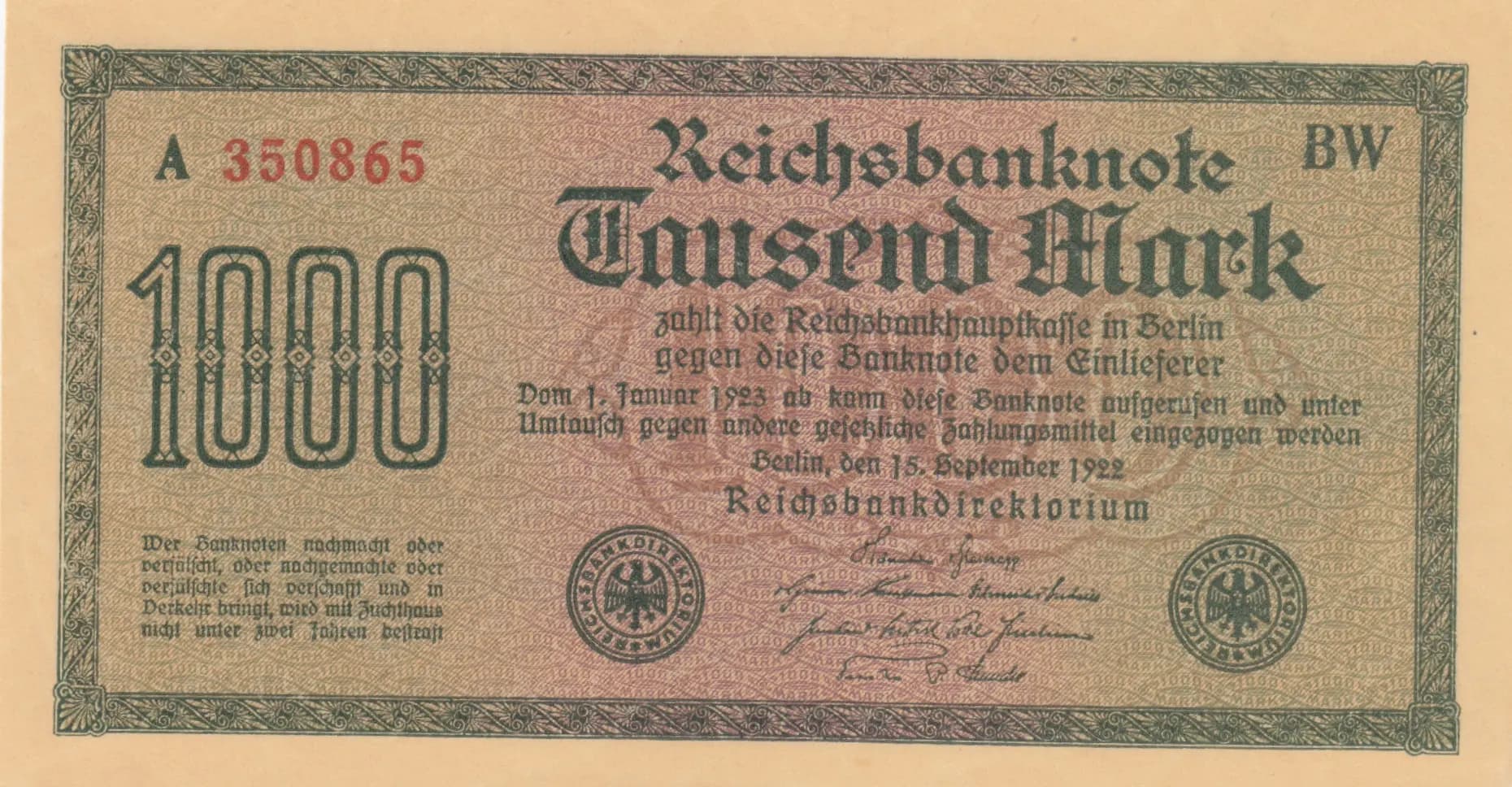
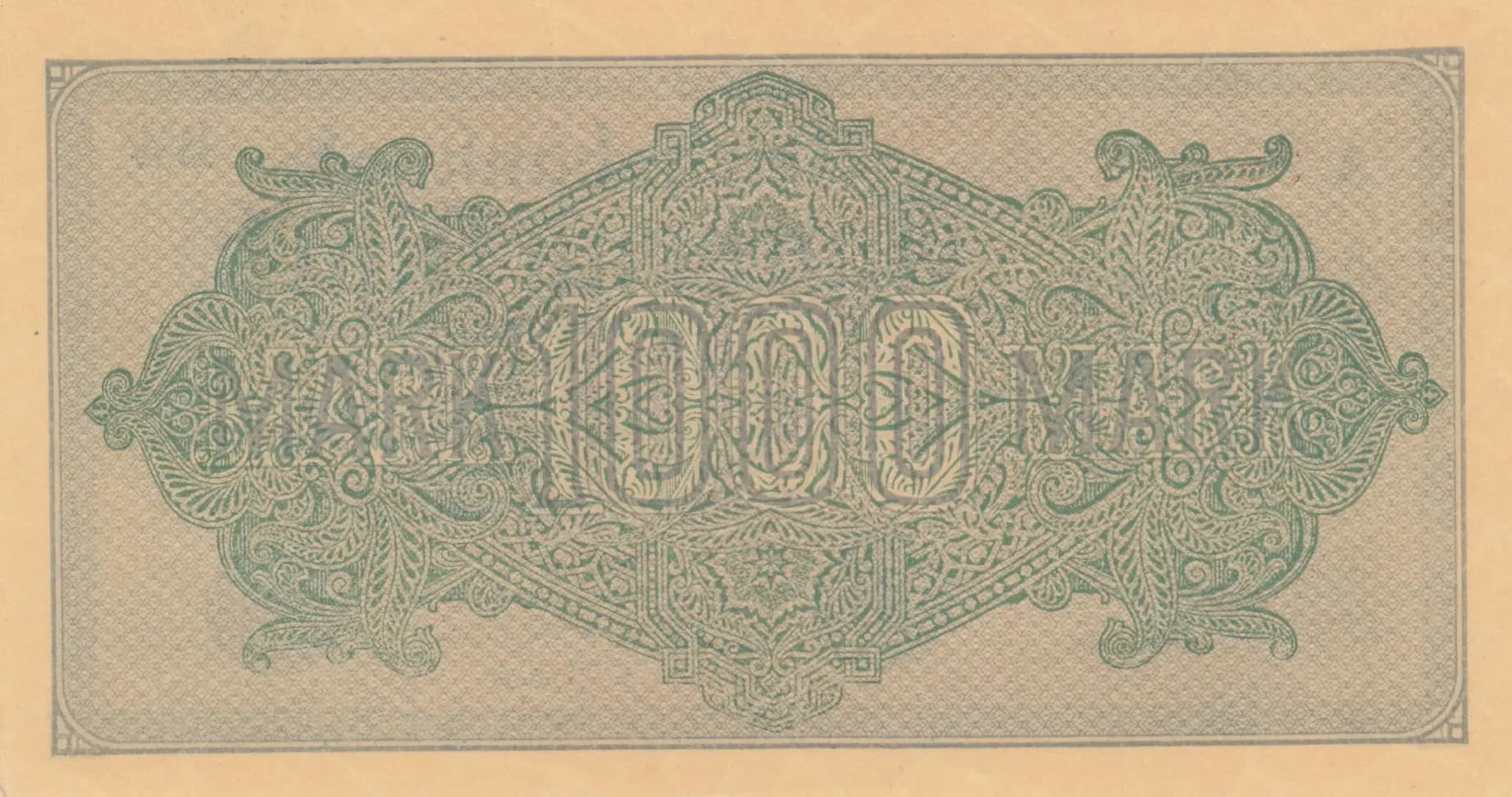
This 1000 Mark Reichsbanknote from September 15, 1922 (Pick P-76b) presents an excellent example of early Weimar-era currency during the hyperinflation period. The note displays crisp, well-preserved printing with vibrant green coloring on both obverse and reverse, characteristic of this series, and shows minimal signs of circulation consistent with an AU grade. The ornate baroque-style design and dual circular Reichsbank seals reflect the security printing standards of the period, making this a historically significant example of German monetary policy during economic crisis.
Common. The 1000 Mark denomination from 1922 was issued in large quantities by the Reichsbank as part of regular circulation during the hyperinflation crisis. The secondary market eBay price data provided demonstrates consistent sub-$2 sales for VF specimens and occasional PMG-graded examples reaching $20-37, indicating substantial supply and moderate collector demand. Millions of these notes were printed and many survive due to paper quality and the relative lack of heavy circulation (many were withdrawn before the 1923 currency reform). AU specimens remain readily available to collectors at modest prices.
Issued during the height of German hyperinflation in autumn 1922, this note represents the Reichsbank's attempt to manage currency circulation as the Mark's value deteriorated rapidly. The September 15, 1922 date places it within weeks of the currency collapse that would culminate in the introduction of the Rentenmark in November 1923. The redemption notice stating the note could be called in from January 1, 1923 onward reflects the transitional monetary chaos of the period, as the Reichsbank struggled to control the money supply and prepare for currency reform.
This note features a classically ornate design with symmetrical baroque-style ornamentation dominating both sides. The obverse displays the Reichsbank's official designation with two circular seals featuring the Imperial German eagle and Reichsbank inscriptions positioned in the lower portion, flanked by signature lines representing Reichsbank officials. The denomination '1000' appears prominently in large Gothic numerals on the left side. The reverse is entirely devoted to an intricate anti-counterfeiting ornamental pattern composed of interlocking geometric designs, scrollwork, shell motifs, and flowing baroque flourishes in dark green against a tan/beige background, with the denomination repeated in the decorative scheme. The ornate borders frame the entire note with geometric and floral patterns characteristic of Imperial German banknote design.
FRONT SIDE: Serial number 'A 350865' (upper left); '1000' and 'Reichsbanknote / Tausend Mark' (center, main denomination); 'Die Reichsbankhauptkaße in Berlin zahlt gegen diese Banknote dem Einlieferer [The Reichsbank main office in Berlin pays against this banknote to the bearer]'; 'Vom 1. Januar 1923 ab kann diese Banknote aufgerufen und unter Umtausch gegen andere gesetzliche Zahlungsmittel eingezogen werden [From January 1, 1923 onwards, this banknote can be called in and exchanged for other legal means of payment]'; 'Berlin, den 15. September 1922' (issue date); 'Reichsbankdirectorium' (issuing authority); Counterfeiting warning: 'Der Banknoten nachmacht oder verfälscht, oder nachgemachte oder verfälschte Noten verbreitet und in Verkehr bringt wird nach Maßgabe des Gesetzes nicht unter zwei Jahren bestraft [Whoever counterfeits or forges banknotes, or circulates counterfeited or forged notes, will be punished according to law for not less than two years]'; 'BW' (printer/official mark, upper right). REVERSE SIDE: '1000' (integrated into ornamental design, center).
Intaglio (engraved) printing on colored paper stock. The fine-line work visible throughout both sides, the precise execution of the elaborate decorative patterns, and the depth of impression typical of intaglio production are all evident in the visual analysis. The printer is not explicitly identified in the visible inscriptions, though German state banknotes of this period were typically produced by the Reichsdruckerei (Imperial Printing Office) or contracted security printers. The deliberate use of colored underprinting (green and lilac) combined with the monochromatic intaglio work represents a sophisticated multi-stage printing process designed to deter counterfeiting.
This note is cataloged as Pick P-76b. The PMG population report indicates variant P-76c, P-76g, and P-76h also exist for the 1000 Mark denomination, representing different signature combinations or printing varieties. The serial number prefix 'A 350865' and the 'BW' marking (likely printer initials) visible on this specimen may indicate the specific printing run or plate. The variety classification within the P-76 series likely relates to different signatory officials of the Reichsbankdirectorium rather than major design changes.