1000 mark 1944
Market Prices
7 salesAbout This Note
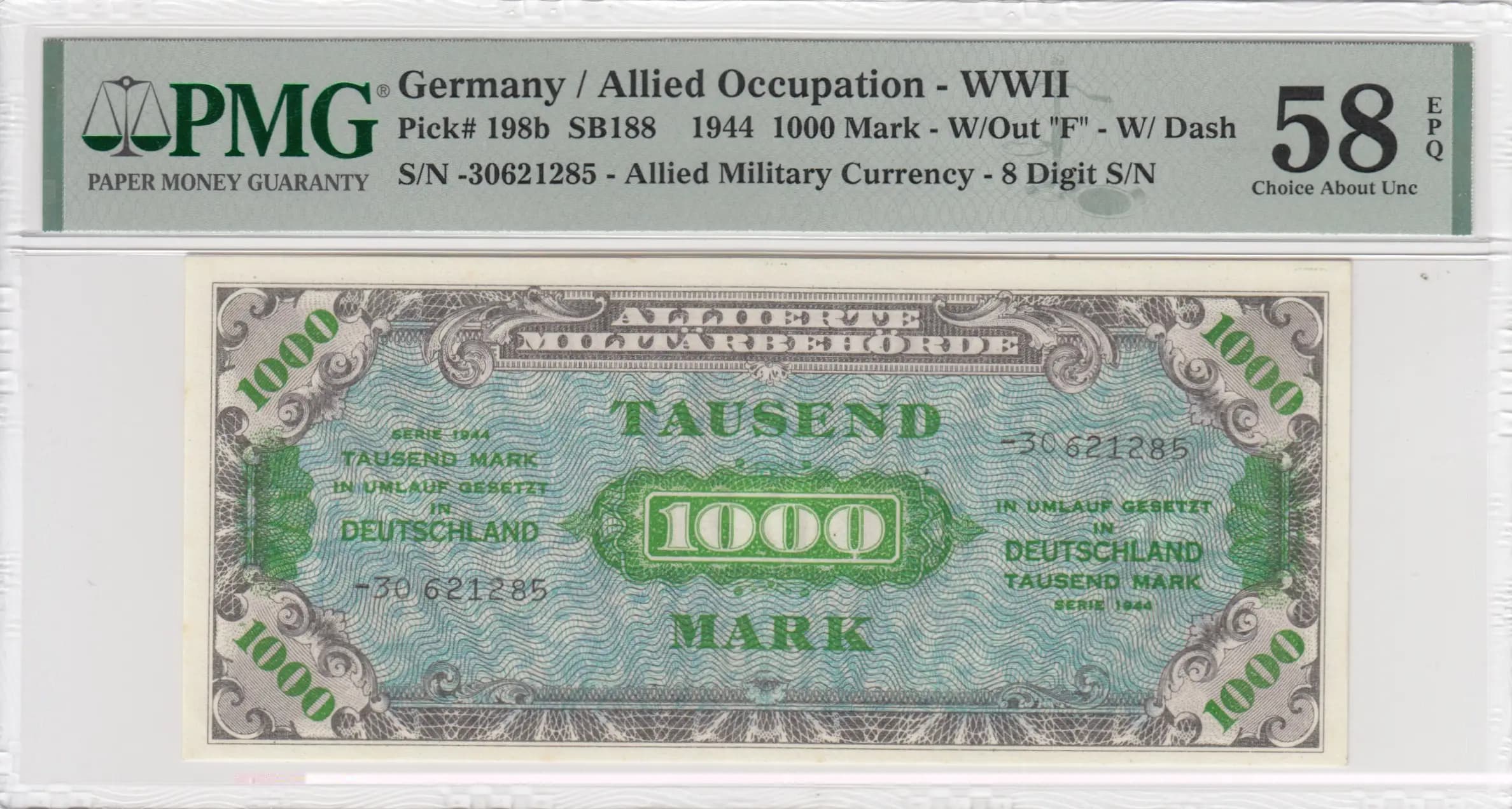
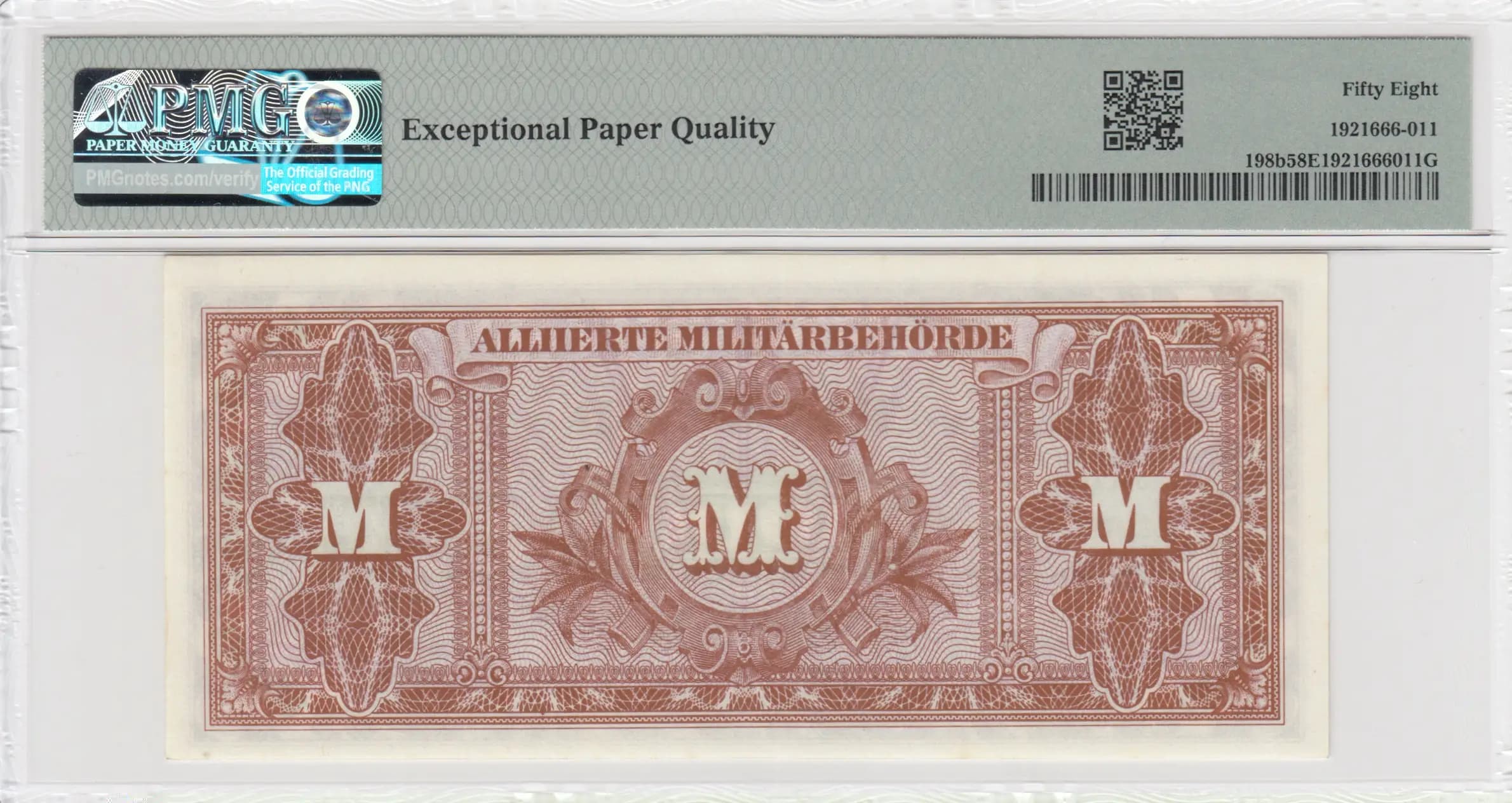
This is a PMG 58 EPQ graded 1000 Mark Allied Military Currency note from 1944, representing an important piece of WWII monetary history. The note displays exceptional condition with crisp, well-defined printing showing the characteristic green obverse and reddish-brown reverse typical of this issue. The clean appearance, lack of wear, and EPQ (Exceptional Paper Quality) designation reflect the note's preservation quality and collector appeal, with comparable notes in similar grades selling in the $110-180 range on the secondary market.
Common. This is a regular-issue Allied Military Currency note from a substantial print run distributed throughout occupied Germany in 1944. The eBay price data shows consistent market activity with notes in similar grades (PMG 63-65) selling for $90-200, and catalog values from 2016 listing the UNC grade at $180, indicating stable collector interest but not scarcity. The presence of multiple graded examples in the PMG population report and the continuous supply of these notes to the secondary market demonstrate they were produced in quantities sufficient to meet wartime circulation needs.
This note was issued by the Alliierte Militärbehörde (Allied Military Authority) in 1944, representing the monetary control mechanism imposed by Allied forces in occupied Germany during the final year of World War II. The prominent 'M' symbol on the reverse and the bilingual German/English inscriptions visible in the design reflect the transitional nature of Germany under Allied military administration. This series of military occupation currency was deliberately designed with security features and denomination markings to prevent counterfeiting and facilitate controlled commerce in the war-torn German territories.
The obverse features a formal, geometric design dominated by the large '1000' denomination in a central rectangular frame, rendered in green with gray and black ornamental scrollwork in the corners. The reverse displays a distinctive reddish-brown color scheme centered on three large 'M' letters arranged in an ornamental pattern, with decorative diamond and geometric shapes framing the design. Both sides incorporate continuous wavy-line security patterns as anti-counterfeiting measures. The overall design aesthetic is characteristic of Allied military currency of the period—functional rather than portrait-based, emphasizing denomination clarity and security features over artistic portraiture.
OBVERSE: 'TAUSEND' (Thousand); 'TAUSEND MARK' (Thousand Mark); 'DEUTSCHLAND' (Germany); 'IN UMLAUF GESETZT' (Put into circulation); Serial number: -30621285. REVERSE: 'ALLIIERTE MILITÄRBEHÖRDE' (Allied Military Authority); Large 'M' symbol (repeated three times, representing the military mark designation).
Intaglio (recess) printing combined with color separation techniques, creating the sharp line work visible in the security patterns and ornamental borders. The precise registration of multiple colors (green/gray on obverse, brown/tan on reverse) and the fine wavy-line background pattern are consistent with high-security banknote production standards of the period. This note was produced by security printers contracted to the Allied military authorities, likely using traditional letterpress and intaglio combination methods standard for occupation currency.
This specific note is cataloged as Pick P-198b, distinguished from P-198a by the absence of an 'F' prefix on the serial number and the presence of a dash separator in the 8-digit serial number (-30621285). The serial number format without 'F' is the defining characteristic of this variety. Both P-198a and P-198b represent the same 1000 Mark denomination from 1944, with the distinction relating to serial number printing variations implemented during production.