10 reichsmark 1929
Market Prices
92 salesAbout This Note
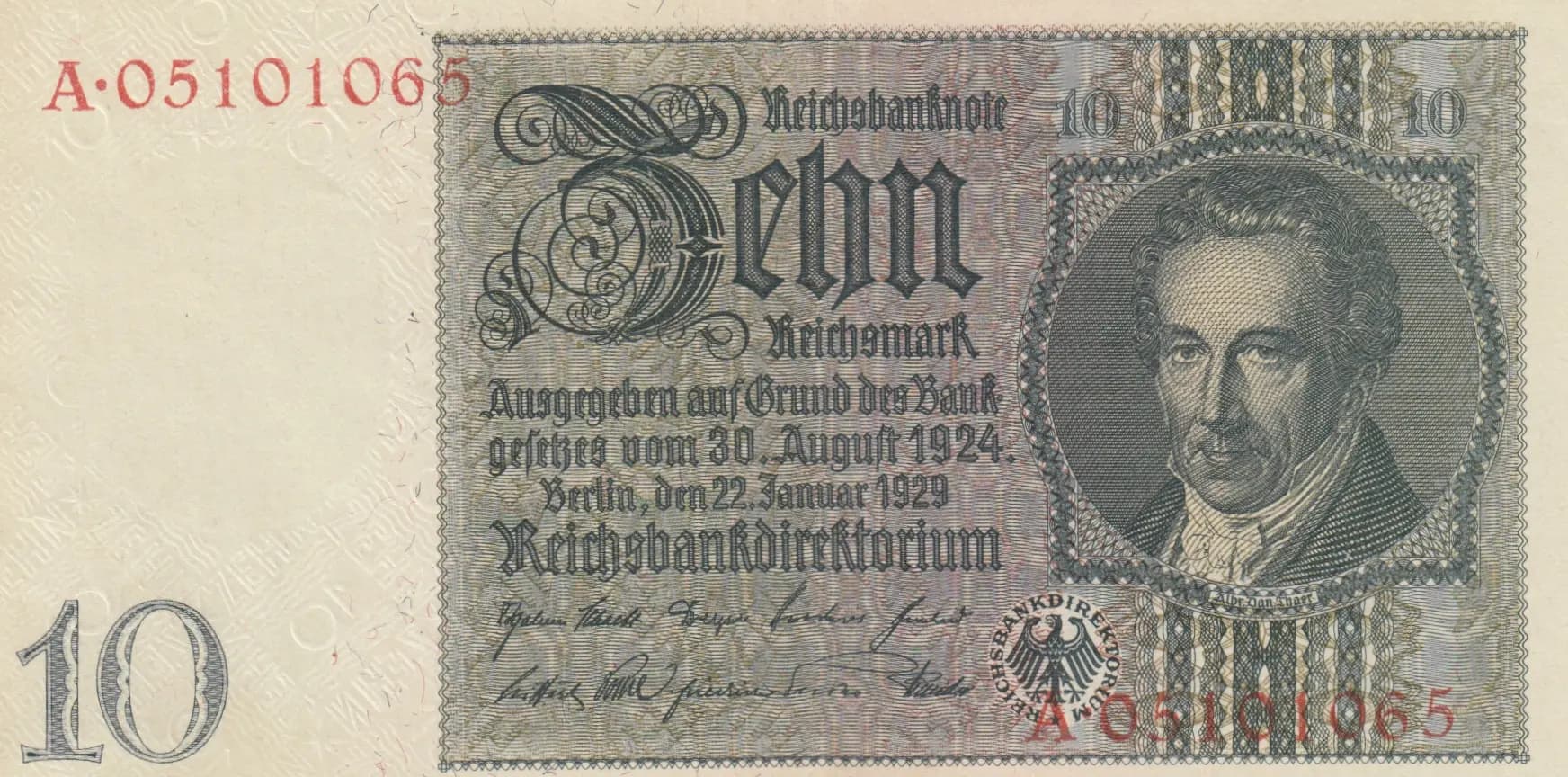
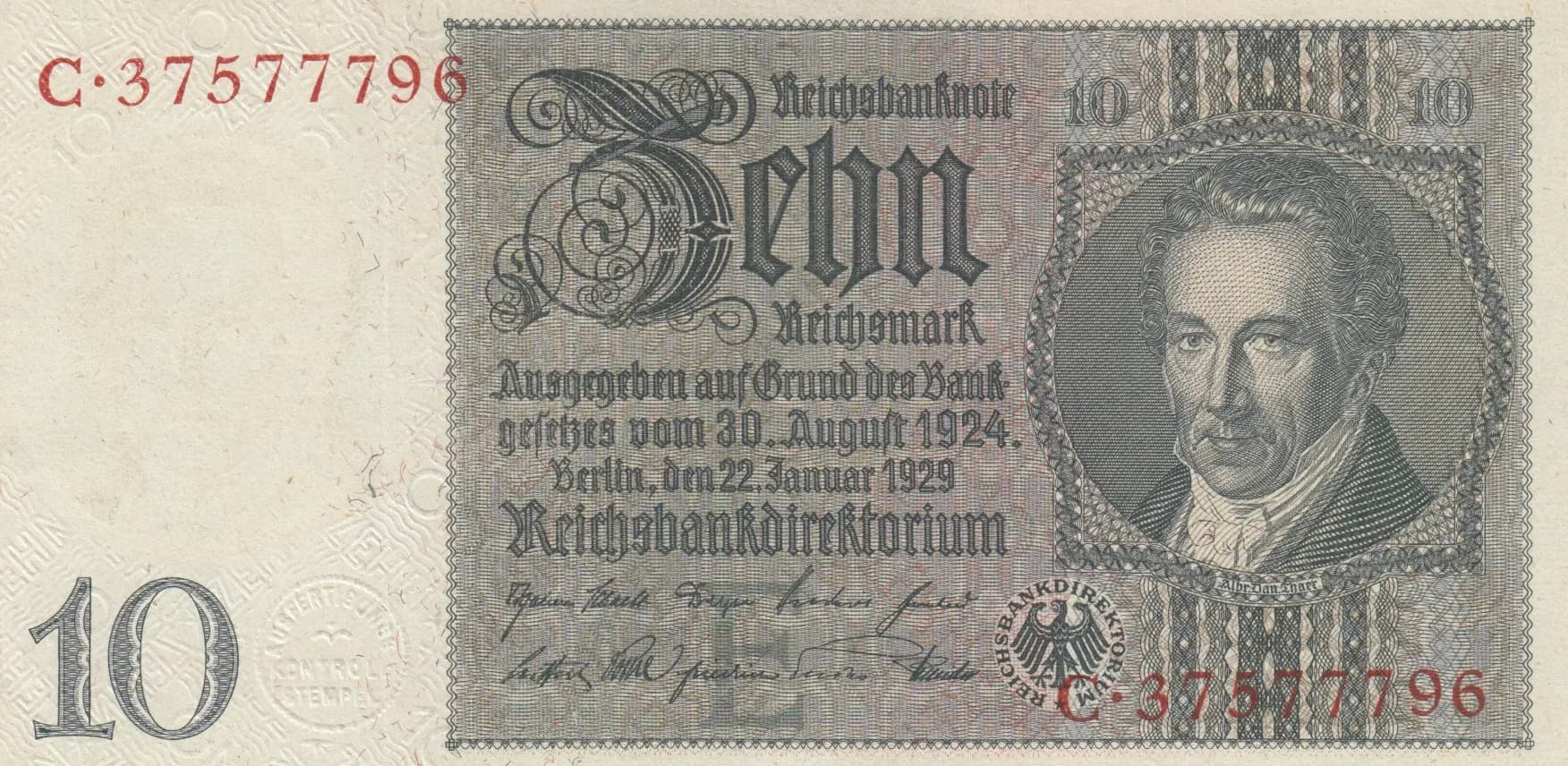
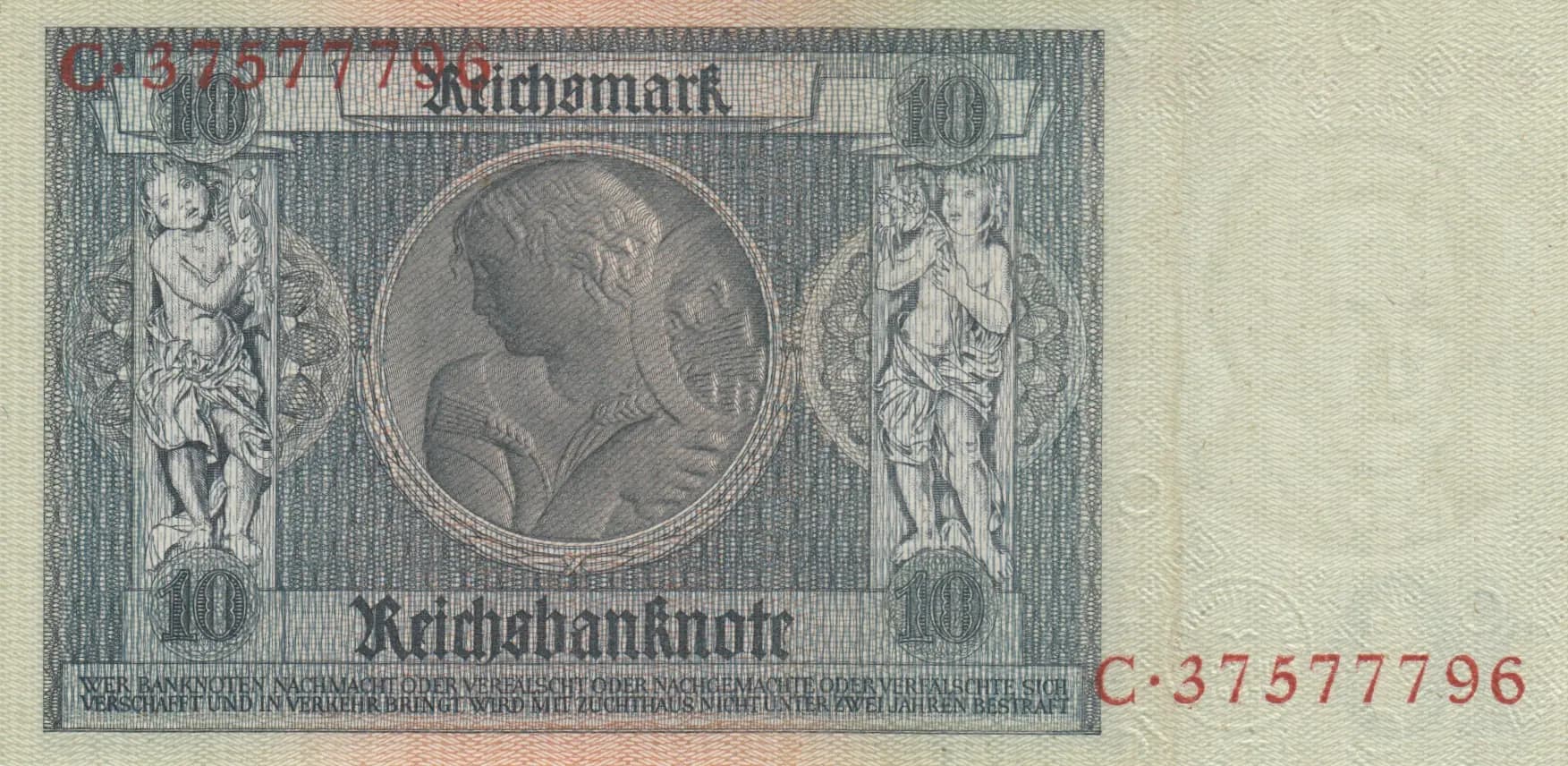
This 10 Reichsmark note from January 22, 1929 is a well-preserved example of Weimar-era currency in AU condition, displaying the characteristic fine line engraving and classical allegorical design typical of Reichsbank issues. The note features a portrait of Albrecht D. Thaer on the obverse and allegorical figures on the reverse, with visible aging consistent with light circulation including subtle creasing and minor foxing on the cream-colored paper. The red serial number marking (C·37577796) and intact security printing confirm authenticity of this economically significant note issued during the relatively stable late Weimar period.
Common. This note circulated widely during 1929-1945 and beyond, with substantial print runs typical of a standard Reichsbank denomination. eBay auction data shows consistent sales across multiple condition grades (F through PMG 67), with ungraded and lower-grade examples regularly selling for under $5 and AU-condition notes typically bringing $10-15 in the secondary market. The 2016 catalogue values list AU at approximately $20, confirming this as a readily available note to collectors despite its historical significance.
Issued on January 22, 1929, this note represents the Reichsbank's currency during the final years of relative economic stability before the Great Depression's onset in October 1929. The choice to depict Albrecht D. Thaer, an 18th-century Prussian agricultural reformer, reflects the Weimar Republic's emphasis on productive national heritage and agrarian values. The allegorical figures and classical design language underscore the government's attempt to project cultural continuity and financial legitimacy during this politically turbulent period.
The obverse features a three-quarter profile portrait of Albrecht Thaer (1752-1815), the renowned Prussian agronomist and agricultural reformer, positioned on the right side within an ornate decorative frame. The composition employs extensive guilloche patterns and fine line engraving in gray and black tones. The reverse presents a classical allegorical design with a central oval medallion containing a right-facing classical profile portrait, flanked symmetrically by two winged putti (cherubs) standing on ornamental pedestals with vine and foliate decorative elements. This neoclassical imagery reflects the design philosophy of the Reichsbank's currency during the stabilization period, emphasizing cultural heritage and classical artistic traditions.
FRONT: 'Reichsbanknote' (Reichsbank note); '10' (denomination); 'Ausgegeben auf Grund des Bankgesetzes vom 30. August 1924 Berlin, den 22. Januar 1929' (Issued pursuant to the Banking Law of August 30, 1924 Berlin, January 22, 1929); 'Reichsbanktirektoriuum' (Reichsbank Directorate); Serial number 'C·37577796'. BACK: '10 Reichsmark' (10 Reichsmark); 'Reichsbanknote' (Reichsbank note); Serial number 'C·37577796'; Legal disclaimer text regarding counterfeiting penalties and official currency status (fine print).
This note was produced using fine line steel engraving, the standard intaglio process for high-security banknotes of this era. The catalog reference notes the use of 'Kreuz-Iris' (Cross-Iris) printing technique, a specialized color transition method for the underprint that creates subtle gradations between gray and cream tones, though this technique is difficult to discern in photographic reproduction. The extensive guilloche patterning, intricate decorative borders, and fine line work throughout both obverse and reverse confirm professional security printing. The printer for this Pick-180a issue was the Reichsbanknote production facility in Berlin.
This specific example carries the serial number prefix 'C·37577796', indicative of the regular issue series. The note demonstrates the standard 'Kreuz-Iris' printing variant that was used from 1929 until approximately 1940-1941. No visible overprints, special markings, or emergency issue indicators are present. Both obverse and reverse signatures are typical of the standard Reichsbank Directorate authority authentication for notes of this period. The red serial number marking is consistent with standard Reichsbank practice for this denomination and year.