5 rupees 1915
About This Note
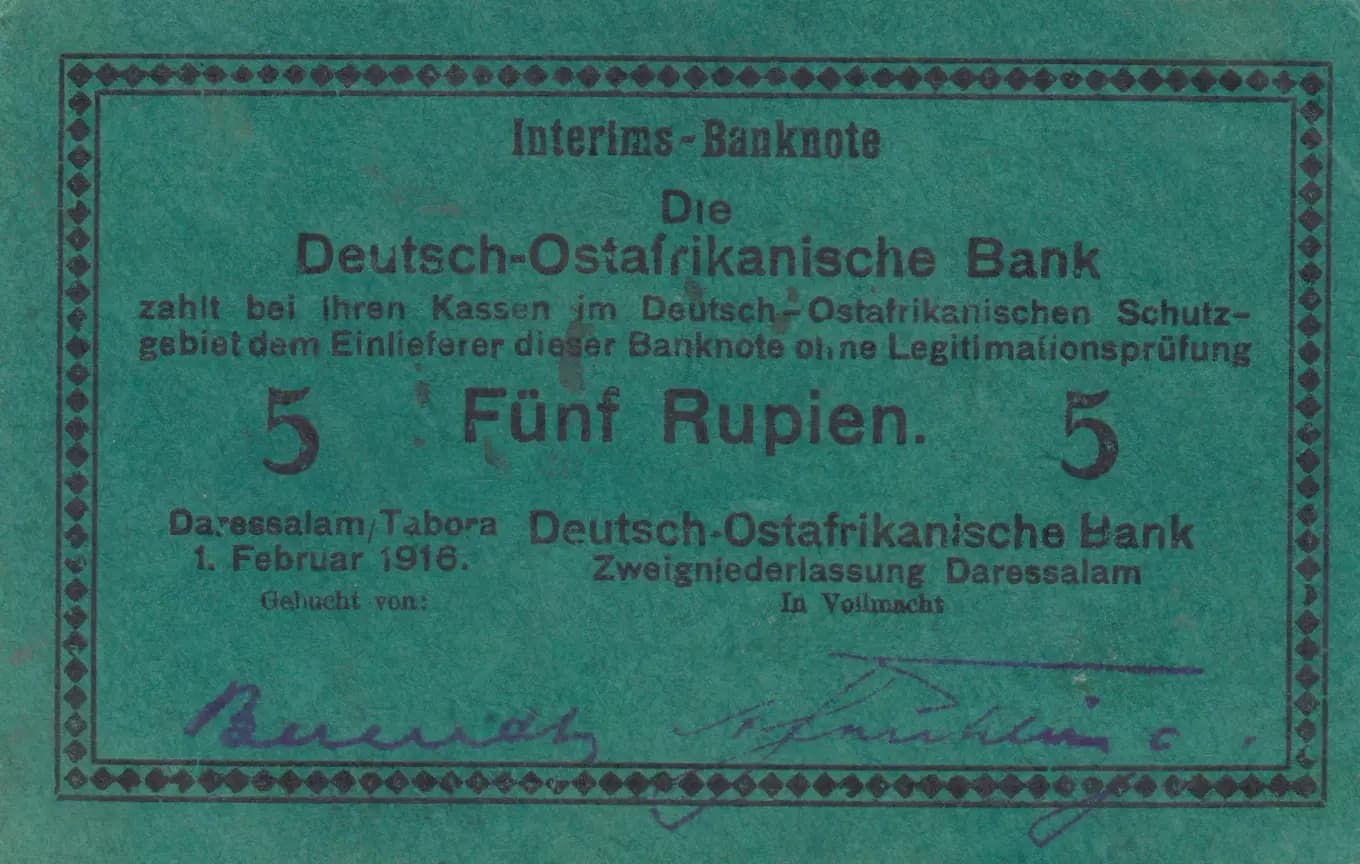
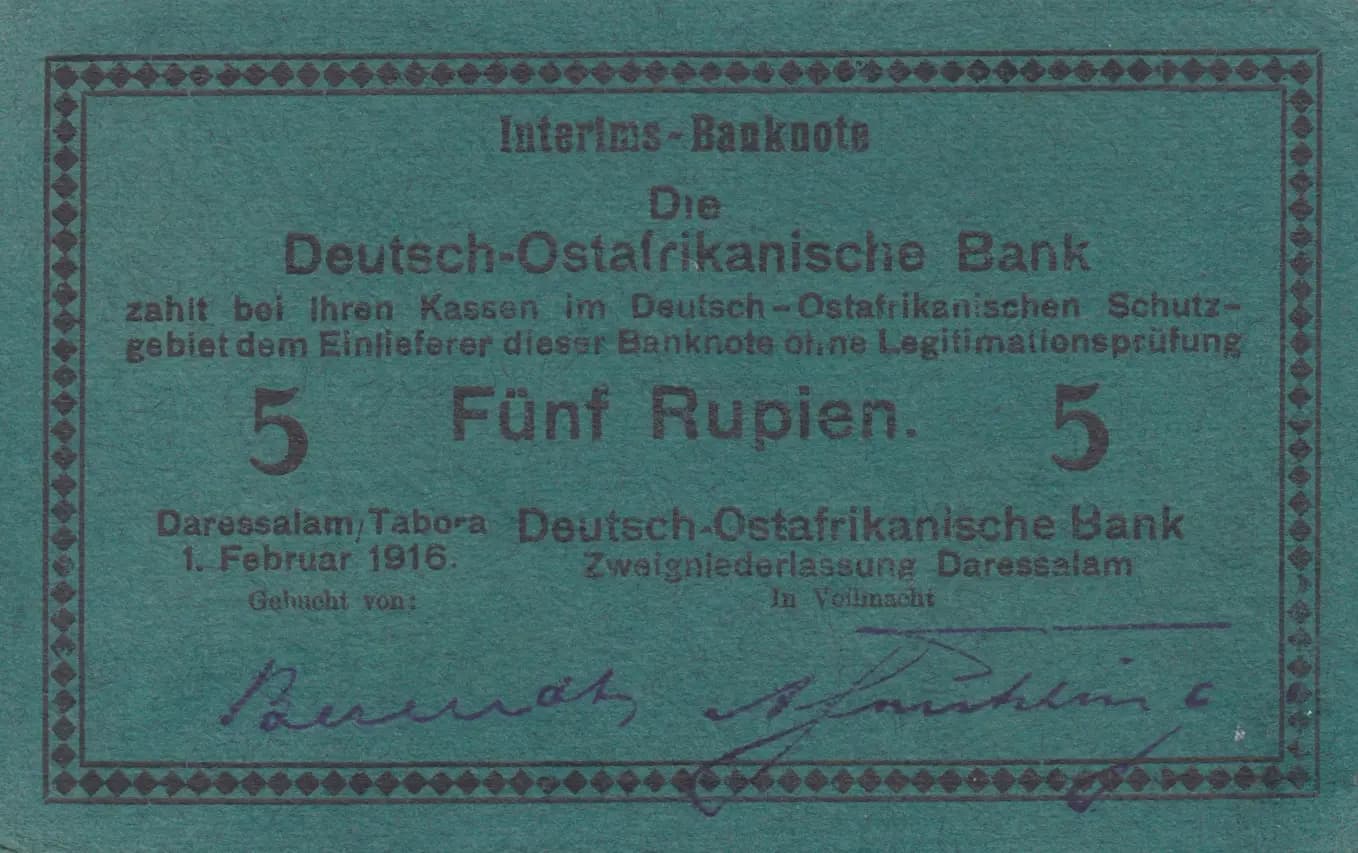
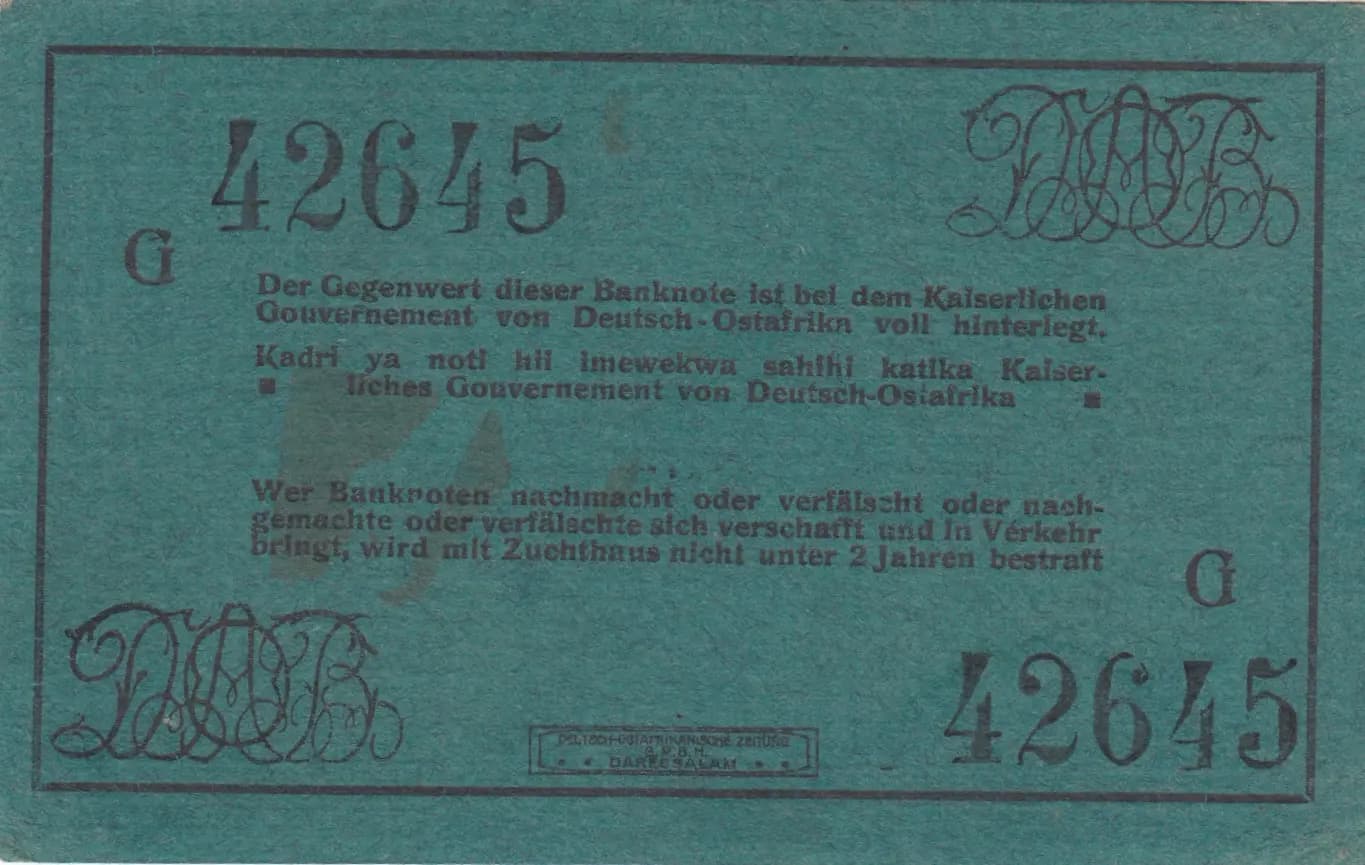
This is an exceptional example of a German East African 5 Rupees Interims-Banknote (interim banknote) from 1916, issued by the Deutsch-Ostafrikanische Bank during a period of monetary transition in the German colonial territory. The note exhibits the characteristic turquoise/teal paper with burgundy text typical of this series, displaying clear handwritten signatures and serial number 42645. In AU condition, this note shows only minor aging consistent with its age, with well-defined decorative diamond-pattern borders and legible inscriptions on both sides—a notable preservation state for a WWI-era colonial banknote.
Common. The Deutsch-Ostafrikanische Bank issued multiple denominations of Interims-Banknoten in 1915-1916 during the monetary restructuring of German East Africa. While these notes are historically significant and increasingly difficult to find in excellent condition due to their age and the colonial context, the Pick catalog number P-36b does not indicate an exceptionally scarce variety. The AU condition grade is noteworthy and increases the desirability of this particular specimen, but the denomination and issuer were produced in quantities sufficient to make the note type itself common within numismatic markets. The serial number 42645 does not indicate a special prefix variety.
The Interims-Banknote designation indicates this note was issued during a transitional monetary period in German East Africa, likely reflecting the disruptions of World War I on colonial financial systems. The dual location references to Dar es Salaam and Tabora, with a specific date of February 1, 1916, document the Deutsch-Ostafrikanische Bank's attempt to maintain financial stability in the protectorate during wartime. The declaration that countervalue was deposited with the Imperial Government reflects the formal backing required for interim currency issues during this unstable colonial period.
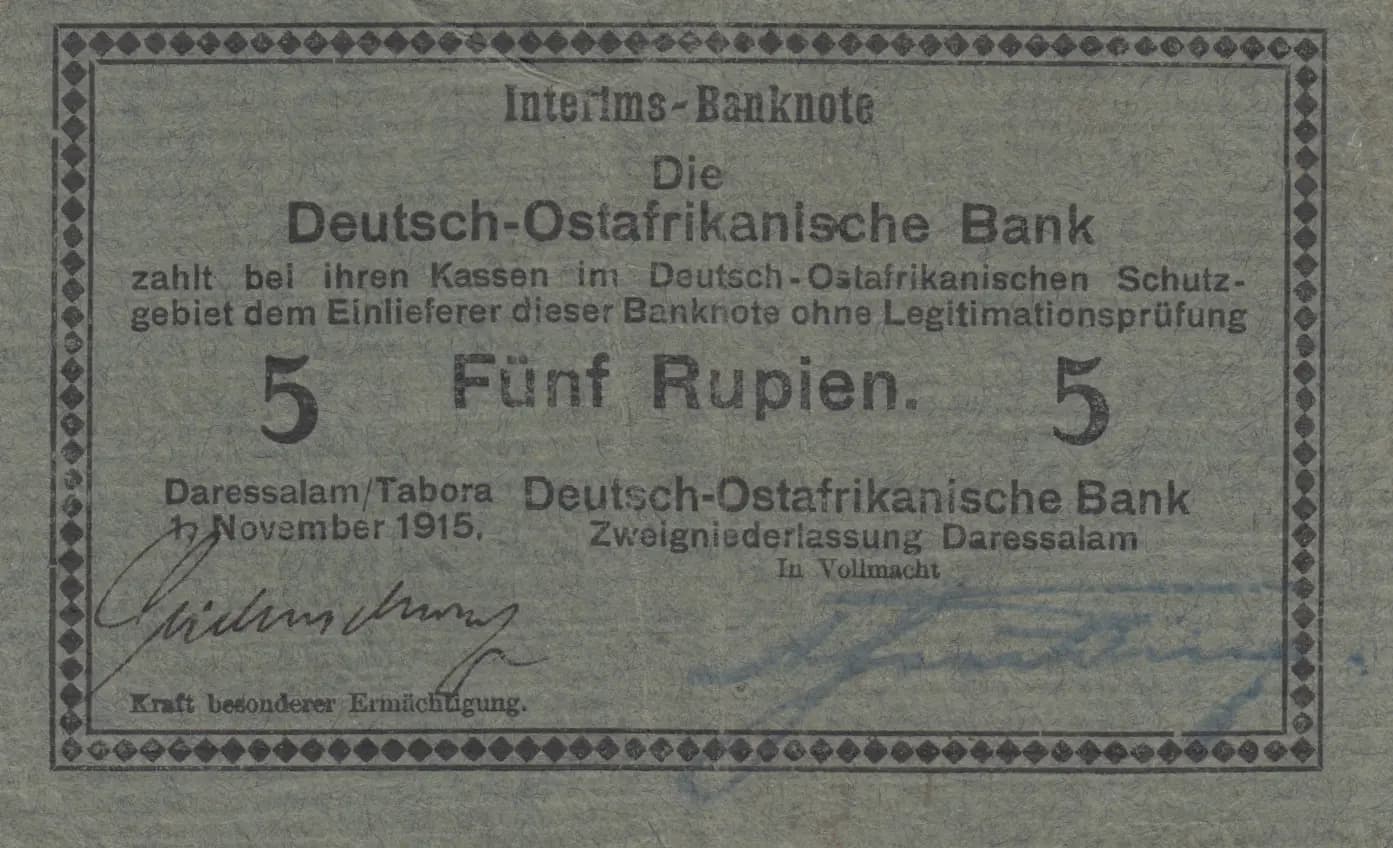
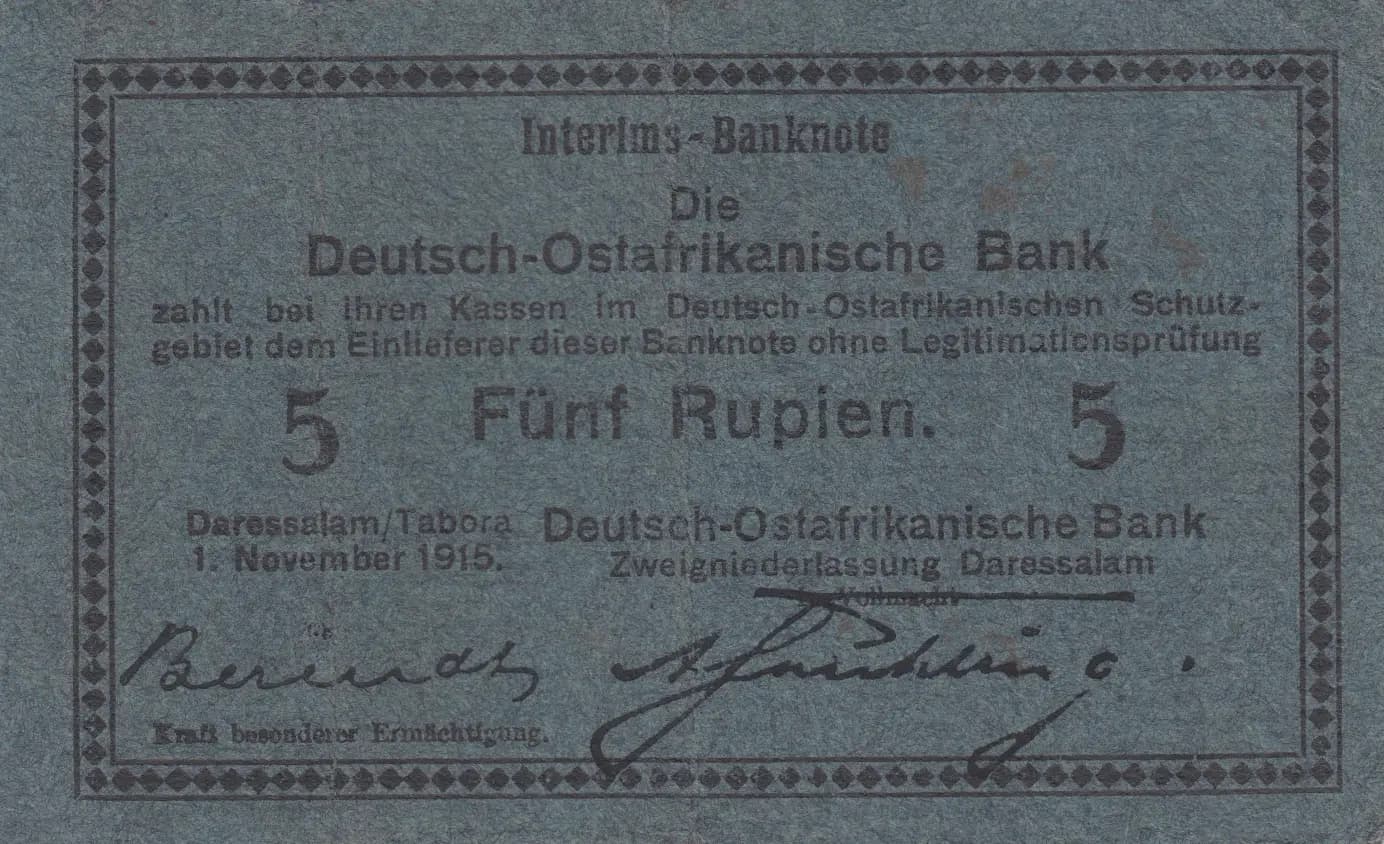
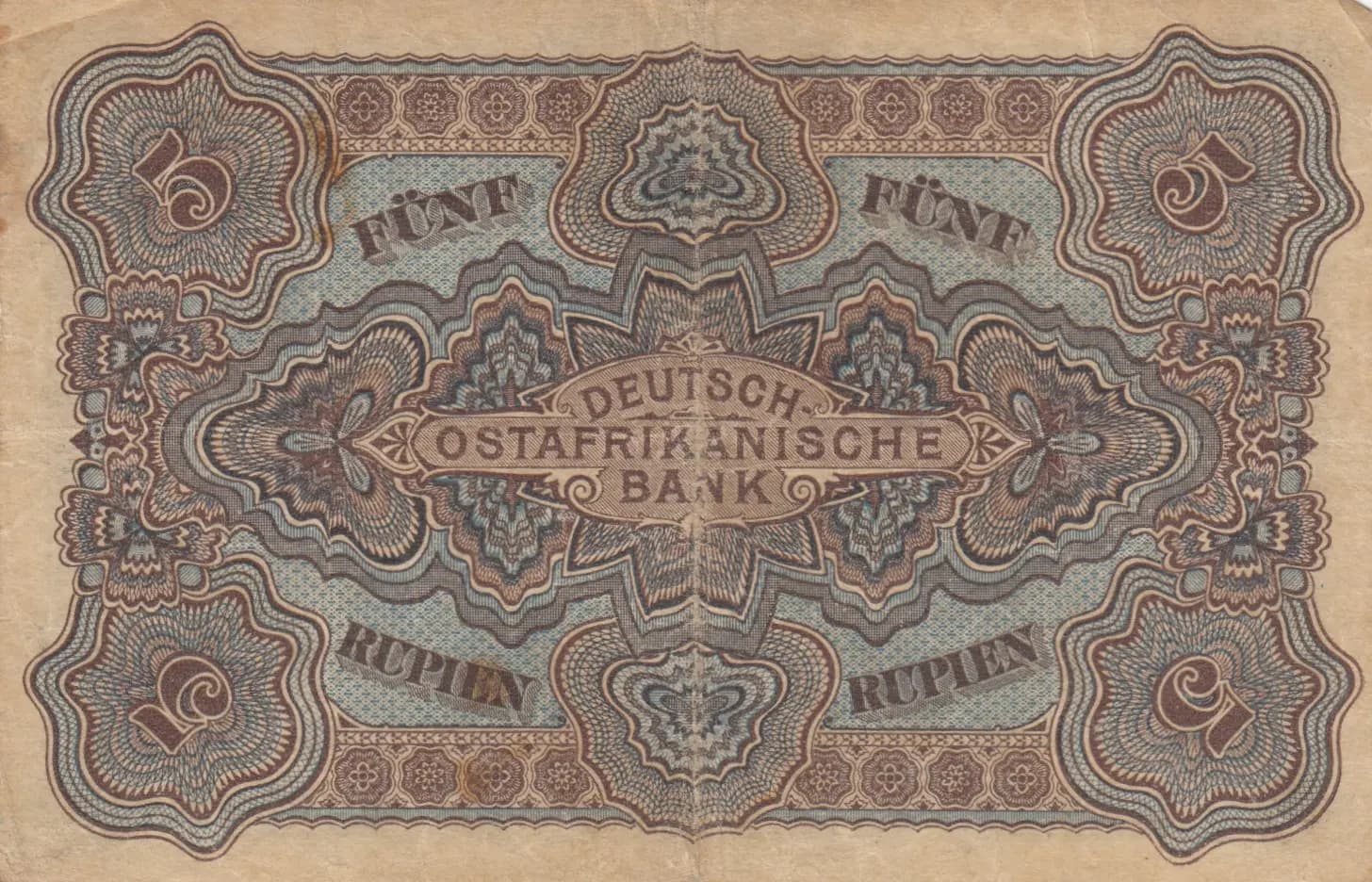
This Interims-Banknote features a symmetrical, formal layout characteristic of German colonial banking documents. The front displays the denomination 'Fünf Rupien' (5 Rupees) centrally positioned, surrounded by an elaborate decorative diamond-pattern border in burgundy that frames the entire note. The design employs classical German administrative typography with the issuing bank's full name and authority statement prominently featured. The back side contains critical legal and security text, including countervalue deposit declarations in both German and Swahili—reflecting the bilingual administrative practice of the German protectorate—along with a stern counterfeiting penalty warning. Handwritten signatures appear on the front, and the serial number (42645) is repeated in multiple locations for verification purposes. A printer's mark appears centered on the back. No portrait, landscape, or allegorical imagery is present; instead, the design relies entirely on text, typography, and geometric borders for visual authority and security.
FRONT SIDE: 'Interims-Banknote' (Interim Banknote) — 'Die Deutsch-Ostafrikanische Bank' (The German East African Bank) — 'zahlt bei Ihren Kassen im Deutsch-Ostafrikanischen Schutzgebiet dem Einlieferer dieser Banknote ohne Legitimationsprüfung' (pays at its cash desk in the German East African protectorate to the depositor of this banknote without legitimacy verification) — 'Fünf Rupien' (Five Rupees) — 'Daressalam/Tabora' (Dar es Salaam/Tabora) — 'Deutsch-Ostafrikanische Bank' (German East African Bank) — '1. Februar 1916' (1st February 1916) — 'Zweigniederlassung Daressalam' (Branch office Dar es Salaam) — 'Gehucht von:' (Printed by:) — 'In Vollmacht' (By authority/Power of attorney). BACK SIDE: Serial number '42645' — 'Der Gegenwert dieser Banknote ist bei dem Kaiserlichen Gouvernement von Deutsch-Ostafrika voll hinterlegt.' (The countervalue of this banknote is fully deposited with the Imperial Government of German East Africa.) — Swahili/German text: 'Kadri ya noti hii imewekwa sahihi katika Kaiserliches Gouvernement von Deutsch-Ostafrika' (The value of this note is properly certified in the Imperial Government of German East Africa) — 'Wer Banknoten nachmacht oder verfälscht oder nachgemachte oder verflälschte verscharft und in Verkehr bringt, wird mit Zuchthaus nicht unter 2 Jahren bestraft' (Whoever counterfeits or falsifies banknotes or brings counterfeit or falsified ones into circulation will be punished with hard labor for not less than 2 years.)
This note was produced using letterpress printing, a standard technique for colonial currency of this period. The crisp definition of the decorative borders, clear typography, and consistent ink application visible in both the front and back images are characteristic of high-quality letterpress work. The handwritten signatures and notations were added post-printing, as was standard practice for authorized currency. The printer information indicated on the front ('Gehucht von:') would have identified the specific security printer, though the name is not fully legible in the visual analysis provided.
This specimen represents the Pick-36b variety, dated 1916 (cataloged as 1915 issue but bearing a February 1, 1916 date on the note itself). The serial number 42645 is specific to this individual note. The Dar es Salaam branch office designation and the specific date of issue (1. Februar 1916) narrow the identification within the Interims-Banknote series. Collectors should note that the handwritten signatures and branch office location may represent variants worth documenting, as these were common variables in interim currency issues. The bilingual German/Swahili text on the reverse is a characteristic feature of this series but not a variety indicator.