1 rupee 1916
“serie F3”
About This Note
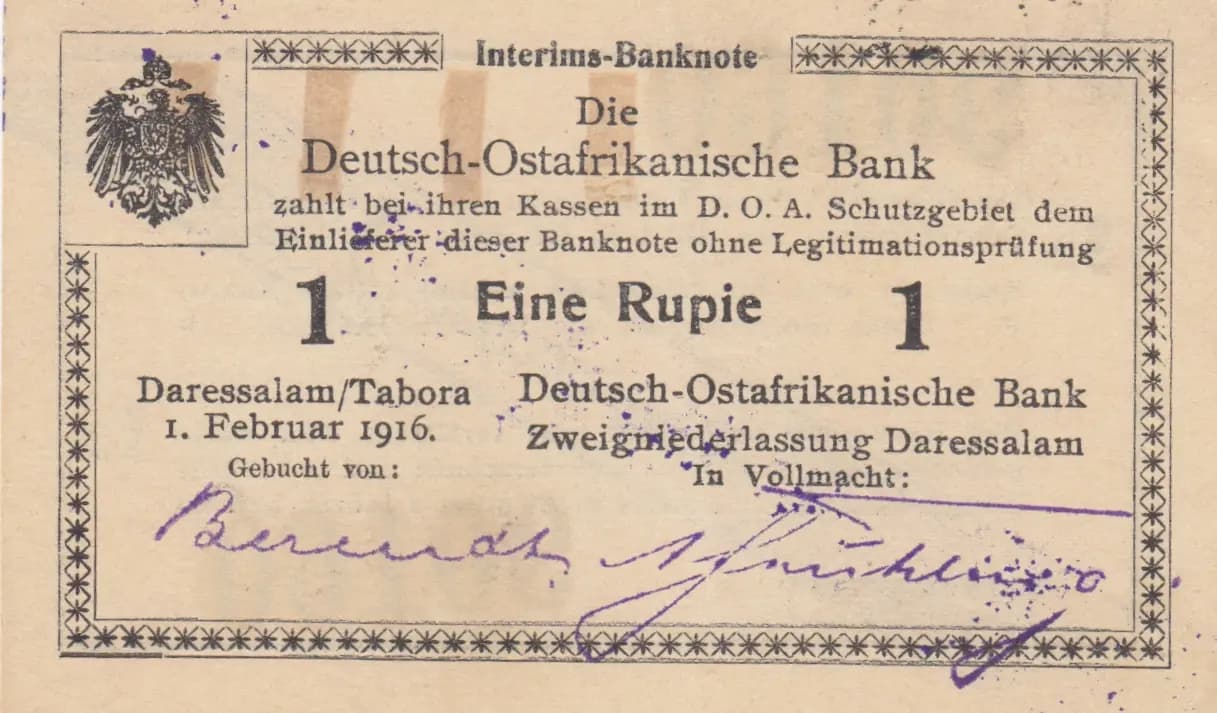
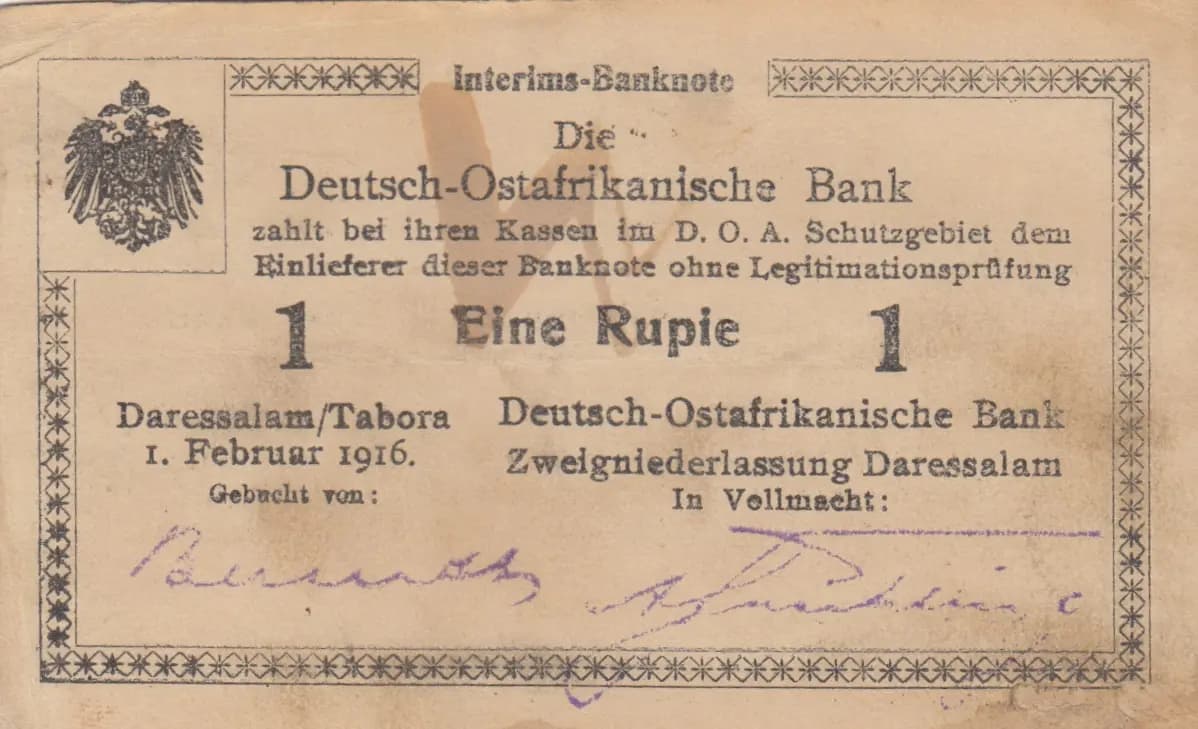
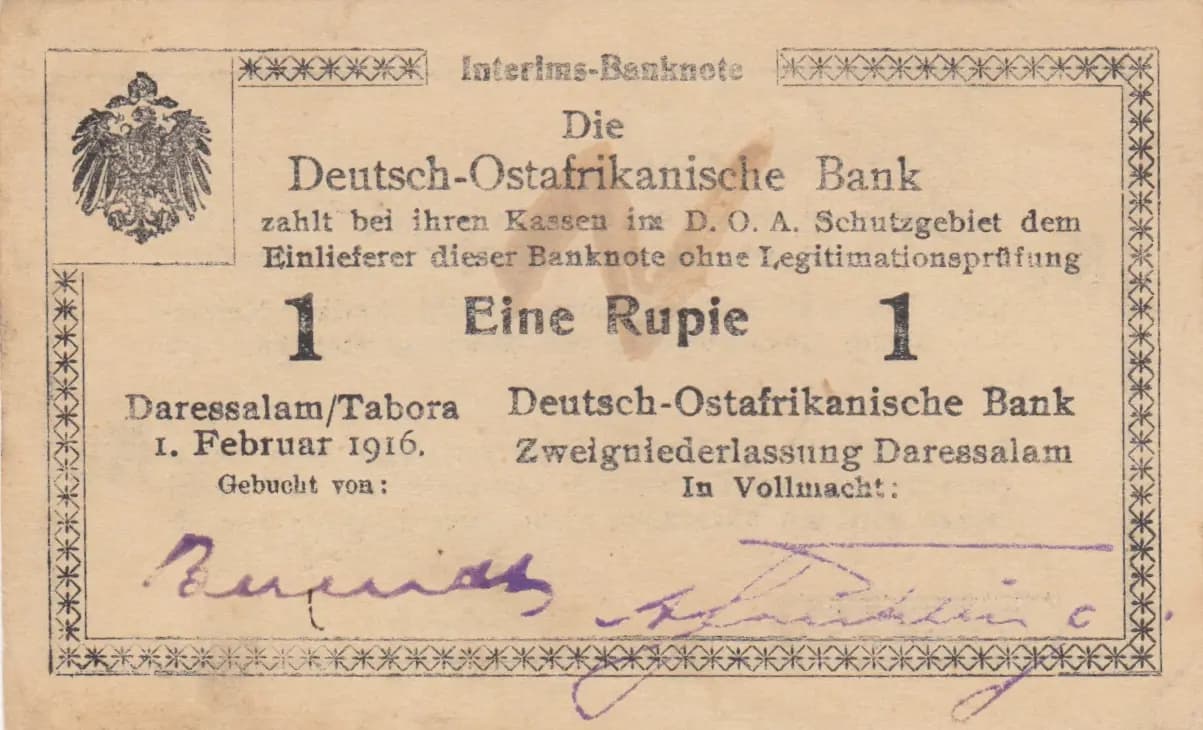
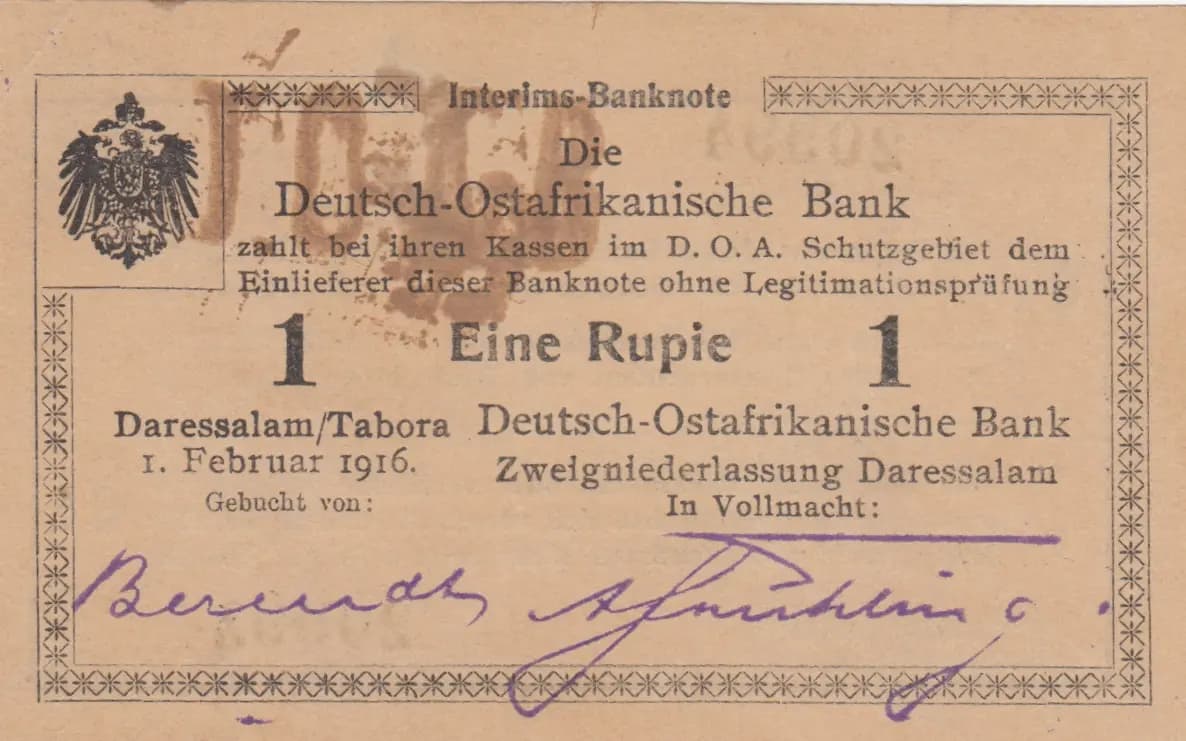
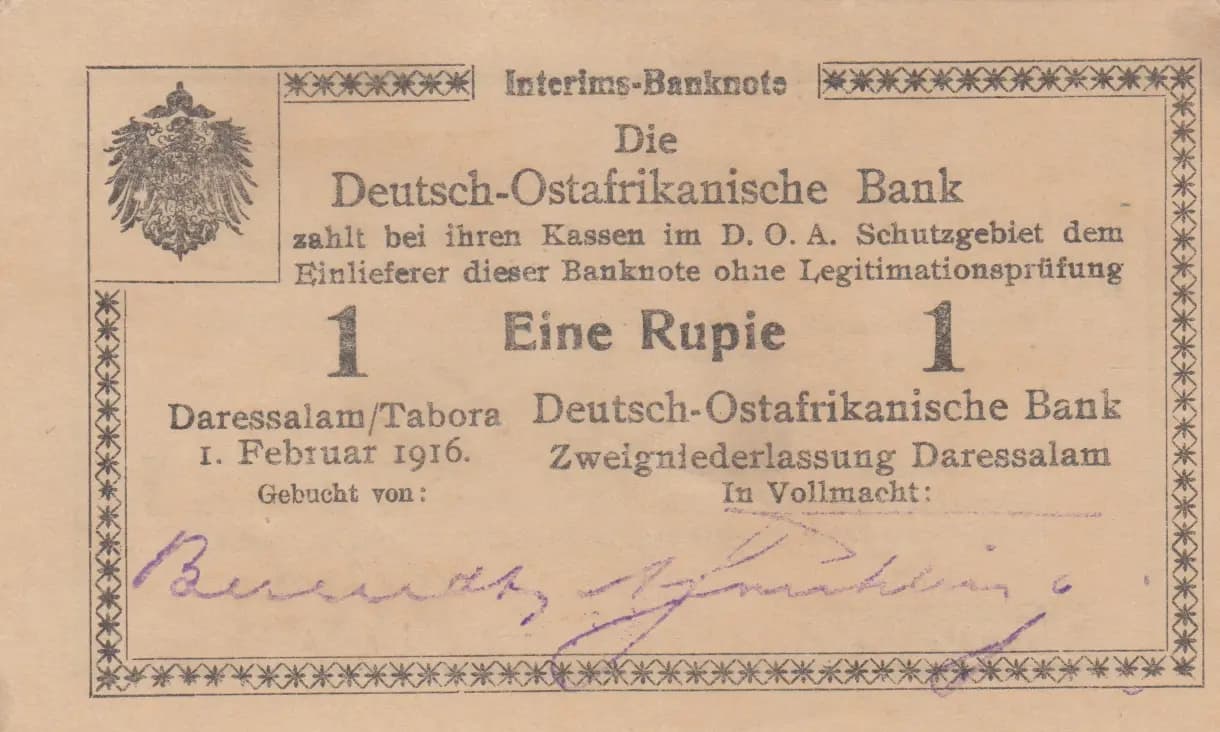
This is an exceptional example of a 1916 German East African interim banknote for 1 Rupie issued by the Deutsch-Ostafrikanische Bank, graded AU with visible historical patina. The note features the Imperial German Eagle (Reichsadler) in the upper left corner and is printed in warm sepia-brown tones on aged cream paper with ornamental geometric borders. The presence of handwritten signatures in period ink and the serial number 91227 with series designation F3 add to its appeal as a historical artifact from Germany's colonial administration in Africa during World War I.
Common. While this is a historical note from a defunct colonial administration and German East Africa, the 1 Rupie denomination from 1916 was produced in substantial quantities as it served as the primary circulating currency denomination. The Pick 19 catalog listing and AU grade availability in collector markets indicate this was not a limited issue. The survival of multiple examples in various collections and the lack of documented scarcity premiums support a common classification. Historical notes from defunct issuers command collector interest for their historical significance rather than numismatic rarity, and this note's value derives from its age, condition, and historical context rather than production scarcity.
This interim banknote was issued during Germany's final years of colonial rule in German East Africa, specifically on February 1, 1916, when the territory was already under military pressure during World War I. The Reichsadler (Imperial German Eagle) prominently displayed on the note symbolizes German sovereignty, while the dual-language text in German and Swahili reflects the colonial administrative structure serving both European settlers and local populations. The note's designation as an 'Interims-Banknote' and the statement that its value was 'fully deposited with the Imperial Government of German East Africa' indicate this was emergency currency issued during wartime economic disruption.
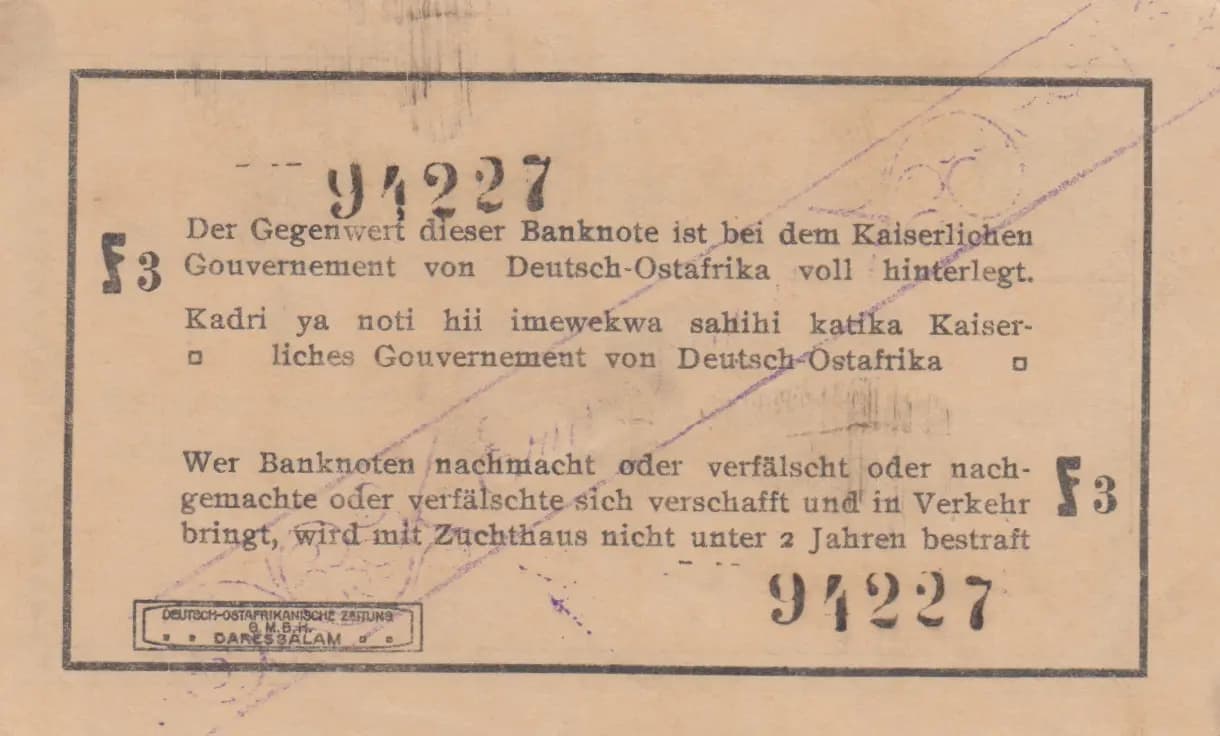
The front of this 1916 1 Rupie note features a formal layout typical of German colonial currency. The Reichsadler (Imperial German Eagle with crown and shield) dominates the upper left corner, symbolizing German imperial authority. The design employs ornamental borders with geometric patterns running along all edges, a common security and aesthetic feature of the era. The text is arranged in a hierarchical manner, with 'Interims-Banknote' and 'Eine Rupie' clearly visible, along with the issuing authority information for the Dar es Salaam branch. The reverse side contains legal text in both German and Swahili, including the critical government certification statement and counterfeiting penalties. Handwritten signatures in period ink appear on both sides, indicating individual authorization by bank officials. The color scheme of sepia-brown ink on cream paper was standard for the period and provides excellent contrast for legibility. The serial number 91227 appears twice on the reverse, with the series designation F3 indicating the printing batch or denomination classification.
{"front":{"title":"Interims-Banknote (Interim Banknote)","issuer":"Die Deutsch-Ostafrikanische Bank (The German East African Bank)","paymentClause":"zahlt bei ihren Kassen im D.O.A. Schutzgebiet dem Einlieferer dieser Banknote ohne Legitimationsprüfung (pays at its cashiers in the D.O.A. protectorate to the bearer of this banknote without verification of legitimation)","denomination":"Eine Rupie (One Rupie)","denominationNumber":"1","bankName":"Deutsch-Ostafrikanische Bank (German East African Bank)","branchInfo":"Zweigniederlassung Daressalam (Branch office Dar es Salaam)","locations":"Daressalam/Tabora (Dar es Salaam/Tabora)","issueDate":"1. Februar 1916 (1st February 1916)","issuanceAuthority":"Gebucht von: / In Vollmacht: (Issued by: / By authorization:)"},"back":{"serialNumber":"91227 (repeated at top and bottom)","seriesDesignation":"F3","governmentCertification":"Der Gegenwert dieser Banknote ist bei dem Kaiserlichen Gouvernement von Deutsch-Ostafrika voll hinterlegt. (The value of this banknote is fully deposited with the Imperial Government of German East Africa.)","swahiliTranslation":"Kadri ya noti hii imewekwa sahihi katika Kaiserliches Gouvernement von Deutsch-Ostafrika (The value of this note has been properly deposited with the Imperial Government of German East Africa)","counterfeitWarning":"Wer Banknoten nachmacht oder verfälscht oder nachgemachte oder verfälschte sich verschafft und in Verkehr bringt, wird mit Zuchthans nicht unter 2 Jahren bestraft (Whoever counterfeits or forges banknotes or procures counterfeit or forged notes and puts them into circulation shall be punished with imprisonment for not less than 2 years)","newspaperMark":"DEUTSCH-OSTAFRIKANISCHE ZEITUNG DARESSALAM (German East African Newspaper Dar es Salaam)"}}
Letterpress printing (typographic printing) on aged cream-colored paper stock. The crisp impressions of text and the consistent ink saturation visible in the sepia-brown tone indicate traditional letterpress methodology. The ornamental borders and eagle vignette were likely produced using engraved or stereotyped plates common to German security printers of the era. The handwritten signatures and possible manuscript numbering were executed with fountain pen using period-appropriate purple-blue iron gall ink. The German East African colonial currency, including this Pick 19 note, was typically printed by established Berlin security printers such as Giesecke & Devrient or similar firms, though specific printer attribution for this interim issue is not definitively marked on the note itself.
This specific example is identified as Series F3 with serial number 91227. The series designation F3 likely indicates the printing batch or denomination series within the 1916 interim issue. The handwritten signatures visible on both front and back represent individual authorization marks by bank officials (the legend 'Gebucht von: / In Vollmacht:' indicates issuing official and authorized representative). Varieties of this Pick 19 note may exist with different series letters (F1, F2, F4, etc.) and varying signature combinations, as was common with interim currency issued during wartime when multiple officials might have signed notes. The specific combination of Series F3 with signatures and serial 91227 constitutes the precise identification of this individual note, though comparative rarity between series letters for this issue is not well documented in standard catalogs.