50 nouveaux francs 1963 specimen
About This Note
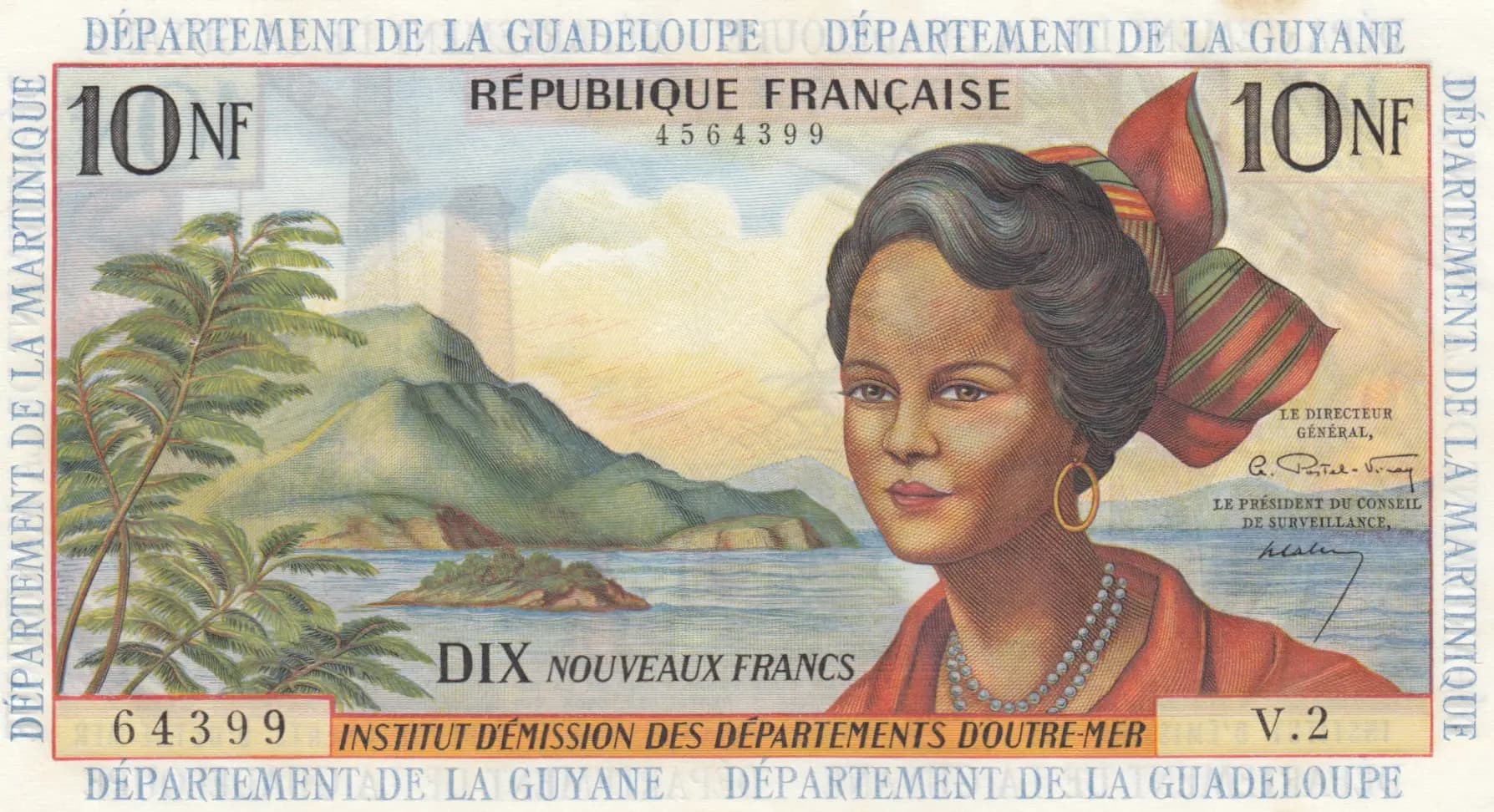
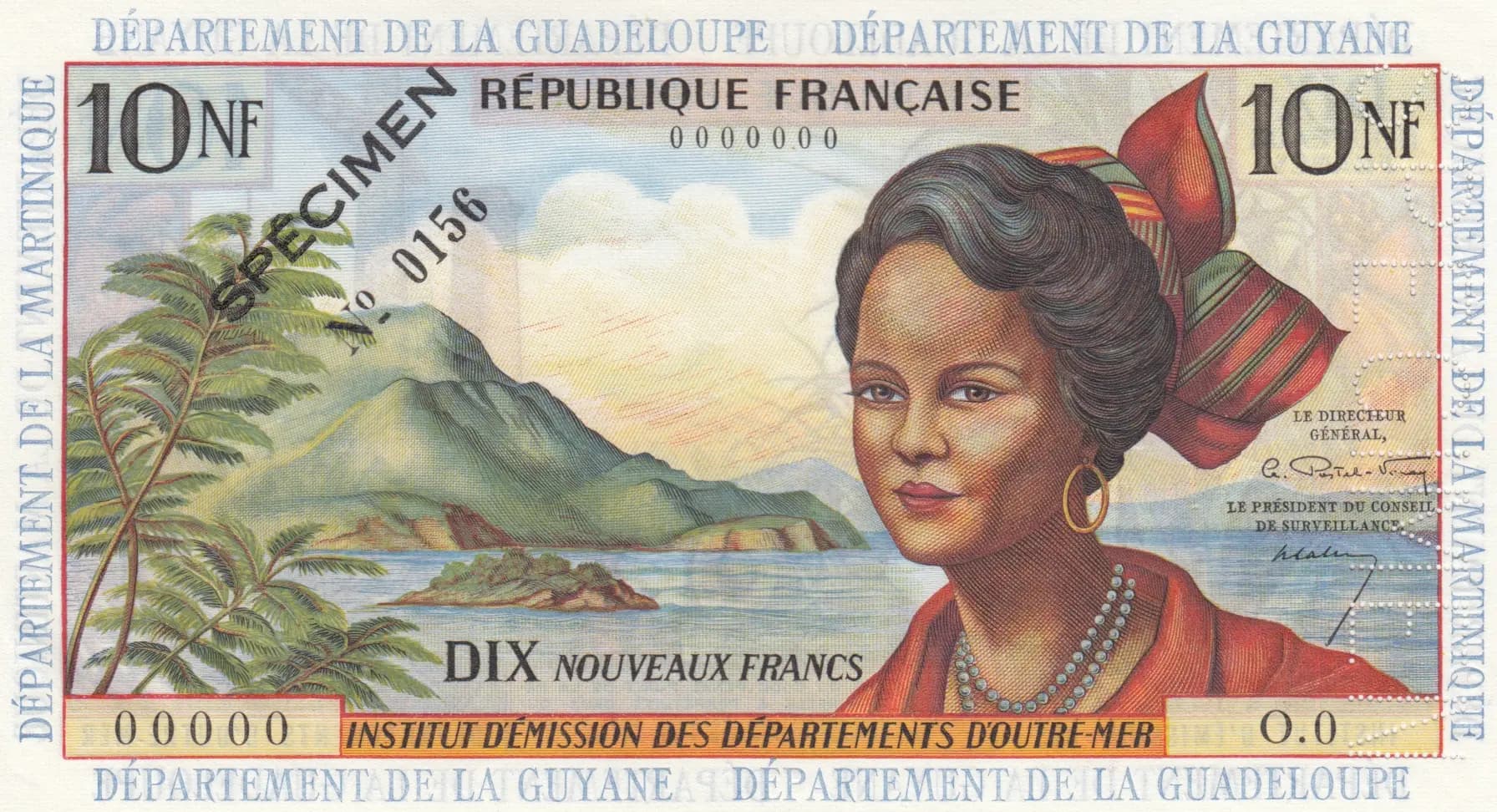
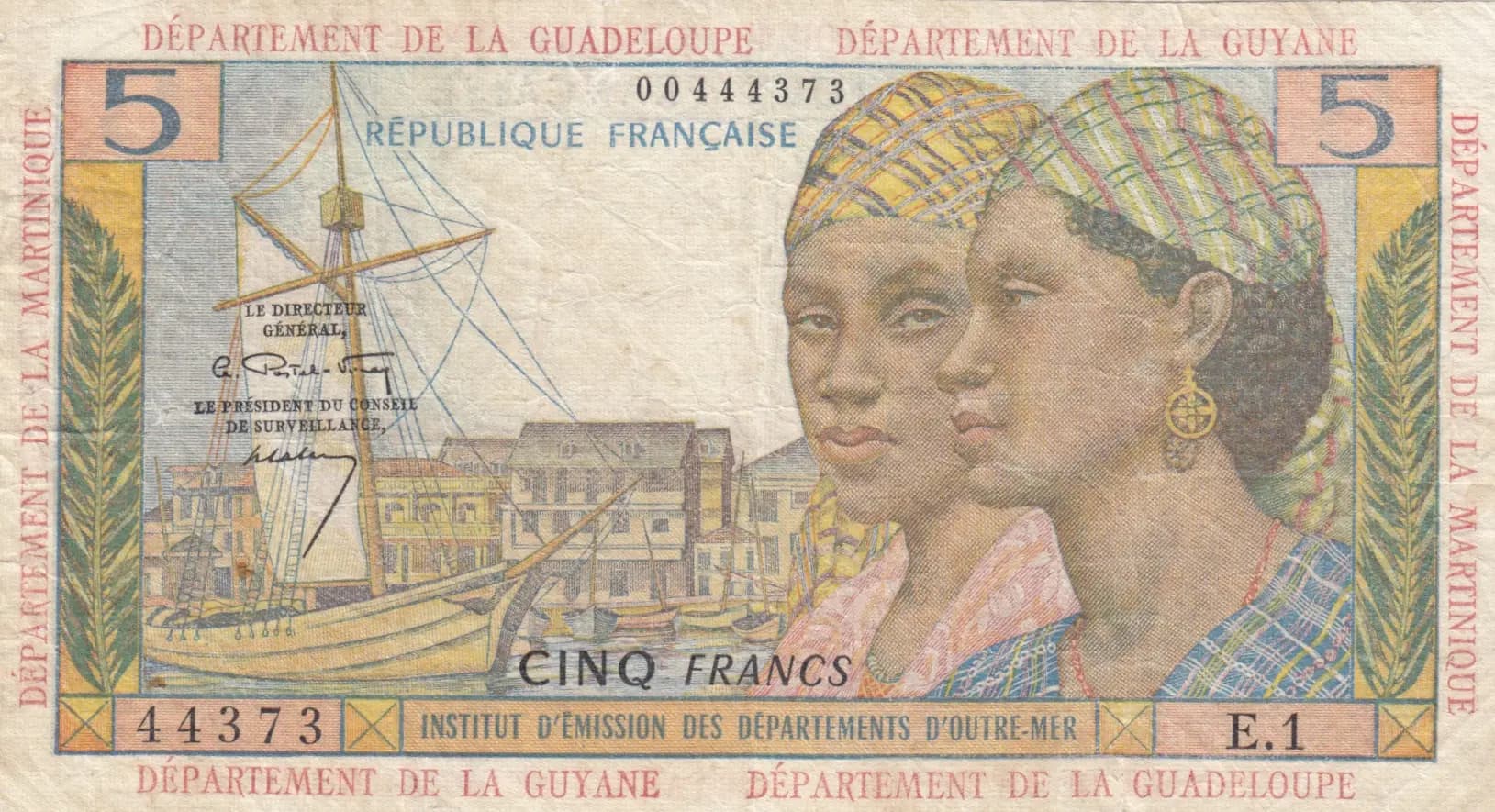
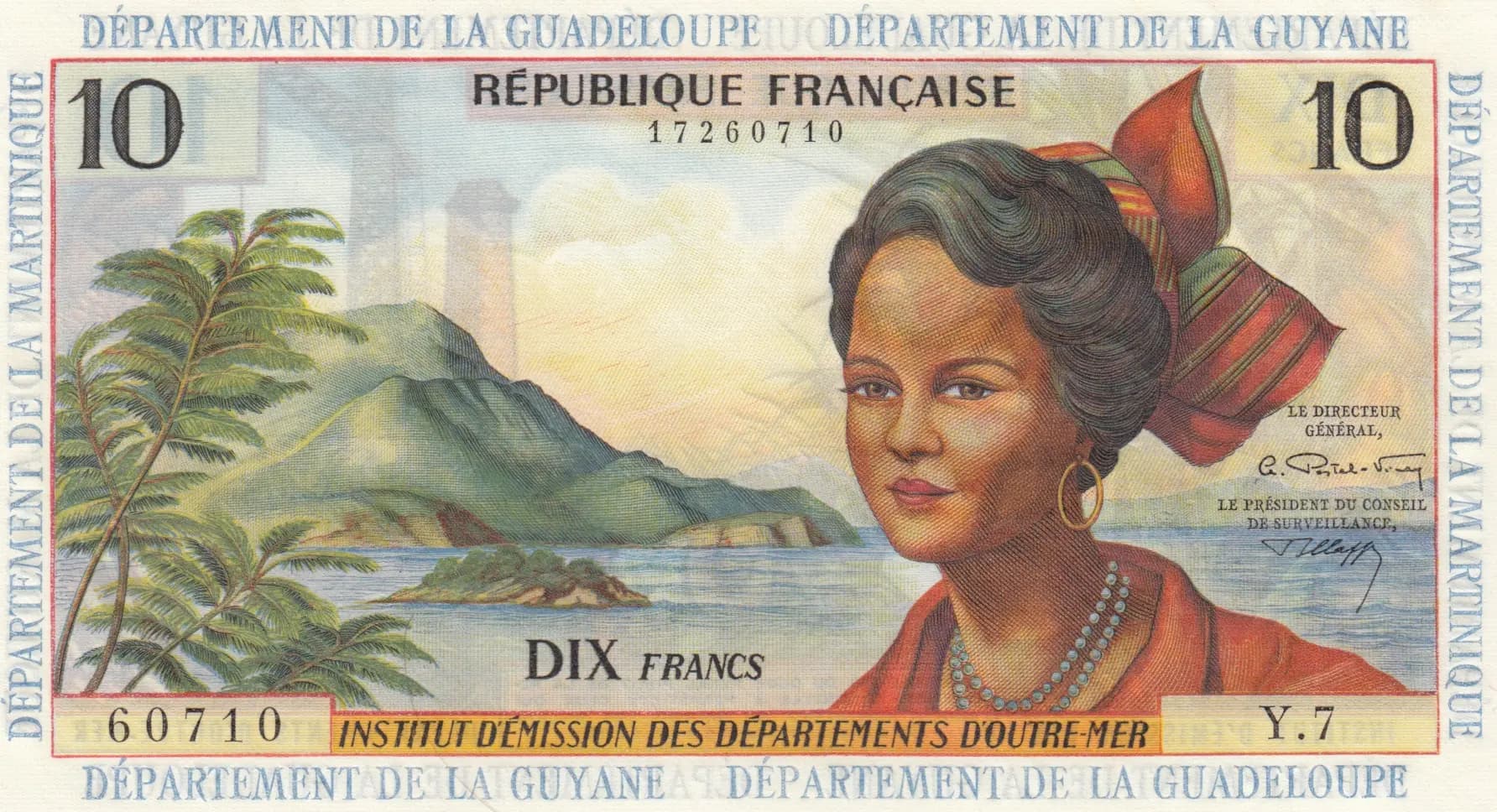
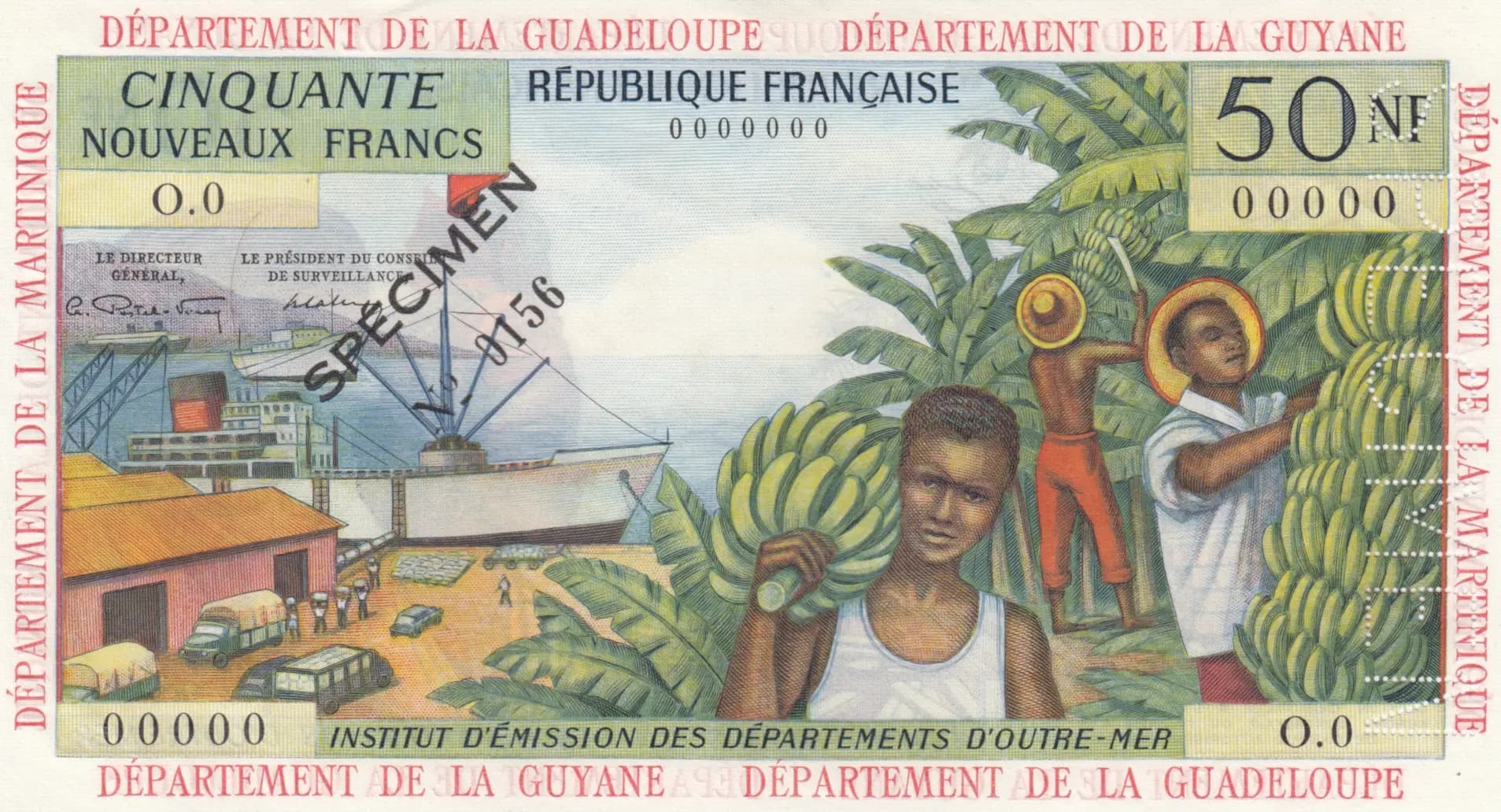
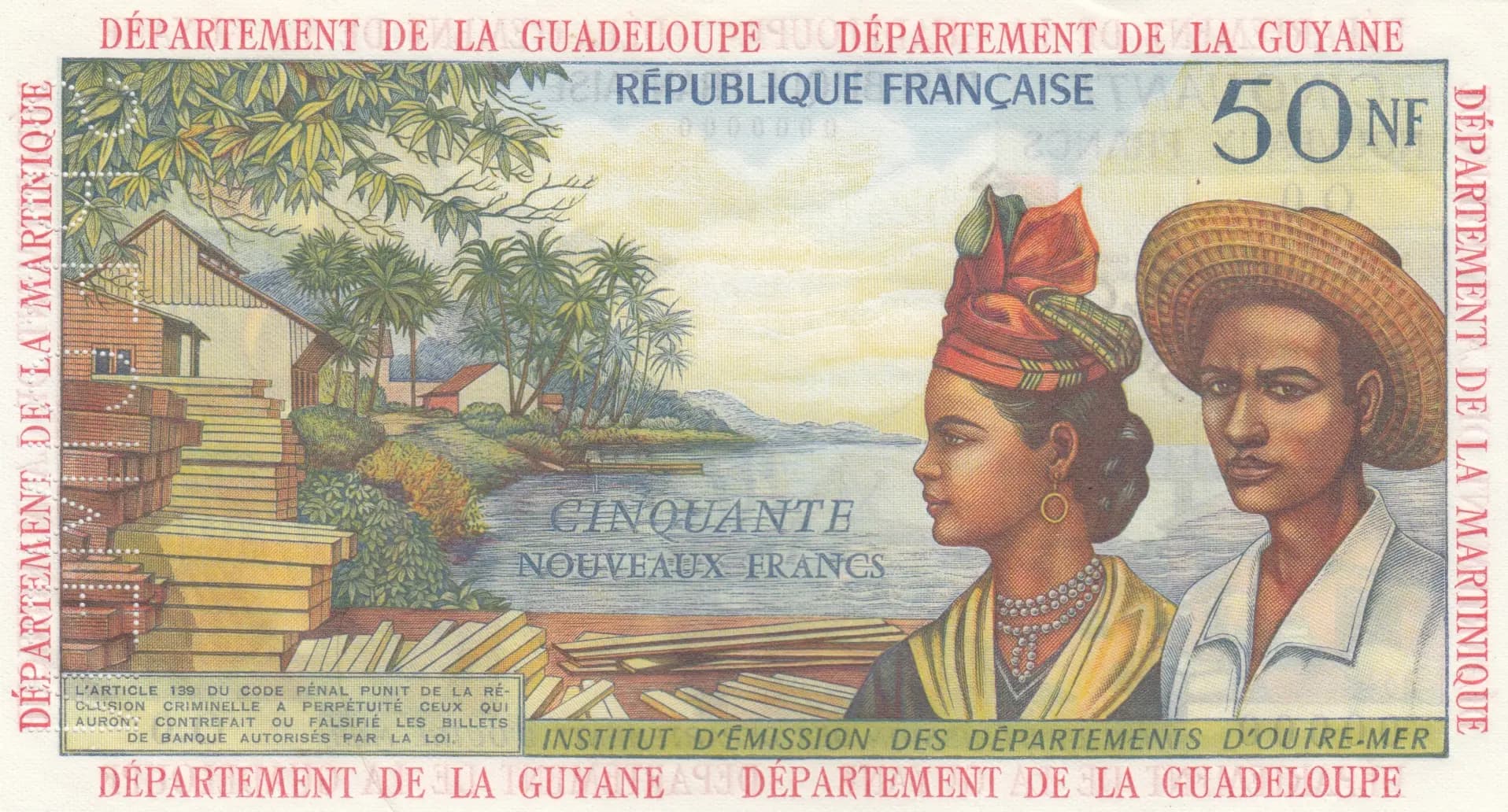
This is a specimen-grade 50 Nouveaux Francs banknote from the French Antilles (1963, Pick P-6s), issued by the Institut d'Emission des Departements d'Outre-Mer. The note features vibrant multicolor engraving depicting tropical Caribbean economic activity on the obverse—dock workers harvesting bananas with a cargo ship—and colonial-era Caribbean life on the reverse with two female figures in traditional dress and a colonial brick house surrounded by palms. In uncirculated condition as a specimen note, it displays crisp printing with no wear, making it a desirable example of mid-20th century French overseas currency design.
Common. As a specimen note from a straightforward 1963 issue with multiple cataloged variants (P-6a, P-6pp1, P-6s), this denomination and type was produced in substantial quantities for circulation and institutional distribution across the three French Caribbean departments. Specimen notes, while technically non-circulating, were issued in meaningful numbers for official, educational, and banking purposes, making them relatively accessible to collectors. The uncirculated condition is typical for specimen notes by definition.
Issued in 1963, this banknote reflects the economic importance of the French Caribbean territories (Guadeloupe, Martinique, and French Guiana) during the post-war era. The imagery emphasizes the region's primary industries—banana export and plantation agriculture—depicted through the dock scene with modern cargo vessels, while the reverse imagery celebrates the cultural heritage and colonial architecture of these departments. The note's design represents France's integration of these overseas territories into its monetary system during a period before widespread decolonization and the eventual currency reforms of the 1970s.
The obverse depicts an economically-themed scene of Caribbean dock workers engaged in banana harvesting and export operations. Three male laborers in white and colored work clothing are shown handling large bunches of bananas in the foreground and mid-ground, with a modern cargo vessel complete with loading cranes positioned in the background left. The dock facility includes red-roofed administrative buildings, loading vehicles, and cargo containers, surrounded by tropical banana plantations. The reverse features two women representing Caribbean cultural identity: one shown in profile wearing a red head wrap and yellow striped garment with pearl jewelry, the other facing forward in a tan straw hat and white collared shirt, also adorned with pearl necklace. These figures are positioned beside a colonial-era brick house with distinctive yellow wooden steps and railings, overlooking a tropical landscape of palm trees with water and mountainous terrain visible in the distance. Both sides employ vibrant multicolor printing in greens, yellows, blues, browns, oranges, and reds, creating a comprehensive portrait of French Caribbean economic and cultural life.
FRONT SIDE: 'CINQUANTE NOUVEAUX FRANCS' (Fifty New Francs), 'RÉPUBLIQUE FRANÇAISE' (French Republic), '50 NF' (denomination), 'DÉPARTEMENT DE LA GUADELOUPE' (Department of Guadeloupe), 'DÉPARTEMENT DE LA GUYANE' (Department of Guyana), 'DÉPARTEMENT DE LA MARTINIQUE' (Department of Martinique), 'LE DIRECTEUR GÉNÉRAL' (The General Director), 'LE PRÉSIDENT DU CONSEIL DE SURVEILLANCE' (The President of the Supervisory Board), 'INSTITUT D'ÉMISSION DES DÉPARTEMENTS D'OUTRE-MER' (Issuing Institute of the Overseas Departments), 'SPECIMEN' (specimen mark), with serial number placeholders '0000000' and '00000'. BACK SIDE: 'CINQUANTE NOUVEAUX FRANCS' (Fifty New Francs), 'RÉPUBLIQUE FRANÇAISE' (French Republic), '50 NF' (denomination), references to the three departments, 'INSTITUT D'ÉMISSION DES DÉPARTEMENTS D'OUTRE-MER' (Issuing Institute of the Overseas Departments), and the security text: 'L'ARTICLE 139 DU CODE PÉNAL PUNIT DE LA RÉCLUSION CRIMINELLE À PERPÉTUITÉ CEUX QUI AURONT CONTREFAIT OU FALSIFIÉ LES BILLETS DE BANQUE AUTORISÉS PAR LA LOI' (Article 139 of the Penal Code punishes with life imprisonment those who counterfeit or falsify banknotes authorized by law).
The note employs traditional intaglio engraving (steel plate engraving) combined with multicolor lithography, evidenced by the fine line work, intricate detail in the portraiture and architectural elements, complex color gradations, and the layered multicolor printing visible throughout both sides. This was the standard security printing technique for French banknotes of this era. The firm responsible for French overseas currency printing during this period was typically Banque de France's contracted security printers, likely including Imprimerie Nationale or similar specialized firms, though the specific printer attribution is not documented in the catalog data provided.
This is the specimen variety (P-6s) of the Pick catalog, distinguished by the red diagonal 'SPECIMEN' overprint across the obverse and the serial number areas marked with zeros (0000000 and 00000) rather than authentic numbered serials. Per the PMG population report, three variants exist for this base Pick number: P-6a (standard circulating issue), P-6pp1 (likely proof or presentation specimen), and P-6s (specimen). The specimen designation, combined with the UNC condition grade and the null serial numbers, confirms this as an official specimen note intended for distribution to banks and official channels rather than for circulation.