10 francs 1964
About This Note
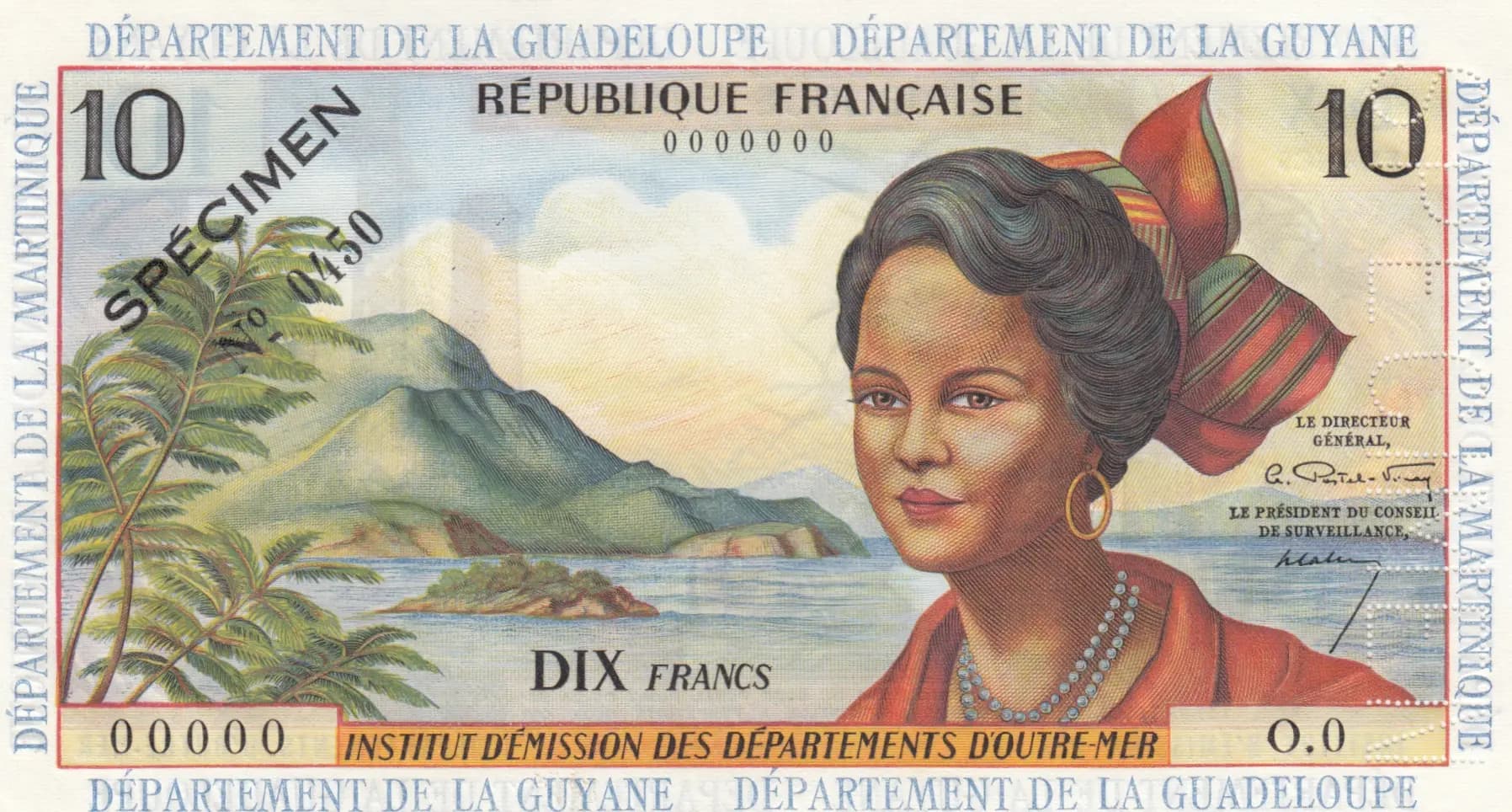
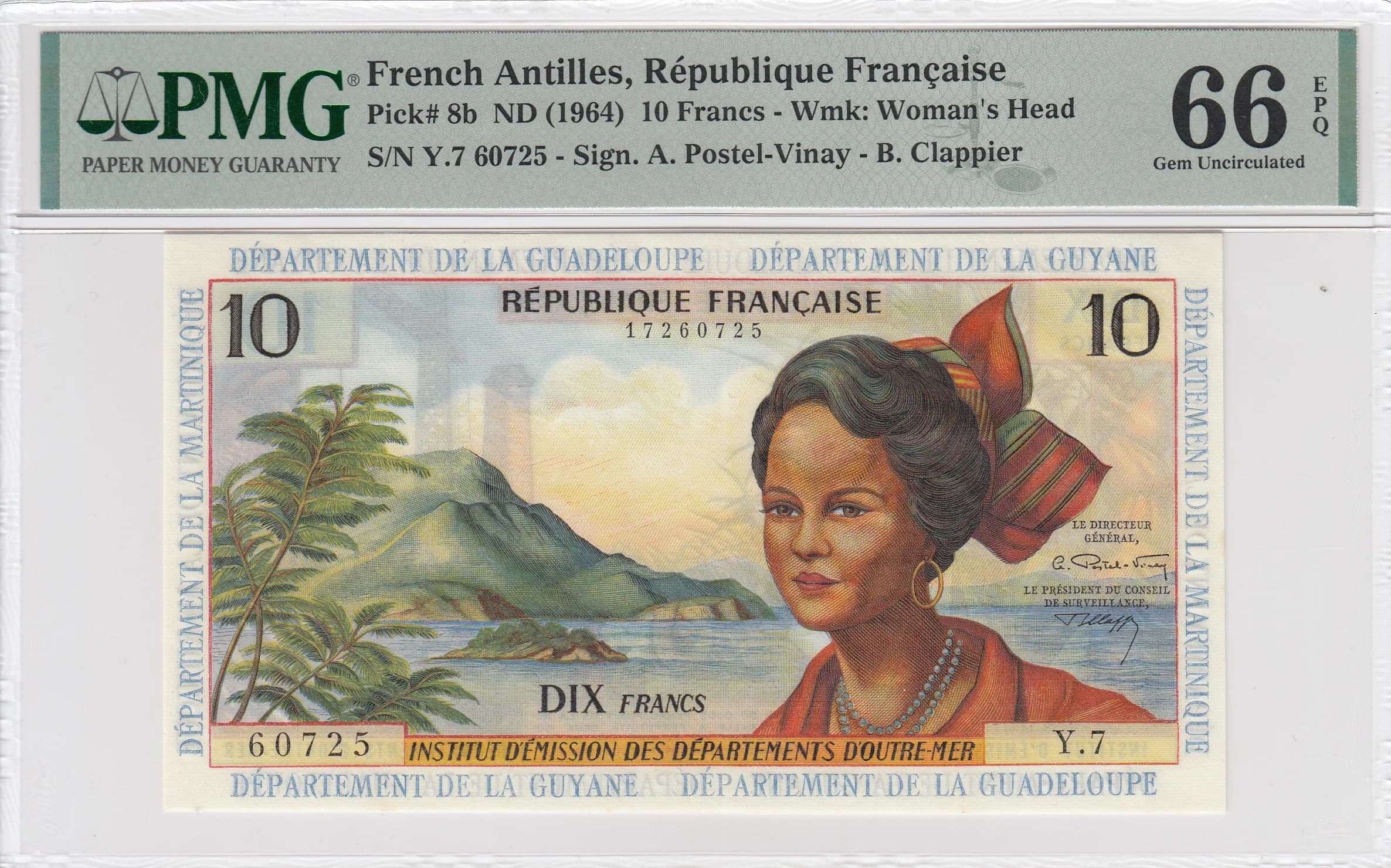
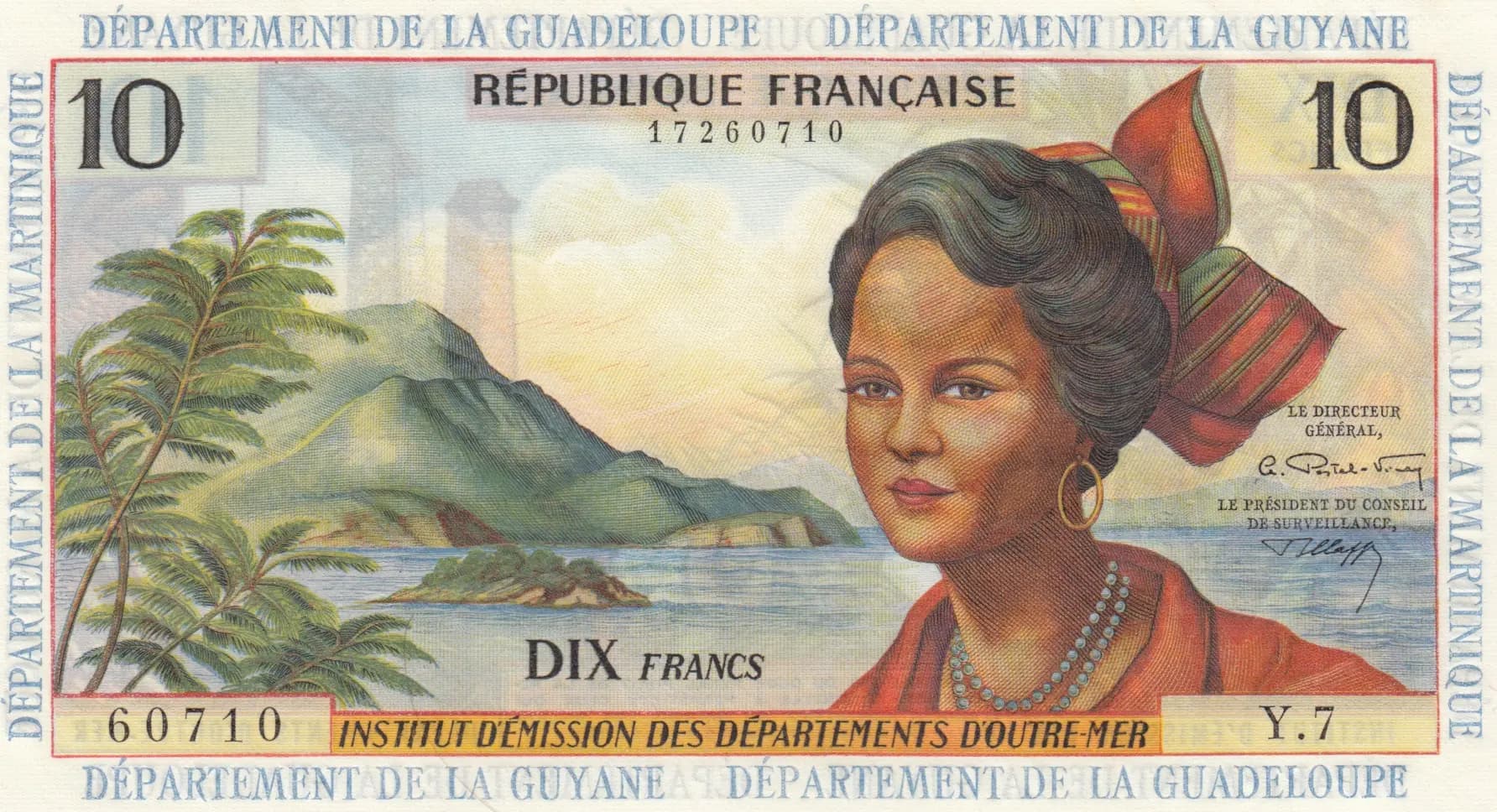
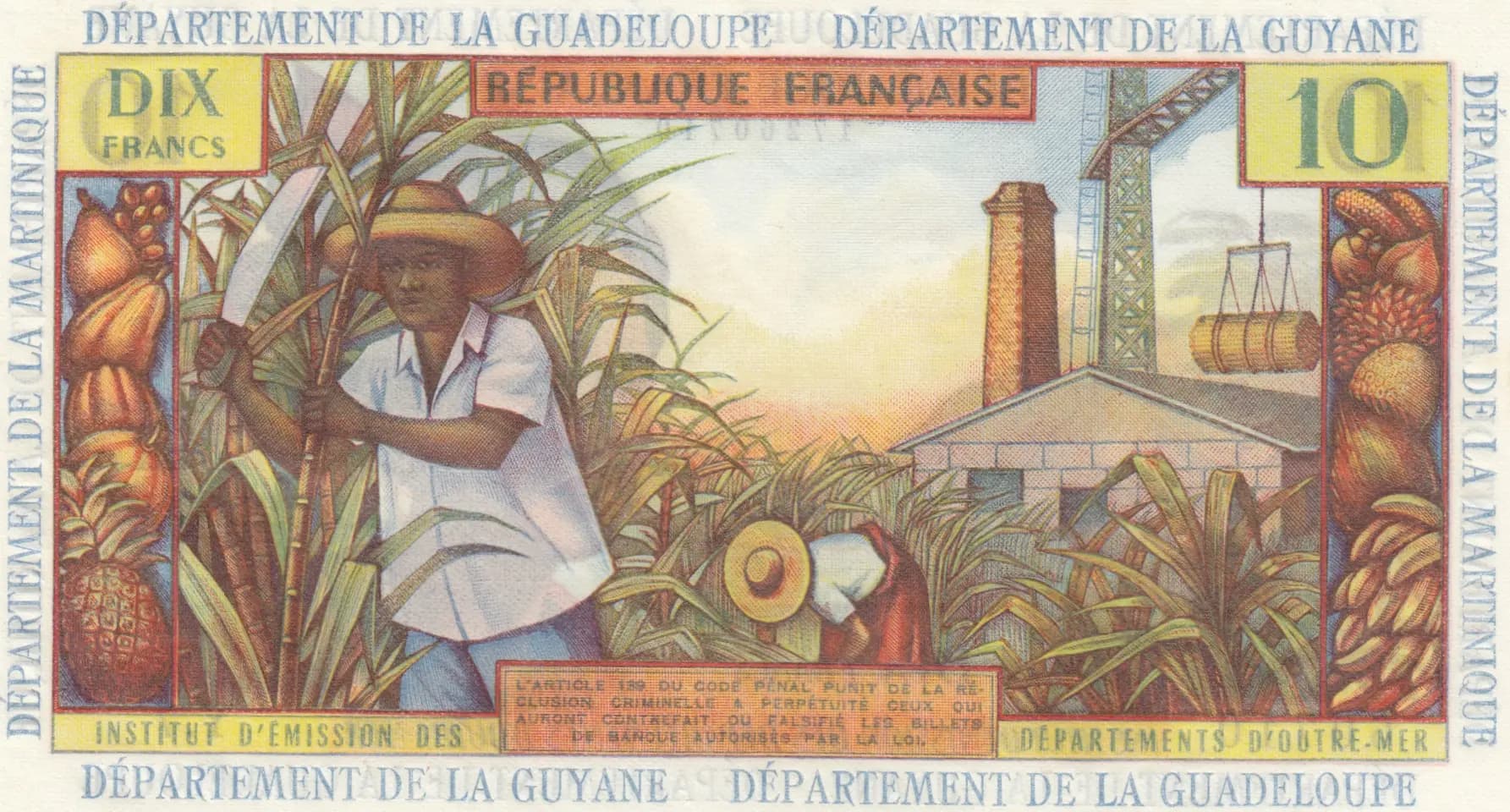
This is a stunning uncirculated example of the 1964 French Antilles 10 francs (Pick P-8b), issued by the Institut d'Emission des Departements d'Outre-Mer. The note features exquisite engraving with vibrant colors—a portrait of a Caribbean woman in traditional dress on the obverse and an agricultural/industrial scene depicting the region's economic foundation on the reverse. In UNC condition with no visible wear, creases, or stains, this note represents a well-preserved example of mid-20th century French colonial currency.
Common. The 10 francs denomination from the Institut d'Emission des Departements d'Outre-Mer was issued in substantial quantities for circulation across Guadeloupe and French Guiana throughout the 1960s. While earlier varieties (P-8a) may show slightly different signatures or watermark characteristics, the P-8b variant represents a standard printing from this series and was produced in quantities consistent with regular monetary circulation. The UNC grade does not significantly elevate rarity, as many examples have survived in excellent condition. This note would be considered accessible to most collectors of French colonial currency.
This banknote was issued in 1964 during the final decades of French colonial administration in the Caribbean, specifically for circulation in Guadeloupe and French Guiana. The imagery directly reflects the economic and cultural identity of these overseas departments: the portrait celebrates Caribbean heritage through the woman's traditional red headwrap and pearl adornments, while the reverse depicts the agricultural and industrial sectors—sugar cane cultivation and factory processing—that formed the economic backbone of these islands. The note's design represents France's effort to create distinct currency for its overseas territories while maintaining metropolitan French authority and aesthetic standards.
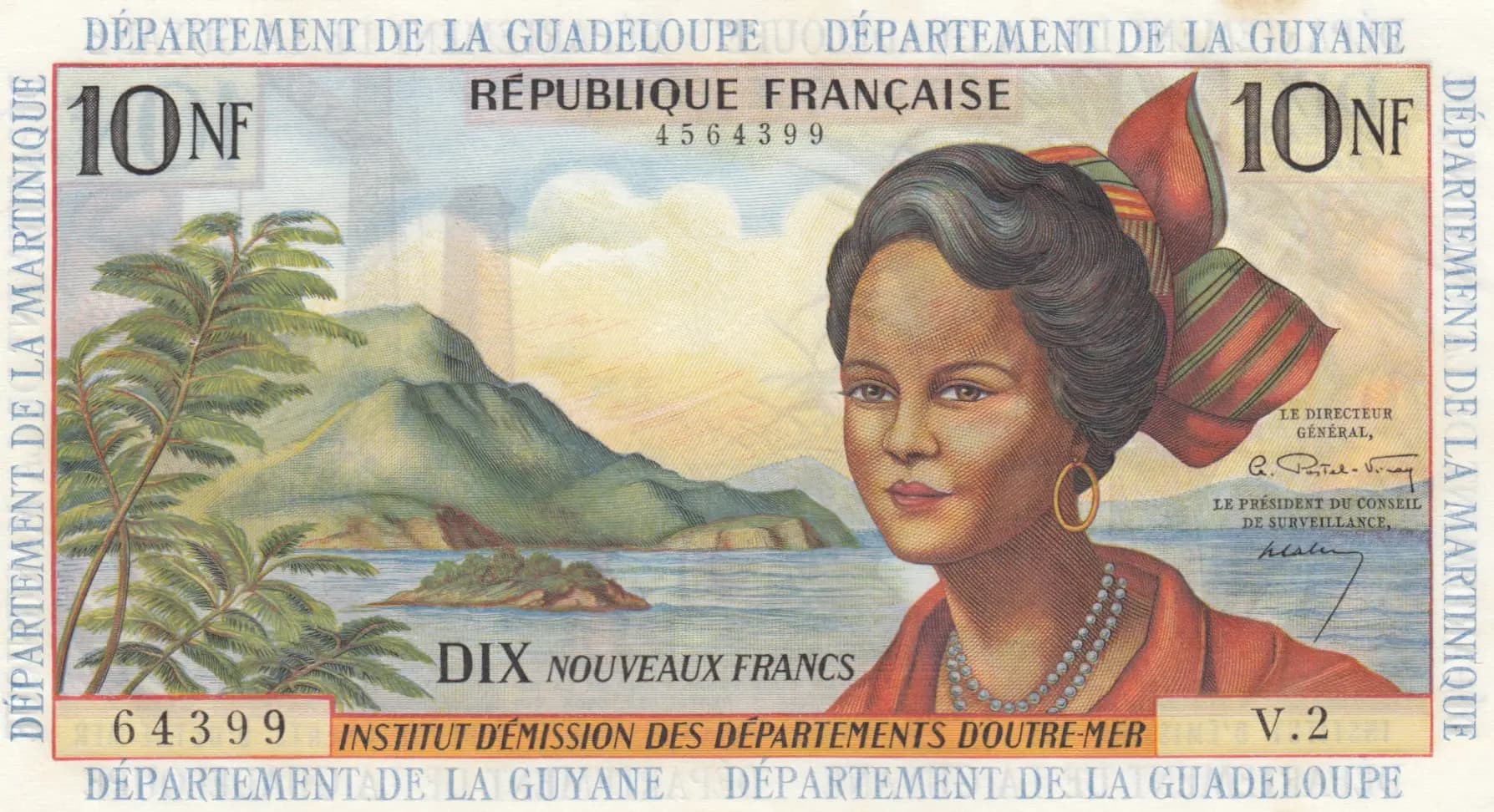
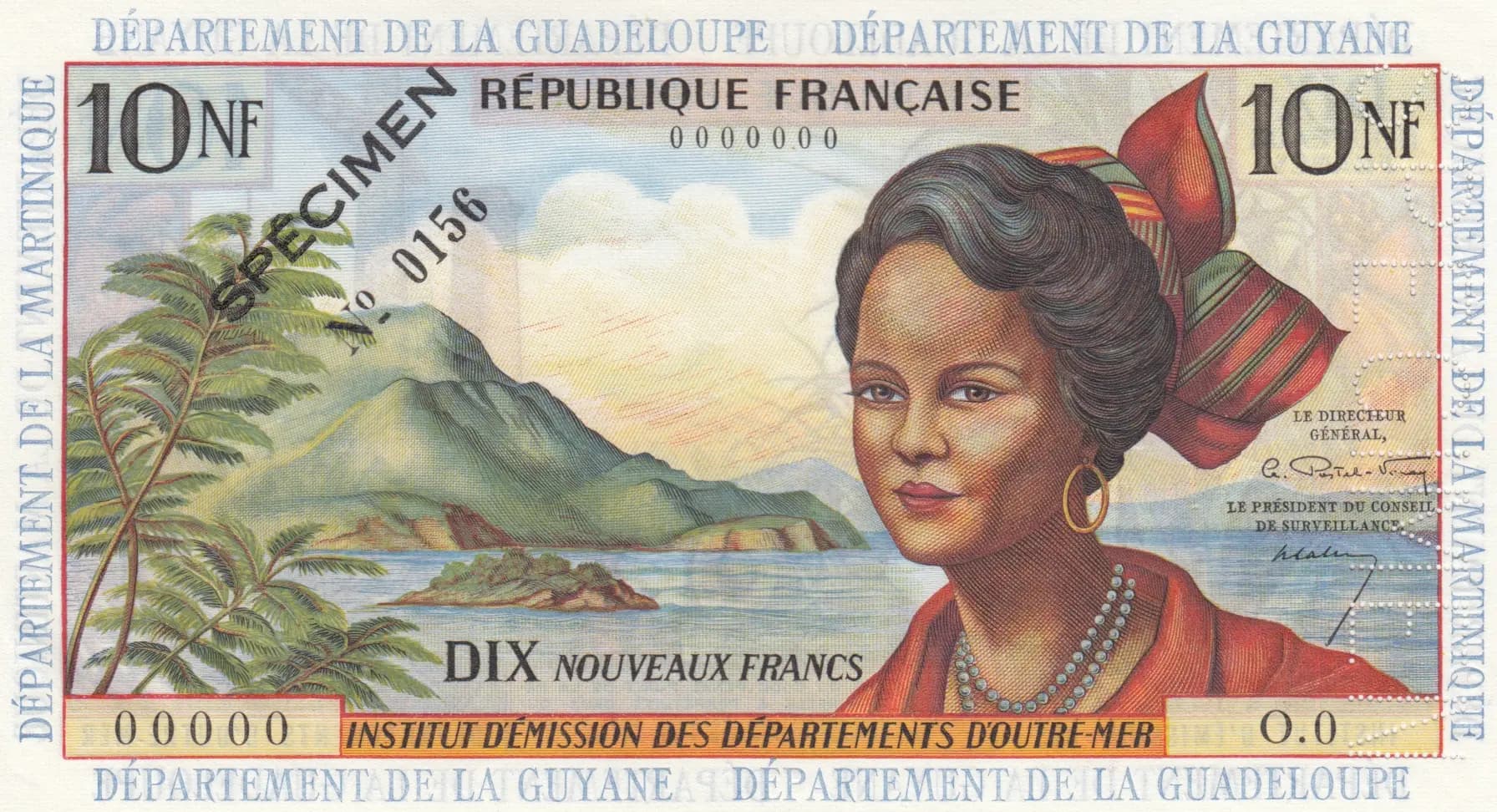
The obverse presents a carefully rendered portrait of a Caribbean woman in right profile, adorned with a red headwrap (traditional madras), pearl necklace, and gold hoop earrings, wearing an orange-red garment. This portrait celebrates the cultural identity of the Guadeloupean and Guianan populations. To the left extends a tropical landscape vignette depicting mountains, a palm tree, coastal waters, and a small island—representing the natural geography of the overseas departments. The reverse features a dynamic agricultural and industrial scene depicting the economic realities of the colonies: a man in a wide-brimmed hat and white shirt labors among tall sugar cane stalks, with industrial processing facilities including a prominent factory chimney visible in the background. Cacao pods frame both the left and right borders, acknowledging the diversity of tropical agricultural exports. Fine decorative guilloche borders in red frame both sides, while the denomination appears as both numerals ('10') and text ('DIX FRANCS'). The note employs a warm color palette of beige, green, blue, red, orange, and gold across both sides.
FRONT SIDE: 'DÉPARTEMENT DE LA GUADELOUPE' (Department of Guadeloupe) | 'DÉPARTEMENT DE LA GUYANE' (Department of Guyana) | 'RÉPUBLIQUE FRANÇAISE' (French Republic) | 'DIX FRANCS' (Ten Francs) | 'INSTITUT D'EMISSION DES DÉPARTEMENTS D'OUTRE-MER' (Issuing Institute of Overseas Departments) | 'LE DIRECTEUR GÉNÉRAL' (The General Director) | 'LE PRÉSIDENT DU CONSEIL DE SURVEILLANCE' (The President of the Supervisory Board) | Reference codes: Y.7, Serial number 17260710. BACK SIDE: 'DÉPARTEMENT DE LA GUADELOUPE' (Department of Guadeloupe) | 'DÉPARTEMENT DE LA GUYANE' (Department of Guyana) | 'DIX FRANCS' (Ten Francs) | 'RÉPUBLIQUE FRANÇAISE' (French Republic) | 'INSTITUT D'EMISSION DES DÉPARTEMENTS D'OUTRE-MER' (Issuing Institute of Overseas Departments) | Legal warning: 'L'ARTICLE 6 DU CODE PÉNAL PUNIT DE LA RÉCLUSION CRIMINELLE À PERPÉTUITÉ CELUI QUI CONTREFAIT OU ALTÈRE LES BILLETS OU LES PIÈCES AYANT COURS LÉGAL' (Article 6 of the Penal Code punishes with life imprisonment anyone who counterfeits or alters banknotes or coins that are legal tender).
This note was produced using intaglio (engraved steel plate) printing, evidenced by the fine engraving details, sharp line work, and three-dimensional appearance visible in the portrait and landscape vignettes. The precise guilloche patterns in the decorative borders and the detailed rendering of both the woman's features and the agricultural/industrial scene are characteristic of high-security intaglio production. The note was printed by the Banque de France's security printer (likely the Imprimerie Nationale or an affiliated security printing facility), which produced French colonial currency during this period.
This note is identified as Pick P-8b, which differs from P-8a primarily in signature varieties and possibly minor design details reflecting changes in the issuing authority's leadership. The visible signatures 'LE DIRECTEUR GÉNÉRAL' and 'LE PRÉSIDENT DU CONSEIL DE SURVEILLANCE' on the obverse correspond to officials serving during the 1964 issuance period. The reference code 'Y.7' visible on the front may indicate a specific printing batch or signature variety. The watermark features a woman's head, consistent with P-8a, P-8as, and P-8b variants. Serial number 17260710 suggests this note is from a mid-range production batch. Collectors should note that PMG has catalogued four variants (P-8a, P-8as, P-8b, P-8s) for this base Pick number, with subtle differences that may be identifiable through careful examination of signature combinations and printing characteristics.