10 francs 1964 specimen
About This Note
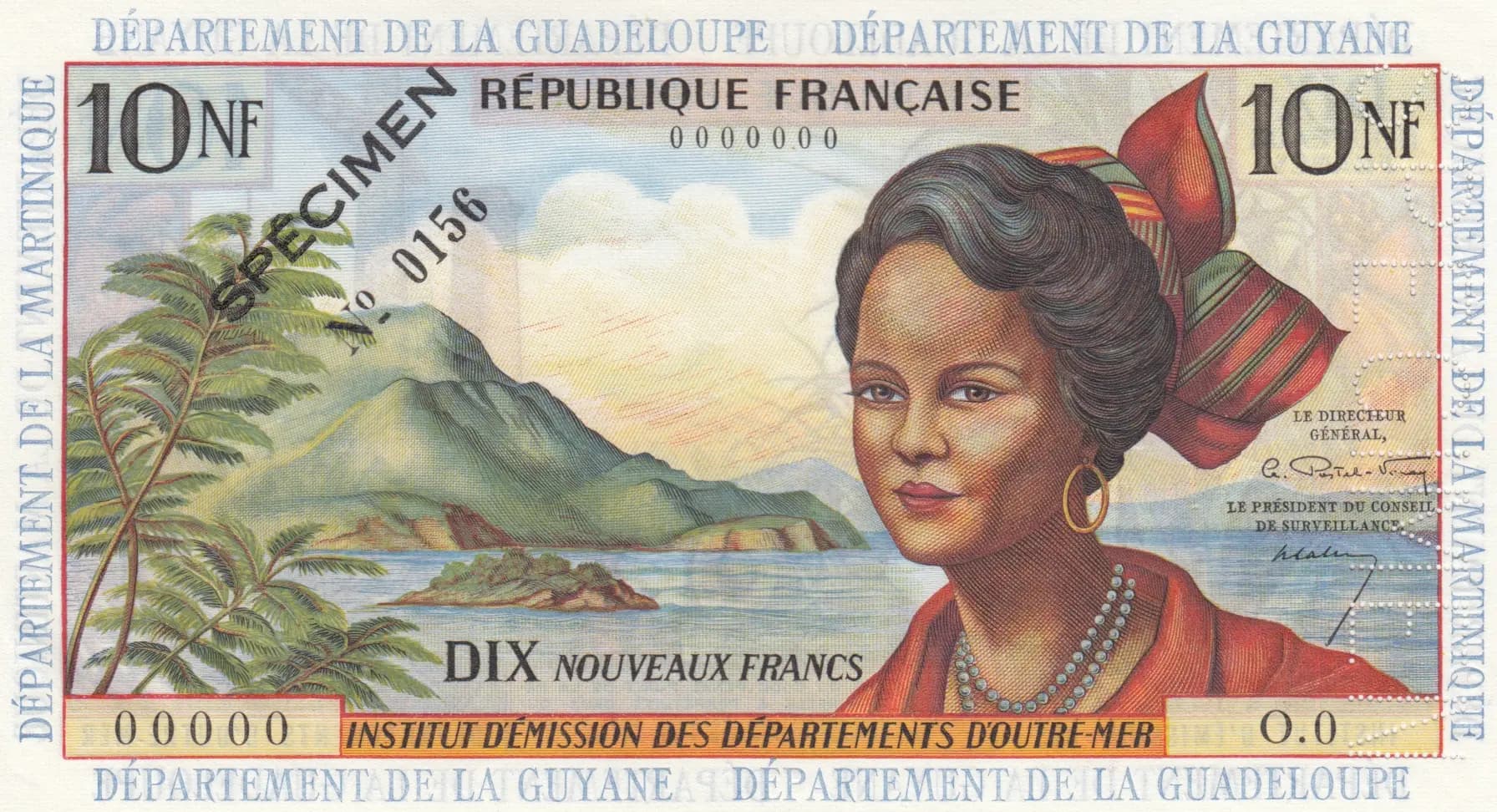
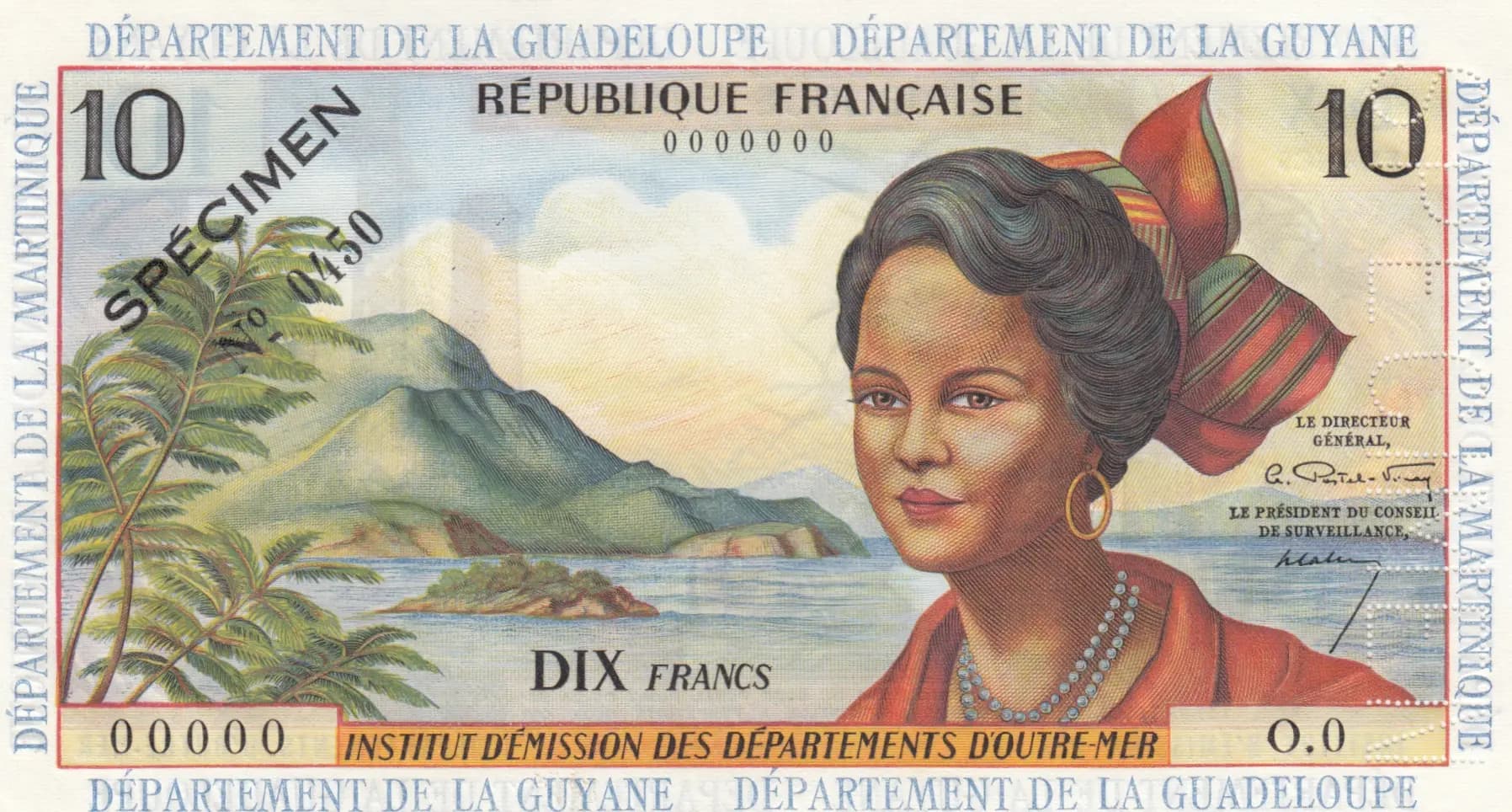
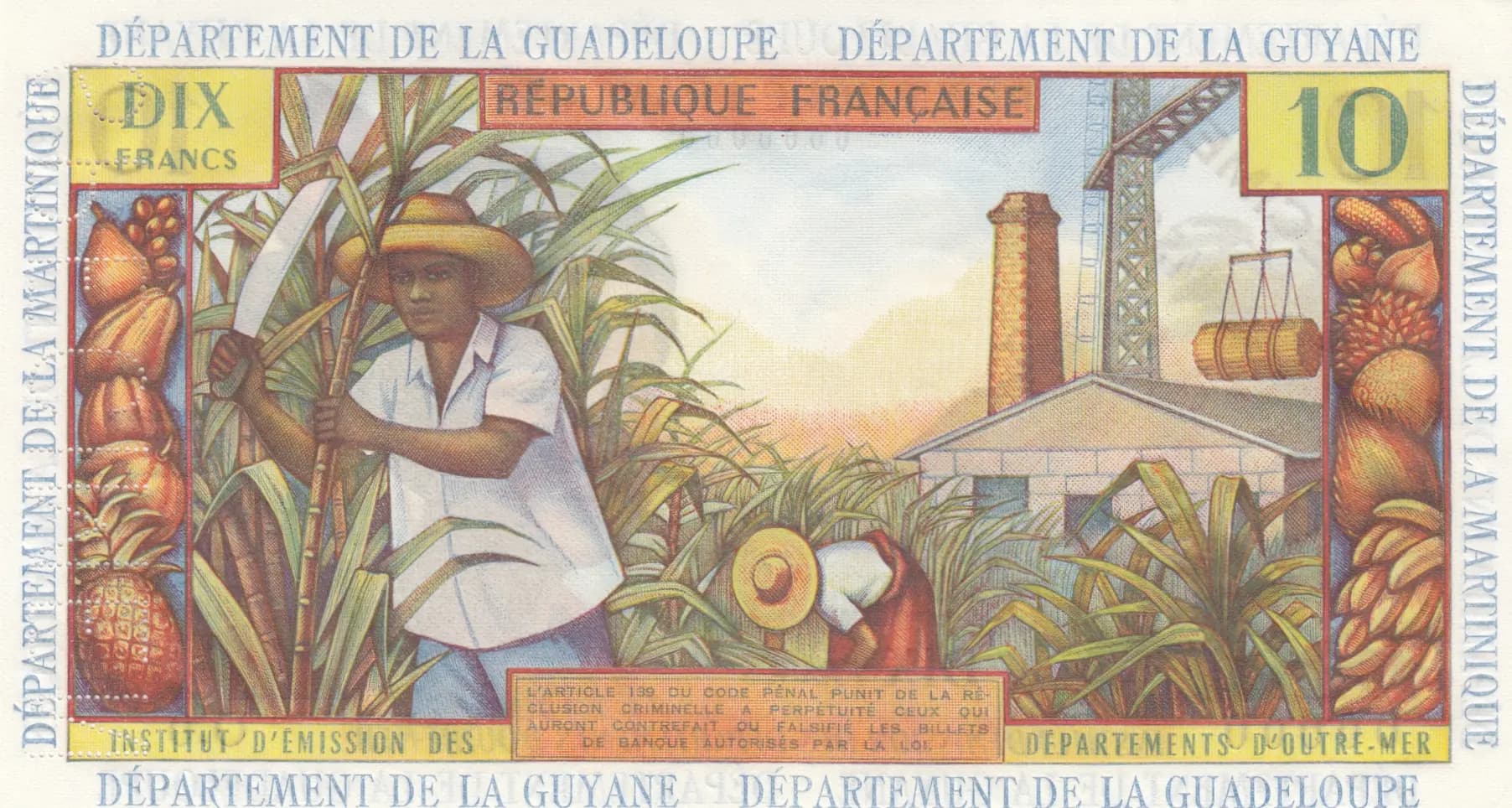
This is an exceptional 1964 specimen note from the Institut d'Emission des Departements d'Outre-Mer, representing the French Antilles currency during the height of the overseas department system. The note presents in pristine uncirculated condition with vibrant color saturation across both obverse and reverse, featuring expertly engraved portraits and detailed tropical/agricultural imagery that exemplify mid-20th century French colonial currency design. The specimen overprint and zero serial numbers confirm this is a presentation or archival piece rather than circulated currency, making it a significant example of French Antilles numismatic history.
Common. The 10 Francs French Antilles notes from the 1964 series were issued in substantial quantities across the three overseas departments (Guadeloupe, Martinique, and French Guyana). While specimen notes are less frequently encountered than circulated examples, this denomination and issuer represent standard currency production. The specimen designation and zero serial numbers indicate this was a presentation or archival piece, but specimens from major currency issues are not inherently rare. No evidence suggests limited print runs, premature withdrawal, or significant collector premium based on standard numismatic market data for French Antilles currency.
Issued in 1964, this banknote reflects France's continued monetary presence in its overseas territories (Guadeloupe, Martinique, and French Guyana) during the post-war period when these regions remained integral to the French economic sphere. The reverse depicts sugar cane harvesting and industrial processing with cacao pods in the decorative border, accurately representing the economic foundation of these Caribbean and South American territories—sugar, cacao, and agricultural exports that sustained colonial and post-colonial economies. The formal French Republic inscriptions and references to penal code protections against counterfeiting emphasize metropolitan French authority over these territorial currencies.
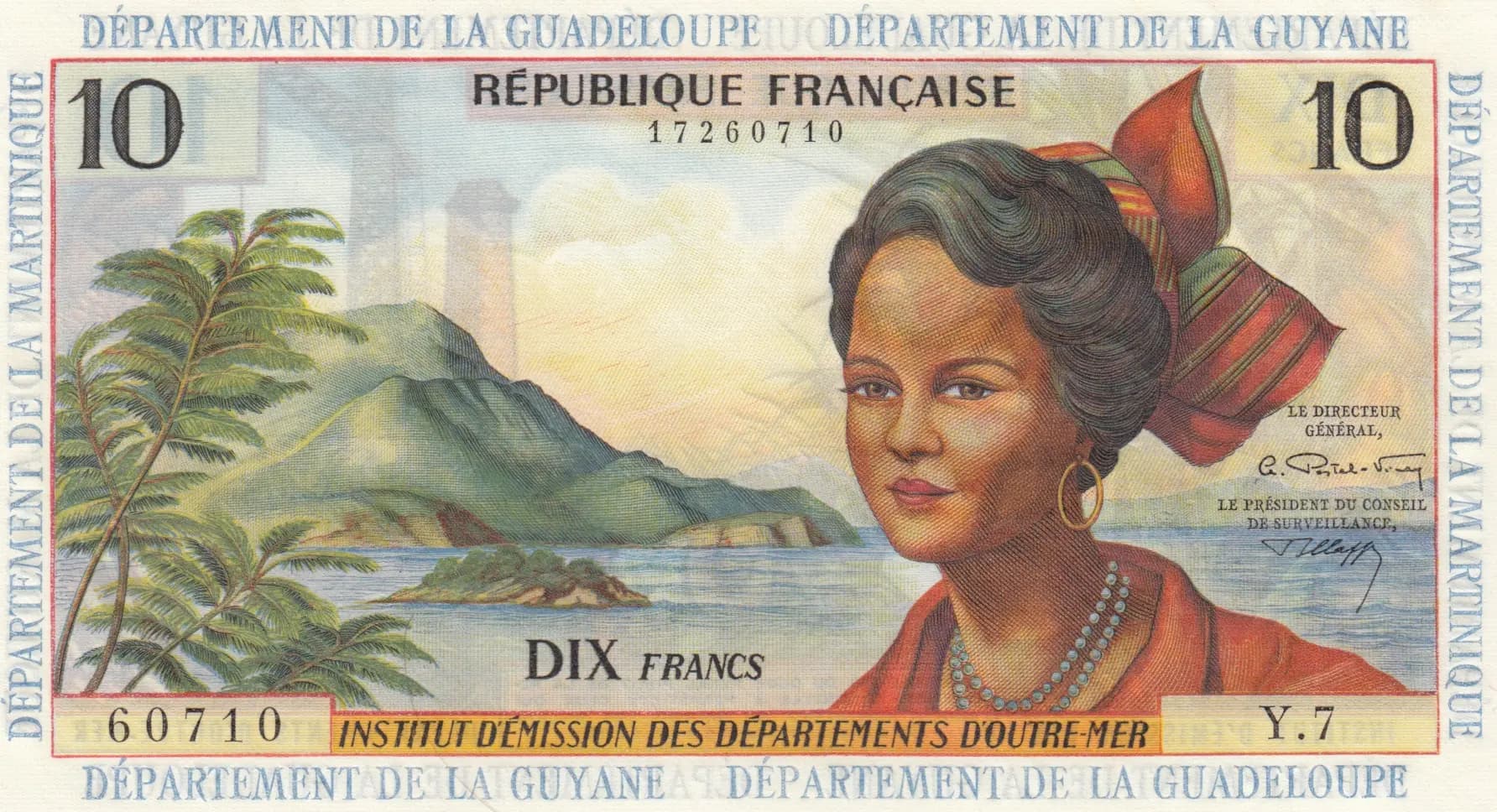
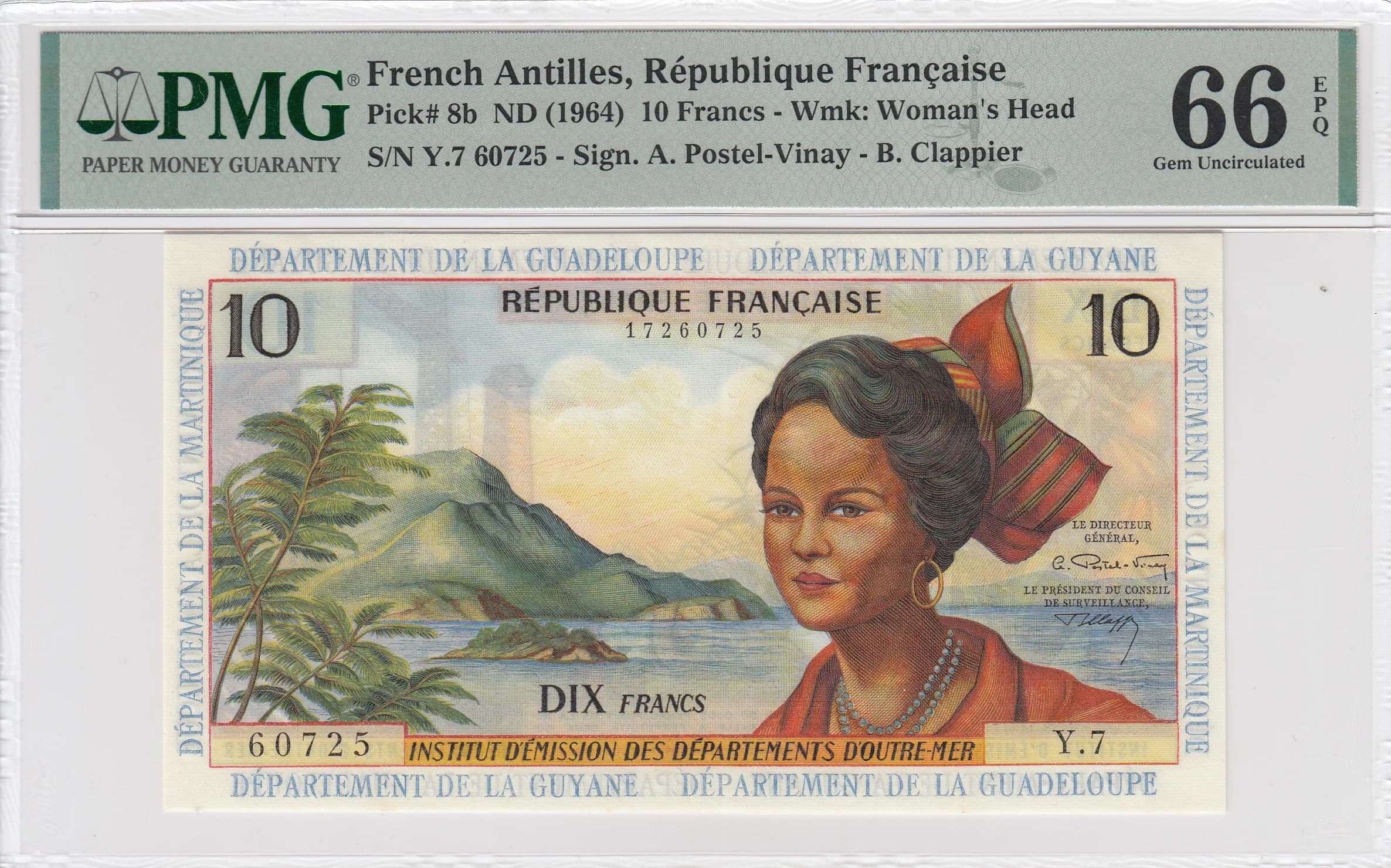
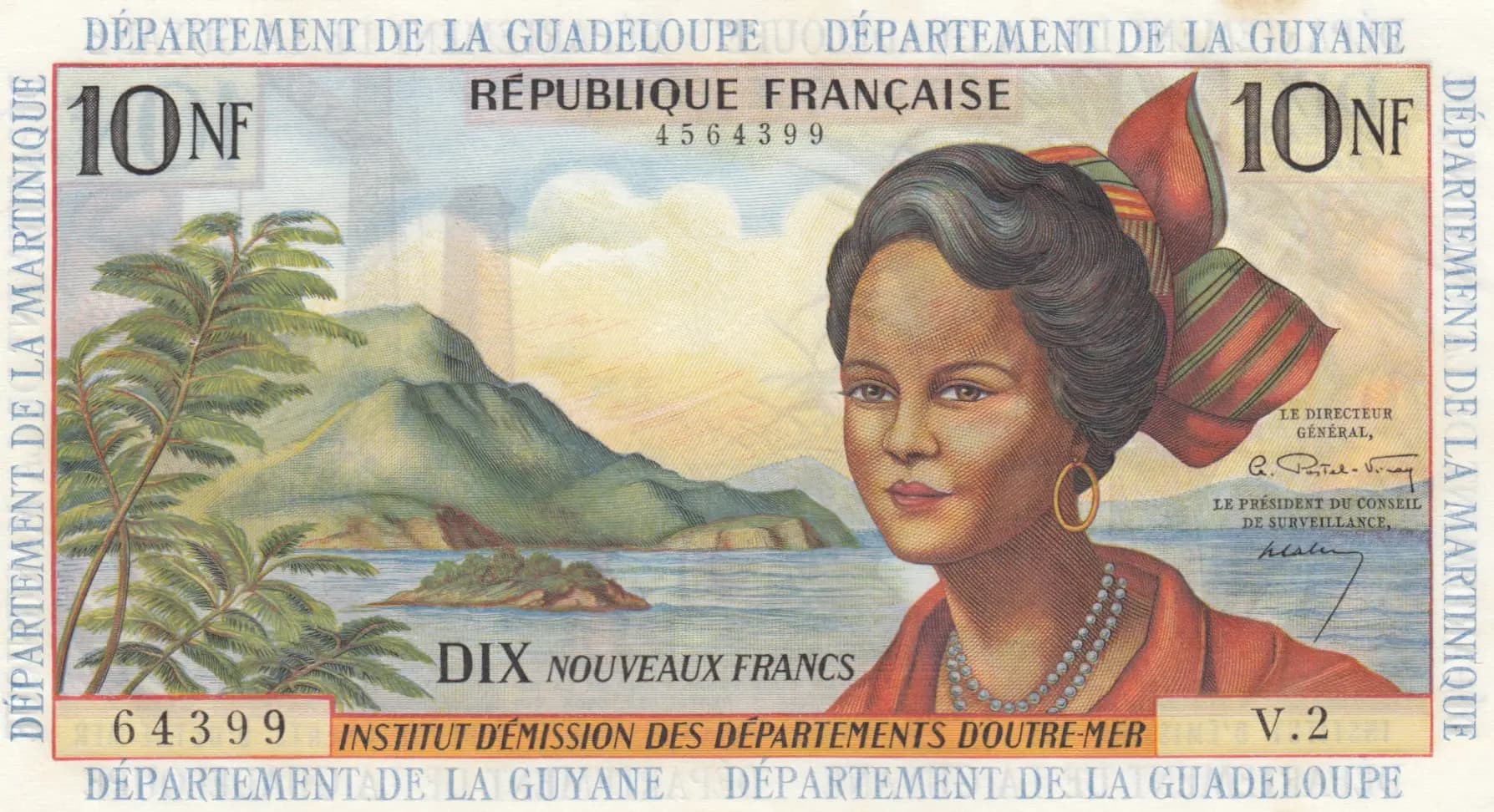
The obverse features a three-quarter portrait of a woman with dark wavy hair, adorned with a pearl necklace and gold hoop earrings, wearing red/coral colored clothing with a decorative headdress or fabric arrangement. To the left, a tropical coastal landscape depicts a mountain, palm vegetation, and blue water, establishing the Caribbean/tropical identity of the issuing territories. The design employs a cream and beige background with red, blue, and green accent colors creating visual hierarchy. The reverse depicts an agricultural worker in a white shirt and straw hat harvesting sugar cane, surrounded by decorative borders featuring cacao pods and citrus fruits. Industrial processing facilities with a scale and chimney structure are visible in the background, representing the industrial transformation of raw agricultural products. This composition symbolizes the economic output and labor force of the overseas departments.
FRONT SIDE: 'DÉPARTEMENT DE LA GUADELOUPE' (Department of Guadeloupe), 'DÉPARTEMENT DE LA GUYANE' (Department of Guyana), 'RÉPUBLIQUE FRANÇAISE' (French Republic), 'DIX FRANCS' (Ten Francs), 'SPECIMEN' (Specimen), 'LE DIRECTEUR GÉNÉRAL' (The Director General), 'LE PRÉSIDENT DU CONSEIL DE SURVEILLANCE' (The President of the Supervisory Board), 'INSTITUT D'ÉMISSION DES DÉPARTEMENTS D'OUTRE-MER' (Issuing Institute of Overseas Departments), plus serial number placeholders '0000000' and 'O.O'. BACK SIDE: 'DÉPARTEMENT DE LA GUADELOUPE' (Department of Guadeloupe), 'DÉPARTEMENT DE LA GUYANE' (Department of Guyana), 'RÉPUBLIQUE FRANÇAISE' (French Republic), 'DIX FRANCS' (Ten Francs), 'INSTITUT D'ÉMISSION DES DÉPARTEMENTS-D'OUTRE-MER' (Issuing Institute of Overseas Departments), and 'L'ARTICLE 139 DU CODE PÉNAL PUNIT DE LA RÉCLUSION CRIMINELLE À PERPÉTUITÉ CEUX QUI AURAIENT CONTREFAIT LES BILLETS ÉMIS PAR LA BANQUE DE FRANCE' (Article 139 of the Penal Code punishes with life imprisonment those who would have counterfeited banknotes issued by the Bank of France).
The note was produced using traditional intaglio (steel plate engraving) printing, evidenced by the fine line work visible throughout both the portrait and landscape details on the obverse, and the detailed agricultural and industrial scenes on the reverse. Multi-color offset lithography was employed for the background colors and decorative elements, with careful color separation to achieve the vibrant yet harmonious palette of reds, blues, greens, and earth tones. The combination of intaglio for security and detail with lithographic coloring represents standard French currency printing practices of the 1960s era. The printer for French Antilles currency during this period was typically Banque de France facilities or contracted French security printers.
This note is identified as Pick P-8as (specimen variety with Woman's Head watermark). The 's' suffix denotes this as a specimen issue with overprinted 'SPECIMEN' text and zero serial numbers (0000000 and related placeholders visible). According to PMG population data, P-8as is one of four cataloged variants for the base Pick number P-8, with related varieties including P-8a (regular issue with same watermark), P-8b (alternate watermark version), and P-8s (specimen without watermark designation). The 'a' designation indicates the Woman's Head watermark variety, which was standard for this series. The pristine condition and specimen status indicate this was never placed into circulation.