5 francs 1964
About This Note
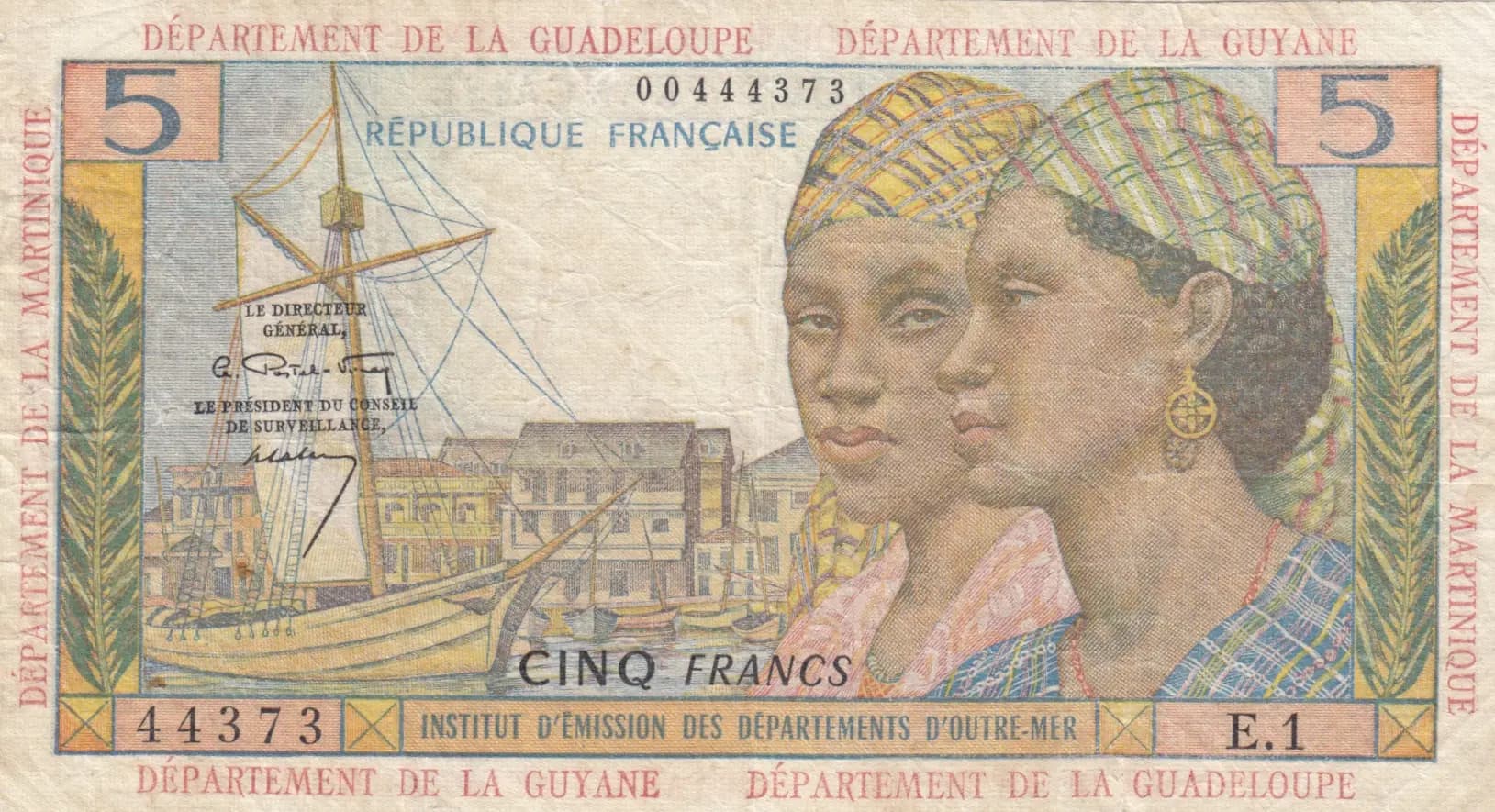
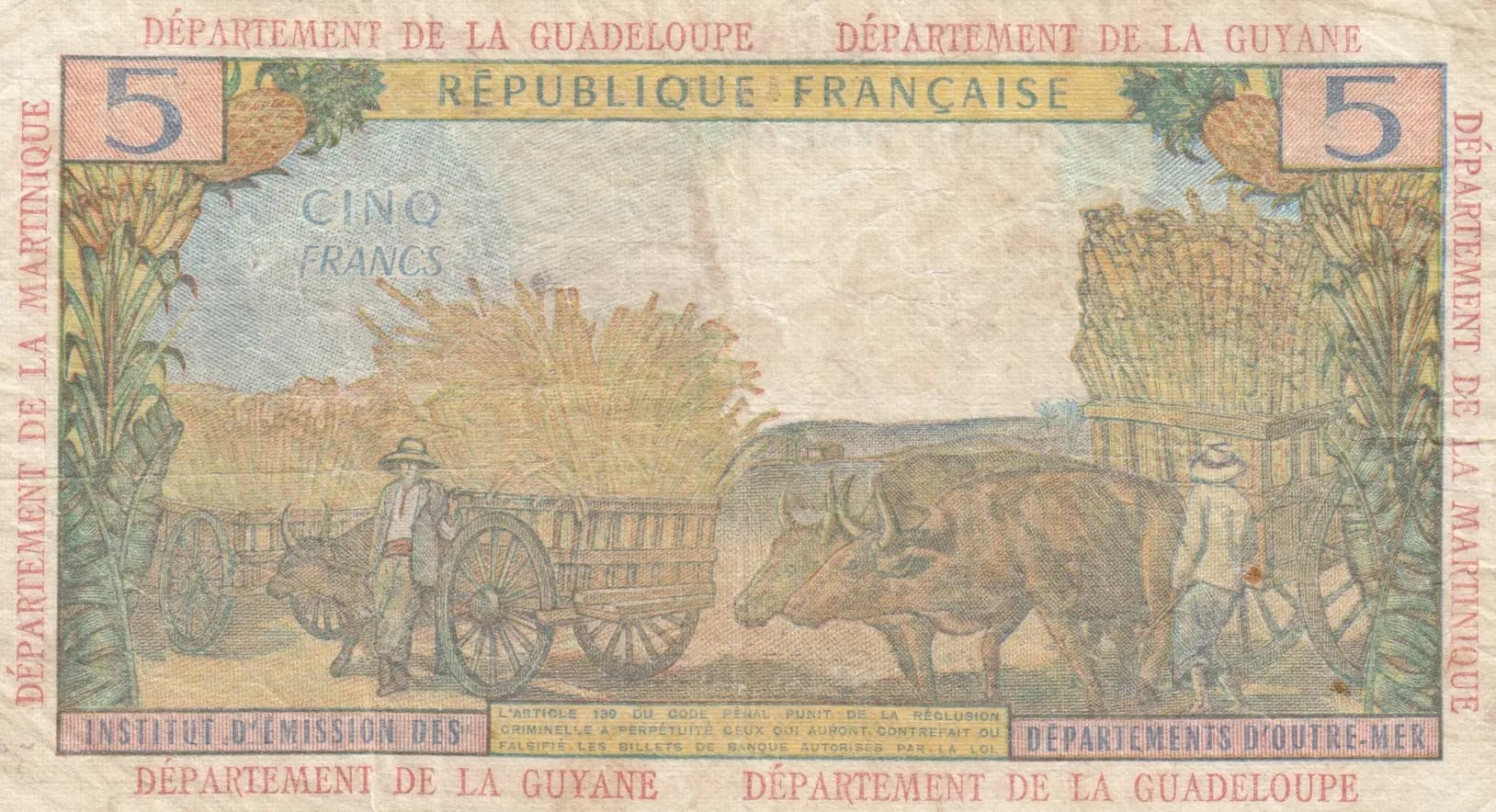
A 1964 French Antilles 5 Francs banknote (Pick P-7a) in Fine condition, issued by the Institut d'Emission des Départements d'Outre-Mer. The obverse features a portrait of a woman in traditional Antillean dress with a distinctive patterned headwrap, accompanied by a detailed engraving of a colonial-era sailing ship at dock, while the reverse depicts a rural agricultural scene with two figures and a laden cart in a tropical landscape. The note exhibits appropriate age-related wear including creasing and foxing consistent with circulation during the mid-20th century, with serial number 00444373 visible on the obverse.
Common. The 1964 issue date falls within the standard circulation period for IEDOM 5 Francs notes, and this denomination and design were produced in substantial quantities for use across four major French overseas departments with combined populations exceeding 1 million. The Pick number P-7a represents the standard watermark variant without special characteristics that would limit production. These notes remain readily available to collectors in used circulated grades, with pricing typically in the $5-15 range for Fine condition examples on the secondary market. No documented print run restrictions, recalls, or short-lived status apply to this issue.
This note represents the monetary sovereignty of France's overseas departments during the early post-war period, specifically reflecting the currencies of Guadeloupe, Guyana, Martinique, and Réunion through the unified IEDOM issuer. The imagery reflects the colonial economic reality of these territories—the obverse's maritime commerce symbolism and the reverse's agricultural labor imagery document the plantation and trading economy that dominated these French Caribbean and South American possessions in 1964. The watermark of a woman's head and the fine engraving techniques employed underscore the security printing standards maintained by French currency authorities for even peripheral territories of the French monetary system.
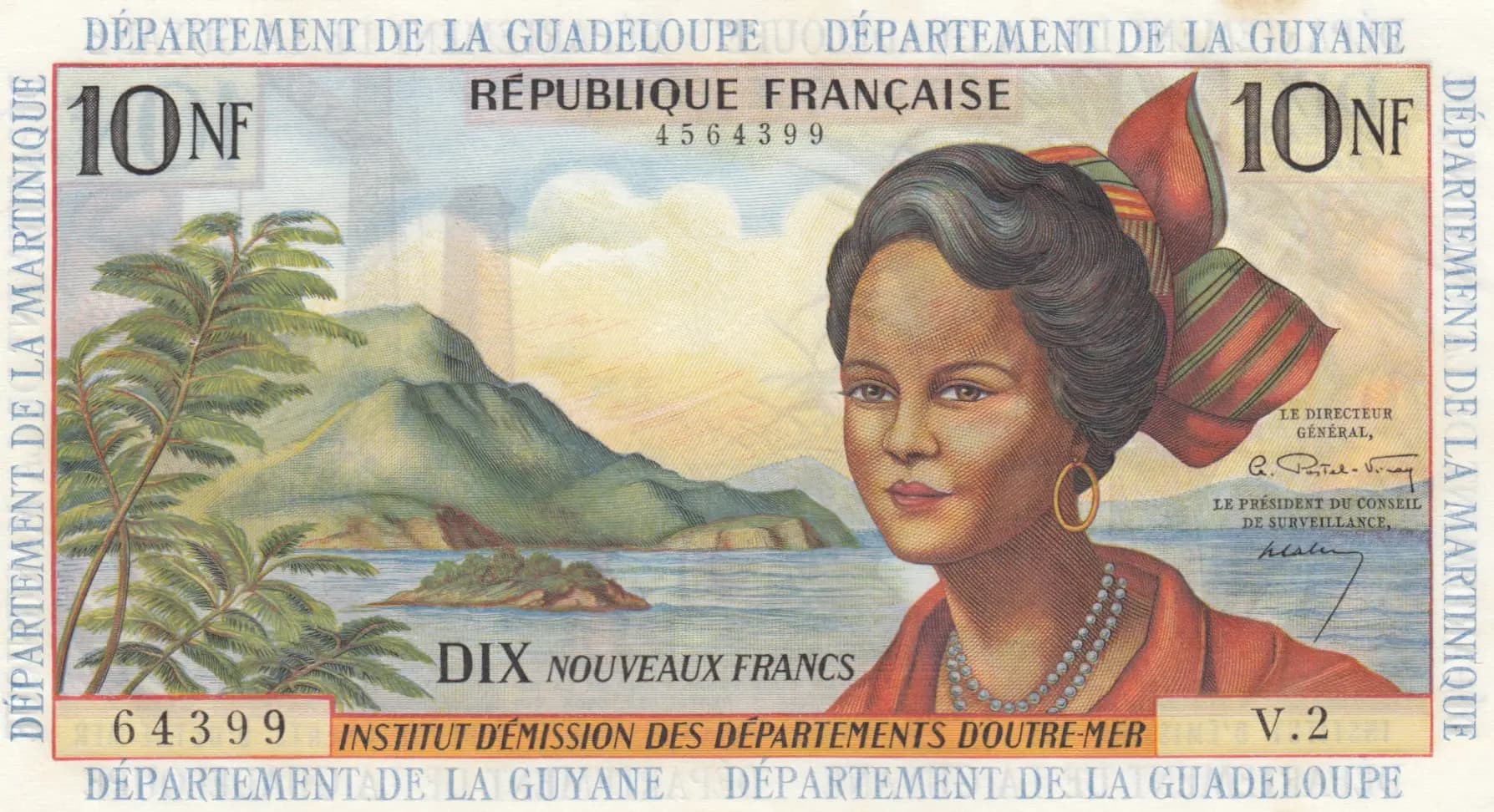
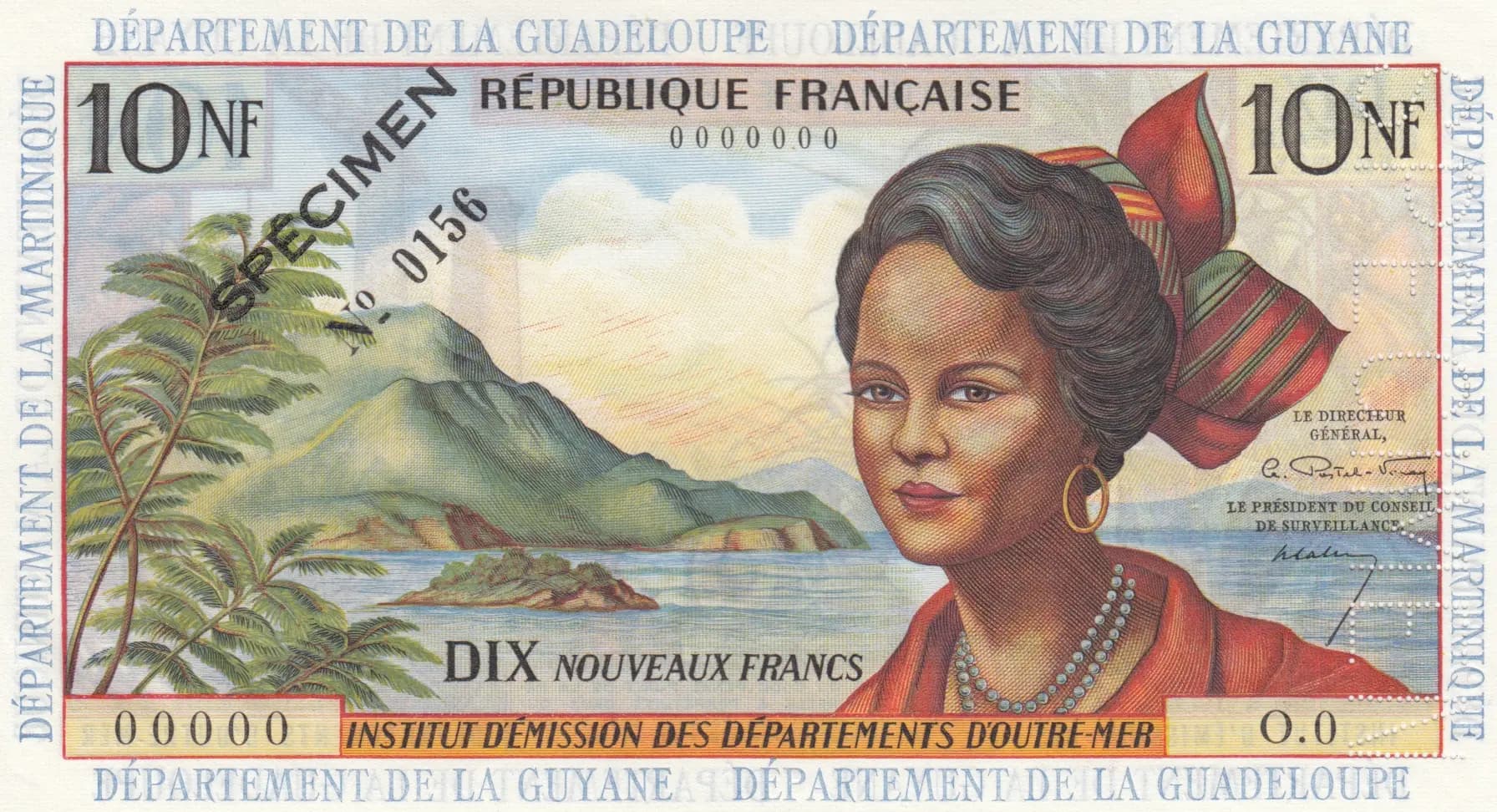
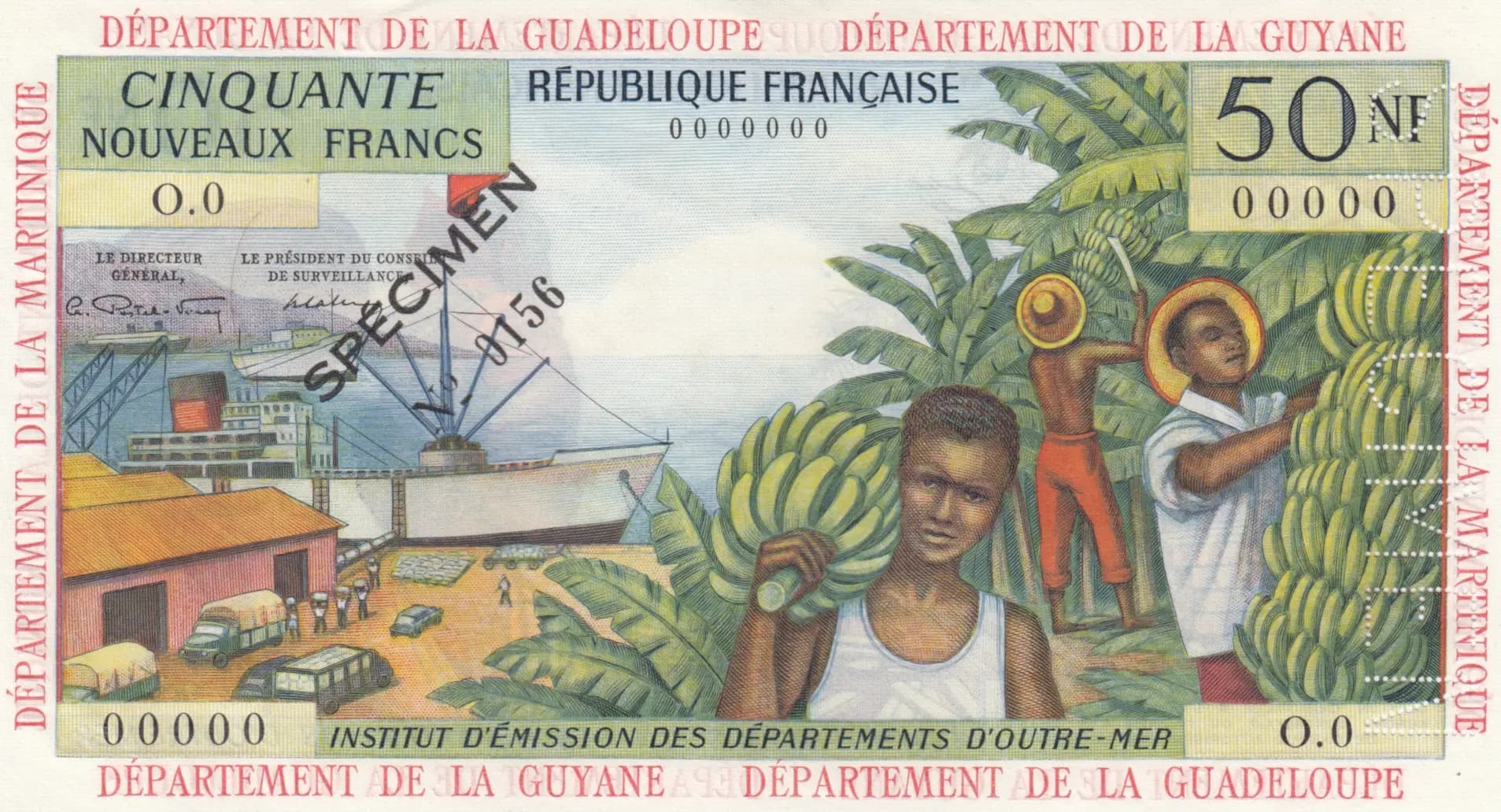
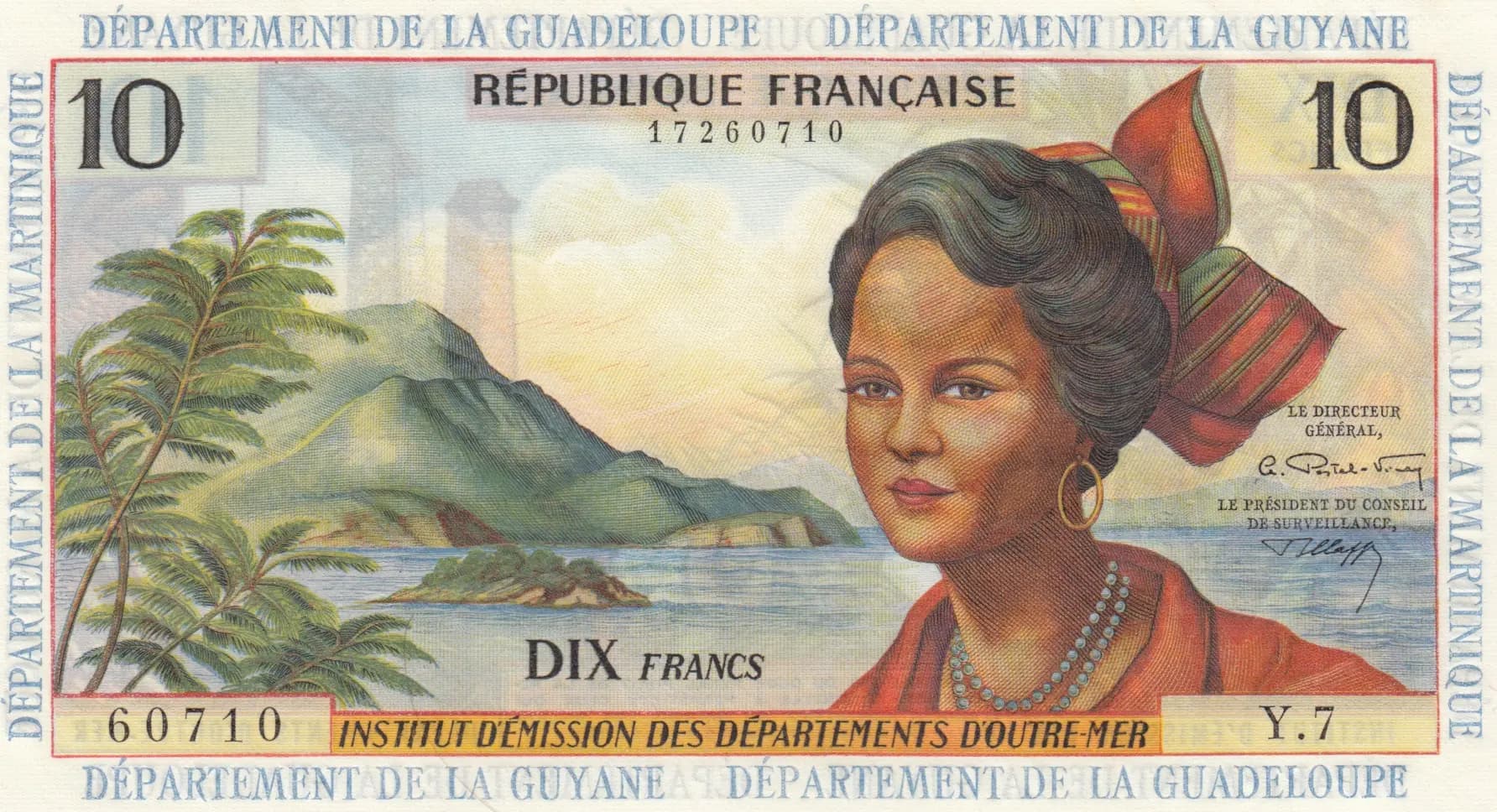
The obverse depicts a Creole woman wearing traditional Antillean dress—specifically a vibrant patterned headwrap in yellow and green tones, pink-toned bodice, and circular cross-design earrings characteristic of West Indian cultural dress. To her left is a detailed maritime scene showing a multi-masted sailing vessel moored at a colonial port with multi-story warehouse buildings, symbolizing the commercial maritime trade that connected these overseas departments to metropolitan France. The design is framed by decorative borders featuring wheat or palm frond motifs in orange, blue-gray, yellow, and tan tones. The reverse presents a complementary agricultural scene showing two men conducting commerce with a wooden-wheeled cart laden with goods in a tropical landscape, flanked by palm trees on both sides. This bilateral imagery represents the dual economic foundations—maritime trade and agricultural production—that sustained these French territories. Fine line engraving patterns throughout provide security and visual sophistication.
OBVERSE: 'DÉPARTEMENT DE LA GUADELOUPE' (Department of Guadeloupe), 'DÉPARTEMENT DE LA GUYANE' (Department of Guyana), 'DÉPARTEMENT DE LA MARTINIQUE' (Department of Martinique), 'DÉPARTEMENT DE LA RÉUNION' (Department of Reunion), 'RÉPUBLIQUE FRANÇAISE' (French Republic), 'LE DIRECTEUR GÉNÉRAL' (The General Director), 'LE PRÉSIDENT DU CONSEIL DE SURVEILLANCE' (The President of the Supervisory Board), 'CINQ FRANCS' (Five Francs), 'INSTITUT D'ÉMISSION DES DÉPARTEMENTS D'OUTRE-MER' (Issuing Institute of the Overseas Departments), Serial number '00444373'. REVERSE: 'DÉPARTEMENT DE LA GUADELOUPE', 'DÉPARTEMENT DE LA GUYANE', 'DÉPARTEMENT DE LA MARTINIQUE', 'DÉPARTEMENT DE LA RÉUNION', 'RÉPUBLIQUE FRANÇAISE', 'CINQ FRANCS', 'INSTITUT D'ÉMISSION DES DÉPARTEMENTS D'OUTRE-MER', and the anti-counterfeiting warning: 'L'ARTICLE 130 DU CODE PÉNAL PUNIT DE LA RÉCLUSION CRIMINELLE À PERPÉTUITÉ CEUX QUI AURAIENT CONTREFAIT OU FALSIFIÉ LES BILLETS ÉMIS PAR LA LOI' (Article 130 of the Penal Code punishes with lifelong criminal imprisonment those who would have counterfeited or forged banknotes issued by law).
Intaglio engraving (taille-douce) with multi-color offset printing, standard for high-security French banknote production of the period. The fine line patterns, complex portraiture, and intricate background scenes are characteristic of engraved banknote production. The note was produced by French security printers working under IEDOM authority, likely Banque de France subsidiary facilities or contracted commercial security printers such as those facilities that produced French colonial and overseas currency. The watermark (woman's head as noted in PMG cataloging) was integral to the paper manufacture.
This note is cataloged as Pick P-7a, the standard 1964 issue with Woman's Head watermark. PMG recognizes four variants for this base Pick number: P-7a (standard), P-7as (specimen), P-7b (alternate printing), and P-7s (unspecified variant). The serial number 00444373 visible on this example places it within standard production runs; no special significance attaches to this particular serial number. The 'E.1' designation visible on the obverse represents the note's official classification within the IEDOM system but does not constitute a separate variety. No overprints, error characteristics, or signature variants that would differentiate this as a special variety are apparent from the visual analysis.