50 francs 1964 specimen
About This Note
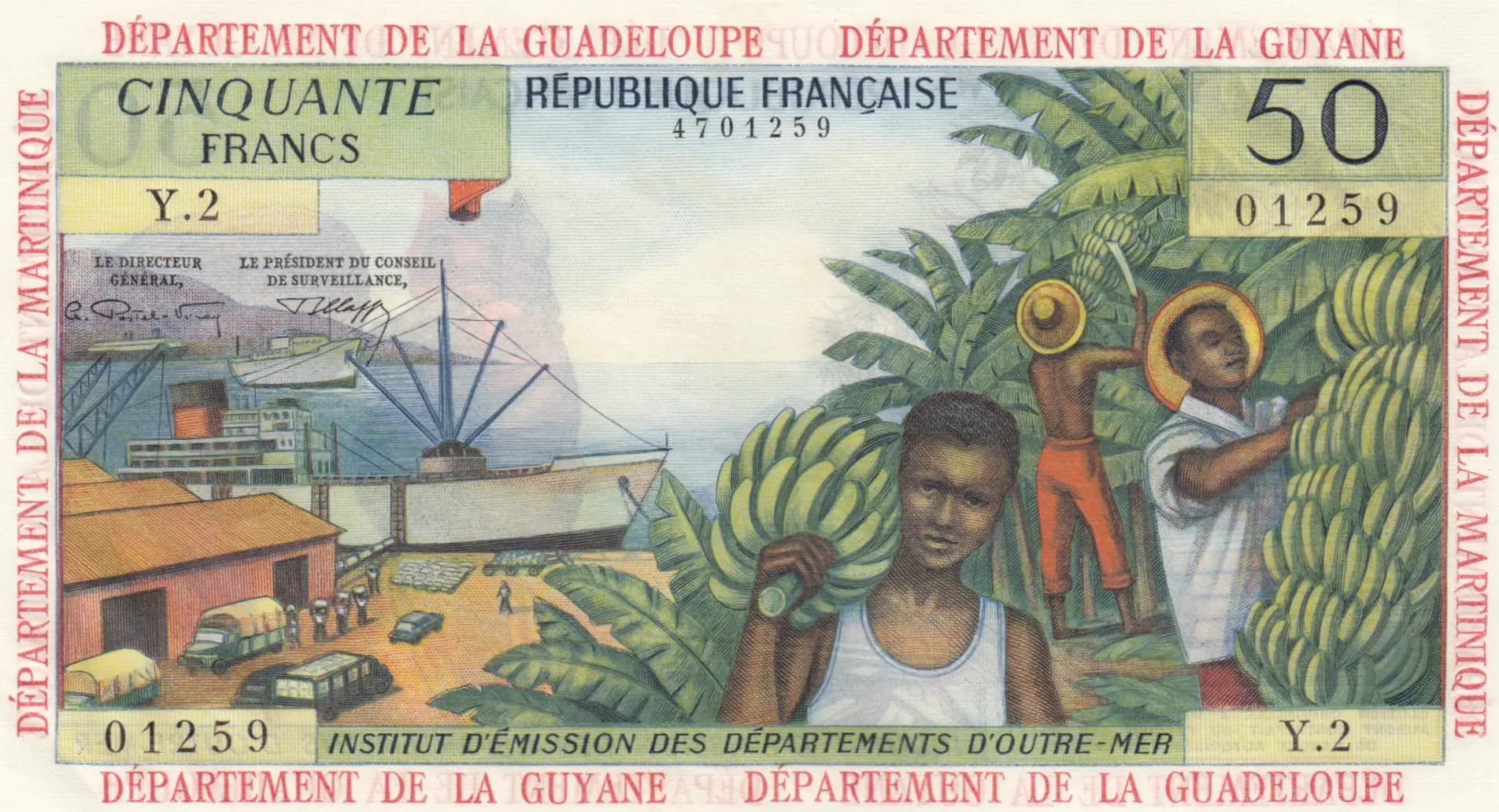
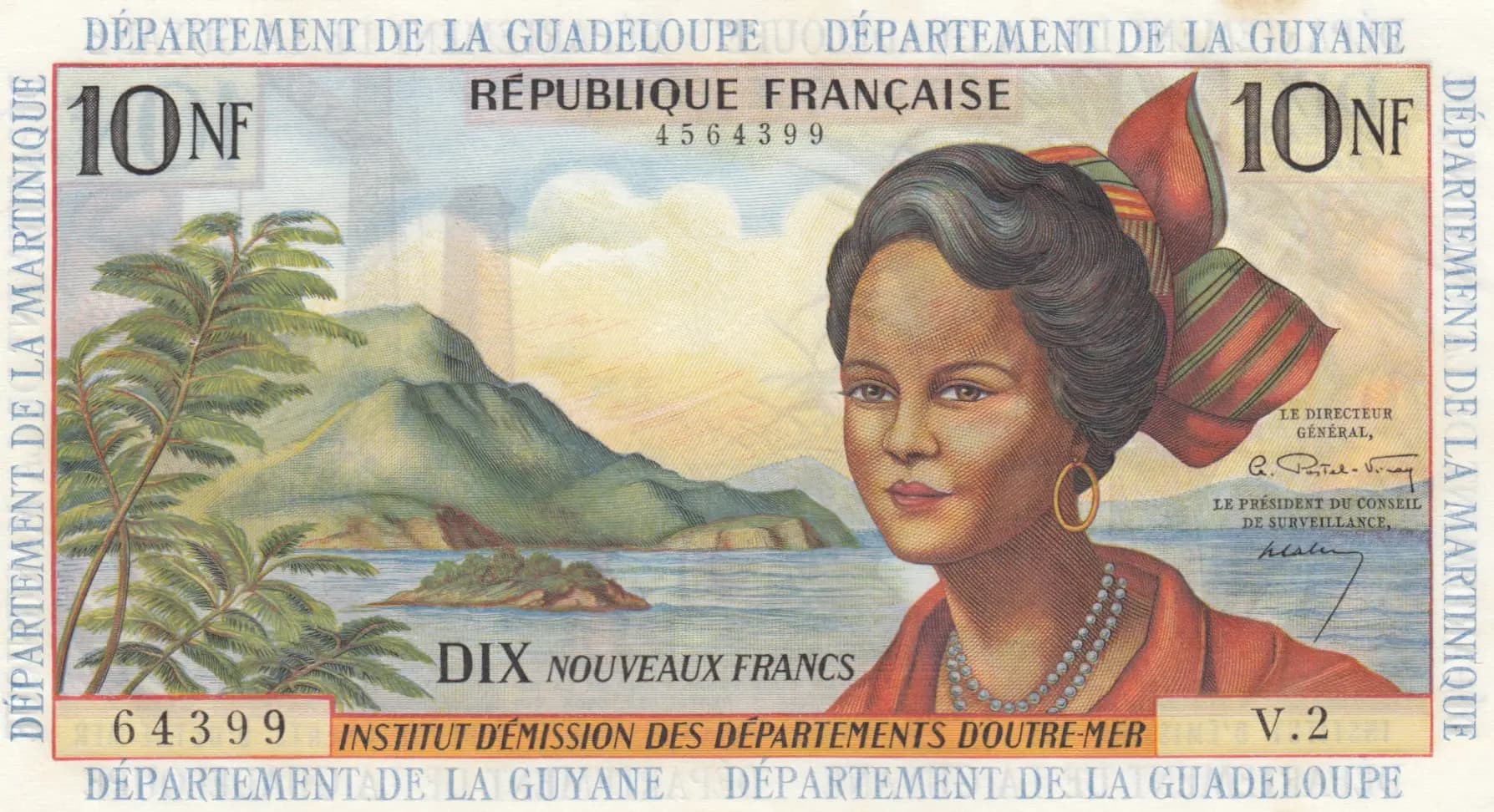
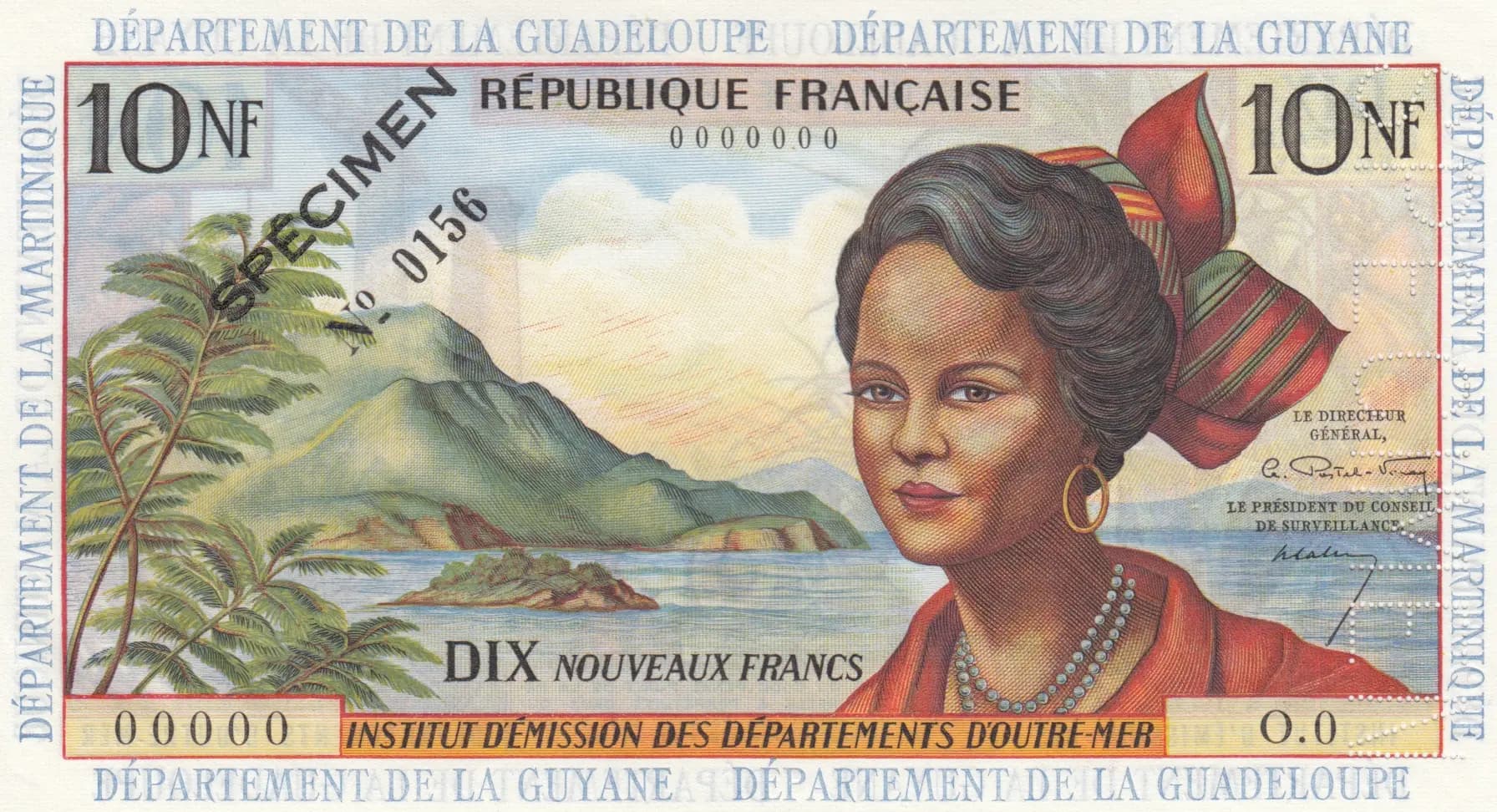
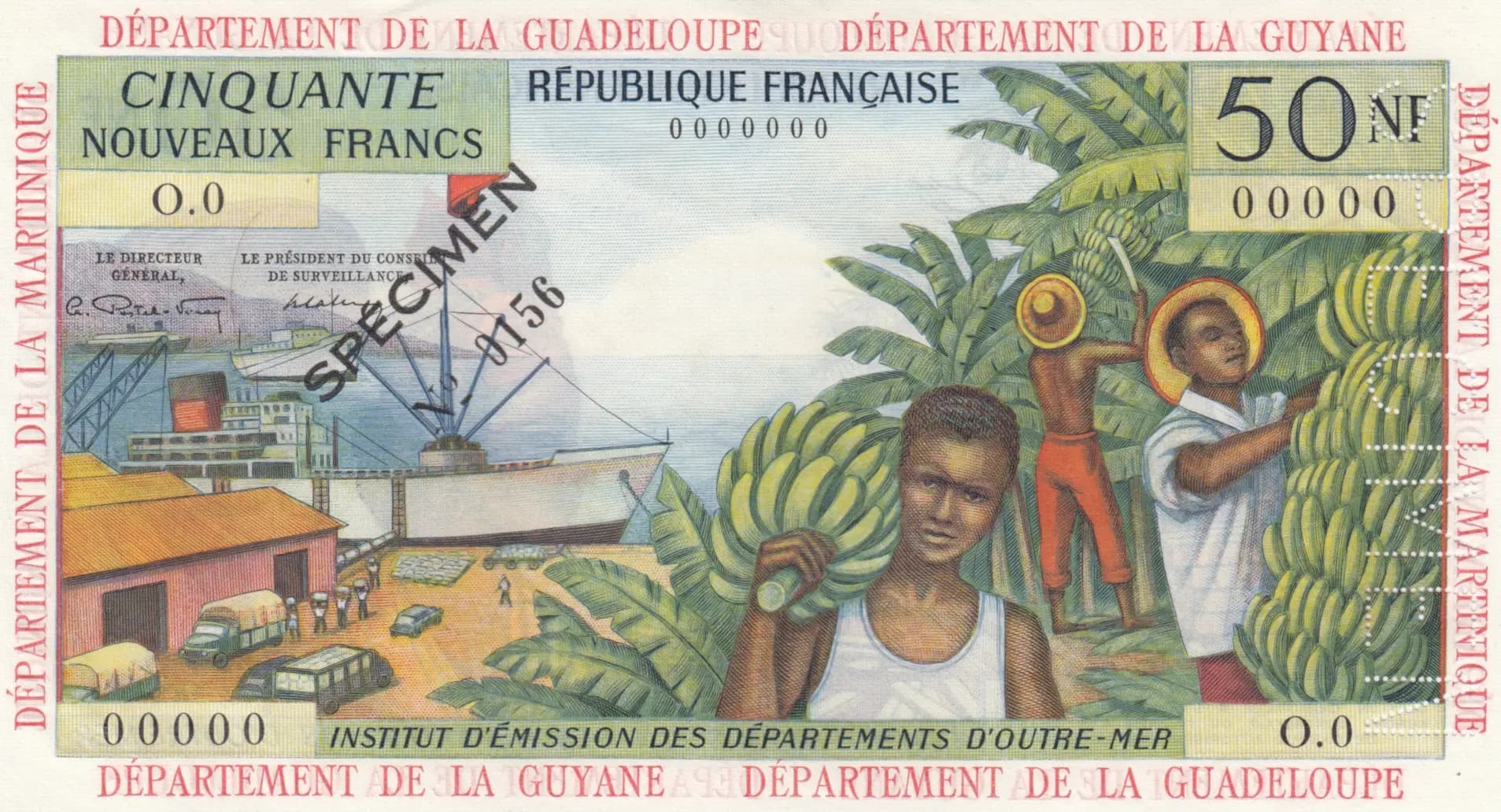
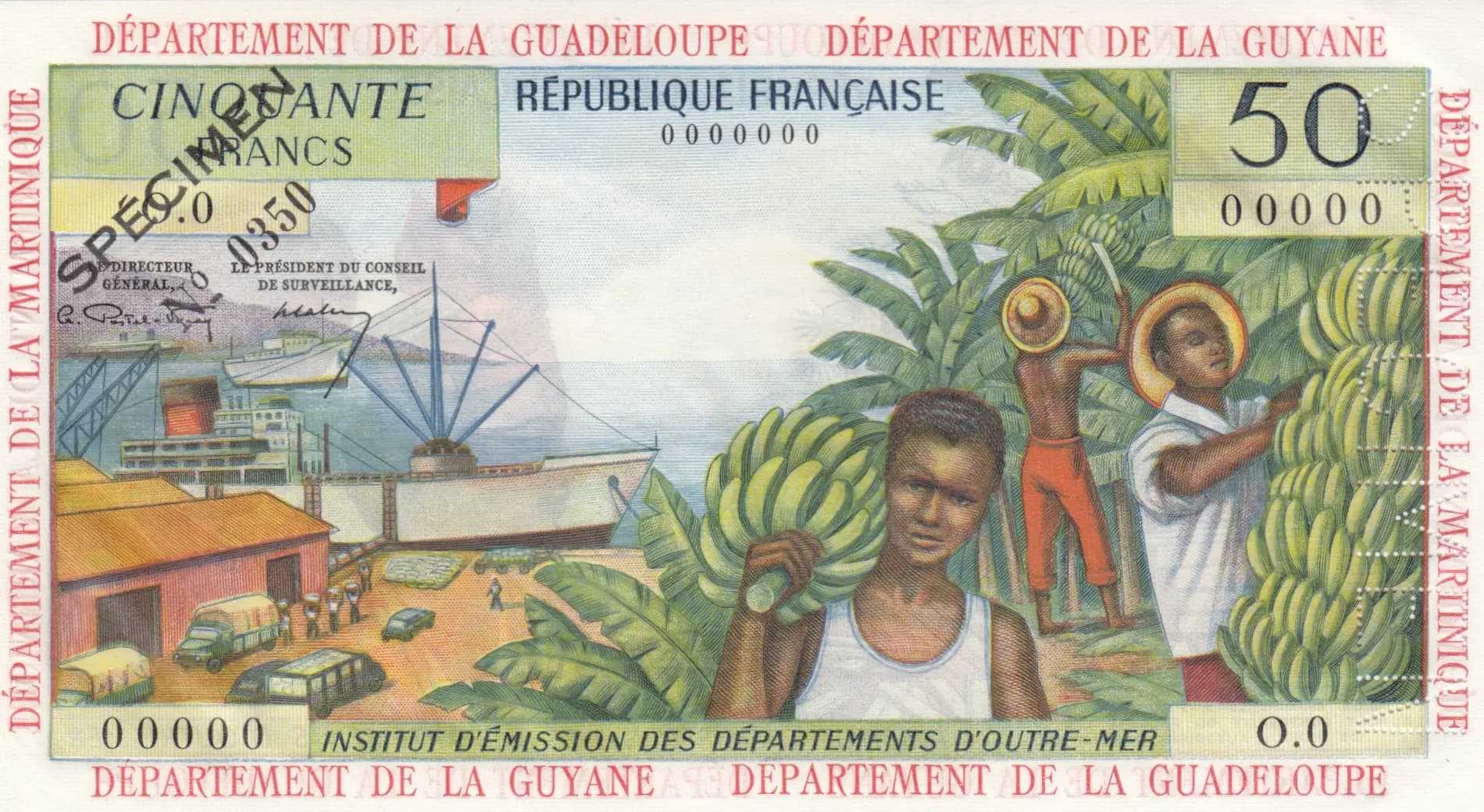
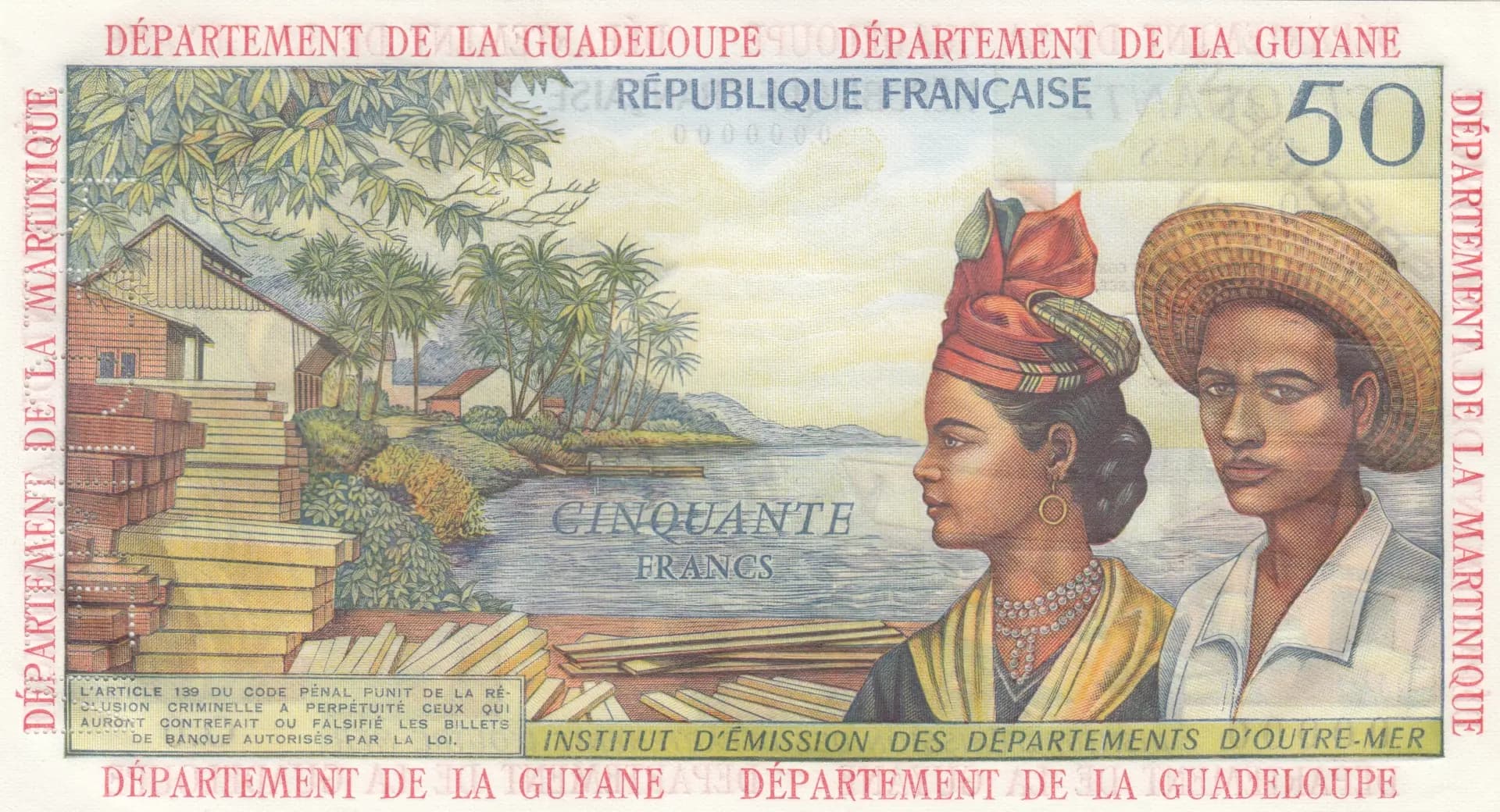
This is an exceptional 1964 French Antilles 50 Francs specimen note (Pick-9as) graded UNC, representing an unissued example of the Institut d'Emission des Departements d'Outre-Mer's currency for Guadeloupe and French Guyana. The note features vibrant tropical imagery on the obverse depicting colonial port infrastructure and banana harvesting activities, while the reverse showcases two portrait busts of local women in traditional dress set against a colonial architectural backdrop. This specimen example is marked with a prominent red diagonal 'SPÉCIMEN' overprint and displays pristine condition with crisp printing, sharp colors, and no visible wear or damage.
common. This is a specimen note from a standard series of the Institut d'Emission des Departements d'Outre-Mer, and while specimen notes are technically unissued examples, the 1964 50 Francs French Antilles issue had a substantial print run for its time. Specimen overprints were routinely produced for distribution to banks, governments, and collectors. The Pick-9as variant (specimen with woman's head watermark) remains readily available in the collector market. No evidence of restricted print runs, early recalls, or scarcity premium exists for this denomination or issuing authority. UNC examples of specimen notes from this series typically trade in the $15-40 range, consistent with common banknotes.
Issued in 1964, this banknote reflects the post-WWII French overseas currency regime for its Caribbean and South American territories, specifically Guadeloupe and French Guyana. The design prominently celebrates the economic foundations of these departments—maritime commerce and tropical agriculture (bananas)—which were central to their mid-20th century colonial economies. The depicts of both colonial infrastructure (dock facilities, warehouses) and local agricultural labor, along with the portraits of women in traditional regional dress, illustrate the cultural and economic identity the issuing authority sought to project for these overseas French territories.
The obverse side features a composite scene celebrating colonial commerce and tropical agriculture: the left portion depicts a busy port facility with cargo ships, loading cranes, and a warehouse with corrugated roof in warm earth tones, representing maritime trade infrastructure. The right portion transitions to agricultural imagery, showing banana harvesting with three figures—a child in the foreground holding a large bunch of bananas, and two adult workers (one wearing a straw hat, one in white clothing) amid lush green banana plants. The reverse displays two sculptural portrait busts of women in profile facing right: the left figure wears traditional dress with a red turban and jewelry, while the right figure wears a straw hat and simple light-colored clothing. Both are set against a colonial-era brick building with wooden steps and tropical surroundings, with a coastal landscape and distant mountains visible in the background. The color palette throughout employs warm yellows, greens, oranges, reds, and browns, with cream and beige backgrounds, creating a distinctly tropical aesthetic. The watermark features the woman's head motif, and multiple denomination numerals and signature lines appear across both sides.
FRONT: 'CINQUANTE FRANCS' (Fifty Francs), 'REPUBLIQUE FRANCAISE' (French Republic), 'DÉPARTEMENT DE LA GUADELOUPE' (Department of Guadeloupe), 'DÉPARTEMENT DE LA GUYANE' (Department of French Guyana), 'DIRECTEUR GÉNÉRAL' (General Director), 'LE PRÉSIDENT DU CONSEIL DE SURVEILLANCE' (The President of the Supervisory Board), 'INSTITUT D'ÉMISSION DES DÉPARTEMENTS D'OUTRE-MER' (Institute of Issue of the Overseas Departments), 'SPÉCIMEN' (Specimen), '50' (denomination), serial number fields. BACK: 'CINQUANTE FRANCS' (Fifty Francs), 'REPUBLIQUE FRANCAISE' (French Republic), 'DÉPARTEMENT DE LA GUADELOUPE' (Department of Guadeloupe), 'DÉPARTEMENT DE LA GUYANE' (Department of French Guyana), 'INSTITUT D'ÉMISSION DES DÉPARTEMENTS D'OUTRE-MER' (Institute of Issue of the Overseas Departments), 'L'ARTICLE 139 DU CODE PÉNAL PUNIT DE LA RÉCLUSION CRIMINELLE À PERPÉTUITÉ CEUX QUI AURAIENT CONTREFAIT OU FALSIFIÉ LES BILLETS DE BANQUE AUTORISÉS PAR LA LOI.' (Article 139 of the Penal Code punishes with life imprisonment those who would have counterfeited or falsified banknotes authorized by law), '50' (denomination).
This banknote was produced using multi-color intaglio (engraved) printing, the standard security printing technique for currency of this era. The detailed portraiture, fine line work in the architectural and agricultural scenes, and the precision of the security features all indicate traditional intaglio engraving. The color registration and tonal gradations visible in the landscape elements are characteristic of multi-plate intaglio production. Security printers for French Antilles currency during this period typically included the Banque de France's printing facilities or contract security printers such as Thomas de la Rue or Bradbury Wilkinson, though specific attribution would require additional documentation.
This note is catalogued as Pick-9as, designating it as the 'specimen' ('s' suffix) variant of the 50 Francs 1964 issue, distinguished by the red diagonal 'SPÉCIMEN' overprint. The 'as' suffix indicates the watermark type: Woman's Head. The PMG population data shows four total variants for the base Pick-9 number: P-9a (regular issued), P-9as (specimen), P-9b (variant of regular issued), and P-9s (specimen without specified watermark distinction). The specimen designation, combined with the zero serial numbers (0000000 and 00000) and the absence of any signature variations, confirms this as an early specimen example produced for security and distribution purposes rather than circulation currency.