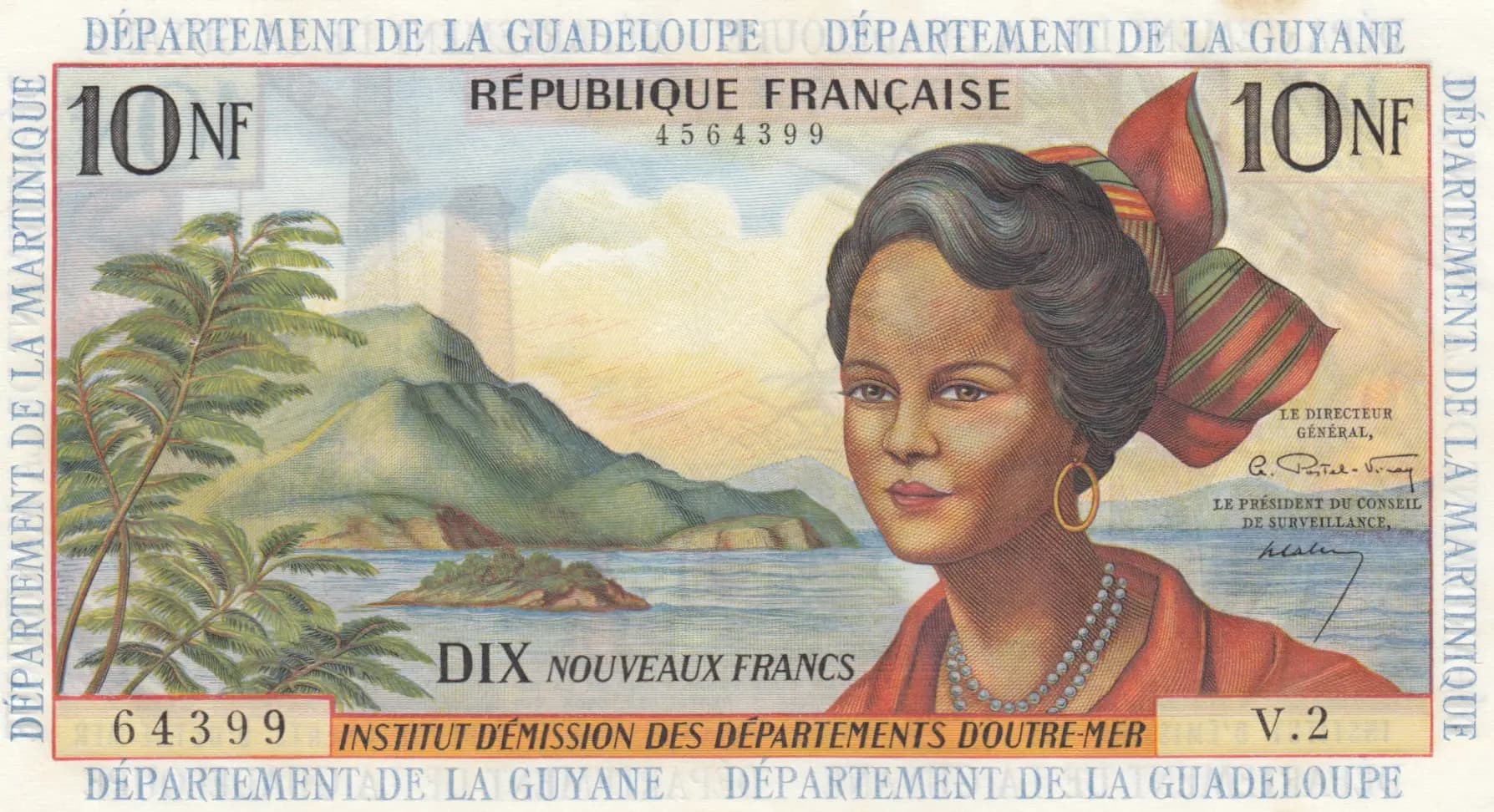
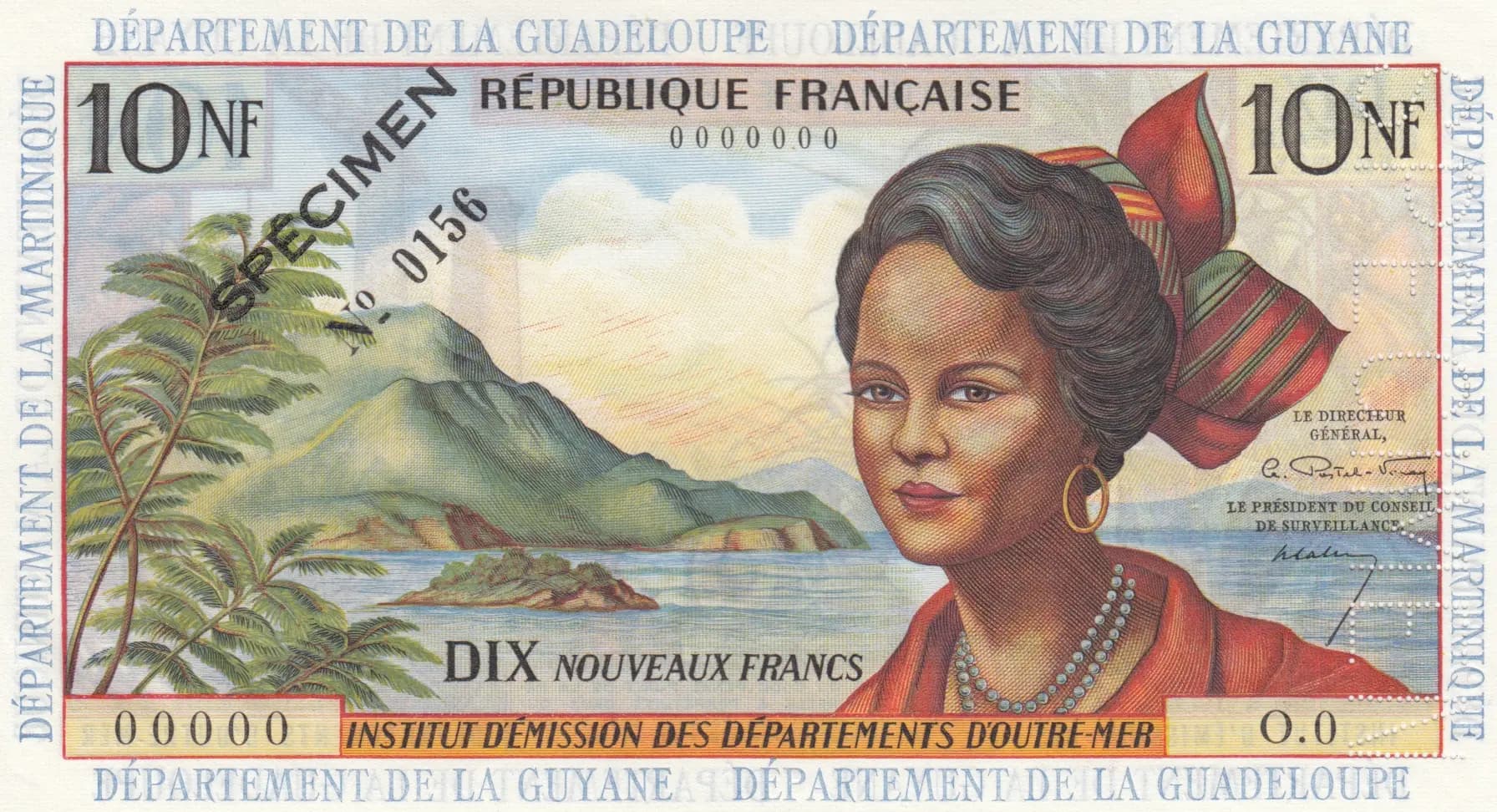
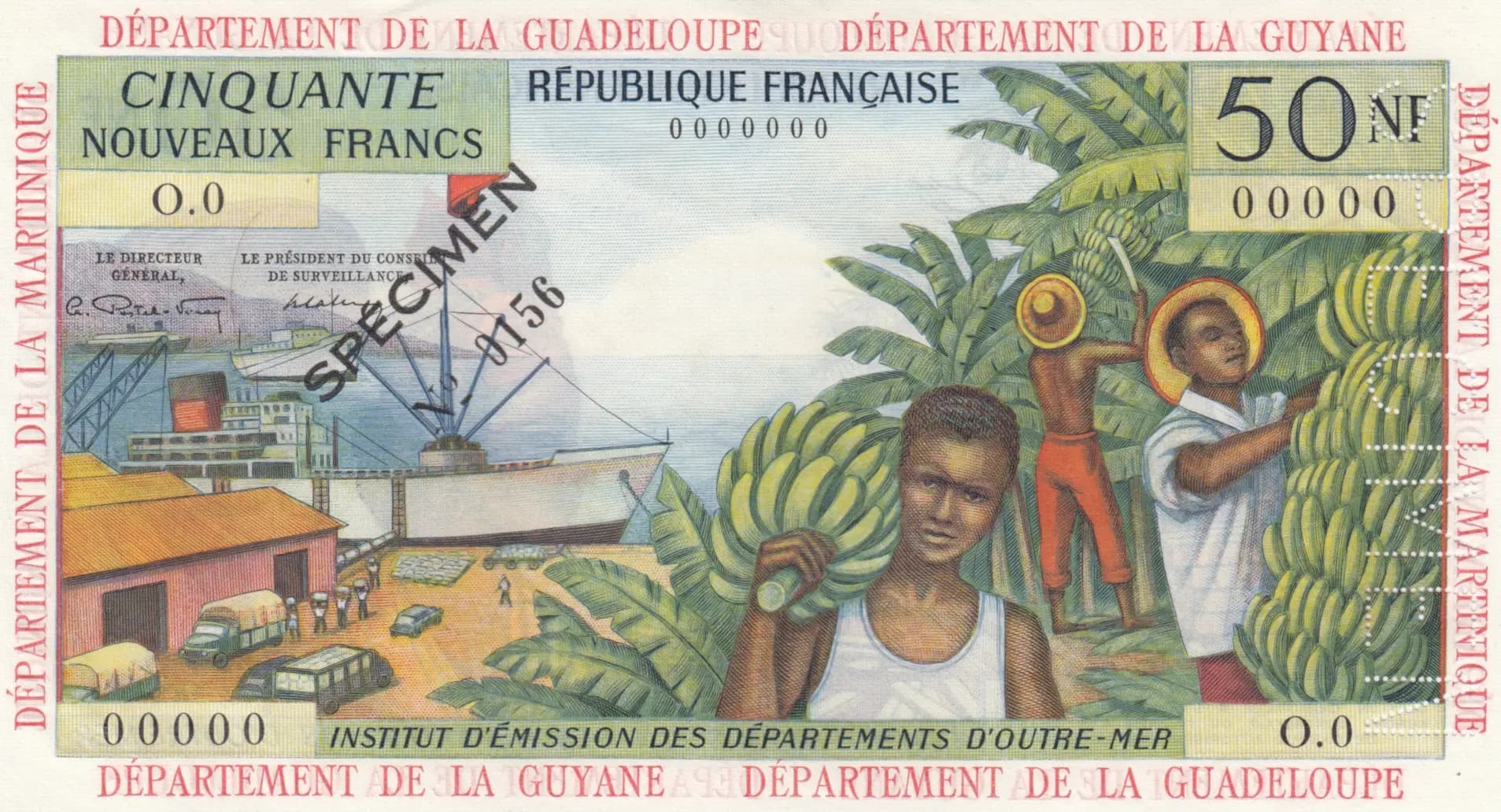
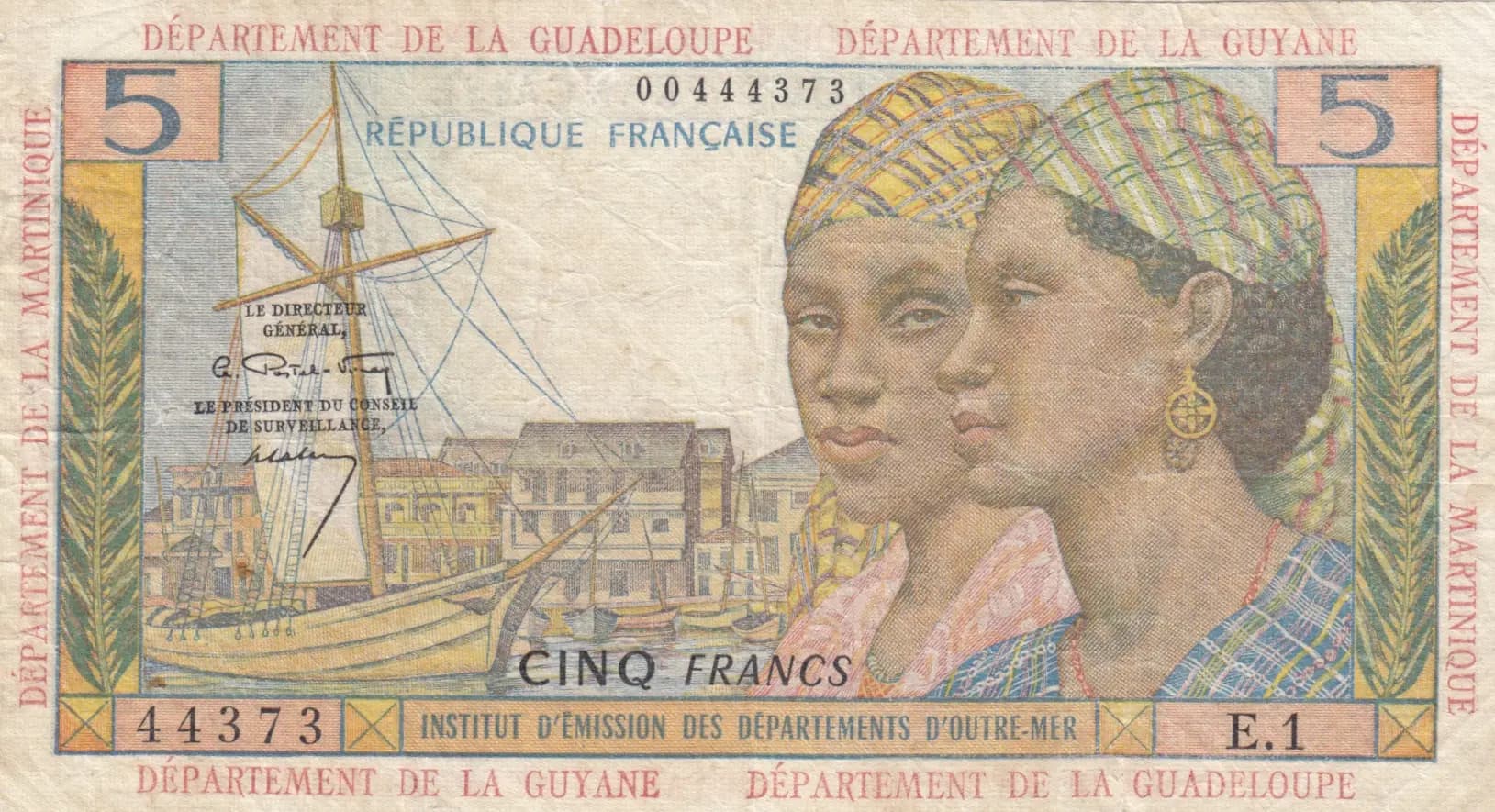
100 francs 1964 specimen
About This Note
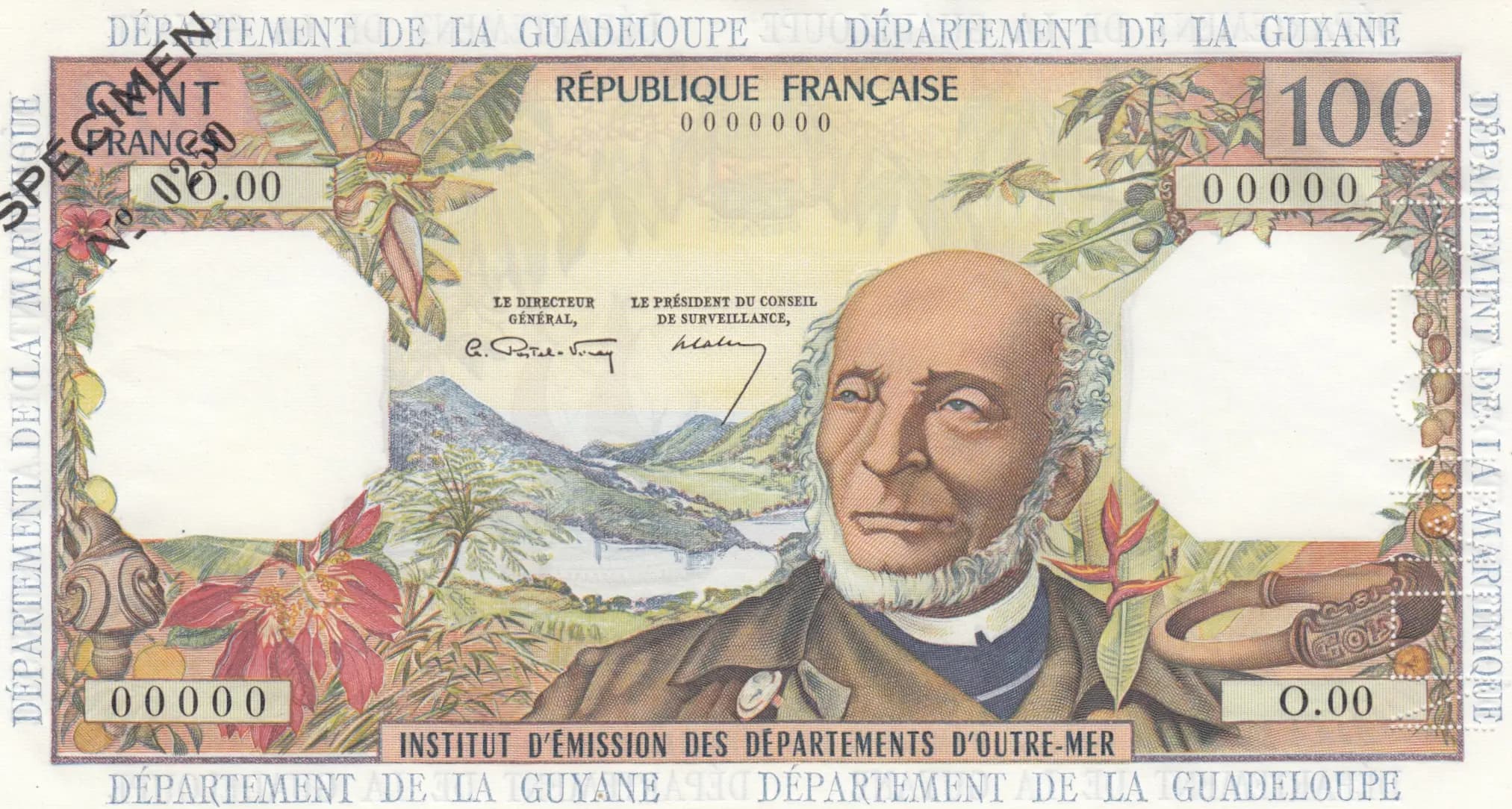
A pristine specimen note of the 100 Francs issued by the Institut d'Emission des Départements d'Outre-Mer in 1964 for the French Antilles. This UNC example displays crisp, sharp engraving throughout with no signs of circulation, featuring vibrant tropical imagery and colonial-era iconography befitting its overseas French territories theme. The diagonal 'SPECIMEN' overprint and blank serial number fields (00000) confirm this as a non-circulating specimen intended for official distribution or reference purposes.
Common. Specimen notes from the 1960s for the French Antilles are typically encountered in collector markets and institutional holdings. While specimen notes command modest premiums over circulated examples due to their pristine condition and non-circulating status, the 100 Francs denomination from this issuer was produced in substantial quantities. The 1964 vintage and UNC specimen grade are neither exceptionally scarce nor particularly limited in surviving population.
This banknote was issued during a significant period in French colonial history, as France's overseas territories were transitioning toward greater autonomy while maintaining monetary union with the metropole. The imagery celebrating the three departments—Guadeloupe, Martinique, and French Guiana—with colonial maritime scenes and tropical flora reflects the economic foundations of these island economies in the 1960s, rooted in their colonial heritage and commercial shipping traditions. The use of specimen notes like this one served to introduce new currency designs to banking institutions and government bodies across the overseas departments.
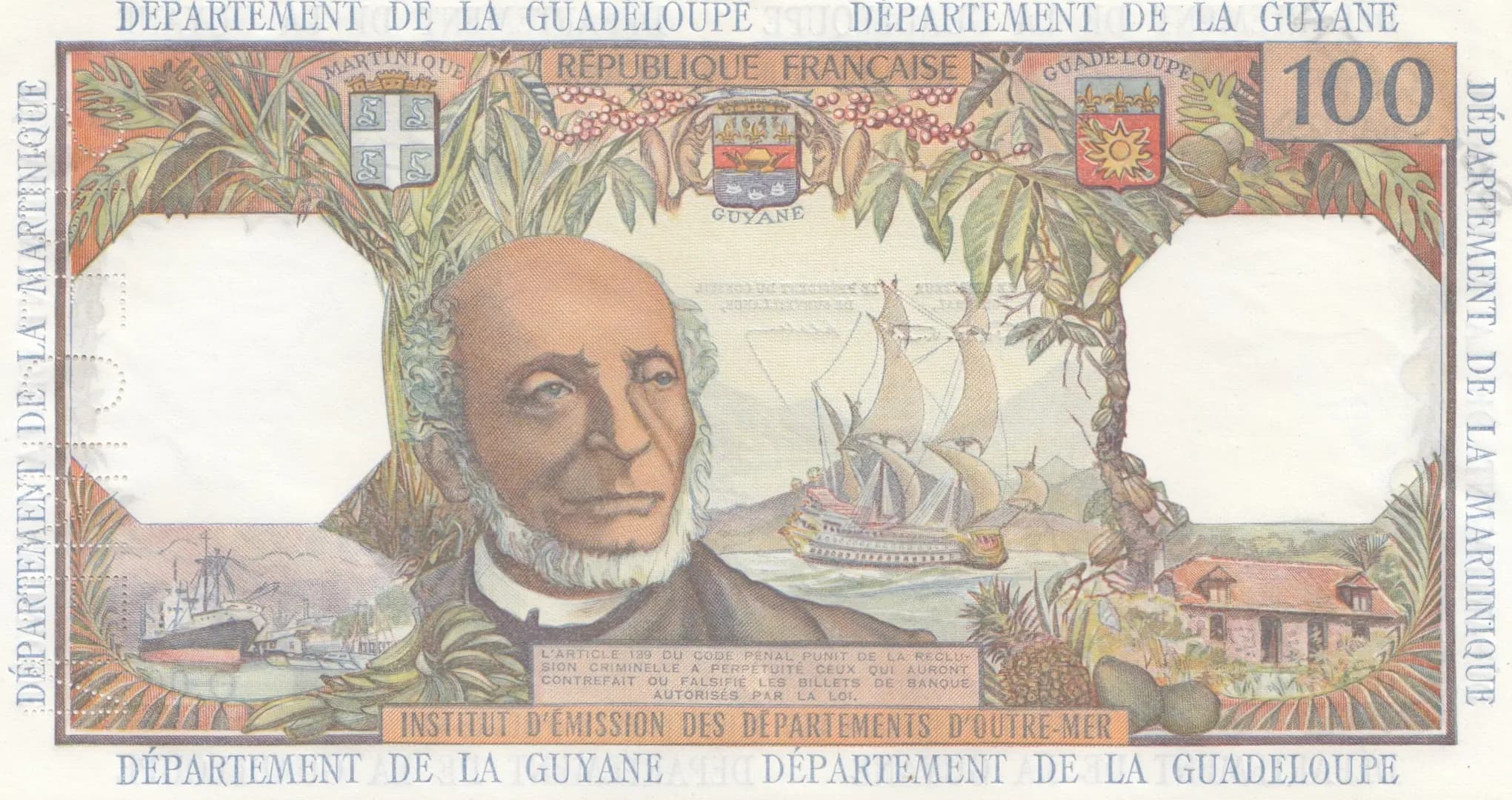
The obverse features a portrait of an elderly gentleman with white hair and beard in formal period attire, positioned on the right side of the note, with a mountainous landscape and water body visible in the background. Decorative tropical borders frame both sides, incorporating red passion flowers and green foliage characteristic of Caribbean flora. The reverse presents the same dignified portrait in profile on the left, accompanied by colonial-era maritime imagery including sailing vessels and coastal settlements, with heraldic coats of arms for the three overseas departments (Martinique, Guadeloupe, and French Guiana) displayed prominently in the upper center. Tropical fruits, including breadfruit illustrations, and ornamental foliage complete the decorative scheme. The design subtly interweaves French republican symbolism with the distinctive cultural and economic heritage of each overseas department, presenting them as integral parts of the French state.
FRONT SIDE: 'RÉPUBLIQUE FRANÇAISE' (French Republic); '100' and 'CENT FRANCS' (One Hundred Francs); 'INSTITUT D'ÉMISSION DES DÉPARTEMENTS D'OUTRE-MER' (Issuing Institute of Overseas Departments); 'DÉPARTEMENT DE LA GUADELOUPE' (Department of Guadeloupe); 'DÉPARTEMENT DE LA GUYANE' (Department of French Guiana); 'LE DIRECTEUR GÉNÉRAL' (The General Director); 'LE PRÉSIDENT DU CONSEIL DE SURVEILLANCE' (The President of the Supervisory Board); Serial number fields showing '00000' and specimen markings. BACK SIDE: 'RÉPUBLIQUE FRANÇAISE' (French Republic); '100'; 'INSTITUT D'ÉMISSION DES DÉPARTEMENTS D'OUTRE-MER' (Issuing Institute of Overseas Departments); Departmental labels for 'MARTINIQUE' (Martinique), 'GUADELOUPE' (Guadeloupe), and 'GUYANE' (French Guiana); 'L'ARTICLE 139 DU CODE PÉNAL PUNIT DE LA RÉCLUSION ORDINAIRE À PERPÉTUITÉ LE CONTREFAIT OU LE FALSIFIEUR DE BILLETS DE BANQUE AUTORISÉS PAR LA BANQUE' (Article 139 of the Penal Code punishes counterfeiting or falsifying banknotes authorized by the bank with ordinary imprisonment up to life sentence).
Intaglio (copperplate) engraving, evidenced by the fine line work, intricate decorative borders, and precise portrait rendering visible throughout both sides. The sharp details in the tropical foliage, heraldic shields, maritime vessels, and architectural elements demonstrate the sophisticated craftsmanship typical of high-security banknote production of the 1960s. The ornate borders and security features such as the watermark areas suggest production by a specialized security printer, likely Banque de France's contracted engraver, with the specimen overprint applied as a secondary security measure.
This note is catalogued as Pick P-10s, the specimen variant of the 1964 100 Francs. The PMG population report identifies this as distinct from P-10a, P-10as, and P-10b variants, which are believed to differ by watermark type (Women's Heads watermark noted for P-10a and P-10as). This specific specimen carries the 'SPECIMEN' overprint and blank/specimen serial number fields (00000), confirming its non-circulating status and official specimen designation. The absence of standard circulation serial numbers is the defining characteristic distinguishing this from regular issue notes.