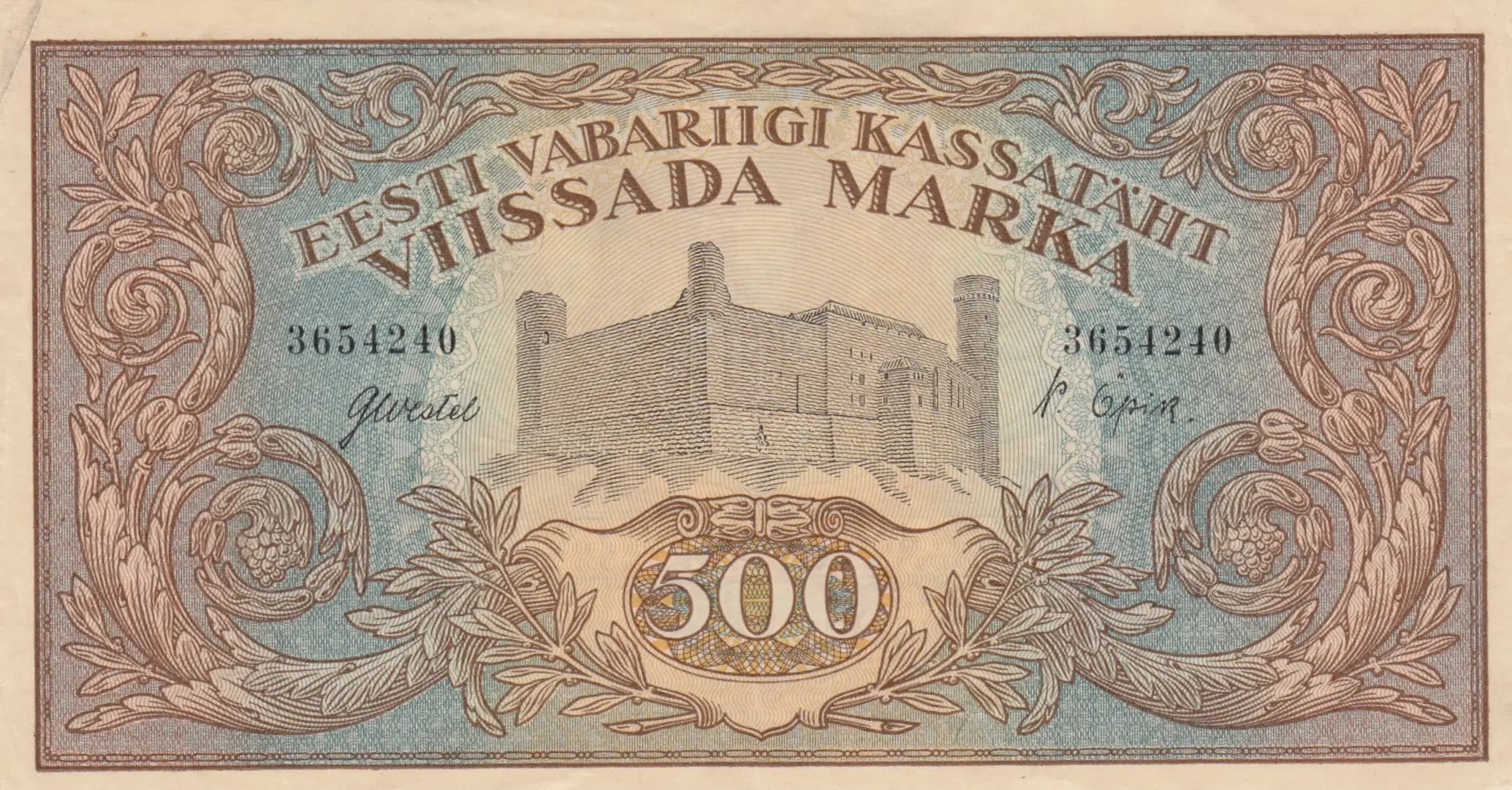
500 marka 1923 specimen
Market Prices
About This Note
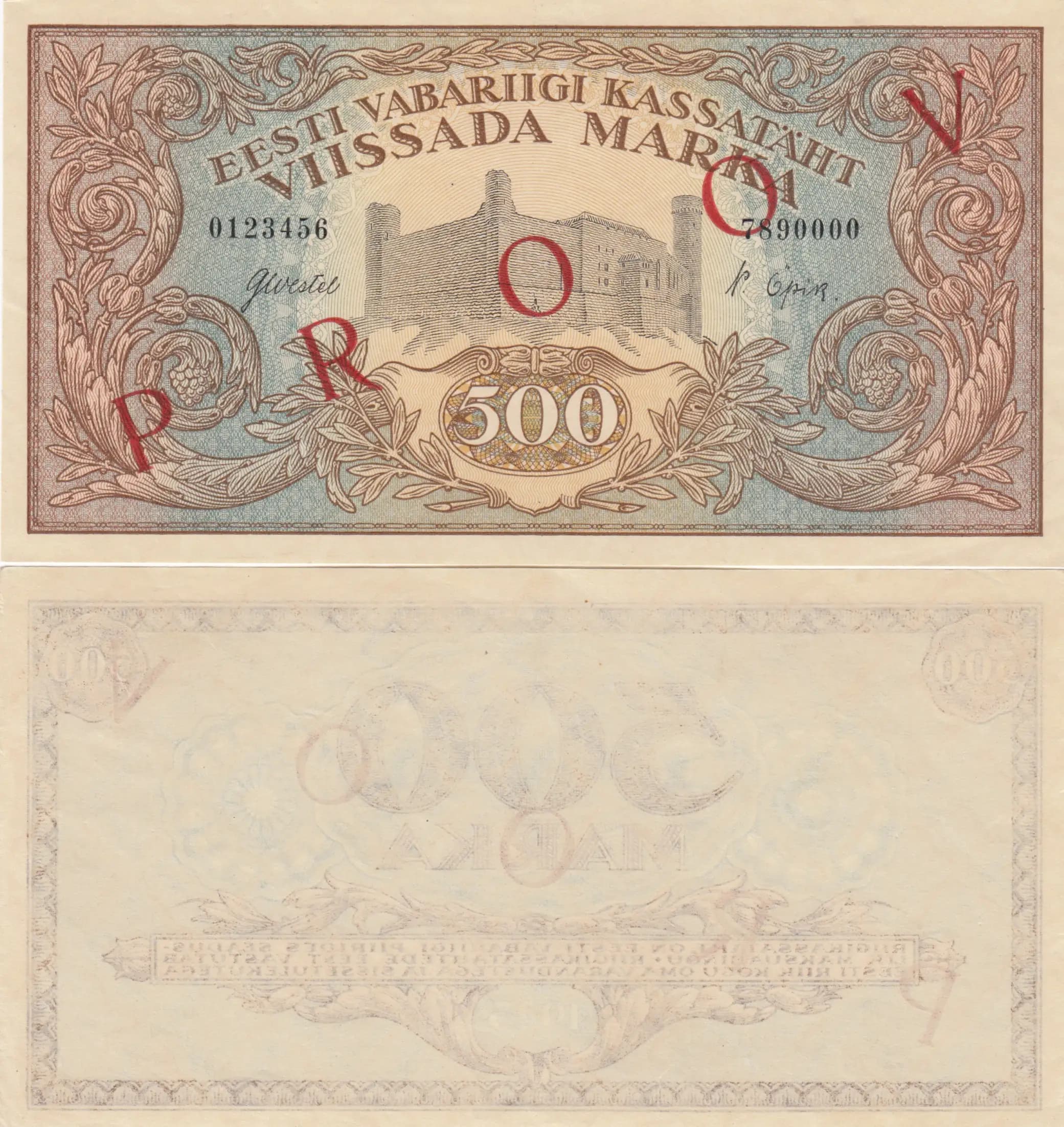
This is an exceptional Estonian 500 Marka specimen note from 1923, graded AU, representing a key issue from the early Estonian Republic period. The note features ornate Art Nouveau-influenced decorative borders with the iconic Toompea Castle depicted at center front, rendered in light blue-green, tan, and brown tones. Red specimen overprints prominently mark this as a non-circulating reference copy, and the pristine condition with no visible wear confirms its protected status since issuance.
Uncommon. While the base denomination and year are relatively standard issues from the Treasury of Estonia, specimen notes (Pick P-52s variant) represent a small fraction of any currency printing, as they were produced in limited quantities for archival, security, and distribution reference purposes only. The eBay market data shows specimen copies trading in the $80-$180 range typically, with some uncirculated examples reaching $150, which is modest compared to heavily circulated examples at $35-$70. The 2016 catalogue valuation of $1000 for UNC specimens appears optimistic relative to current realized prices, suggesting the specimen variant may be slightly more available than catalogue values suggest, though it remains notably less common than circulation strikes.
The 500 Marka note was issued by the newly independent Estonian Republic's Treasury following the December 15, 1922 legislation establishing the national currency system, with this particular printing dated 1923. The prominent feature of Toompea Castle (Domberg), the seat of Estonian government and a symbol of national sovereignty, reflects the nation's assertion of independence from Russian imperial rule. The ornate, Western European-influenced design aesthetic of the note demonstrates Estonia's deliberate cultural orientation toward Nordic and Western Europe during this formative period of the interwar republic.
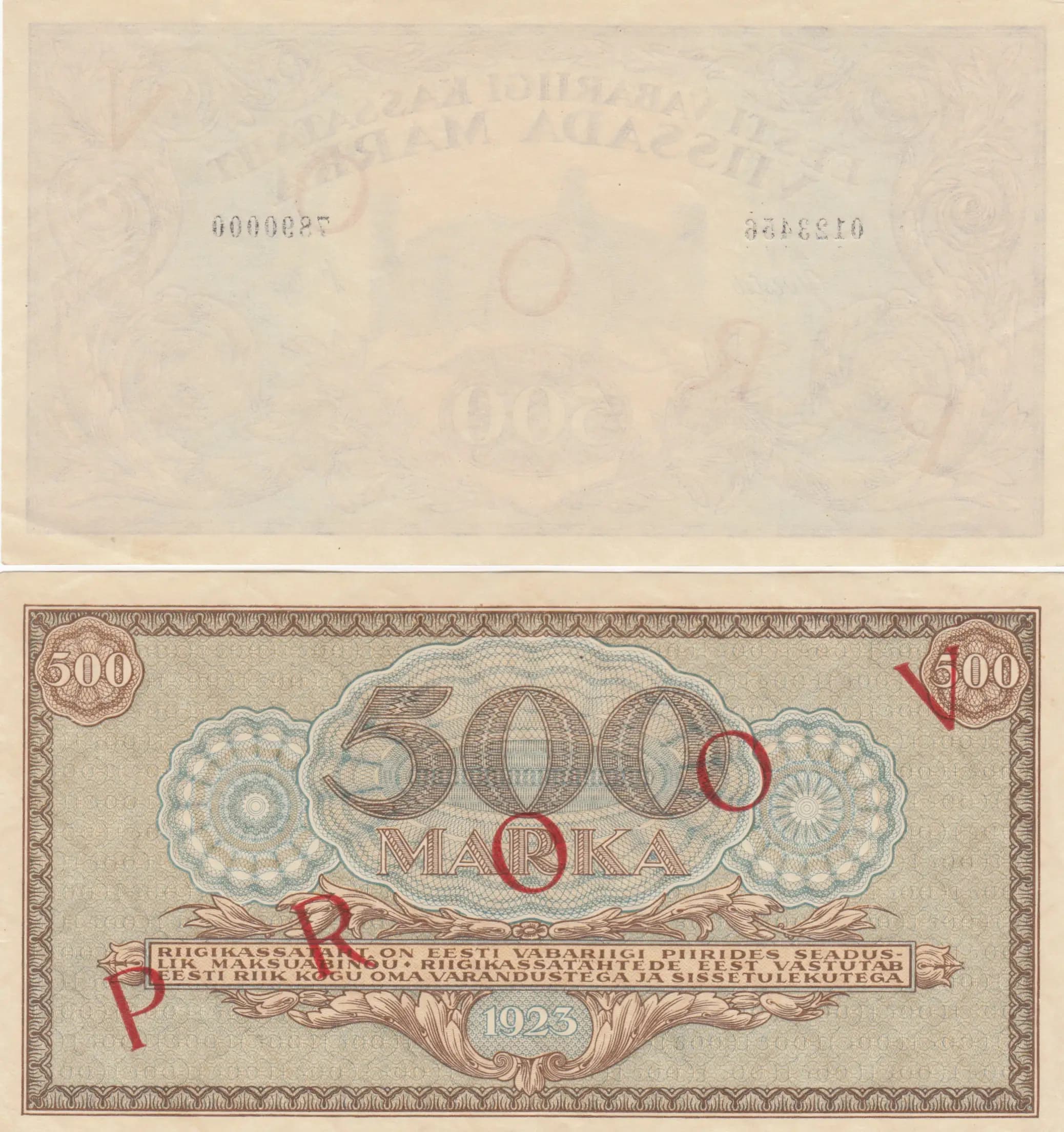
The note showcases a refined neoclassical design centered on the architectural landmark of Toompea Castle with its characteristic crenellated walls and fortified structure, positioned as the dominant vignette on the obverse. The castle imagery represents Castrum Danorum (Danish Castle), the historic seat of power. The design is framed by elaborate ornamental borders featuring Art Nouveau scrollwork and floral patterns in all four corners, with laurel wreaths framing the denomination numerals. The reverse displays a more abstract composition, featuring prominent circular rosettes in the upper corners containing the denomination '500', with complementary ornamental flourishes throughout. The overall aesthetic employs symmetrical, formal composition typical of early 20th-century European currency design, emphasizing national dignity and security through visual complexity.
FRONT: 'EESTI VABARIIGI KASSATÄITIT' (Estonian Republic Treasury Note); 'VIIISSADA MARKA' (Five Hundred Marks); Serial numbers: 0123456 and 2890000; Denomination: 500; Overprint: 'SPECIMEN'. BACK: Denomination: '500 MARKA' (500 Marks); Legal basis text: 'RIIGIKASSA ION EESTI VABARIIGI PIIRIDES SEADUS 15.12.1922 TUNNUSSTATAKSE KASUTUSSE KÄESOLEVA REGULATSIOONI JÄRGI KÄESOLEVA MÄRGISTUSE JÄRGI VASTUTUSELEKULEGA' (State Treasury of the Estonian Republic - Law of 15.12.1922 recognized for use according to these regulations and markings with responsibility); Year: 1923; Serial numbers: 6000027 and 5788510; Specimen overprints in red.
This note was produced using fine-line engraving and intaglio printing methods, evidenced by the crisp detail visible in the ornate guilloche patterns, decorative scrollwork, and the three-dimensional quality of the castle vignette. The complex ornamental design served dual purposes as both aesthetic expression and anti-counterfeiting security measure. The specimen overprints were applied separately in red, likely through a different printing stage or by hand/machine overprinting after the primary currency design was completed. The watermark patterns (rhombic designs noted in reference data) are consistent with period security currency papers manufactured to resist counterfeiting.
This is Pick P-52s, the specimen overprint variant (vs. P-52a, the standard circulation issue). The specimen designation is confirmed by the red 'SPECIMEN' overprints visible in Cyrillic (Р) and English across both sides. The serial numbers shown (0123456/2890000 on obverse, 6000027/5788510 on reverse) may indicate this as a low-number specimen example, potentially from an early printing batch. No signature varieties are evident in the visual analysis, consistent with Estonian notes of this period which typically lacked personalized signatories on high denominations. The 1923 date is consistent with the catalogue designation.