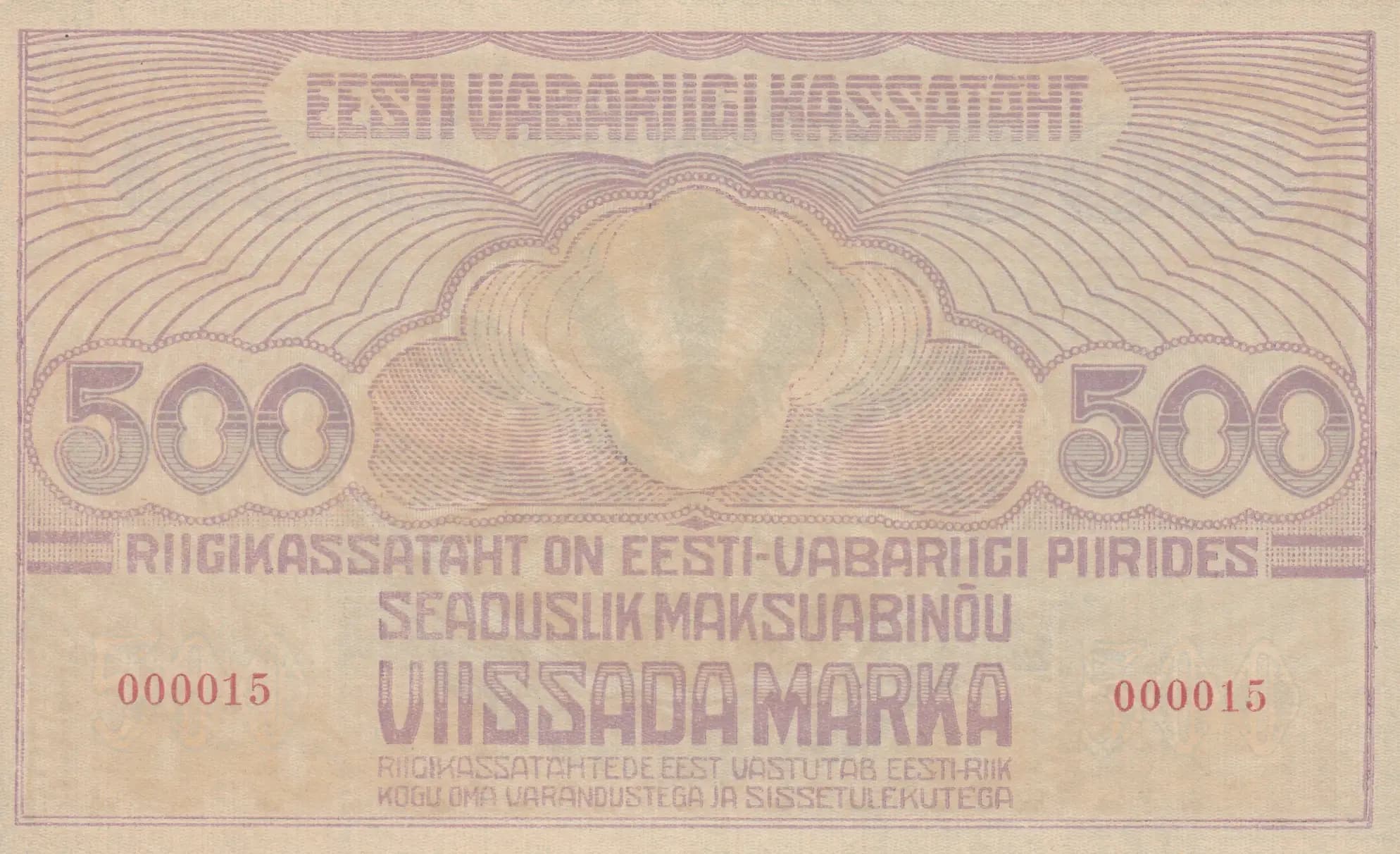
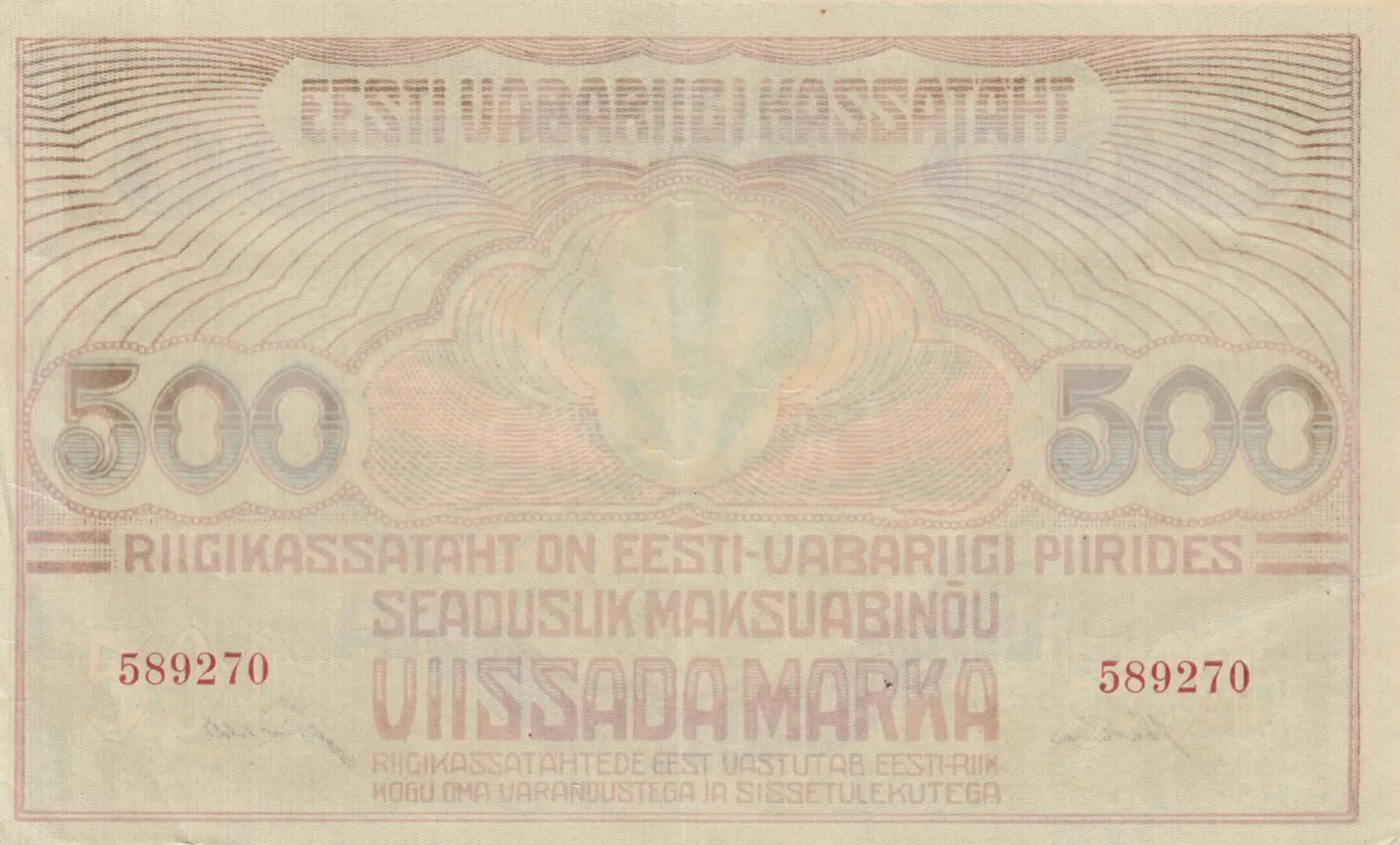
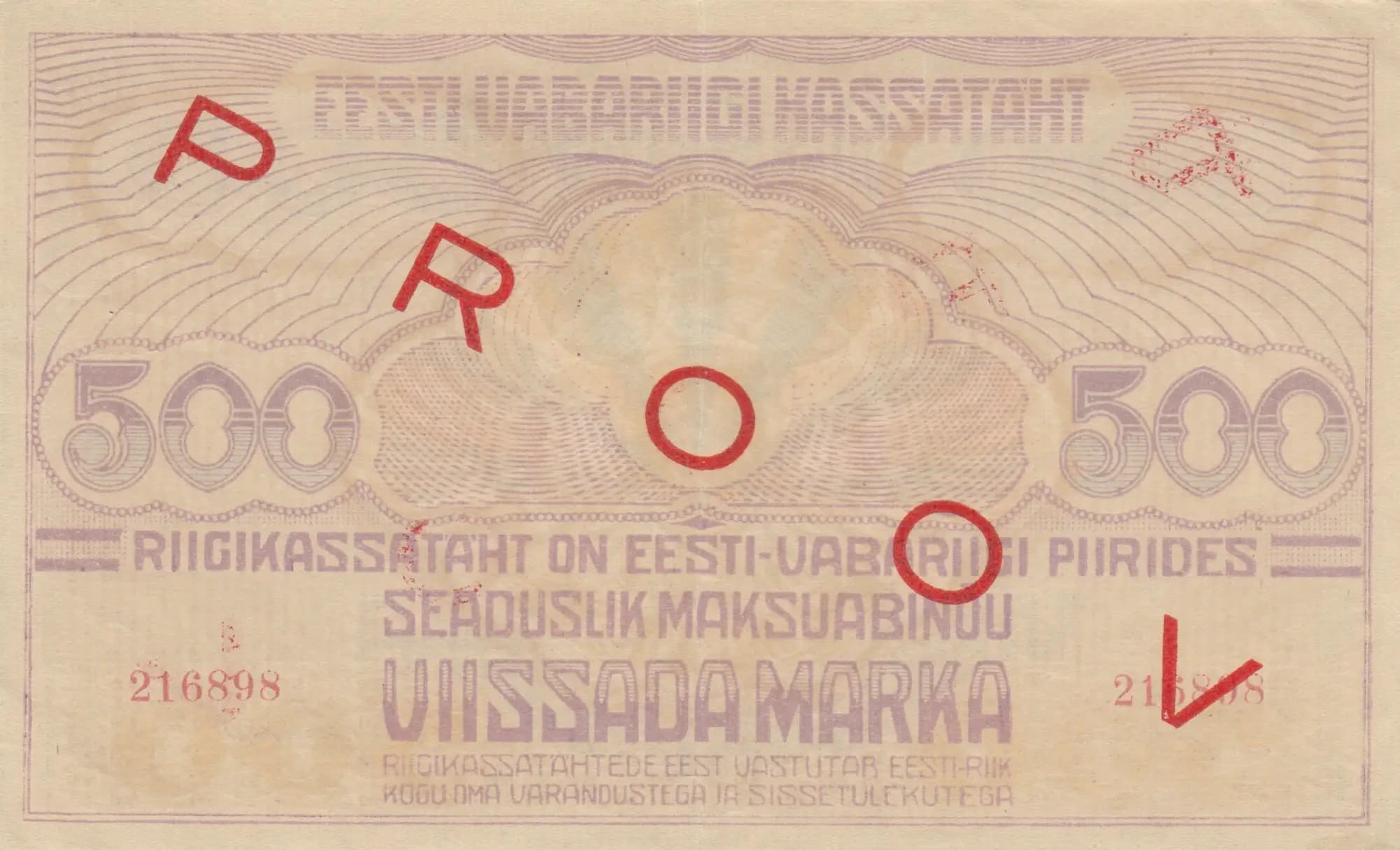
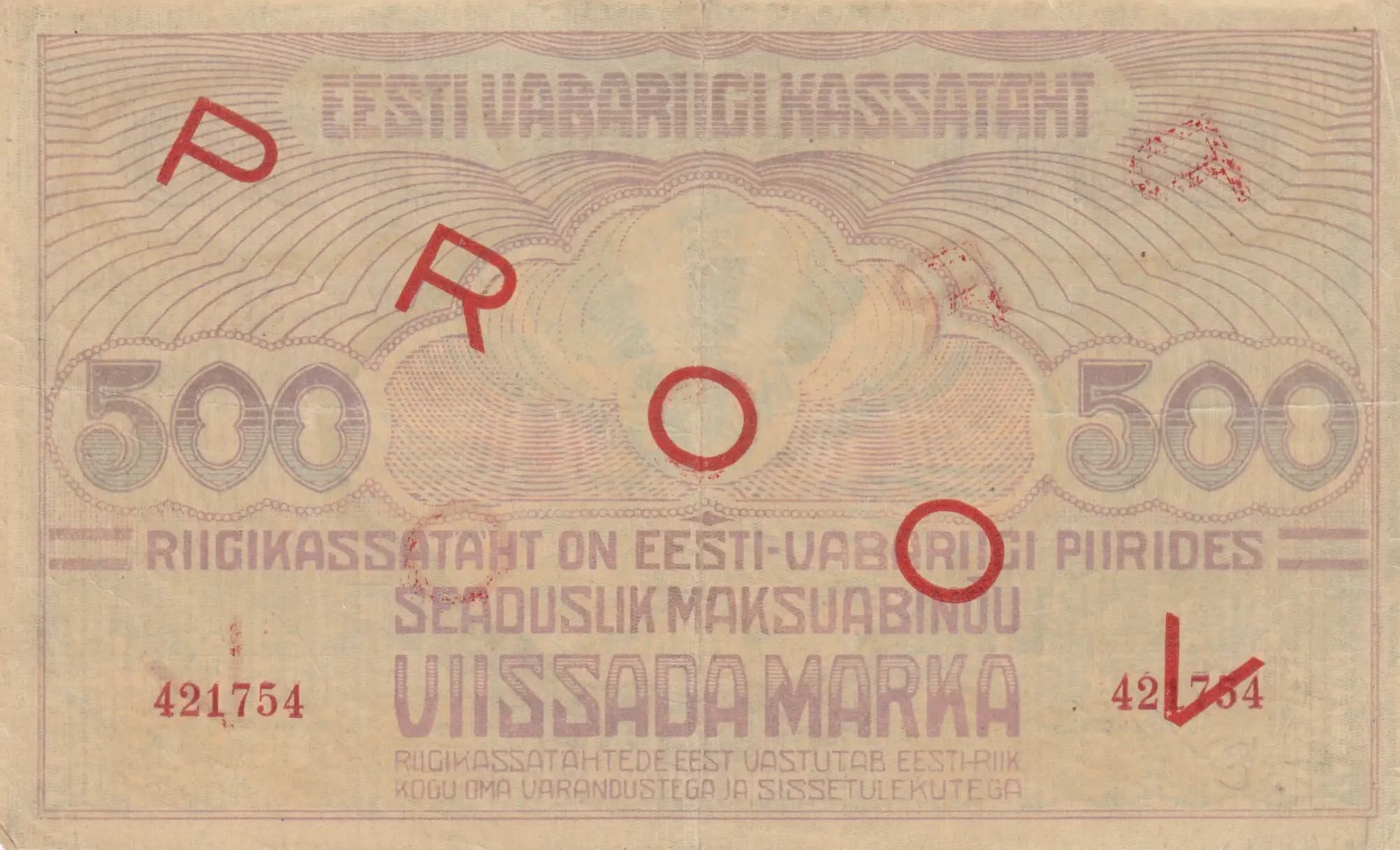
500 marka 1920 specimen
Market Prices
About This Note
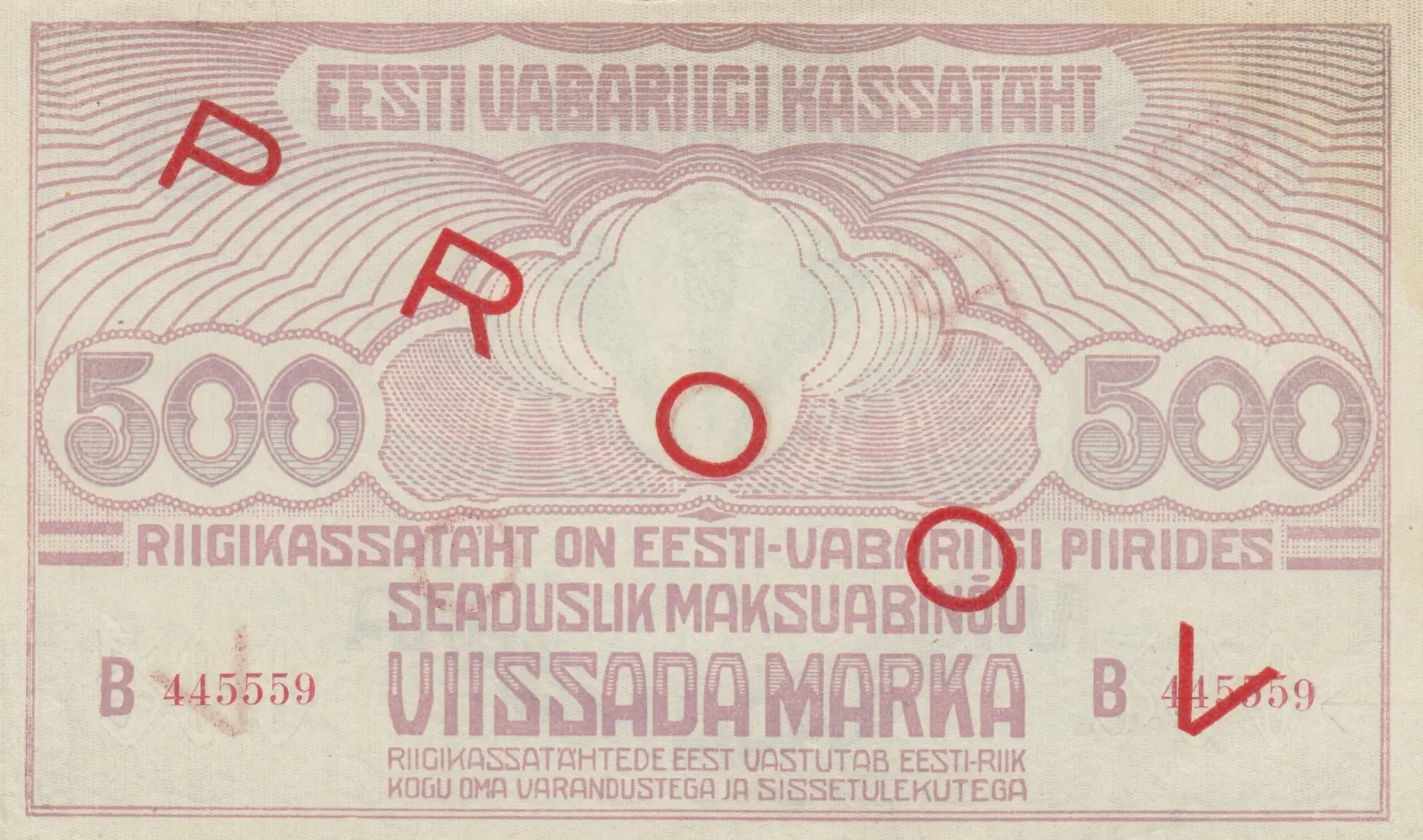
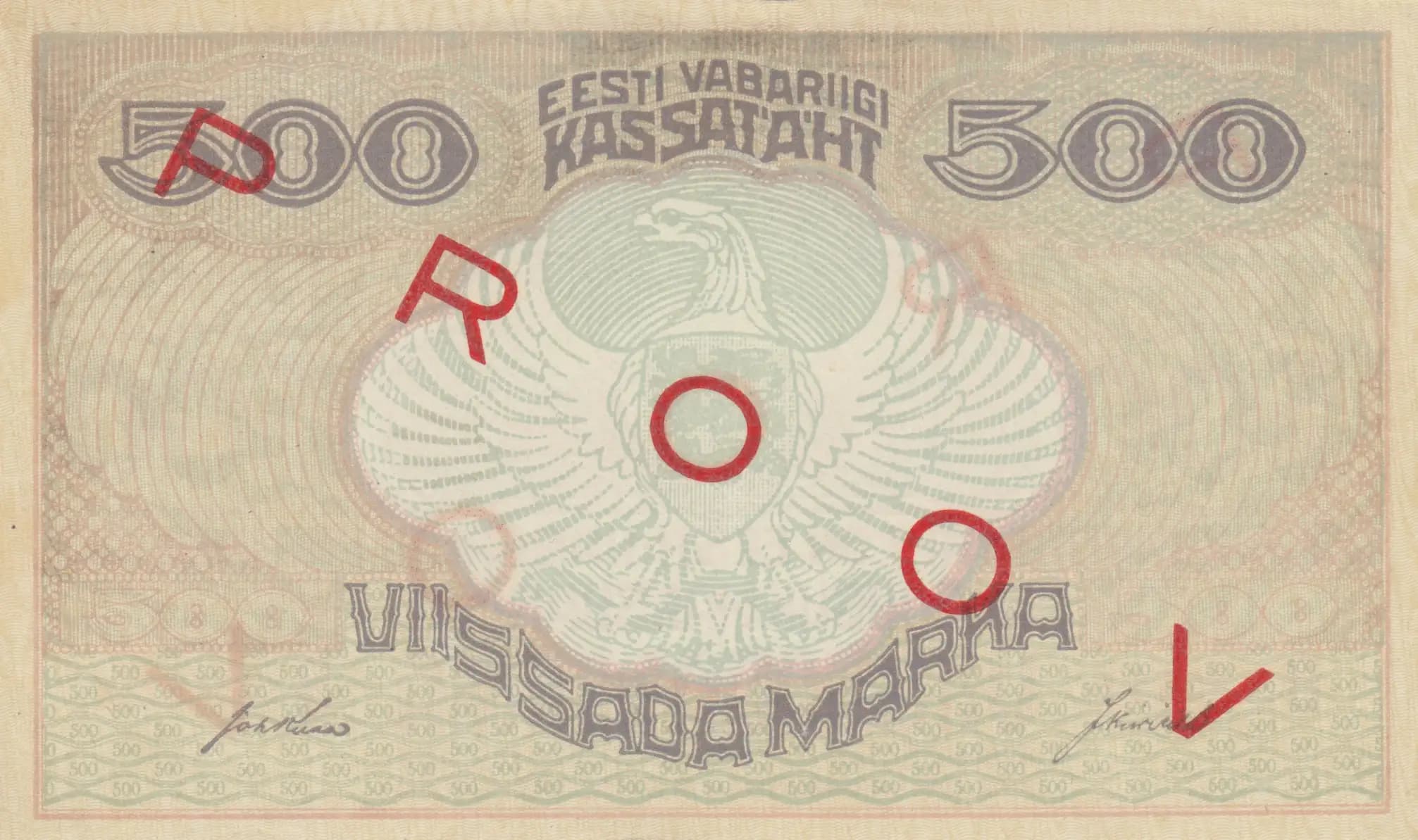
This is an Estonian 500 Marka specimen note from 1920, issued by the Treasury of Estonia (Eesti Vabariigi Kassataht) during the early years of Estonian independence. The note displays exceptional condition with crisp, uncirculated paper and sharp engraving details throughout. Red specimen overprints are prominently applied across both sides, making this a desirable example for collectors of early Estonian currency and specimens.
Common. The eBay market pricing data shows consistent sales activity across multiple condition grades, with most examples trading between $38.50 and $245.00 USD depending on grade. The presence of multiple graded variants in the PMG population report and the broad price range across condition grades typical of regularly circulating notes indicate this denomination was produced in sufficient quantities to remain readily available in the modern collector market. Specimen overprints do not significantly elevate rarity for this particular issue.
The 500 Marka note was issued in 1920 as Estonia established its independent currency following the country's break from Russian imperial rule. The heraldic eagle prominently featured on the reverse side represents Estonian national sovereignty and independence, while the ornate guilloché patterns and sophisticated security features reflect the newly formed republic's commitment to establishing a credible, secure currency system during the unstable post-WWI period.
The 500 Marka features a classical early 20th-century design aesthetic with highly detailed engraving throughout. The obverse displays a mauve-pink color scheme with intricate wavy guilloché line patterns providing background security. The center features an ornamental cloud-like oval cartouche with horizontal line patterns containing the denomination '500' in large numerals positioned on both left and right margins. The reverse adopts a green-olive color scheme and showcases a detailed heraldic eagle with spread wings mounted within an ornamental circular frame at the center, representing the Estonian national symbol. Fine line engraving patterns and complex guilloché work cover both sides, with the denomination repeated in large numerals. All inscriptions are rendered in Estonian, reinforcing national identity during the early independence period.
Front side: 'EESTI VABARIIGI KASSATAHT' (Estonian Republic State Treasury Note); '500' (denomination numeral); 'RIIGIKASSATAHT ON EESTI-VABARIIGI PIIRDES SEADUSLIK MAKSUABINGU' (State Treasury Note is legal tender within the Estonian Republic); 'VIISSADA MARKA' (Five hundred marks); 'RIIGIKASSATAHTEDE EEST VASTUTAB EESTI-RIIK KOGU OMA VARANDUSTEGA SISSETULEVESTE' (The Estonian State is responsible for State Treasury Notes with all its property and income); Serial number: 'B 445559'. Back side: 'EESTI VABARIIGI KASSATAHT' (Estonian Republic State Treasury Note); '500' (denomination numeral); 'VIISSADA MARKA' (Five hundred marks); Two official signatures visible at bottom.
Intaglio engraving (line engraving and guilloché work), which was the standard security printing method for banknotes of this era. The complexity of the background patterns, the sharpness of the heraldic eagle engraving, and the fine line details visible in both the visual analysis and throughout the note indicate professional currency printing. This note was likely produced by an established European security printing firm contracted by the Estonian Treasury, though specific printer attribution would require additional documentation.
This is the P-49es variant, identified by the watermark 'EV' (Eesti Vabariigi). The PMG population report indicates P-49b is a separate variant of the 500 Marka base Pick number. The specimen marking with red 'PRO' and circular specimen stamps, combined with the serial number prefix 'B 445559', indicates this note is from the specimen printing run rather than regular circulation issue. The two-signature configuration visible at the bottom of the reverse and the specific color schemes (mauve-pink obverse, green-olive reverse) are consistent with the standard 1920 issue.