500 marka 1920
“# 000015”
Market Prices
About This Note
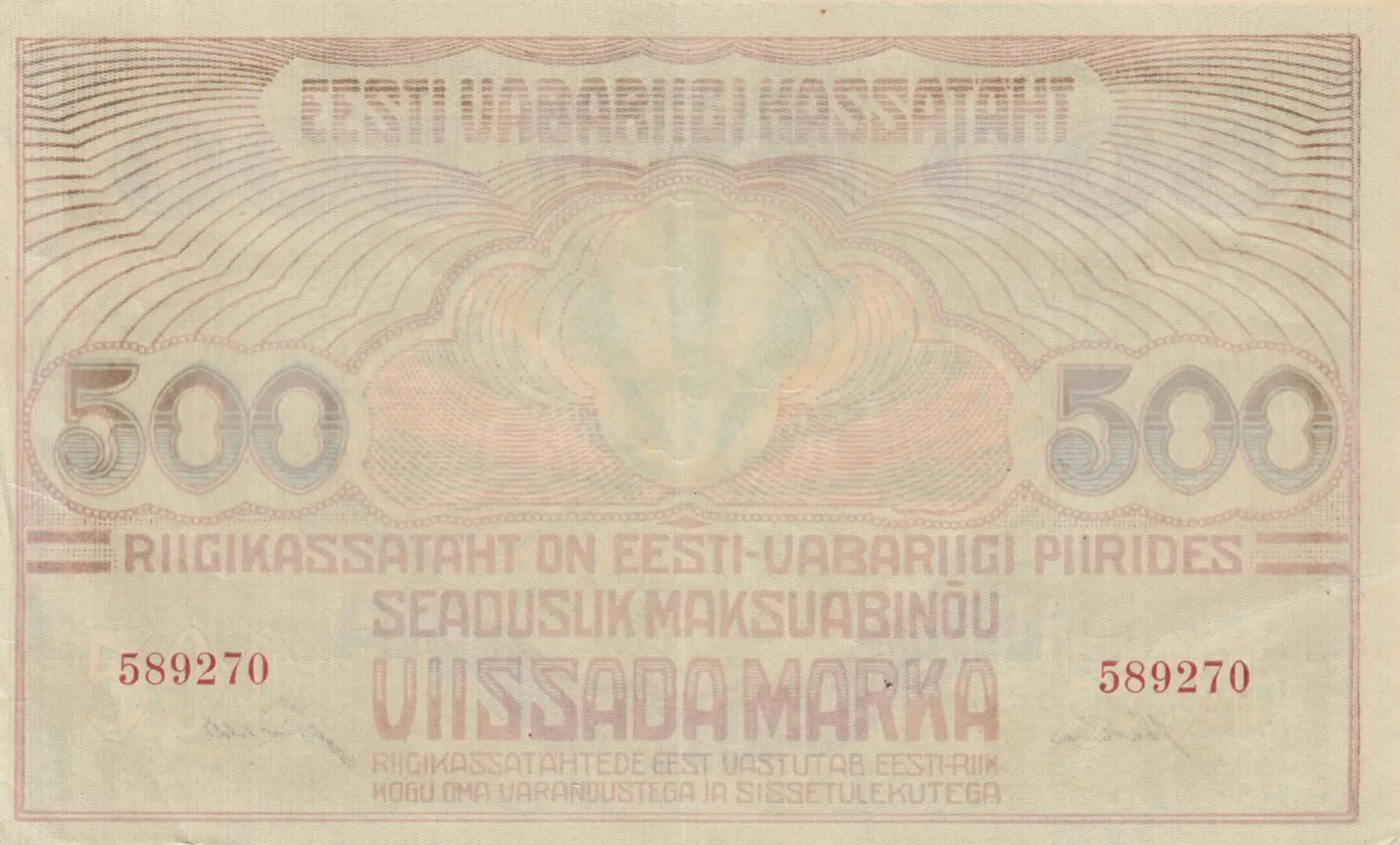
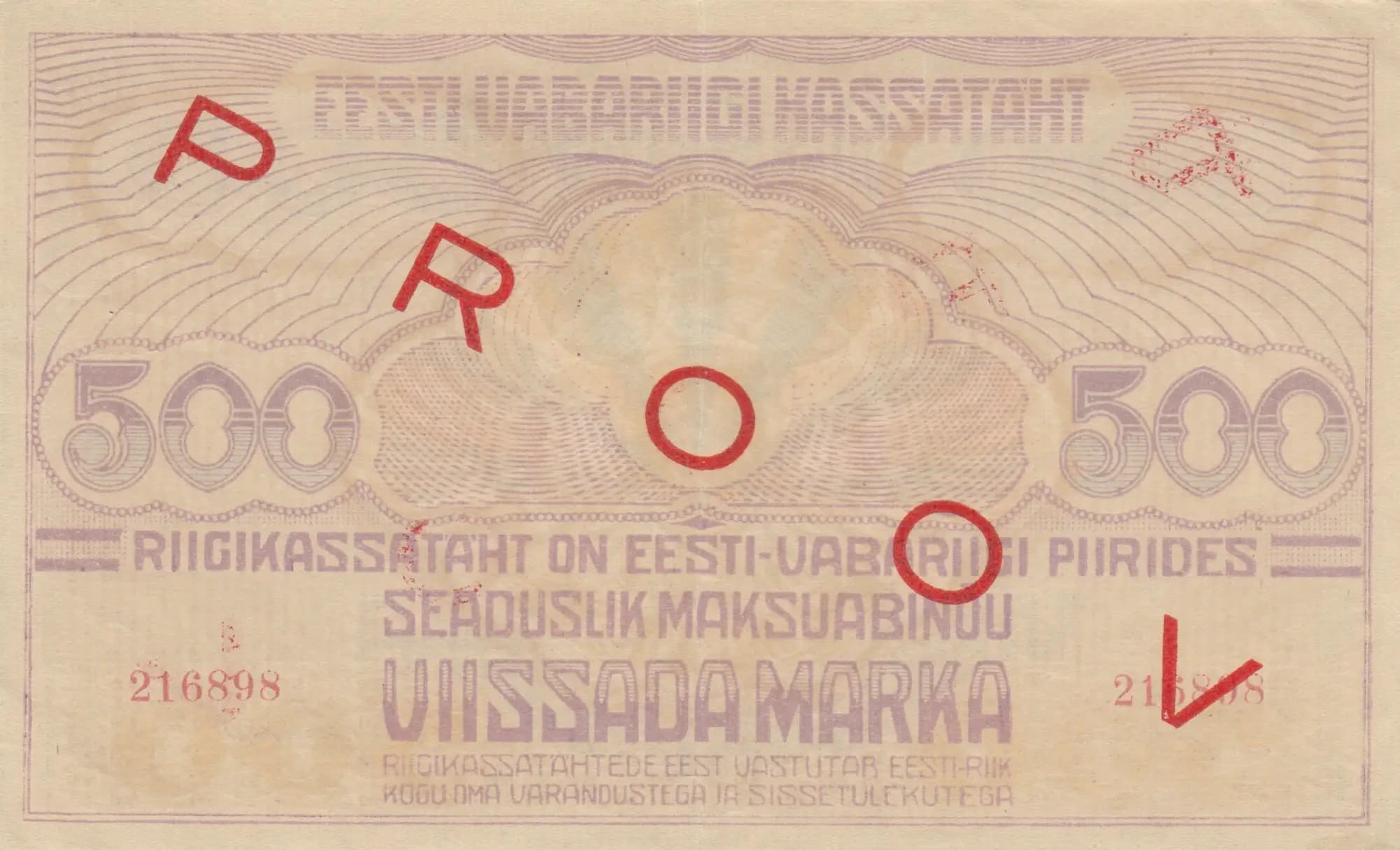
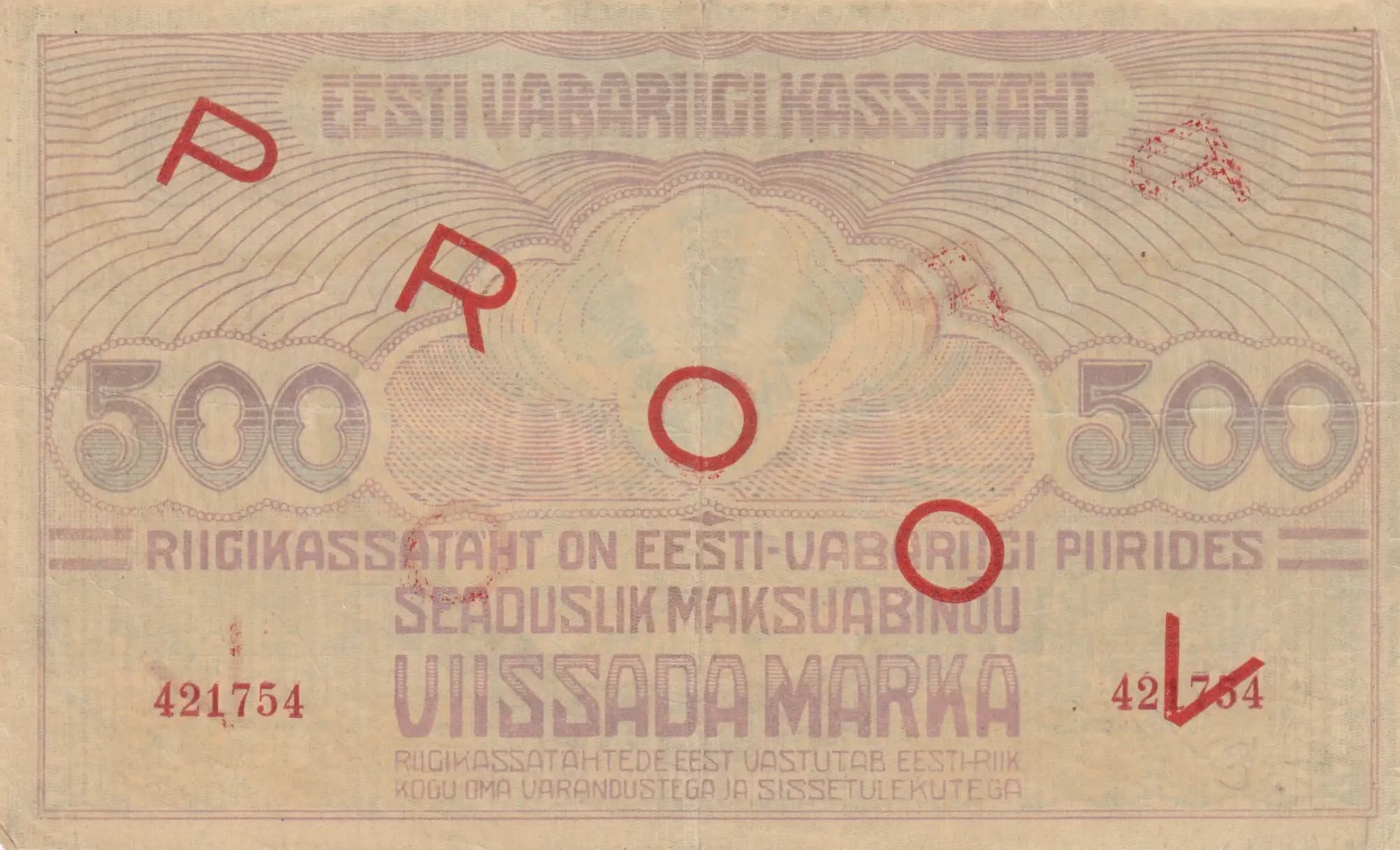
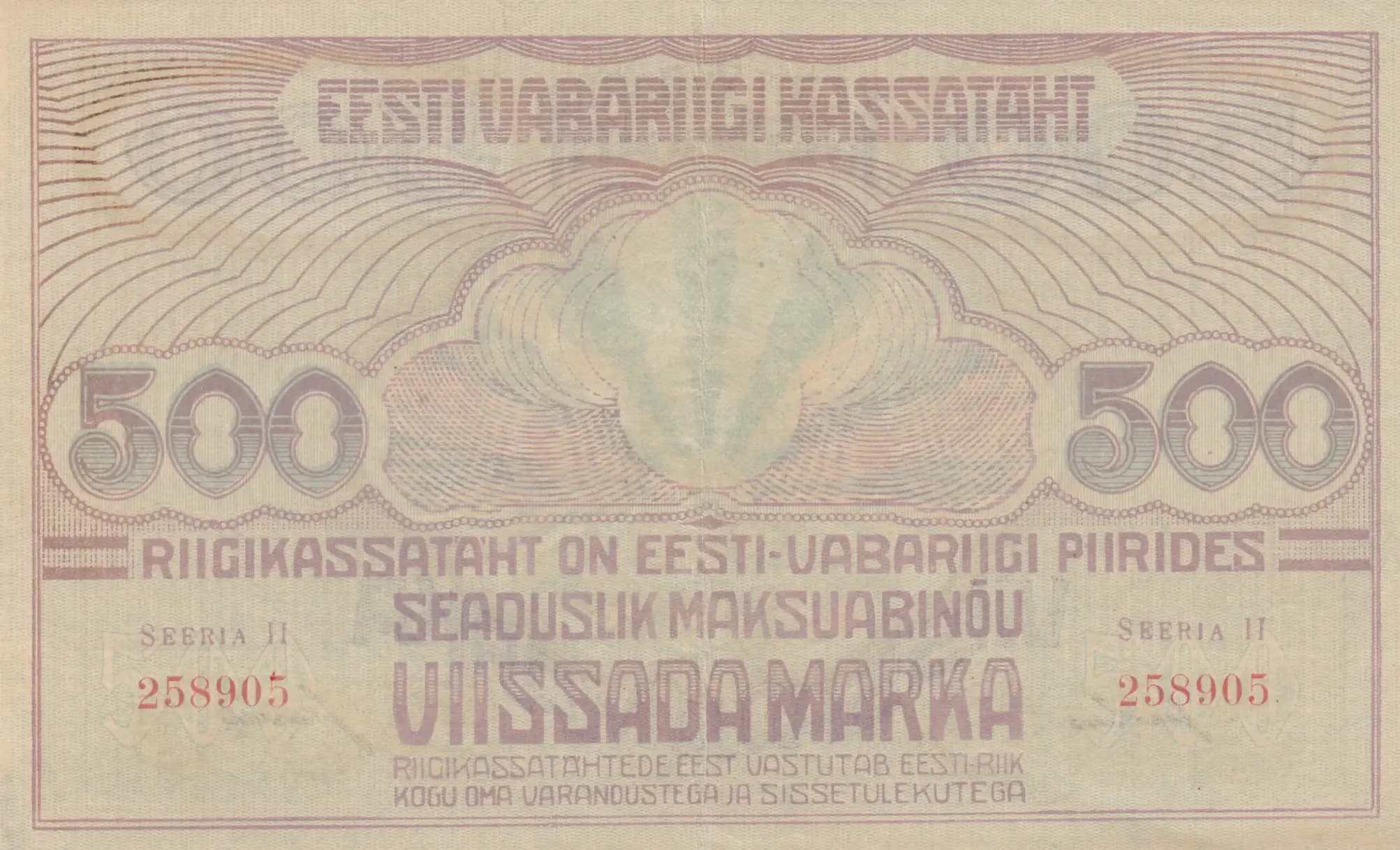
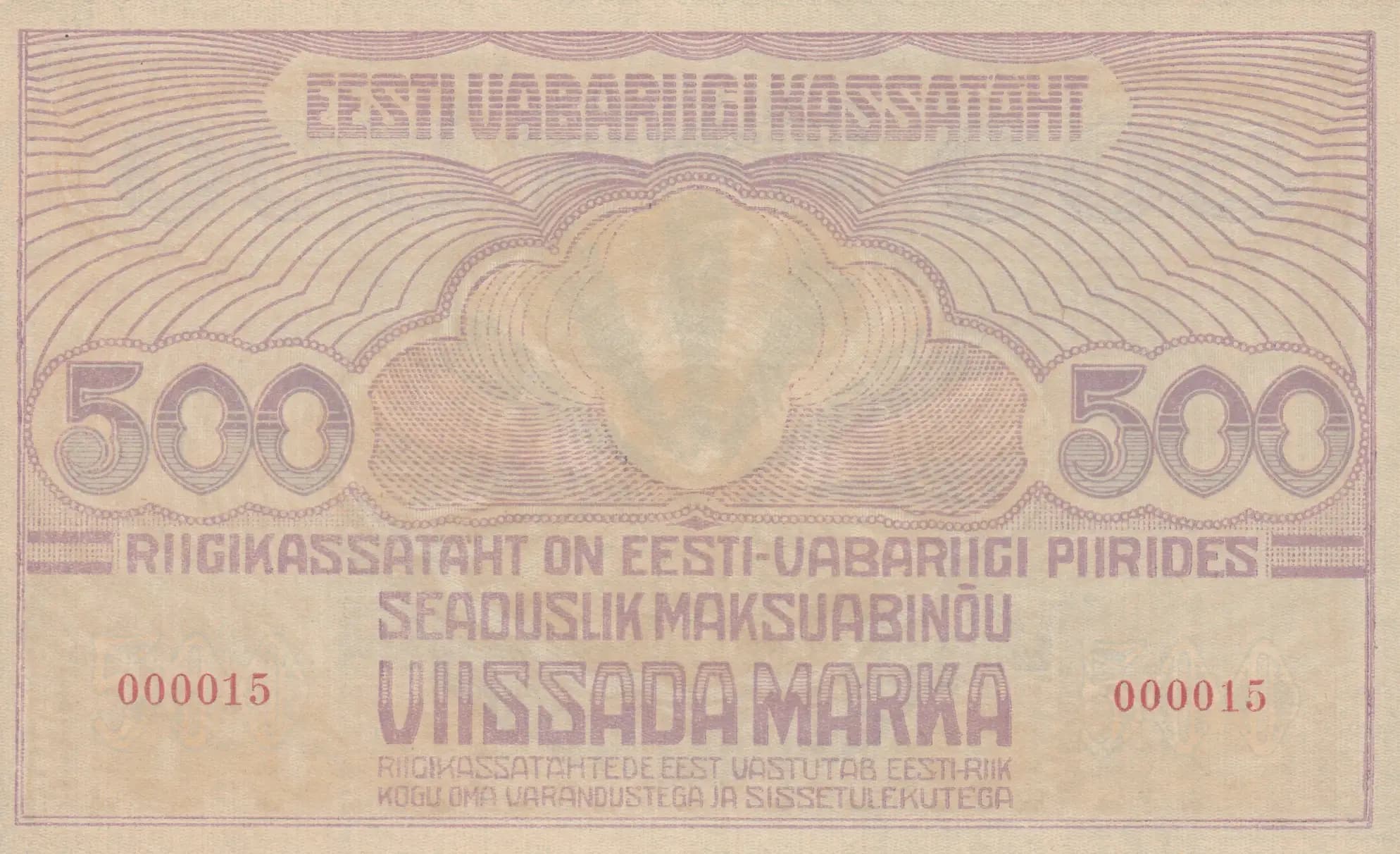
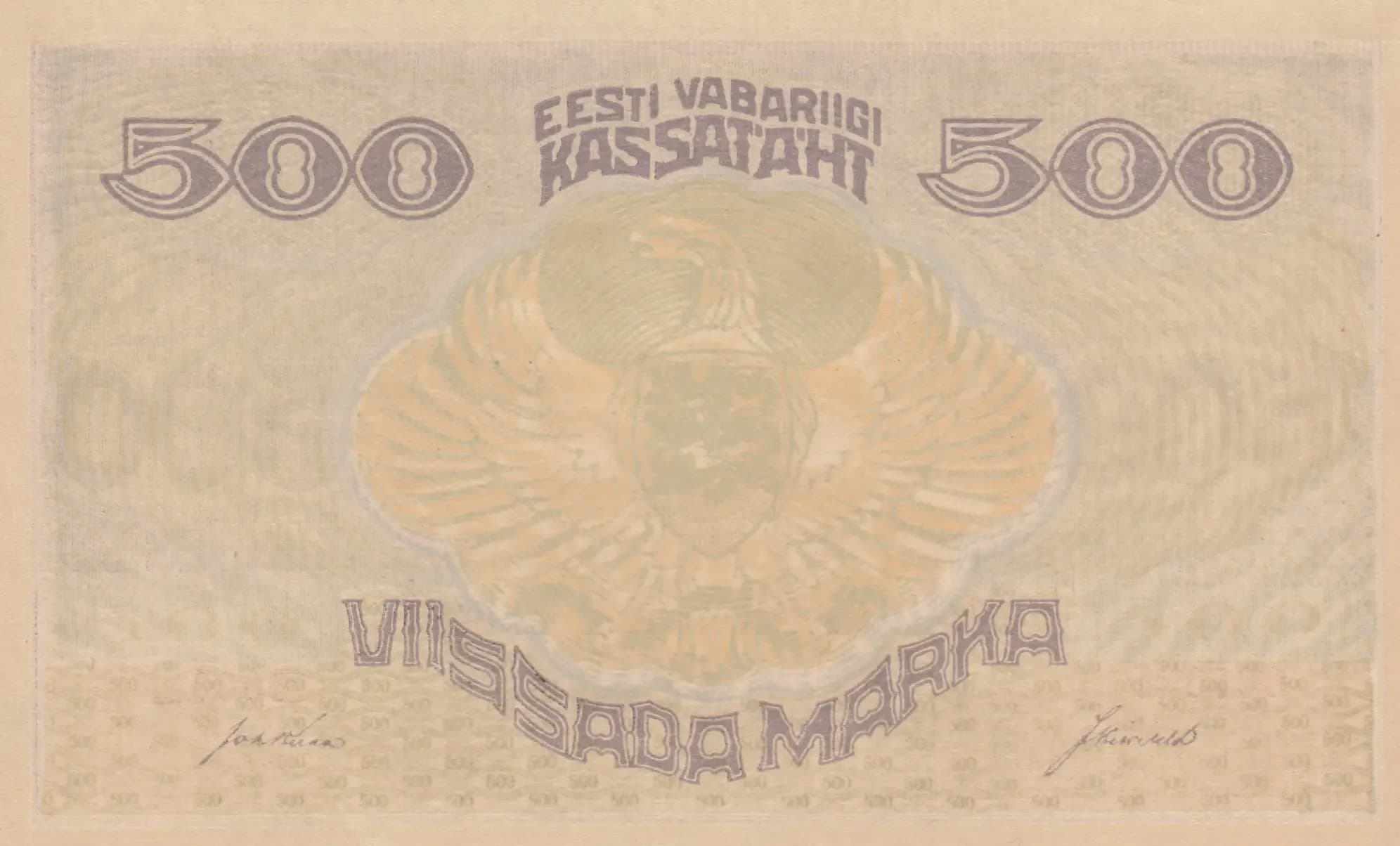
This uncirculated 500 marka note from 1920 represents an early emission of the newly independent Estonian Republic's treasury currency. The note exhibits pristine condition with vibrant purple/mauve printing on a cream background, featuring an ornate heraldic eagle design on the reverse and elaborate decorative geometric patterns on the obverse. The serial number 000015 and flawless preservation make this an exceptional example of Estonia's first national currency issue.
Common. While this is an early issue from a historically significant period, the secondary market eBay data shows consistent availability with UNC examples trading in the $114-$150 range, well below the 2016 catalog value of $500. The wide price range and frequent listings indicate adequate supply in the collector market. Low serial numbers like 000015 command minimal premiums. Early Estonian currency, though historically important, remains common in the numismatic market.
The 500 marka denomination was issued by the Estonian Treasury following the nation's declaration of independence in 1918, during the formative years of the Estonian Republic. The heraldic eagle symbol on the reverse represents the national coat of arms adopted by the new state, while the ornate decorative patterns reflect the artistic sensibilities of early 20th-century European banknote design. This note serves as a tangible artifact of Estonia's brief period of independence before Soviet occupation, making it historically significant beyond its monetary value.
The obverse features a striking ornamental design centered on an elaborate floral or cloud-like medallion surrounded by concentric wavy lines forming an intricate border frame. Large denomination numerals '500' appear in the lower corners in purple ink. The reverse showcases the Estonian heraldic eagle with spread wings, rendered in fine detail within an ornate wreath or laurel frame, symbolizing national sovereignty. The eagle is positioned centrally with large '500' numerals in the upper corners. Both sides maintain a consistent cream/beige background with purple/mauve printing, creating a cohesive and dignified presentation befitting a state treasury note. The fine line work and decorative elements throughout suggest high-quality security printing standards for the period.
FRONT: 'EESTI VABARIIGI KASSATÄHT' (Estonian Republic Treasury Note); '500' and 'VIISSADA MARKA' (Five Hundred Marka); 'RIIGIKASSATÄHT ON EESTI-VABARIIGI PIIRIIDES SEADUSLIK MAKSUABINÕU' (State Treasury Note is legal tender within the Estonian Republic); 'RIIGIKASSATÄHTEDE EEST VASTUTAB EESTI-RIIK KOGU OMA VARANDUSEGA JA SISSETULEKUTEGA' (The Estonian State is responsible for Treasury Notes with all its property and income); Serial number '000015'. BACK: 'EESTI VABARIIGI KASSATÄHT' (Estonian Republic Treasury Note); '500' and 'VIISSADA MARKA' (Five Hundred Marka); 'Juurides' (By/From, appearing twice as signature locations).
Intaglio (engraved) printing, evidenced by the fine line work visible in the eagle's wing details, the intricate concentric wavy patterns, and the precise rendering of decorative elements. The crisp, sharp impressions of the text and numerical denominations are consistent with intaglio production methods standard for European banknote printing in 1920. The printer for Estonian Treasury Notes of this series has not been definitively identified in readily available sources, though Estonian notes of this period were typically produced by established European security printers.
This note corresponds to Pick-49a. The PMG population report indicates at least two cataloged varieties (P-49b and P-49es with EV watermark), suggesting variants exist within this denomination. The watermark noted in catalog references is '500'. The serial number 000015 with no prefix is consistent with early production runs. Without additional distinguishing marks or overprints visible in the images, this appears to be the standard P-49a variety, though comparison with known P-49b and P-49es examples would confirm the exact variety assigned.