500 marka 1920 specimen
Market Prices
About This Note
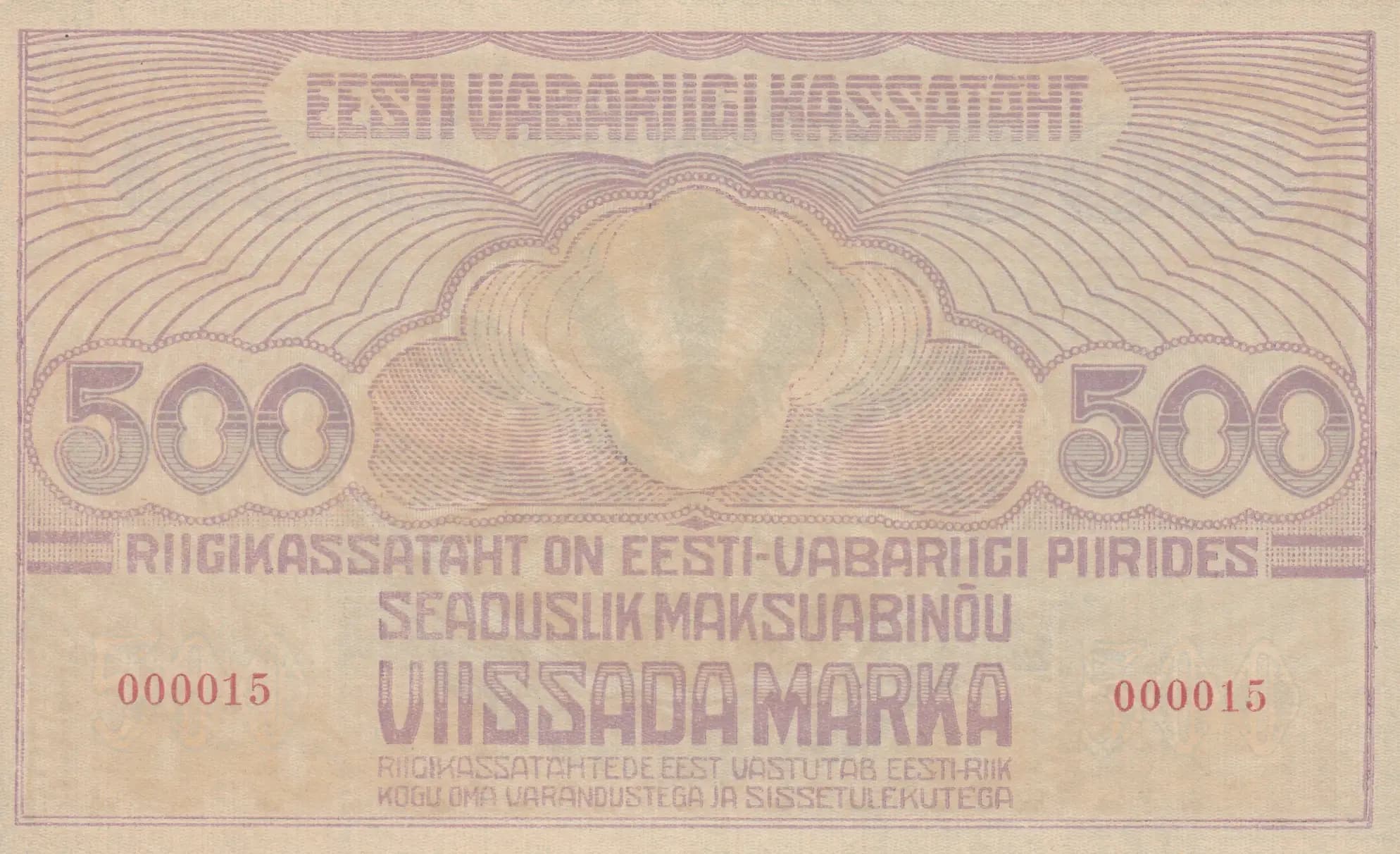
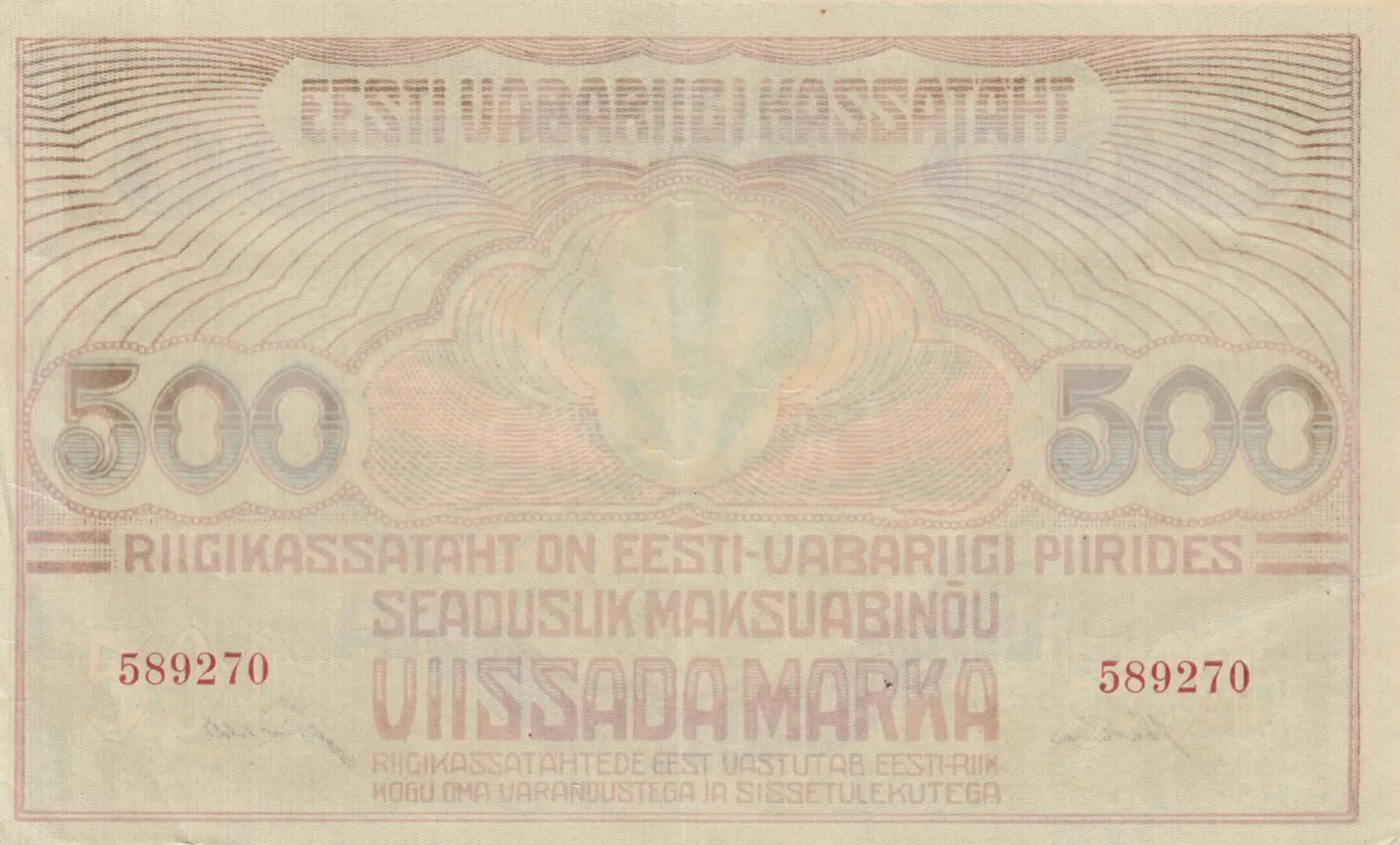
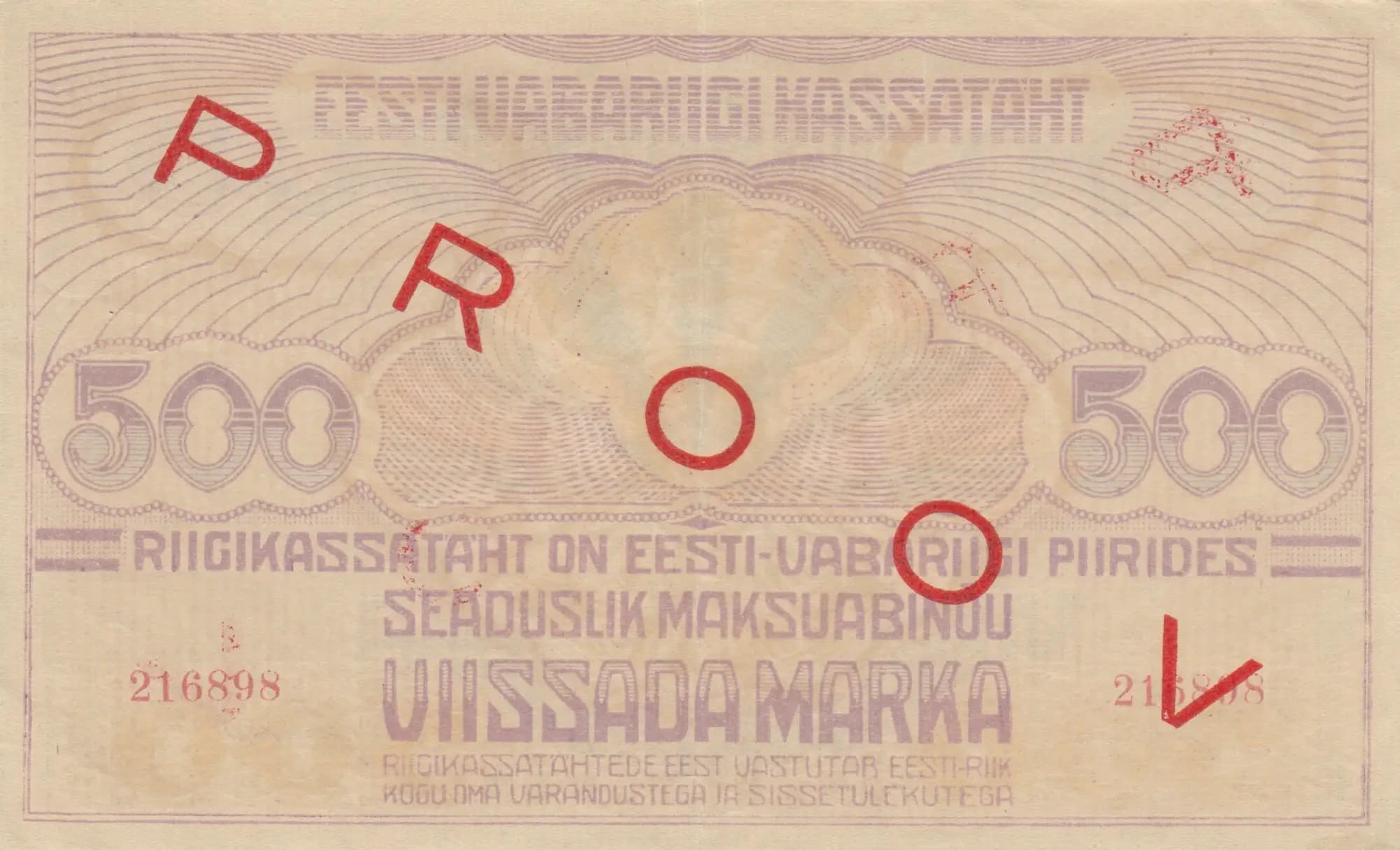
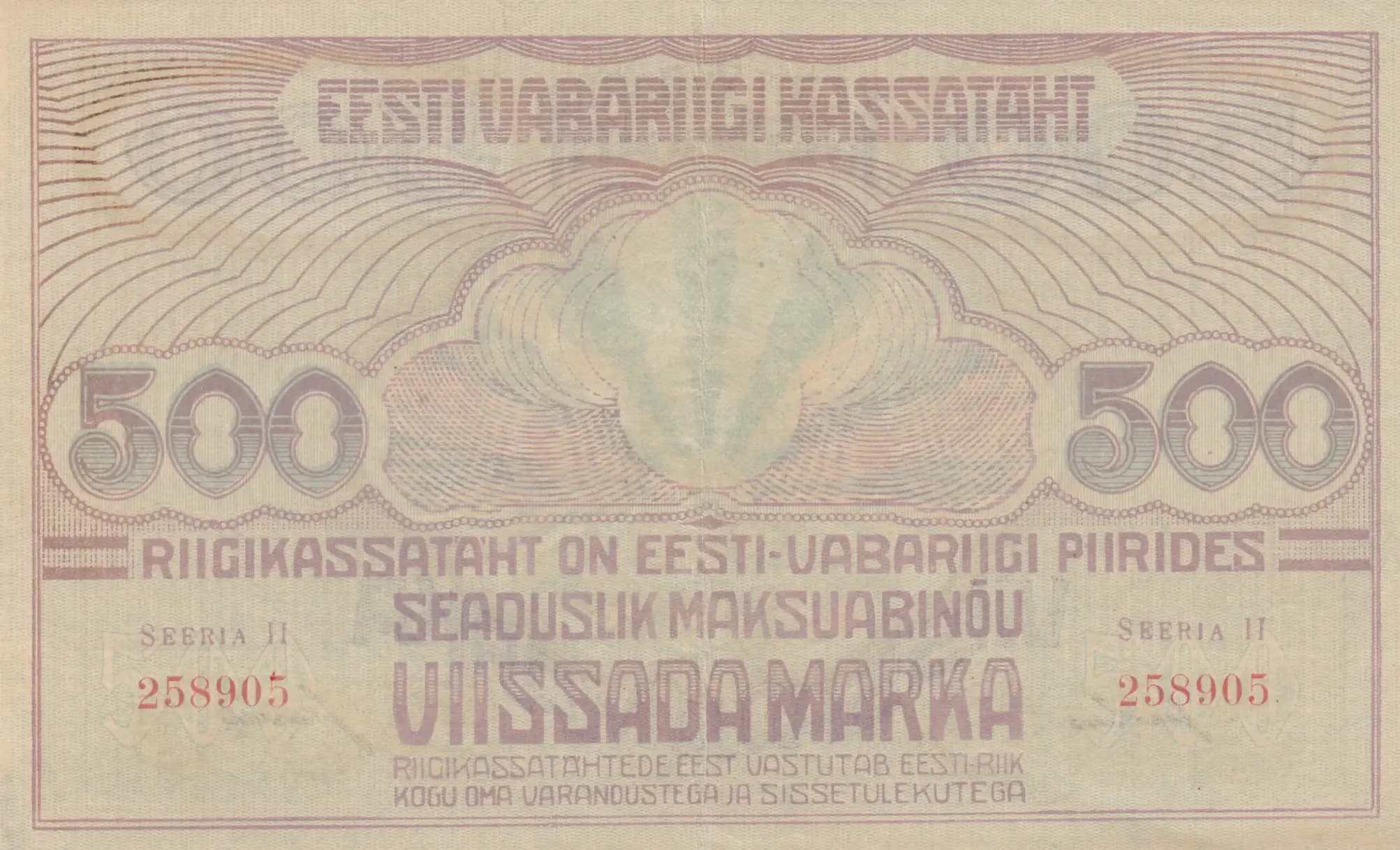
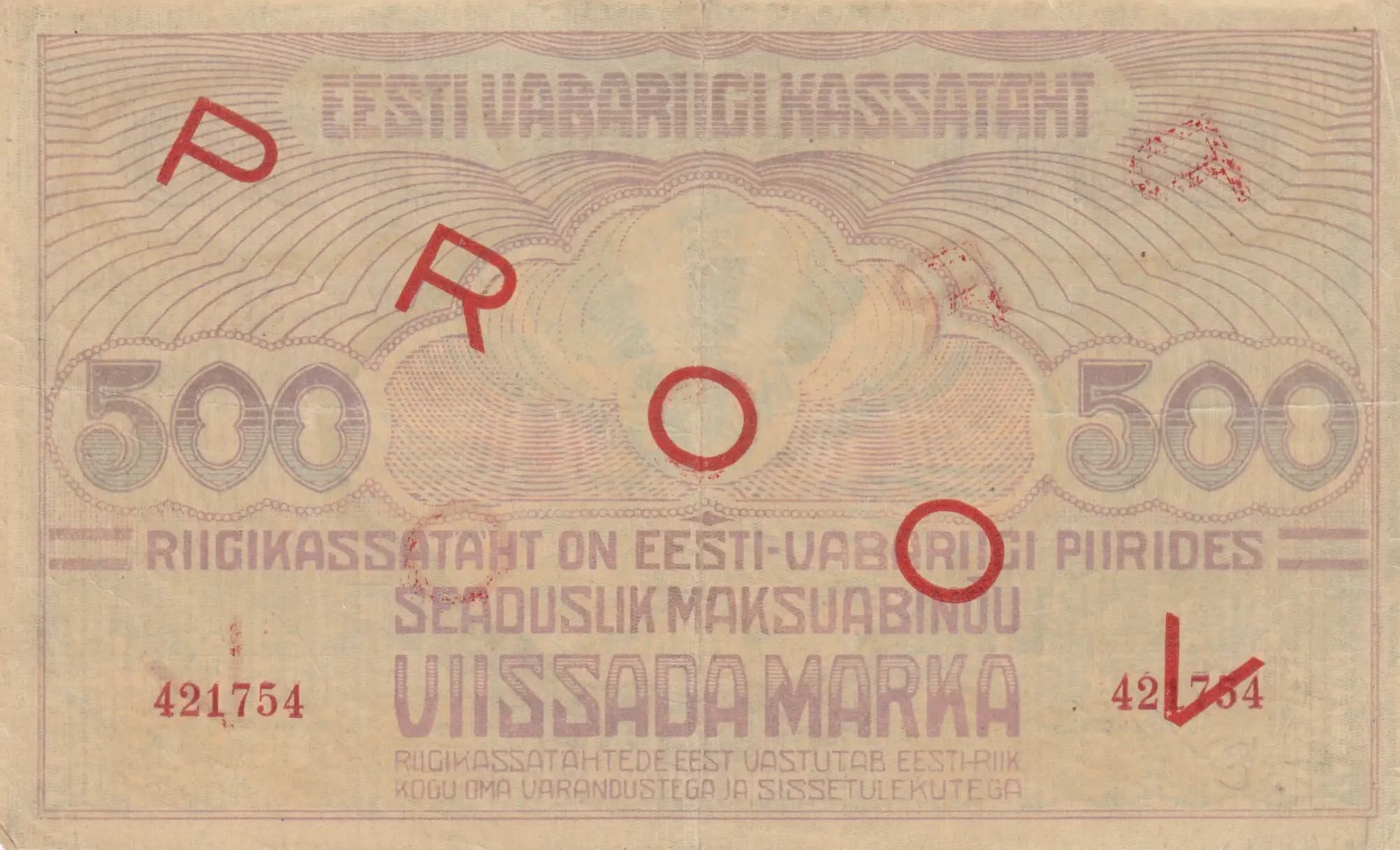
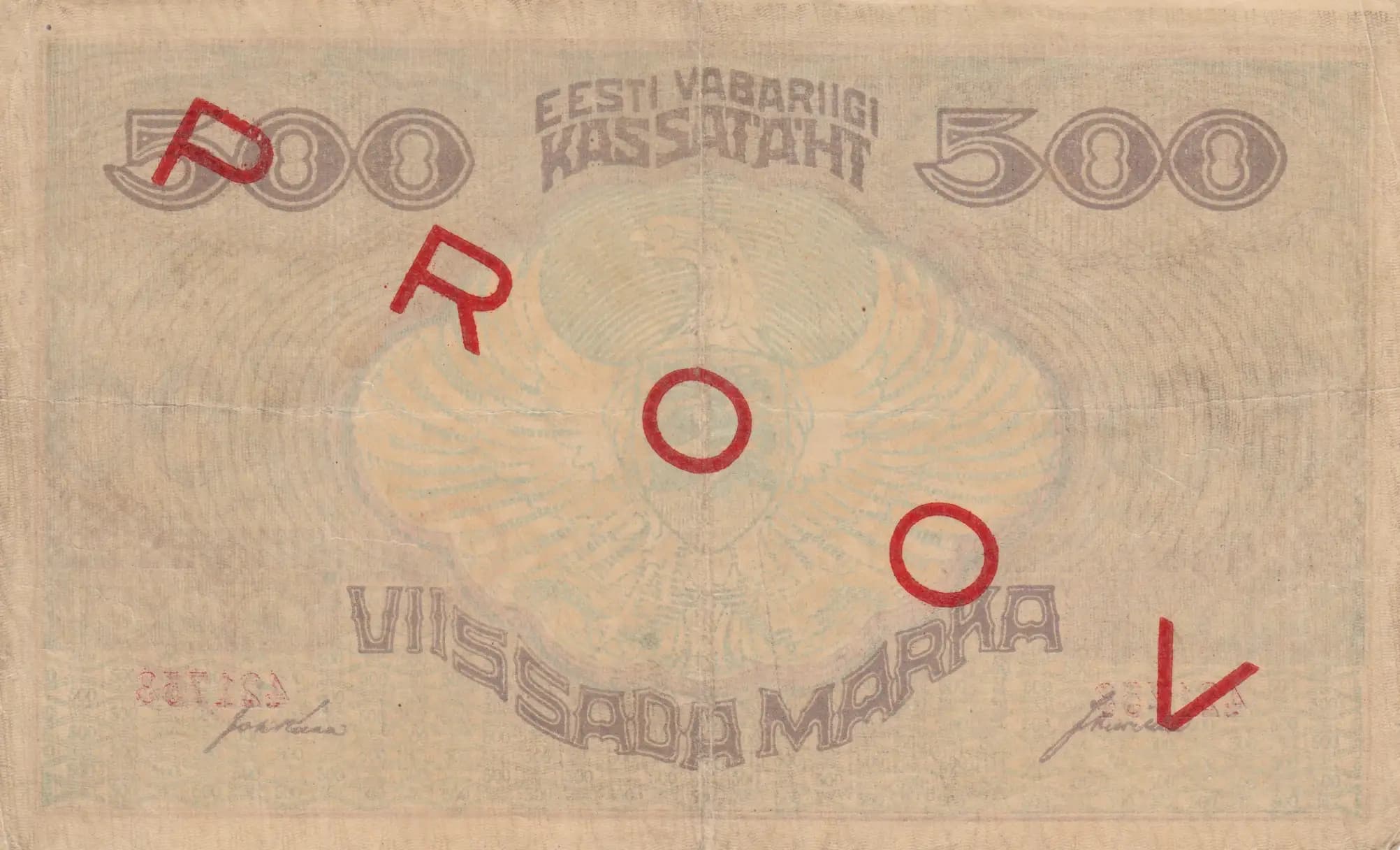
This is a 500 Marka specimen note from the Estonian Treasury, issued in 1920 during the early years of Estonian independence. The note features red specimen designation stamps (P, O, and RI markings) indicating its non-circulating status, with a tan/cream aged patina and light foxing consistent with VF condition. The design showcases fine security line patterns throughout, with a central heraldic lion or coat of arms prominently displayed on the reverse, making this an important example of Estonia's first national currency.
Common. eBay transaction data shows consistent availability across multiple condition grades with VF specimens regularly trading in the $45-$250 range, indicating this is a well-circulated issue in the numismatic market with adequate supply. The 2016 catalog value for VF grade of $250 is moderate, and specimen notes of this denomination from Estonia's 1920 issue are not exceptionally scarce. The print run was substantial enough to support ongoing collector access.
This 500 Marka note was issued by the newly independent Estonian Republic in 1920, following Estonia's declaration of independence from Russia in 1918. The heraldic lion and coat of arms depicted on the reverse symbolize Estonian national sovereignty and statehood during this formative period. The text 'EESTI VABARIIGI KASSATÄHT' (Estonian Republic Treasury Note) and legal tender declarations in Estonian reflect the nation's assertion of independence and establishment of its own monetary system.
The front features an ornamental border with fine wavy security lines and tan/beige background, with large '500' denominations in outlined numerals on left and right sides. The center contains a faint oval vignette area with light purple/gray text declaring legal tender status and state responsibility. The reverse prominently displays a large oval heraldic design featuring the Estonian lion or coat of arms within a protective shield frame, also with '500' numerals in large outlined style on both sides. Red specimen marking stamps (large 'P' in upper left and top center, circles with 'O' and 'RI' designations) are clearly impressed across both sides, with signature lines or marks in red at the bottom corners. The overall design emphasizes national symbols of the young Estonian state through heraldic imagery.
FRONT SIDE: 'EESTI VABARIIGI KASSATÄHT' (Estonian Republic Treasury Note); '500' (denomination); 'RIIGIKASSATAHTE ON EESTI VABARIIGI PIIRIDE SEADOUSLIK MAKSUABINDU UIISSADA MARKA' (The state treasury note is the legal tender of the Estonian Republic five hundred marka); 'RIIGIKASSATAHTEDE EEST VASTUTAB EESTI-RIIK KOGU OMA VARANDUSEGA JA SISSETULEK.KUTEGA' (The Estonian State is responsible for the state treasury notes with all its property and income); Serial number '421754'. BACK SIDE: 'EESTI VABARIIGI KASSATÄHT' (Estonian Republic Treasury Note); '500' (denomination); 'VIISSADA MARKA' (Five Hundred Marks) [appears twice].
Intaglio printing (engraved) with multicolor security elements, evidenced by the fine line background patterns, detailed engraving of the heraldic design, and crisp impression of denomination numerals and text. The fine wavy line patterns throughout serve as an anti-counterfeiting security feature typical of early 20th-century European banknote production. Specimen marking stamps were applied separately in red ink after printing.
This is cataloged as P-49as, identifying it as a specimen (s suffix) of the Pick 49a base variety. The PMG Population Report indicates variants P-49b and P-49es exist, with P-49es featuring an 'EV' watermark. The visual analysis confirms the specimen designation through red stamp markings (P, O, RI circles). The serial number 421754 and the specific red specimen overprinting style are consistent with the known specimen variety classification for this issue.