500 marka 1920
Market Prices
About This Note
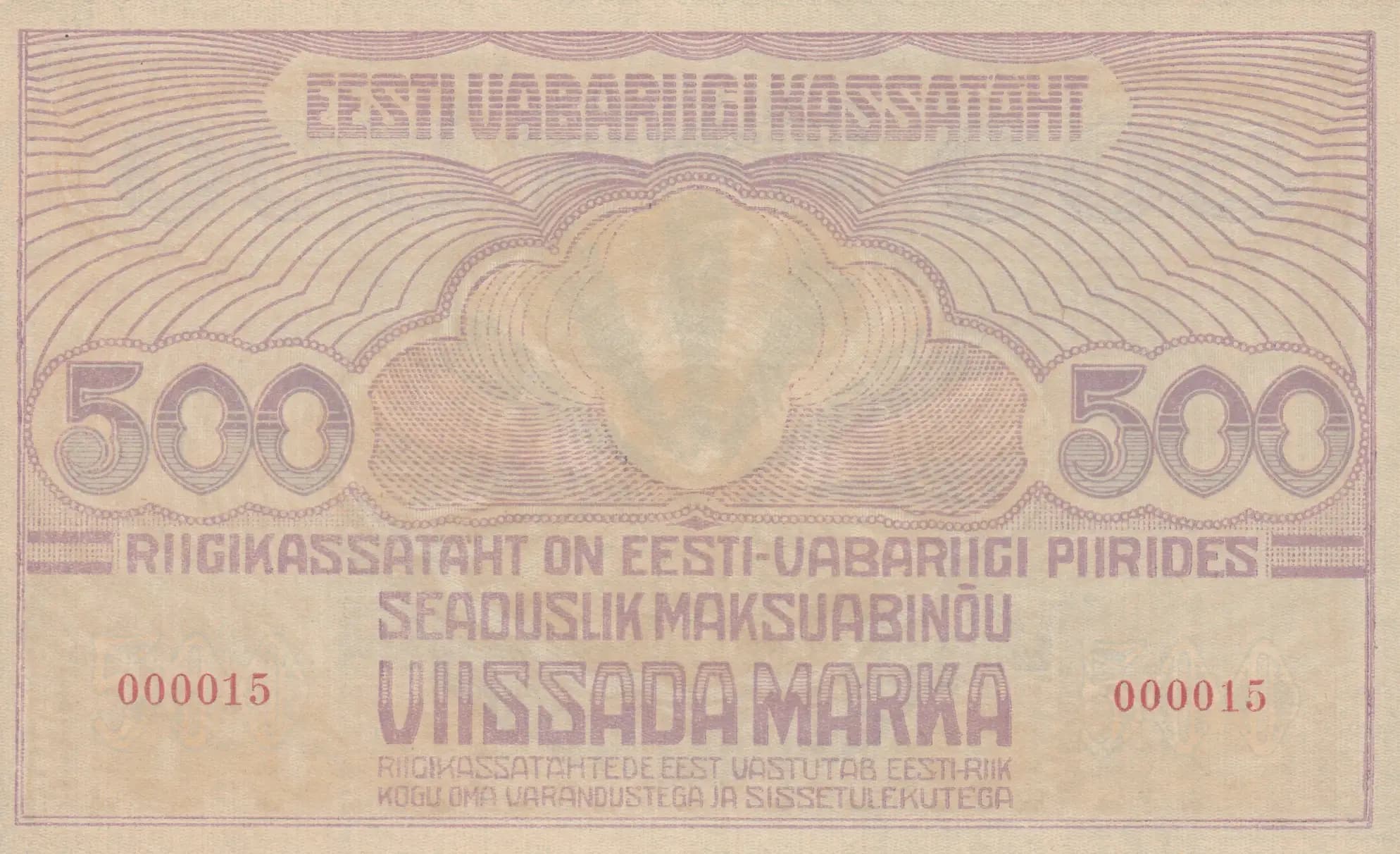
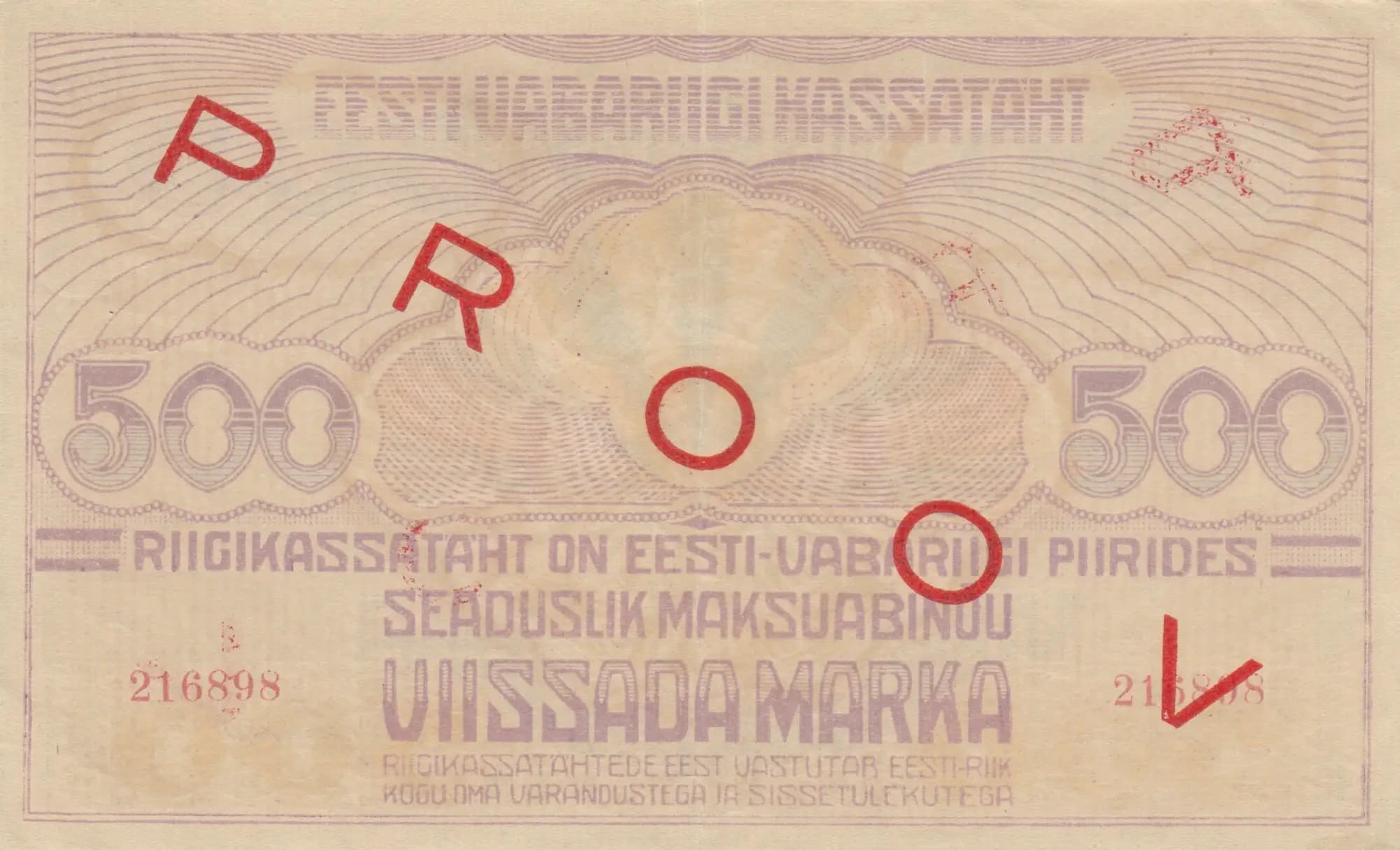
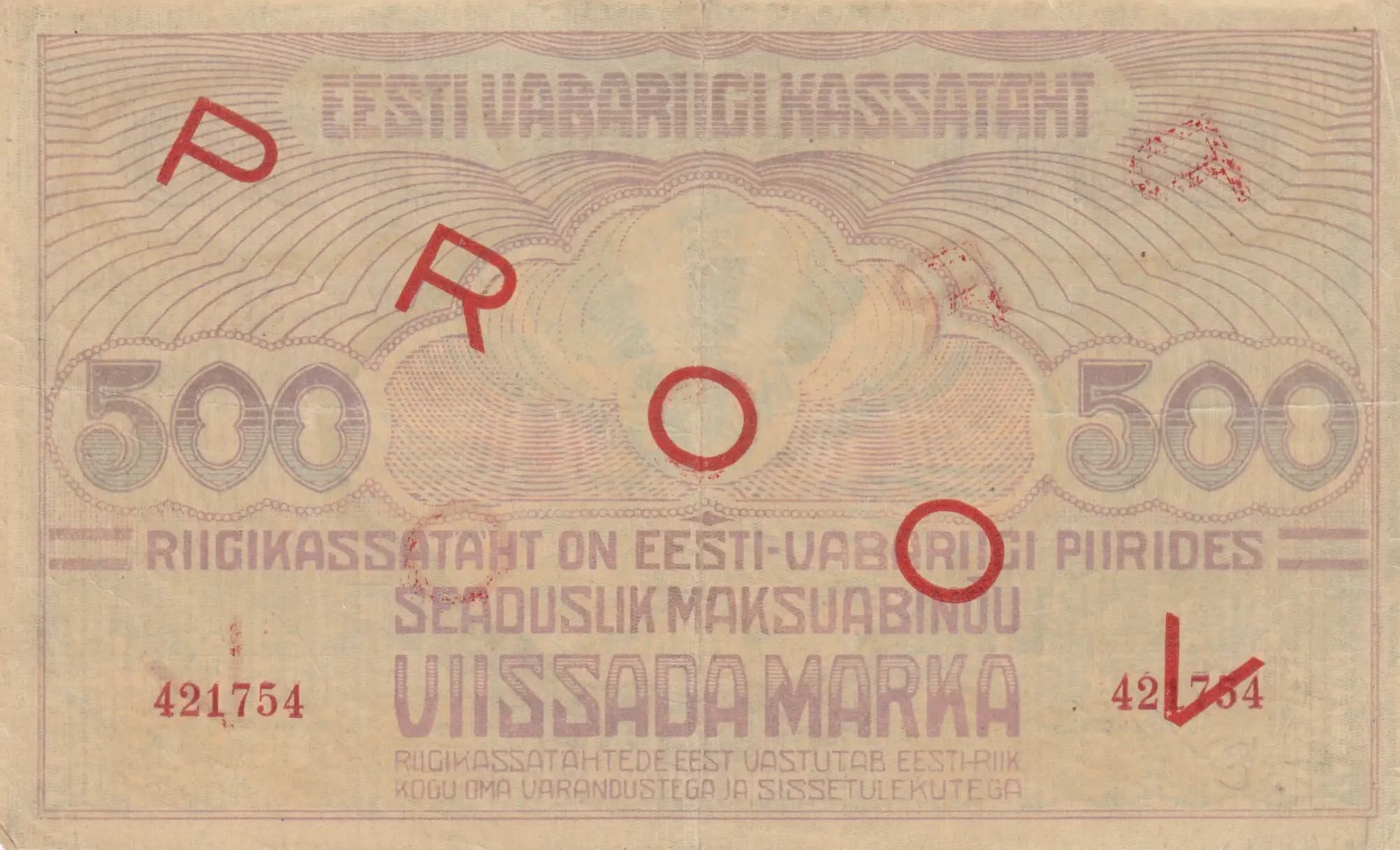
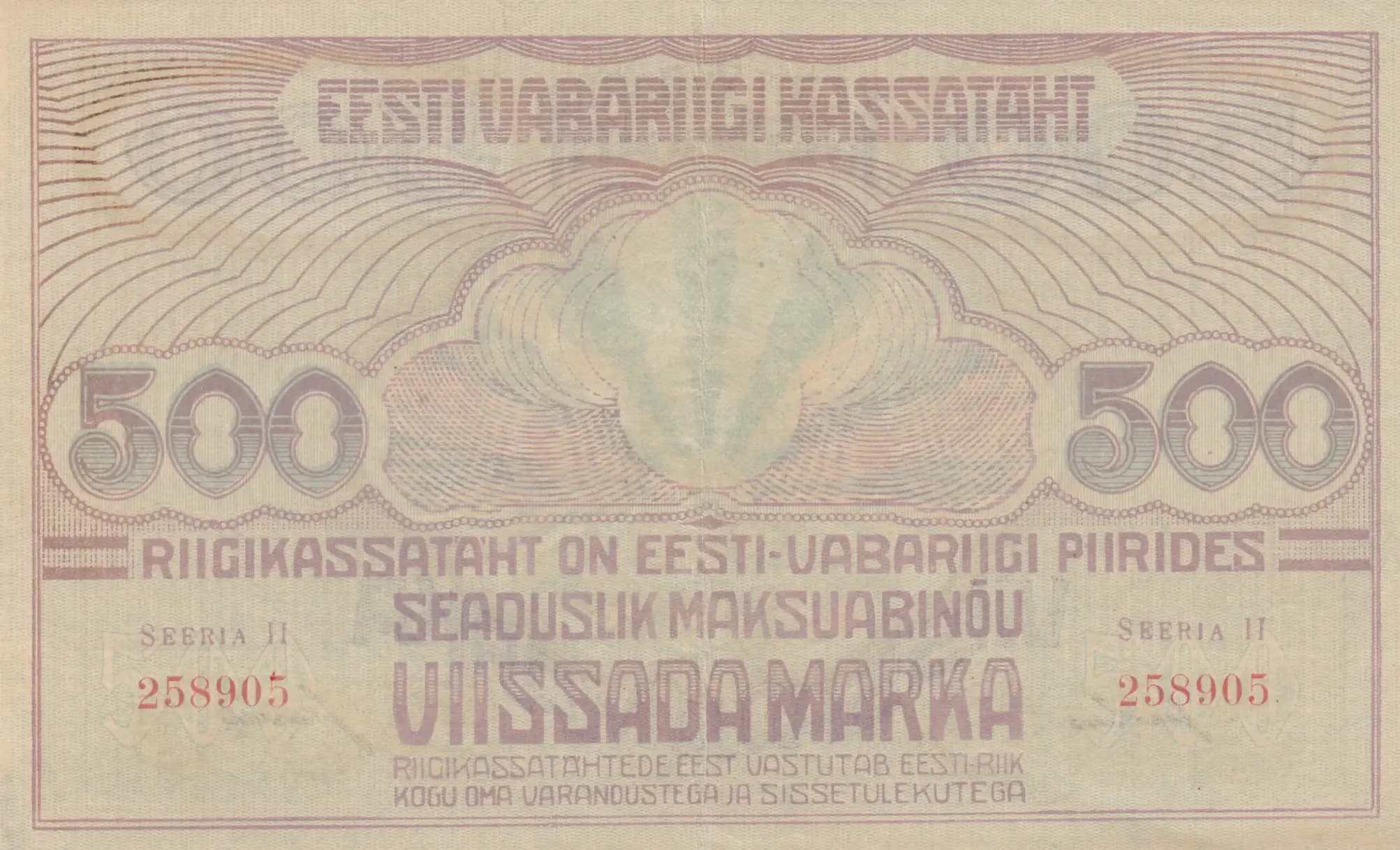
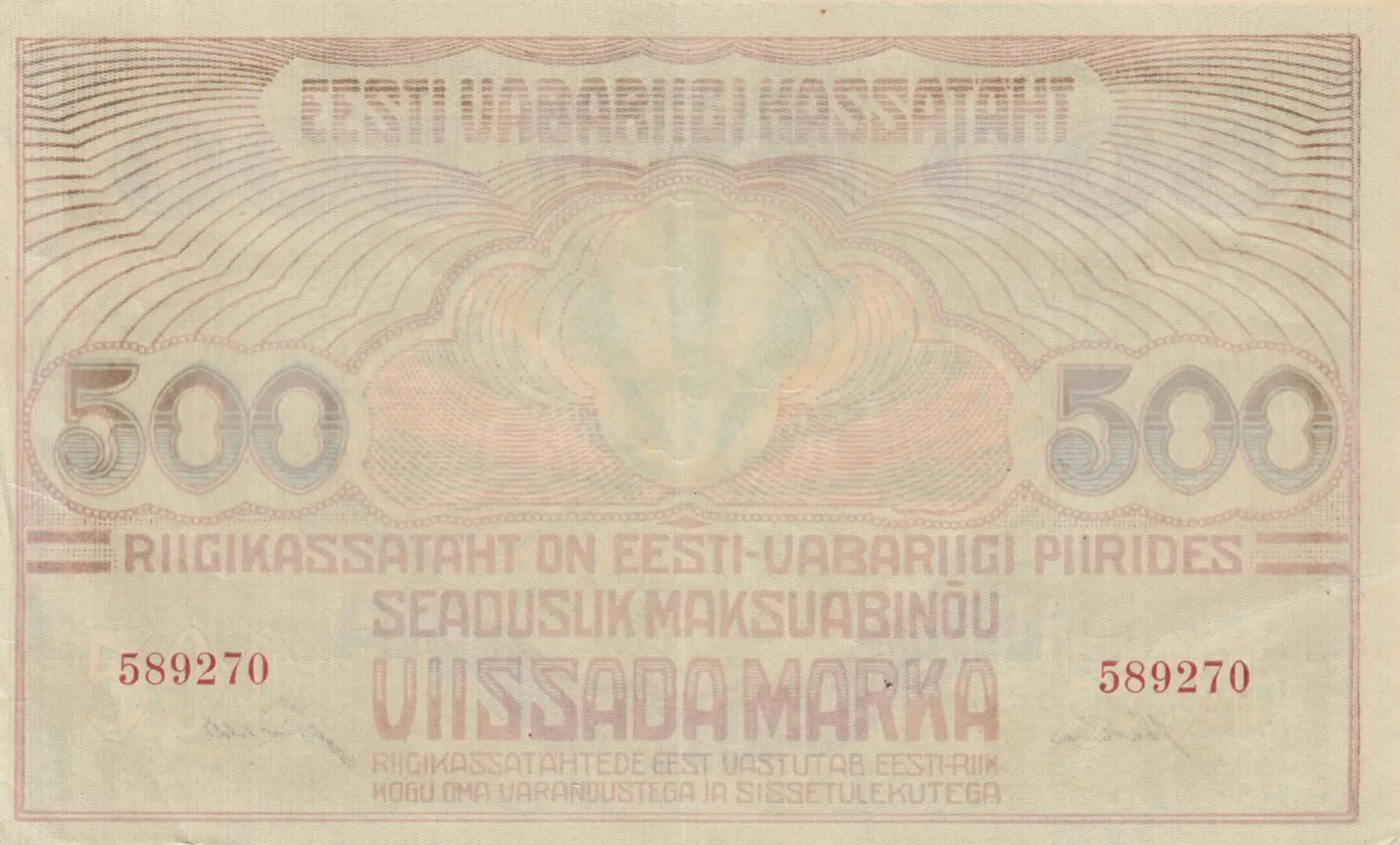
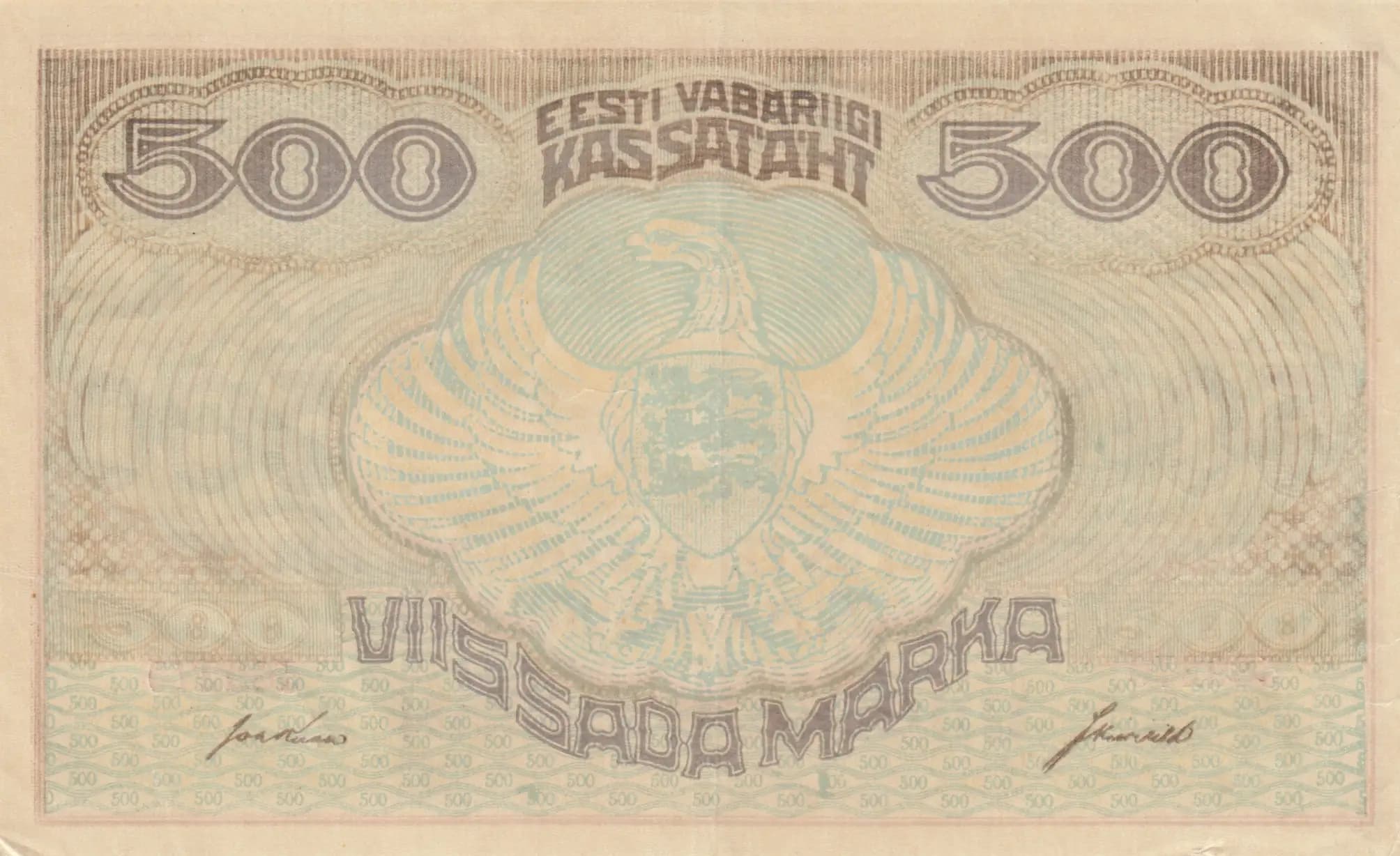
This Estonia 500 Marka banknote from 1920 represents an early emission of the newly independent Estonian Republic's currency. The note displays the characteristic light tan and brown printing of early 20th-century security printing, with an elaborate central oval vignette featuring a portrait on the obverse and a heraldic emblem (likely Estonia's coat of arms with a two-headed eagle) on the reverse. In VF condition, the note shows expected aging with faint but legible text and imagery, maintaining good structural integrity without major damage.
Common. The eBay price tracking data shows this note regularly selling in the $40-$245 range depending on condition, with VF examples averaging around $80-$100. The 2016 catalog value for VF is $250, but active market sales indicate lower typical prices, consistent with a regularly available note. While Estonian banknotes from the 1920 period have historical significance, the 500 Marka denomination appears in sufficient quantities to be considered common in the collector market. No indication of limited print runs, recalls, or extreme scarcity in the available data.
This banknote was issued during Estonia's first period of independence (1920-1921) following the country's declaration of independence from the Russian Empire. The obverse features a male portrait within an ornate oval frame, while the reverse prominently displays heraldic symbols including a winged coat of arms, representing the newly sovereign Estonian state's assertion of national identity. The use of the Estonian language on all inscriptions underscores the nation's break from Russian imperial currency and establishment of its own monetary authority.
The 500 Marka note features a classical early-20th-century security banknote design with bilateral symmetry. The obverse displays a male portrait (likely a national figure or allegorical representation of Estonia) centered within an ornate oval cartouche surrounded by concentric decorative borders. The reverse presents Estonia's state heraldic emblem—a two-headed eagle or winged coat of arms with a central shield—also framed in an elaborate oval vignette. Both sides feature extensive guilloche work and complex wavy line patterns as security measures, with the denomination 500 prominently displayed in all four corners. The color scheme consists of light tan/beige backgrounds with brown and rust-colored printing, and subtle blue-green tinting in the heraldic emblem area. Two official signatures appear in manuscript at the bottom of the reverse, confirming authorization by Treasury officials.
OBVERSE: '500' (denomination in upper corners); 'EESTNUUDS LOOHID KUSSAMKEIT' (header text, partially degraded); 'RIIGIKASSATAHTI ON EESTI-VABARIIGI PIIRDES SEADUSLIK MAKSUVAHING' (translates to 'State Treasury Note is legal tender within the Estonian Republic'); 'VIISSADA MARKA' (translates to 'Five hundred marks'); 'RIIGIKASSATAHTEDE EEST VASTUTAB EESTI-RIIK' (translates to 'The Estonian State is responsible for Treasury Notes'); Serial number '589270'. REVERSE: '500' (denomination in upper corners); 'EESTI VABARIIGI KASSATAHTI' (translates to 'Estonian Republic State Treasury Note'); 'VIISSADA MARKA' (translates to 'Five hundred marks'); Two official manuscript signatures at bottom; '500' (denomination repeated).
Intaglio/engraving printing method, evidenced by the sharp, precise guilloche patterns, concentric line work, and dense security printing throughout the note. The fine detail in the oval vignettes and the complex wavy line patterns characteristic of security printing from this era are consistent with copper plate engraving. The note was likely produced by a prominent European security printer, though the specific printer for P-49a is not definitively identified in standard catalogs. The quality of the security work reflects professional banknote production standards of the early 1920s.
This note is cataloged as Pick P-49a, with PMG records indicating at least two variants: P-49b (alternate signature configuration or printer) and P-49es (with 'EV' watermark, representing 'Eesti Vabariigi'). The observed note displays a watermark of '500' (denomination watermark) as noted in the catalog reference. The serial number visible is 589270. Without additional documentation on the specific signatures or other distinguishing features, the exact variety beyond P-49a designation cannot be precisely determined from the visual evidence alone, though the presence of handwritten manuscript signatures and the watermark details should be consistent with the base P-49a classification.