500 marka 1920
Market Prices
About This Note
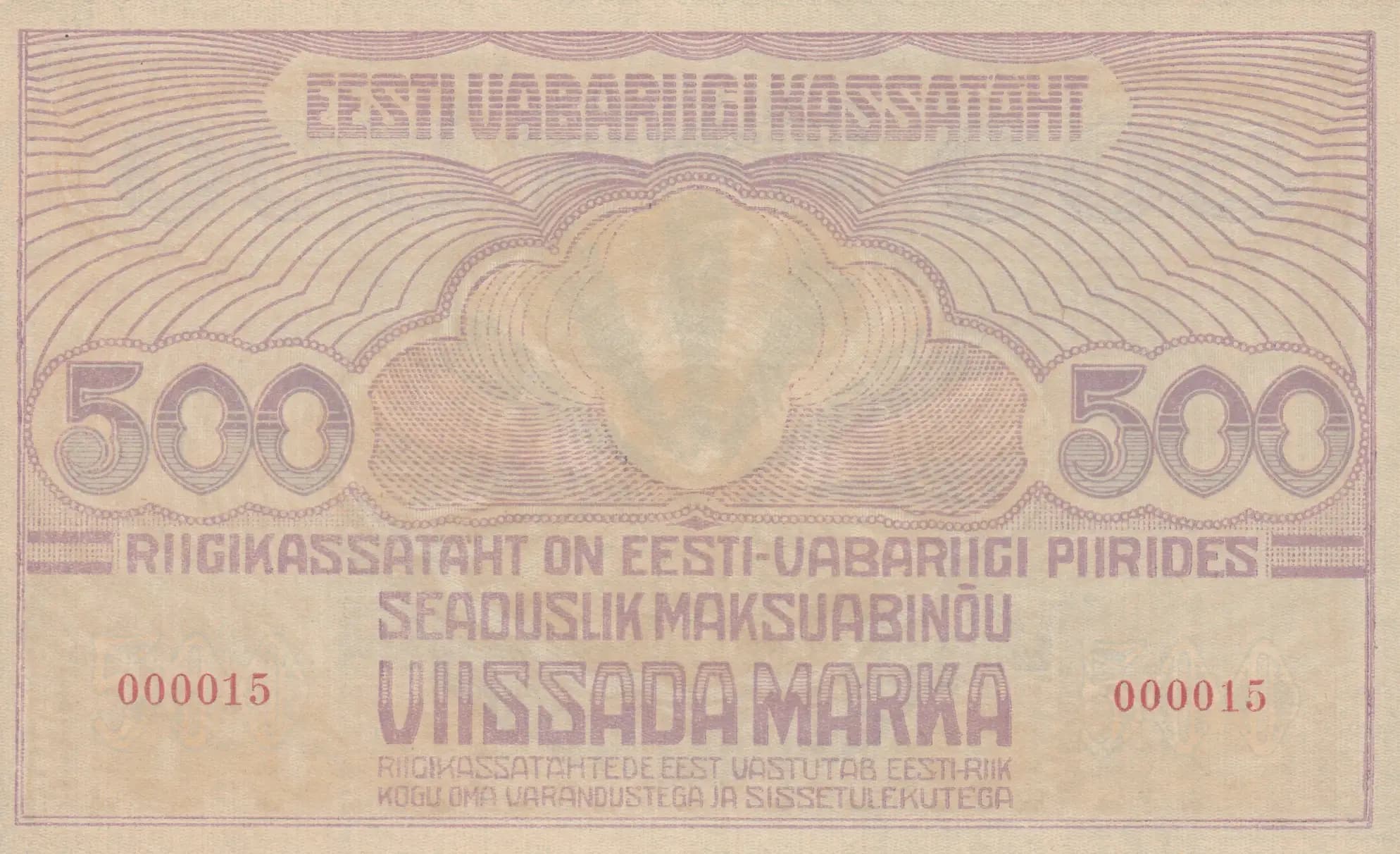
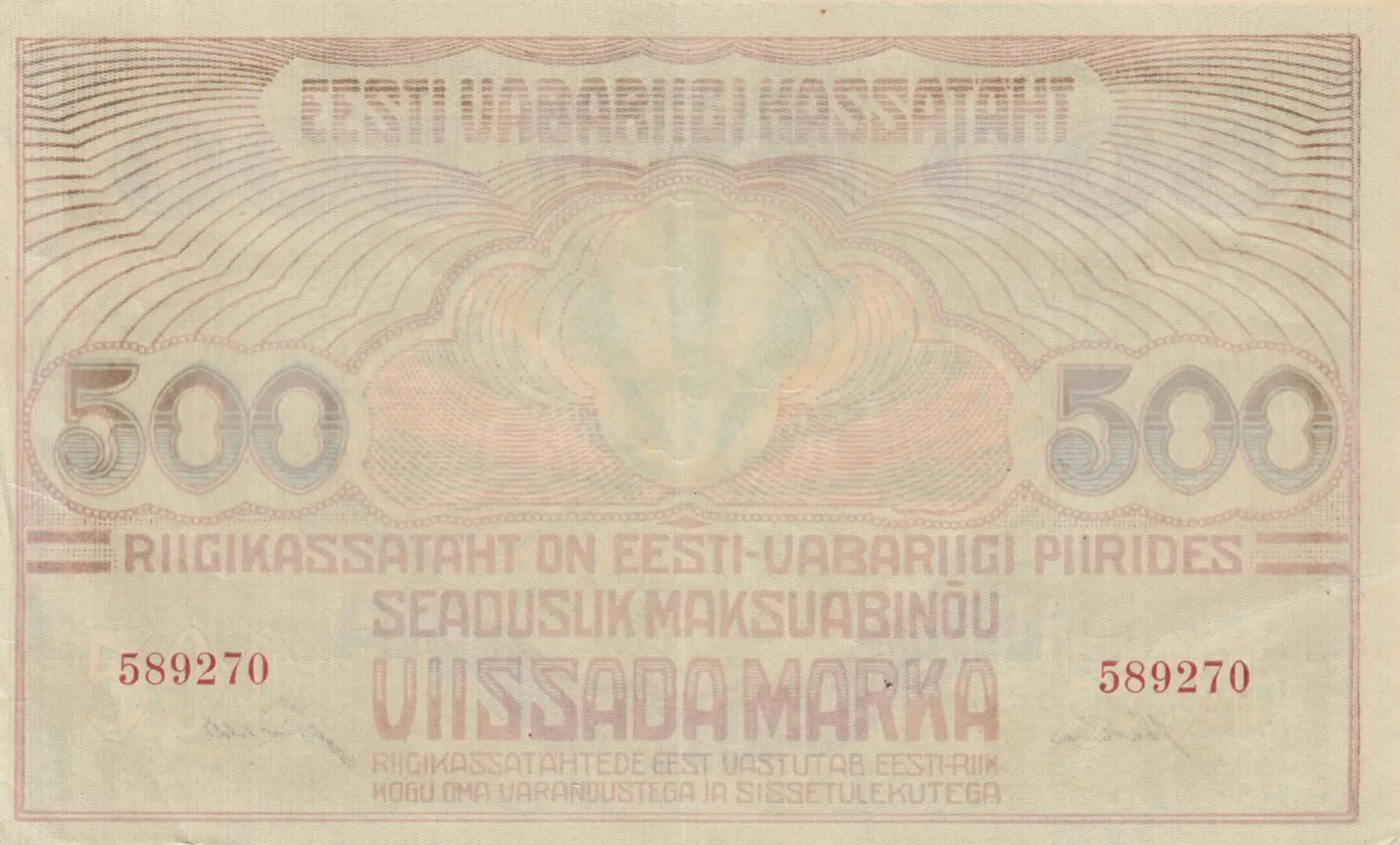
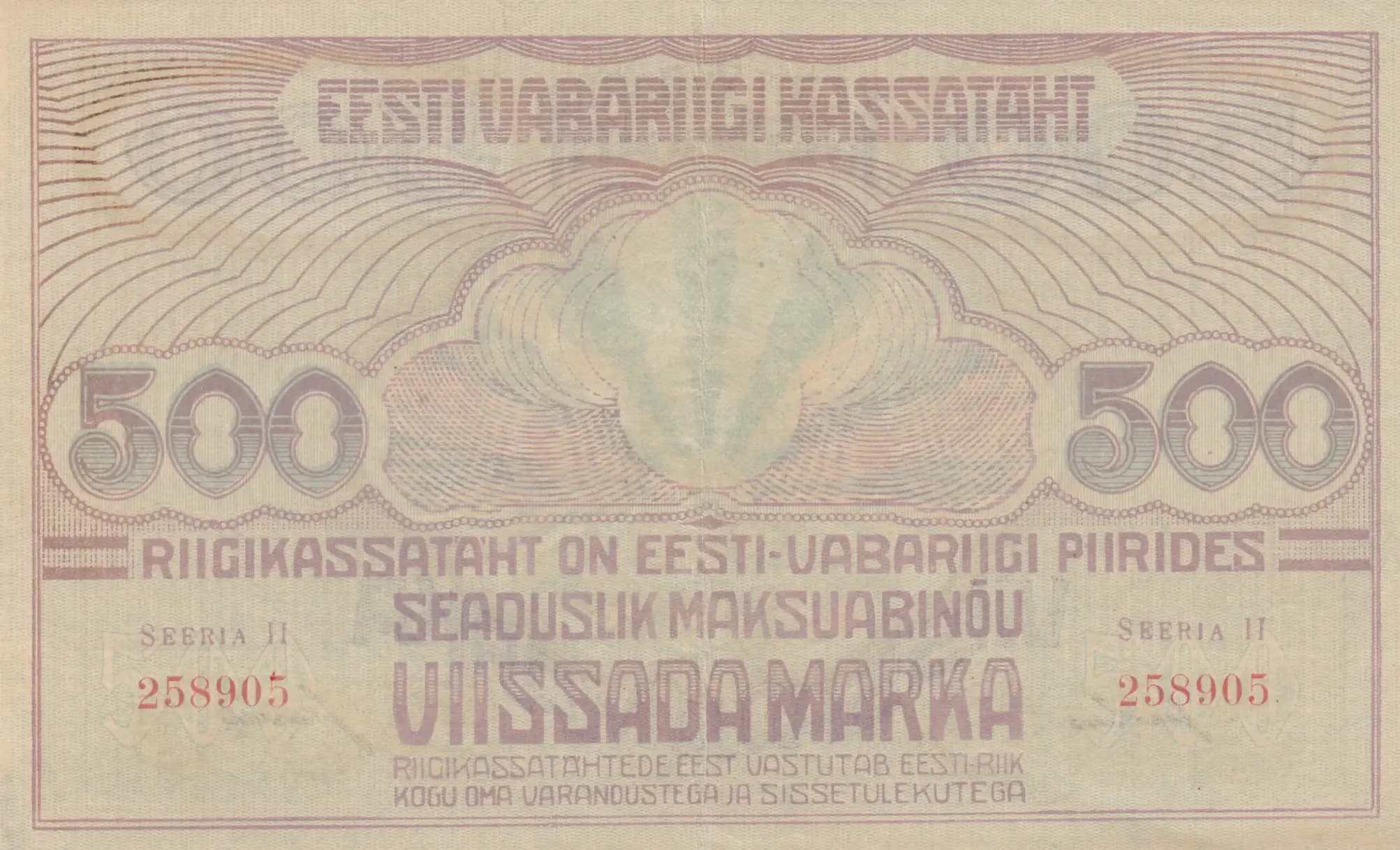
This 500 Marka Treasury Note from Estonia's 1920 issue represents an important early currency of the newly independent Estonian Republic. The note exhibits excellent preservation with crisp printing, vibrant mauve and cream coloration, and clear security features including fine line guilloche patterns and a prominent heraldic eagle design. The 'SEERIA II' (Series II) designation visible on the front, combined with the serial number 258905, places this in the second printing run of this denomination.
Common. eBay market data shows multiple sales ranging from $15 to $245 USD, with EF/XF specimens consistently selling in the $38-$82 range, indicating steady availability in the secondary market. The 2016 catalog value of $250 for VF condition aligns with observed market activity. The relatively large print run of Series II notes, combined with historical survival rates and modern market liquidity, confirms this denomination as commonly encountered by collectors of Baltic or early European state currencies.
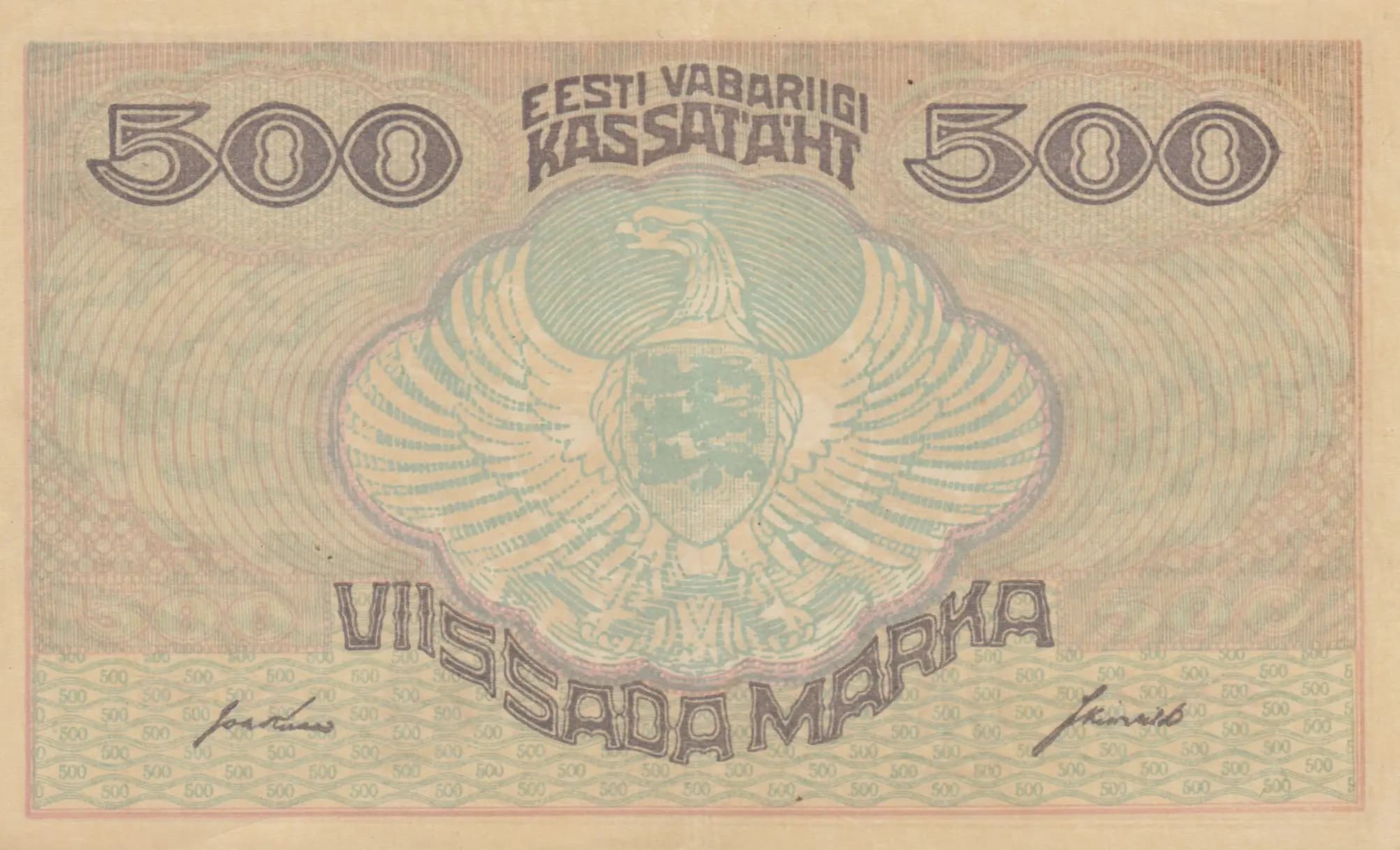
Issued during Estonia's transition to independence following World War I, this 500 Marka note represents the Treasury of Estonia's efforts to establish a sovereign currency. The heraldic eagle with shield on the reverse served as a symbol of the newly formed Estonian state, while the ornate decorative borders reflected the fine engraving standards of early 20th-century European banknote production. The note's inscriptions in Estonian language underscore the cultural assertion of the newly liberated nation.
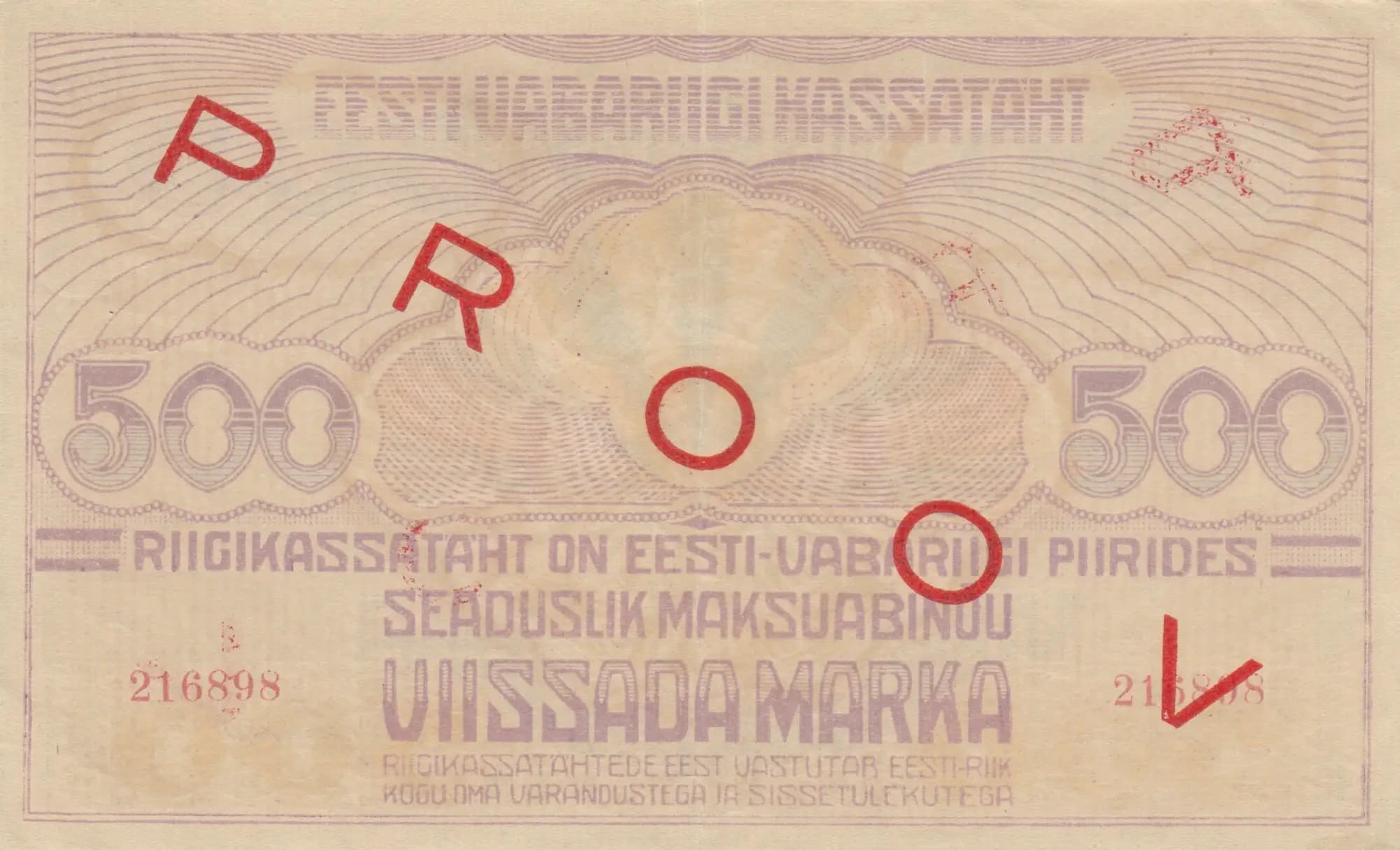
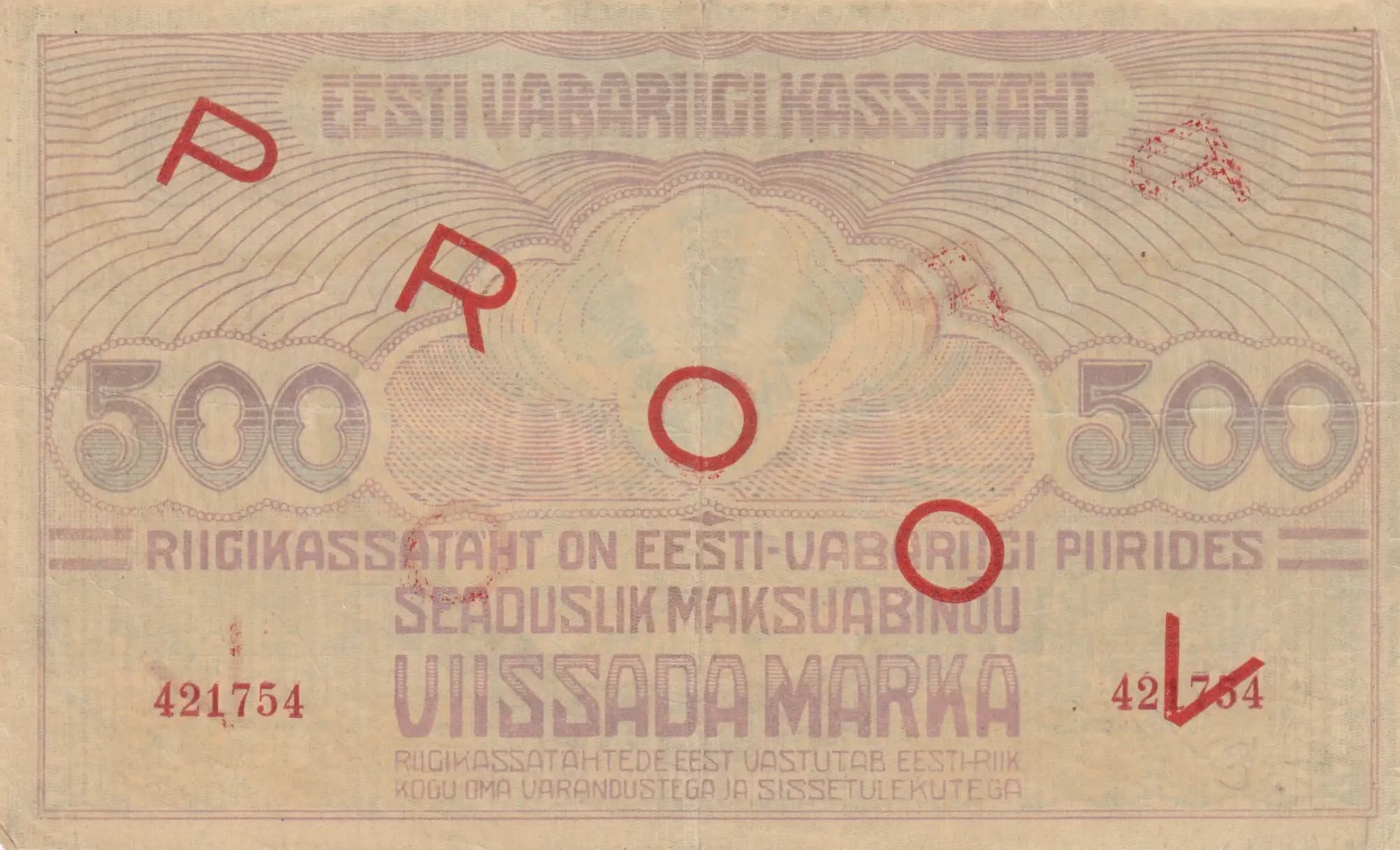
The obverse features an ornate frame composed of fine line guilloche patterns in mauve and cream tones, with a prominent cloud or shell-shaped cartouche in the upper center serving as the denomination tablet. The reverse is dominated by the heraldic eagle of Estonia with outstretched wings, clutching a shield bearing the Estonian coat of arms at its center. Both sides display the denomination '500' in large numerals at left and right, with repeating background patterns of '500' visible in lower portions as an anti-counterfeiting measure. The overall design reflects the formal, classical aesthetic typical of early independent Baltic state currencies, with careful attention to security through complex engraving.
FRONT SIDE: 'EESTI VABARIIGI KASSATAHT' (Estonian Republic Treasury Note) | '500' and 'VIISSADA MARKA' (Five Hundred Marks) | 'RIIGIKASSATAHT ON EESTI-VABARIIGI PIIRDES SEADUSLIK MAKSUABINÕU' (The state treasury note is legal tender within the borders of the Estonian Republic) | 'RIIGIKASSATAHTEDE EEST VASTUTAB EESTI-RIIK KOGU OMA VARANDUSTEGA JA SISSETULEK KUTEGA' (The Estonian State is responsible for treasury notes with all its assets and income) | 'SEERIA II' (Series II) | Serial number '258905'. BACK SIDE: '500' | 'EESTI VABARIIGI KASSATAHT' (Estonian Republic Treasury Note) | 'VIISSADA MARKA' (Five Hundred Marks) | Signature marks present but not fully legible.
Intaglio engraving (recess printing), characteristic of high-security banknote production of the period. The fine line guilloche patterns, clear detail in the heraldic eagle design, and sharp denomination numerals are consistent with professional security printing techniques used by Estonian authorities or contracted European security printers during 1920-1921. The quality of impression and color registration visible in the EF specimen suggests production by an established banknote printer, likely De La Rue or a comparable Continental European firm.
This specimen is identified as Pick P-49b (Series II variant). The PMG population report indicates a P-49es variant exists with watermark 'EV' (Eesti Vabariigi). The serial number 258905 and 'SEERIA II' designation on the front confirm this as the P-49b type. The precise printing characteristics of Series II, including color variations and security feature placement, distinguish it from the earlier Series I printing (P-49a). Collectors should note that watermark presence and specific serial number ranges may indicate different printings or contract variations within the P-49b designation.