500 marka 1920 specimen
Market Prices
About This Note
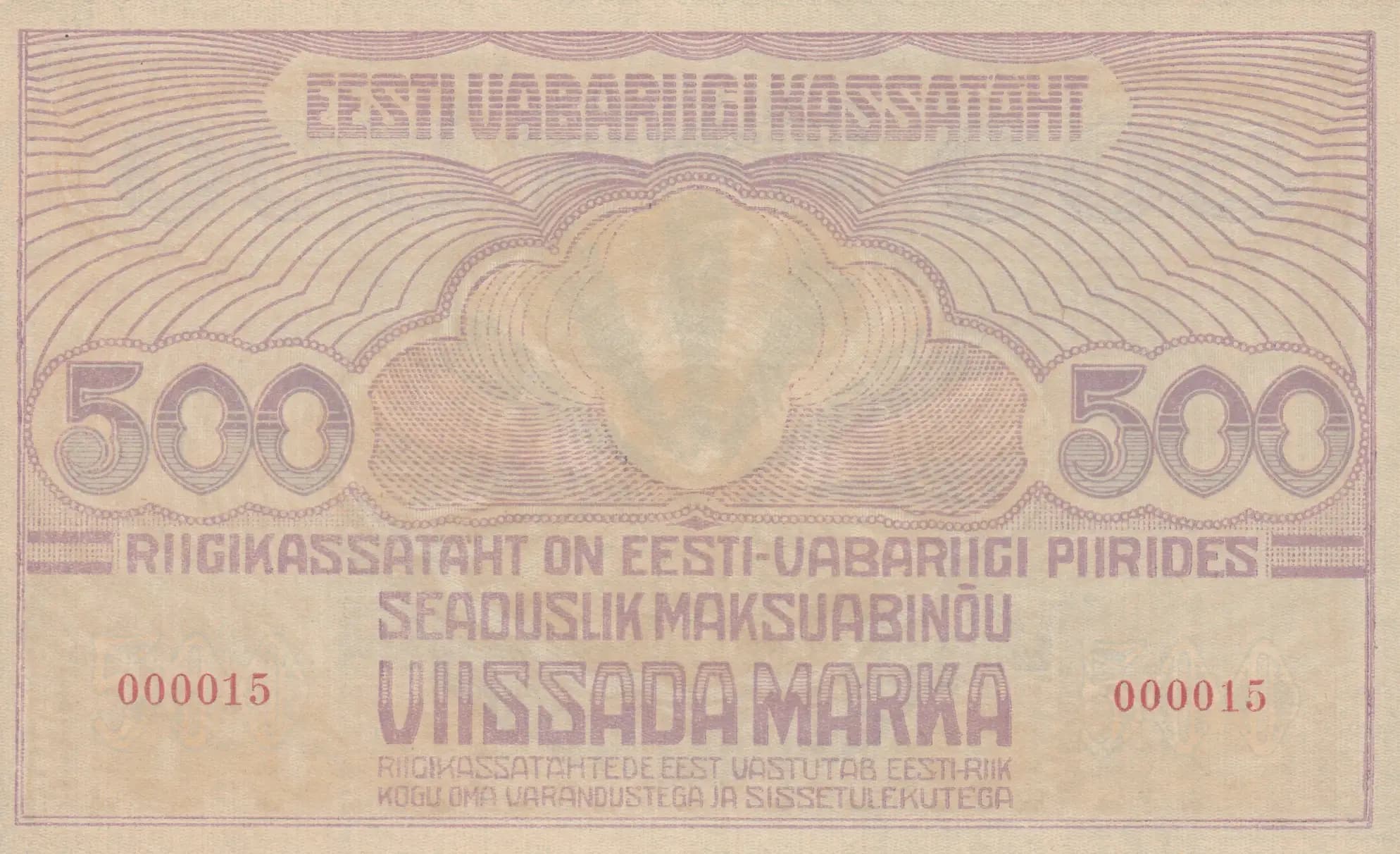
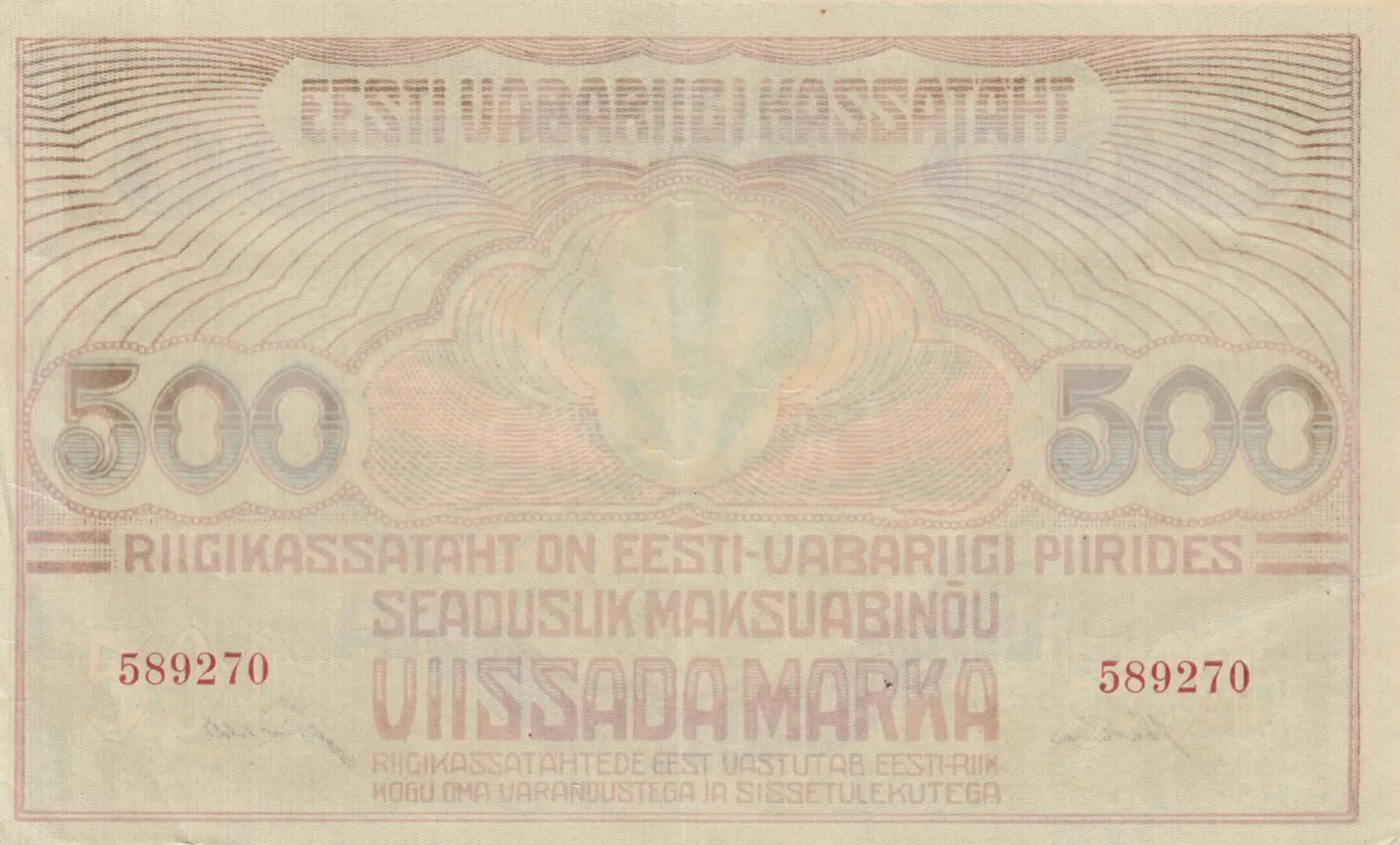
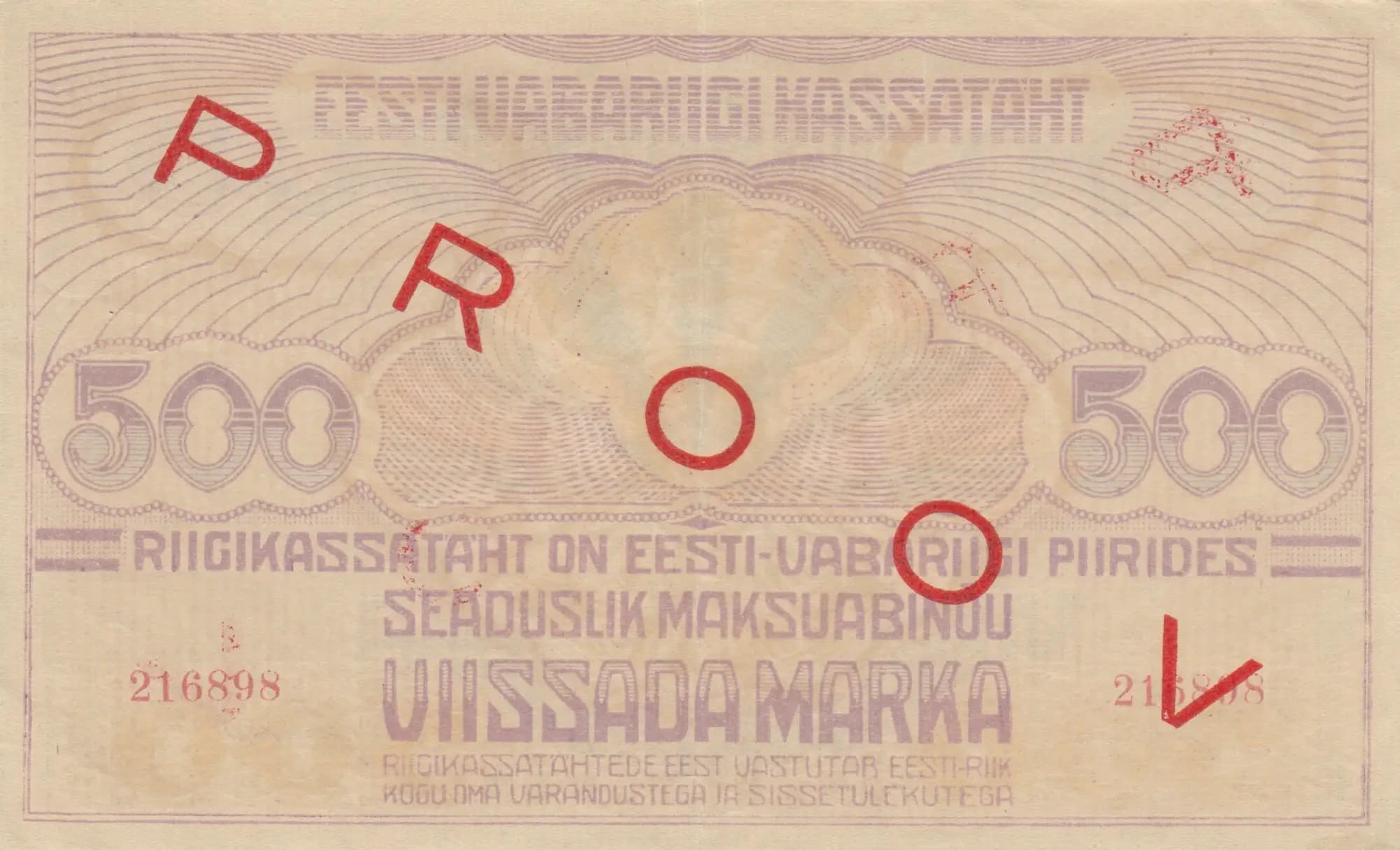
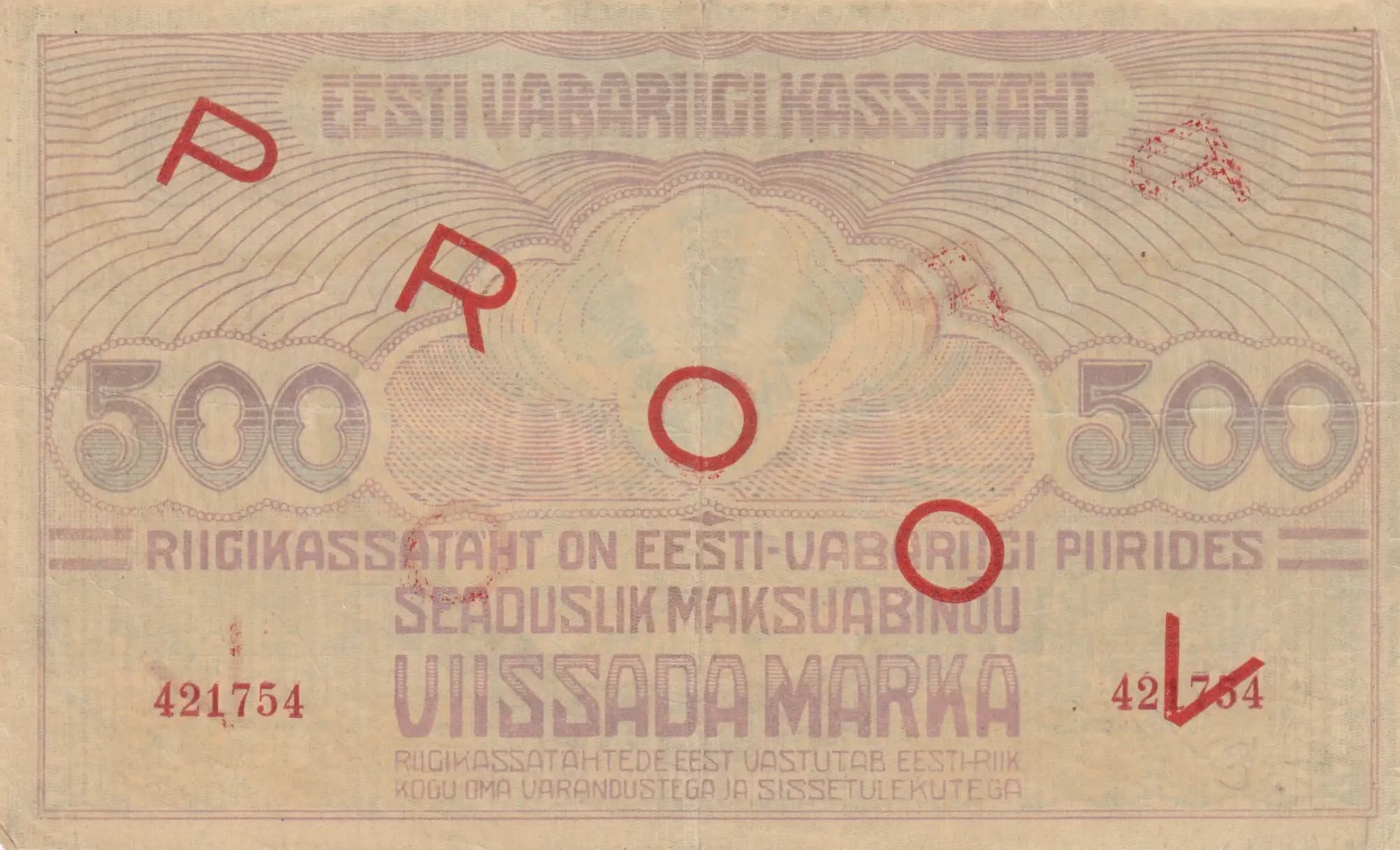
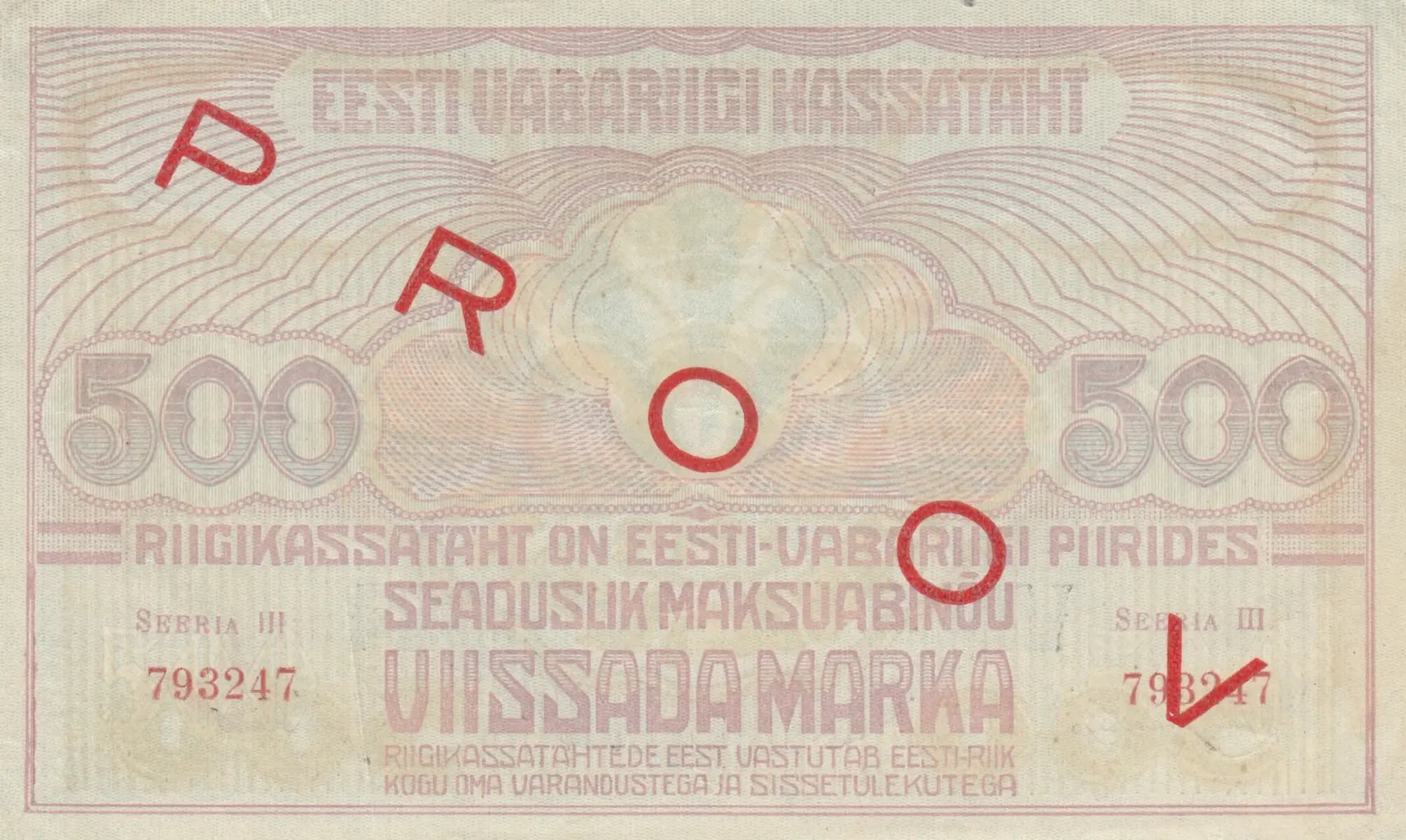
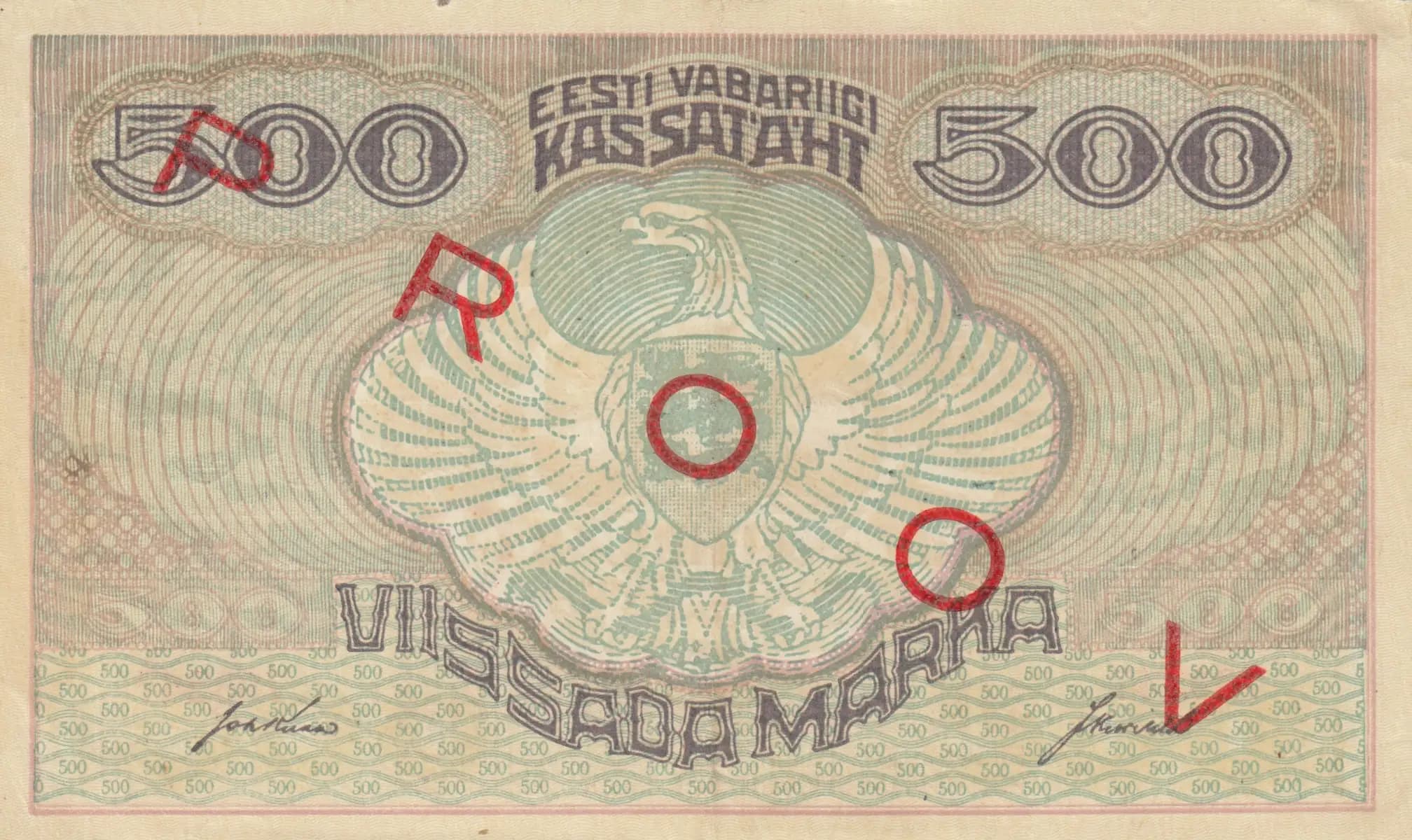
This is a 500 Marka specimen banknote from the Estonian Republic, issued in 1920 during the nation's early independence period. The note features exceptional engraved design work with a central oval ornamental pattern on the obverse and an elaborate heraldic eagle design on the reverse, both rendered in fine line engraving technique. As a specimen note bearing diagonal red 'PRO' markings, this example represents the Treasury's presentation pieces rather than circulation currency, and the VF condition grade indicates well-preserved detail with minimal wear despite its over century-old age.
Common. eBay market data shows VF grade examples consistently selling in the $54.90 to $245.00 range, with most transactions between $75-$150, indicating steady collector demand but reliable availability. The 2016 catalogue value for VF is $250 USD, aligning with observed market prices. Specimen notes from this series were produced in sufficient quantities for archival and diplomatic purposes, and multiple examples remain in circulation through the collector market. The print run of this denomination was substantial enough that it does not command premium pricing typical of rare notes.
Estonia issued this 500 Marka denomination during 1920-1921, a critical period following the nation's declaration of independence from the Russian Empire in 1918. The heraldic eagle and shield design on the reverse symbolized Estonian national sovereignty and state authority, while the inscription 'EESTI VABARIIGI KASSATÄHT' (Estonian Republic banknote) affirmed the new nation's monetary independence. The specimen marking indicates this was prepared as an official presentation piece for the Treasury archives or international banking correspondence, documenting the formal currency design approved by the provisional government.
The obverse features a delicate central oval ornamental design composed of concentric wavy line patterns, serving as both an aesthetic focal point and security feature against counterfeiting. The denomination 500 appears prominently in corner positions on both sides. The reverse displays the coat of arms of the Estonian Republic—a heraldic shield with an eagle or bird of prey with wings extended, rendered in intricate engraved line work characteristic of high-security banknote design. The signatures of officials Juurikas and Bienkel appear at the bottom of the reverse. The entire note background is covered with fine parallel and wavy line patterns in the engraved style. Color scheme features rose/pink and tan on the obverse with green and tan on the reverse, typical of early Estonian banknote palettes.
OBVERSE: 'EESTI VABARIIGI KASSATÄHT' (Estonian Republic banknote) — 'RIIGIKASSATÄHT ON EESTI-VABARIIGI PIIRDES SEADUSLIK MAKSUABIN UUSSADA MARKA' (State banknote is legal tender within the Estonian Republic) — 'RIIGIKASSATÄHTEDE EEST VASTUTAB EESTI-RIIK KOGU OMA VARANDUSEGA JA SISSETULEKUTEGA' (The Estonian State is responsible for state banknotes with all its property and income) — 'SEERIA III' (Series III) — Serial number: 793247. REVERSE: 'EESTI VABARIIGI KASSATÄHT' (Estonian Republic banknote) — 'VIISSADA MARKA' (Five hundred marks) — Signatures of Juurikas and Bienkel (Treasury officials). Both sides bear specimen overprint marking 'PRO' (in red).
Steel plate engraving throughout, utilizing fine line engraving technique for both security patterning and main design elements. The concentric wavy patterns and detailed heraldic imagery demonstrate high-quality intaglio printing characteristic of European security printers of the period. The specimen overprints are applied separately in red. While the specific security printer is not documented in available catalogs, the technical quality suggests work from an established European banknote printer, likely contracted by the Estonian Treasury.
This note is catalogued as P-49cs (specimen variety). The Pick catalog identifies P-49b and P-49es as variants, with P-49es noted as having 'EV' watermark designation. This specimen bears the standard '500' watermark. The 'SEERIA III' (Series III) designation indicates this is part of the third series issued. The signatures of Juurikas and Bienkel are consistent with Treasury officials of the 1920-1921 issuance period. The serial number 793247 with prefix 'P' represents the standard numbering sequence for this series. The 'PRO' specimen overprinting in red is the defining characteristic separating this from regular circulation issues (P-49b).