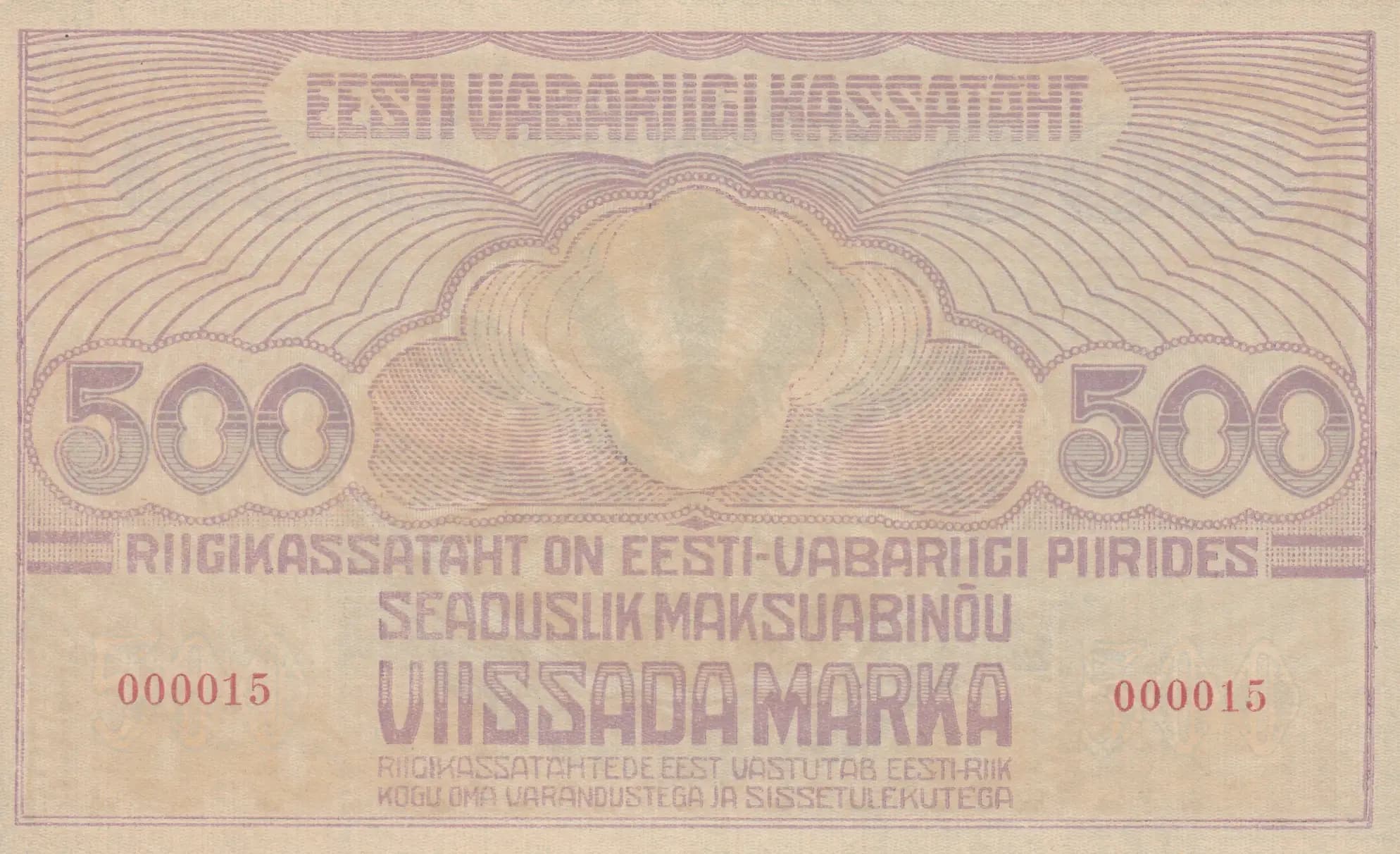
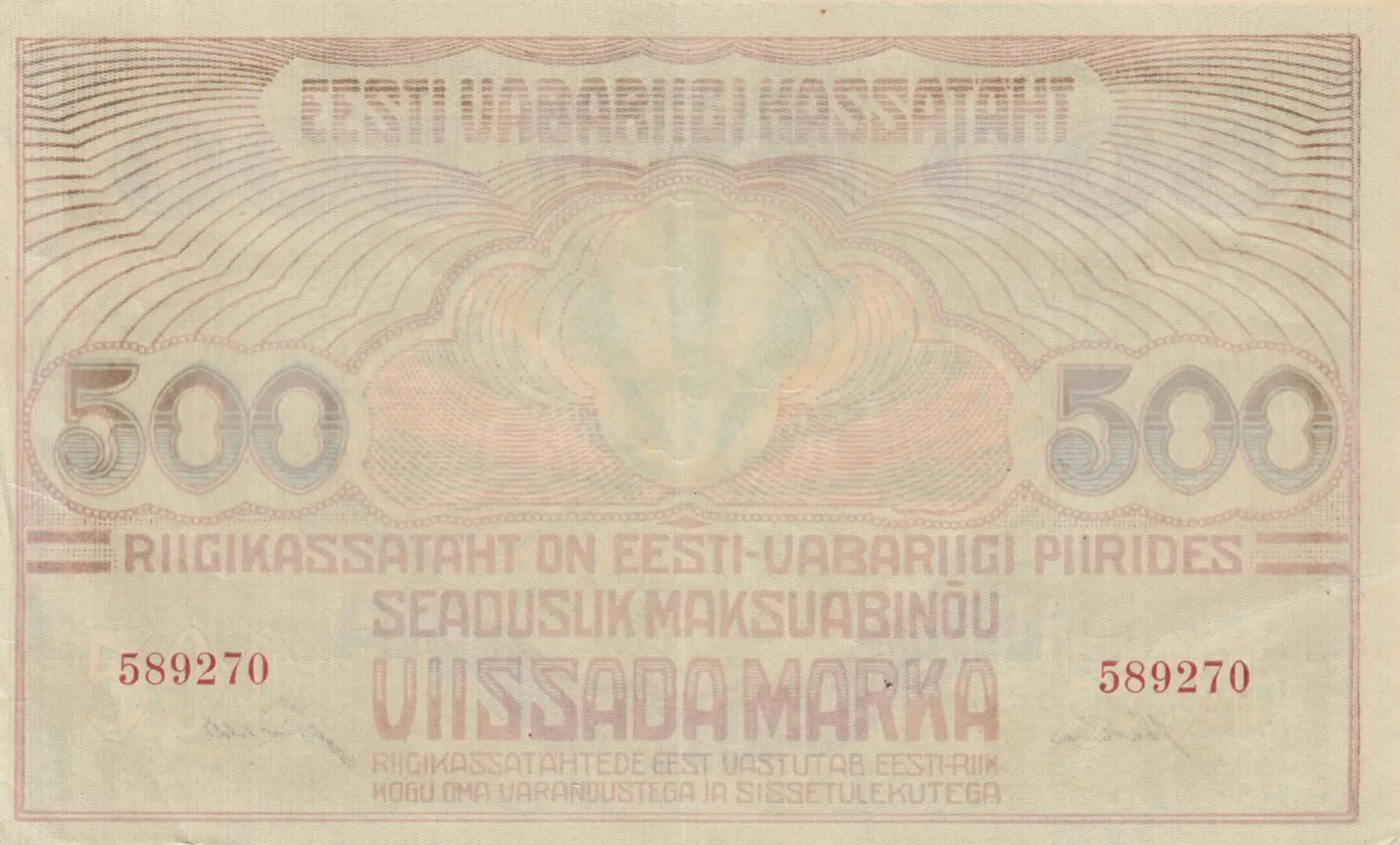
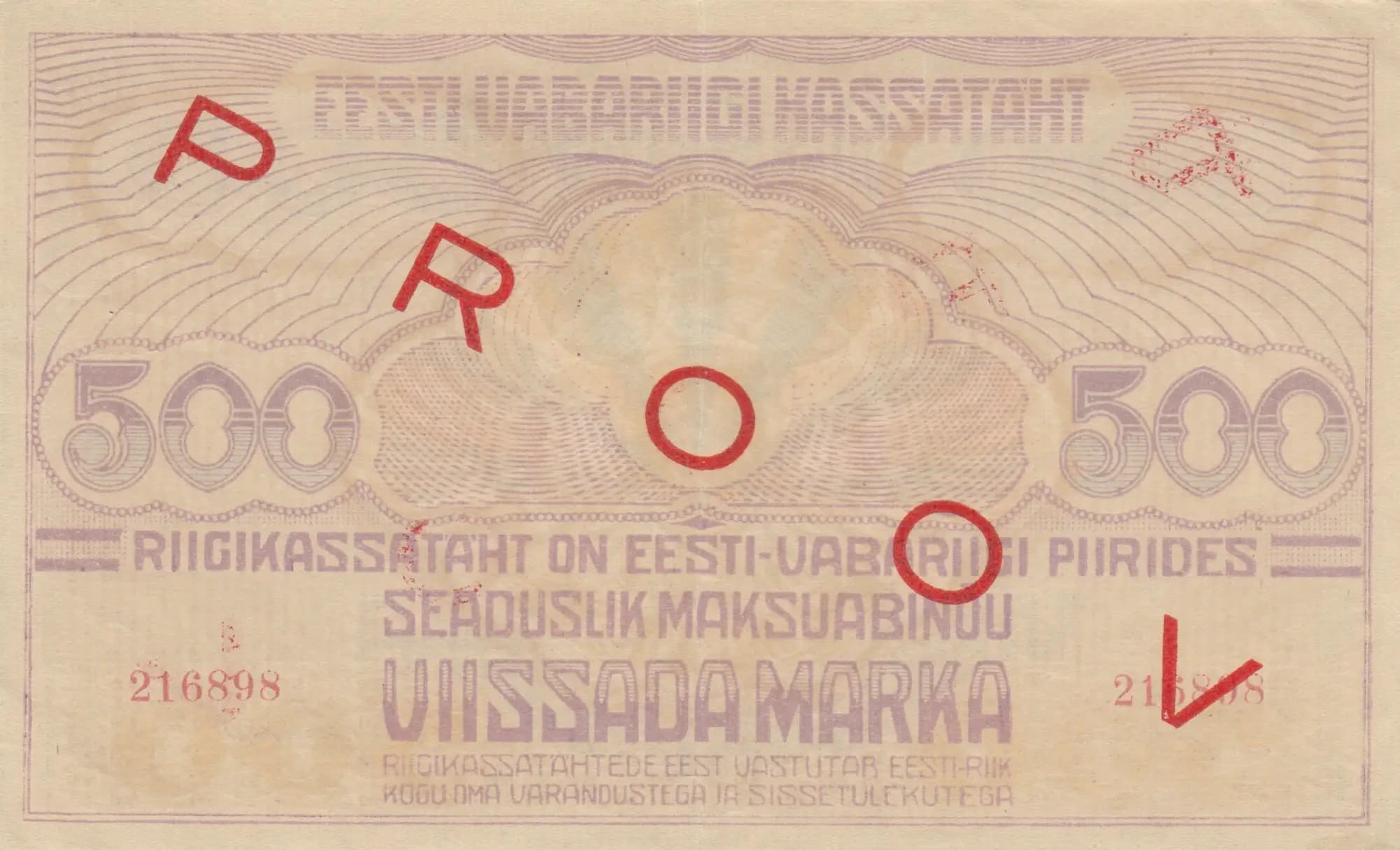
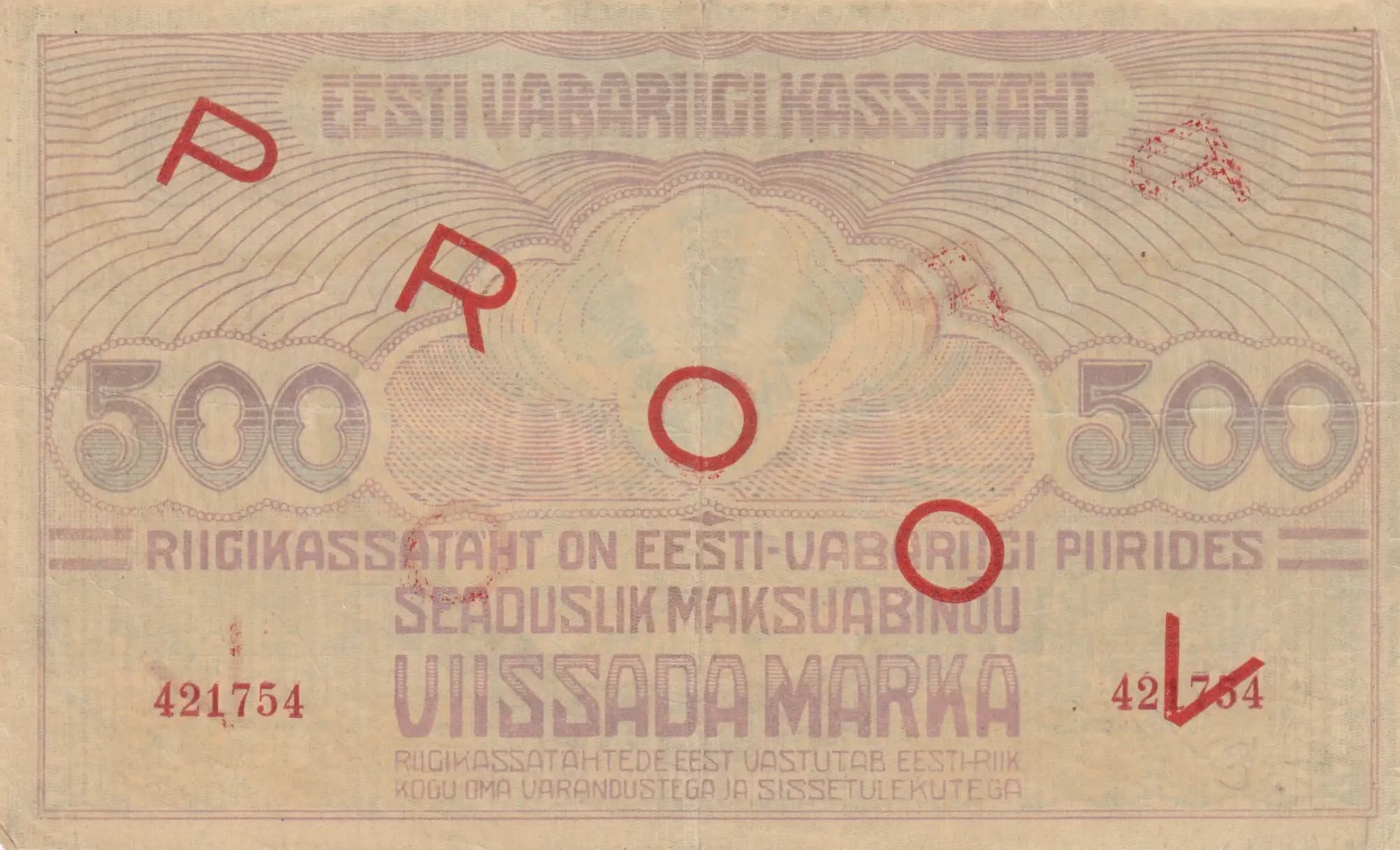
500 marka 1920
Market Prices
1 saleAbout This Note
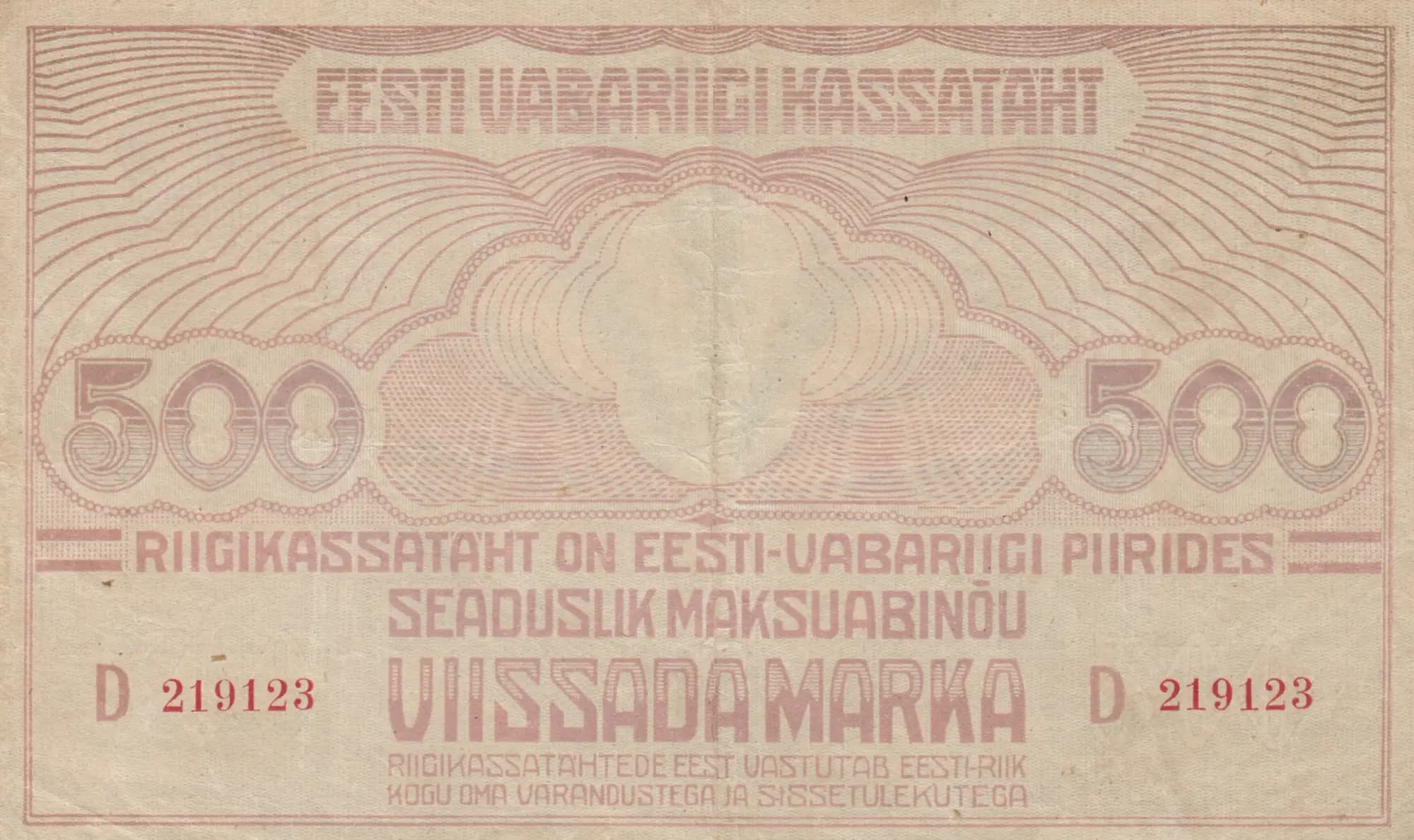
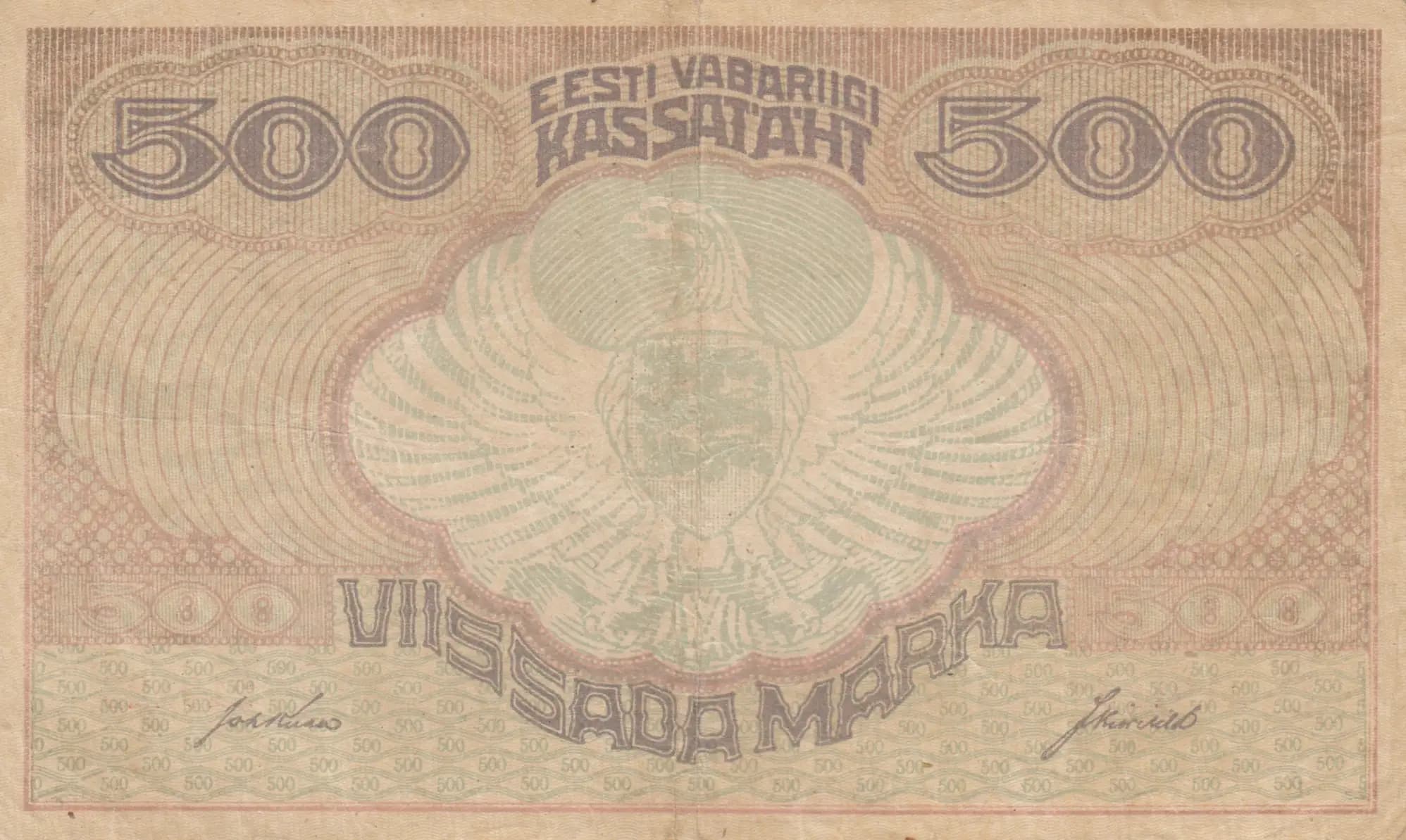
This Estonian 500 Marka note from 1920 is an early example of the newly independent Estonian Republic's treasury currency, featuring the distinctive double-headed eagle on the reverse—a heraldic symbol central to Estonia's national identity. The note exhibits significant age-related wear including foxing, discoloration, and a prominent vertical center fold, consistent with its VF grade and over 100-year lifespan. The reddish-brown and cream color palette, ornate decorative borders, and fine line-work engraving reflect the sophisticated security printing standards of early 20th-century European banknote production.
Common. The eBay pricing data from realbanknotes.com shows recent sales at modest levels ($26 for circulated examples, with VF catalog values of $200), and the note's circulation during Estonia's treasury period (1920-1921) resulted in substantial print runs. The existence of at least 2 known PMG varieties (P-49b and P-49es) further suggests these were produced in reasonable quantities. No evidence of short print runs, recalls, or scarcity factors is present in the available catalog data.
The 500 Marka note was issued by the Treasury of Estonia (Eesti Vabariigi Kassatäht) during the critical early years of Estonian independence following World War I and the collapse of Tsarist Russia. The prominent double-headed eagle depicted on the reverse served as a powerful heraldic emblem of national sovereignty, connecting Estonia to its medieval past while establishing its identity as a modern nation-state. The inscriptions emphasizing that 'the Estonian State is responsible for State Treasury Notes with all its assets and income' reflect the fledgling republic's determination to establish financial credibility and legitimate monetary authority.
The obverse (front) features an ornate decorative circular medallion with radial line patterns at center, surrounded by a continuous wavy-line border pattern. The design is predominantly rendered in reddish-brown and tan tones with cream underprinting. Large '500' numerals appear in both left and right margins. The reverse (back) showcases the heraldic centerpiece—a double-headed eagle with outstretched wings depicted within an oval ornamental frame, rendered in fine detail characteristic of security engraving. Corner elements include decorative rosette patterns. The background incorporates repetitive security pattern work. Both sides display the complete Estonian language text establishing legal tender status and state responsibility for the note.
FRONT: 'EESTI VABARIIGI KASSATÄHT' (Estonian Republic Banknote); '500' and 'VIISSADA MARKA' (Five Hundred Marka) appear as denomination markers; 'RIIGIKASSATÄHT ON EESTI-VABARIIGI PIIRDES SEADUSLIK MAKSUABINU' (State Treasury Note is legal tender within the Estonian Republic); 'RIIGIKASSATAHTEDE EEST VASTUTAB EESTI-RIIK KOGU OMA VARANDUSTEEA JA SISSETUEKUTEGA' (The Estonian State is responsible for State Treasury Notes with all its assets and income); Serial number 'D 219123'. BACK: 'EESTI VABARIIGI KASSATÄHT' (Estonian Republic Banknote); '500' and 'VIISSADA MARKA' (Five Hundred Marka); Official signatures appear at bottom left and right.
Intaglio engraving (line-engraved steel plate printing), evidenced by the fine detailed line-work visible throughout the ornamental borders, the precisely rendered heraldic eagle, and the security pattern repetition. The multi-color printing effect (reddish-brown, tan, cream) suggests either multi-pass intaglio printing or chromatic overprinting. The consistent fine line patterns and decorative elements throughout are characteristic of early 20th-century security printing practices employed by established European banknote printers during this period.
This specimen is identified as Pick P-49f based on catalog data. The PMG population report indicates at least two varieties exist: P-49b and P-49es (with watermark EV). The observed serial number prefix 'D 219123' and the reddish-brown/tan color scheme are consistent with printed variants from the 1920-1921 issue period. The note's coloration and design characteristics align with documented later printings of this denomination, though establishing the precise variety would require comparison with authenticated reference examples and examination of paper composition and watermark presence (not definitively visible in the provided images).