500 marka 1920
Market Prices
1 saleAbout This Note
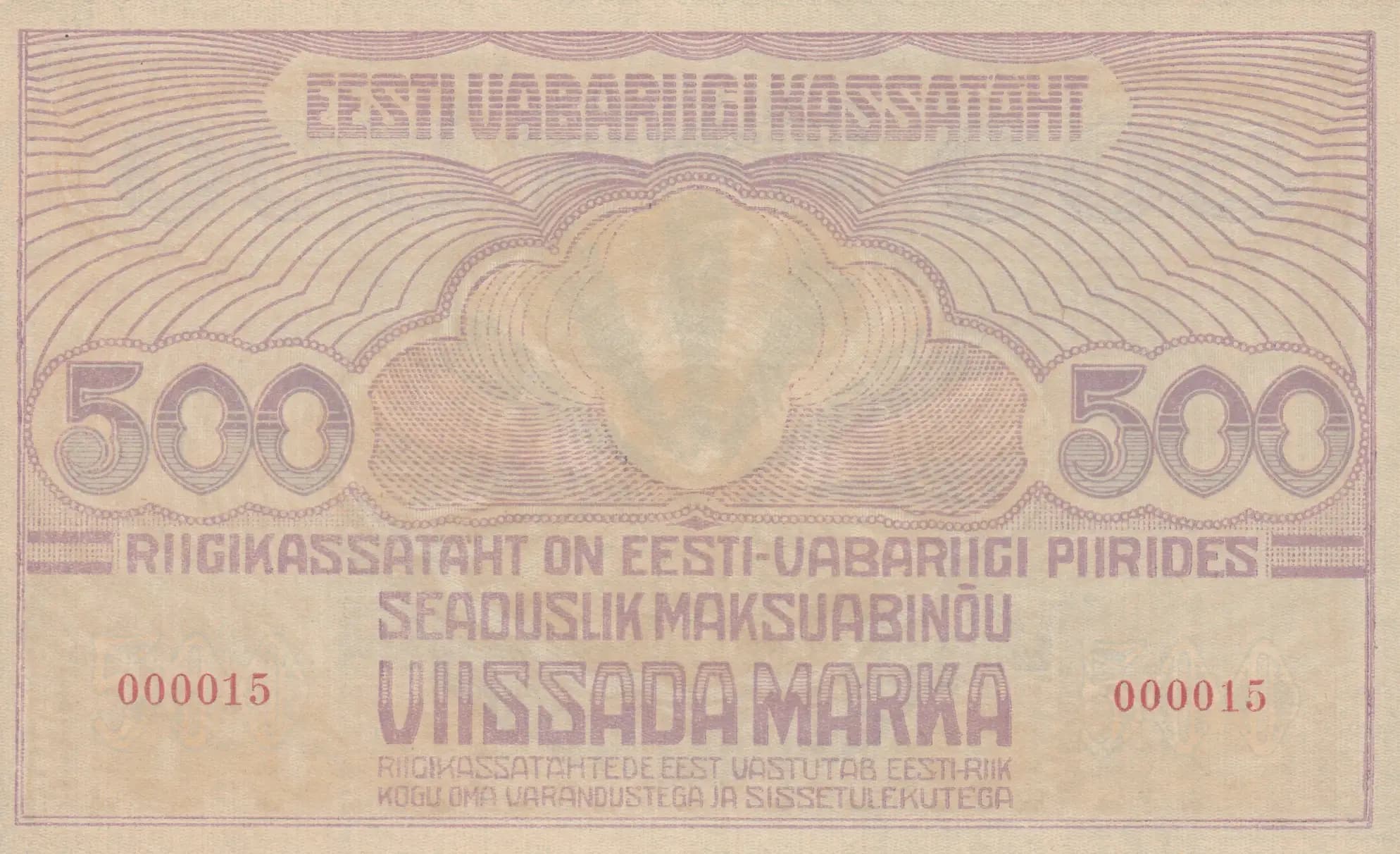
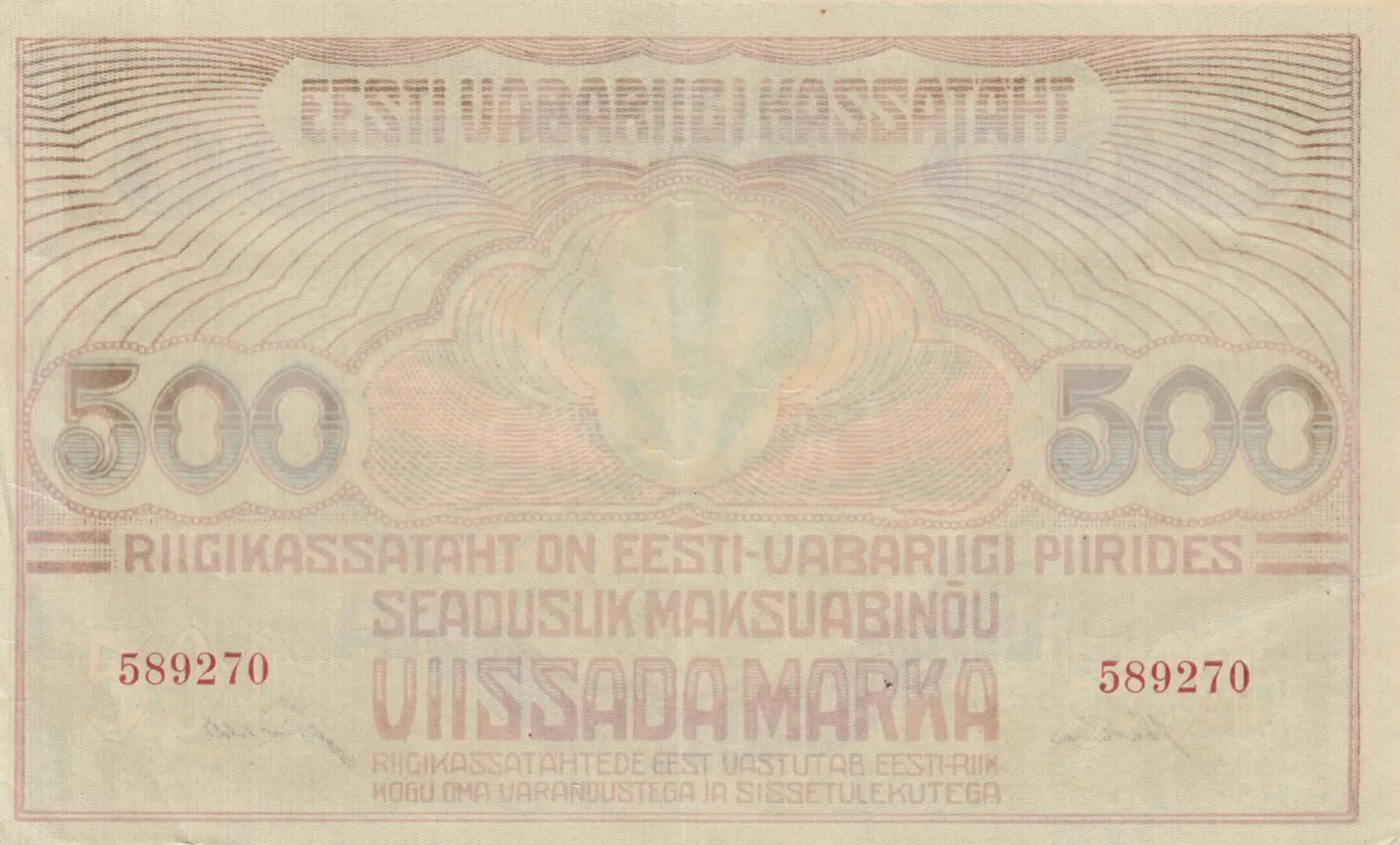
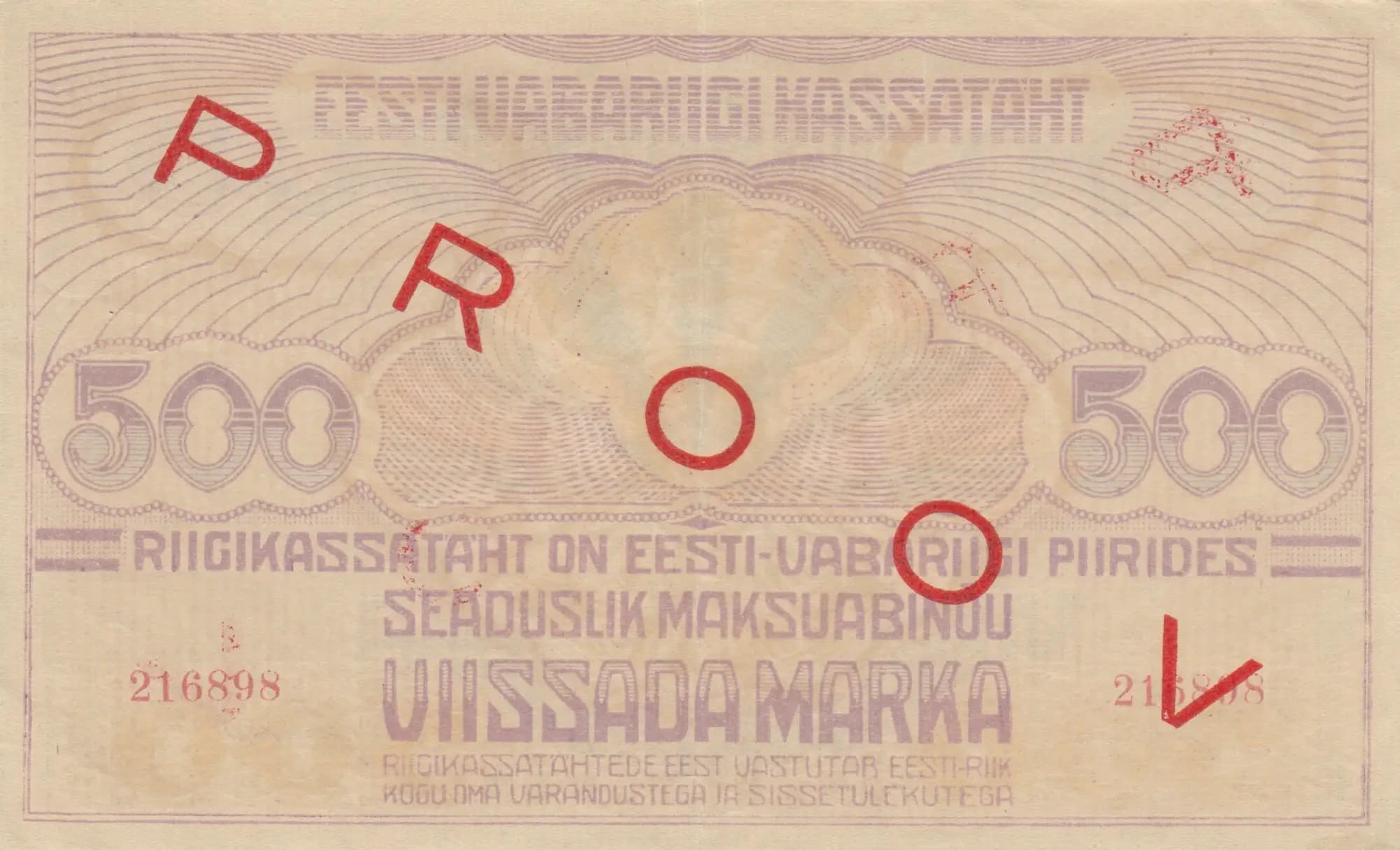
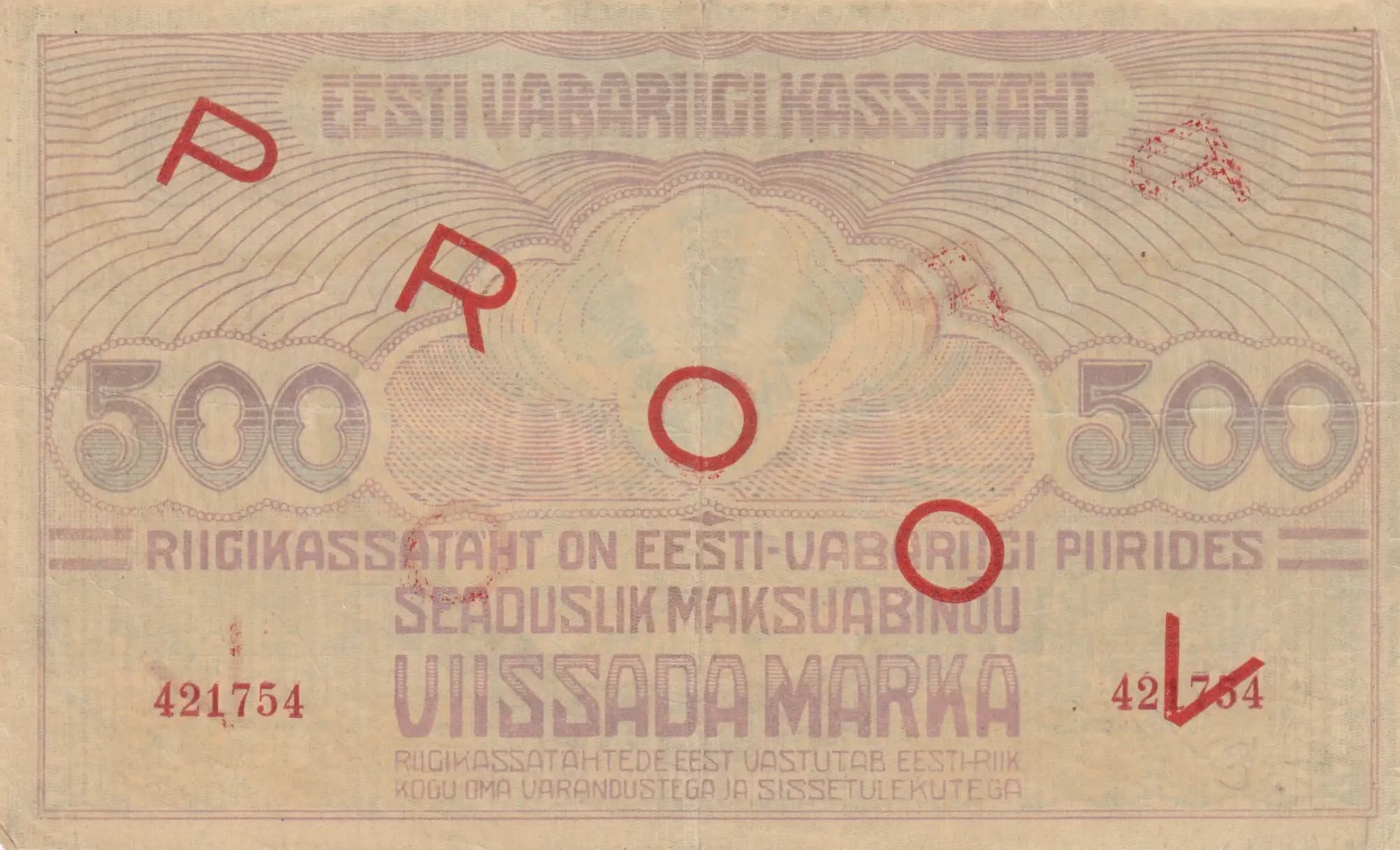
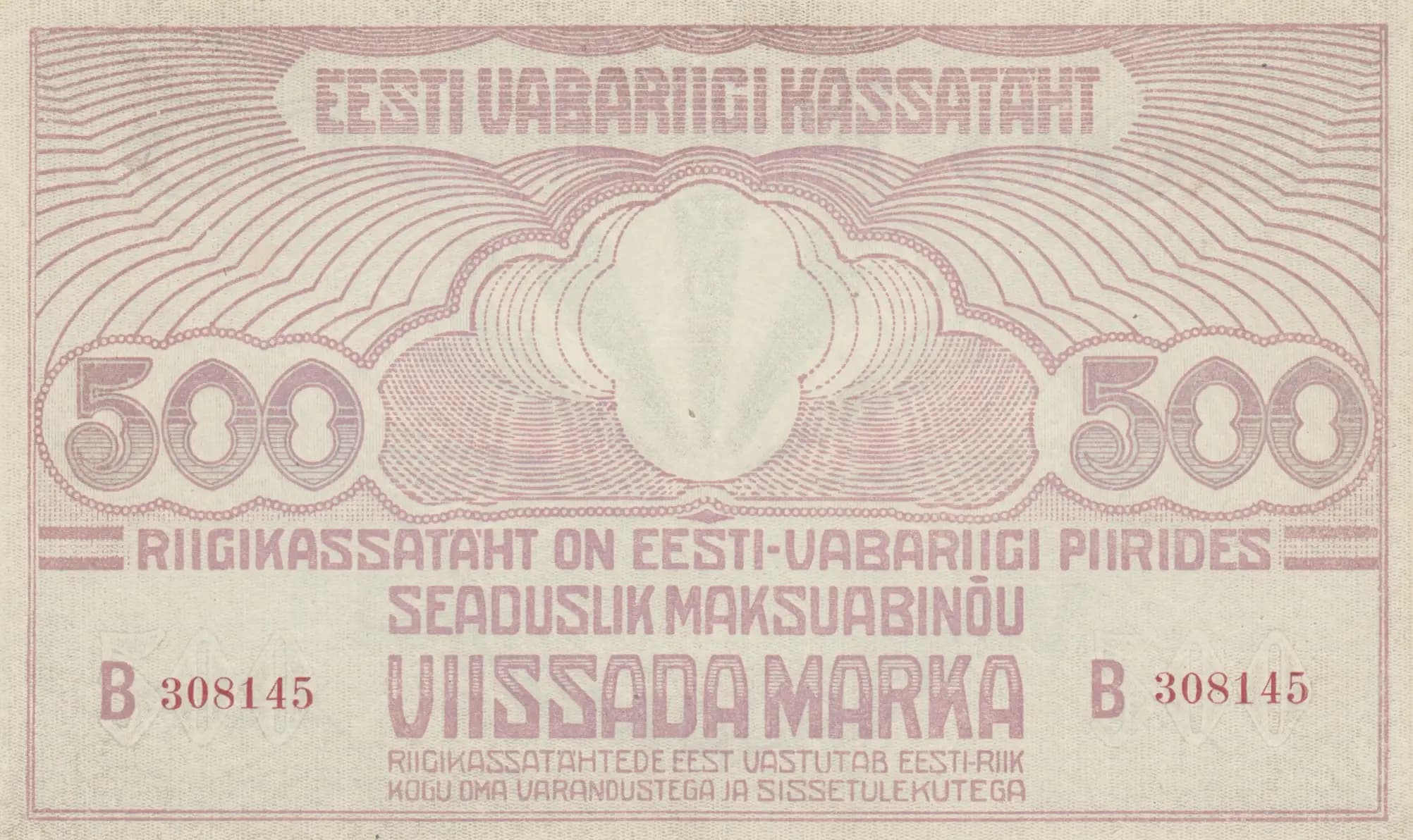
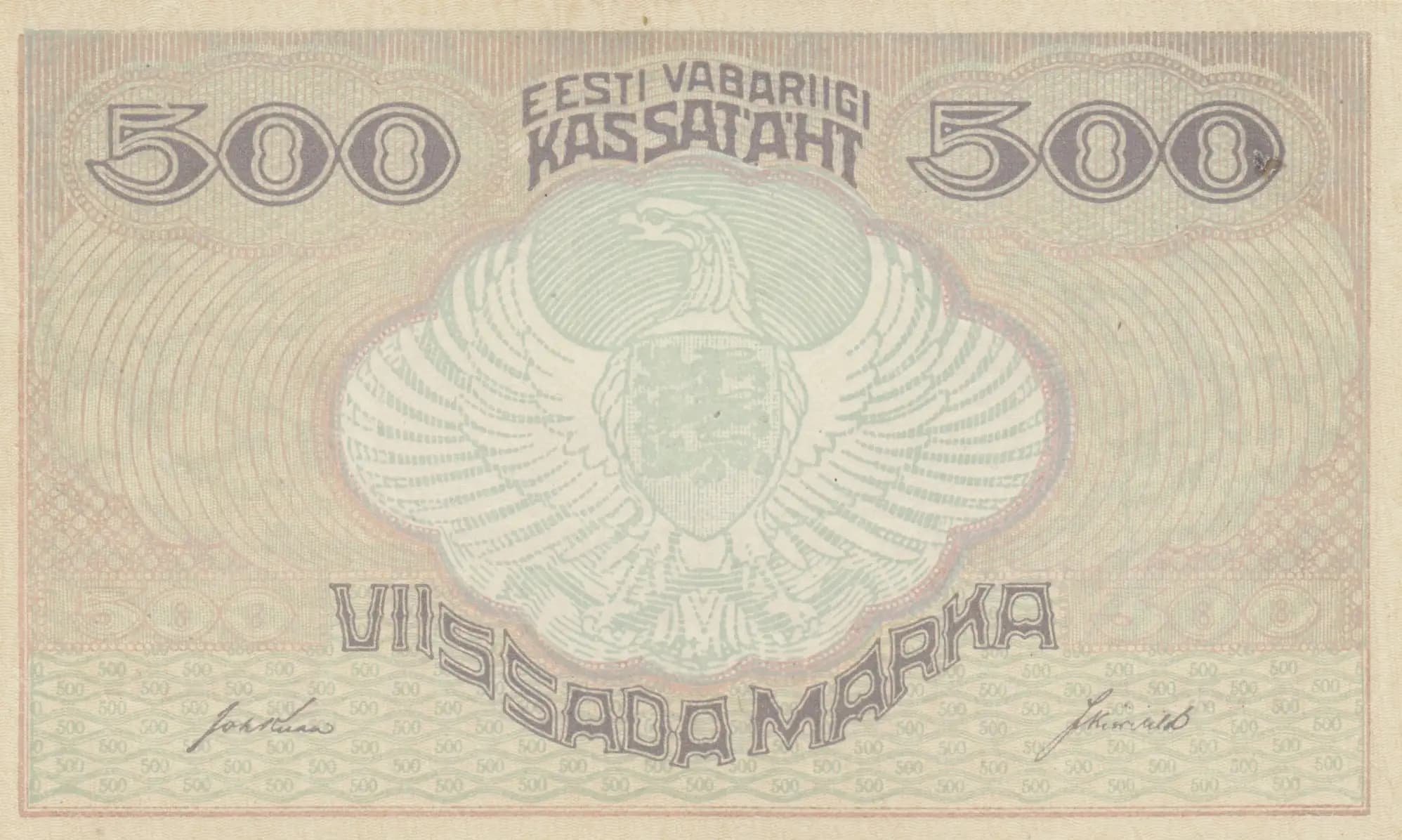
This 500 Marka note from Estonia's 1920 Treasury issue presents in exceptional AU condition with crisp, uncirculated appearance and no visible wear or handling marks. The front features an ornate shield-shaped ornament with concentric wave patterns in mauve and cream tones, while the reverse displays the Estonian coat of arms—a heraldic eagle with spread wings protecting a shield containing a lion rampant. The intricate guilloche and line-work security patterns throughout demonstrate the sophisticated engraving techniques employed by the newly independent Estonian Republic.
Common. Despite the historical significance of early Estonian currency, this Pick number was issued in substantial quantities during 1920-1921 to establish the new state's currency circulation. Market data from realbanknotes.com shows catalogue values of $90 (VG), $200 (VF), and $300 (UNC) as of 2016, with a 2019 eBay sale at $82 in VG condition—pricing consistent with a widely available note. The absence of scarcity notations in PMG population reports and the straightforward availability in AU/UNC grades confirm this is a common collectible, though desirable for Estonia specialists.
Issued in 1920 during Estonia's establishment as an independent republic following World War I and the Russian Revolution, this banknote symbolizes the nation's newfound sovereignty. The prominent heraldic eagle and lion rampant on the reverse represent Estonian national identity and state authority, while the inscriptions in Estonian (rather than Russian) emphasize the break from imperial rule. The Treasury's explicit statement that 'The Estonian State is responsible for state banknotes with all its property and income' underscores the fledgling nation's commitment to monetary stability during a period of significant political and economic transition.
The obverse features a centrally positioned shield ornament composed of concentric wavy line patterns, framed by decorative cloud-like scrollwork elements at top and bottom, rendered in mauve and cream with intricate guilloche border work. The reverse showcases the Great Coat of Arms of Estonia: a heraldic eagle with fully spread wings displayed protectively over an escutcheon containing a rampant lion, crowned with a heraldic crest element. Large denomination numerals '500' appear symmetrically on both sides of each design. The composition emphasizes national heraldic symbolism appropriate to a newly sovereign state asserting its independence and legitimacy in international currency markets.
FRONT: 'EESTI VABARIIGI KASSATAHT' (Estonian Republic Banknote) / '500' (denomination) / 'VIISSADA MARKA' (Five hundred marks) / 'RIIGIKASSATAHT ON EESTI-VABARIIGI PIIRDES SEADUSLIK MAKSUABIN' (State banknote is legal tender within Estonian Republic territory) / 'RIIGIKASSATAHTEDE EEST VASTUTAB EESTI-RIIK KOGU OMA VARANDUSEGA JA SISSETULEKUTEGA' (The Estonian State is responsible for state banknotes with all its property and income) / Serial number: B 308145. BACK: 'EESTI VABARIIGI KASSATAHT' (Estonian Republic Banknote) / '500' (denomination) / 'VIISSADA MARKA' (Five hundred marks) / Two official signatures in cursive script (illegible in image).
Intaglio engraving with multi-color offset printing (typically 3-4 color impressions). The front employs mauve, rose pink, and cream; the reverse uses green/sage green, gray, and cream tones. The complex guilloche patterns, fine line-work, and intricate heraldic detailing characteristic of this note indicate production by a premium security printer, likely Waterlows & Sons or a comparable Continental European security printing firm specializing in post-WWI nationalist currencies.
This note is catalogued as Pick P-49e, indicating it belongs to a variant series within the 500 Marka 1920 issue. The visual analysis identifies this as 'SEERIA B' (Series B) based on the serial number prefix 'B 308145'. PMG records indicate at least two variants for this base Pick number (P-49b and P-49es), with the latter bearing watermark 'EV' (Eesti Vabariigi). The present note's series designation and lack of visible watermark description suggest it may correspond to the standard P-49e variety, though definitive variety attribution would require examination of watermark characteristics under transmitted light and comparison with reference specimens.