500 marka 1920
Market Prices
About This Note
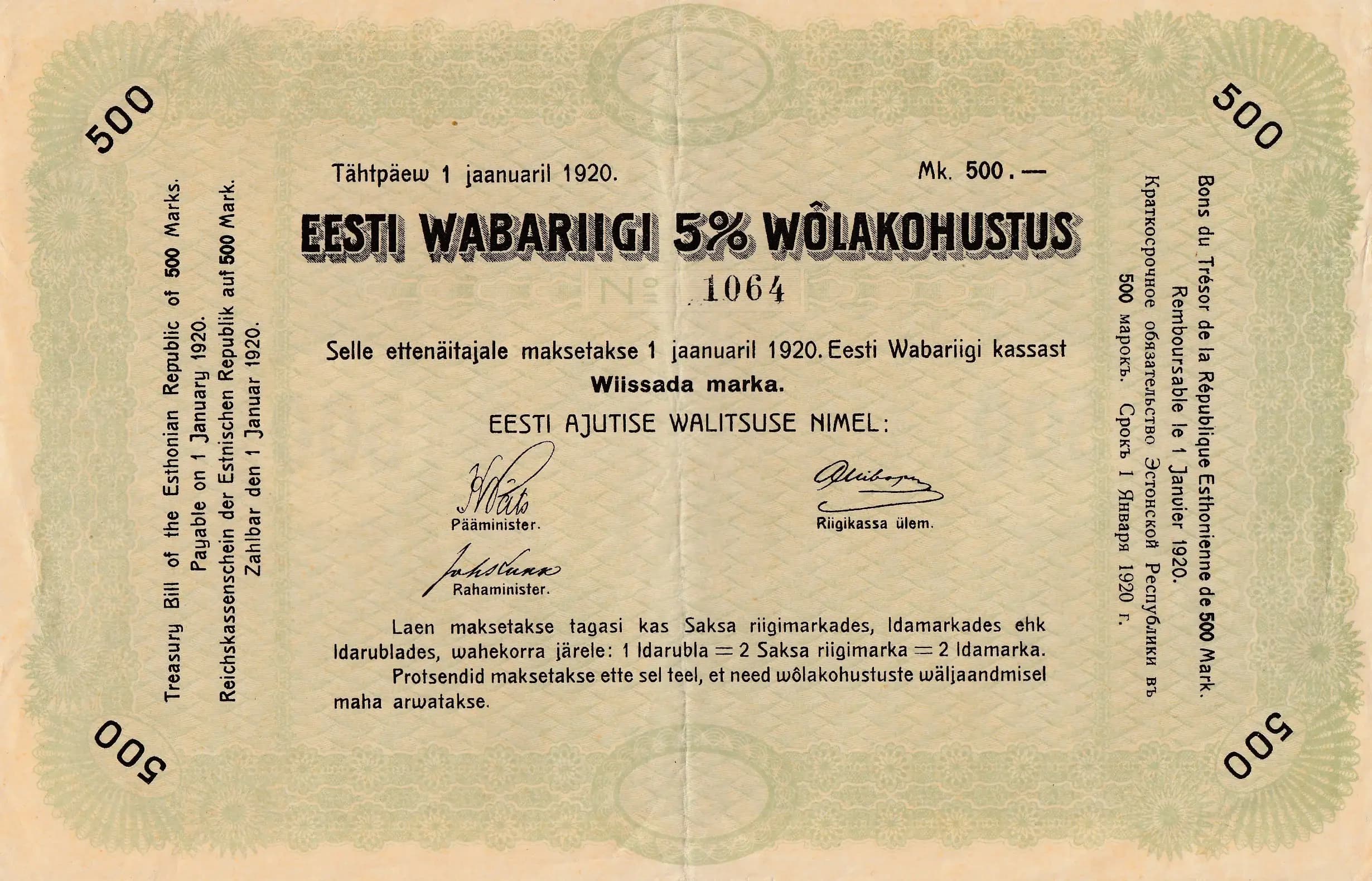
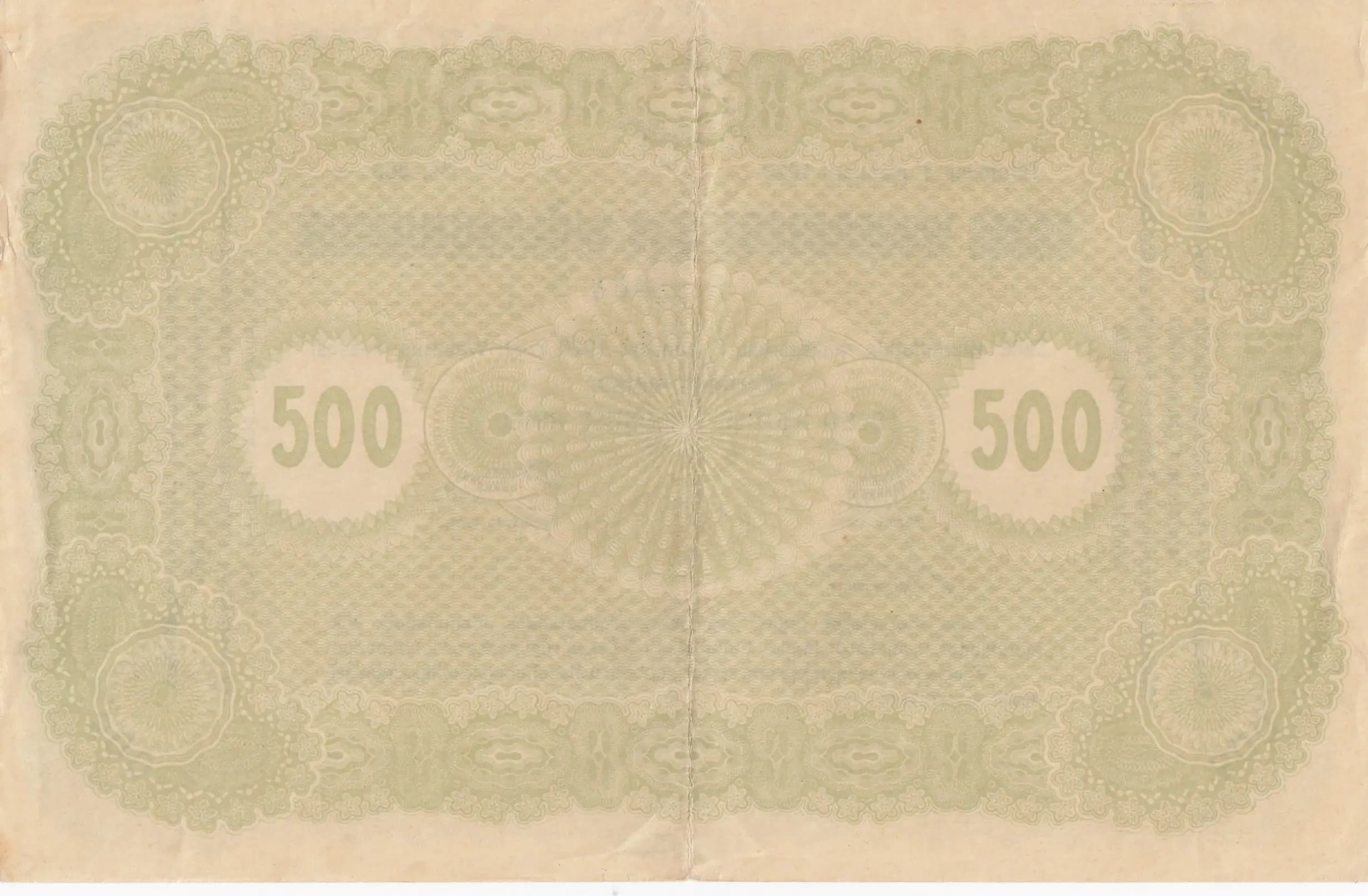
This 500 Marka treasury bond from the Estonian Republic, issued January 1, 1920, presents as an EF-graded example of an important early Estonian financial instrument. The note features a distinctive cream-colored base with green tinting, ornate decorative borders, and a central radiating sunburst pattern on the reverse, with a visible center fold consistent with age. As a 5% loan bond signed by officials of the Estonian Provisional Government, this piece represents a crucial transitional moment in Estonian independence and early financial sovereignty.
Common. Market evidence strongly supports a common classification: eBay price tracking data shows multiple sales across all condition grades, with examples in XF condition trading in the $38-45 range and UNC examples typically $114-150 USD. The 500 Marka denomination, while historically significant, was issued in substantial quantities by the Estonian Provisional Government as a loan instrument rather than circulating currency. The consistent availability of multiple examples in various grades indicates a healthy, stable supply in the numismatic market. The single PMG population report variant confirms this is a standard cataloging entry without notable rarity variants.
The 500 Marka bond was issued during Estonia's critical early independence period following the 1918 declaration of independence from the Russian Empire. The multilingual text in Estonian, German, and French reflects the geopolitical complexity of the Baltic region in 1920, while the repayment clause referencing German Reichsmarks and East marks demonstrates the economic entanglement with neighboring currencies during this volatile post-WWI period. The Provisional Government signatures and Treasury issuance underscore Estonia's efforts to establish financial credibility as a newly sovereign nation.
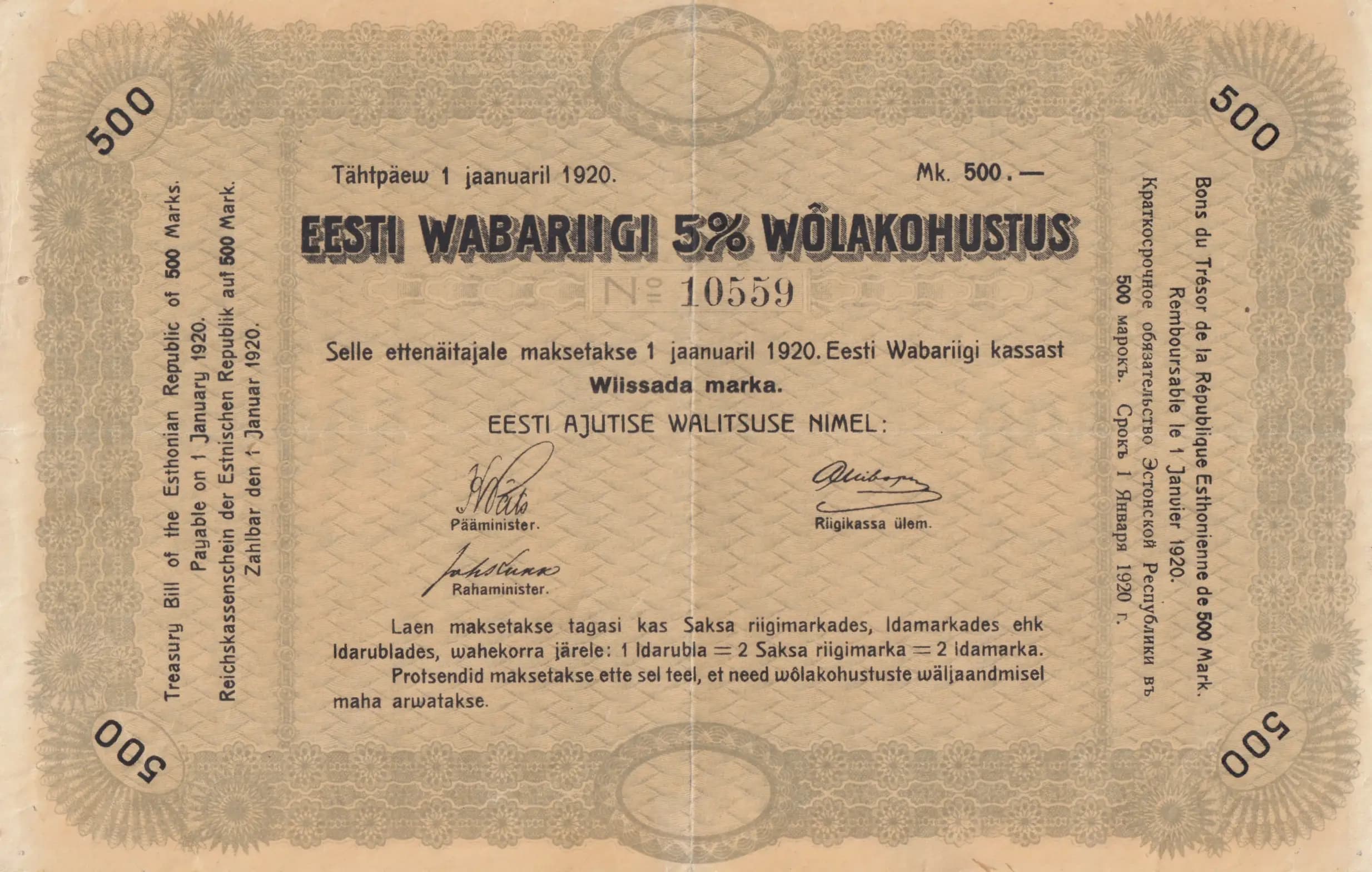
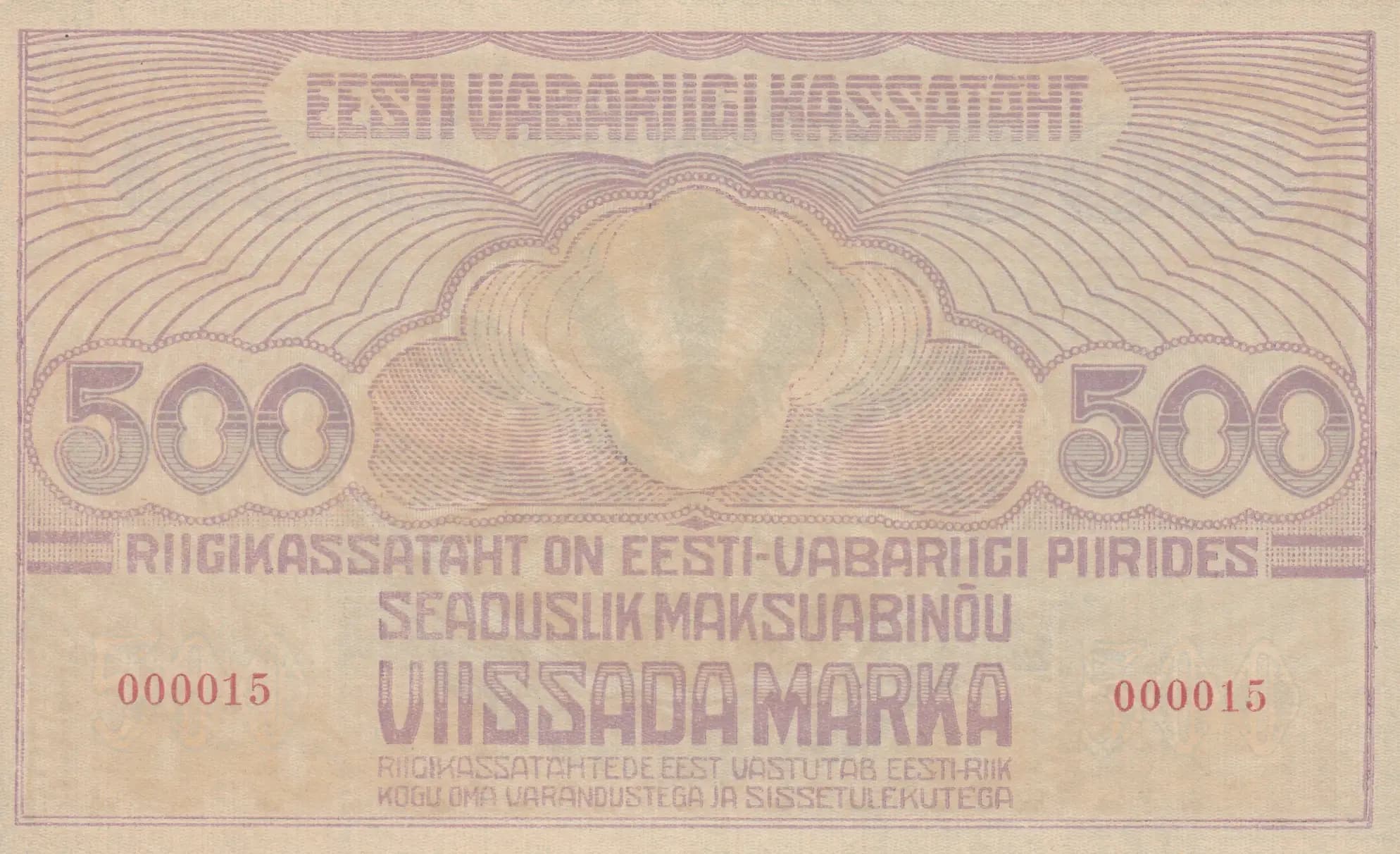
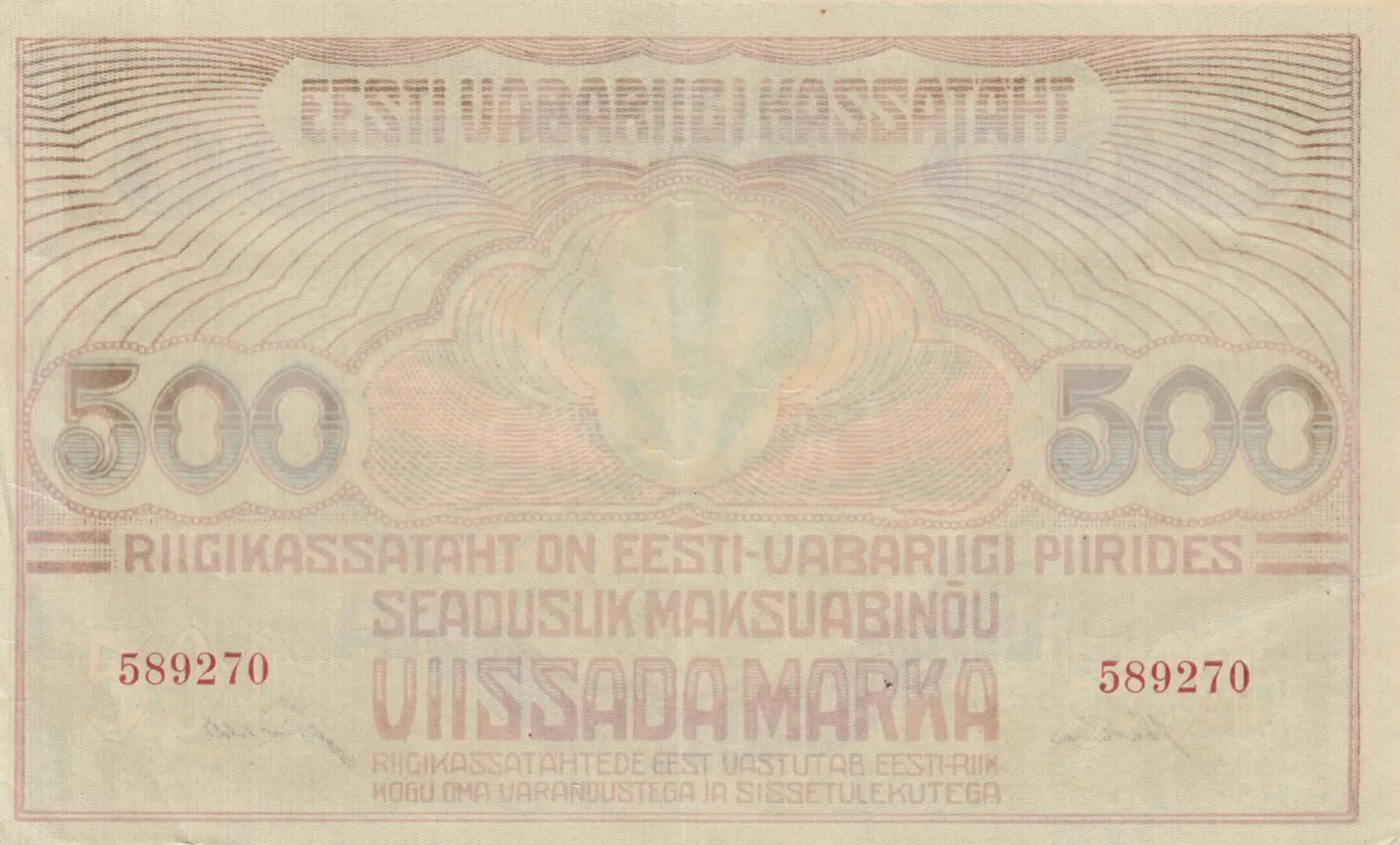
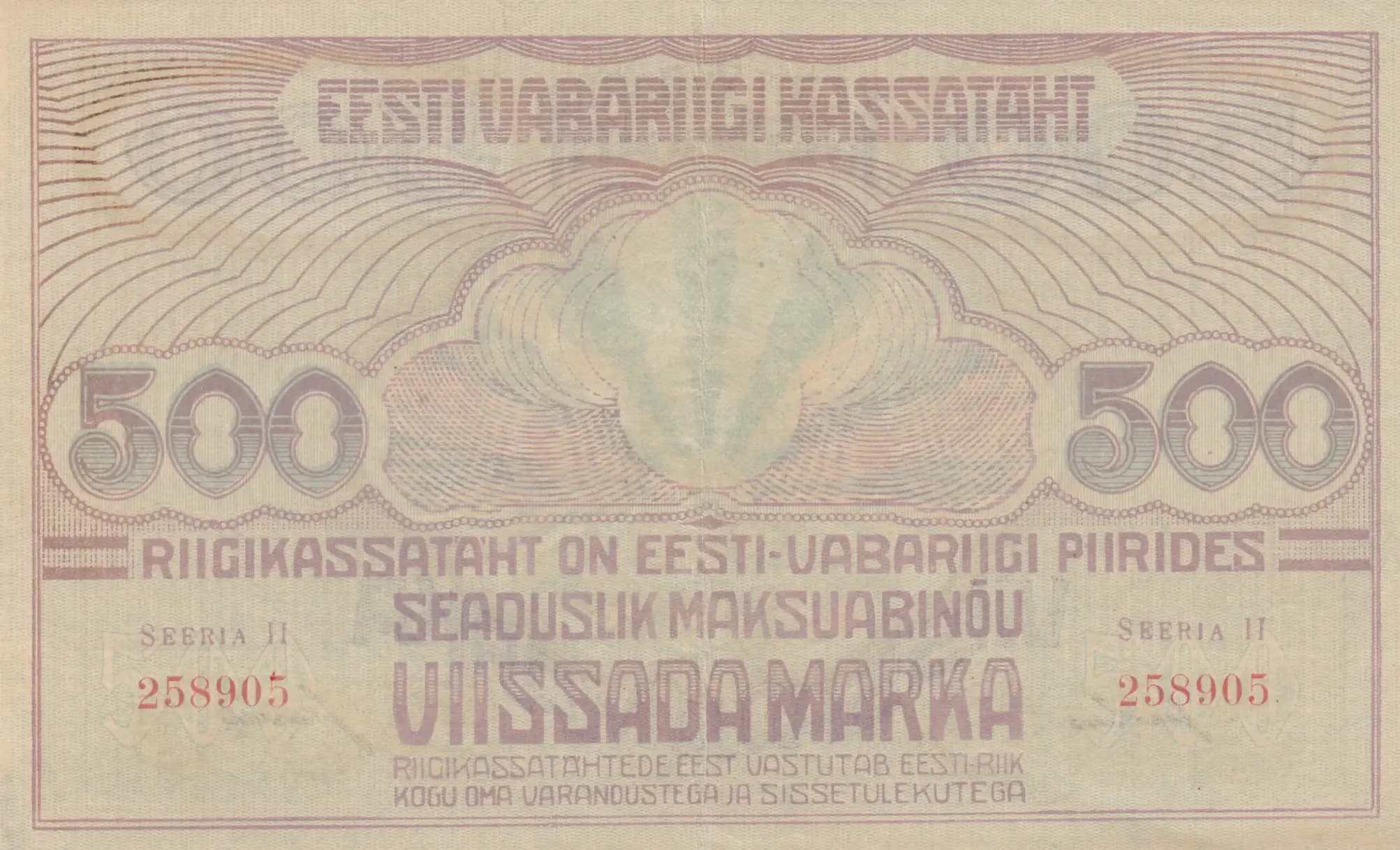
The 500 Marka bond exhibits a classical early 20th-century treasury security design characteristic of Baltic and Northern European financial instruments of the period. The obverse features a formal, symmetrical layout with large corner denomination numerals (500) in all four corners, establishing immediate recognition of face value. The central area is dominated by text in multiple languages arranged both horizontally and vertically, reflecting the cosmopolitan nature of Estonian financial markets and the need to appeal to international investors and creditors. An ornate circular seal or emblem occupies the upper center, representing state authority. The signature area in the lower center portion displays three lines for authorized signatories—Prime Minister, Finance Minister, and State Treasury Chief—lending official gravitas to the document. Decorative fan-pattern elements appear in the corners, typical of anti-counterfeiting design philosophy of the era. The reverse side displays a more decorative character, featuring a prominent radiating sunburst or fan pattern in the center, flanked by ornate circular medallions in all four corners. Watermark-style denomination numerals (500) appear pale and prominent in all four corners of the reverse, serving both identification and security purposes. The overall color scheme of cream or beige base with green tinting is consistent with the catalog reference noting this as the green variant (distinguishing it from the gray variant P-34).
FRONT SIDE: Main heading: 'EESTI WABARIIGI 5% WÕLAKOHUSTUS' (Estonian Republic 5% Loan Bond). Date and maturity: 'Tähtpäev 1 jaanuaril 1920' (Maturity date January 1, 1920). Denomination: 'Mk. 500.—' and 'Wiissada marka' (500 Marks). Authority line: 'EESTI AJUTISE WALITSUSE NIMEL:' (On behalf of the Estonian Provisional Government:) followed by signature lines for 'Pääminister' (Prime Minister), 'Rahaminister' (Finance Minister), and 'Riigikassa ülem' (State Treasury Chief). Payment clause: 'Selle ettenäitajale maksutakse 1 jaanuaril 1920. Eesti Wabariigi kassast' (Payment to bearer on January 1, 1920 from the Estonian Republic Treasury). Currency clause: 'Laen maksutakse tagasi kas Saksa riigimarkades, Idamarkades ehk Idarublades, vahekorra järele: 1 Idarubla = 2 Saksa riigimarka = 2 Idamarka' (Loan repayment in German Reichsmarks, East marks or East rubles according to rate: 1 East ruble = 2 German Reichsmarks = 2 East marks). Interest provision: 'Protsendid maksutakse ette sel teel, et need wõlakohustuste wäljandamisel maha arwatakse' (Interest payments are made in advance by deduction at the time of bond distribution). English translation: 'Treasury Bill of the Estonian Republic of 500 Marks.' German text: 'Reichskassenschein der Estländischen Republik 1 Januar 1920' (Reichs treasury certificate of the Estonian Republic January 1, 1920). French text: 'Bon du Trésor de la République Estonienne 500 Marks du 1 Janvier 1920' (Treasury Bond of the Estonian Republic 500 Marks of January 1, 1920). Serial number element: '1064'. BACK SIDE: Denomination watermark numerals: '500' appearing in all four corners.
The note employs intaglio printing techniques, evidenced by the crisp, well-defined line work visible in the ornate borders, decorative patterns, and text elements. The multi-color effect (cream base with green tinting) was achieved through successive intaglio passes or color application. The security printer for this Estonian issue is not definitively identified in standard catalog references, though the quality and sophistication suggest involvement of a professional European security printer, possibly contracted by the newly independent Estonian government. The clear impression of signatures and the precision of the corner numerals and central security devices are consistent with high-quality intaglio production standards of the 1920 period.
The visual analysis identifies this as the green-tinted variety, consistent with the catalog designation and the external reference noting color distinction from P-34 (gray variant). The serial number element '1064' visible in the image suggests sequential numbering systems were employed. While the specific variety designation would require examination of signature combinations, serial number series, and other production details not fully determinable from visual inspection alone, the confirmed green coloration distinguishes this from the concurrent gray-colored issue. No overprints, unusual serial prefixes, or other notable production variants are evident from the images analyzed.