500 marka 1920
Market Prices
About This Note
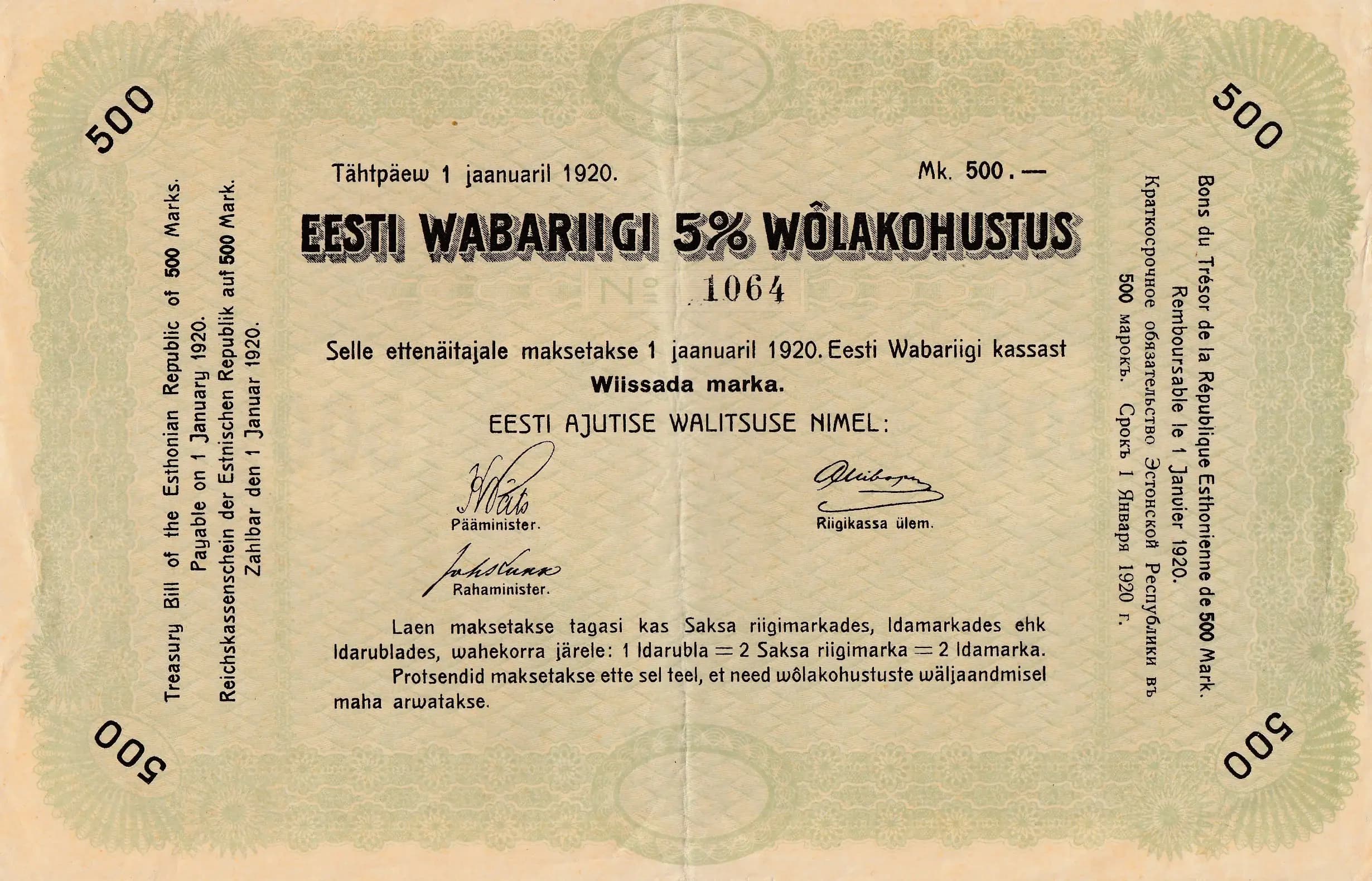
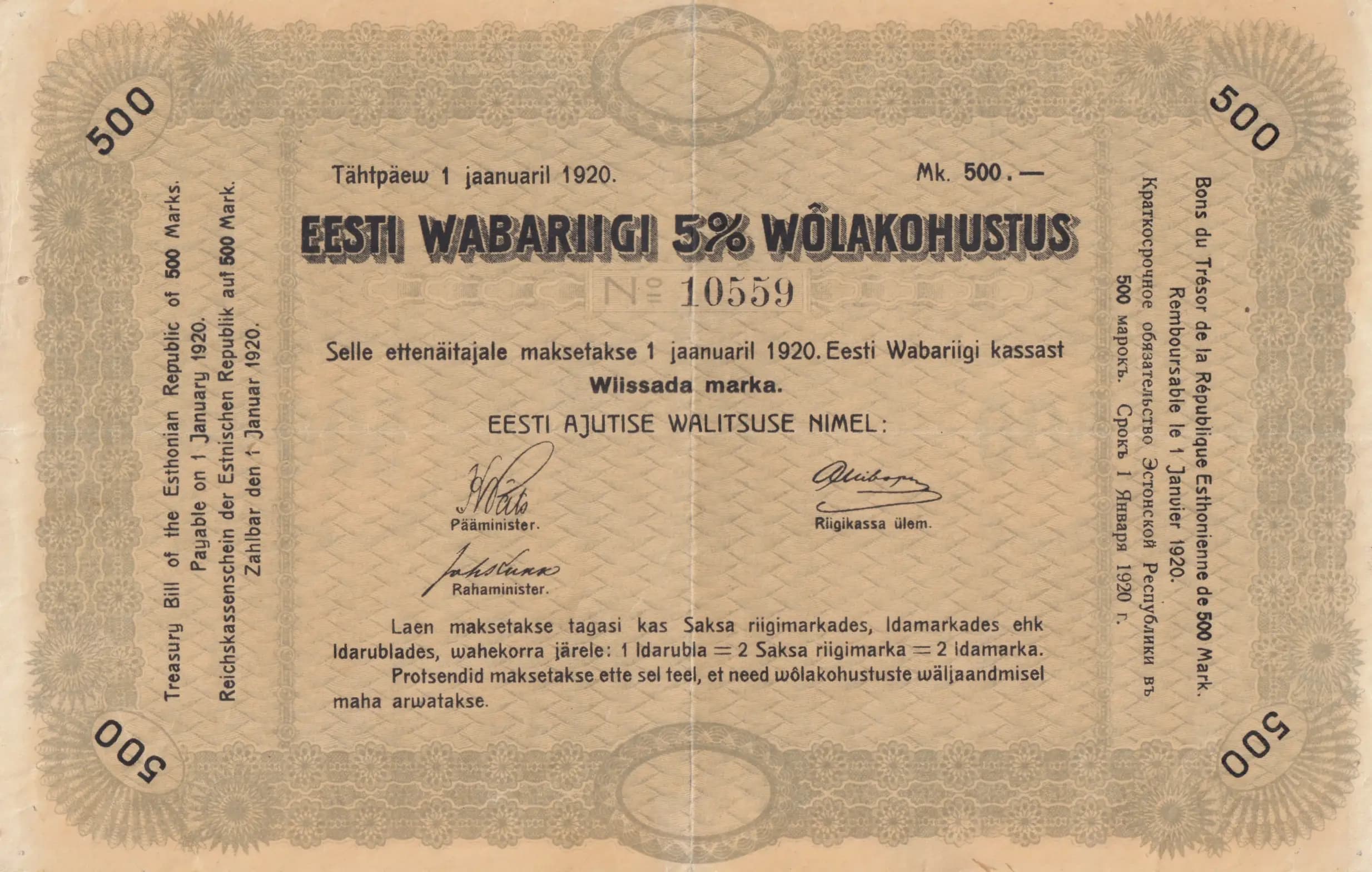
This Estonian 500 Marka treasury bill from 1920 exemplifies the early monetary instruments of the newly independent Estonian Republic. The note features an elegant design with ornate guilloche borders and fan-pattern corner decorations in tan and light gray tones, displaying a vertical center fold consistent with period usage. In VF condition with age-appropriate foxing and yellowing, this note represents an important artifact from Estonia's formative years as a sovereign nation.
Common. eBay market data shows VF examples trading in the $54.90–$82.00 range, with occasional sales reaching $245.00, indicating steady collector demand but no scarcity premium. The Estonian Republic issued multiple denominations of these 1920 treasury bills in substantial quantities. Print runs for this series were substantial enough to support regular availability in the numismatic market across various condition grades.
Issued on January 1, 1920, this 5% loan obligation reflects Estonia's immediate financial needs following independence from the Russian Empire. The trilingual governance inscriptions—referencing the Estonian Provisional Government with signatures from the Prime Minister, Finance Minister, and State Treasury Chief—document the transitional administrative structure. The note's redemption terms stipulating payment in German state marks, East marks, or East rubles reveal the complex post-WWI currency environment of the Baltic region.
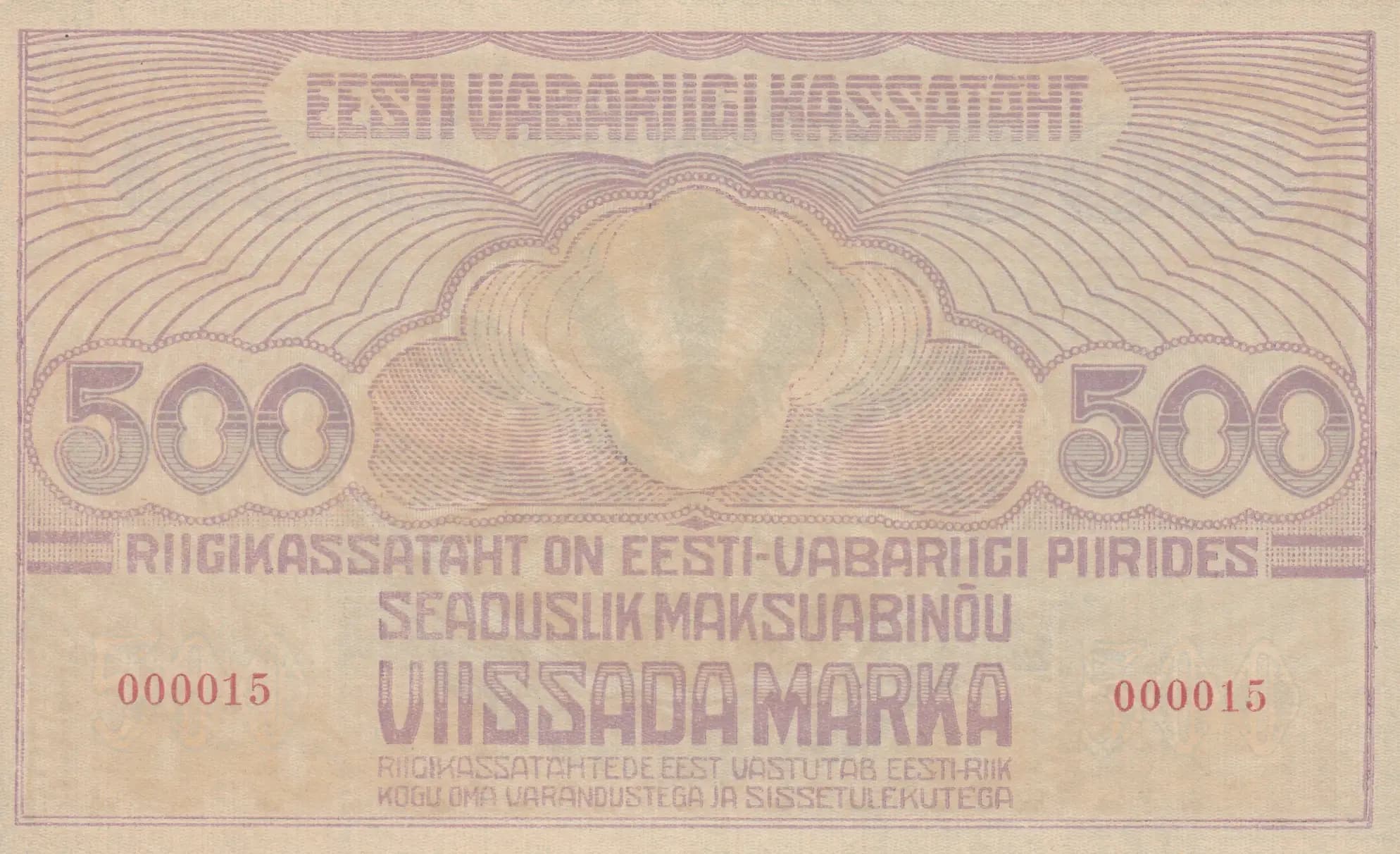
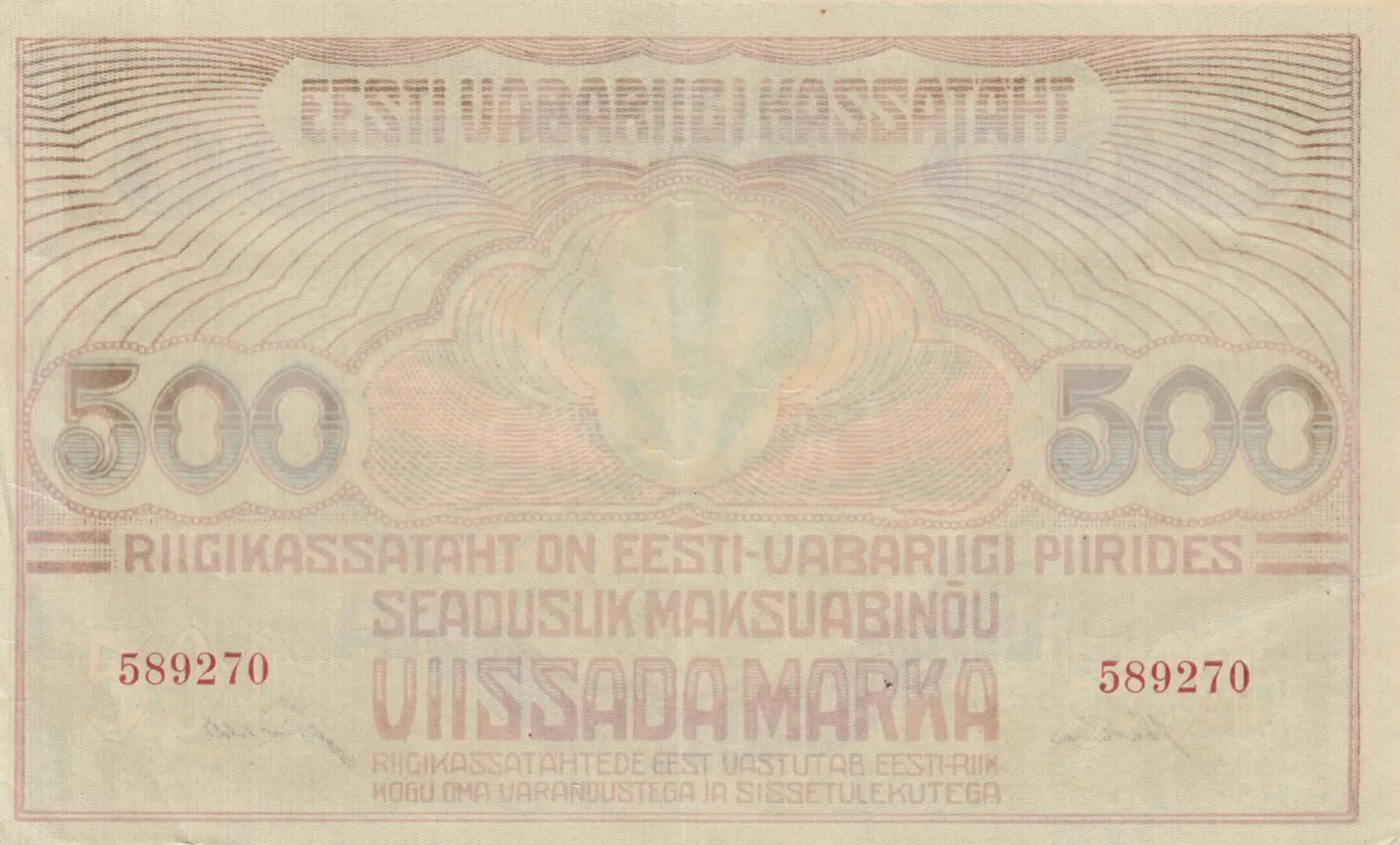
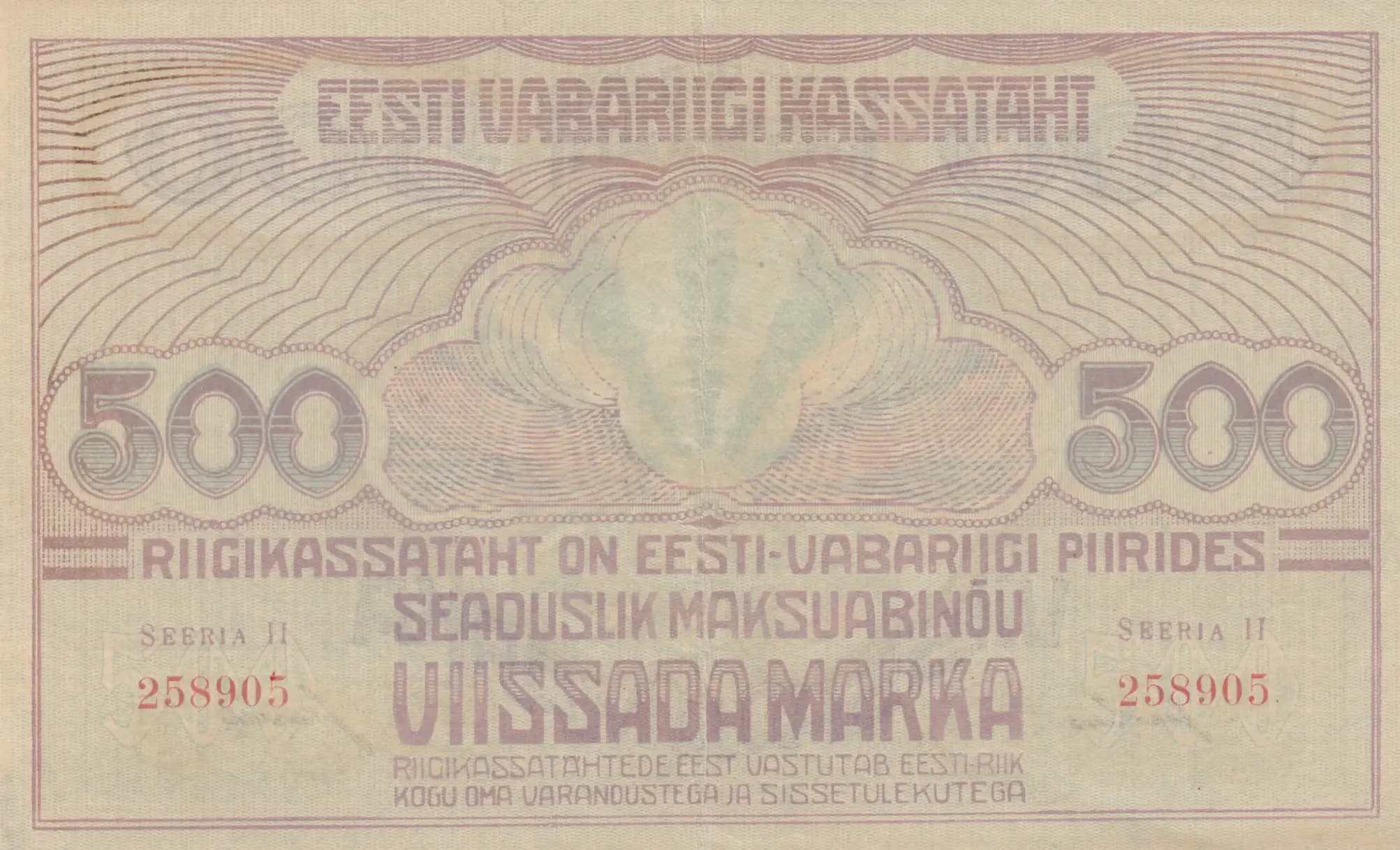
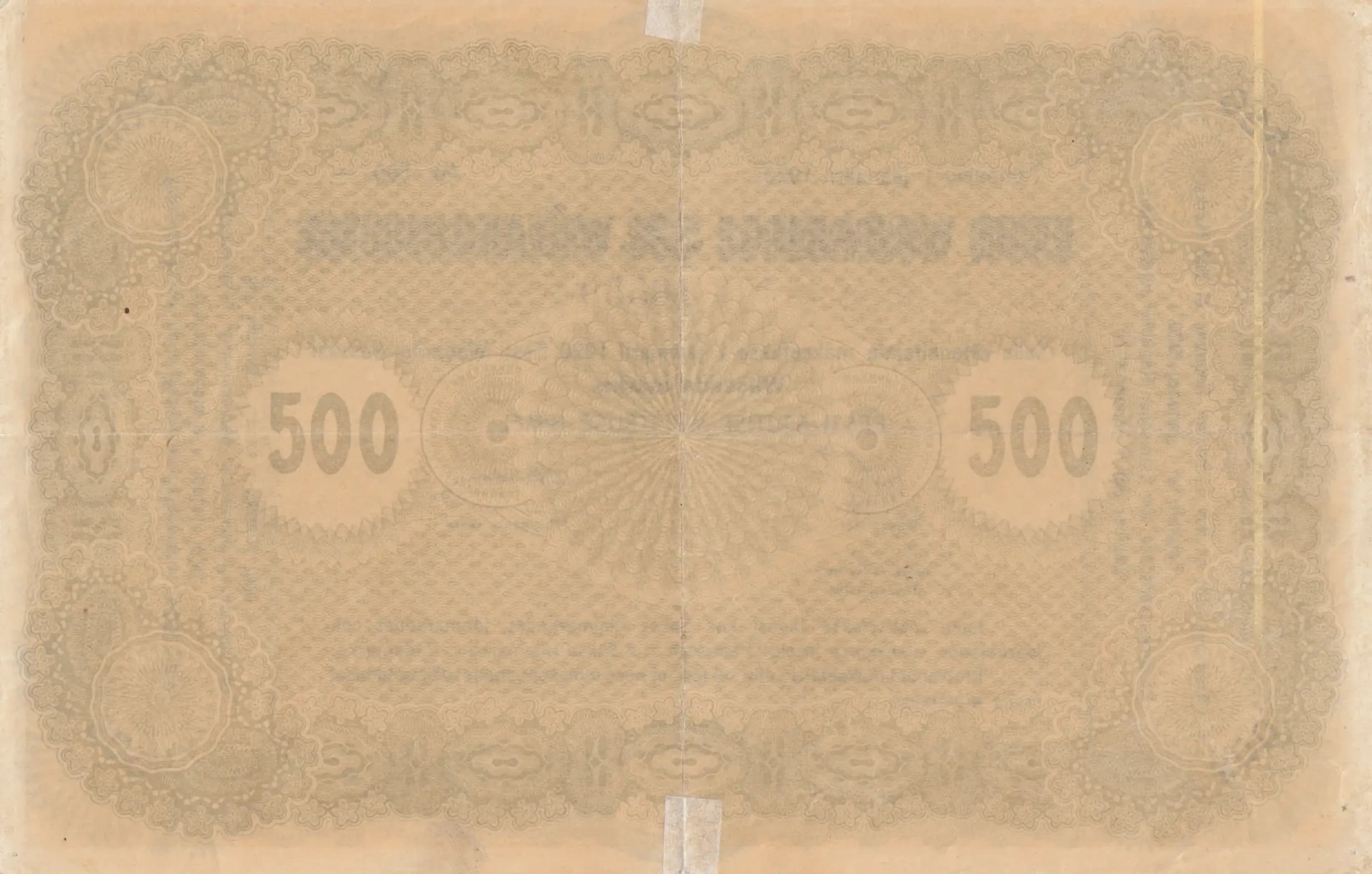
The 500 Marka note presents a purely administrative design without portraits or landmarks, emphasizing decorative security elements typical of early 20th-century treasury instruments. The front features a formal layout with denomination numerals in upper corners, central official seals and emblems (oval and circular designs), and extensive guilloche patterning throughout. The reverse side is dominated by symmetrical decorative guilloche work with radiating fan-pattern designs in each corner and watermark-style denomination indicators. The color scheme of tan, beige, light brown, and gray creates a sophisticated yet austere appearance befitting a government financial instrument. The ornate corner designs and interlocking geometric patterns serve both aesthetic and security purposes.
FRONT SIDE: 'EESTI WABARIIGI 5% WÕLAKOHUSTUS' (Estonian Republic 5% Loan Obligation); 'Tähtpäev 1 jaanuar 1920' (Due date January 1, 1920); 'Mk. 500.—' / 'Wilssada marka' (Marks 500); 'Selle ettenäitajale maksefakse 1 jaanuar 1920. Eesti Wabariigi kassast' (Payment to the bearer on January 1, 1920 from the Estonian Republic treasury); 'EESTI AJUTISE WALITSUSE NIMEL' (On behalf of the Estonian Provisional Government); 'Pääminister' (Prime Minister); 'Rahaminister' (Minister of Finance); 'Riigikassa üllem' (State Treasury Chief); 'Realiseeritavaks 1 jaanuari 1920' (Redeemable January 1, 1920); 'Kaarsmäe ja Kassiopeia Kirjapano ja Trükikoja, Tallinn' (Kaarsmäe and Kassiopeia Publishing and Printing House, Tallinn); Redemption clause detailing exchange rates: 1 East ruble = 2 German state marks = 2 East marks, with interest paid in advance. BACK SIDE: '500' (Five hundred) appearing in watermark-style format.
Letterpress and intaglio printing, combining raised type for text and engraved plates for the decorative guilloche borders and security patterns. Printed by Kaarsmäe ja Kassiopeia Kirjapano ja Trükikoja (Kaarsmäe and Kassiopeia Publishing and Printing House) in Tallinn. The multi-color guilloche patterns and fine line work indicate skilled security printing typical of Baltic region printers of the period.
Pick catalog lists P-34 as the gray-colored variant; P-35 represents a similar issue with green coloring. This example is identified as the P-34 gray variety. Serial number 10559 is visible on the front. The note bears three signature lines for Pääminister (Prime Minister), Rahaminister (Minister of Finance), and Riigikassa üllem (State Treasury Chief), though specific signatories cannot be confirmed from the visual analysis. No other documented varieties (date overprints, watermark variants, or serial number prefixes) are indicated in the available catalog data.