50 marka 1919 specimen
About This Note
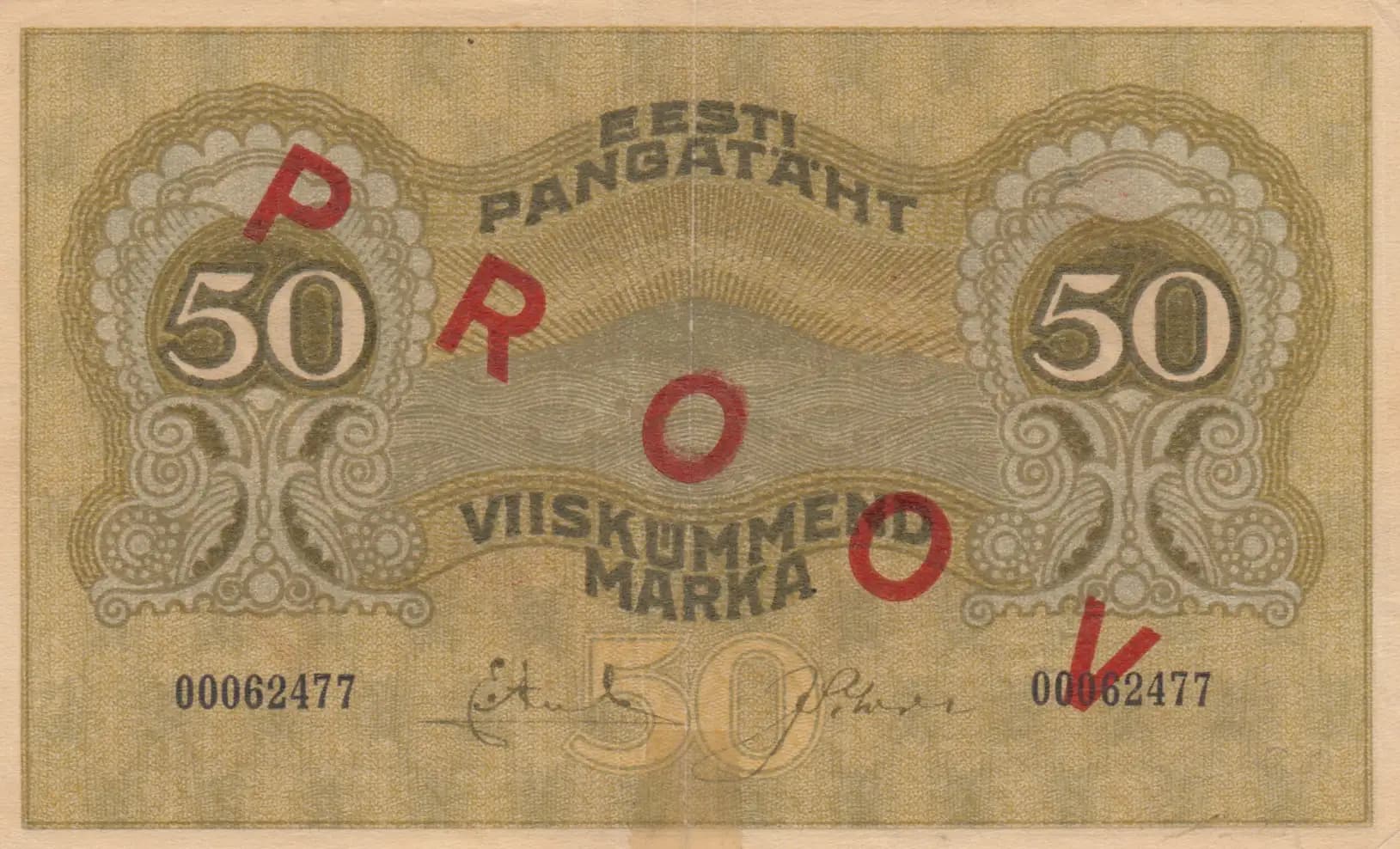
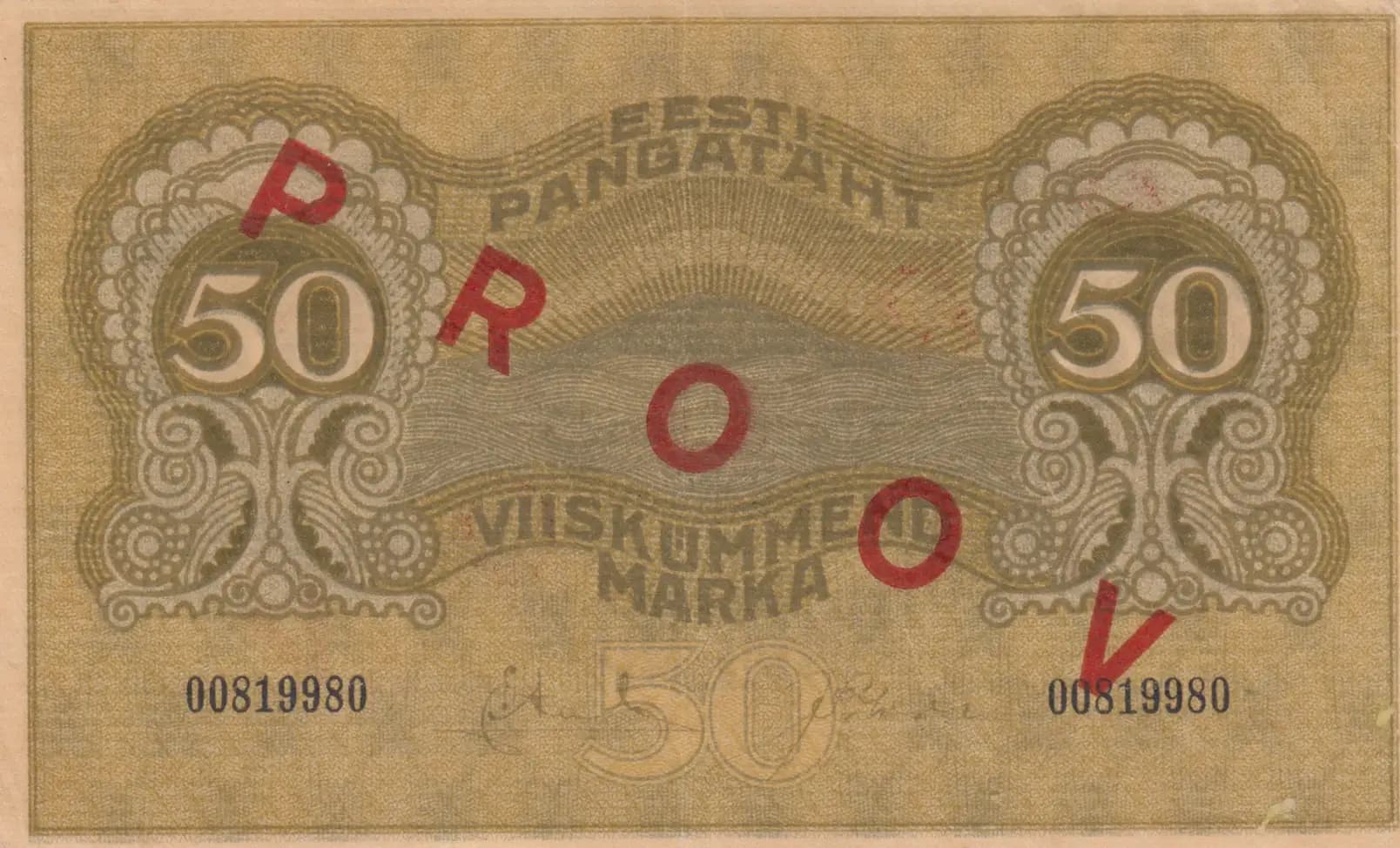
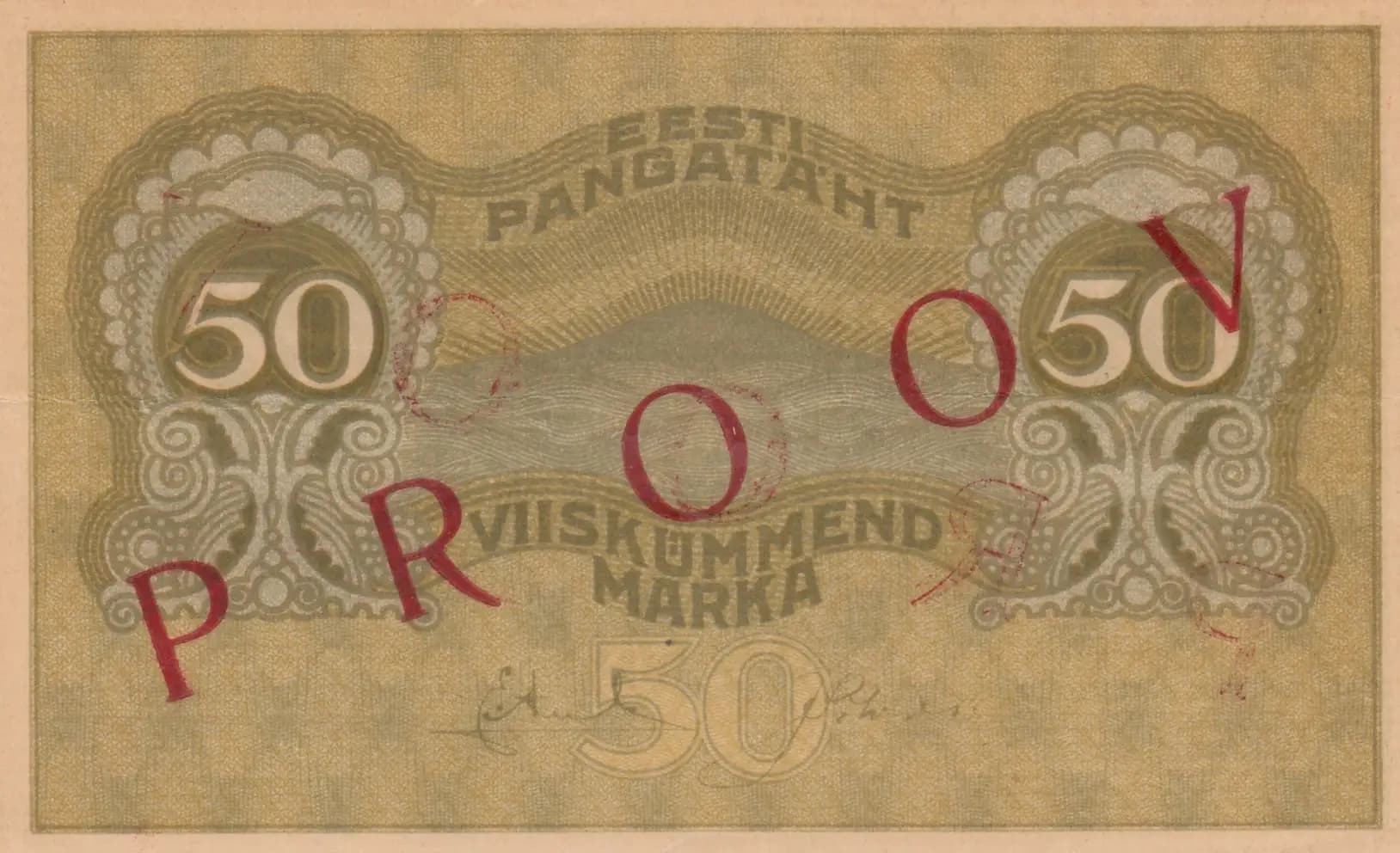
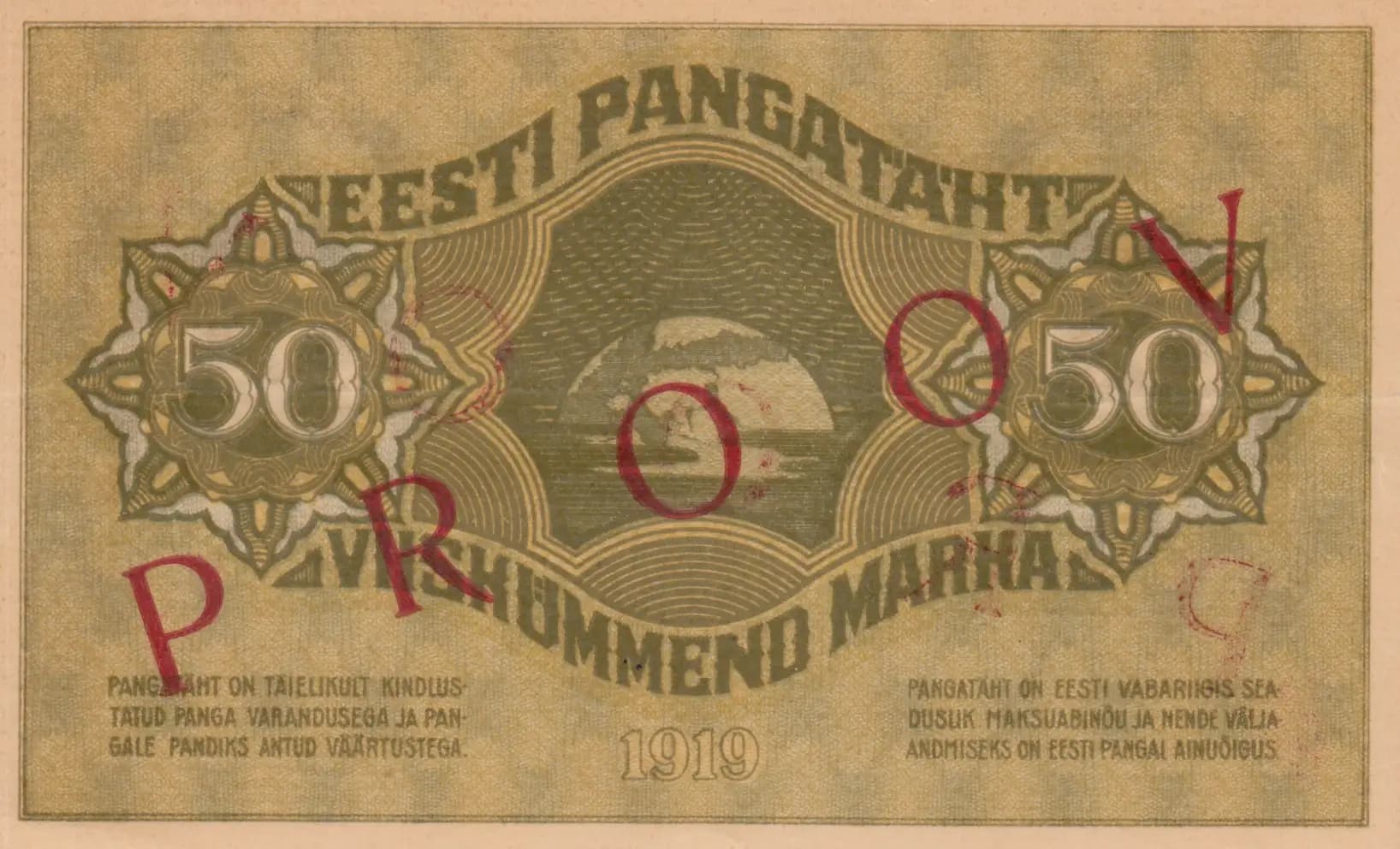
This is an exceptional example of Estonia's first banknote series, a 50 Marka specimen from 1919 issued by the newly independent Estonian Treasury. The note displays pristine uncirculated condition with vibrant beige and tan coloring, ornate decorative medallions, and the characteristic red specimen overprint ('PRO VIISKU MEND MARKA') stamped diagonally across both obverse and reverse. The intricate geometric and floral patterns, combined with the historical significance of this early nationalist currency, make this a notable piece of interwar numismatic history.
common
The 50 Marka banknote was issued in 1919 during Estonia's declaration of independence from Imperial Russia, representing the nation's first autonomous monetary authority. The design incorporates patriotic symbols including the Estonian state coat of arms and star emblems on the reverse, reflecting the newly formed Eesti Vabariigi's assertion of sovereignty. This specimen note predates the later Kroon currency period and represents a brief but historically significant chapter in Estonian monetary independence before the 1928 currency reform.
The 50 Marka employs a classical banknote design aesthetic typical of early 20th-century European currency. The obverse features large '50' denominations in ornate oval medallions positioned in the upper corners, with the center dominated by concentric wavy line patterns creating a radial vignette effect. The reverse showcases the Estonian state coat of arms rendered as two ornate star-shaped emblems flanking a central oval medallion containing a landscape vignette—likely depicting a significant Estonian landmark or waterway with architectural elements such as a bridge. Both sides are framed by intricate lace-like geometric border patterns in olive-khaki and green tones against the cream-beige ground. The overall composition emphasizes national symbolism through heraldic elements while maintaining visual security through complex pattern work.
FRONT: 'EESTI PANGATAHHT' (Estonian Bank) with denomination '50' in decorative corner medallions. Red overprint reading 'PRO VIISKU MEND MARKA' (Specimen Mark). BACK: 'EESTI PANGATAHHT' (Estonian Bank) with denomination '50' and date '1919'. Two legal declarations in Estonian: 'PANGATAHT ON TAIELIKULT KINDLUSTATUD PANGA VARANDUSEGA JA PANGALE PANDIKS AKTUD VAARTUSTEGA' (The banknote is fully secured by the bank's assets and by securities pledged to the bank) and 'PANGATAHT ON EESTI VABARIIGIS SEA DUSUK HAKSUABINOUIJA HEMDE VÄLIA ANDMISEKS ON EESTI PANGAL AINUOIGUS' (The banknote is legal tender in the Estonian Republic and only the Estonian Bank has the exclusive right to issue it). Red specimen overprint 'PRO VIISKU MEND MARKA' stamped diagonally across center.
The note exhibits characteristics of intaglio engraving, evidenced by the fine, crisp line work visible in the geometric patterns, decorative medallions, and border designs. The layered pattern complexity and precision of the radiating lines and scrollwork are consistent with steel or copper plate engraving. The red specimen overprint appears to have been applied by separate printing pass, likely lithographic or typographic, and is clearly distinguishable from the main engraved design. The registration and quality suggest work by a specialized security printer, though the specific printer for this Estonian Treasury issue is not definitively documented in standard references.
This note is specifically identified as a specimen copy (bs2 designation in Pick catalog), indicated by the prominent red diagonal overprint reading 'PRO VIISKU MEND MARKA' (Specimen Mark). Specimen notes from the 1919 Estonian series represent a known variety produced for distribution to banks and government officials rather than public circulation. The 1919 date and specimen status are consistent across known examples of this Pick number. No significant varieties in terms of signature changes, serial number prefixes, or design modifications are recorded for this particular denomination and issue year.