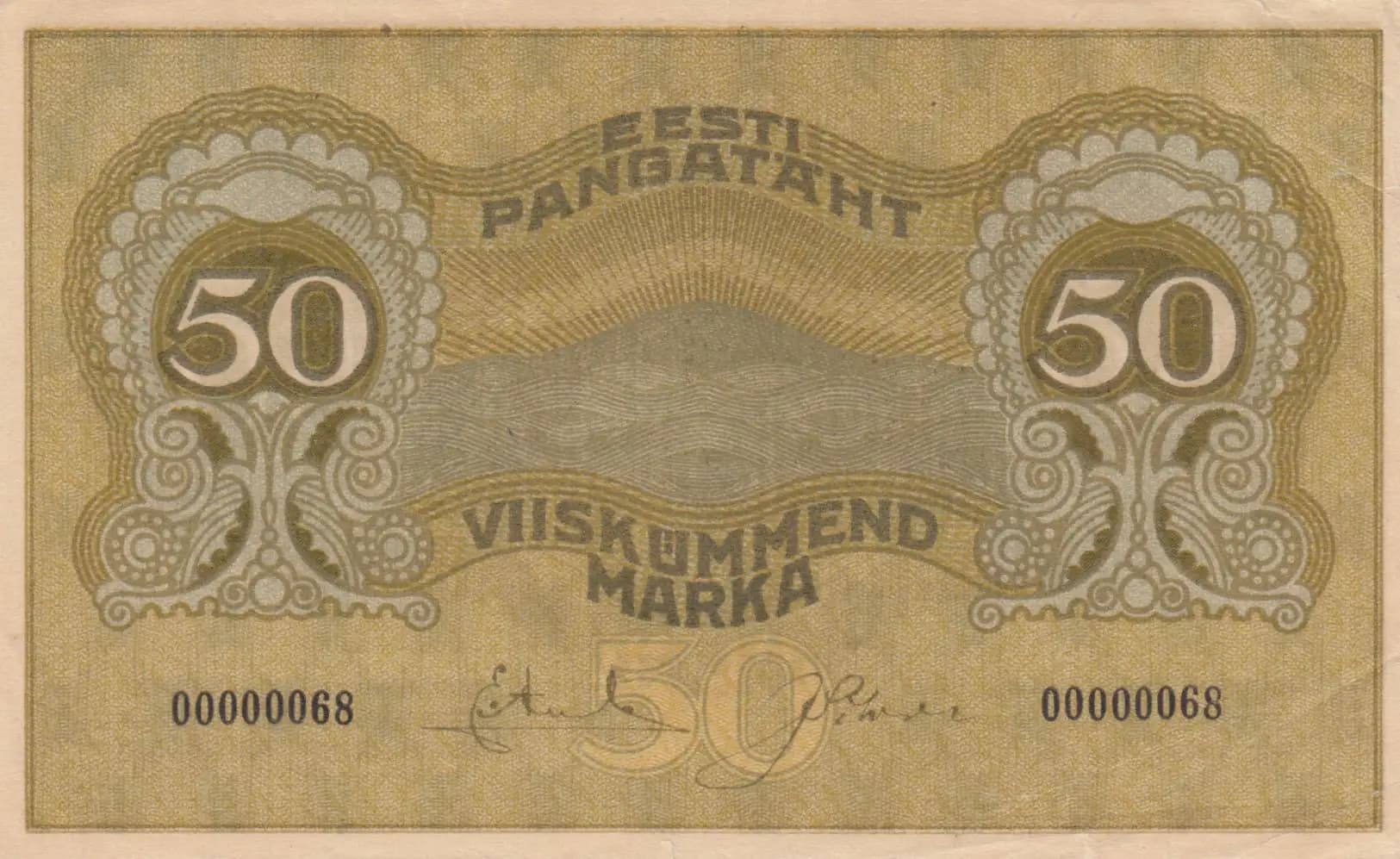
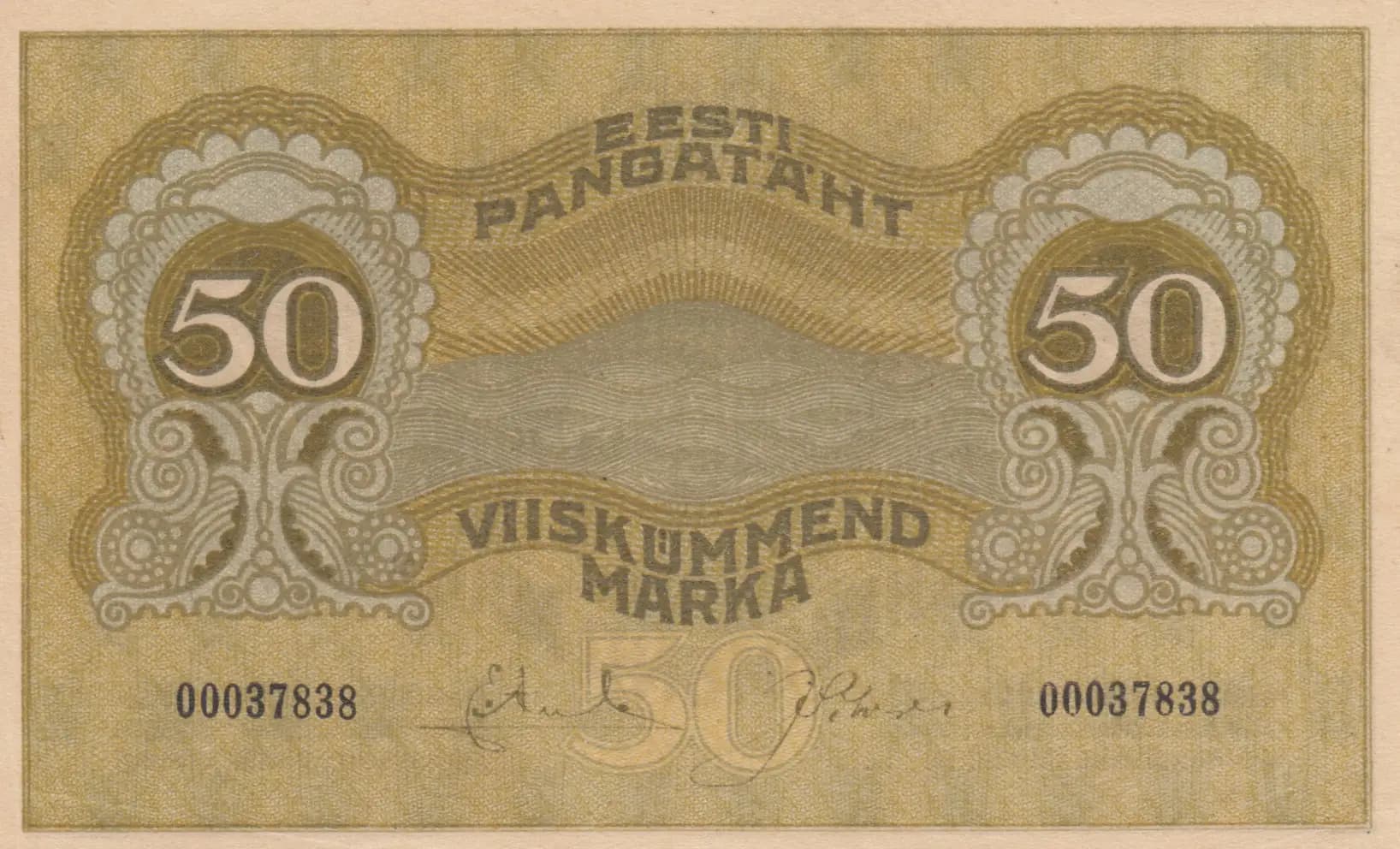
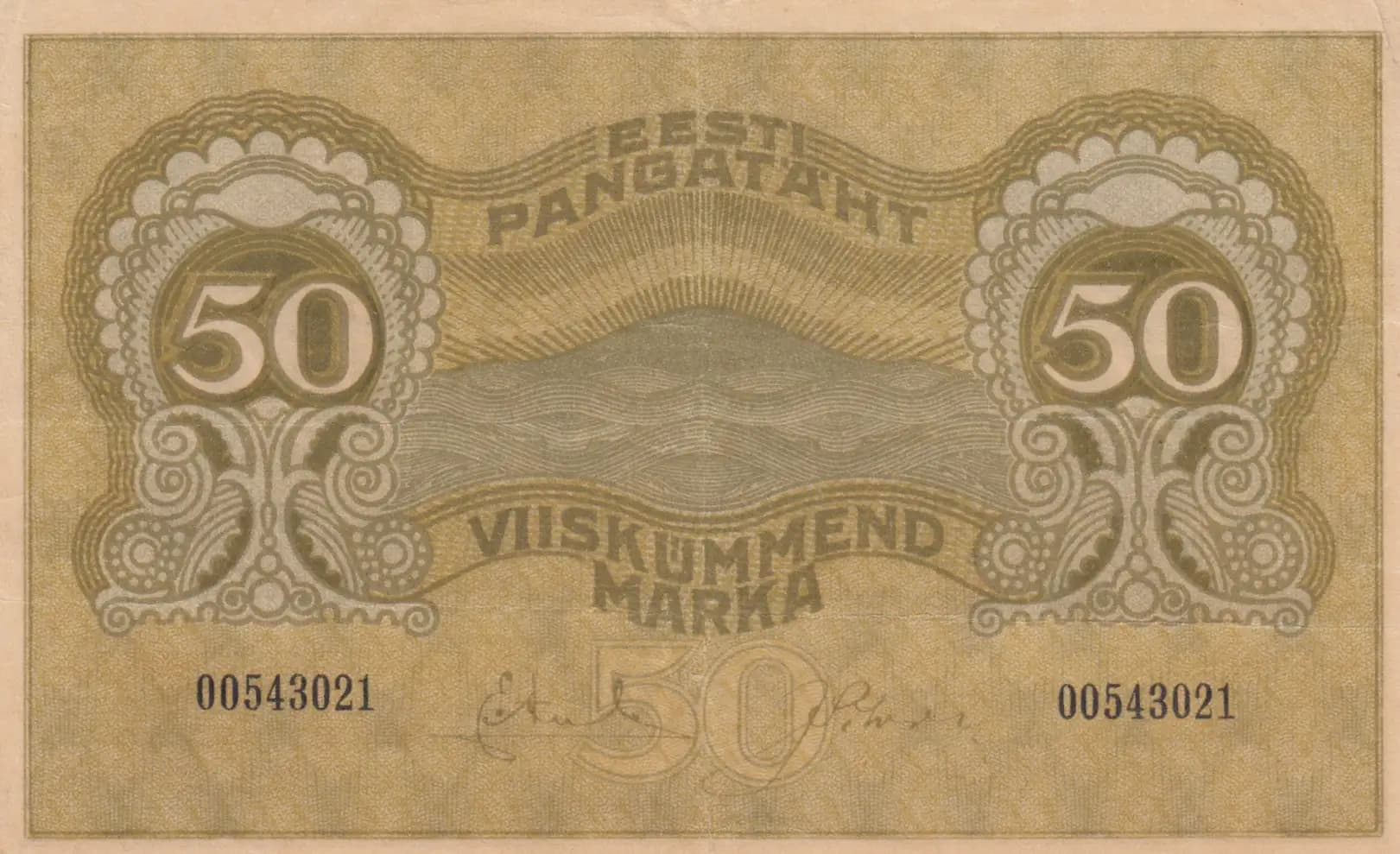
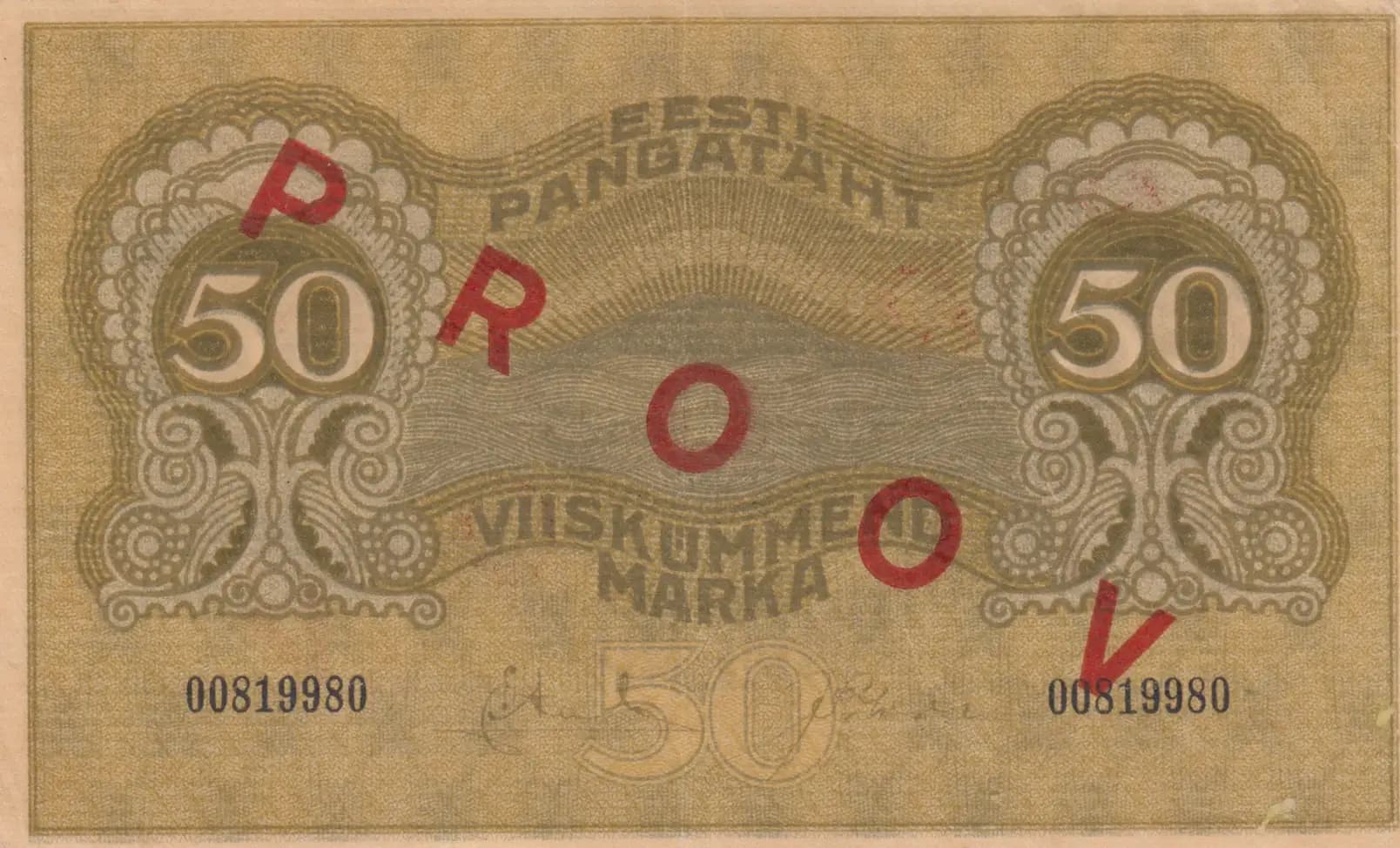
50 marka 1919 specimen
Market Prices
3 salesAbout This Note
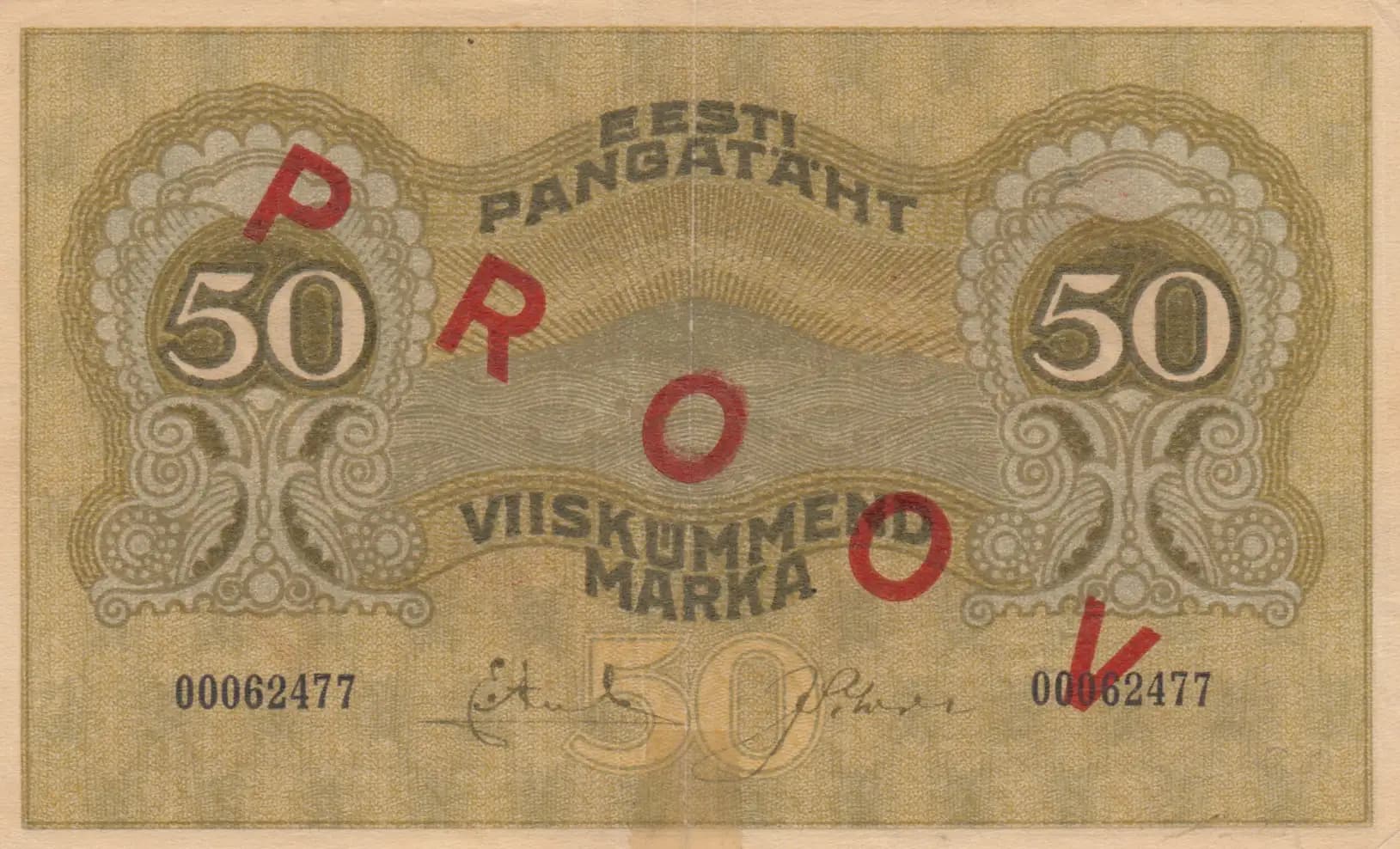
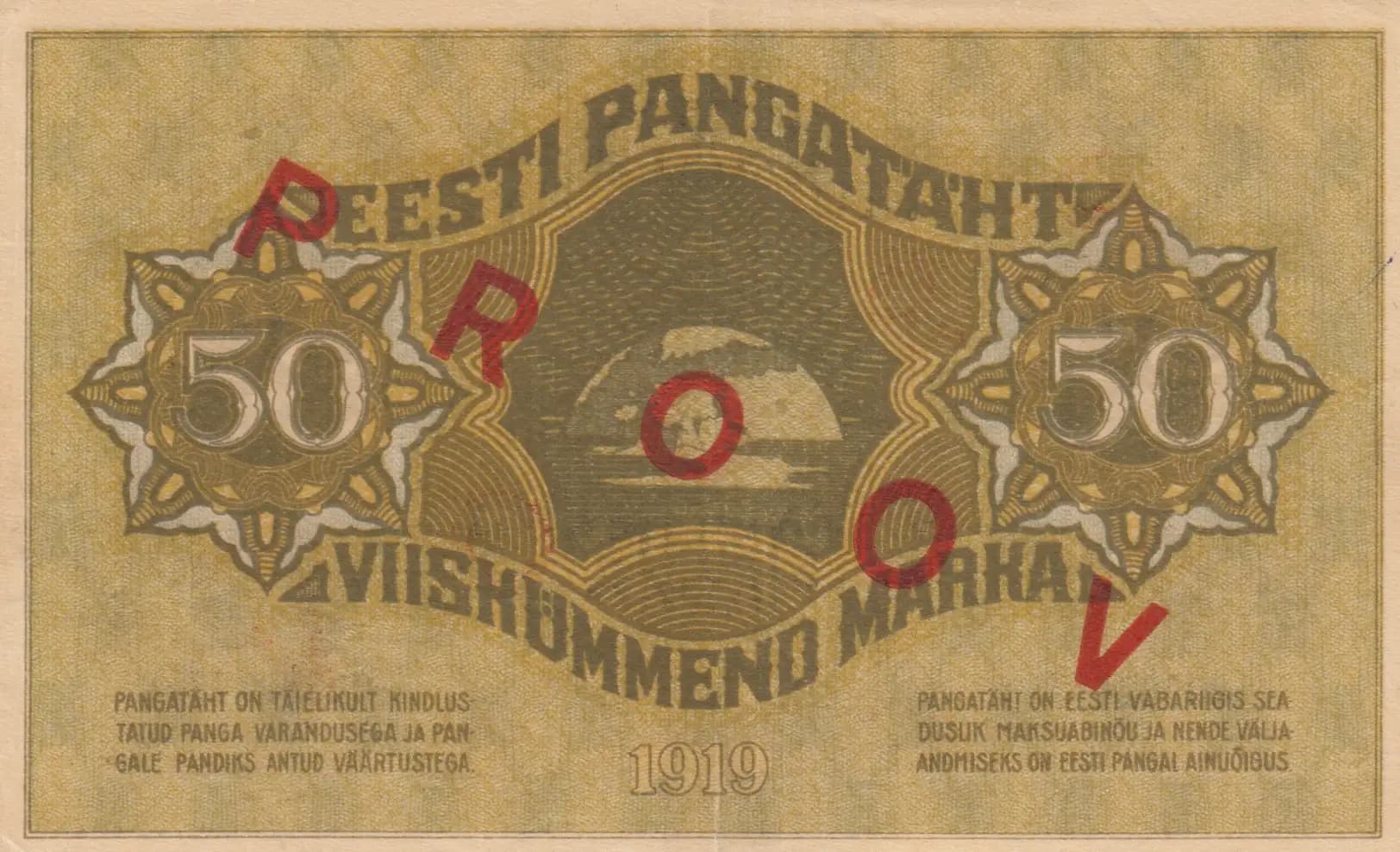
This is an exceptional 1919 Estonian 50 Marka specimen note graded VF, representing the Treasury of Estonia's first independent currency issue. The note displays the characteristic beige and tan coloring with elaborate ornamental scrollwork, denomination circles, and a red 'PRO' specimen overprint clearly visible on both obverse and reverse. The note appears to have minimal circulation wear despite its age, with crisp detail visible in the intricate intaglio work, making it a desirable example of early Estonian numismatic history.
Uncommon. While early Estonian currency from 1919 is not frequently encountered in Western numismatic markets, this specific note is not exceptionally rare. The eBay market data provided shows VF specimens selling in the $125–150 range with moderate bidding activity (17–21 bids), suggesting steady but not overwhelming collector demand. The specimen marking ('PRO' overprint) indicates this was a trial or presentation piece rather than a regular circulation note, which adds specialization value but does not constitute extreme rarity. The 2016 catalog value of $150 for VF grade and the regular appearance of sales suggests this variety is uncommon rather than scarce or rare. Print runs for early Estonian issues were modest but not exceptionally small relative to the nation's population.
Issued in 1919 following Estonia's declaration of independence from the Russian Empire, this banknote represents the newly formed Eesti Vabariigi (Estonian Republic) asserting its sovereignty through its own currency. The elaborate decorative design and central vignette reflecting architectural or landscape imagery symbolized national pride during this formative period. The Estonian-language inscriptions and exclusive right granted to the Estonian Bank underscore the nation's assertion of economic independence and territorial control during a volatile post-World War I period.
The 50 Marka features a symmetrical design with ornamental filigree and scrollwork dominating both sides. The obverse presents large denomination circles containing '50' on the left and right edges, surrounded by elaborate baroque-style decorative frames with rosette and spiral motifs. The reverse maintains similar ornamental treatment with star-like or geometric medallions containing denomination markers, but centers on a prominent oval-framed vignette depicting what appears to be an Estonian landscape or fortification—likely representing national heritage or a significant public building. The entire design emphasizes security and legitimacy through complex intaglio work, with no portraits present but rather symbolic and architectural imagery befitting a new nation's currency. The consistent use of tan, beige, and brown colorways with red specimen overprints creates visual hierarchy and distinguishes this example as a trial or presentation piece.
OBVERSE: 'EESTI PANGATAHNT' (Estonian Bank Note) — header text; 'VIILSKUMME MARKA' (Fifty Mark) — denomination in words; 'PRO' — specimen marking; '50' — denomination numeral; Serial number '00062477'. REVERSE: 'EESTI PANGATAHNT' (Estonian Bank Note) — header; '1919' — issue year; 'PRO' and 'MARK' — specimen and denomination overprints; '50' — denomination; 'PANGATAHNT ON TÄIELIKULT KINDLUS TATUD PANGA VARANDUSEGA JA PAN GALE' PANDIKS ANTUD VÄÄRTUISTEGA' (The banknote is fully secured by the bank's assets and by values pledged to the bank); 'PANGATAHNT ON EESTI VABARIIGIS SEA DUSUK MARSUABINOJ JA NEROE VÄLJA ANDHISERS ON EESTI PANGAL AINUOIGIBUS' (The banknote is in circulation in the Estonian Republic and only the Estonian Bank has the exclusive right to issue it).
Intaglio printing (engraving/steel plate gravure), evidenced by the fine line patterns, elaborate filigree work, ornamental frames, and the dimensional quality of the decorative elements visible in the visual analysis. The complexity of the scrollwork and security-oriented design elements are characteristic of professional security printing employed by established European printers contracted by the new Estonian state. The crisp definition of small design details and the consistent density of the ink impression indicate high-quality steel plate engraving work typical of early 20th-century central European currency production.
This note is identified as Pick P-55as (the 's' suffix indicating 'specimen'). The visual analysis confirms the specimen marking via the red 'PRO' overprint visible on both obverse and reverse. The PMG population report indicates at least two catalogued variants (P-55b and P-55s) for this base Pick number, with this example representing the specimen variety (P-55as). The serial number '00062477' and the red overprint are key identifying features of this specimen variant, distinguishing it from regular issue circulation notes (P-55b) which would lack the specimen marking.