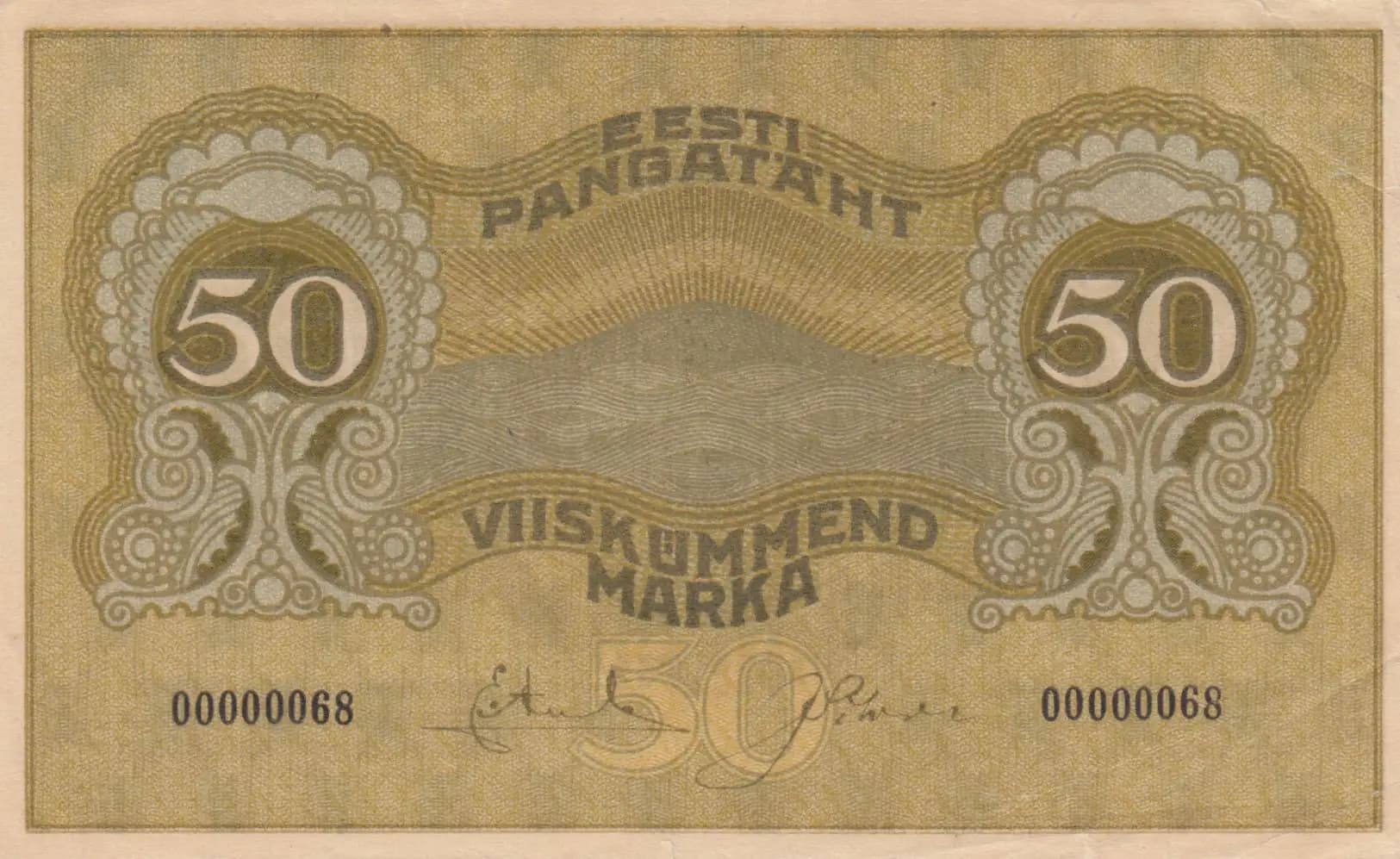
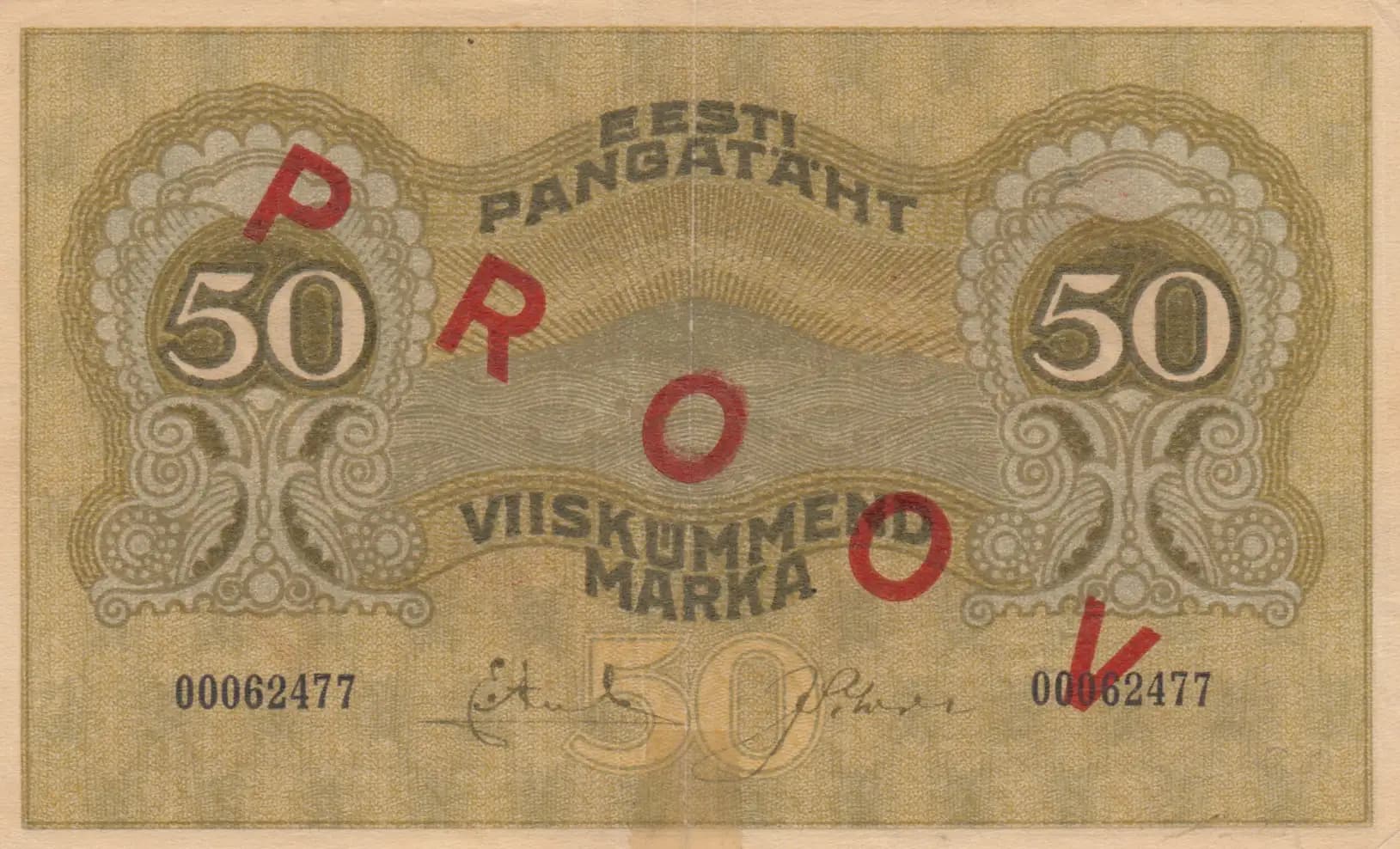
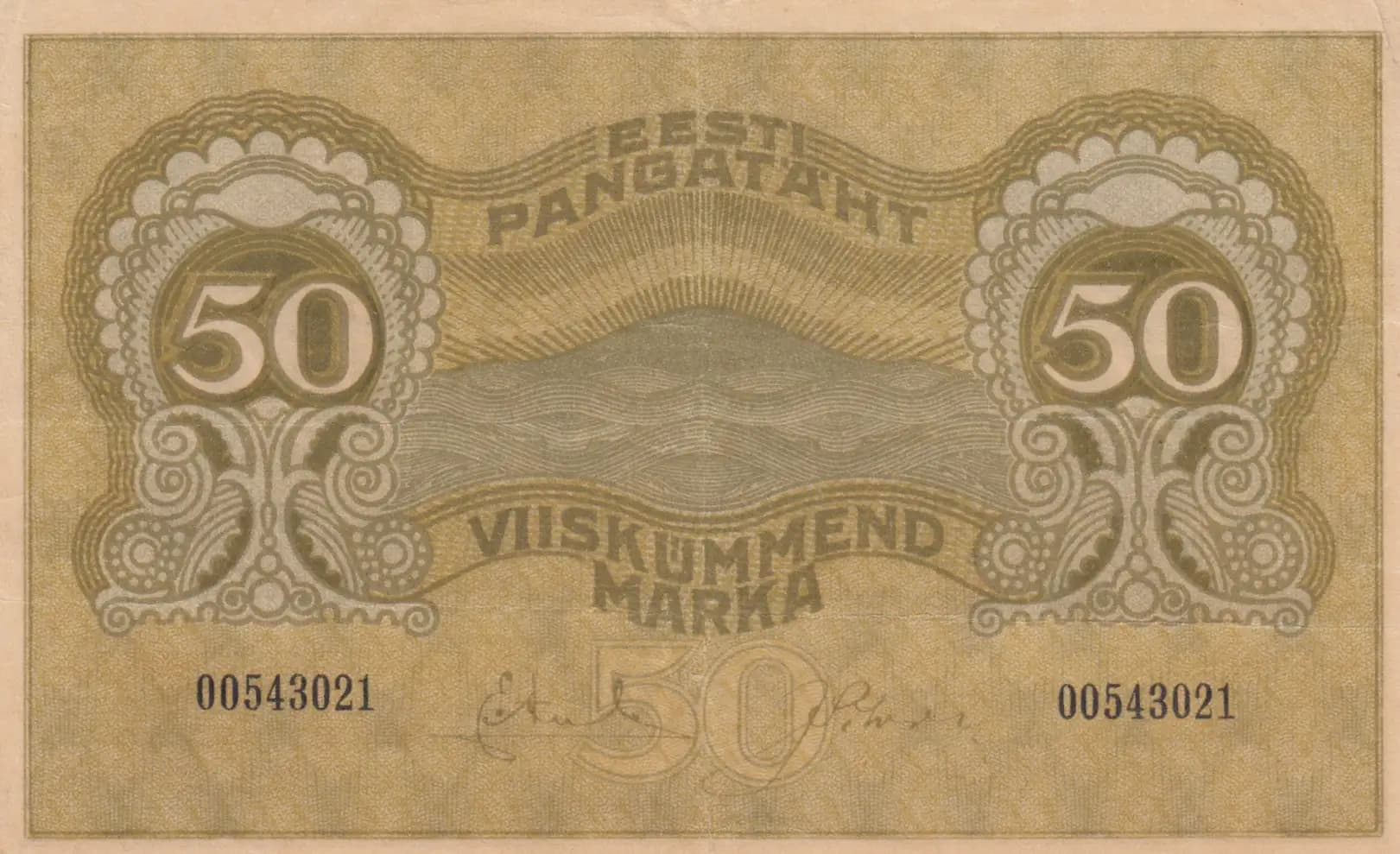
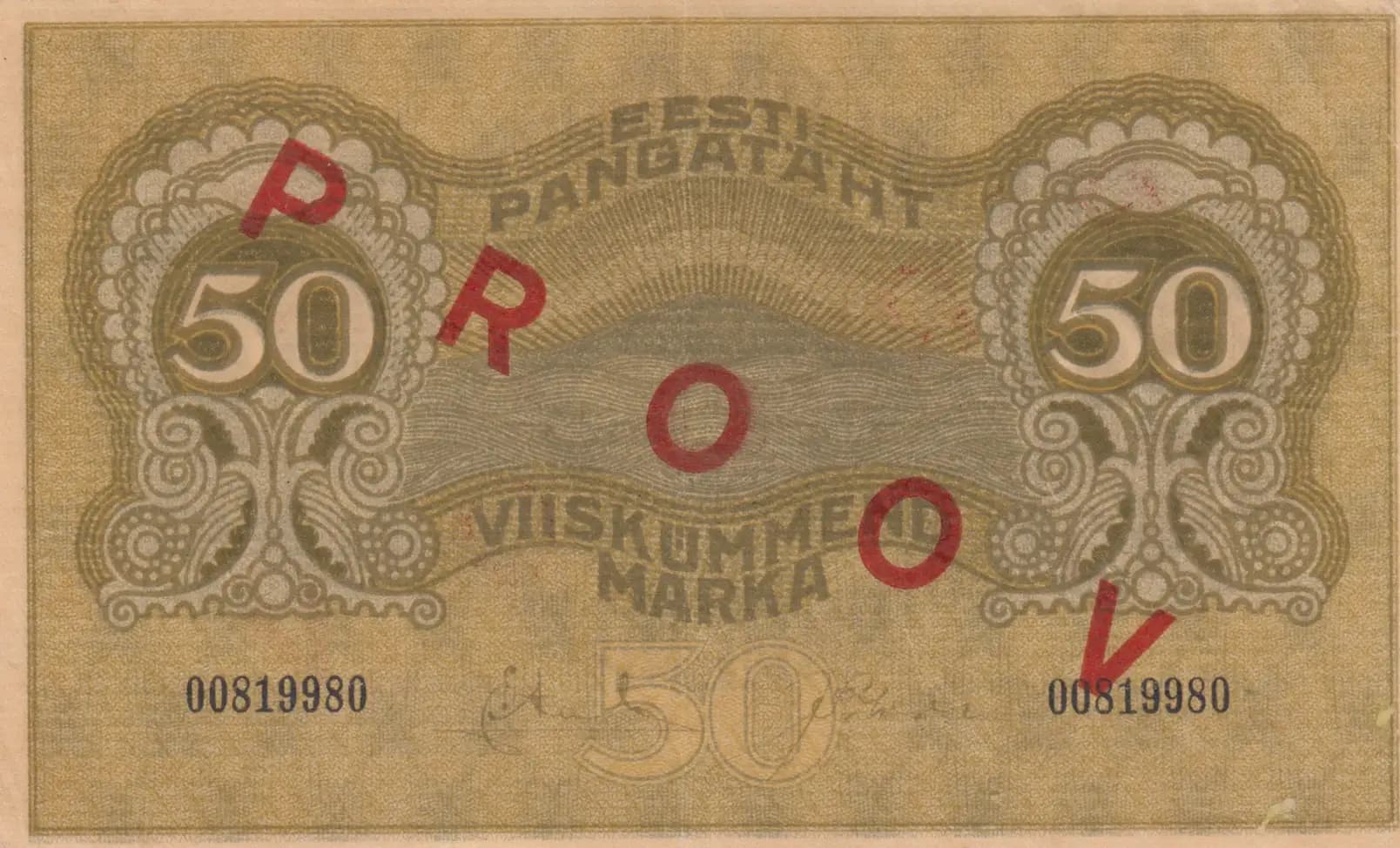
50 marka 1919
Market Prices
3 salesAbout This Note
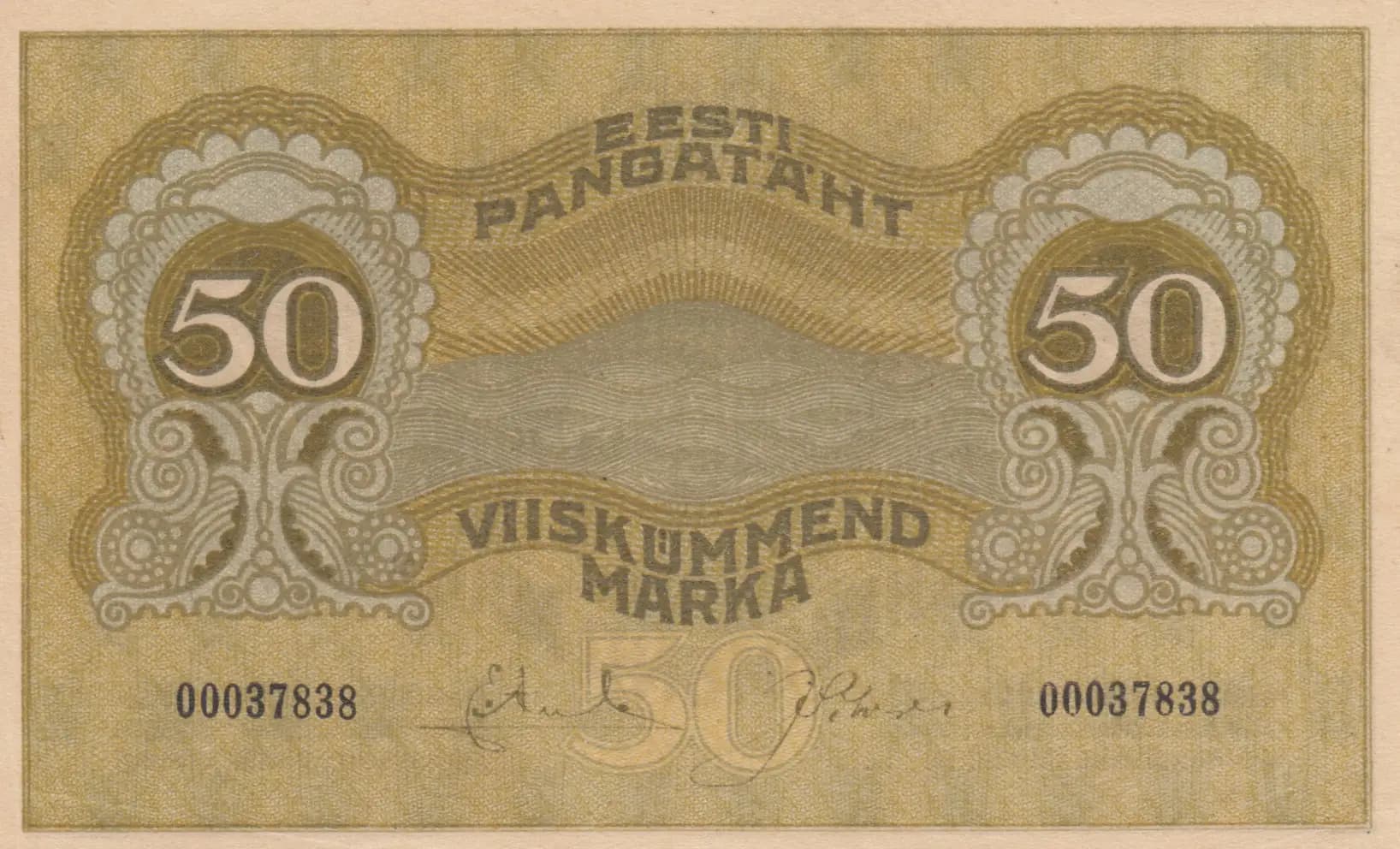
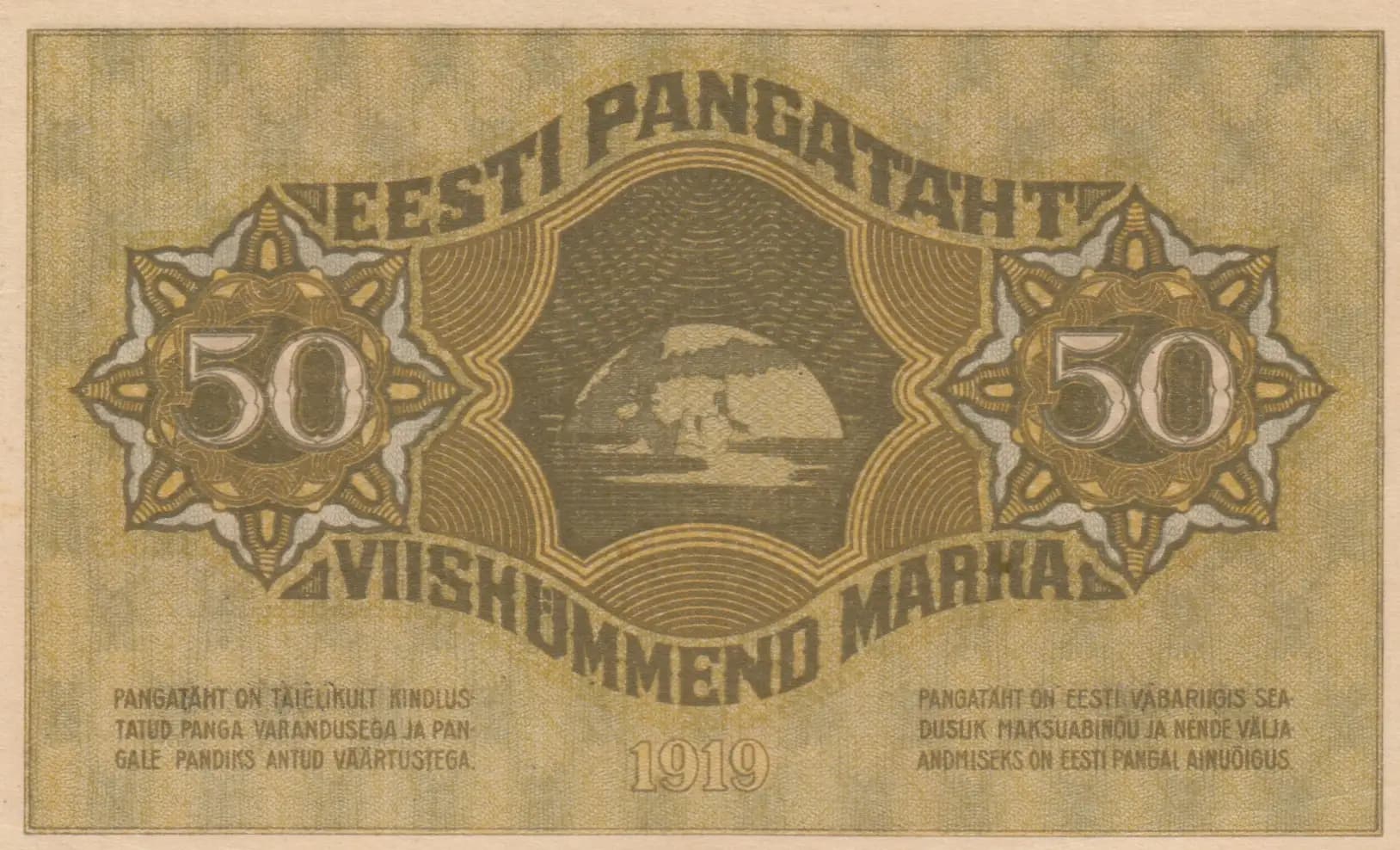
This is an exceptional example of Estonia's early 1919 50 marka banknote (Pick P-55a) in uncirculated condition. The note exhibits pristine condition with crisp printing, vibrant beige and gold tones, and no visible wear, folds, or handling marks. The elegant design features symmetrical ornamental medallions, a radiating sunburst on the obverse, and a striking central landscape vignette on the reverse, making it a visually compelling example of post-WWI Estonian currency design.
Common. While this is an early Estonian banknote from 1919, eBay market data indicates modest pricing even for VF and F grades ($44–$125), with UNC catalog values of $300. The note was issued by the newly formed Estonian state and appears to have had a reasonable print run. Early independent Estonian currency (1919–1928) is generally available to collectors, though condition specimens command premiums. The UNC grade elevates this particular example's value, but the denomination and issue are not scarce.
Issued in 1919 by the Treasury of Estonia following the nation's declaration of independence from Russia, this banknote represents the early financial infrastructure of the newly established Estonian Republic. The prominent date '1919' and Estonian language inscriptions (EESTI PANGAKAART, VIISKÜMMEND MARKA) underscore Estonia's assertion of sovereignty and national identity during the tumultuous interwar period. The bear depicted in the landscape vignette on the reverse likely represents Estonian national symbolism and connection to the natural heritage of the Baltic region.
The obverse features a symmetrical classical design with two ornate circular medallions containing scrollwork patterns and the denomination '50' positioned on the left and right margins. The center displays 'EESTI PANGAKAART' above a radiating sunburst pattern and 'VIISKÜMMEND MARKA' below, creating a formal, heraldic appearance typical of early 20th-century European central bank currency. The reverse presents a more naturalistic composition with a central landscape vignette depicting a bear in its natural habitat, framed by ornamental borders. Two star-shaped decorative medallions with intricate scrollwork flank this central image, each containing '50'. The date '1919' is prominently displayed, and legal tender declarations frame the lower portion. The overall color palette of warm beige, gold, tan, and brown tones creates a cohesive and dignified appearance throughout both sides.
FRONT: 'EESTI PANGAKAART' (Estonian Bank Note), 'VIISKÜMMEND MARKA' (Fifty Marks), '50' (denomination in Arabic numerals), '00037838' (serial number). BACK: 'EESTI PANGATÄHTE' (Estonian Bank Note), 'VIISKÜMMEND MARKA' (Fifty Marks), '50' (denomination), '1919' (issue year), 'PANGATÄHT ON TAIELIKULT KINDLUS TAIUD PANGA VARANDUSEGA JA PANGALE PANDIIS ANTUD MÄÄRTUSTEGA' (The banknote is fully secured by the bank's assets and the amounts designated for the bank), 'PANGATÄHT ON EESTI VABARIIGIS SEA DUSUK MAKSUABINOU JA NENDE VÄLJA ANDMISEKS ON EESTI PANGAL AINUÖIGUS' (The banknote is legal tender in the Estonian Republic and only the Estonian Bank has the exclusive right to issue them).
Intaglio engraving (copperplate printing), evidenced by the fine line work, intricate scrollwork patterns, detailed radiating lines, and the three-dimensional quality of the impressions visible in the medallions and landscape vignette. The level of detail in the security features—including the complex filigree patterns and fine engraving throughout—is characteristic of high-security intaglio production standards of the period. No printer attribution is definitively established in the available catalog data for this Pick number.
This note is identified as Pick P-55a. The PMG Population Report indicates at least two catalogued varieties (P-55b and P-55s), suggesting minor variations exist within this denomination—likely related to printer marks, signature variants, or overprint states. The visual analysis does not reveal definitive overprints or signature varieties that would distinguish this as a specific sub-variety beyond the base P-55a designation. The serial number '00037838' visible on the front is low, consistent with early printing runs of 1919.