50 marka 1919 specimen
About This Note
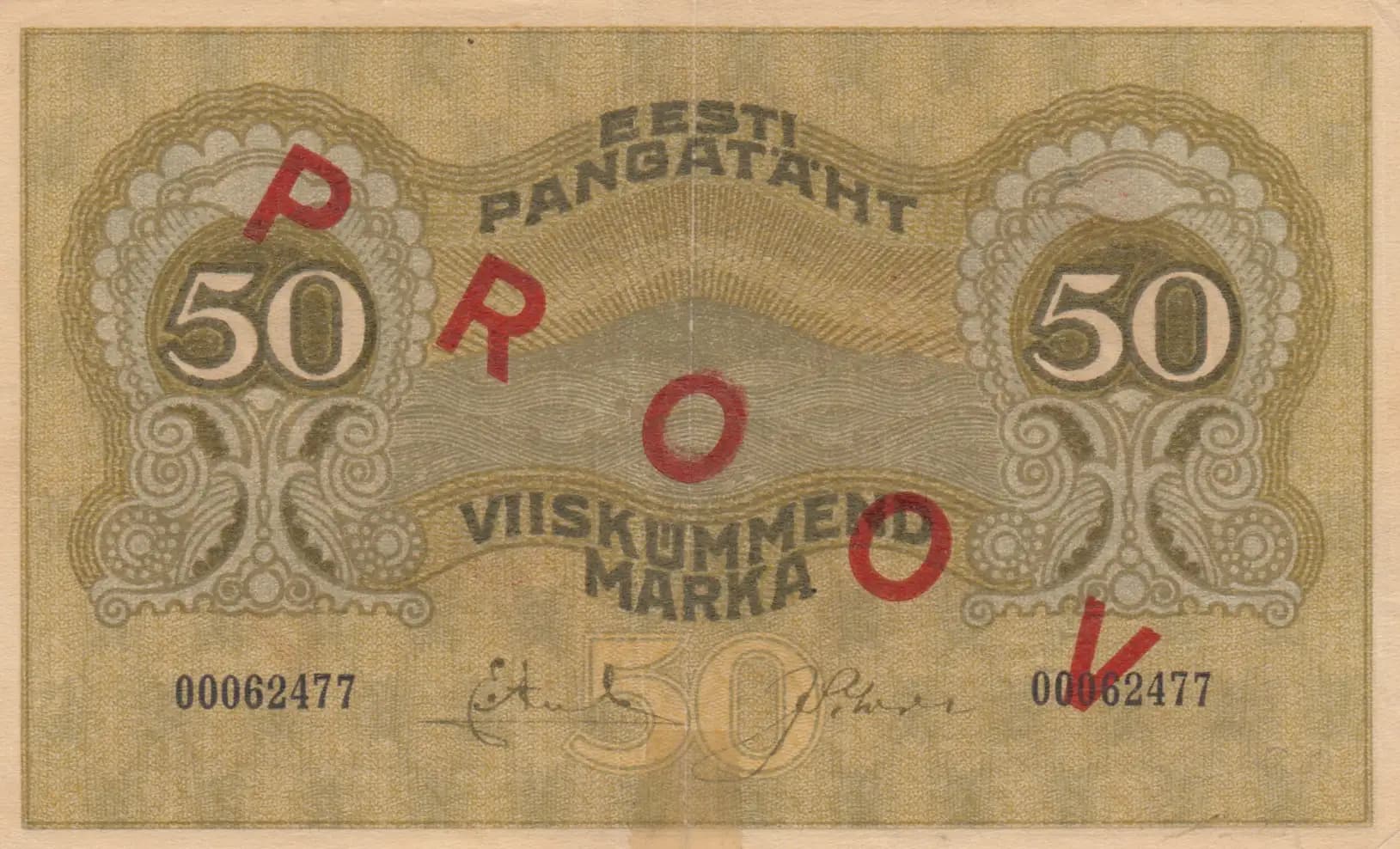
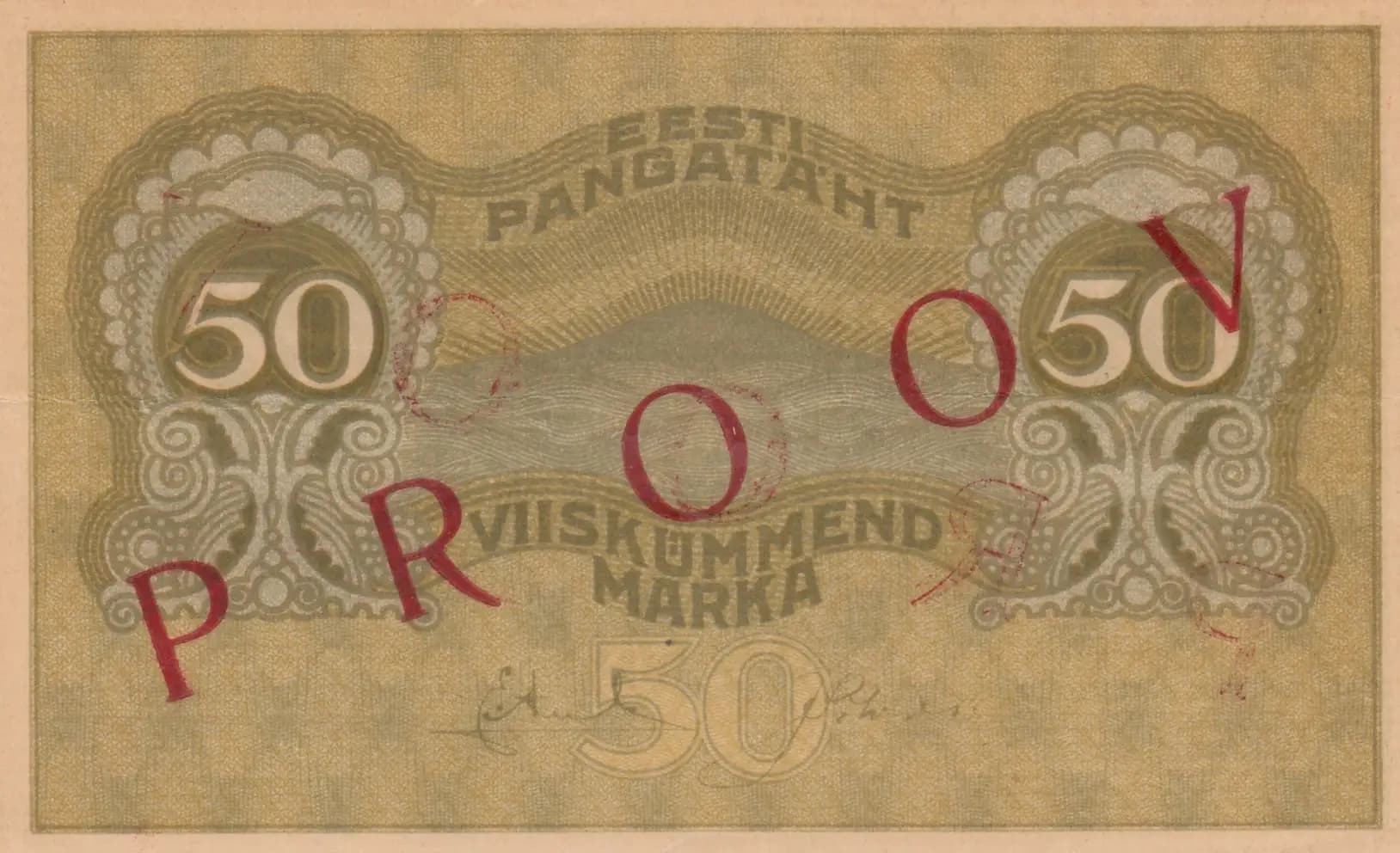
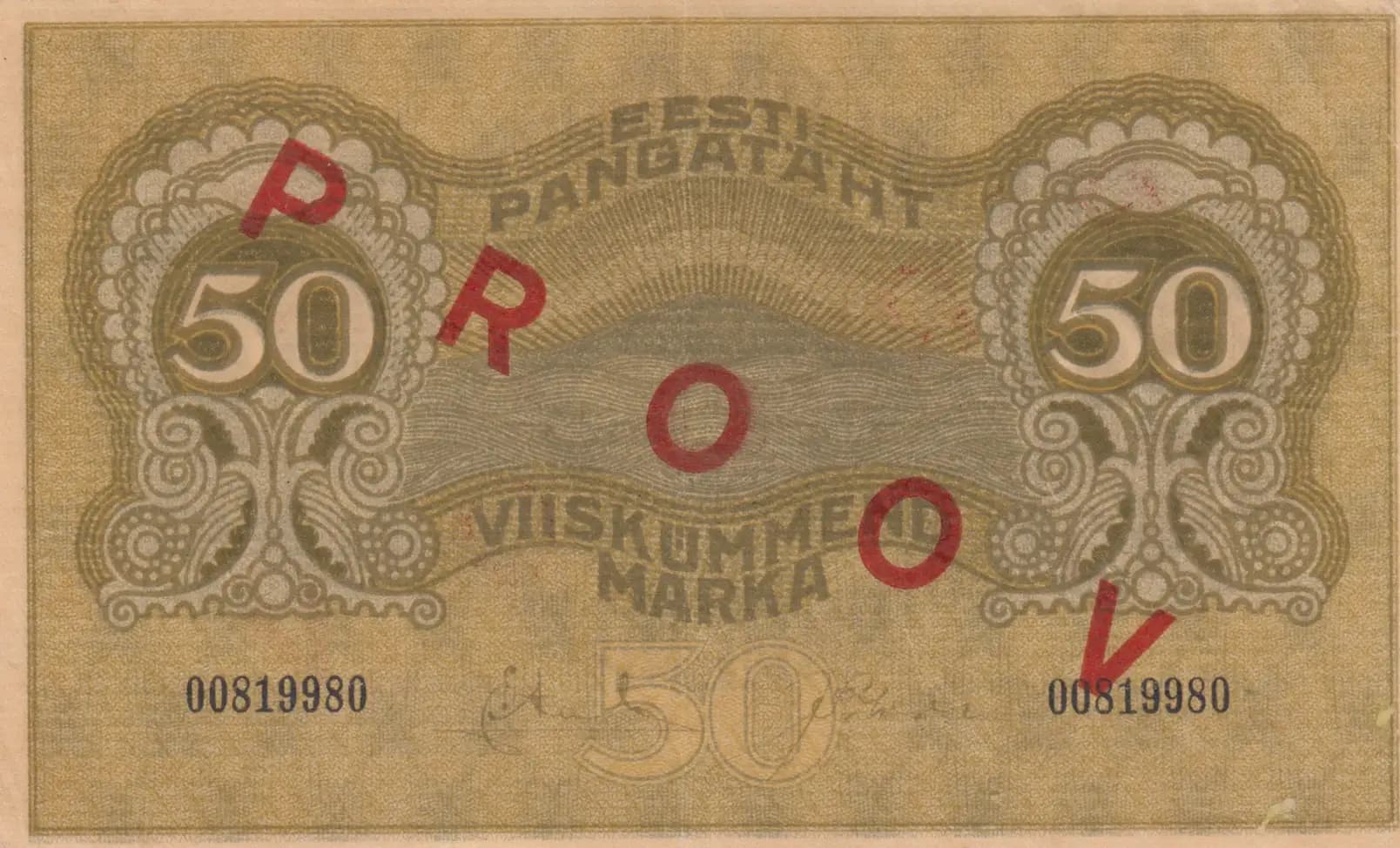
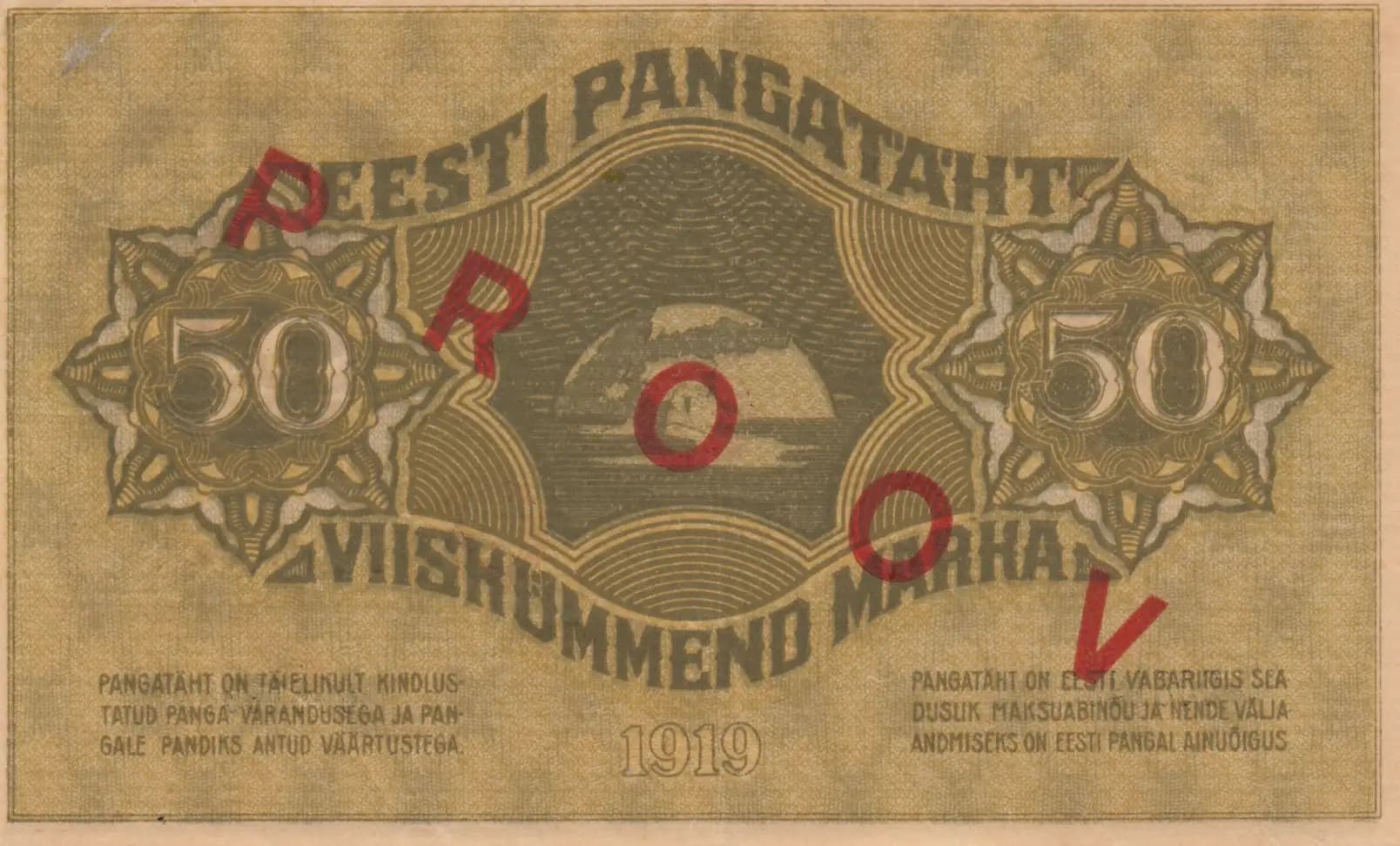
This is a VF-graded Estonian 50 Marka specimen note from 1919, the inaugural year of Estonia's independence and banking system. The note displays pristine condition with no circulation wear, featuring the characteristic red 'PROO V' (proof) overprint across both sides, indicating this was a specimen issue not intended for circulation. The fine engraving work, ornate corner scrollwork, and decorative star and oval medallions showcase the high-quality printing standards of Estonia's early banknotes, making this an important artifact of the nation's first currency.
Uncommon. While the 1919 50 Marka is not extremely rare, specimen/proof issues marked 'PROO V' were produced in limited quantities as samples for banking officials and archives rather than for circulation or general collection. Specimen overprints significantly reduce their number in the collector market compared to circulated or standard-issue examples. The VF condition grade suggests this note has been well-preserved, further distinguishing it from more heavily circulated examples. Most collectors encounter circulated versions of this denomination; specimen notes command a modest premium due to their limited intended distribution and historical significance as documentation of Estonia's early banking system.
The 50 Marka note was issued in 1919 by the newly independent Estonian Republic, following the country's declaration of independence from the Russian Empire. The 'EESTI PANK' (Estonian Bank) and 'EESTI PANGATAHT' inscriptions reflect Estonia's establishment of sovereign monetary authority during this transformative period. The central shield design and radiating patterns symbolize the stability and legitimacy the young nation sought to project through its currency, while the Estonian-language inscriptions emphasize national sovereignty and the legal tender status of notes backed by the Bank's assets.
The 50 Marka features a classical, ornately engraved design typical of European banknotes of the early 20th century. The front presents large denomination numerals '50' housed within decorative oval medallions positioned in the left and right margins, with elaborate scrollwork frames occupying all four corners. The upper center displays radiating line patterns suggesting a rising sun or classical burst motif. The back introduces star-shaped ornamental medallions containing the denomination, with a central shield or coat of arms design constructed from fine radiating lines—symbolizing national authority and heraldic tradition. The color scheme of tan, beige, cream, and brown creates a sophisticated, conservative aesthetic appropriate to the period. No portraits are depicted; instead, the design relies on geometric ornamentation, heraldic symbolism, and fine-line engraving to convey legitimacy and security. The bilateral symmetry and formal arrangement reflect the classical aesthetic principles governing European state currency design of this era.
FRONT SIDE: 'EESTI PANK' = Estonian Bank; 'VIISKÜMMEND MARKA' = Fifty Marks; '50' = denomination numeral; 'PROO V' = Proof/Specimen (red overprint); Serial number '00819980' appears at bottom corners. BACK SIDE: 'EESTI PANGATAHT' = Estonian Banknote; 'EESTI PANGATAHTE ON TÄIELIKULT KINDLUSTATUD PANGA-VARANDUSEGA JA PANGALE PANDITUD MÄÄRUSTEGA' = The Estonian banknote is fully secured by the Bank's assets and by the regulations given to the Bank; 'PANGATAHTI ON EESTI VABARIIGIS SEADUSLIKU MAKSUVÄRINDU JA HEINDE VÄLJA ANDMISEKS ON EESTI PANGAL AINUOIGUS' = The banknote is legal tender in the Estonian Republic and only the Estonian Bank has the right to issue it; '1919' = year of issue; '50' = denomination; 'PROO V' = Proof/Specimen overprint.
Steel engraving and letterpress printing. The fine line work, radiating patterns, detailed scrollwork, and ornamental borders are characteristic of intaglio engraving, which was the standard security printing method for banknotes in 1919. The crisp definition of the overprinted 'PROO V' text (in red) appears to be applied via a secondary printing pass, possibly lithographic or letterpress. The printer for Estonian currency during this period was likely a European security printer, though specific attribution would require additional documentation; however, many early Estonian notes were produced by established German or Scandinavian printers given regional proximity and expertise.
This is a specimen variety identified by the red 'PROO V' (PROOF) overprint stamped vertically across the center of both obverse and reverse. The Pick catalog designation 'P-55bs1' explicitly marks this as a specimen issue ('s' suffix in Pick nomenclature). The serial number '00819980' visible on this example may represent a specimen-range sequence, though confirmation would require comparison with other documented specimen notes. No signature varieties are apparent from the images provided. The 1919 date and 'EESTI PANK' issuer identification place this definitively within Estonia's first independent currency series.