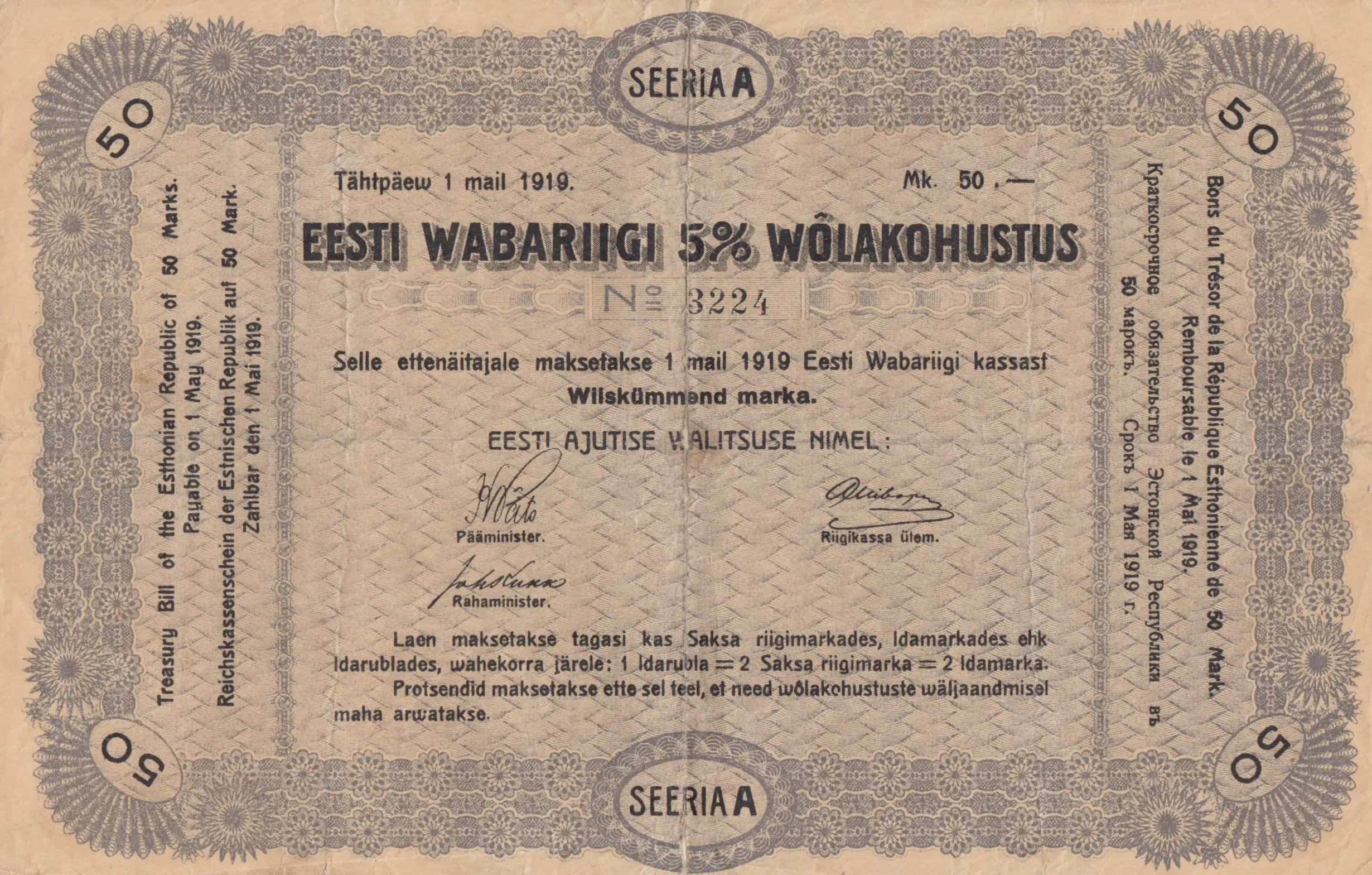
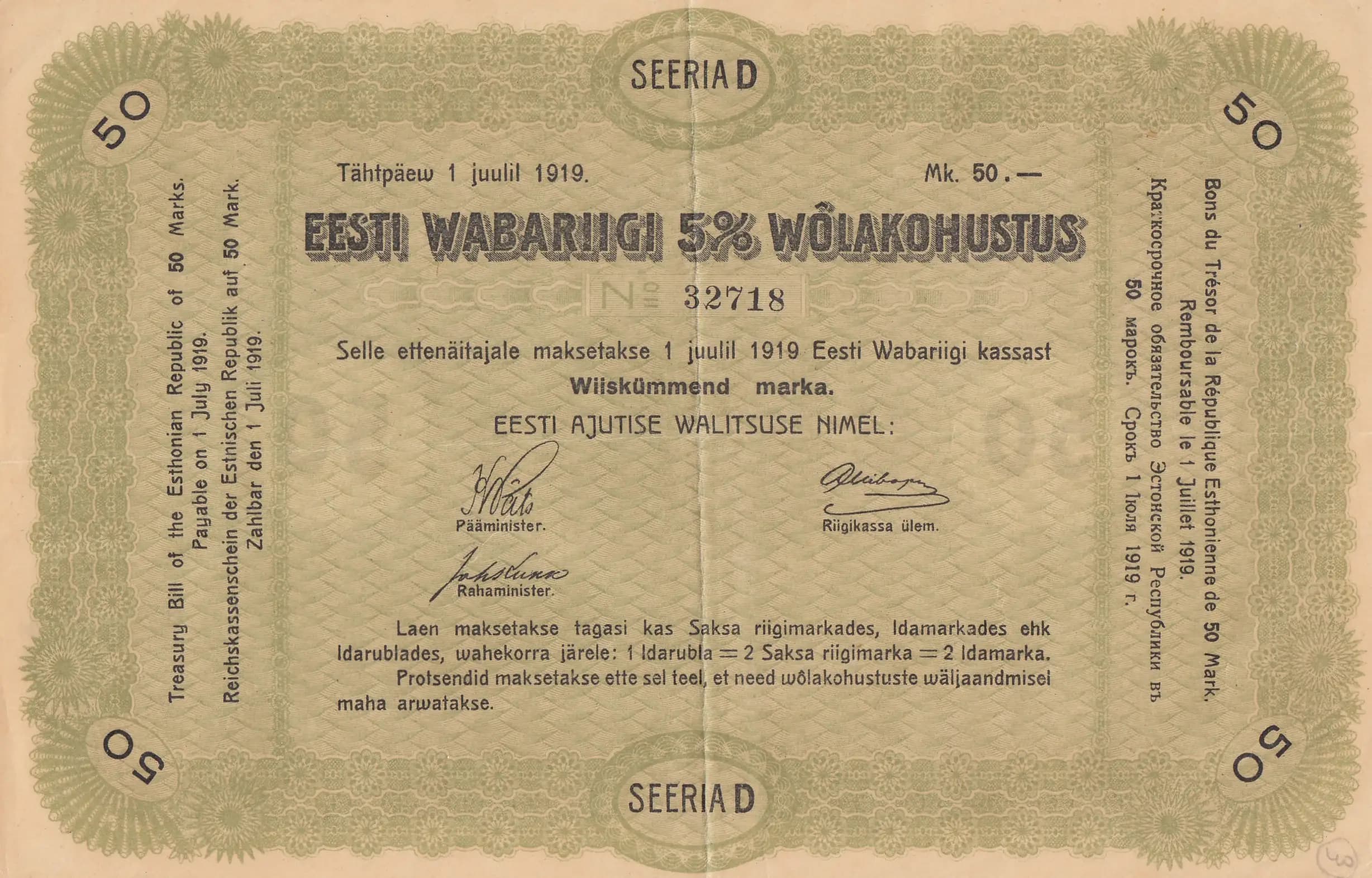
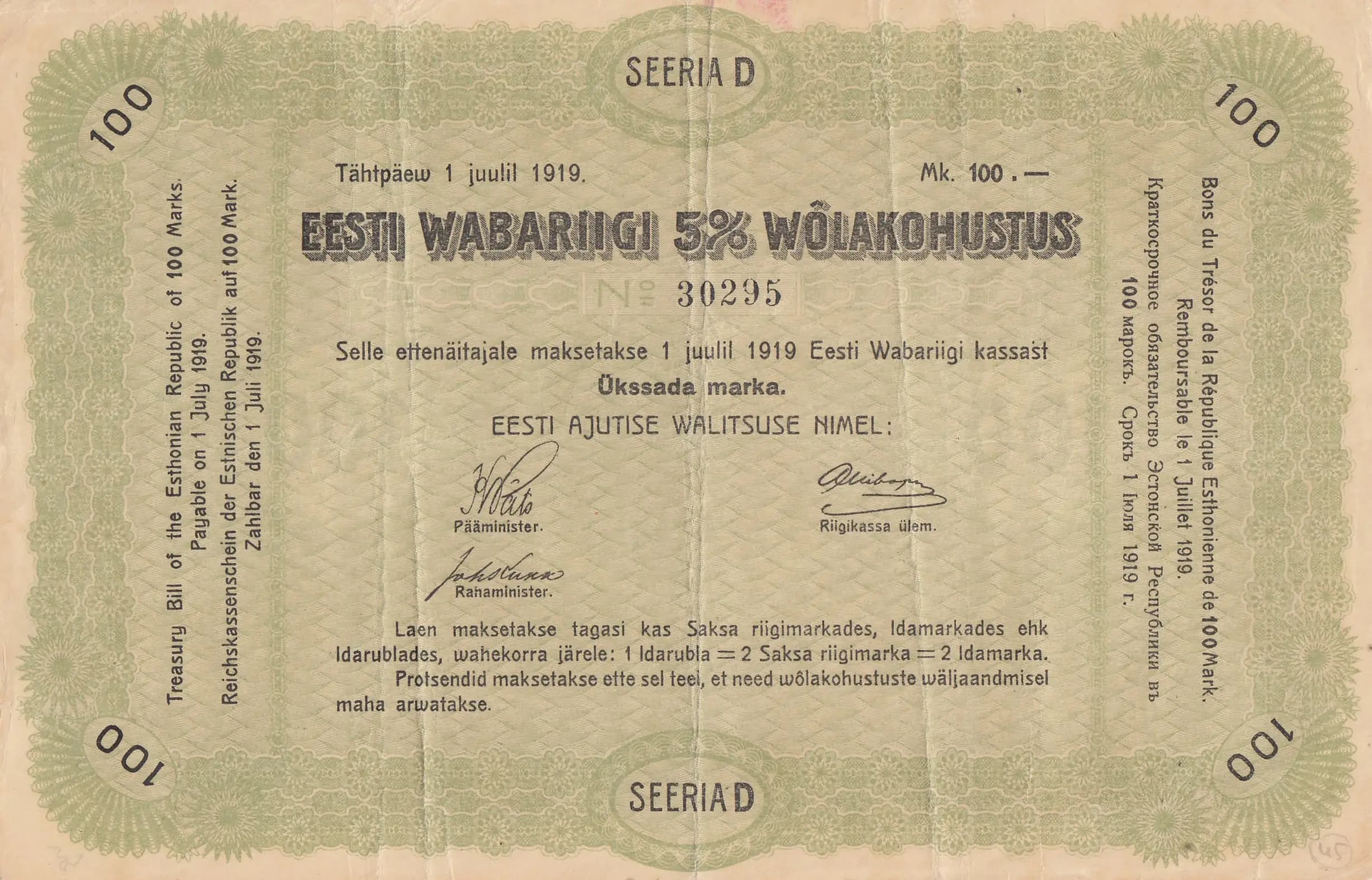
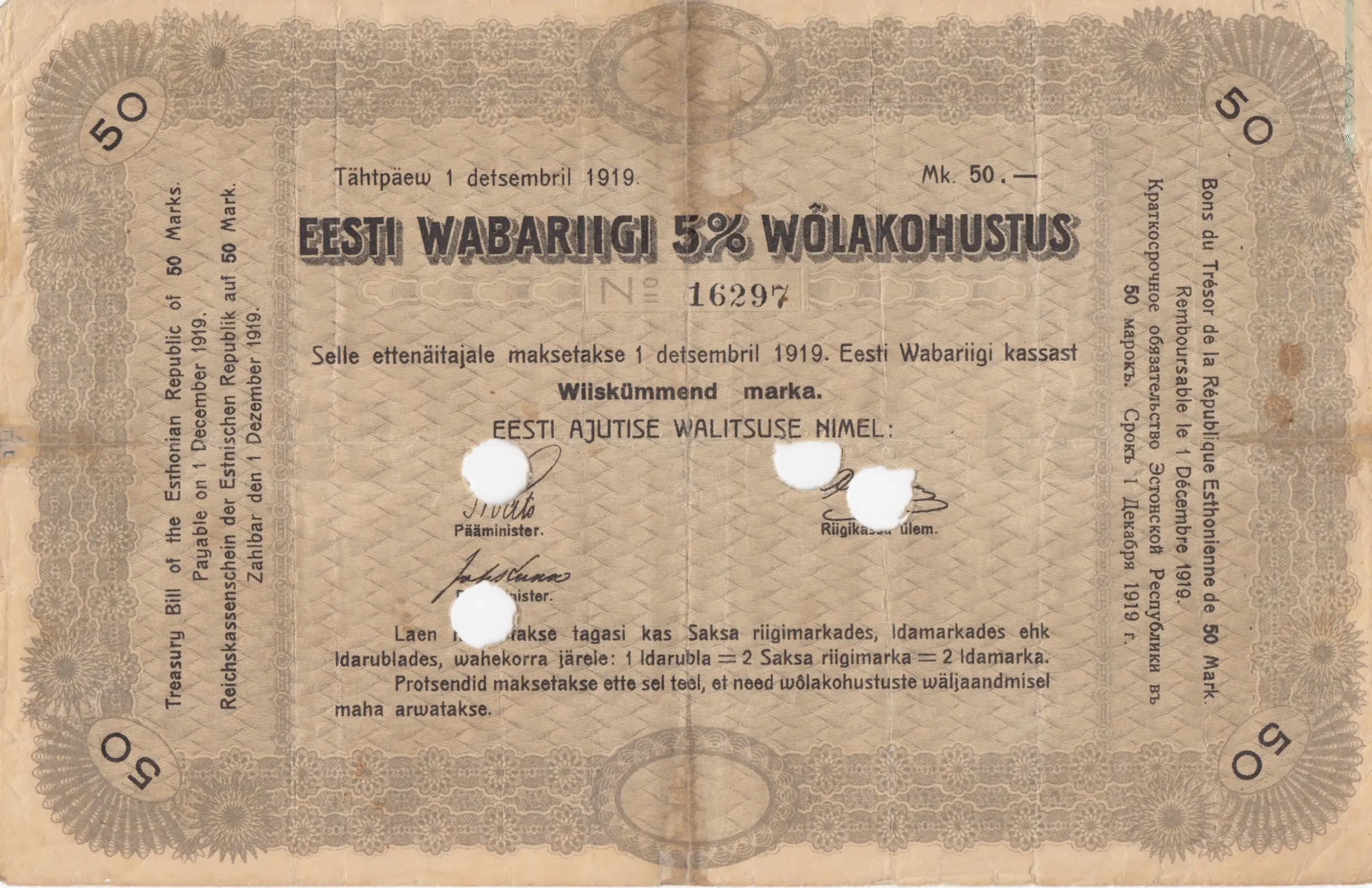
50 marka 1919
About This Note
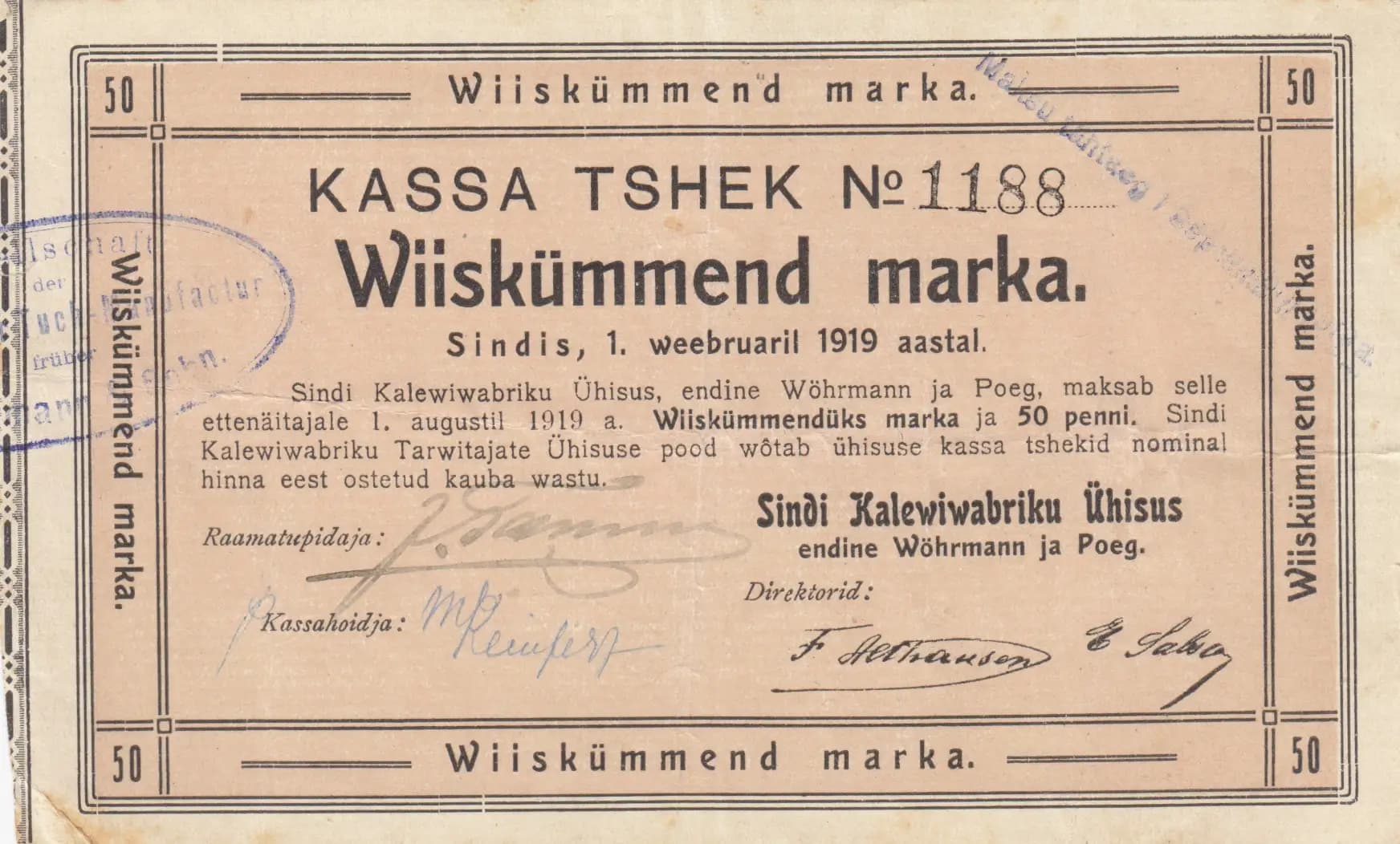
This is a 50 marka cash check (Kassa Tshek) issued by the Sindi Kalevivabrik (Sindi Calico Factory) on February 1, 1919, representing an important example of emergency currency from the nascent Estonian Republic. The document is printed on aged beige paper with black text and features handwritten signatures and a blue circular stamp, showing significant period wear consistent with its 1919 origin. This unlisted Pick note is a fascinating artifact of Estonia's transitional currency period, when factories issued their own negotiable certificates due to monetary instability during independence.
Scarce. Factory-issued scrip from the 1919 Estonian independence period is collected but limited in surviving examples. Most such documents were redeemed and destroyed, or discarded as worthless when the factories ceased operations or monetary reforms rendered them obsolete. The Sindi Kalevivabrik notes are particularly notable as the factory was a significant regional manufacturer. This specific unlisted Pick number reflects that these factory certificates fall outside the standard banknote catalogs, and surviving examples in any condition are notably scarcer than official government-issued currency from the same period. The VF condition grade is notable for a document of this type, as most surviving examples show heavier wear.
Issued during the chaotic early months of Estonian independence (declared February 24, 1919), this cash check represents the factory-issued scrip system that emerged when traditional currency was scarce and unreliable. The Sindi Kalevivabrik, a major textile manufacturer formerly known as Wöhrmann and Poeg, issued these certificates to facilitate internal trade and worker compensation during the transition from Tsarist to Estonian monetary systems. The note's bilingual elements (Estonian with Russian numeral notation) reflect the linguistic transition occurring in Estonia during this period of national sovereignty.
This cash check features a simple, functional design typical of factory scrip from the early 20th century. The document employs a rectangular format with a decorative border frame featuring corner ornaments in black ink. The color scheme is monochromatic—black text on aged beige paper—with no pictorial elements, portraits, or landmarks. Instead of artistic imagery, the design relies on clear, legible typography and organizational structure to establish legitimacy and official status. The circular stamp impression on the left side (in blue ink) served as the issuing authority's seal, likely containing the factory's official mark or initials. The document's layout separates the promise-to-pay clause, redemption conditions, and signature lines for bookkeeper, cashier, and management, following standard commercial promissory note conventions of the era. Multiple handwritten signatures and annotations in blue ink indicate this was an actively circulated and honored instrument.
FRONT SIDE: Principal heading reads 'Wiiskümmend marka' (50 marks). The document is identified as 'KASSA TSHEK №1188' (Cash Check No. 1188). Dating inscription: 'Sindis, 1. weebruaril 1919 aastal' (In Sindi, February 1, 1919). Main promise-to-pay text: 'Sindi Kalewiwabrikul Ühisus, endine Wöhrmann ja Poeg, maksab selle ettenäitajale 1. augustil 1919 a. Wiiskümmendüks marka ja 50 penni' (Sindi Calico Factory Association, formerly Wöhrmann and Poeg, pays to the bearer on August 1, 1919 fifty-one marks and 50 penni). Redemption clause: 'Sindi Kalewiwabrikul Ühisuse pood wötab ühisuse kassa tshekid nominal hinna eest ostetud kauba wastu' (The Sindi Calico Factory Association store accepts association cash checks at nominal price for purchased goods). Signature lines labeled: 'Raamatupidaja' (Bookkeeper), 'Kassahoidja' (Cashier), 'Direktoria' (Management/Directorate). Repeated denomination at margins: 'Wiiskümmend marka' (50 marks). BACK SIDE: Blank or essentially no visible printed text.
Letterpress printing on laid or wove paper stock typical of Estonian commercial printing of 1919. The sharp, crisp impression of the decorative border and text indicates professional printing rather than manuscript creation. The circular stamp impression was applied by hand after printing, possibly using a rubber stamp or embossing stamp common to commercial banking practices. All handwritten elements (signatures and notations) were executed in blue-black ink after the document's printing, using standard fountain pens of the period. No security printing features, watermarks, or anti-counterfeiting measures are evident, which is consistent with factory scrip of this transitional period.
This note is identified as Check No. 1188 issued on February 1, 1919 (Sindi, 1. weebruaril 1919 aastal) with a redemption date of August 1, 1919. As a factory-issued cash check system, numerous varieties likely exist based on sequential check numbering. The specific promise notation—'fifty-one marks and 50 penni' for a stated 50-mark denomination—represents a premium/interest element possibly reflecting the time value until August 1 redemption, making this a specific textual variant. Additional varieties may exist with different check numbers, dates, issuing officer signatures, or denomination values within the same Sindi Kalevivabrik series, though without access to comparative examples or specialized Estonian scrip catalogs, specific variety nomenclature cannot be definitively established.