100 marka 1919
“serie D”
Market Prices
About This Note
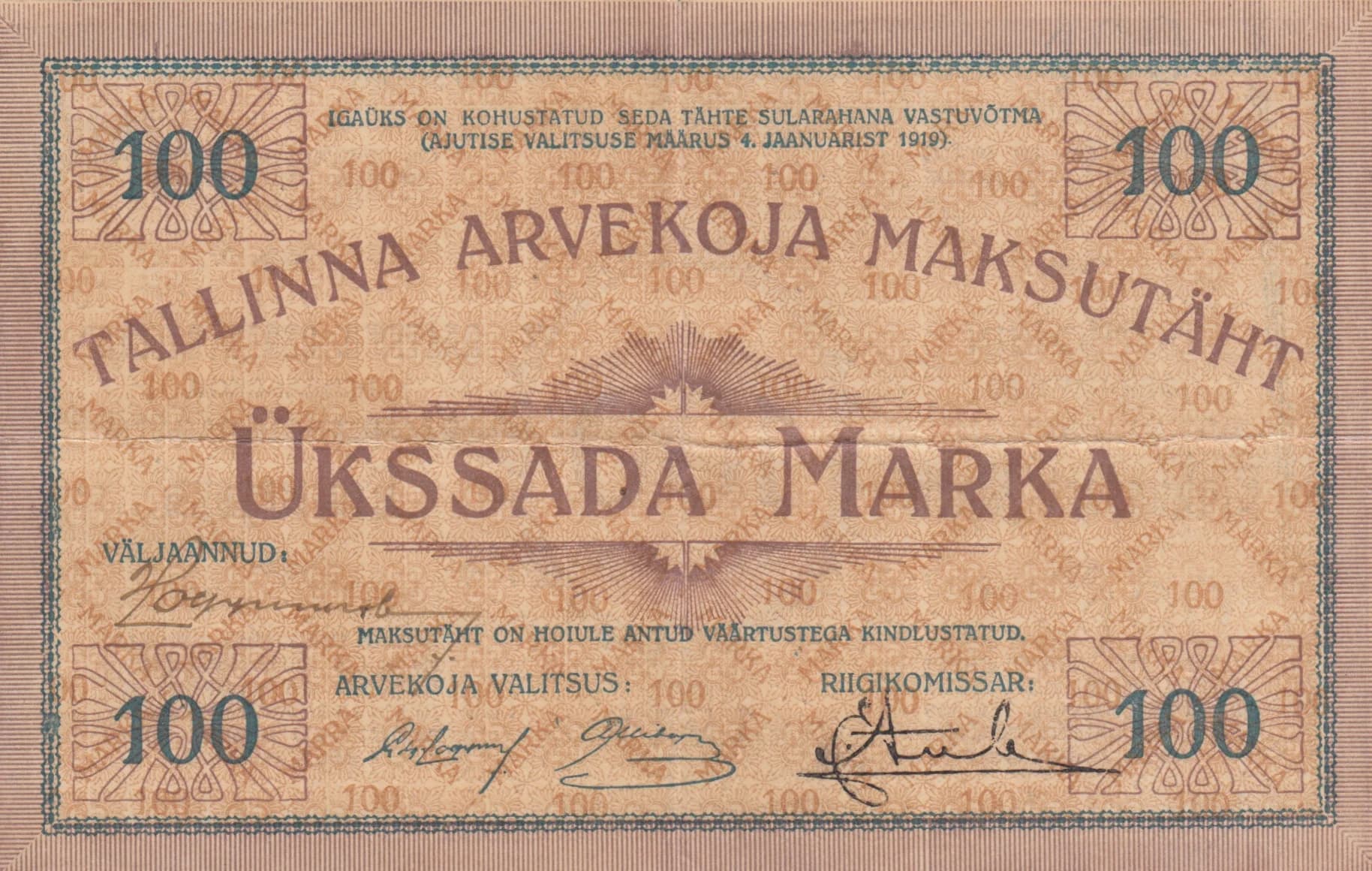
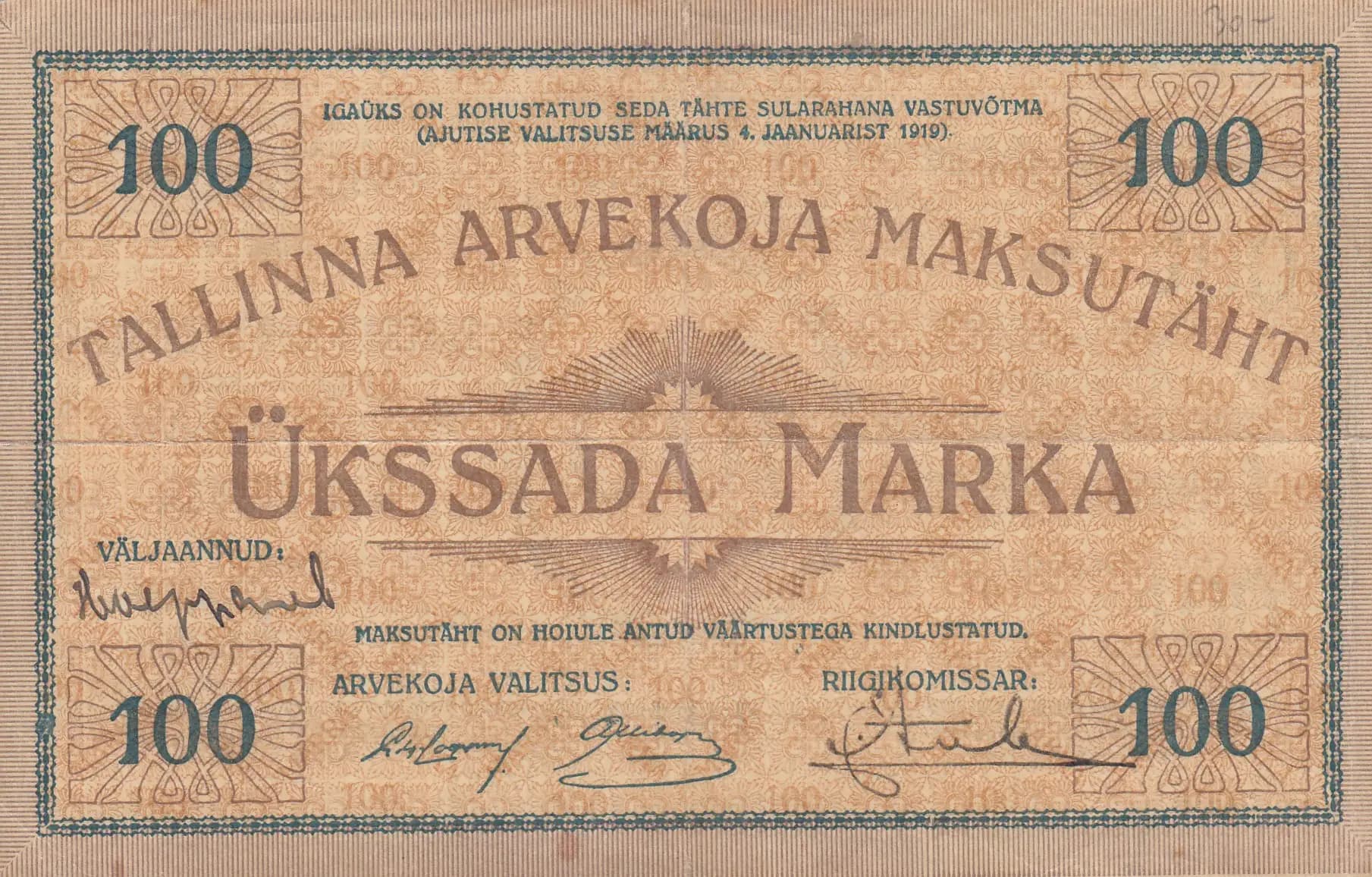
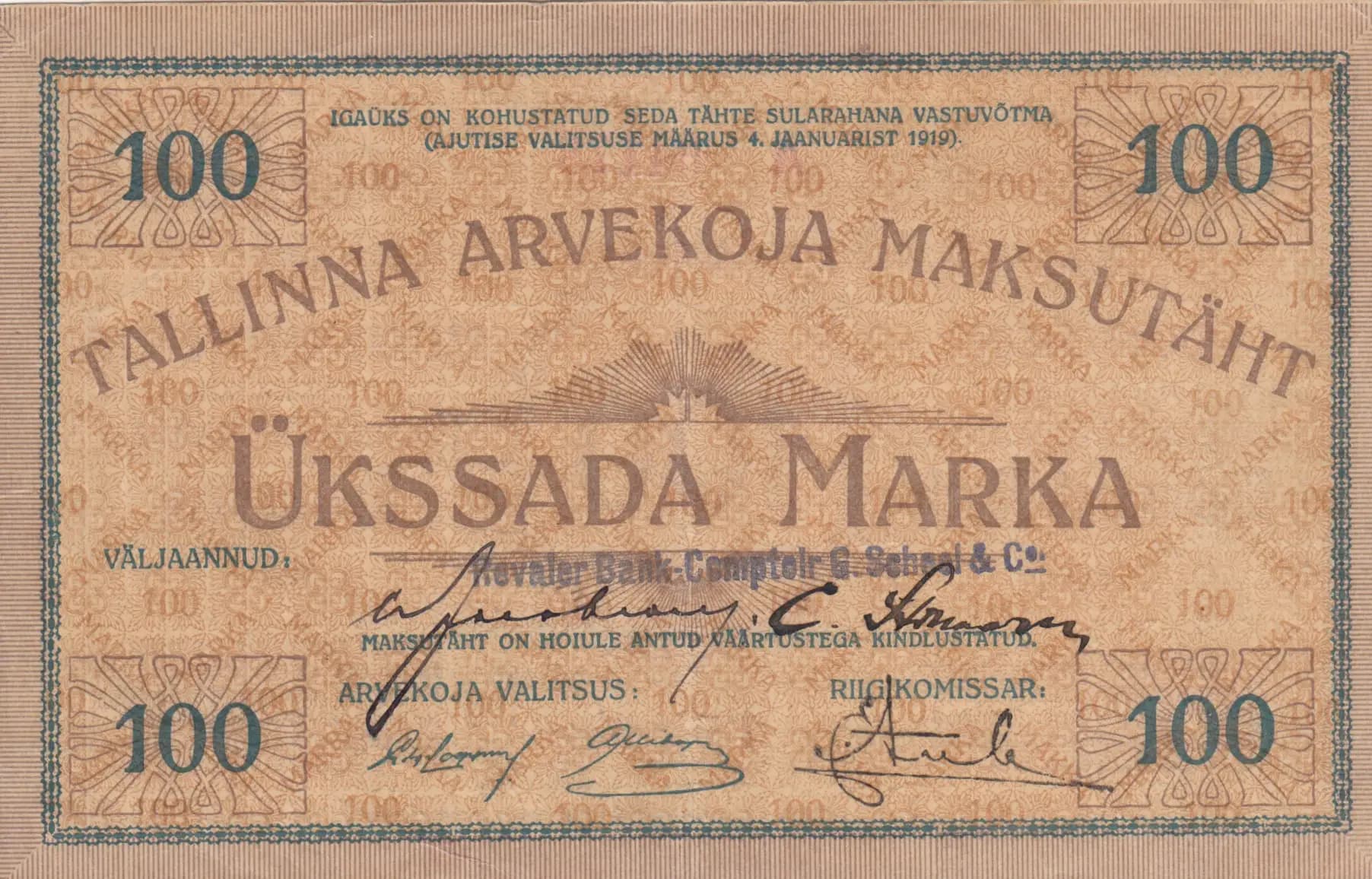
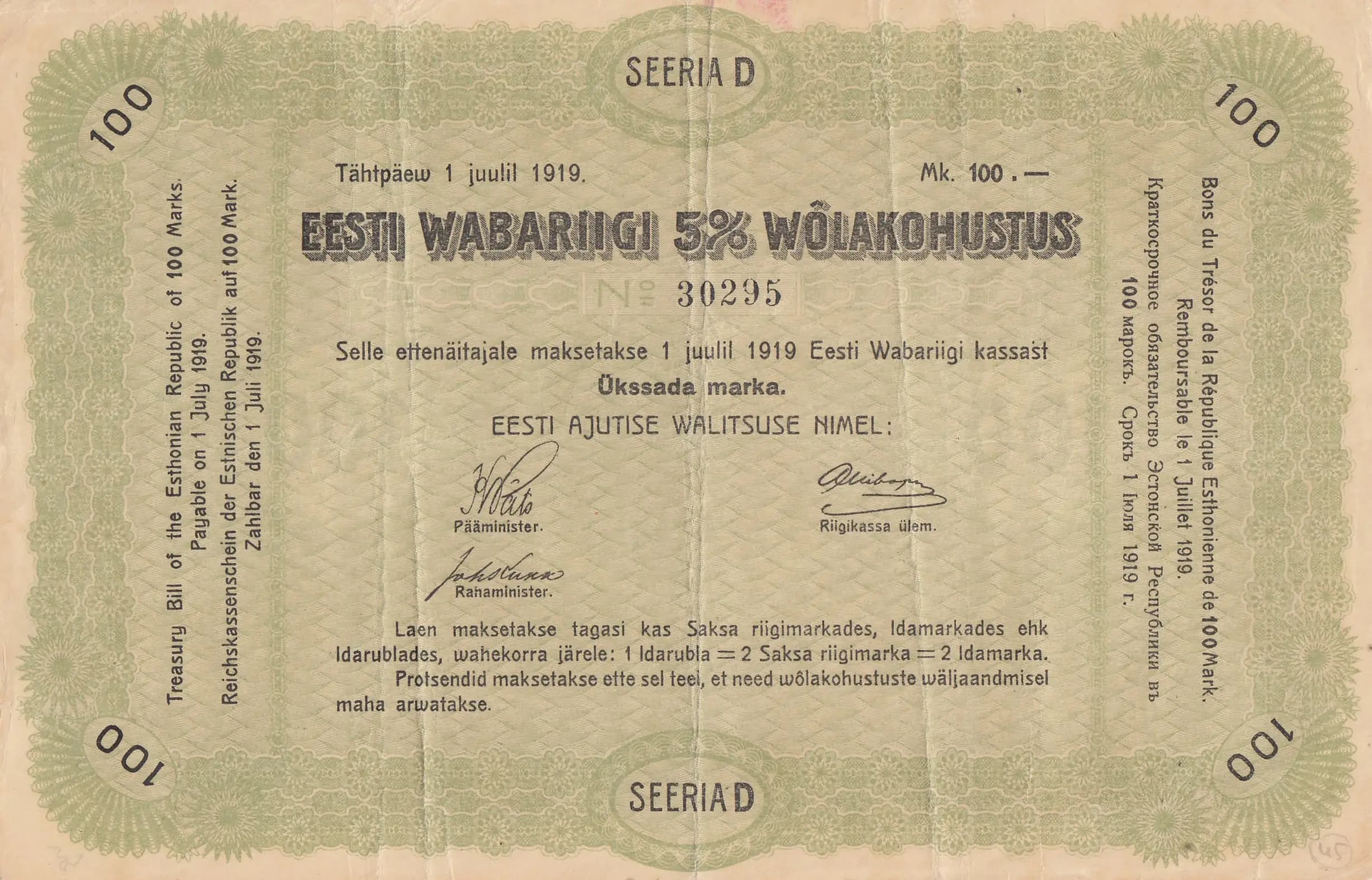
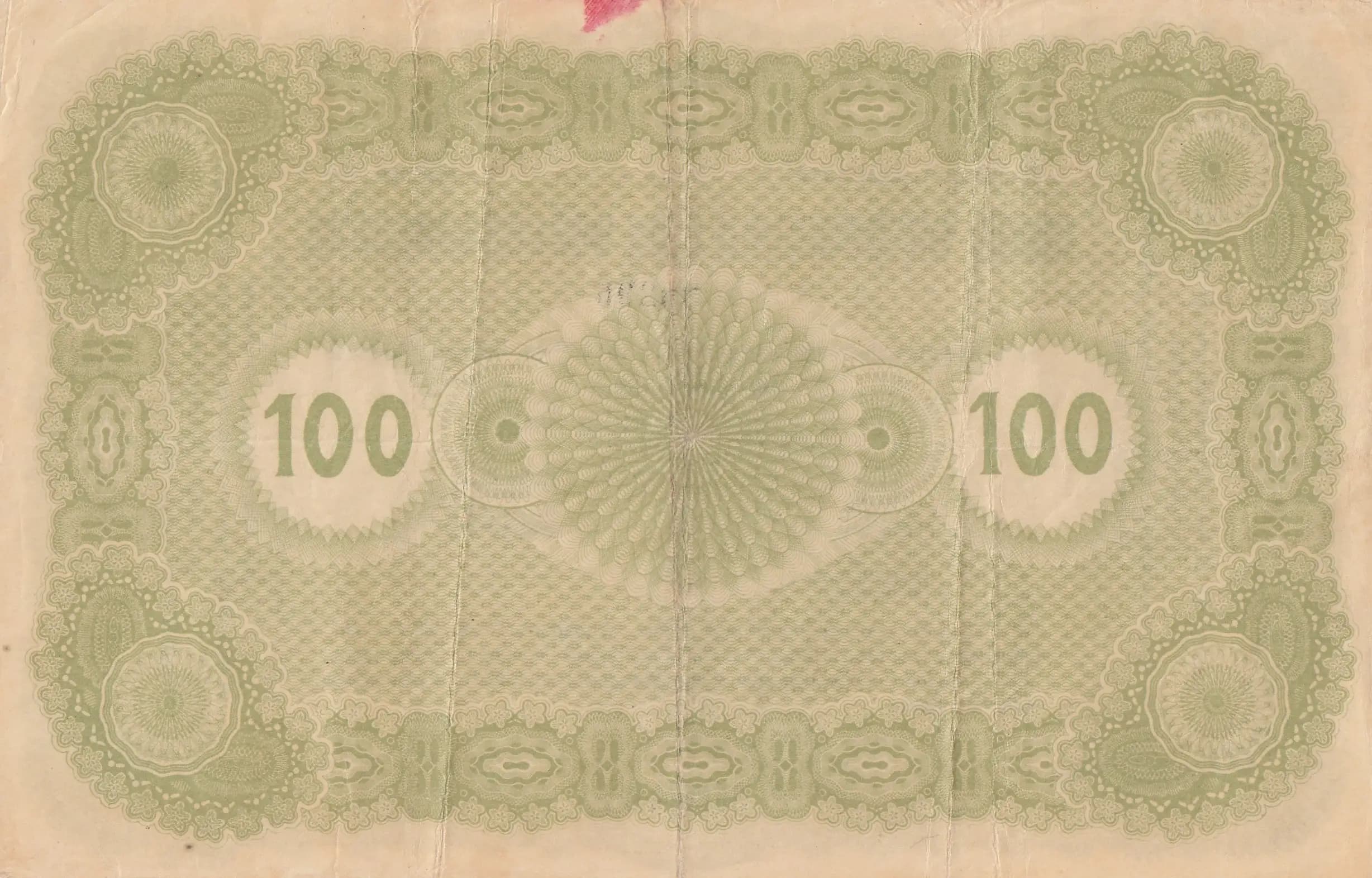
This Estonian 100 Marka treasury bill from 1919 represents an early monetary instrument of the newly independent Estonian Republic, issued during a period of significant political and economic transition. The note exhibits VF condition with visible age-related creasing and foxing across both sides, yet retains clear impressions of its ornate engraved decorative elements including distinctive radiating sunburst patterns and geometric borders. Series D specimens like this example command moderate collector interest, with market values around $54-$245 USD depending on exact condition, reflecting the note's importance as a foundational Estonian numismatic artifact.
Common. While this note is historically significant as an early Estonian financial instrument, the eBay market data shows multiple examples trading in the $45-$275 range across various condition grades, indicating adequate availability in the collector market. VF condition specimens like this example are priced around $54-$245 USD, with mid-range values near $100-$150, which is typical for common early 20th-century European treasury bills. The Estonian Republic's survival and eventual currency reform suggest this series was issued in reasonable quantities and did not suffer significant recall or destruction relative to other contemporary issues.
Issued on July 1, 1919, this 5% obligation note was one of the Estonian Provisional Government's early financial instruments during the country's struggle for independence and stabilization following World War I and the Russian Revolution. The multilingual inscriptions in Estonian, German, and French reflect the complex geopolitical environment of the newly formed Baltic state, while the repayment terms specified in imperial marks, East marks, and East rubles demonstrate the transitional currency chaos of post-WWI Eastern Europe. This treasury bill served both as a financial instrument and a symbol of Estonian sovereignty during the nation's critical first years of independence.
This treasury bill features a classical engraved design typical of early 20th-century European financial instruments. The front presents a formal layout with extensive legal text and three signature lines representing the Estonian Provisional Government's financial authority, framed by ornate borders composed of interlocking floral and geometric patterns. The reverse side employs a more decorative aesthetic, centered on a large radiating sunburst or fan pattern rendered in concentric lines, flanked by the denomination '100' in prominent oval frames. All four corners of both sides display circular medallion patterns with radiating line work, creating a unified security-oriented design language. The color scheme of green on cream/beige aged paper is consistent with Central European treasury instruments of the period. No portraits or specific landmarks appear; instead, the design relies entirely on intricate geometric ornamentation and typography to convey authority and deter counterfeiting.
FRONT SIDE: 'SEERIA D' (Series D); '100' (denomination); 'Tõhtpäev 1 juulil 1919.' (Date: 1 July 1919); 'Mk. 100.—' (Marks 100); 'EESTI WABARIIIGI 5% WÕLAKOHUSTUS' (Estonian Republic 5% Obligation); Serial number '30295'; 'Selle ettenäitajale maksetakse 1 juulil 1919 Eesti Wabarigi kassast ükssada marka.' (This bearer shall be paid one hundred marks from the Estonian Republic treasury on 1 July 1919); 'EESTI AJUTISE WALITSUSE NIMEL:' (In the name of the Estonian Provisional Government:); Signature lines for 'Pääminister' (Prime Minister), 'Riigikaass ülem' (State Council chairman), and 'Ranaminister' (Finance Minister); Extended terms clause regarding repayment in German imperial marks, East marks, or East rubles at specified exchange rates with interest payments deducted at issuance. BACK SIDE: Large '100' numerals on left and right sides with 'SEERIA D' (Series D) designation. German inscription: 'Reichsschein der Esthnischen Republik 1 Juli 1919' (Treasury note of the Estonian Republic 1 July 1919). French inscription: 'Bons du Trésor de la République Esthonienne du 1er juillet 1919' (Treasury bonds of the Estonian Republic of 1 July 1919).
This note was produced using the intaglio engraving process (letterpress/steel engraving), evidenced by the deeply rendered decorative borders, fine-line geometric patterns, and crisp legibility of text visible in the image analysis. The complexity of the corner medallions and the radiating sunburst pattern on the reverse demonstrate the high-quality craftsmanship typical of security printing of this era. While the specific Estonian printer is not definitively identified in available catalog references, the technical execution is consistent with German or Scandinavian security printers who commonly produced early Baltic state currency and financial instruments during 1919-1920.
Series D variety as indicated by 'SEERIA D' marking visible on both obverse and reverse. Serial number 30295 observed on this specimen. Pick catalog P-15A designation indicates this is the standard uniface printing variant (though the visual analysis reveals both sides were printed, this may indicate a later dual-sided printing or catalog reclassification). Known signature varieties exist for this issue corresponding to different Provisional Government officials, though specific signatory identification would require additional archival research. No overprints, color variants, or emergency issue markings are evident on this example.