5 penni 1919
Market Prices
15 salesAbout This Note
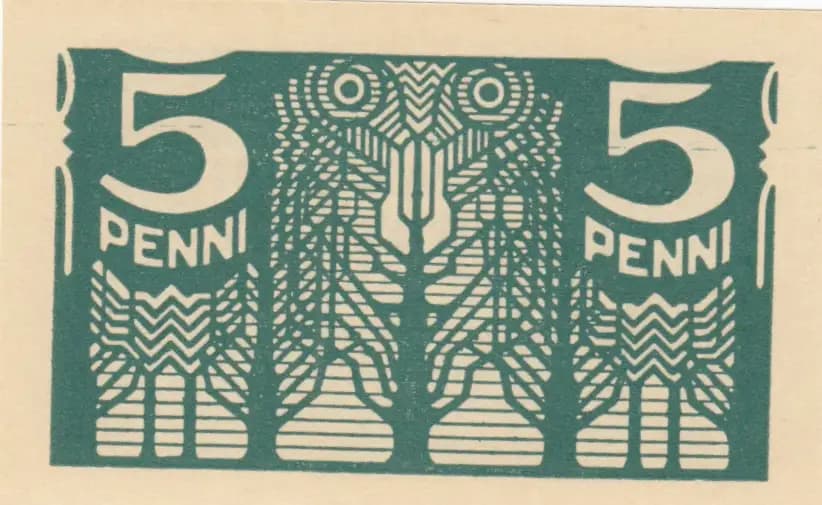
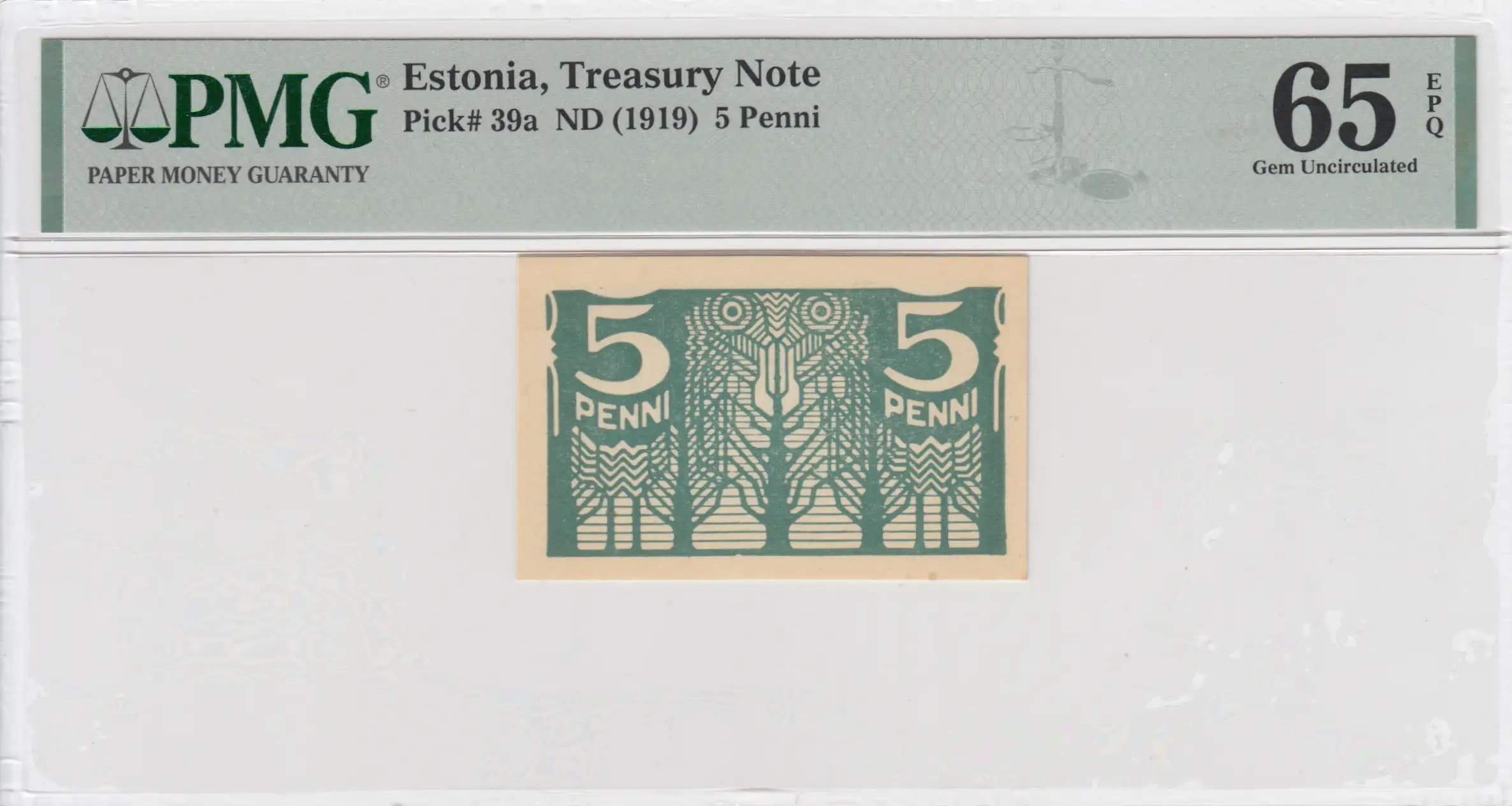
This is an exceptional example of Estonia's 1919 5 Penni Treasury Note (Pick P-39a) graded PMG 65 EPQ, representing the early currency of the newly independent Estonian Republic. The note features distinctive geometric forest or tree motifs in green on a tan background, with crisp printing and perfect preservation showing no signs of circulation. This Gem Uncirculated specimen with Exceptional Paper Quality represents the finest condition commonly encountered for this issue, making it a desirable piece of Estonian numismatic history.
Common. While this is an early Estonian note with historical significance, eBay market data shows consistent sales of examples in various grades ranging from $3 to $51 over the past decade. The PMG 65 EPQ example shown sold for $51 in 2019, while lower-grade examples (VF to AUNC) regularly sell for $5-$15, indicating adequate supply in the market. The 1919 5 Penni was part of the initial currency issue of the Estonian Republic and saw reasonable print quantities. The note is readily available to collectors at moderate prices, making it common rather than scarce.
Issued by the Treasury of Estonia (Eesti Vabariigi Kassataht) in 1919, this note commemorates Estonia's declaration of independence and establishment of the Estonian Republic following World War I and the collapse of the Russian Empire. The geometric stylized forest imagery reflects the natural resources and Nordic character of the newly sovereign nation, while the simple design reflects the practical needs of a young state establishing its monetary system during a period of significant geopolitical transition.
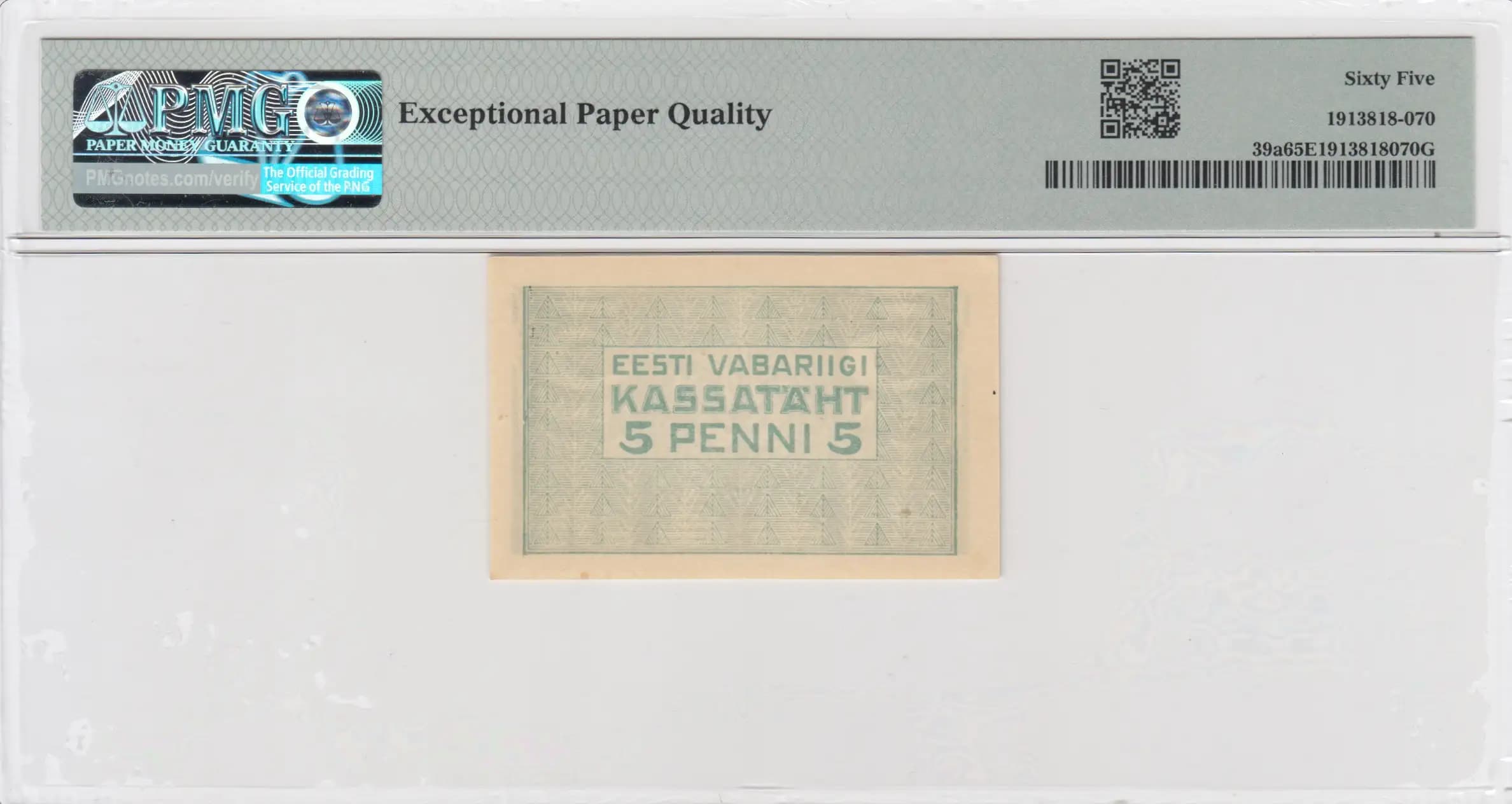
The 5 Penni features a modernist geometric design with stylized trees or forest elements arranged in a repeating pattern across the note's obverse. The reverse displays a simple but elegant triangular repeating pattern border framing the essential text. No portraits or specific landmarks are depicted; instead, the design emphasizes abstract geometric and nature-inspired motifs characteristic of early 20th-century Estonian design aesthetics. The color scheme of green printing on tan/cream paper creates a soft, natural appearance while maintaining good contrast for legibility. Denomination numerals appear in opposite corners, and the issuing authority is clearly identified on the reverse.
Front side: '5' (denomination), 'PENNI' (currency unit), repeated at opposite corners. Back side: 'EESTI VABARIIGI' (Estonian Republic), 'KASSATAHT' (Treasury Note), '5 PENNI 5' (denomination on both sides). PMG certification details: Grade '65' (Gem Uncirculated), 'EPQ' (Exceptional Paper Quality), catalog identifier '39a65E1913818070G', certification number '1913818-070'.
This note was produced using letterpress or similar relief printing methods typical of 1919-era European currency production. The crisp, sharp line work visible in the geometric patterns and borders, combined with the uniform color application observed in the PMG 65 specimen, indicates high-quality security printing. The fine parallel lines and geometric patterns served both aesthetic and security purposes, making counterfeiting more difficult. The specific printer is not definitively documented in standard references, though Estonian notes of this period were produced domestically by the newly established Estonian state printing facilities.
The PMG Population Report indicates P-39a as the cataloged variety for this Pick number. Based on the certification holder visible in the images, this specimen is the P-39a variety. No distinguishing features (such as signature variations, date changes, or overprints) are apparent that would indicate further sub-varieties. The note is an undated issue (ND) from 1919, standard for this series. Serial numbers visible in the PMG holder (1913818-070) confirm individual specimen identity but do not indicate a distinct cataloged variety.