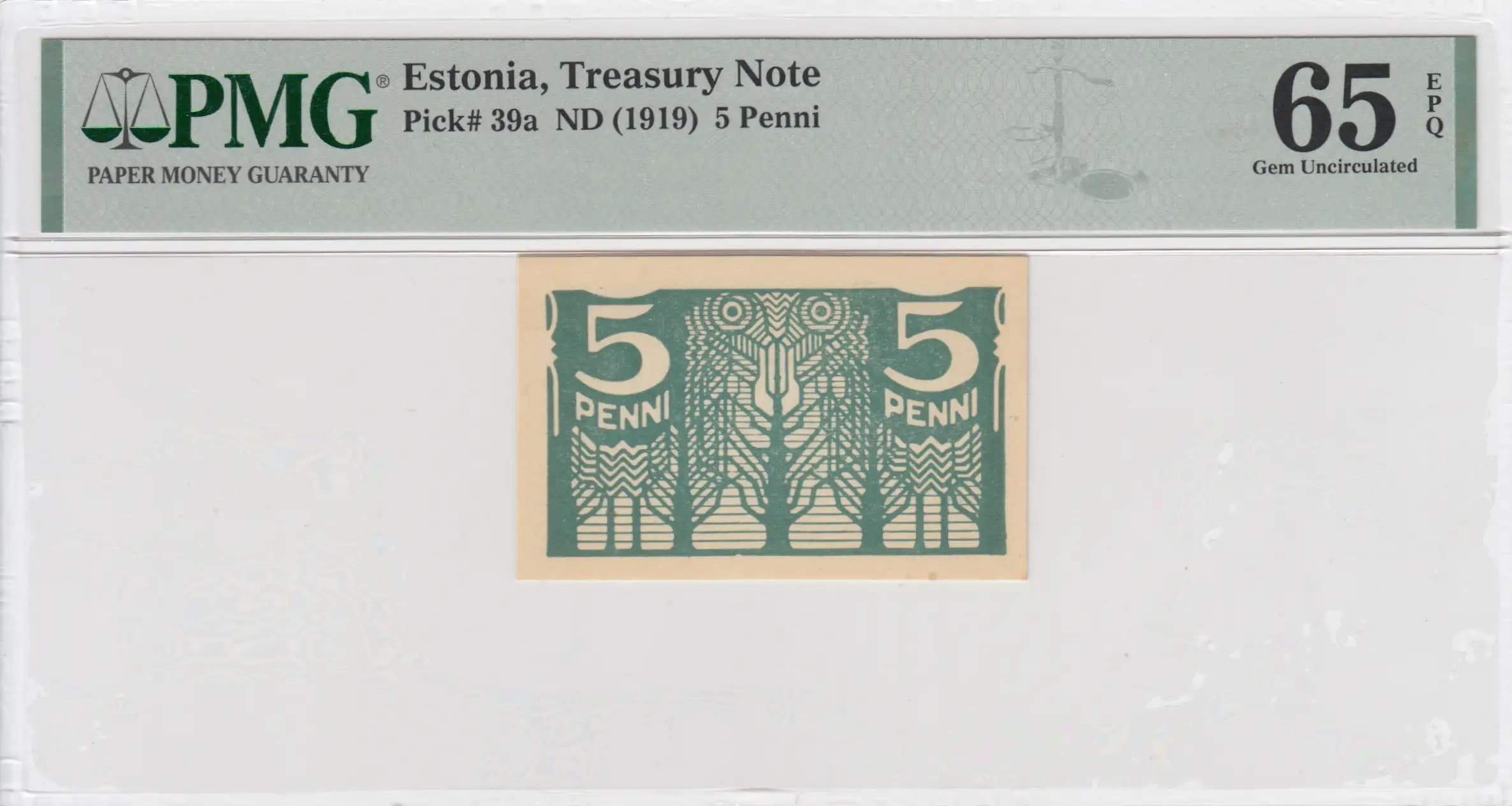
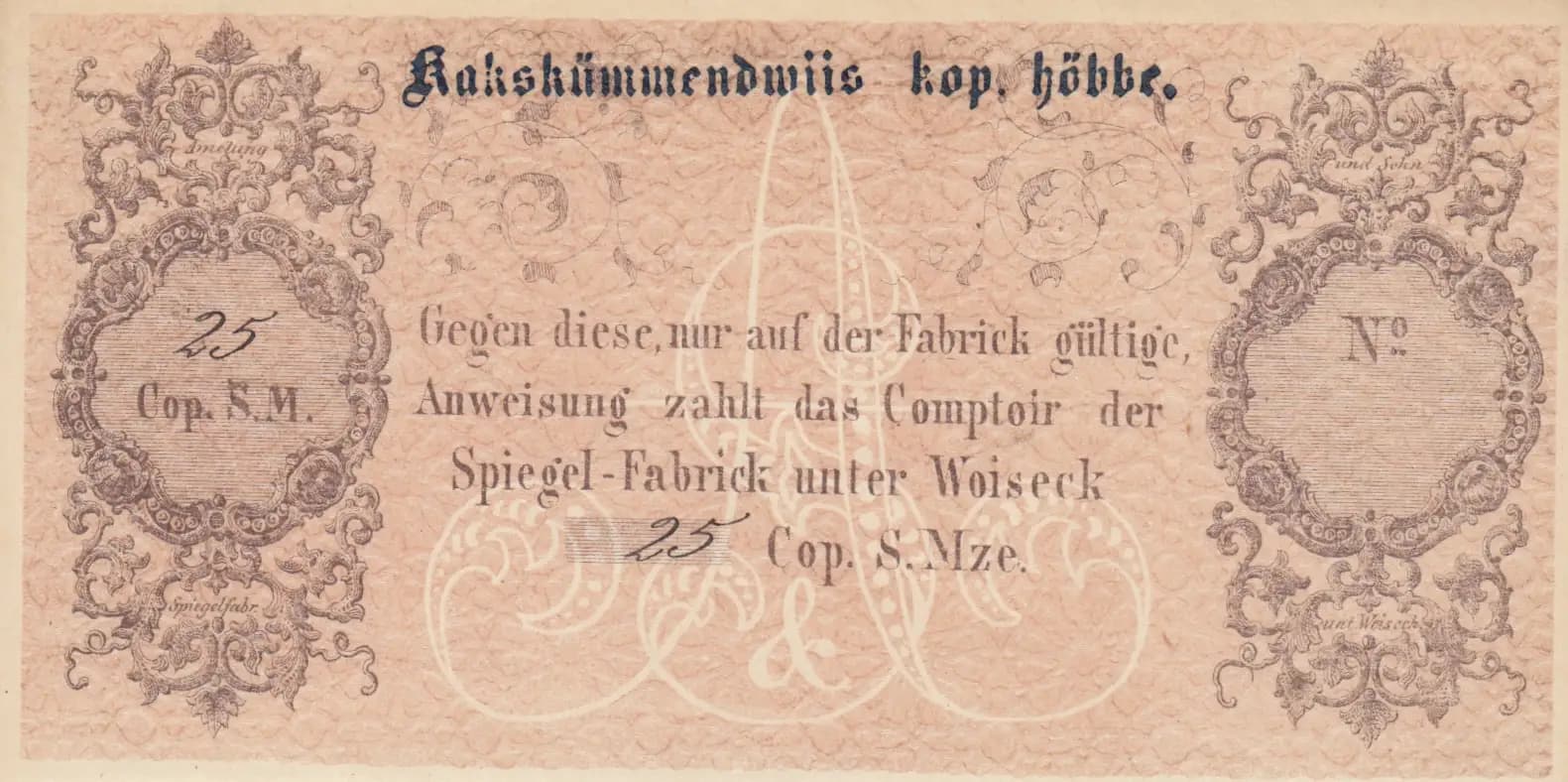
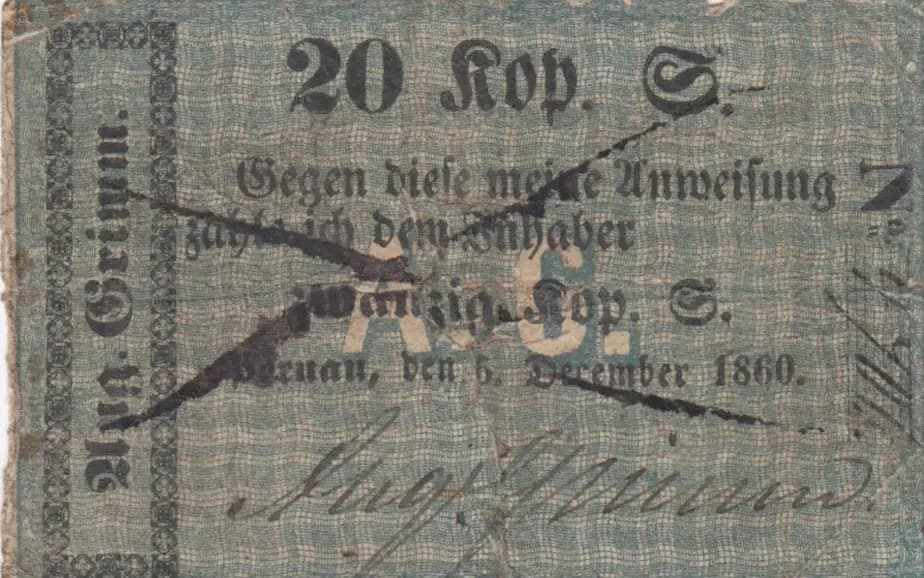
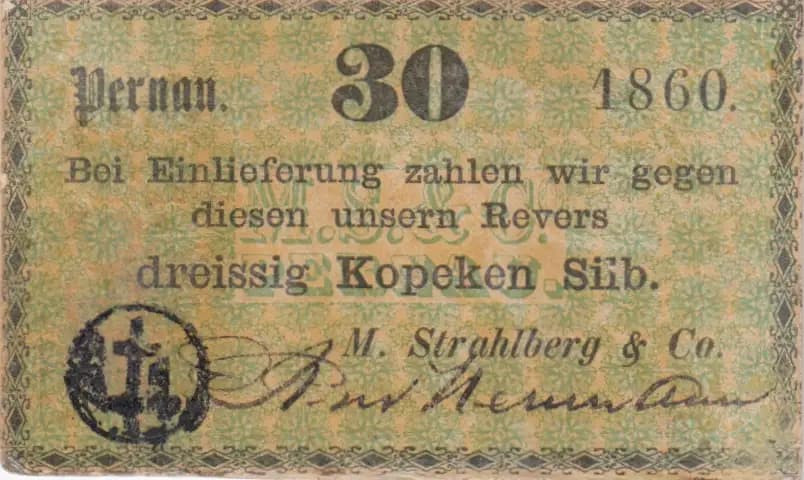
5 penni 1919
Market Prices
15 salesAbout This Note
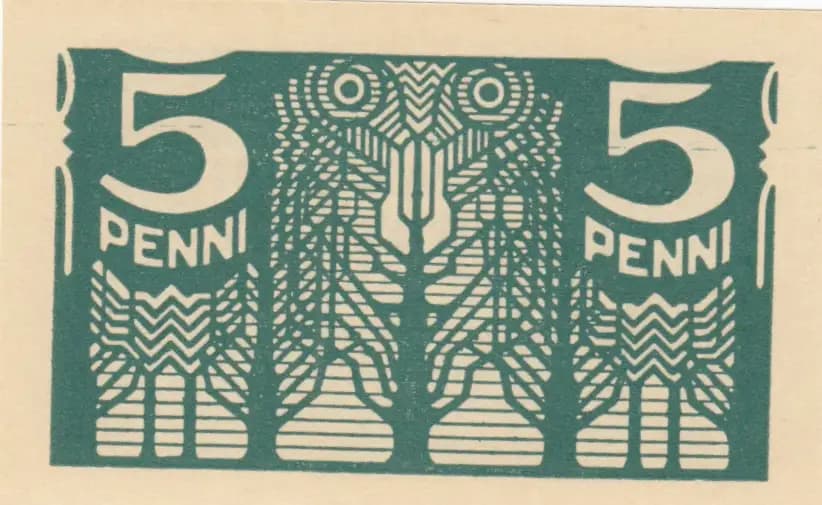
This is an exceptional example of Estonia's early post-independence currency: a 5 Penni note from 1919 in uncirculated condition. The note features a striking Art Deco-styled owl rendered in teal-green ink on cream paper, with geometric patterns and meticulous line work throughout. The crisp, clean appearance with no wear or handling marks, combined with the historical significance of this Treasury of Estonia issue, makes this an attractive piece for collectors of early Estonian numismatic material.
Common. The eBay market data clearly demonstrates regular trading activity across multiple condition grades, with even UNC examples selling in the $9.50–$13.50 range historically (2014–2016 period). Multiple PMG-graded examples exist in the population report, and VF condition notes regularly appear at auction for under $10. While historically significant as an early Estonian issue, this denomination was printed in sufficient quantities to remain accessible to collectors. The 2016 catalog value of $25 for UNC is aspirational rather than reflective of actual market clearing prices observed in the eBay data.
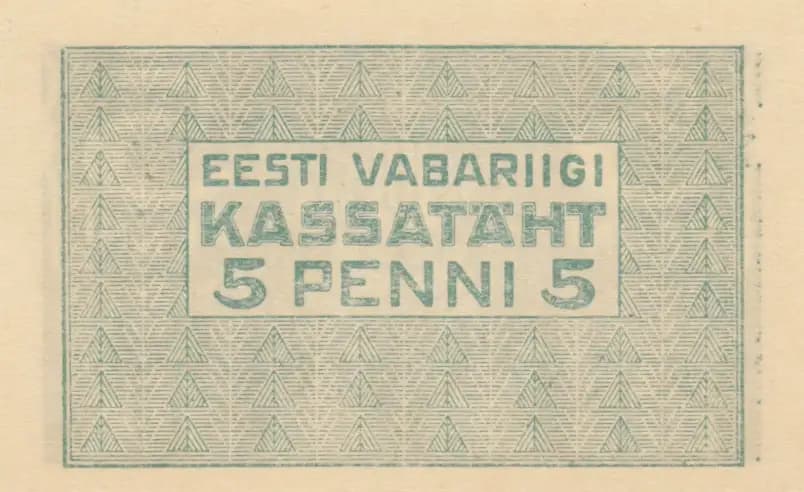
This banknote was issued during Estonia's initial period of independence following World War I, when the newly established Estonian Republic was developing its own currency system separate from Russian ruble denominations. The stylized owl depicted on the front likely symbolizes wisdom and national identity, reflecting Art Deco design trends popular in early 20th-century European currency design. The inscription 'EESTI VABARIIGI KASSATAHT' (Estonian Republic banknote) on the reverse underscores the nation's sovereign financial authority during this formative period.
The front of this note showcases a central stylized owl with large circular eyes rendered in precise geometric linework, characteristic of Art Deco aesthetics. The owl's body consists of intricate hatching and crosshatching patterns, creating visual depth and serving as a security feature. Flanking the owl on both sides are symmetrical decorative borders composed of linear patterns. The denomination '5' appears prominently in large numerals on the left and right margins, with 'PENNI' inscribed below each numeral. The reverse features an all-over repeating triangular or diamond-shaped pattern as a background texture, with a central rectangular panel containing issuing authority and denomination information. The consistent teal-green color scheme on cream-beige paper unifies both sides.
Front: '5' (denomination numeral, left and right), 'PENNI' (Estonian currency unit, below each denomination numeral). Back: 'EESTI VABARIIGI' (Estonian Republic), 'KASSATAHT' (banknote/treasury note), '5 PENNI 5' (denomination and value).
Intaglio (engraving and line engraving), evidenced by the precise, detailed geometric patterns, fine line work, and crosshatching visible throughout the design. The consistent ink density and crisp impression of both the owl figure and decorative borders are characteristic of high-quality intaglio printing. The specific printer for Estonian Treasury notes of this period was typically the Estonian State Printing Office or contracted European security printers, though exact attribution for this Pick number is not definitively established here.
Pick P-39a is catalogued as the primary variant for this denomination and issuer. The visual analysis does not reveal distinct characteristics (such as signature variants, date variations, or serial number prefixes) that would indicate additional sub-varieties. No overprints, color variations, or printing differences are evident from the images that would suggest P-39b or other sub-varieties, though PMG's population data indicates only one catalogued variant exists for this base Pick number.