5 marka 1919 specimen
“thick paper”
Market Prices
1 saleAbout This Note
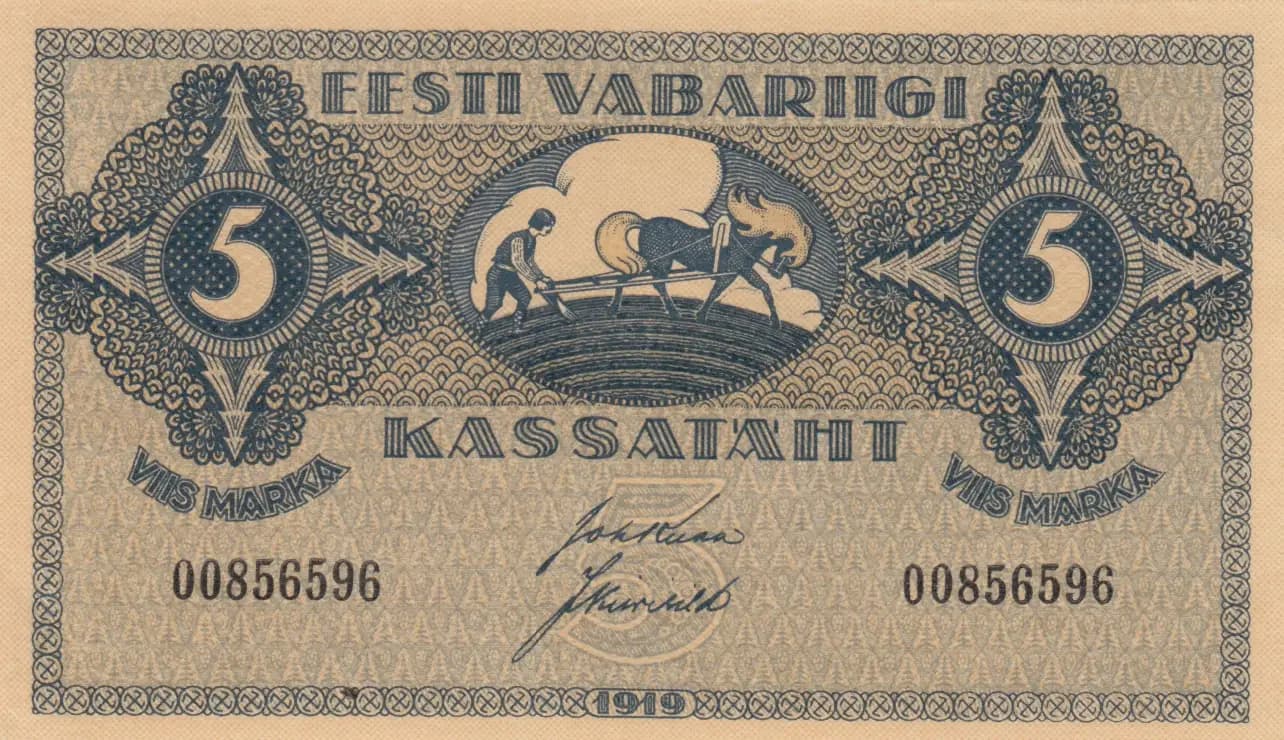
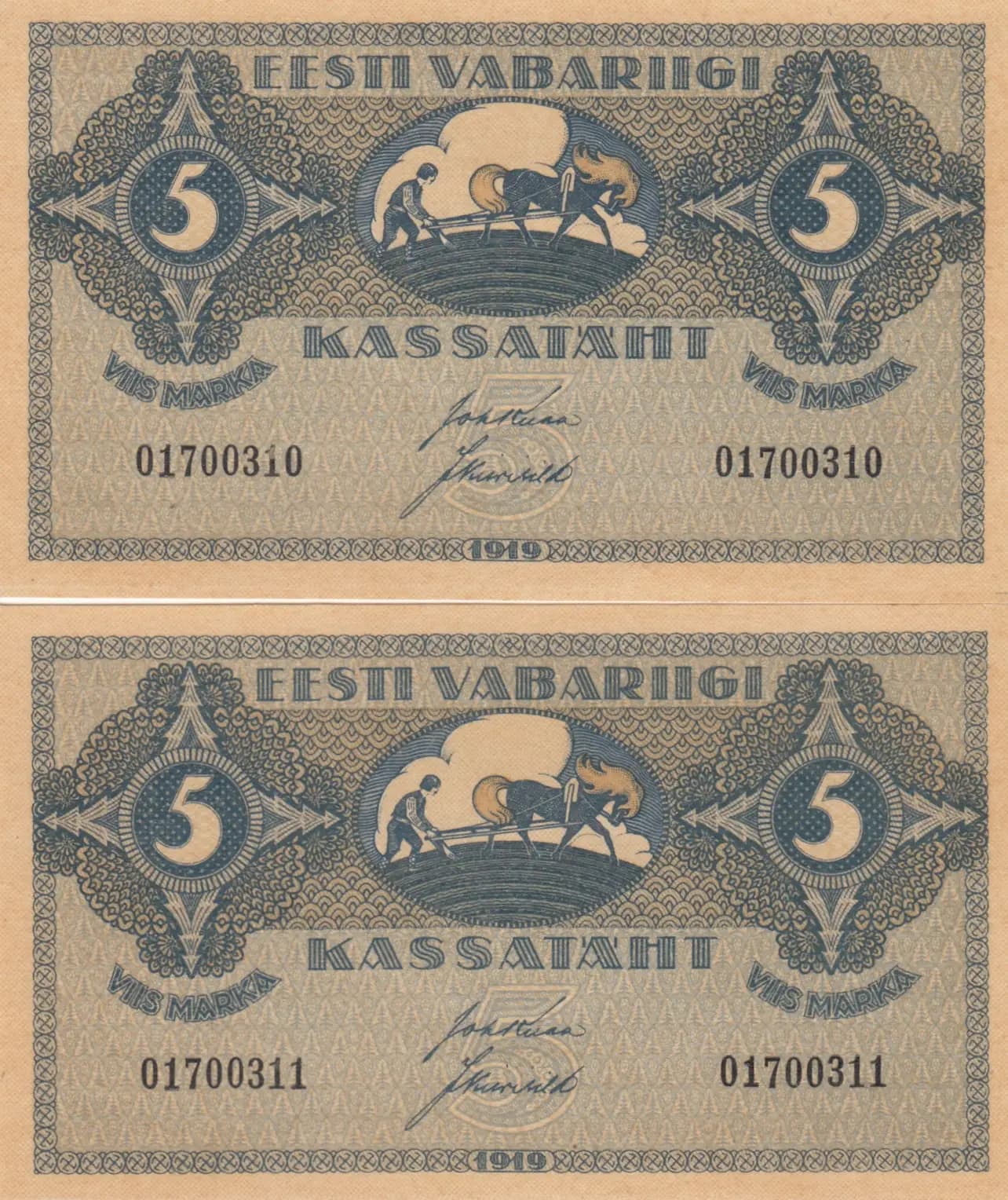
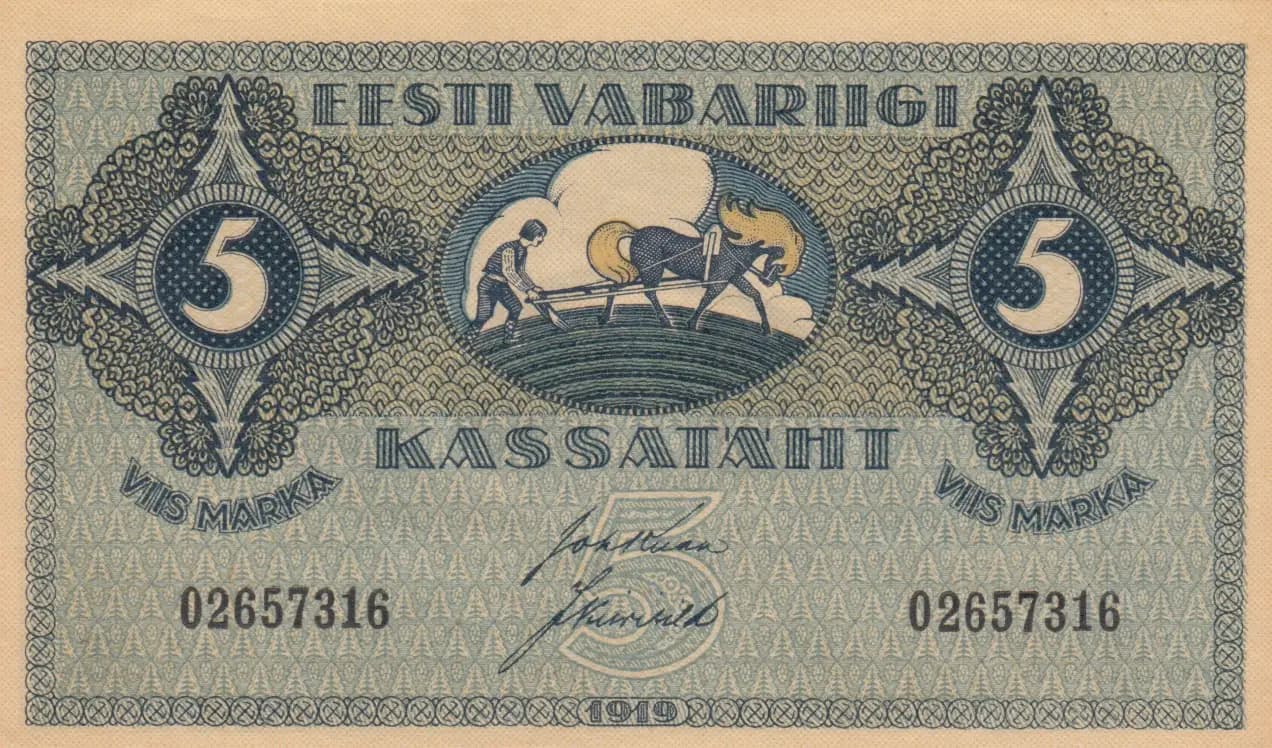
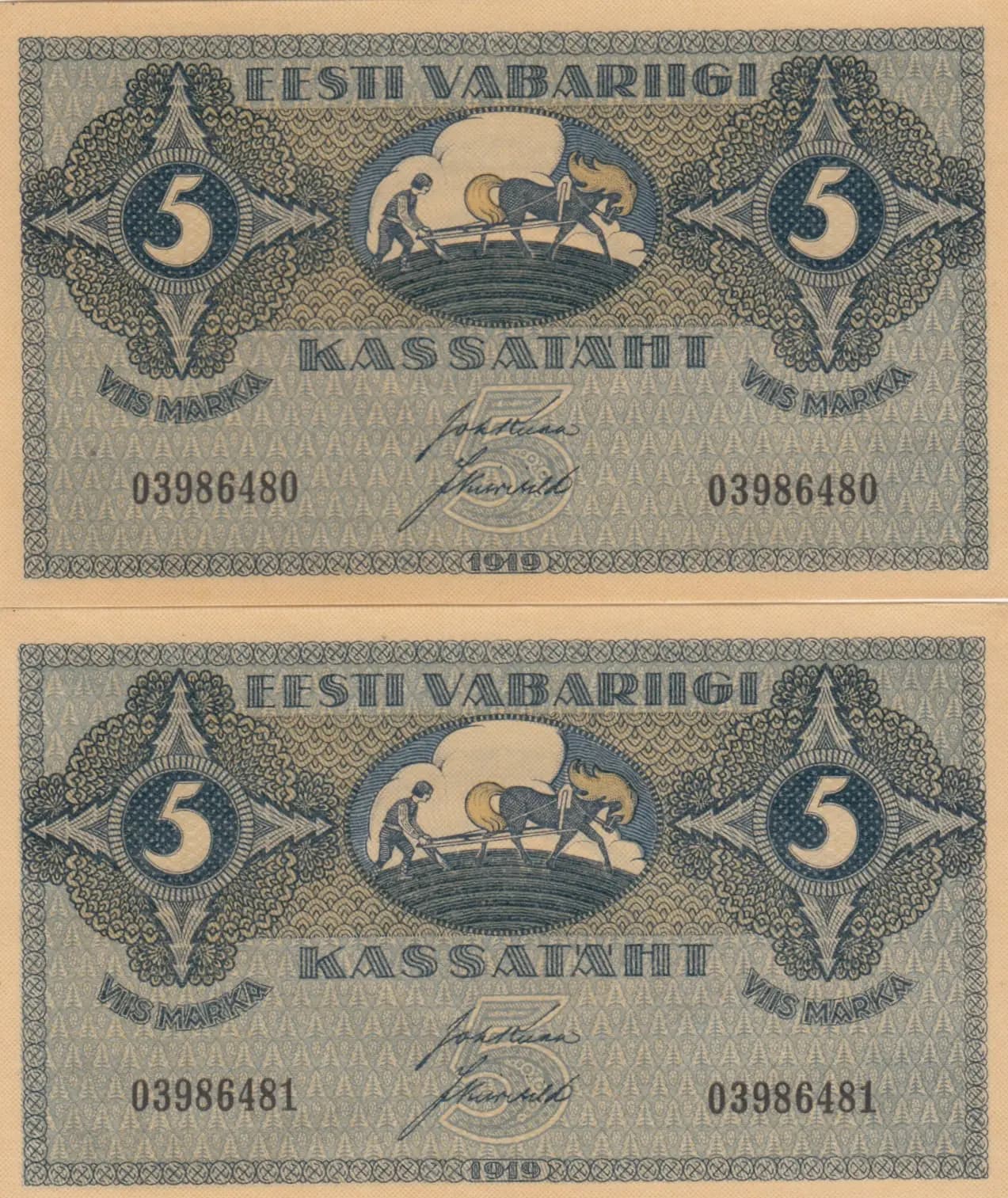
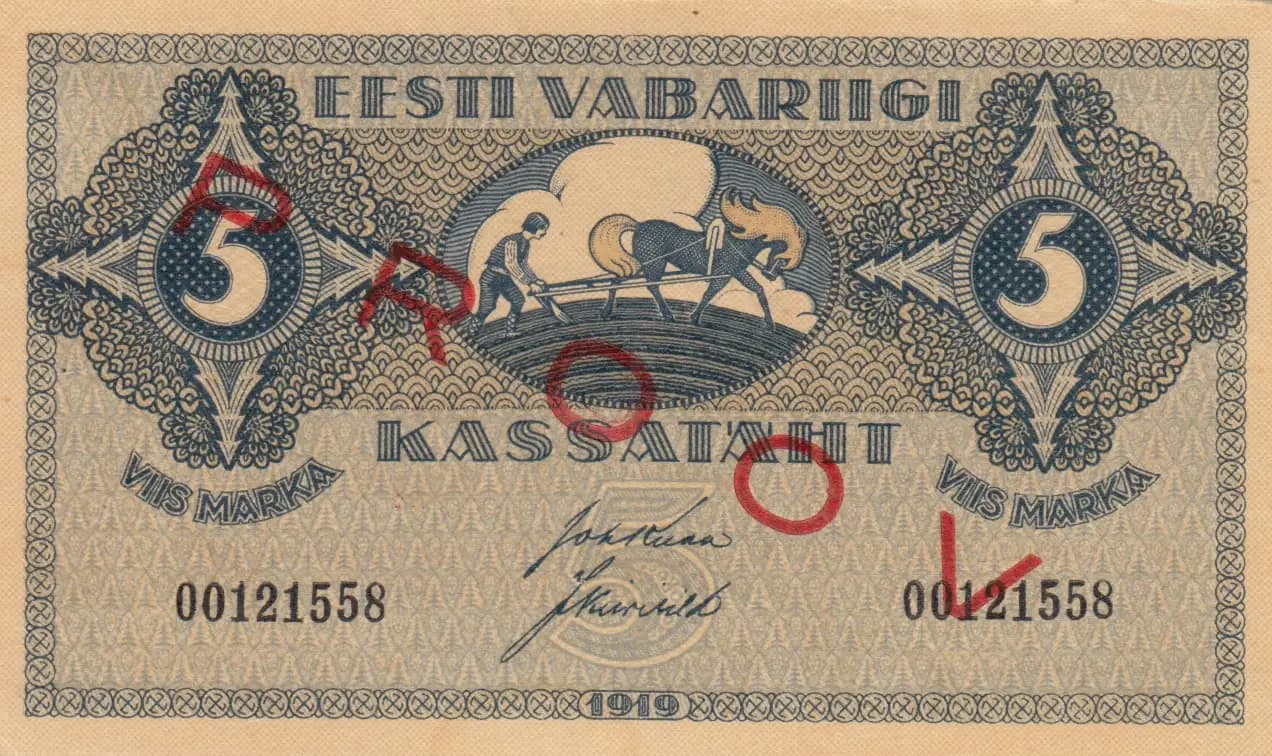
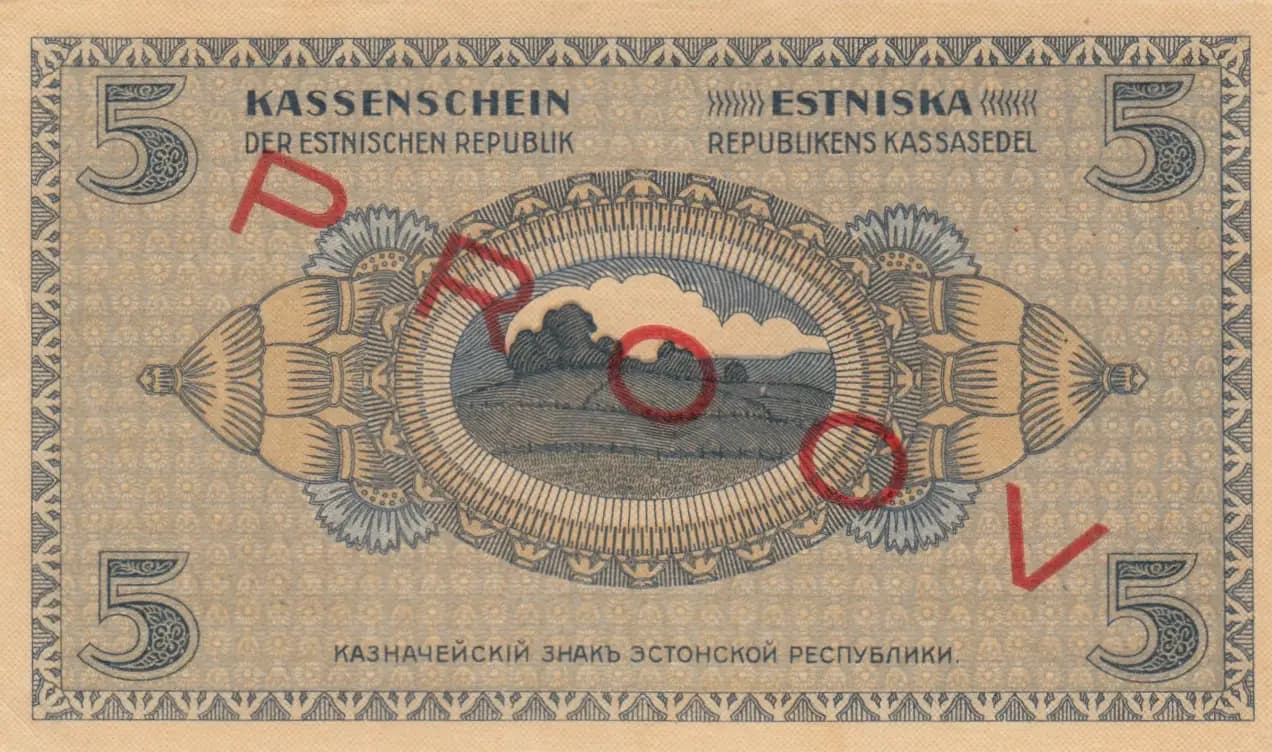
This is a striking specimen note of Estonia's first independent currency issue, the 5 Marka from 1919, graded AU with notable thick paper stock. The note features red specimen cancellation marks prominently stamped across both sides, indicating it was never intended for circulation. The design showcases quintessentially pastoral imagery—a farmer plowing with horse on the obverse and a landscape with buildings on the reverse—reflecting Estonia's agrarian economy during its early independence.
Common. While this is a specimen note from Estonia's first independent issue, the denomination and catalog designation (P-45s) appears in standard reference works as an established variety. The eBay market data shows UNC examples selling for approximately $80 in 2016, a modest price point indicating steady but not exceptional collector demand. Specimen notes of this era, while not in everyday circulation, were produced in sufficient quantities for cataloging purposes and appear regularly in the market. The presence of established pricing data and PMG population reports further suggests this is not a scarce issue.
Issued in 1919 following Estonia's declaration of independence from the Russian Empire, this Treasury note represents the newly formed Estonian Republic's first monetary assertion. The imagery of agricultural labor and rural landscapes deliberately emphasized Estonia's economic foundation and national identity during a period of state consolidation. The multilingual text—Estonian, German, and Russian—reflects the complex linguistic and cultural heritage of the region during this transitional period.
The obverse features a central vignette of a farmer actively plowing a field with a horse—a symbol of Estonia's agrarian heritage and economic foundation. The denomination numeral '5' appears in circular ornamental medallions on both left and right sides. The reverse presents a landscape vignette depicting rural scenery with buildings and clouded sky, further emphasizing the agricultural character of the newly independent nation. Both sides feature elaborate decorative borders with intricate geometric and floral patterns in period Art Nouveau style, with the '5' denomination repeated in all four corners of the reverse. The color palette of beige, tan, blue, red, and black creates visual distinction and security through multicolor printing.
FRONT SIDE: 'EESTIVABARIGI' (Estonian Republic) at top; 'KASSAPÄHT' (Treasury note) and 'VIS MARKA' (State mark) in middle section; serial number '00121558'. BACK SIDE: 'KASSENSCHEIN' (German: Banknote/Treasury note) and 'ESTNISKA' (Estonian: Estonian) at top; 'DER ESTNISCHEN REPUBLIK' (German: Of the Estonian Republic) and 'REPUBLIKENS KASSASEDEL' (Estonian: Republic's treasury note); 'КАЗНАЧЕЙСКИЙ ЗНАК ЭСТОНСКОЙ РЕСПУБЛИКИ' (Russian: Treasury mark of the Estonian Republic) at bottom; denomination '5' in all four corners.
The note was produced using multicolor letterpress or lithographic printing, evident from the crisp ornamental borders, detailed vignettes, and layered color registration visible in the visual analysis. The consistent dot patterns and line work suggest either lithography or high-quality letterpress production typical of early 20th-century security printing. The precision of the geometric decorative elements and the sharp definition of the central vignettes indicate work by a specialized security printer, likely a European firm with experience in government bond and currency production.
This is cataloged as Pick P-45s, the specimen variety of the 5 Marka 1919 issue. The red cancellation marks (circles, lines, and letter markings 'P' and 'V') are characteristic of specimen overprinting. The serial number '00121558' is visible on the obverse. PMG records indicate two variants exist for this base Pick number (P-45a and P-45s), with this note being the specimen variant (P-45s). The thick paper stock noted in the catalog data may represent a deliberate choice for specimen notes versus circulating versions.