5 marka 1919
Market Prices
13 salesAbout This Note
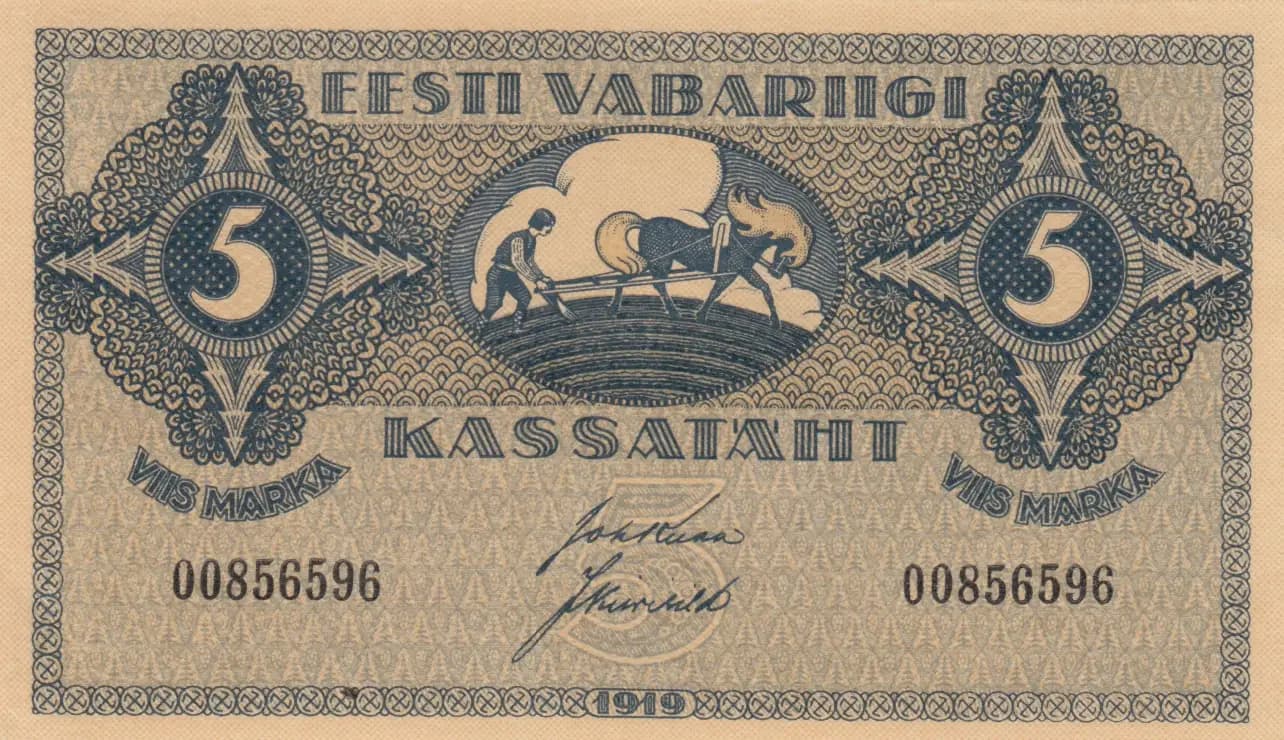
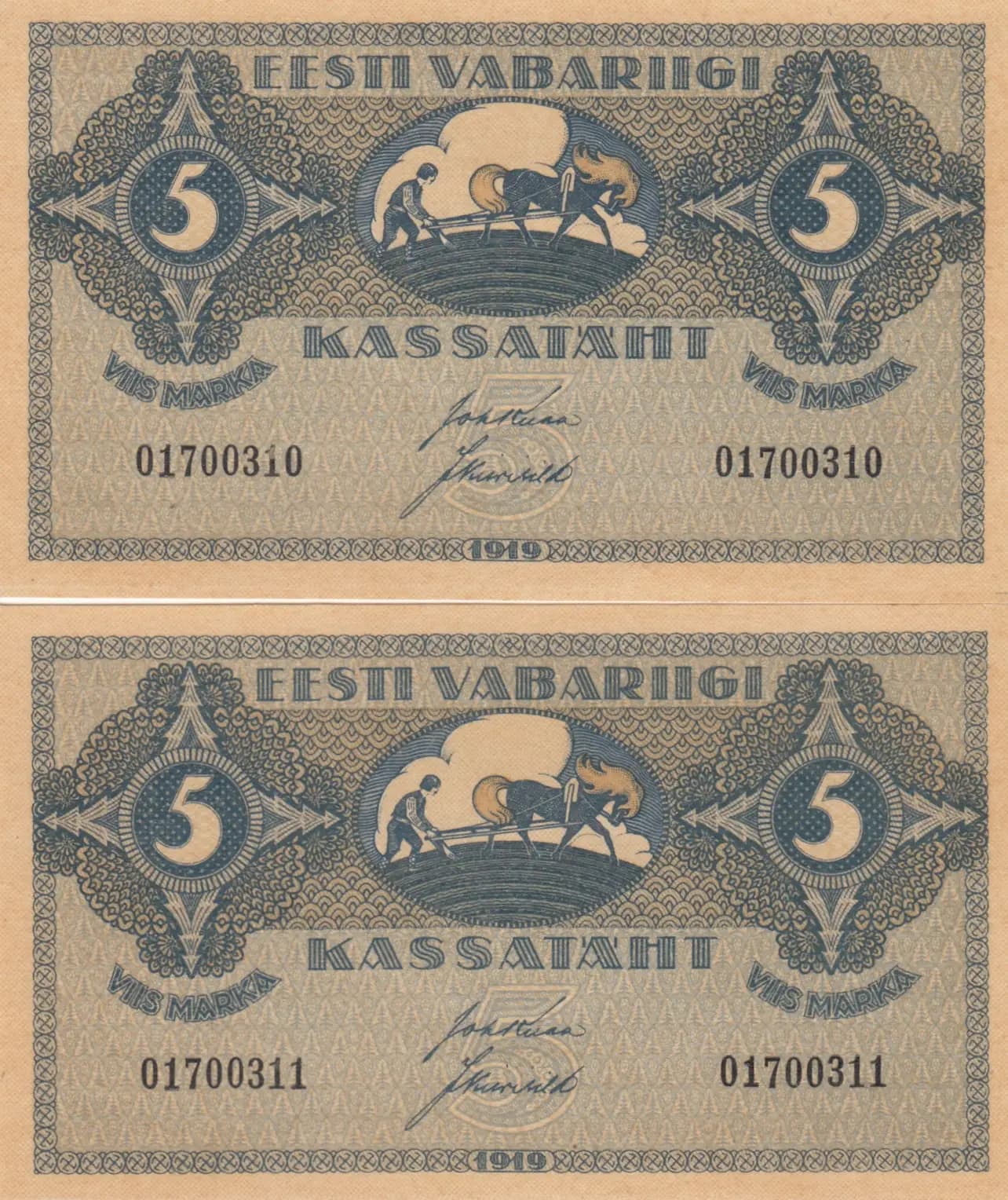
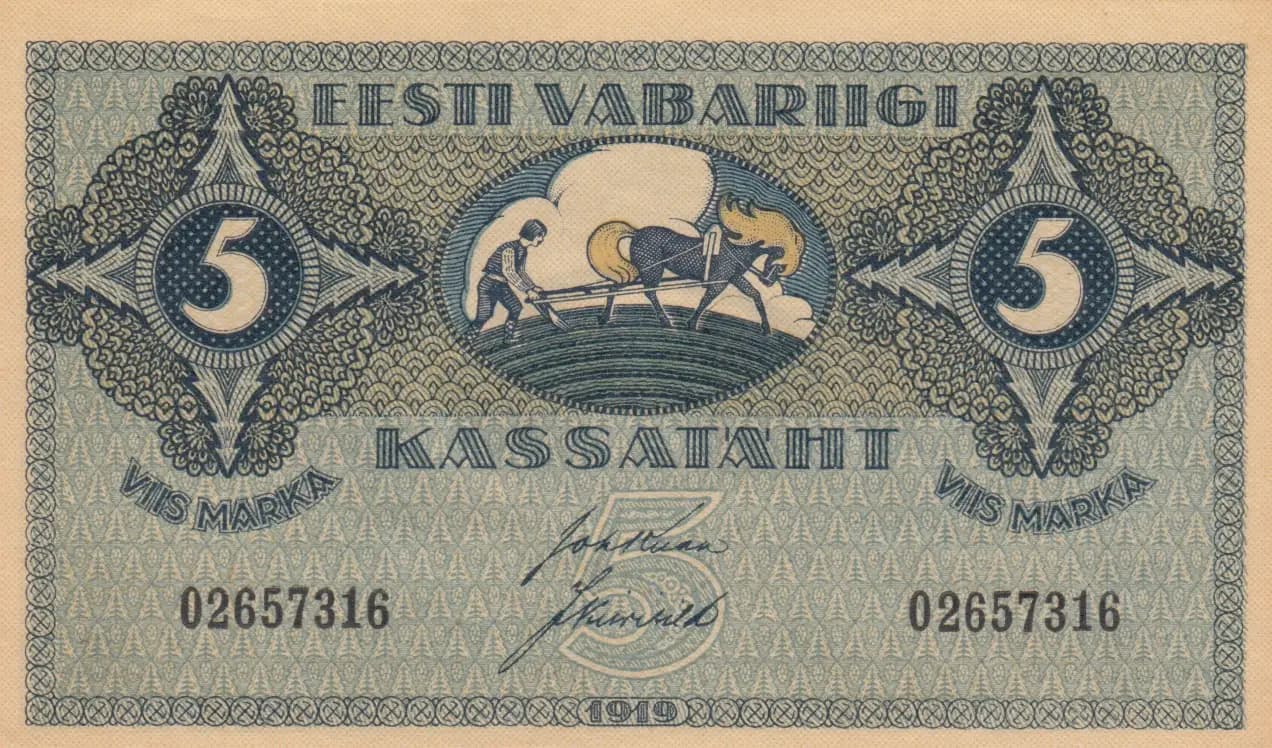
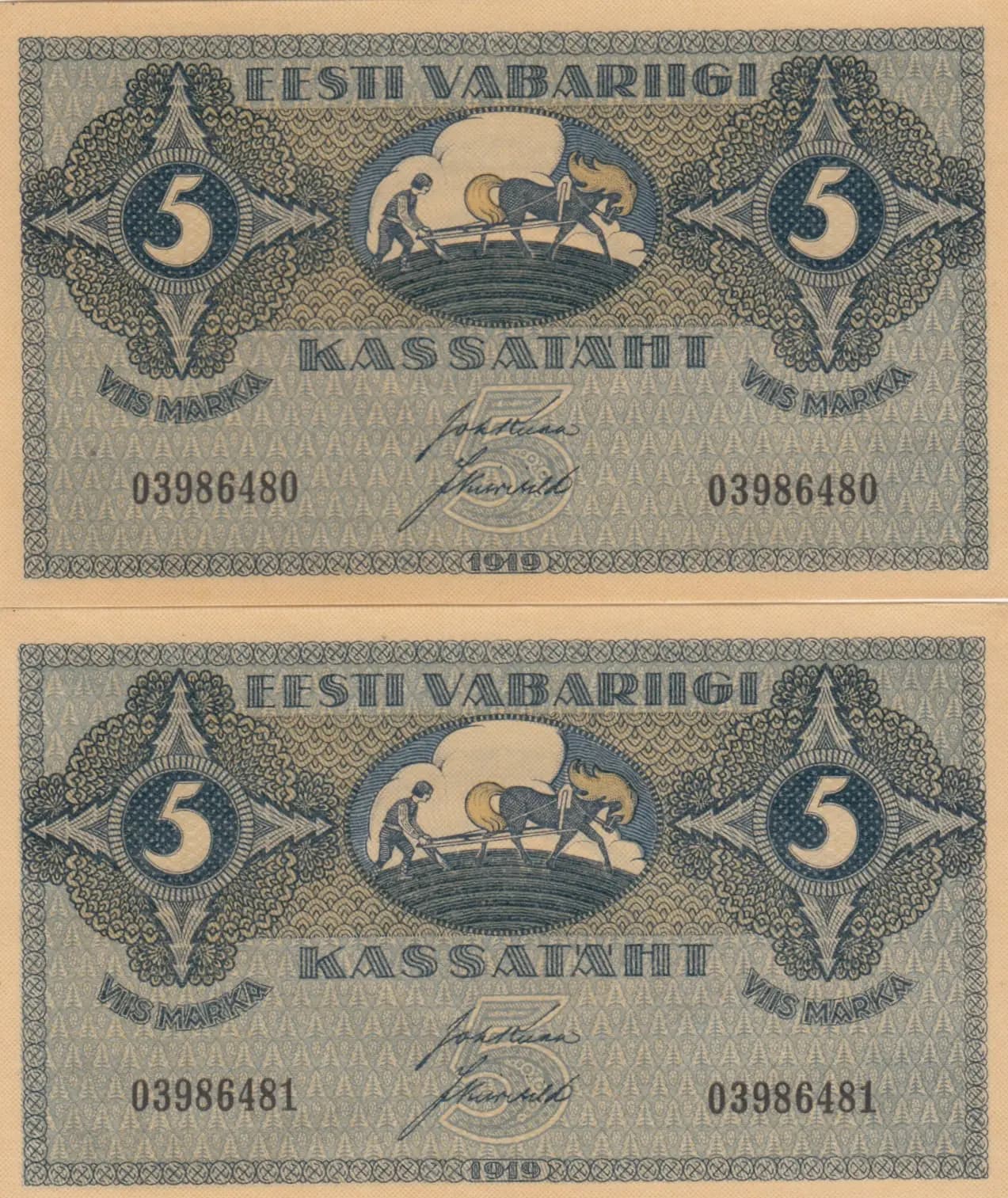
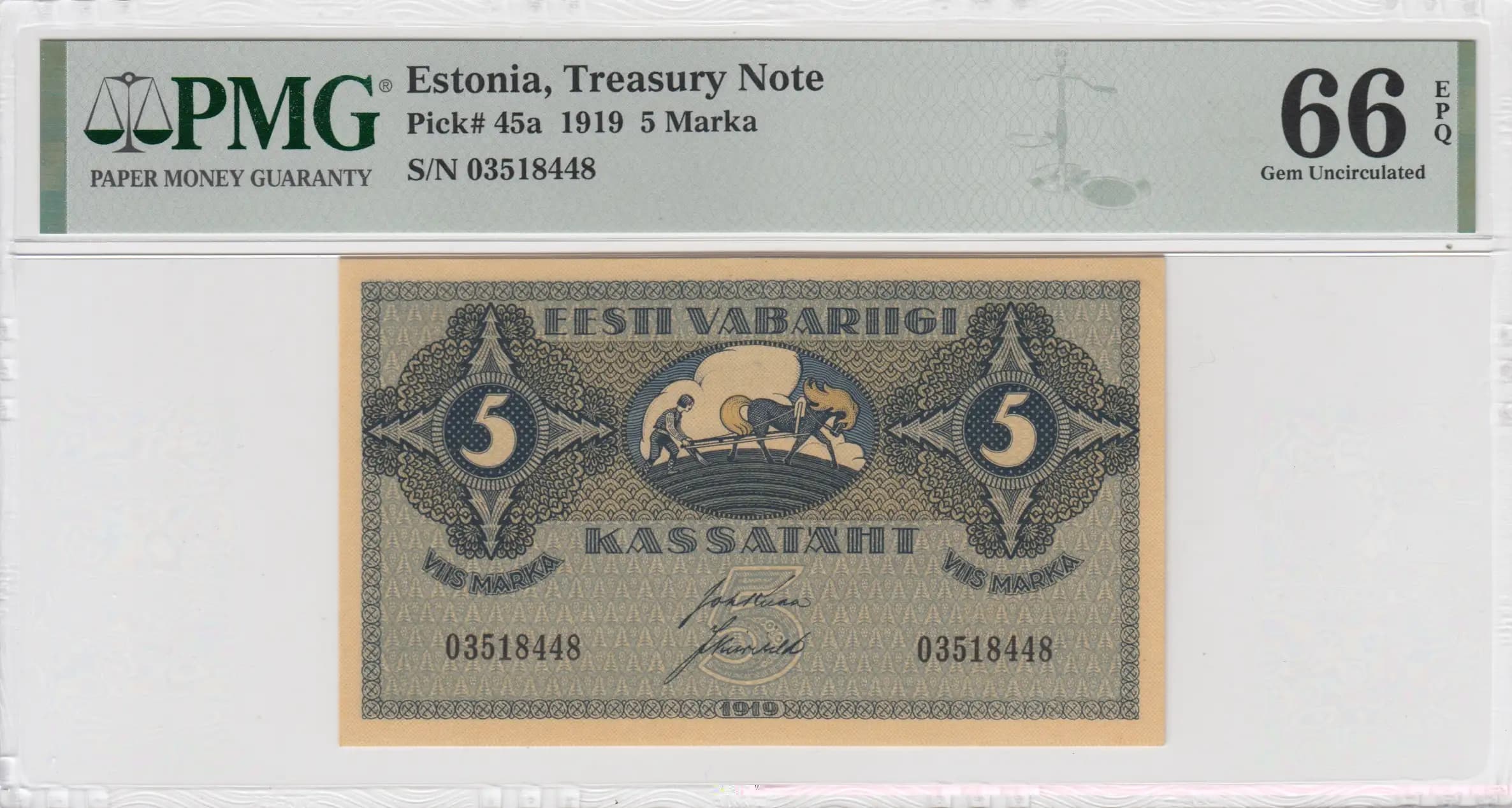
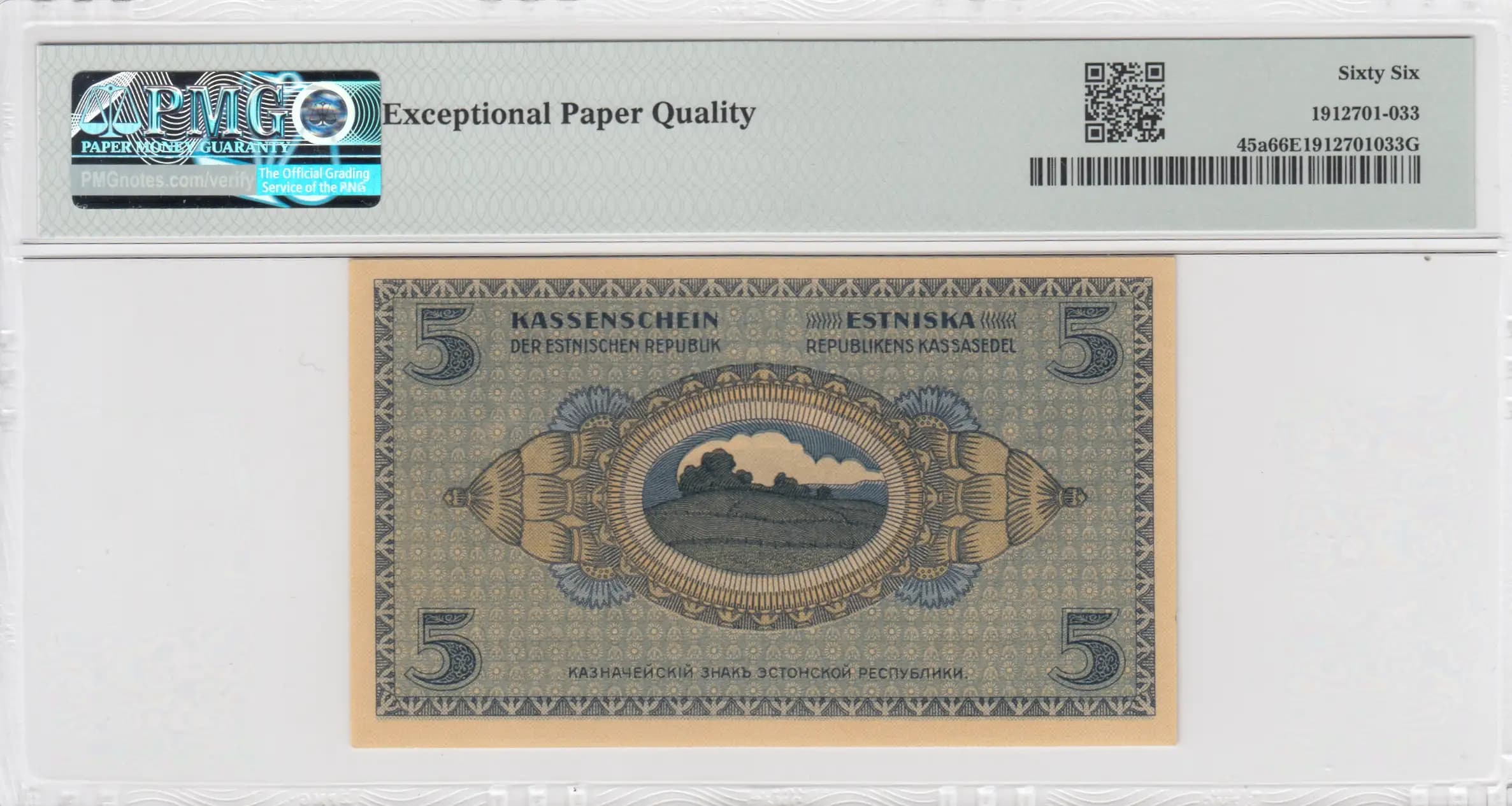
This is an exceptional example of Estonia's first independent currency, the 5 Marka Treasury Note from 1919, graded PMG 66 EPQ. The note displays pristine condition with sharp, clear printing throughout, featuring ornate geometric borders and fine guilloché background work typical of early 20th-century security printing. The bilingual design (Estonian, German, and Russian text) reflects Estonia's complex linguistic landscape during this transitional period of independence.
Common. The eBay market data shows consistent sales of this note in Fine to EF condition ranging from $3.25 to $29.62, with typical realized prices between $8-$20 for circulated examples. Even a PMG 64 example sold for $91.90 in 2019, indicating that while higher grades command premium prices, the note itself circulated widely and remains readily available to collectors. The 1919 date and standard issue designation (P-45a being the primary variant) confirm this was a regular, large-circulation issue from Estonia's Treasury.
Issued during Estonia's first year of independence from Russian Imperial rule, this 5 Marka note represents the Treasury of Estonia's effort to establish a new national currency. The agricultural imagery—featuring workers/laborers with equipment on the front and a pastoral landscape on the back—reflects Estonia's predominantly agricultural economy during the 1919-1928 marka period. The multilingual inscriptions (Estonian, German, and Russian) document the linguistic diversity of the newly independent Baltic nation during the immediate post-WWI era.
The front features a central circular medallion containing two figures engaged in labor with agricultural or industrial equipment, representing the working class and Estonia's productive economy. The design is framed by ornate geometric borders with radiating corner ornaments, and large denomination numerals appear in decorative diamond-shaped frames in the upper corners. The back displays a landscape vignette within an oval frame, depicting rolling terrain with vegetation, symbolizing Estonia's natural resources and rural character. Both sides feature extensive fine parallel line work (guilloché pattern) as a background security element, with the decorative border patterns repeated throughout. The note is printed in blue-gray and black on a cream/beige paper stock.
FRONT: 'EESTI VABARIIGI' (Estonian Republic), 'KASSATÄHT' (Treasury Note), 'VIS MARKA' (Five Marka), denomination numeral '5', year '1919', serial number '03518448'. BACK: 'KASSENSCHEIN' (German: Treasury Note), 'ESTNISKA' (Estonian), 'DER ESTNISCHEN REPUBLIK' (German: of the Estonian Republic), 'REPUBLIKENS KASSASEDEL' (Estonian: Republic's Treasury Note), 'КАЗНАЧЕЙСКИЙ ЗНАК ЭСТОНСКОЙ РЕСПУБЛИКИ' (Russian: Treasury Note of the Estonian Republic), denomination numeral '5'.
This note was produced using intaglio (engraving) printing, evidenced by the fine parallel line work, sharp definition of the geometric borders, and detailed rendering of the vignettes visible in both images. The guilloché background patterns and multi-color printing suggest work by a specialized security printer, likely a European firm experienced in banknote production. The precision of the line work and clarity of detail in PMG 66 condition strongly indicates professional security printing standards typical of early 20th-century central bank note production.
This note represents Pick catalog P-45a (regular issue, 5 Marka denomination). The visual analysis shows serial number 03518448, which appears to be from a standard production run. PMG records indicate two known varieties for this base Pick number: P-45a and P-45s (specimen). The bilingual/trilingual text (Estonian, German, Russian) on both sides is standard for this issue, reflecting the official language policy of the newly independent Estonian Republic in 1919. No overprints, date variations, or signature variants are visible in this example.