40 kopikat 1908
About This Note
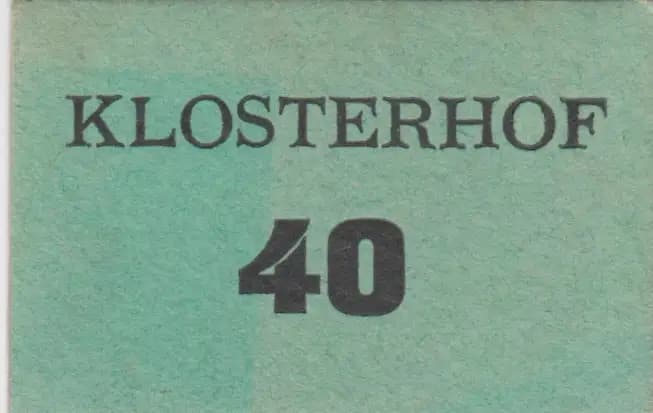
This is a rare emergency currency issue from Kloostri (Klosterhof), a village in western Estonia, denominated at 40 kopikat and dated 26 September 1908. The note features ornate Germanic typography typical of the Baltic German cultural sphere and includes an Estonian-language inscription, reflecting the multilingual heritage of early 20th-century Estonia. In AU condition, the note displays significant but expected aging with foxing and discoloration consistent with its 115+ year age, making it a notable example of Estonian local/emergency currency from the pre-independence period.
Rare. This note is unlisted in the Pick catalog, indicating it does not appear in standard philatelic references for Estonian currency. The extremely limited geographic issue (a single village in western Estonia), the specific historical moment (1908, Russian imperial period), and the apparent non-standardized nature of the emission all point to a very restricted print run. The survival of this example in AU condition further underscores its rarity, as local emergency issues were typically heavily circulated and discarded rather than preserved.
This banknote was issued during a period of Russian imperial rule over Estonia, as evidenced by the kopikat denomination (Russian currency subunit). The 1908 date places the issue during a time of economic and political tension in the Russian Empire, when local communities sometimes issued emergency currency. The bilingual German-Estonian inscriptions reflect Kloostri's position in the culturally mixed Baltic region, where Baltic German landowners and Estonian peasants coexisted, and the reference to 'Klosterhof' (Monastery/Cloister Court) suggests the note may have been backed by local estate authority.
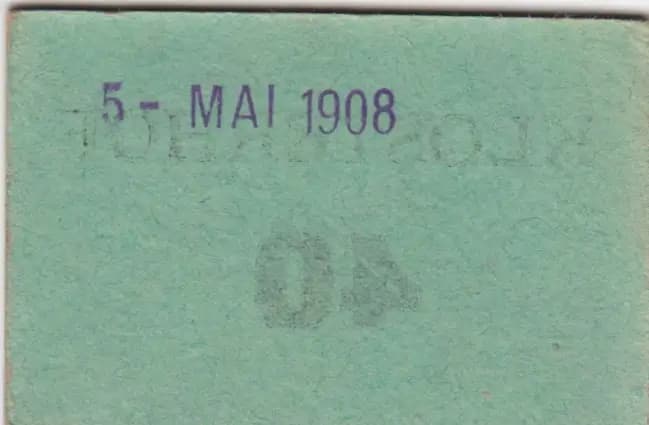
The front of this note features a title-page style layout in the tradition of early emergency currency documents. The design employs ornate Gothic/Old English script typography characteristic of Germanic printing traditions prevalent in the Baltic region during this period. The denomination '40' is centrally positioned in large numerals, establishing clear face value. The Estonian-language inscription below the German title suggests dual cultural authority, possibly indicating local community or estate backing. The back is largely blank save for a date stamp impression, typical of emergency issues that prioritized rapid production over elaborate design. The uniform tan/beige coloration and lack of complex security features reflect the modest printing capabilities and urgent circumstances of local currency production.
Front Side: 'Klosterhof' (German: Cloister Court/Monastery Court); '40' (denomination); 'Ilma päewa templeta ei masja' (Estonian: 'Without a day's temple there is no land/property' - likely a local motto or proverb). Back Side: '26 SEPT 1908' (date of issue: 26 September 1908).
Letterpress printing, characteristic of early 20th-century emergency currency issues. The ornate typography and date stamp impression are consistent with local or regional printing facilities rather than official state currency printers. The simplicity of the design and absence of complex security features (watermarks, filigree work) indicate this was produced quickly by local printers to address immediate liquidity needs.
This specific variety is dated 26 September 1908 with a 40 kopikat denomination and identified 'Klosterhof' (Kloostri) as the issuing location. As an unlisted Pick variety, the note may exist in other denominations or with different dates from the same issuer. No other varieties are identifiable from the available visual information, though further research into Estonian local currency archives may reveal additional related issues from this period or issuer.