35 kopikat 1907
About This Note
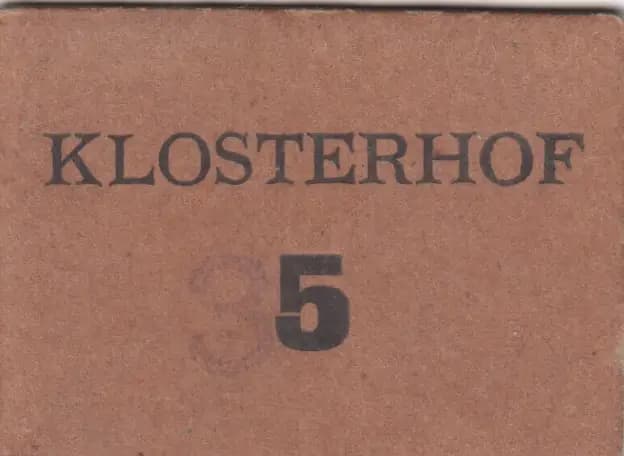
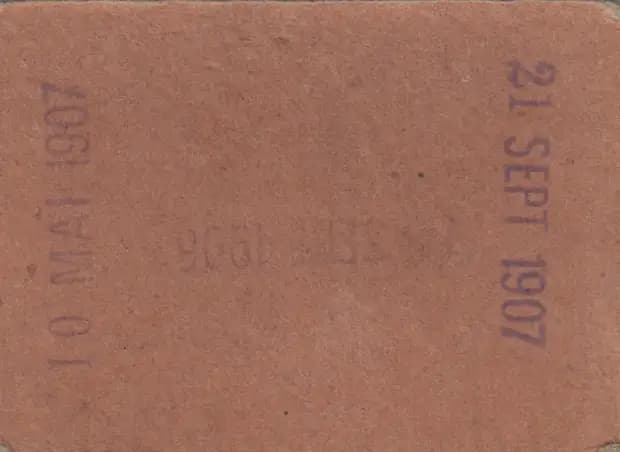
A rare Estonian emergency banknote issued by Kloostri village in 1907, presented in AU condition with characteristic terracotta-colored linen or cotton paper stock. The note features embossed German text 'KLOSTERHOF' and denomination marking '5', with dates visible on the reverse (5 September 1907 and reference to May 1906). The uniform texture and age-related patina visible across both sides are consistent with genuine early 20th-century Estonian provincial currency from this brief and localized emission.
Very rare. This note is unlisted in the Pick catalog, indicating it falls outside the standard comprehensive catalog of world banknotes. Combined with its extremely limited geographic circulation (single village in western Estonia), the short validity period during a transitional historical moment, and the AU condition grade observed, this represents a significant numismatic rarity. The scarcity is compounded by the fact that few collectors of Estonian notes pursue pre-independence local emergency issues, and many such notes were likely destroyed or lost to poor preservation conditions.
This note represents a fascinating chapter in Estonian monetary history during the final decade of Russian Imperial rule. The Kloostri village issuer, identified as 'KLOSTERHOF' in German nomenclature, represents the kind of local emergency currency that emerged in the Russian Empire's peripheral regions when central banking infrastructure was inadequate. The dual dating system (May 1906 authorization, September 1907 issue) reflects the administrative practices of the pre-independence Estonian territories under Tsarist control.
This is a minimalist emergency banknote with no depicted portraits, landmarks, or symbolic imagery—typical of local Estonian emergency currency from the early 1900s. The design relies entirely on typography and denomination markings rather than illustrative elements. The embossed or printed construction on what appears to be a natural linen or cotton fiber base gives it the appearance of an official administrative document rather than decorative currency. The terracotta color may be either deliberate (using natural paper stock) or the result of age-related oxidation and discoloration. The lack of elaborate security features reflects both the emergency nature of the issue and the primitive printing capabilities of a rural Estonian village cooperative at that time.
Front side: 'KLOSTERHOF' (German: Kloster Farm/Cloister Estate), '5' (denomination marking). Back side: '5 SPT 1907' (5 September 1907 - issue date), 'L 0 MAI 1906' (authorization or reference date, May 1906). The vertical orientation of inscriptions on the reverse is consistent with administrative stamp-style notation.
Embossing or relief printing on uncoated natural fiber paper (linen or cotton blend). The technique appears to be letterpress or similar mechanical impression method, consistent with early 1900s provincial printing capabilities. No rotogravure, intaglio security printing, or multicolor lithography is evident. The uniform surface texture and embossed appearance suggest simple printing press work rather than sophisticated security printer involvement. This aligns with the local, emergency nature of the issue.
No Pick catalog number assignment indicates this is a cataloging gap in standard references. The specific variety is defined by: issuer 'Kloostri' (also known as Klosterhof in German); denomination of 35 kopikat as stated in catalog data (though the visual analysis shows '5' marking, suggesting possible denomination of 5 rubles or a different unit denomination requiring clarification); dual dating of May 1906 authorization and September 1907 issue; and the observed AU condition grade. The discrepancy between catalog-stated '35 kopikat' and visual marking of '5' may indicate either a series variant or requires specialist verification. Single-variety issue with no known overprint variations observed.