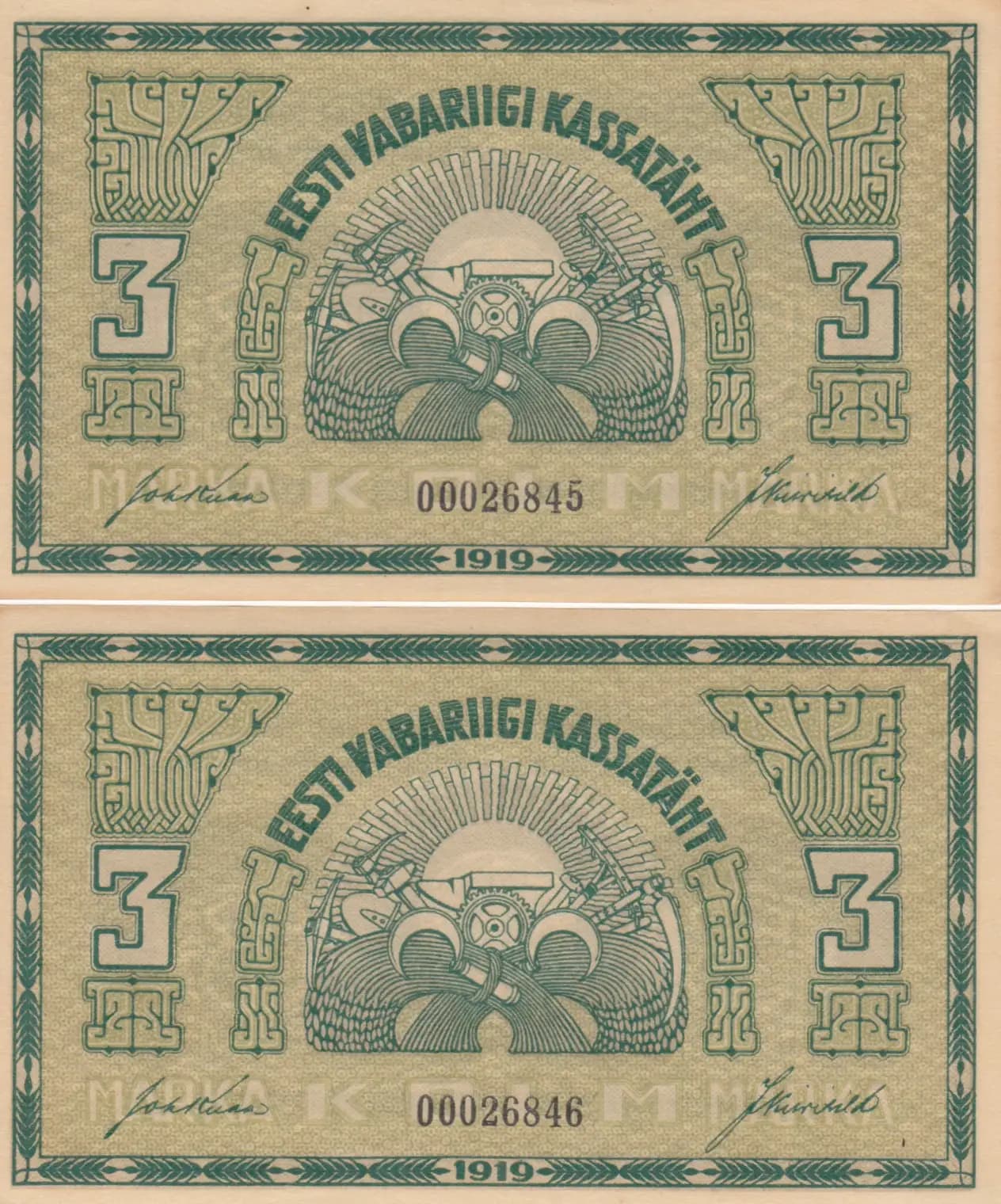
3 marka 1919 specimen
Market Prices
About This Note
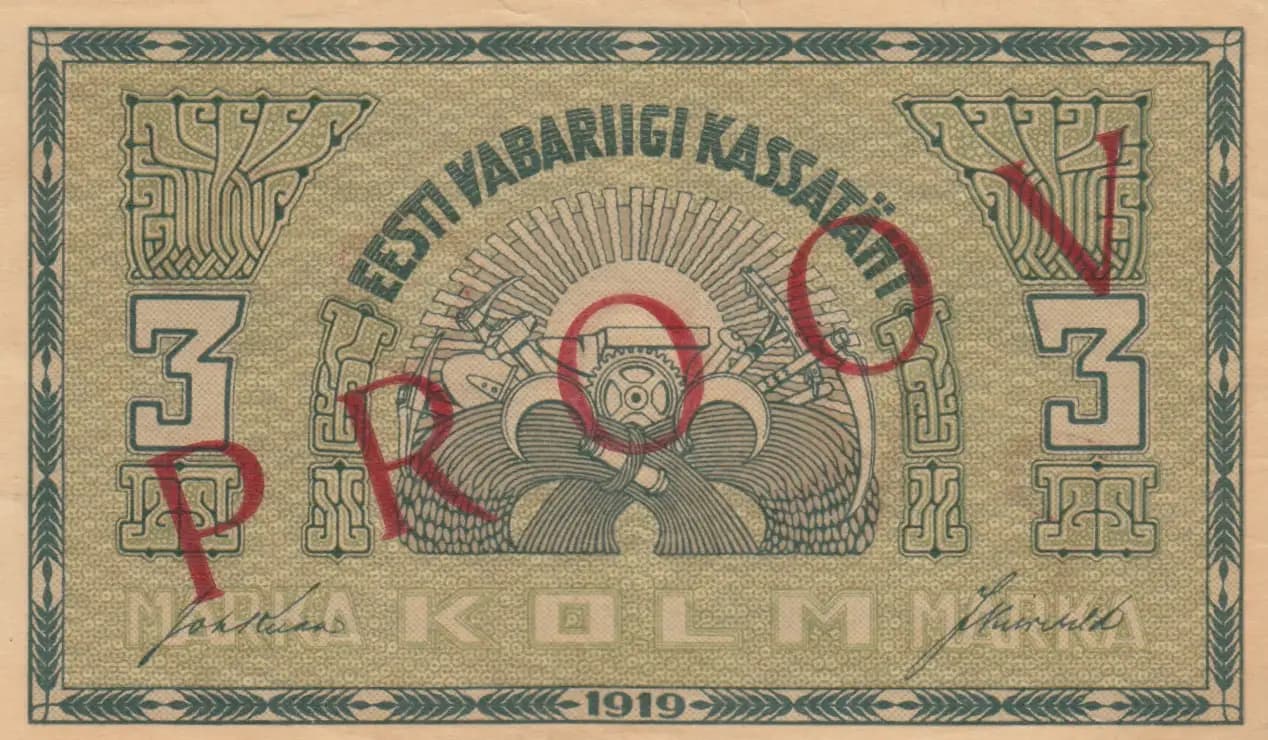
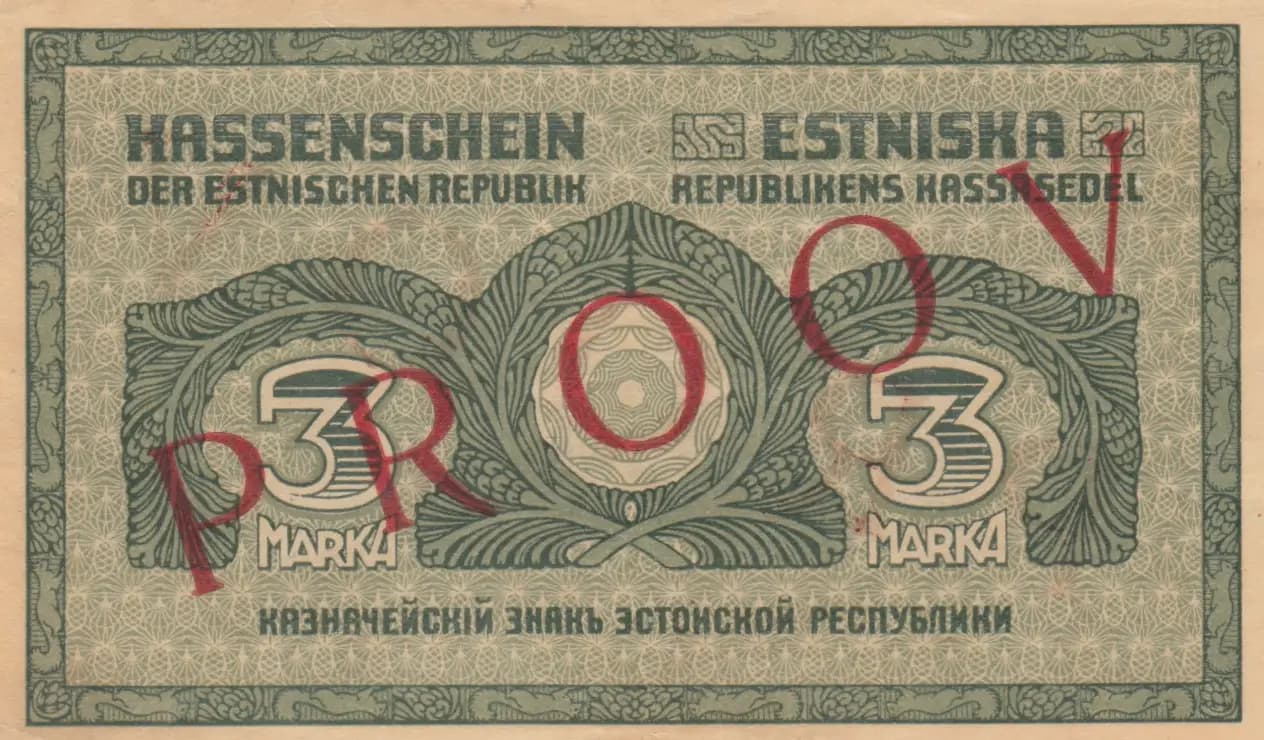
This is an Estonian Treasury Note (Kassenschein) for 3 Marka from 1919, graded AU as a specimen note. The banknote features an elegant beige and cream palette with green and dark teal ornamental borders, centered around an ornate eagle emblem with radiating sunburst design on the obverse and a circular medallion on the reverse. Red specimen cancellation marks are prominently displayed across both sides, indicating this was an unissued presentation or archive piece from the early Estonian Republic's first currency issuance.
Common. While this is an early Estonian note from 1919, specimen notes from this period appear regularly in the marketplace at modest valuations. eBay price tracking data shows circulation examples trading between $15-25 USD, and even uncirculated specimens at $80-180 USD, with some listed higher ($275 USD maximum). The AU specimen grade represents the middle-to-upper range of specimen note pricing. Specimen notes by definition were not widely circulated, but they were produced in sufficient quantities for distribution to banks and archives, making them relatively common in collector channels compared to truly rare early emissions.
Issued during Estonia's declaration of independence in 1919, this note represents the Treasury of Estonia's first attempt at establishing a national currency following the collapse of Tsarist Russian authority. The multilingual inscriptions (Estonian, German, and Russian) reflect the complex linguistic and political landscape of the newly independent Baltic state during the immediate post-WWI period. The eagle emblem with sunburst design symbolizes the national aspirations and sovereignty of the fledgling Estonian Republic during this tumultuous period of state-building and currency establishment.
The 3 Marka note displays a dual-design composition reflecting early 20th-century European banknote aesthetics. The obverse features a central eagle emblem rendered in an ornate heraldic style with fully spread wings radiating outward in a sunburst pattern—a classical symbol of national sovereignty and strength. Large denomination numerals '3' in outlined style appear in opposite corners. The reverse maintains thematic consistency with an ornate circular medallion at center, possibly representing a wreath or floral/geometric medallion design typical of treasury notes. Both sides employ intricate line engraving throughout the background, with geometric patterns in the decorative borders framing the central designs. The color scheme of beige/cream fields with green and dark teal ornamental accents creates visual hierarchy and was typical of early Estonian currency design.
FRONT: 'EESTI VABAARIIGI KASSA' (Bank of Estonian Republic); '3' and '1919' (denomination and year); 'K.D.L.M' (likely abbreviation for printing/authorization details). BACK: 'KASSENSCHEIN' (Treasury Note/Cashier's Note in German); 'DER ESTNISCHEN REPUBLIK' (Of the Estonian Republic); 'REPUBLIKENS KASSA-SEDEL' (Republic's Treasury Note in Estonian); '3 MARKA' (denomination); 'КАЗНАЧЕЙСКИЙ ЗНАК ЭСТОНСКОЙ РЕСПУБЛИКИ' (Treasury Note of the Estonian Republic in Russian); 'ESTNIGRA' (Estonia reference).
Intaglio engraving (line engraving) on banknote paper, evidenced by the fine detail work, intricate background patterns, and raised impression characteristics visible in the visual analysis. The multi-color printing (green, teal, and base color separation) suggests separate plate work typical of security printing of the 1919 period. The specimen was likely produced by a European security printer specializing in currency production, possibly based in Germany or Scandinavia given Estonia's regional connections and the German language inscriptions present.
This note is specifically cataloged as a specimen (Pick P-44s), indicated by the red cancellation marks prominently displayed across both obverse and reverse. Specimen notes of this issue typically feature the red overprint/cancellation marks as an anti-counterfeiting and archive-marking measure. No signature varieties or date variations are apparent from the visual analysis of this particular example, though related circulation issues (Pick 44) may exist with varied signatures or security features. The K.D.L.M abbreviation appears on this specimen but its full meaning and whether it varies on circulation notes would require additional research into Estonian Treasury documentation.