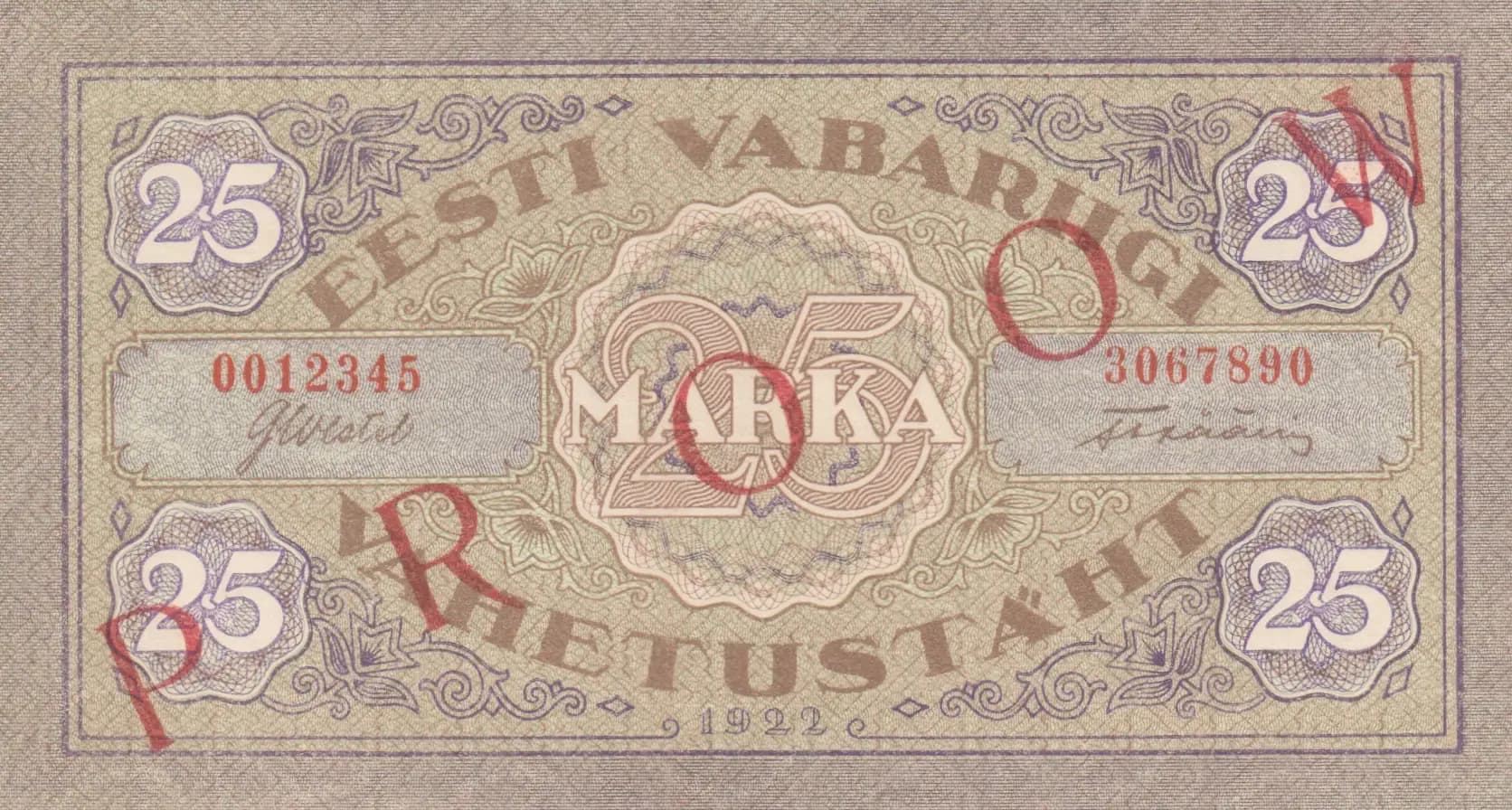
25 marka 1922 specimen, uniface
About This Note
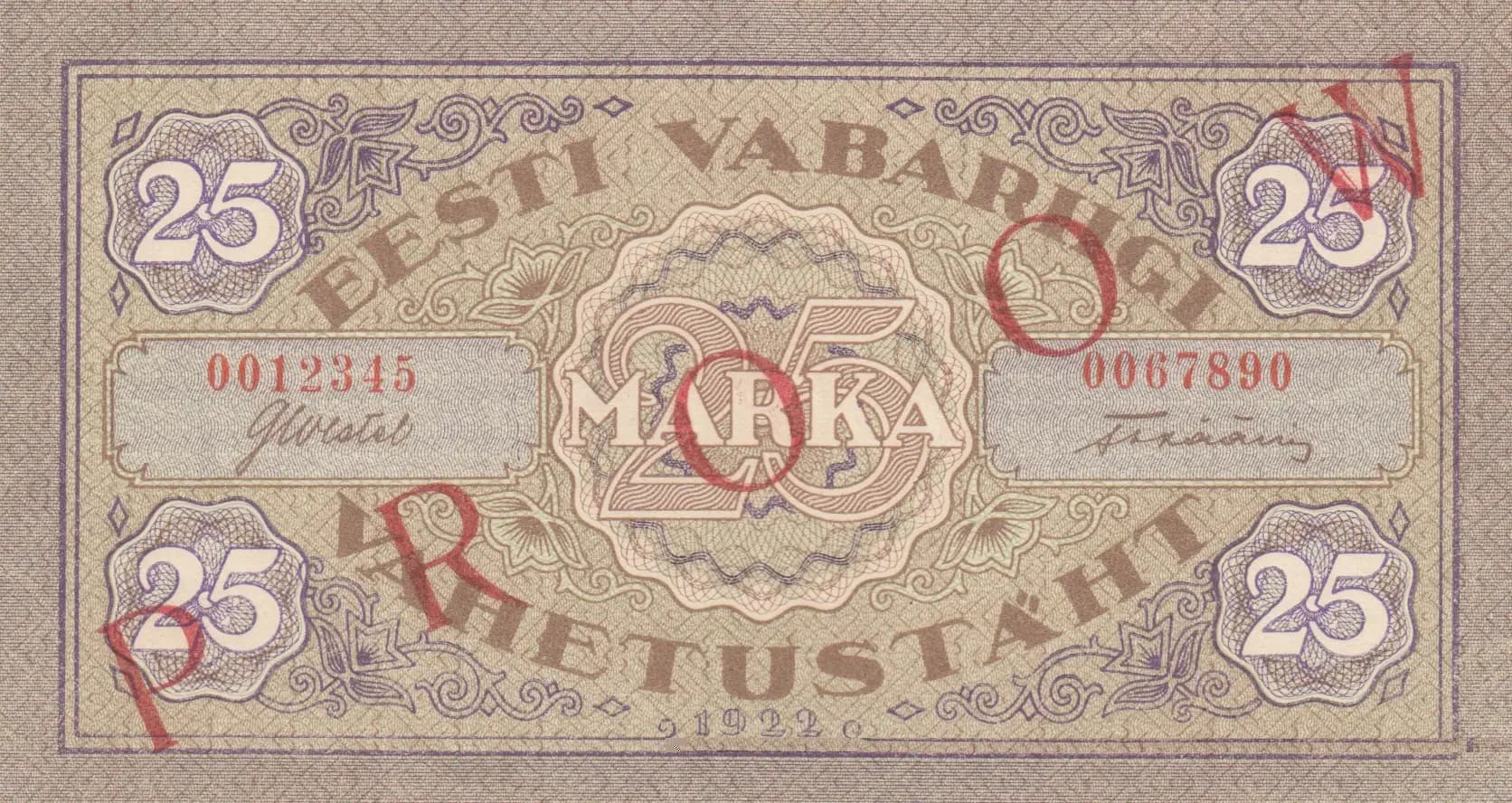
This is a 25 marka specimen banknote from Estonia's 1922 issue, presented in uncirculated condition with visible specimen cancellation markings. The note features an exceptionally ornate design with symmetrical purple and brown decorative elements, corner denominations, and a prominent central cartouche. The specimen overprints and light aging patina visible on the cream-colored paper are consistent with archive storage of an early Estonian Republic banknote.
Common. The 1922 Estonian 25 marka series was produced in standard quantities for the newly established Republic of Estonia's currency circulation. While specimen notes of this era command modest premiums over regular issued notes due to collector interest in early Estonian currency, the Pick-54as2 specimen designation indicates this is a cataloged specimen variant rather than an exceptionally scarce issue. Early Estonian banknotes, while historically significant, were generally produced in sufficient quantities to be considered common in the numismatic market.
This 25 marka note was issued by the Treasury of Estonia (Eesti Vabariigi Pesti Kirst) in 1922, during the nascent period of the Estonian Republic following independence in 1918. The ornamental design with its coat of arms cartouche and classical scrollwork reflects the nation's effort to establish a distinct visual identity and financial credibility during a period of significant European currency instability following World War I.
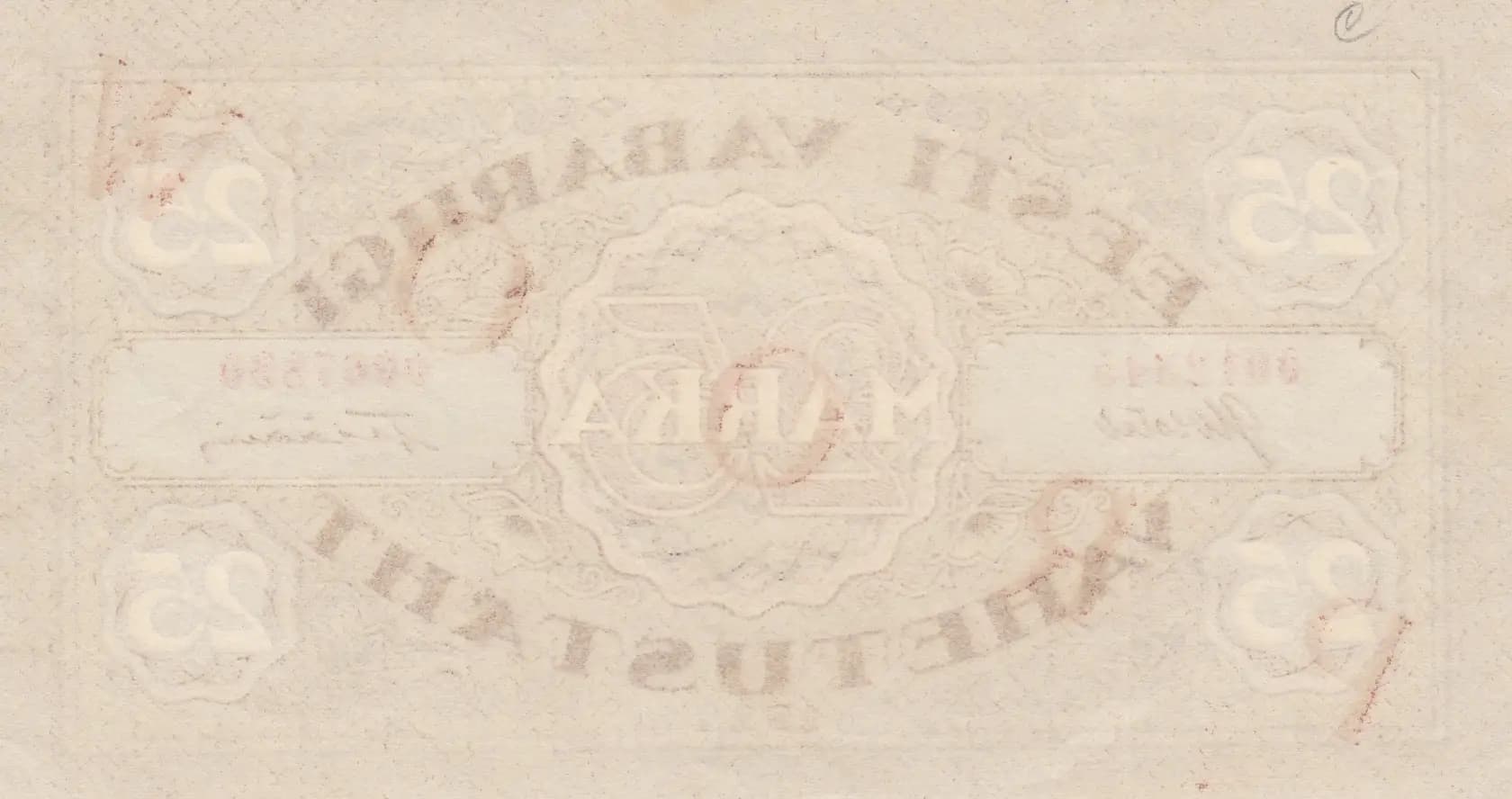
The obverse features a highly symmetrical, ornamental design characteristic of early 20th-century European currency production. The central element consists of an elaborate cartouche containing the denomination '25 MARKA' with what appears to be a heraldic coat of arms or national emblem in relief. Corner ornaments in all four corners display the denomination within decorative frames of scrollwork and floral patterns. The overall palette employs beige/cream as the base with purple/violet and brown inks for the decorative elements and red ink for serial numbers and specimen markings. The reverse is minimal, with only very faint embossed impressions of ornamental designs and possibly watermark-related imagery, suggesting a uniface design or minimal back printing common to some specimen notes.
Front side: '25' (denomination in all four corners), 'PESTI VARA' (Estonian Treasury), 'MARKA' (currency denomination), 'PESTI KIRST' (Estonian Treasury), '1922' (date of issue), serial numbers '0012315' and '0067890' in red ink. Back side: '25' (visible very faintly). The inscriptions are primarily in Estonian, reflecting the newly independent nation's linguistic identity.
The note employs intaglio engraving (evidenced by the fine line work, deep scrollwork patterns, and precise corner ornaments visible in the image). The detailed embossing on the reverse and the crisp denomination frames are characteristic of security printing techniques from this era. The multiple color application (cream, purple, brown, red) indicates separate passes through the printing press, a standard practice for currency production in the 1920s. The specimen overprints in red ink were likely applied post-printing as part of the archival marking process.
This note is specifically identified as Pick-54as2, indicating it is a specimen variety (the 's' designation in Pick numbering denotes specimen notes). The uniface designation confirms the back side contains minimal or no printed design, which is consistent with the visual analysis showing only faint embossed patterns on the reverse. The red specimen overprint markings visible on the note confirm its specimen status. Serial numbers '0012315' and '0067890' are present, though specimen notes often carried different numbering schemes than circulation issues.