25 marka 1922 specimen
About This Note
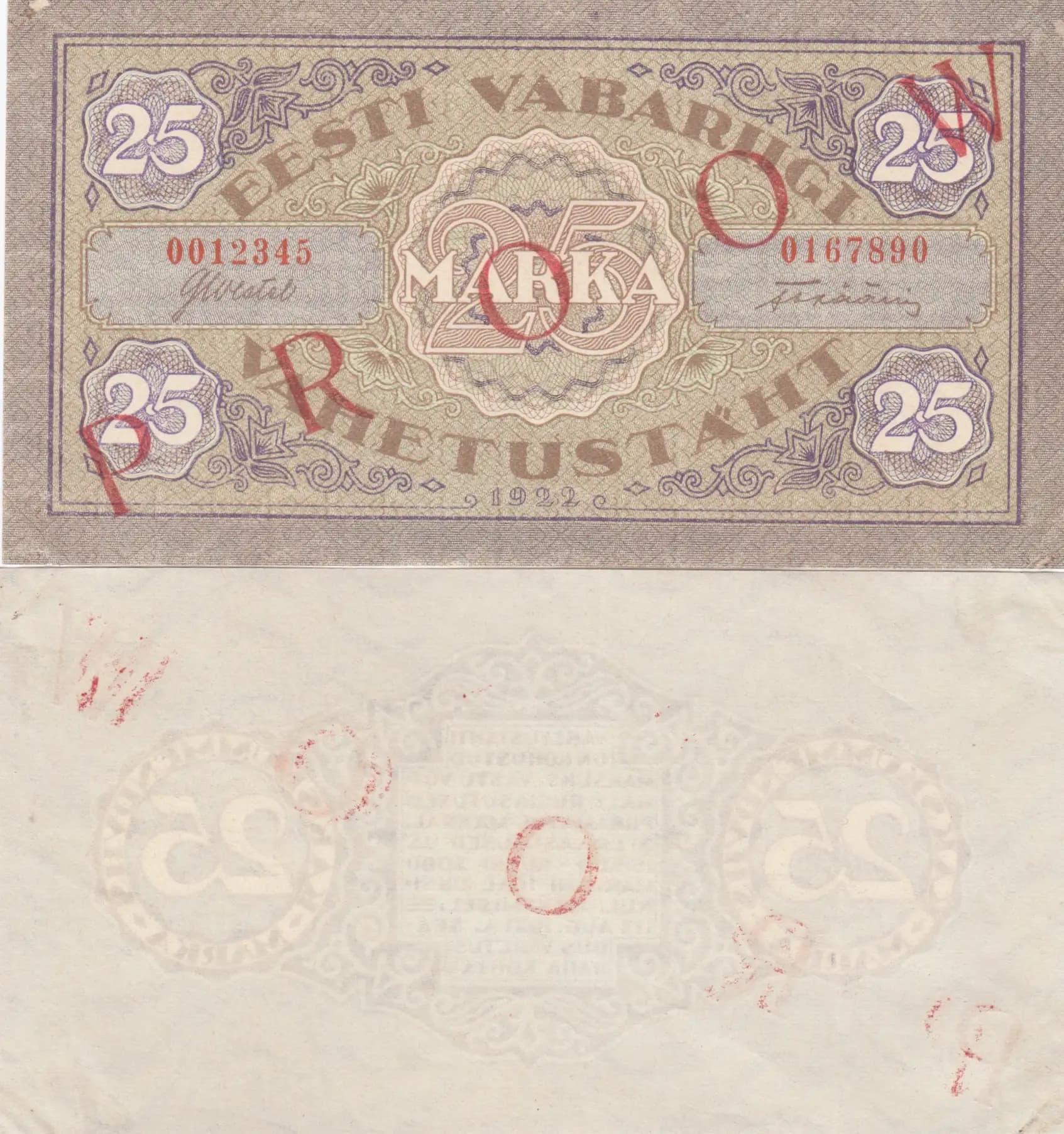
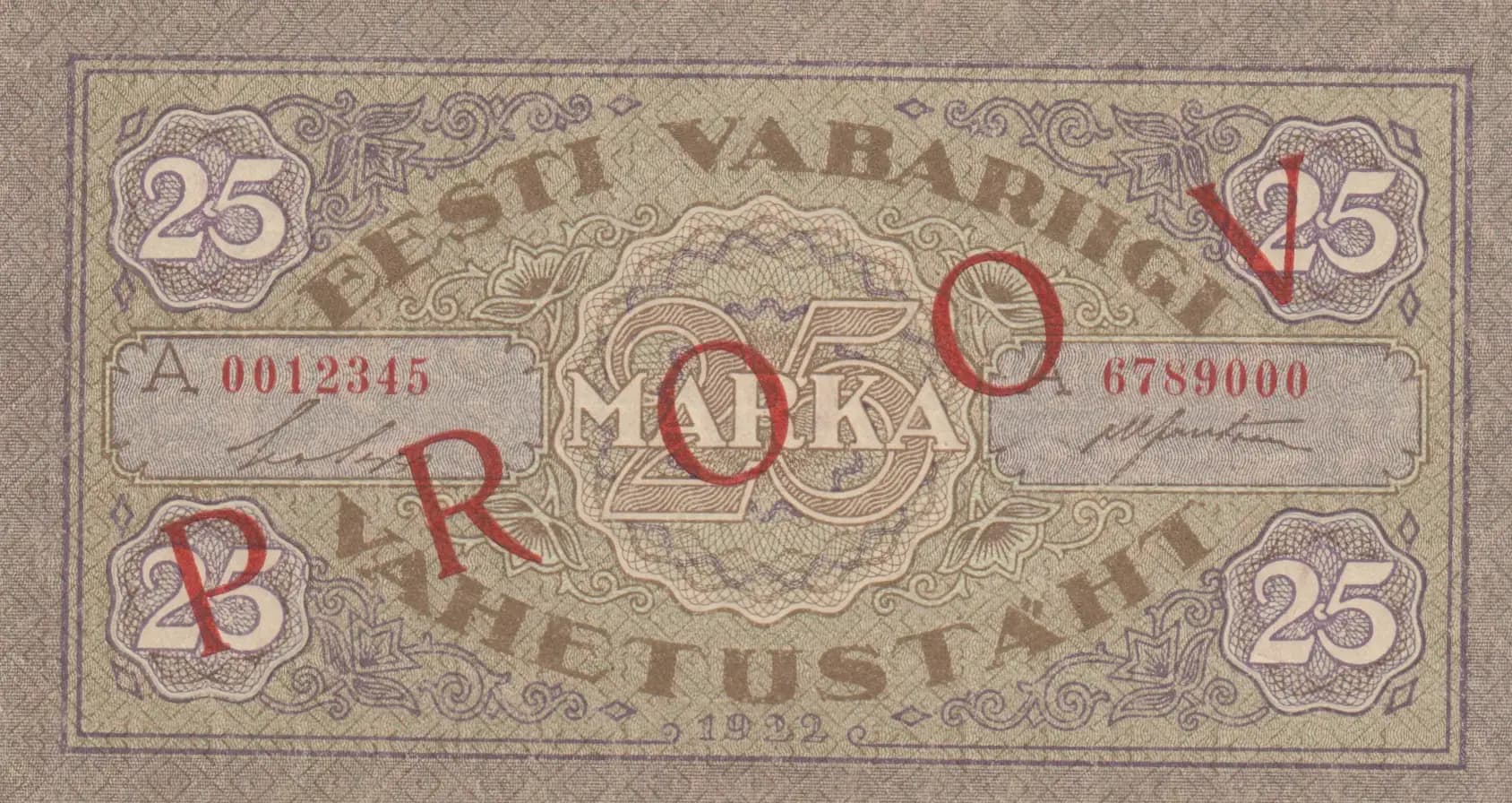
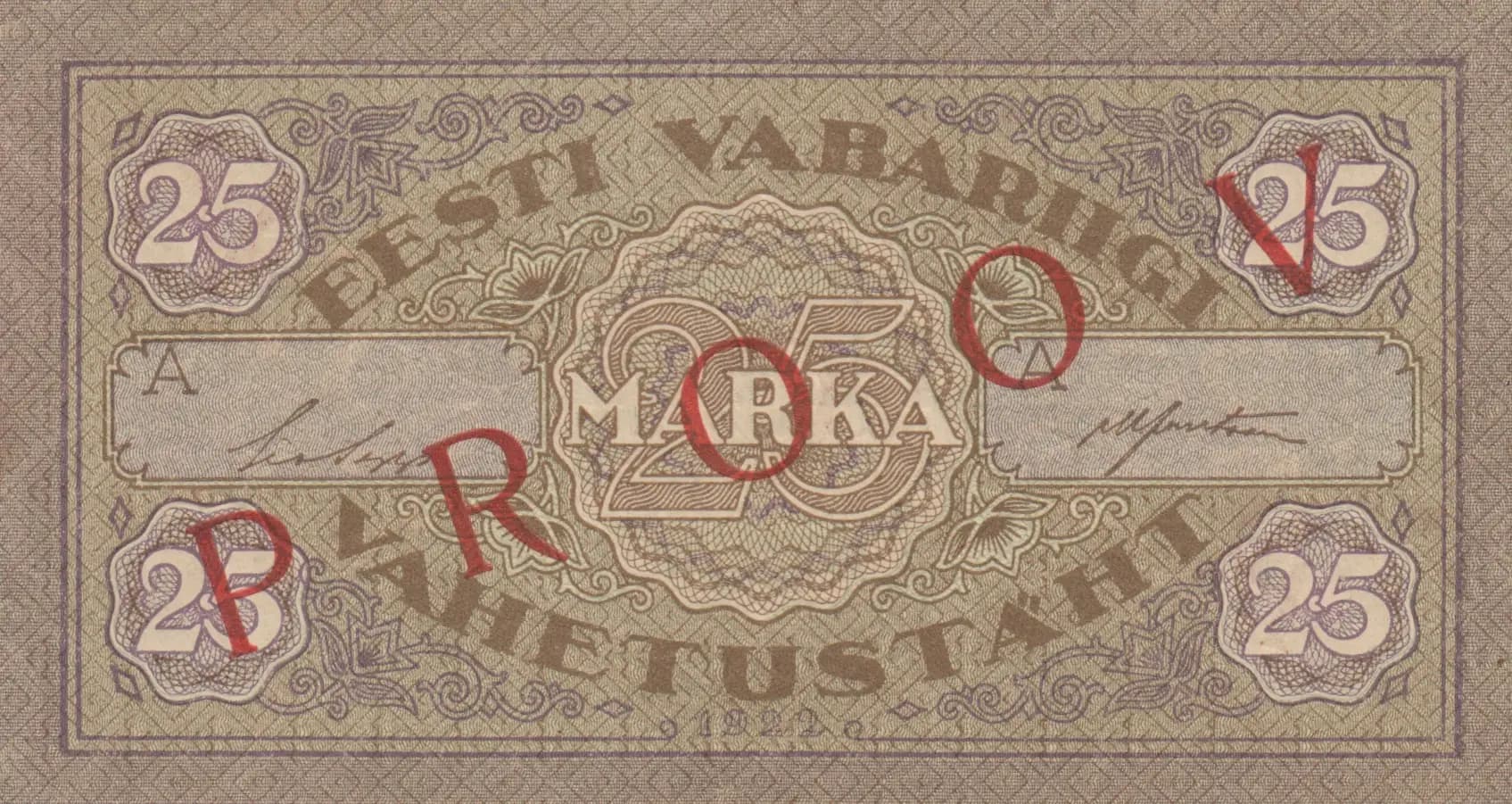
This is an uncirculated 1922 specimen note of 25 marka from the newly independent Estonian Republic, featuring exceptional ornate engraving with geometric and floral border designs in beige, tan, purple, and red. The note bears the red diagonal 'SPECIMEN' overprint typical of presentation pieces, and exhibits sharp, crisp printing with no signs of wear, creasing, or deterioration. As a specimen from the early Estonian currency period, this note represents an important artifact from the first years of Estonian independence and monetary sovereignty.
common. The 25 marka denomination from 1922 is a standard issue from the early Estonian Republic period. While specimen notes are less common than circulation notes, specimens from this era are regularly encountered in the numismatic market. No evidence of restricted print runs, early recall, or extreme scarcity is indicated by the Pick catalog listing or standard references. The denomination and year are neither from a particularly short-lived series nor subject to documented collector premiums that would suggest rarity.
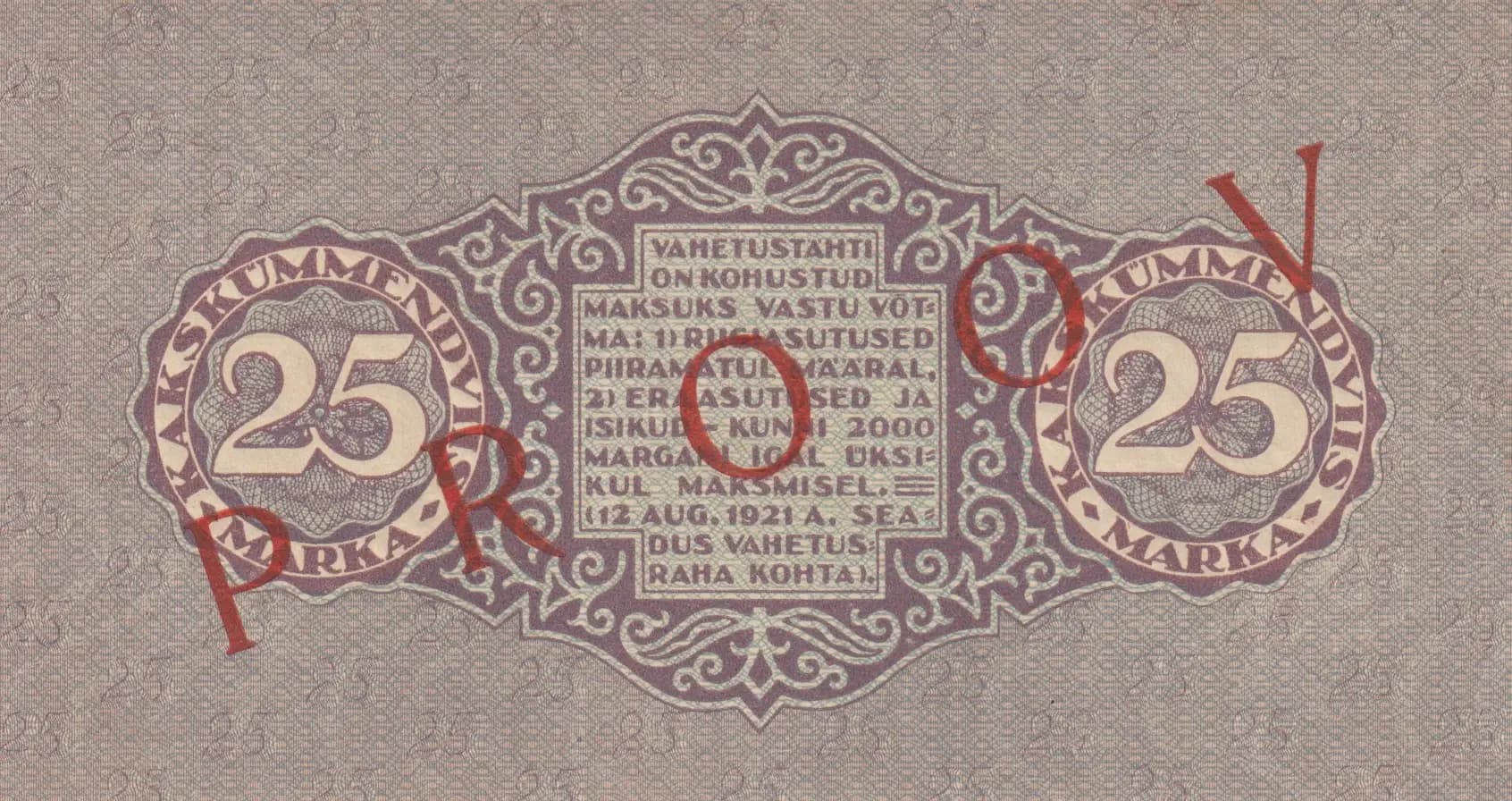
This 25 marka note was issued in 1922 by the Treasury of Estonia (Eesti Vabariik), during the period immediately following Estonia's declaration of independence in 1918 and the establishment of its national monetary system. The reverse contains text referencing the August 12, 1921 law regarding currency exchange, reflecting the legislative framework that governed the new nation's finances. The ornate design and specimen marking indicate this was produced for presentation and record-keeping purposes by the young Estonian state as it established its financial institutions and currency credibility on the international stage.
The 25 marka note employs a classical early 20th-century design aesthetic with no portrayed portraits or specific landmarks. Instead, the security and decorative scheme relies entirely on sophisticated ornamental engraving: elaborate geometric and floral border patterns frame both sides; the denomination appears in four decorative corner cartouches on the front and in circular medallions on the reverse; a prominent hexagonal frame on the front contains the 'MARKA' text; and the reverse features a rectangular text block within an ornate decorative frame containing the legal provisions governing the note's use. The symmetrical, intricately detailed borders serve both aesthetic and security functions, with fine-line engraving throughout creating visual complexity intended to deter counterfeiting. The color palette of beige, tan, purple, red, and brown tones is consistent across both sides, presenting a unified and official appearance appropriate for a newly sovereign nation's currency.
FRONT: 'EESTI VABARIIK' (Estonian Republic) - main heading; 'MARKA' (Marka/Mark - currency denomination) in ornate hexagonal frame; '25' (denomination numeral); 'SPECIMEN' (red overprint, English-language designation). BACK: 'MARK' and 'MARKA' (denomination designation in circular medallions); 'AKUKUMMID' (State); Legal text reading approximately 'VAHETUSTAHTI ON KOHUSTUD MAKSUKS VASTU VOI TAMAI PIIRINA TUL AARAAL. 21 ER ASUT SED JA ISIKUD KUN IT 2000 MARGA IL OKSI KUL MAKSMISEL' (currency exchange obligation and restriction text regarding state and individual payment limits of 2000 marka); '112 AUG. 1921 A. SEA ZDUS VAHETUS RAHA KOHTA' (reference to August 12, 1921 Law Regarding Currency Exchange); 'SPECIMEN' (red overprint).
The note exhibits characteristics of intaglio (engraved) printing, evidenced by the fine, sharp line work visible throughout the ornamental borders, the crisp detail in the decorative cartouches and frames, and the precision of the denomination numerals and text. The red 'SPECIMEN' overprint appears to be applied separately, consistent with specimen marking practices. While specific printer attribution is not definitively documented in the available catalog data, Estonian banknotes of this period were typically produced by established European security printers; the quality of engraving suggests professional currency production standards.
This note is specifically identified as Pick P-54cs2, where the 'cs2' designation indicates it is the second specimen variety catalogued for this pick number. The red diagonal 'SPECIMEN' overprint is the defining characteristic of this variety. The note may be distinguished from circulation issues (P-54c) by this overprint marking and its pristine condition, typical of never-circulated specimen pieces prepared for official presentation or archival purposes. No variable elements such as differing signatures, serial number prefixes, or printer marks distinguishing additional varieties are noted in the visual analysis.