25 marka 1922 specimen
About This Note
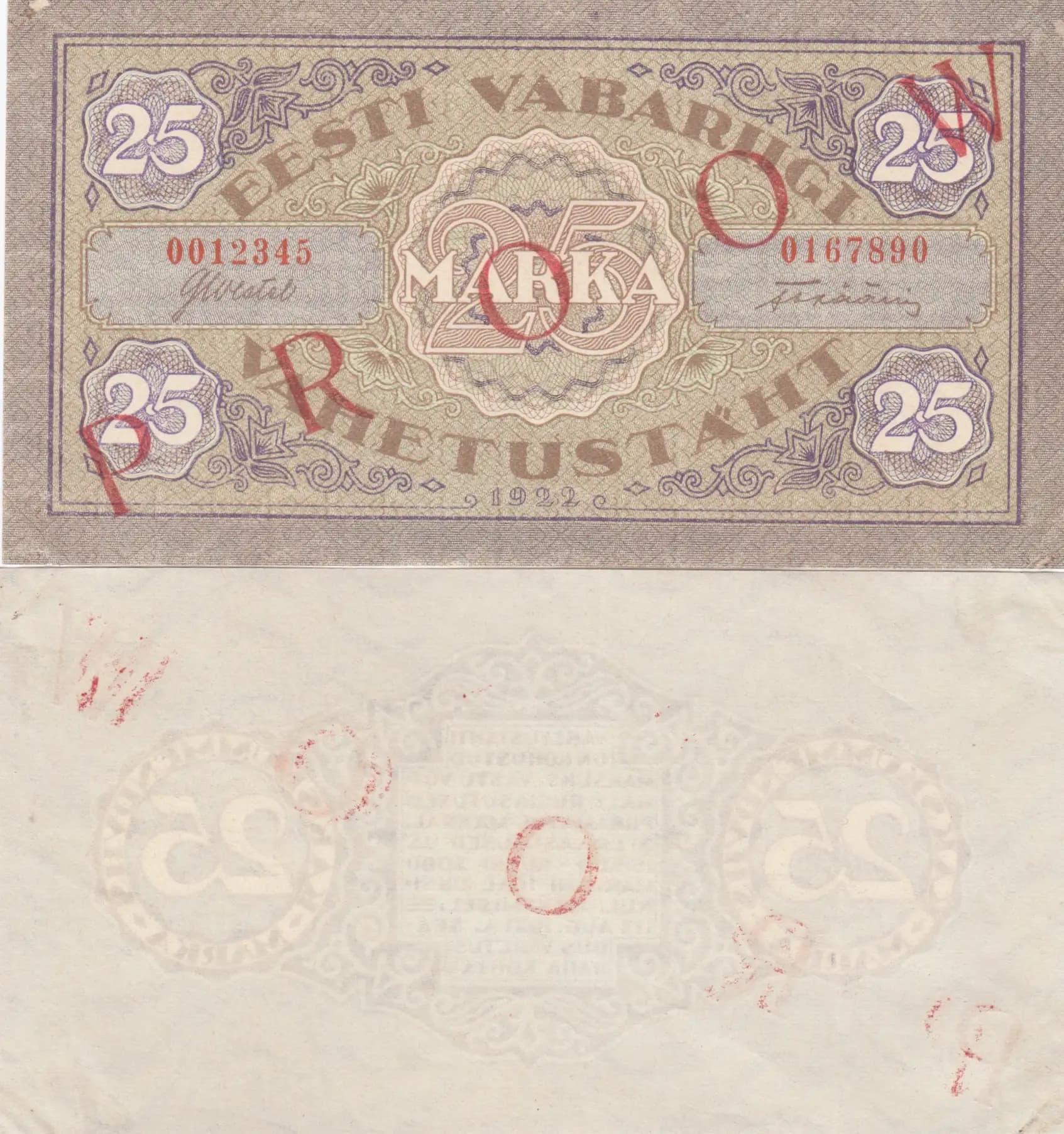
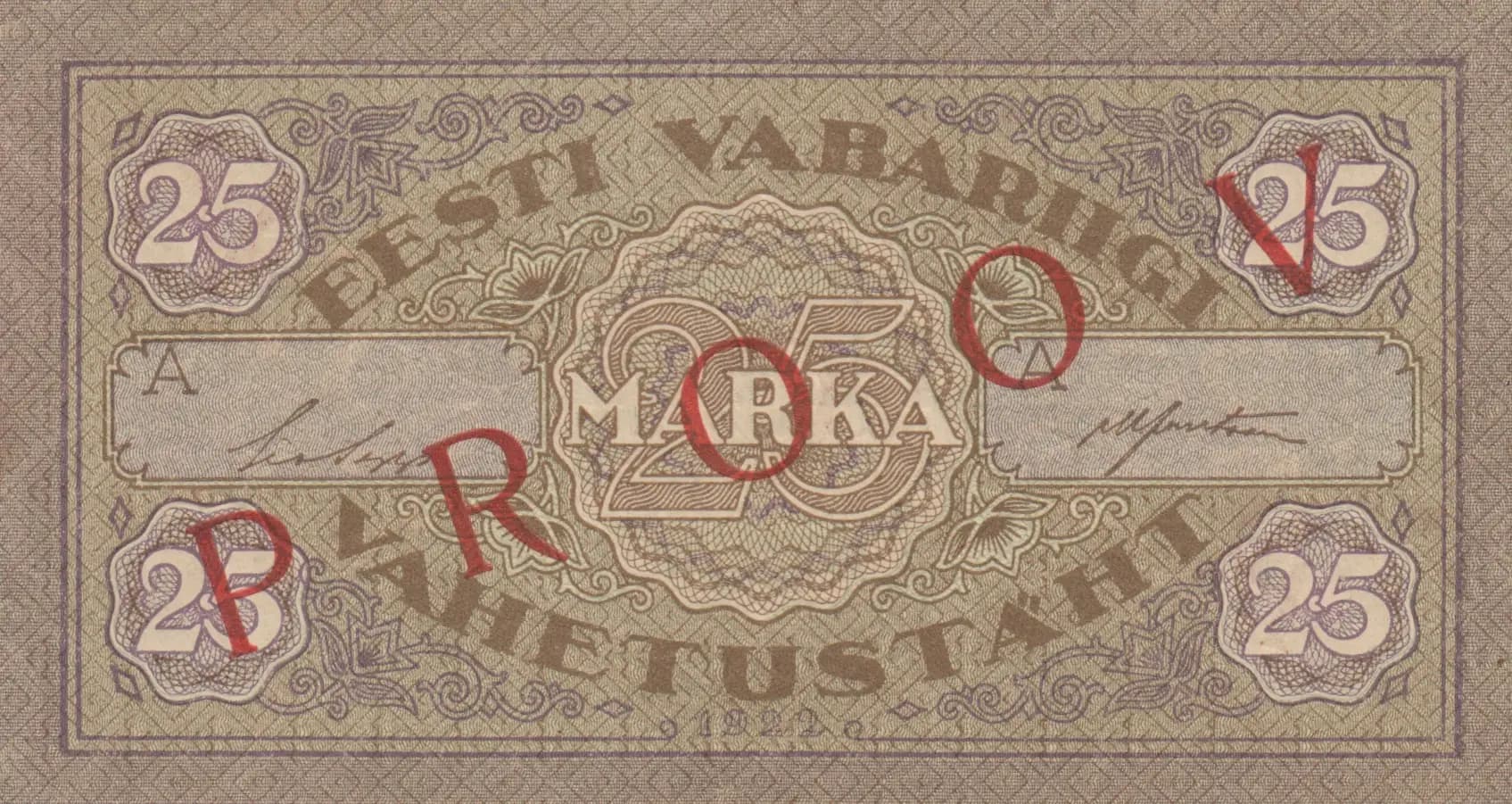
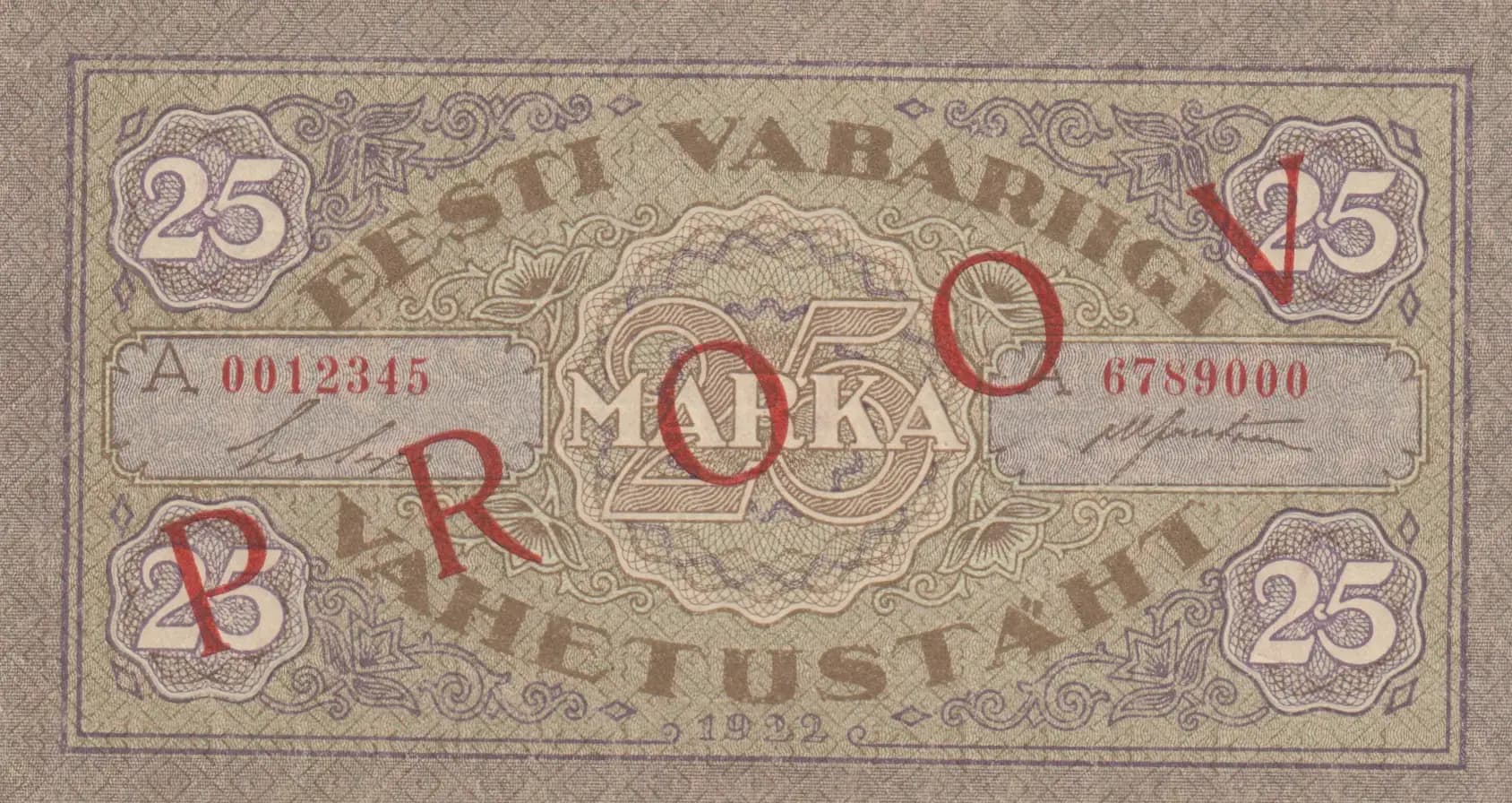
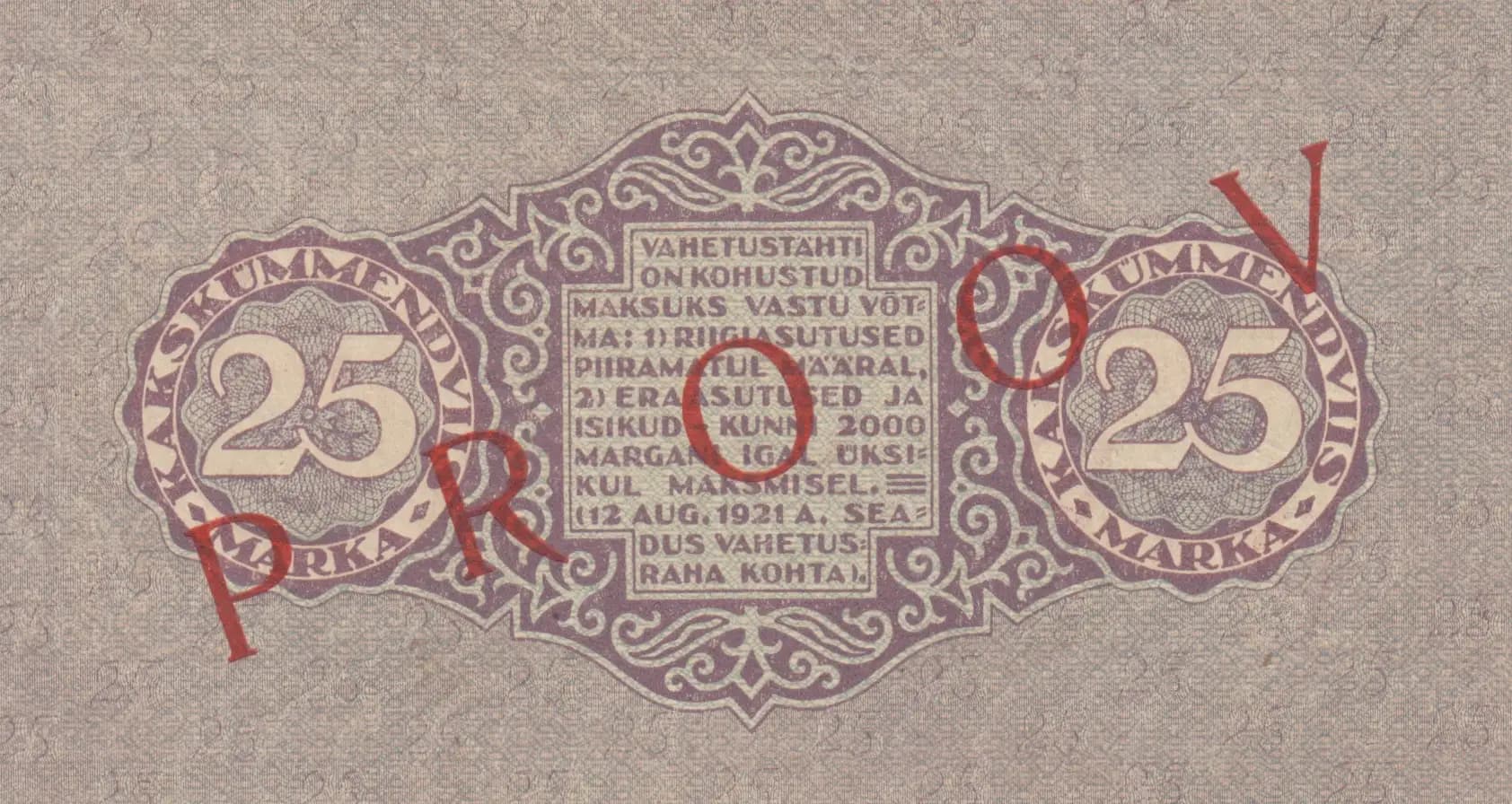
This is an Estonian 25 Marka specimen note from 1922, issued during the early years of the independent Estonian Republic. The note displays excellent uncirculated condition with crisp red specimen overprint markings ('R' and 'PR'/'JO' designations) across both sides, indicating this was a bank or government archive example never released for circulation. The ornate purple and brown color scheme with intricate scrollwork and floral border patterns exemplifies the high-quality engraved security printing of interwar European banknotes.
Common. The 25 Marka 1922 specimen (Pick 54cs1) is a standard catalog note from the early Estonian republic's initial currency issue. While specimen notes are less common than circulation examples, this denomination and issue were produced in sufficient quantities that specimens remain readily available to collectors of Baltic or interwar European currency. Estonian currency from this period is not scarce in the numismatic market.
The 25 Marka denomination was issued by the Estonian Treasury in 1922, during the nation's early period of independence following the 1918 declaration and the Estonian War of Independence. The note's inscriptions reference the August 12, 1921 Exchange Law, establishing legal tender status and acceptance rules for the new Estonian currency. The ornamental design with shield emblems reflects the nationalist aesthetic of newly-sovereign Baltic republics asserting their identity through distinctive currency designs during the interwar period.
The 25 Marka features a symmetrical design centered on ornamental rather than portraiture elements, reflecting the neoclassical aesthetic preferred for early Estonian state currency. Corner emblems contain shield-like cartouches bearing the denomination '25' surrounded by floral and scrollwork border patterns in purple and brown tones on a cream/beige field. The front displays a central vertical text arrangement with 'KRONA' as the primary denomination identifier, while the back features a rectangular cartouche containing the legal tender decree text. The design employs no historical figures or national monuments, instead emphasizing geometric and floral decorative elements that served as security features through their fine-line engraving complexity.
FRONT SIDE: '25' (denomination marking in corners and center); 'KRONA' (vertically centered, meaning 'Crown'); 'PETSUS MARK' (diagonally across, referring to Estonian Mark); Serial numbers visible. BACK SIDE: '25' and 'MARK' (denomination); Legal text reads: 'Exchange notes are obligated to be accepted as payment! 1) State treasury institutions without limit. 2) Private individuals and persons up to 2000 marks per individual transaction. (12 August 1921 According to the Exchange Law)' This text establishes the mandatory acceptance and redemption rules for the currency.
This note was produced using fine-line steel engraving, evidenced by the intricate scrollwork, precise border patterns, and detailed ornamental elements visible across both sides. The security printer for Estonian currency of this period was likely a combination of European contract printers; the specific engraver information is not documented in the catalog reference provided. The red specimen overprints were applied separately using a stamp/overprint press, a common practice for distinguishing archive and presentation examples from circulating currency.
This is specifically noted as a specimen (cs1 designation in Pick catalog), indicated by the red specimen overprint markings visible on both sides—the circular 'R' stamp on the front and the letter overprints ('PR', 'JO') on the back. These markings definitively identify this as a bank or treasury specimen rather than a circulation note. The serial numbers visible (0012345 and 6789000 noted in analysis) appear consistent with specimen numbering practices, though full confirmation of variety status would require examination of additional examples and archival records.