20 penni 1919
Market Prices
13 salesAbout This Note
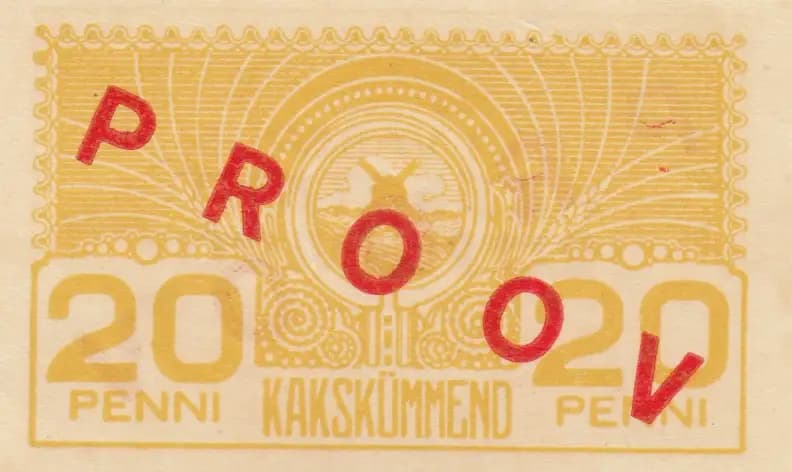
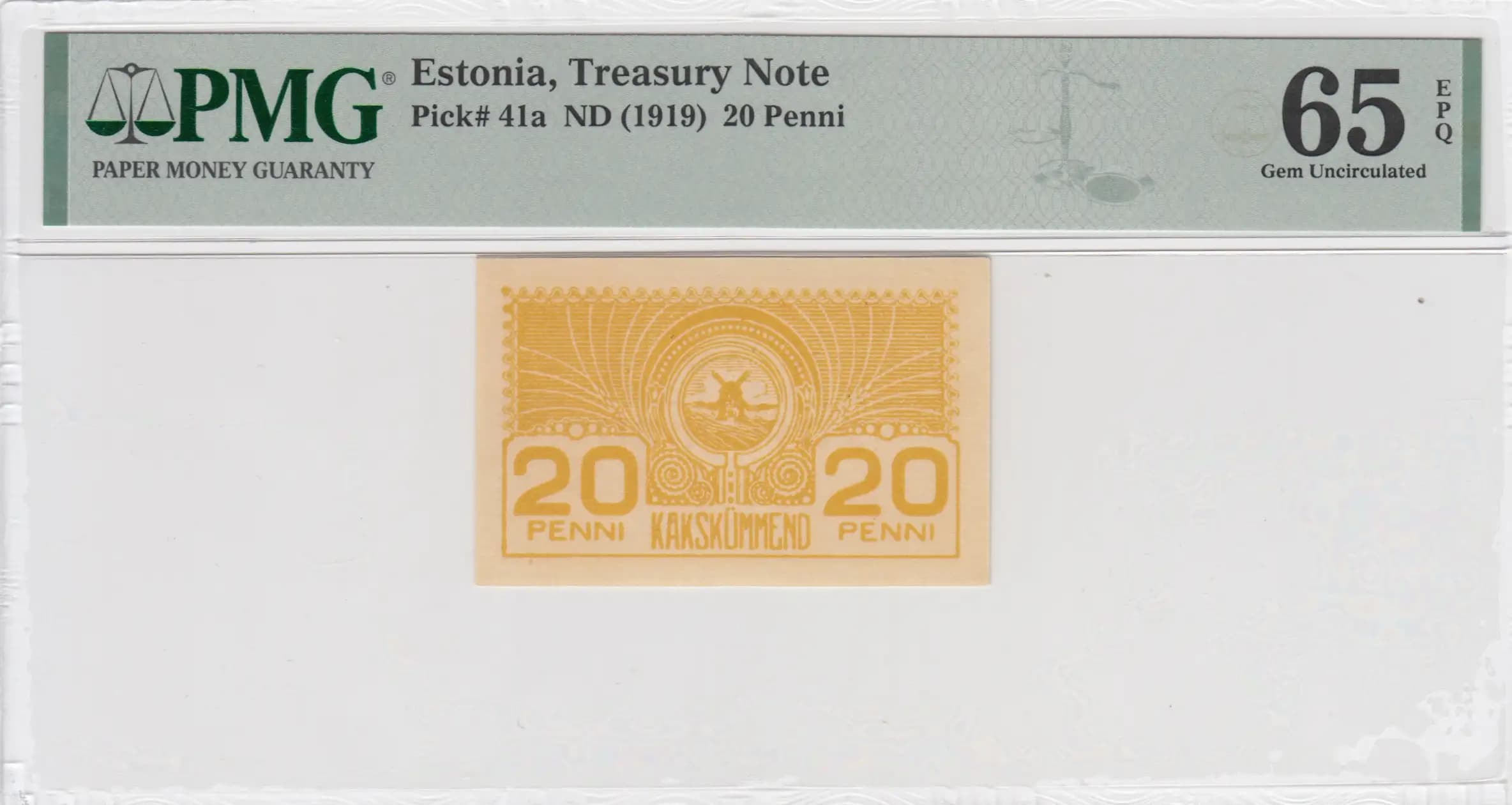
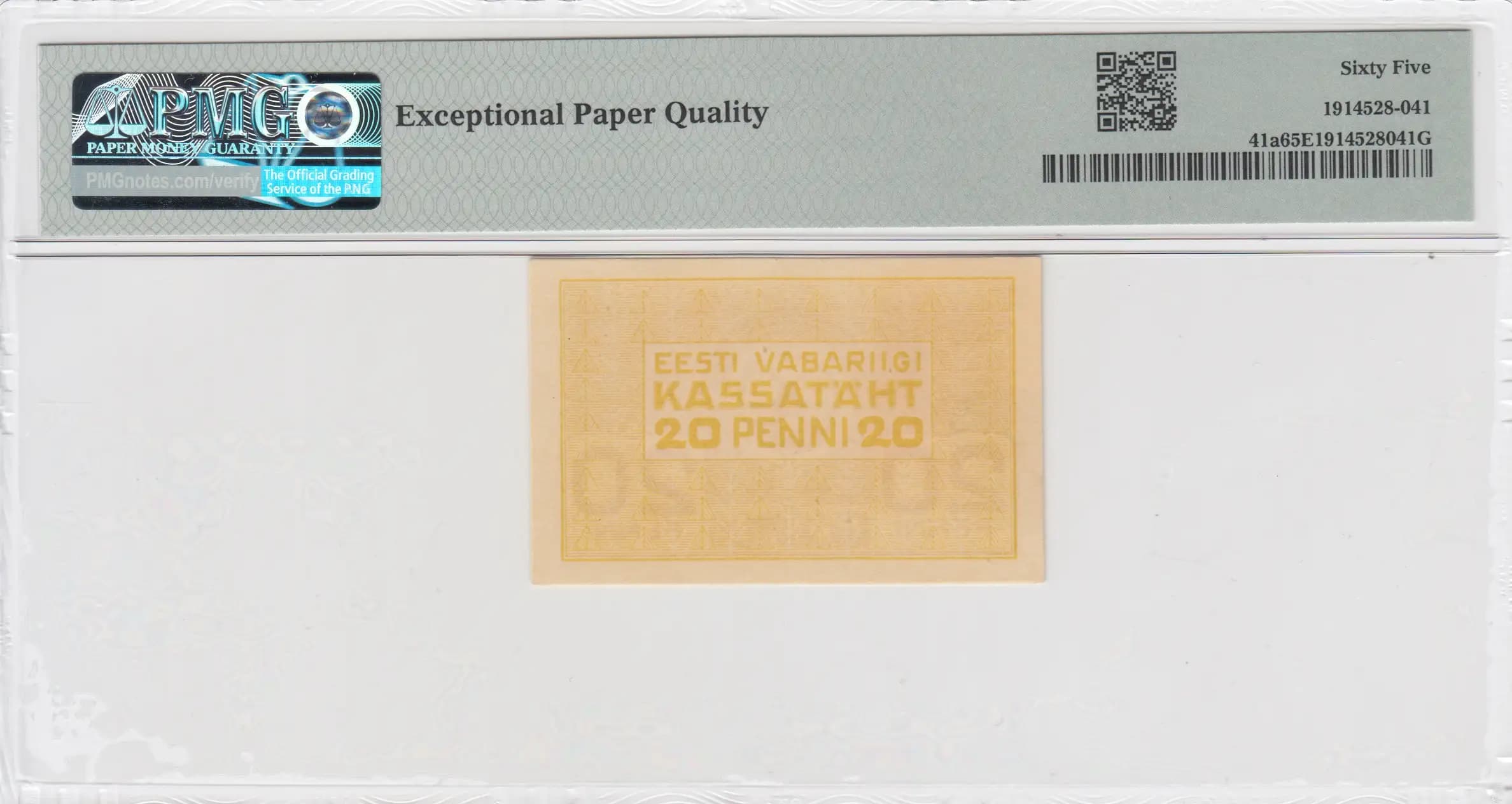
This Estonian 20 Penni Treasury Note from 1919 is a PMG 65 EPQ graded example in near-gem condition, representing the early currency of the newly independent Estonian Republic. The note features a striking contrast between the minimalist text-based obverse and an ornate reverse dominated by a golden sunburst pattern radiating from a central circular emblem containing a stylized bird or eagle motif. With recent comparable PMG 65 examples selling in the $51–$82 range on eBay, this represents a desirable grade for a note of historical significance to Estonian numismatists.
Common. This note appears regularly on the numismatic market, as evidenced by consistent eBay sales activity spanning from 2014 to 2021. Market data shows examples in lower grades (VF, AUNC) routinely selling for $4–$16, with UNC examples at $26–$35. The PMG 65 grade, while more desirable, still achieves modest premiums ($51–$82 range), indicating adequate supply even in higher grades. The printing was substantial enough to support regular market circulation, and no documented recall or short print run is recorded for this Pick number.
Issued in 1919 by the Treasury of Estonia (Eesti Vabariigi Kassataht), this note represents the first currency circulated by the newly independent Estonian Republic following independence from the Russian Empire. The eagle imagery on the reverse reflects Estonian national symbolism, while the geometric Art Deco–influenced design patterns are typical of early 20th-century European currency design. The denomination in penni reflects Estonia's adoption of a decimal currency system aligned with Nordic monetary traditions.
The obverse presents a clean, utilitarian design centered on the issuing authority text arranged within a rectangular golden frame on a cream background, reflecting the functional aesthetic of emergency or early-issue currency. The reverse is the artistic focal point: a symmetrical composition featuring a radiating sunburst pattern in gold/yellow tones emanating from a central circular emblem. Within this emblem is a stylized eagle or bird in flight—a national symbol of Estonia. The design employs intricate geometric line work and decorative borders with repeating patterns, suggesting early twentieth-century security engraving practices. The large denomination numerals '20' are positioned prominently on both left and right sides of the reverse, ensuring easy recognition in commerce.
Front side: 'EESTI VABARIIGI' (Estonian Republic), 'KASSATAHT' (Treasury Note), '20 PENNI 20' (20 Penni 20). Back side: '20' (denomination numeral, left and right), 'FENNI' (Penni), 'KAKSKÜMMEND' (Twenty in Estonian).
Intaglio engraving (recess printing), evidenced by the crisp, fine-line geometric patterns, complex radiating designs, and the sharp detail of the central eagle motif. The intricate line work visible in both the sunburst pattern and border designs are characteristic of security engraving common to early Estonian currency. The printer for this Pick 41a issue is not definitively documented in standard references, though it may have been produced by a European security printer contracted by the Estonian Treasury.
The PMG Population Report identifies this as Pick 41a, indicating a single cataloged variety for this base Pick number. No specific signatures, date variants, or serial number prefix variations are evident from the visual analysis. The note displays 'ND' (no date) on issue, which is standard for this 1919 Treasury Note issue. The absence of visible printer attribution or distinctive overprints within the observed images suggests this is the standard circulation variety without provisional markings.