20 krooni 1932 specimen
Market Prices
1 saleAbout This Note
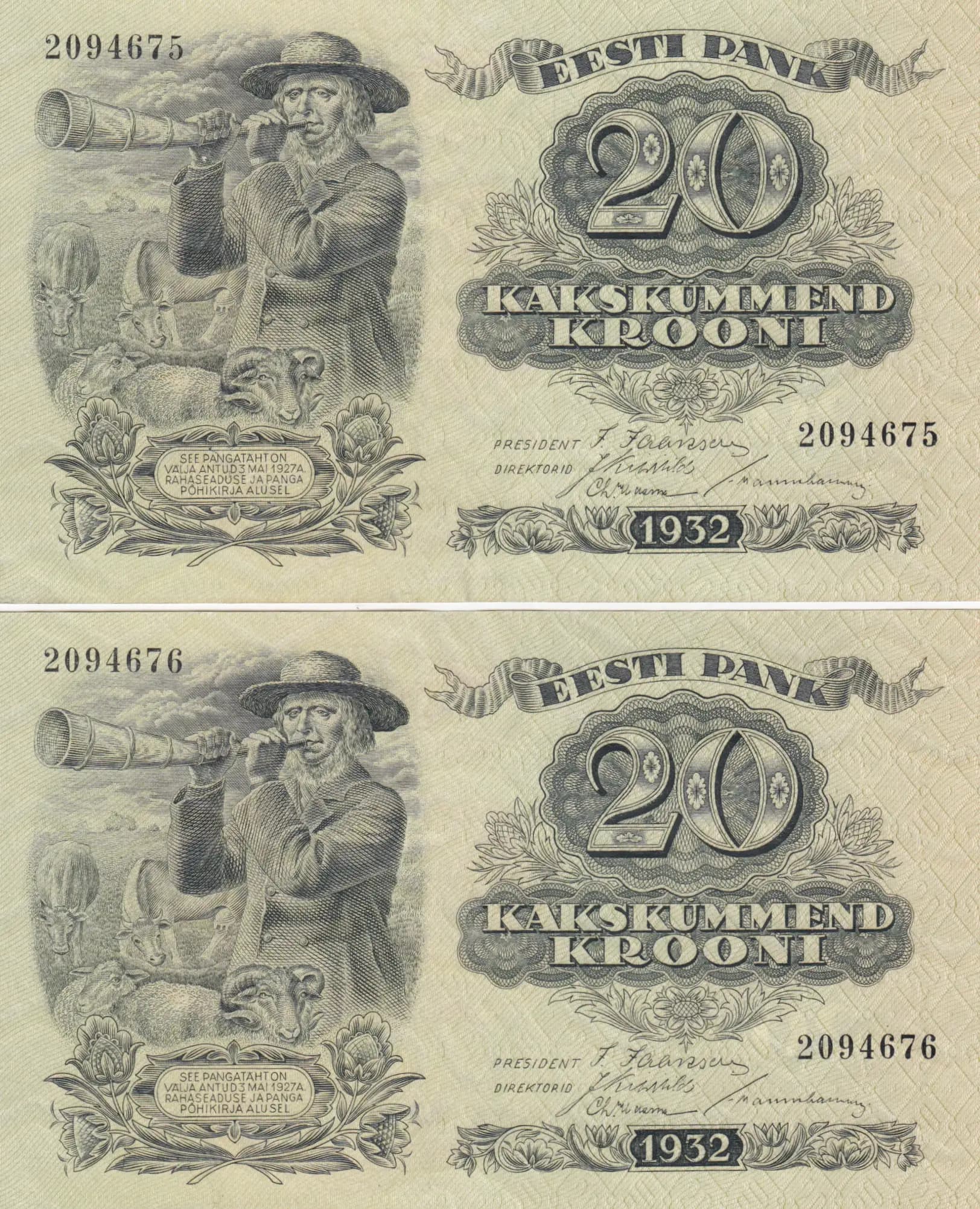
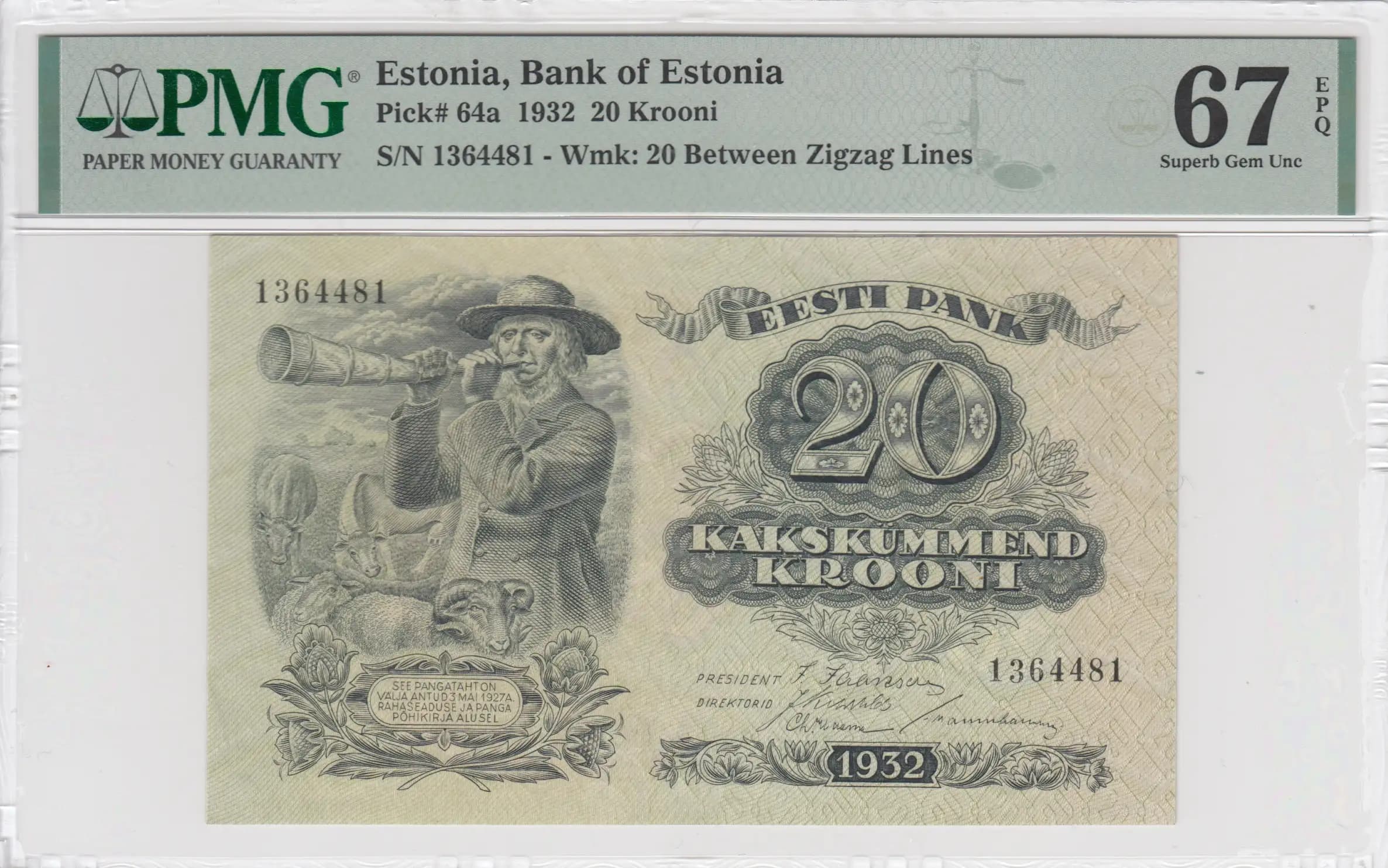
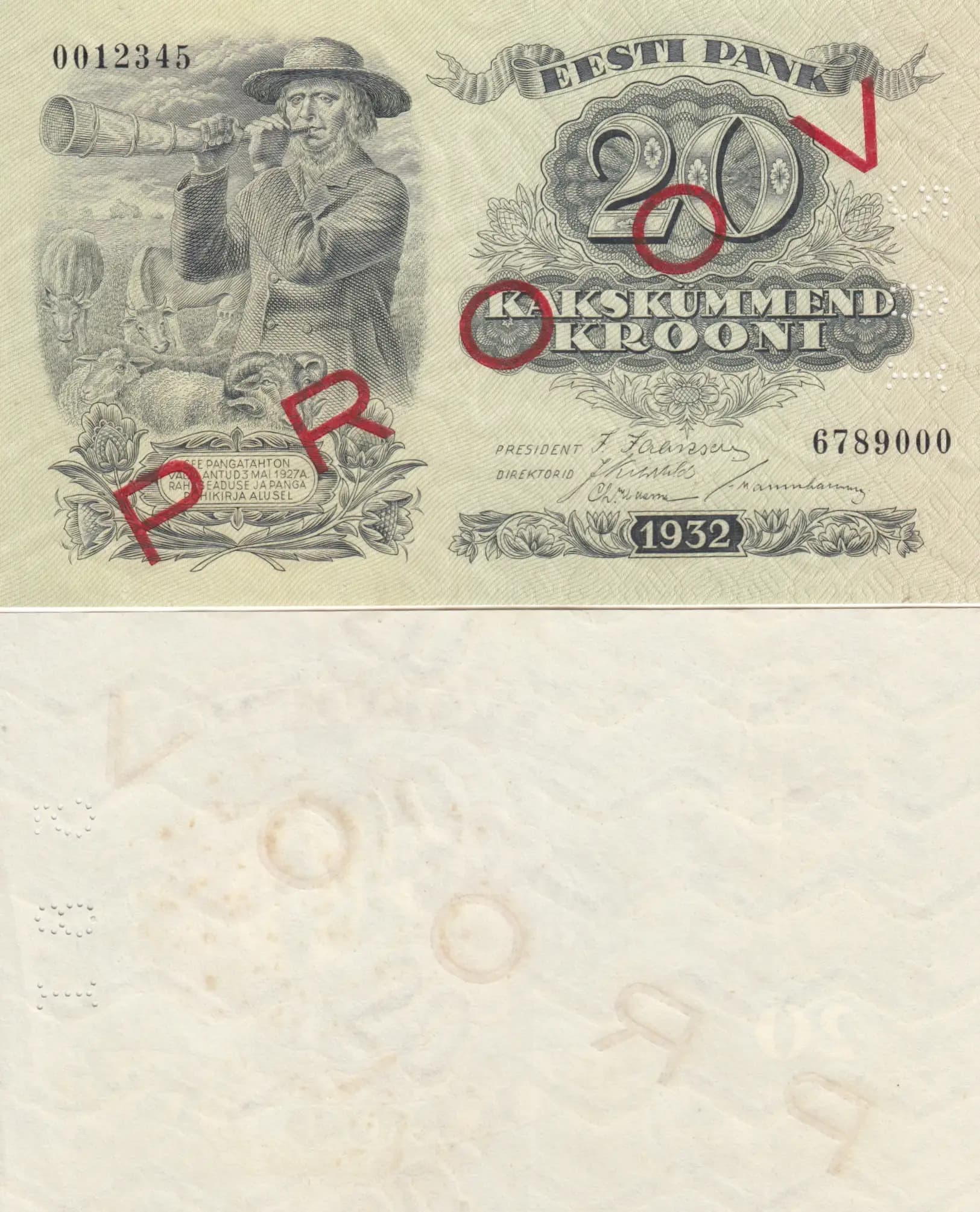
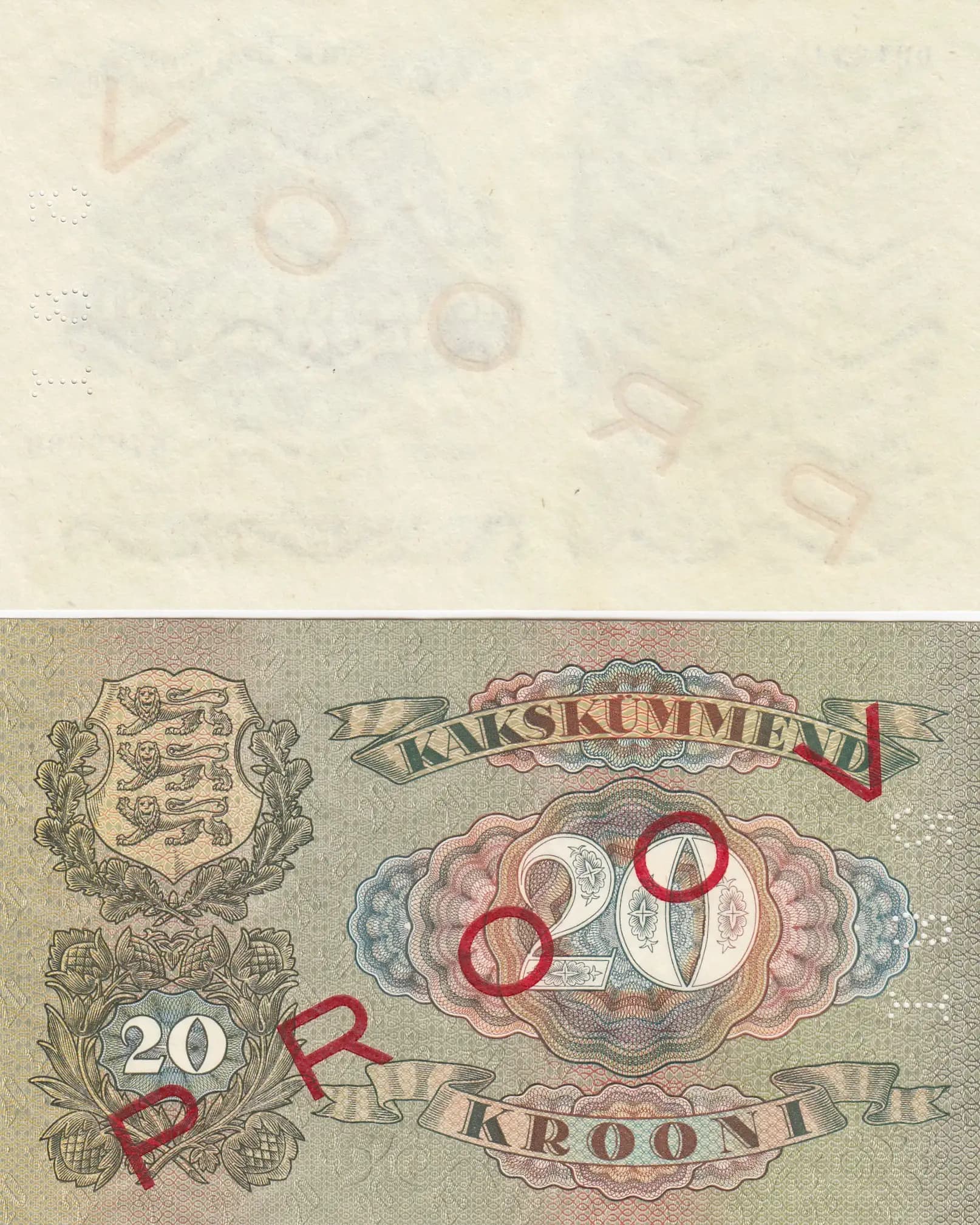
This is an uncirculated 1932 Estonian 20 krooni specimen note, featuring a striking portrait of a bearded historical figure in 17th-18th century dress holding a telescope on the obverse, with the Estonian coat of arms and decorative heraldic designs on the reverse. The note is marked with a red 'SPECIMEN' overprint and exhibits exceptional condition with crisp printing, clean margins, and no signs of circulation wear. As a specimen note from Estonia's interwar period, this represents an important numismatic artifact from the early years of the Estonian Republic.
Common. While specimen notes are inherently less common than circulated currency, the 1932 20 krooni specimen exists in sufficient quantity to be considered common among specimen collectors. Catalog values from 2016 list UNC specimens at $40, and eBay data shows a 2009 sale at $52.56, indicating modest collector demand without scarcity premium. The denomination was in regular production, and specimen notes were produced in quantities sufficient for distribution to archival institutions and security printer records. No indication of recall or extremely limited mintage exists.
Issued by Eesti Pank during Estonia's interwar independence (1918-1940), this 1932 20 krooni note reflects the young nation's efforts to establish a modern, secure currency system following independence from Russian Imperial rule. The inclusion of the Estonian coat of arms (three lions) and the portrait of a figure in historical dress connects the currency to Estonia's historical and cultural identity during this formative period. Specimen notes like this were produced for archival, promotional, and security printer reference purposes rather than for circulation, making them important records of the note design and production standards of the era.
The obverse features a portrait of a bearded man in 17th-18th century historical costume, wearing a wide-brimmed hat and holding a telescope or spyglass to his eye, rendered in fine black and white engraving on the left side. This figure likely represents a historical Estonian notable or scholar. The denomination '20' appears prominently in an ornamental oval frame in the center-right. The lower left contains a heraldic emblem or coat of arms. Decorative floral and botanical elements frame the composition. The reverse displays the three-lion Estonian coat of arms on the left, with the denomination repeated in an ornamental oval medallion in the center. Multiple decorative frames, scrollwork, and heraldic designs fill the field. Both sides feature complex ornamental engraving throughout, characteristic of security banknote design of the period.
FRONT SIDE: 'EESTI PANK' (Estonian Bank) — issuing authority; '20' and 'KAKSKÜMMEND KROONI' (Twenty Krooni) — denomination in numeral and Estonian words; '1932' — year of issue; 'SPECIMEN' — red overprint indicating specimen status; 'PRESIDENT' and 'DIREKTOR' — signature lines for bank officials. BACK SIDE: 'KAKSKÜMMEND' (Twenty) and 'KROONI' (Krooni/currency) — denomination text; '20' — numeral denomination; 'SPECIMEN' — red overprint. Serial numbers visible but designated as specimen series (0012345, 6789000).
Intaglio (engraved) printing, the primary security printing method for currency of this era. The fine line work, detailed crosshatching visible in the portrait, and complex ornamental patterns are characteristic of steel-plate engraving. The specimen note status and quality of execution suggest production by a specialized security printer, likely Giesecke+Devrient or a similar European banknote printer contracted by Eesti Pank. The red 'SPECIMEN' overprint was applied as a security measure to distinguish non-circulating archival copies.
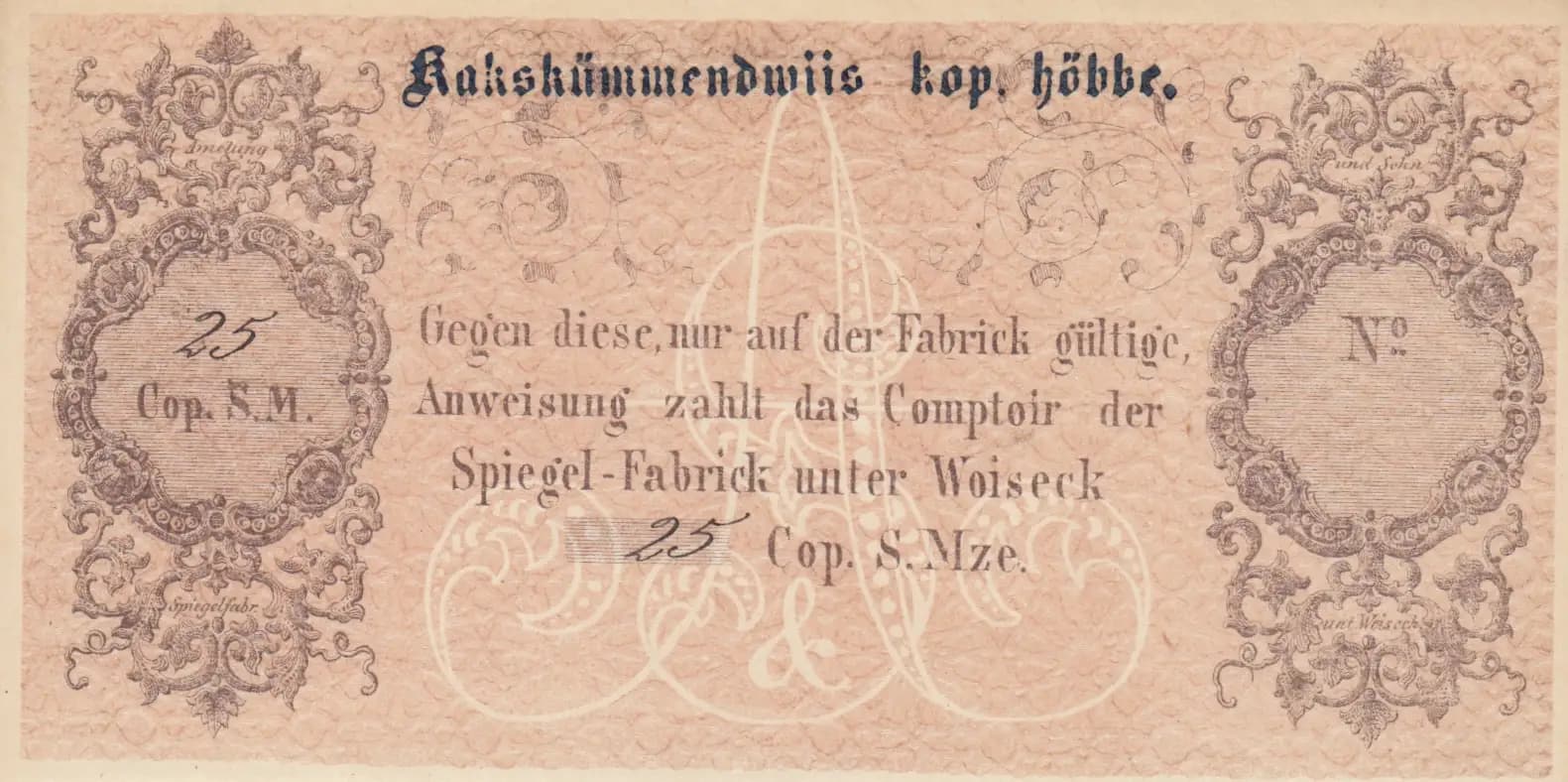
This note is cataloged as Pick P-64s, the specimen variant. PMG records indicate the existence of P-64a (standard circulation issue) and P-64s (specimen issue) as the two primary varieties for this Pick number. This specific example is distinguished by the red 'SPECIMEN' overprint applied diagonally across both obverse and reverse, official marking that prevented accidental circulation. The specimen series uses generic serial numbers (0012345, 6789000) rather than production-run specific numbers. No additional varieties (signature variants, color variants, or date variations) are discernible from this example.