20 krooni 1932 pair
Market Prices
47 salesAbout This Note
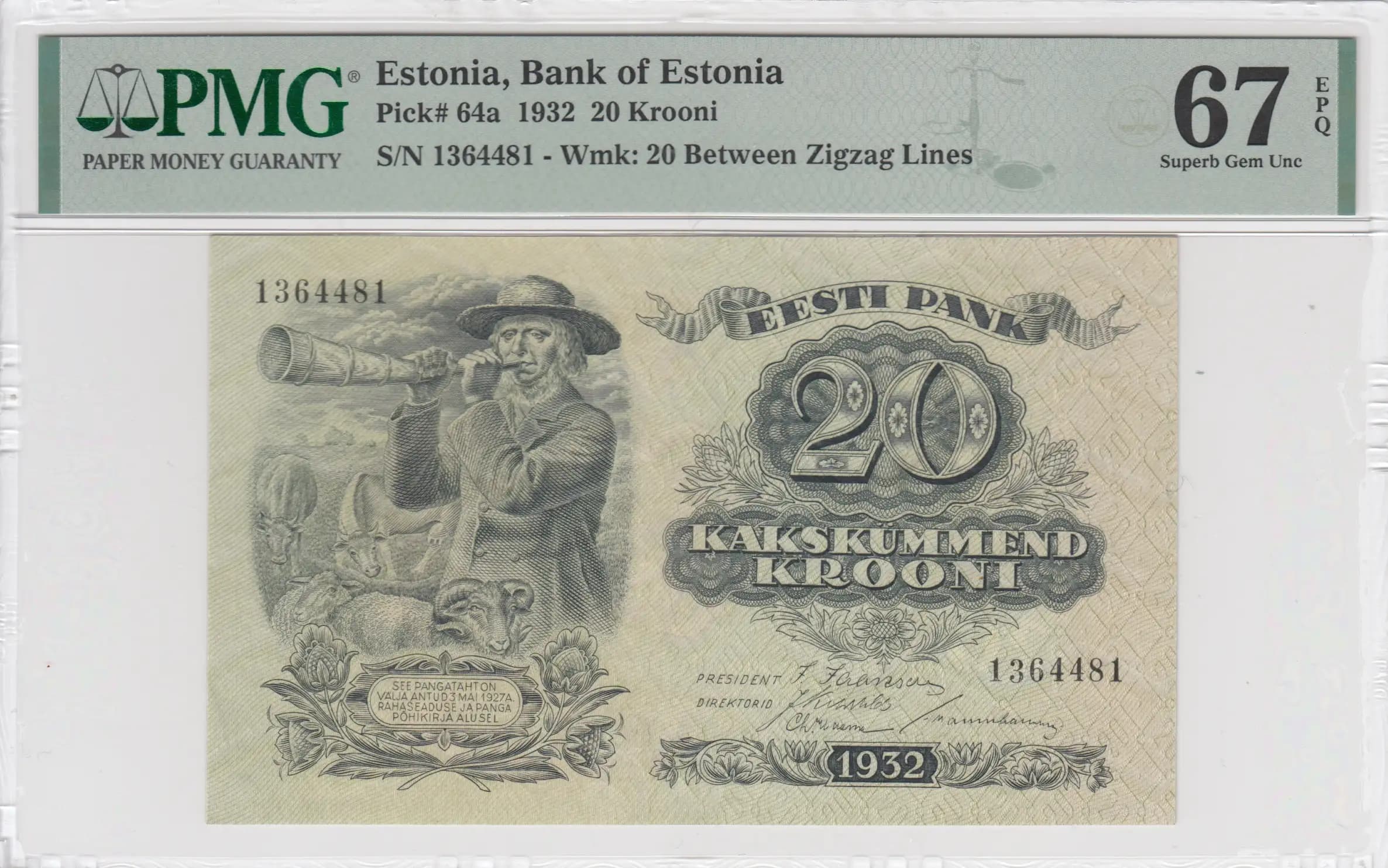
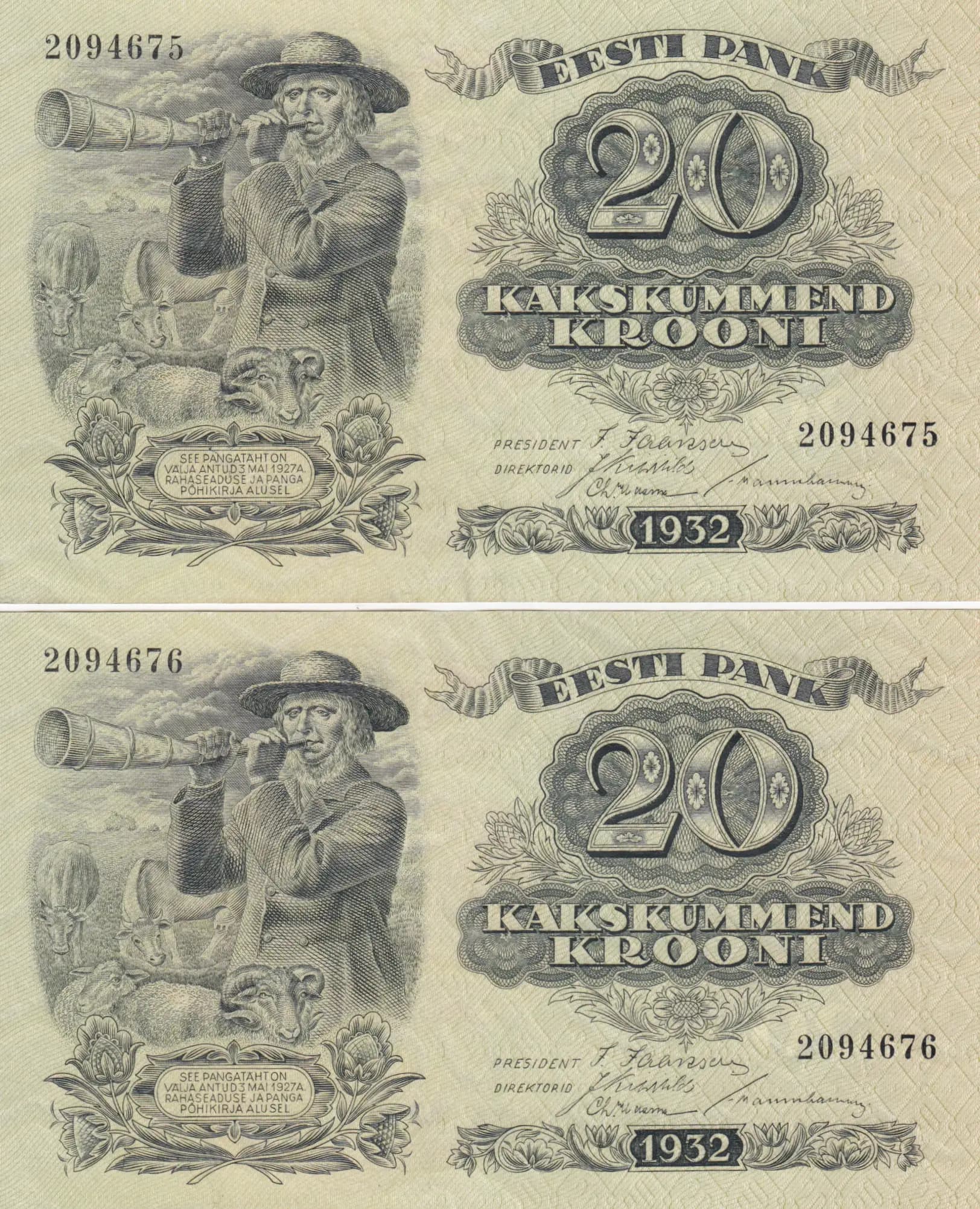
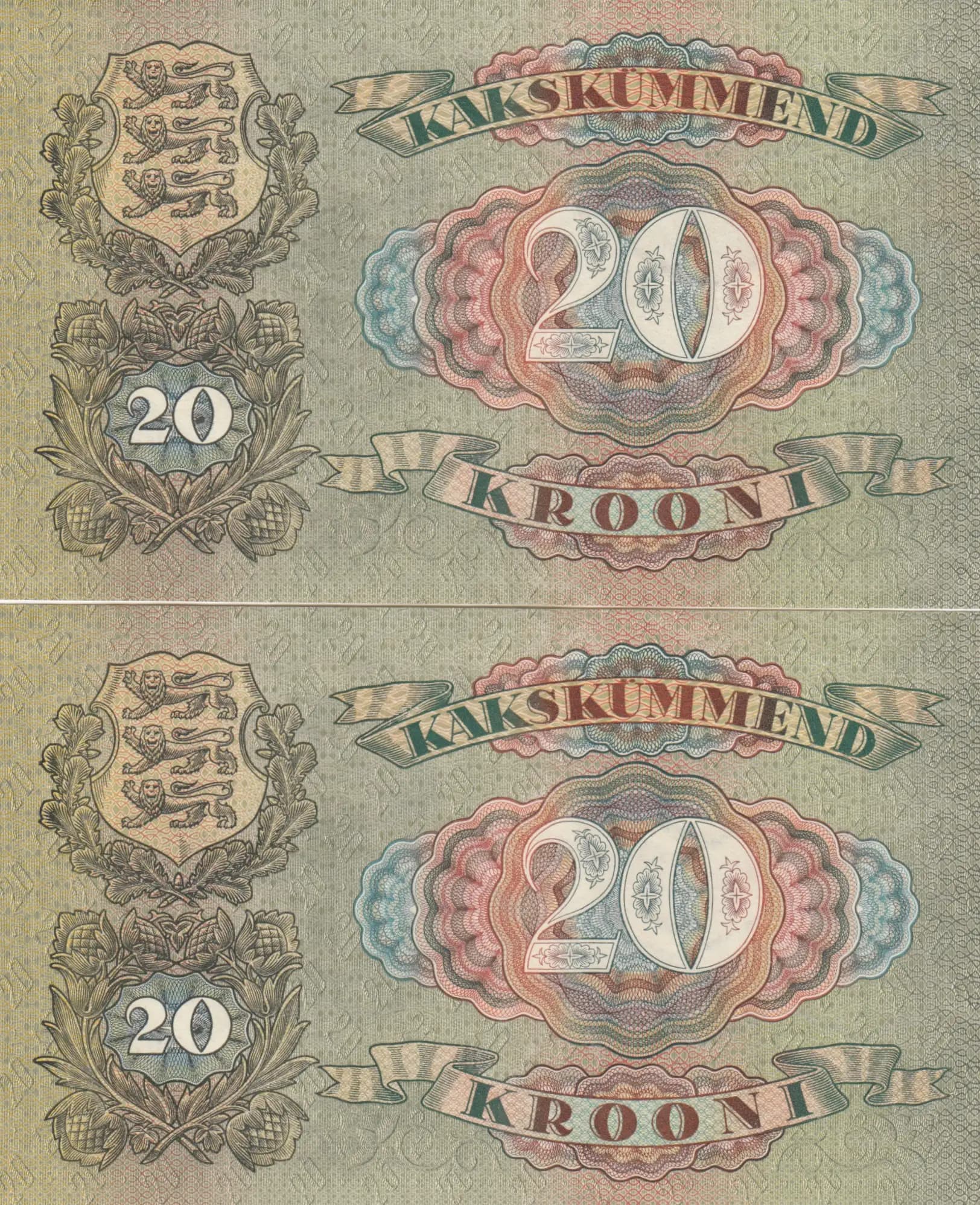
A consecutive pair of Estonia's 1932 20 krooni notes in exceptional AU condition, featuring the iconic shepherd/astronomer figure with telescope on the obverse and the Estonian coat of arms on the reverse. Both notes display sharp, crisp printing with no circulation wear, vibrant color on the reverse, and consecutive serial numbers (2094675-2094676), making this an attractive collectible pair for enthusiasts of Baltic numismatics.
Common. The eBay sales history provided shows consistent trading at modest prices ($15-$40 for circulated and uncirculated examples over more than a decade), with more recent AU/UNC examples selling in the $20-$35 range. The 2016 catalog value of $60 for UNC reflects standard pricing for common notes in premium condition. No evidence of limited print runs or recall status. This denomination and issue are readily available to collectors.
Issued by Eesti Pank during Estonia's independence period (1918-1940), this 1932 20 krooni note reflects the young republic's numismatic identity through its symbolic imagery. The shepherd figure with telescope may represent Estonian pastoral heritage or scientific progress, while the three-lion coat of arms prominently displayed on the reverse affirms the nation's sovereignty and heraldic traditions during this interwar period of consolidation.
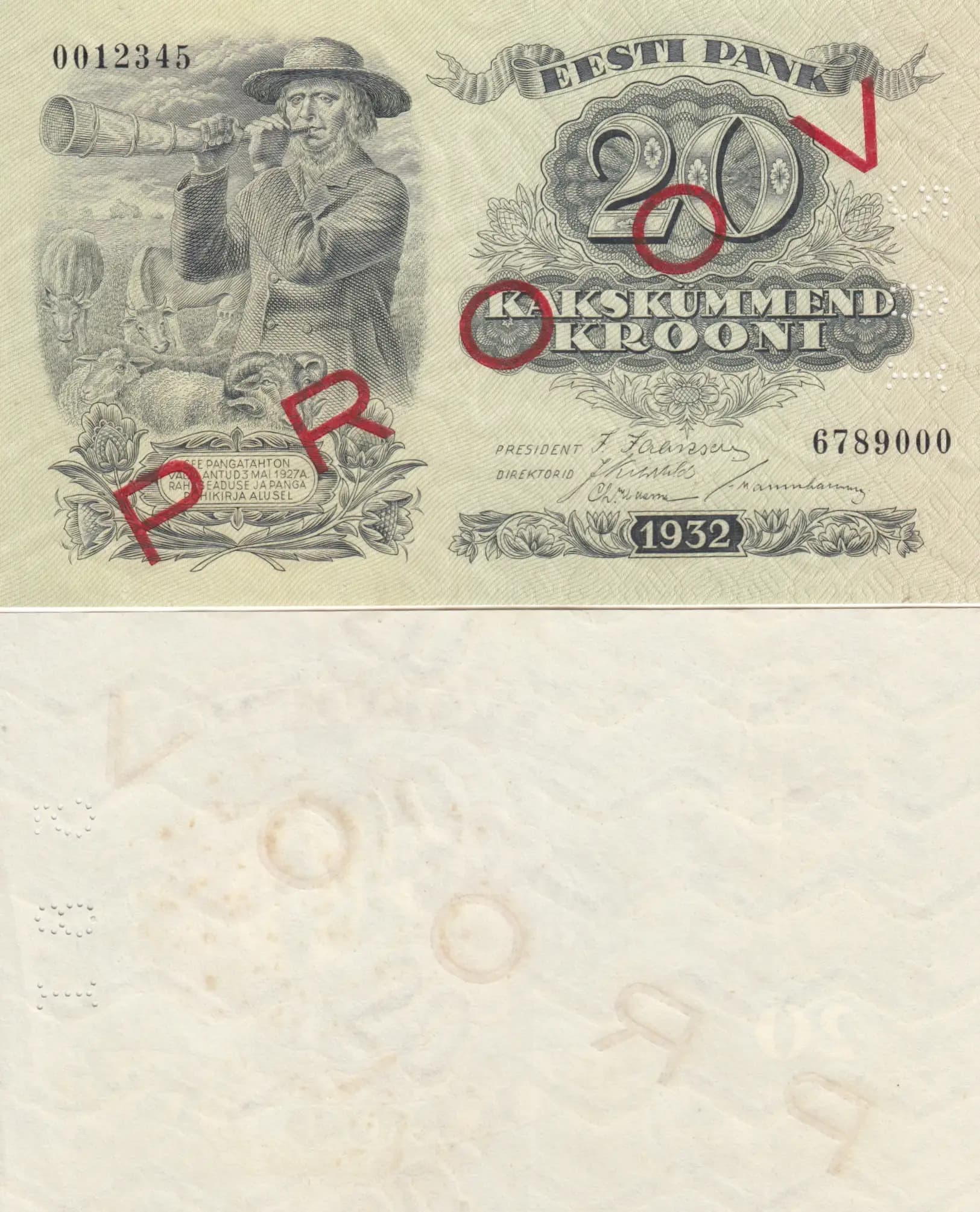
The obverse features a bearded figure in 19th-century attire (wide-brimmed hat and long coat) gazing through a telescope or spyglass toward the upper right, symbolizing observation or discovery. The figure is positioned on the left side of the note with an ornamental floral wreath containing botanical elements below. The right side displays the denomination '20' within an elaborate baroque-style decorative frame. The reverse showcases Estonia's coat of arms—three lions within a shield, crowned and surrounded by ornamental foliage—positioned in the upper left, with a large central cartouche containing the denomination numeral '20' rendered in multi-colored baroque ornamentation (pink, green, and blue tones). Fine guilloche line patterns provide security throughout both sides.
Front side: 'EESTI PANK' (Bank of Estonia), '20 KAKSKUMMEND KROONI' (20 Twenty Kroon), 'SEE PANGAHAI ON VALJA ANTUD RAHASSADUSTE JA PANGA POHIKIRA AUSIL' (This banknote has been issued under the Monetary Law and Bank Charter), 'PRESIDENT' and 'DIREKTORID' (President and Directors), '1932' (year of issue), serial numbers '2094675' and '2094676'. Back side: 'KAKSUMMEND 20 KROONI' (Twenty 20 Kroon).
Intaglio (copperplate) engraving, the standard security printing method for Estonian banknotes of this era. The fine line guilloche background patterns, intricate portrait rendering, and precise denomination cartouches are characteristic of high-security intaglio production. Multiple color printing on the reverse (green, pink, blue) was achieved through successive printing passes, typical of interwar European banknote production standards.
This lot represents the P-64a standard issue (as opposed to the P-64s specimen note variant). The two notes display consecutive serial numbers (2094675 and 2094676), indicating they were drawn from the same printing batch. PMG cataloging recognizes two variants for Pick 64 (standard P-64a and specimen P-64s), though this pair appears to be regular circulating issue notes rather than marked specimens.