20 krooni 1932
Market Prices
47 salesAbout This Note
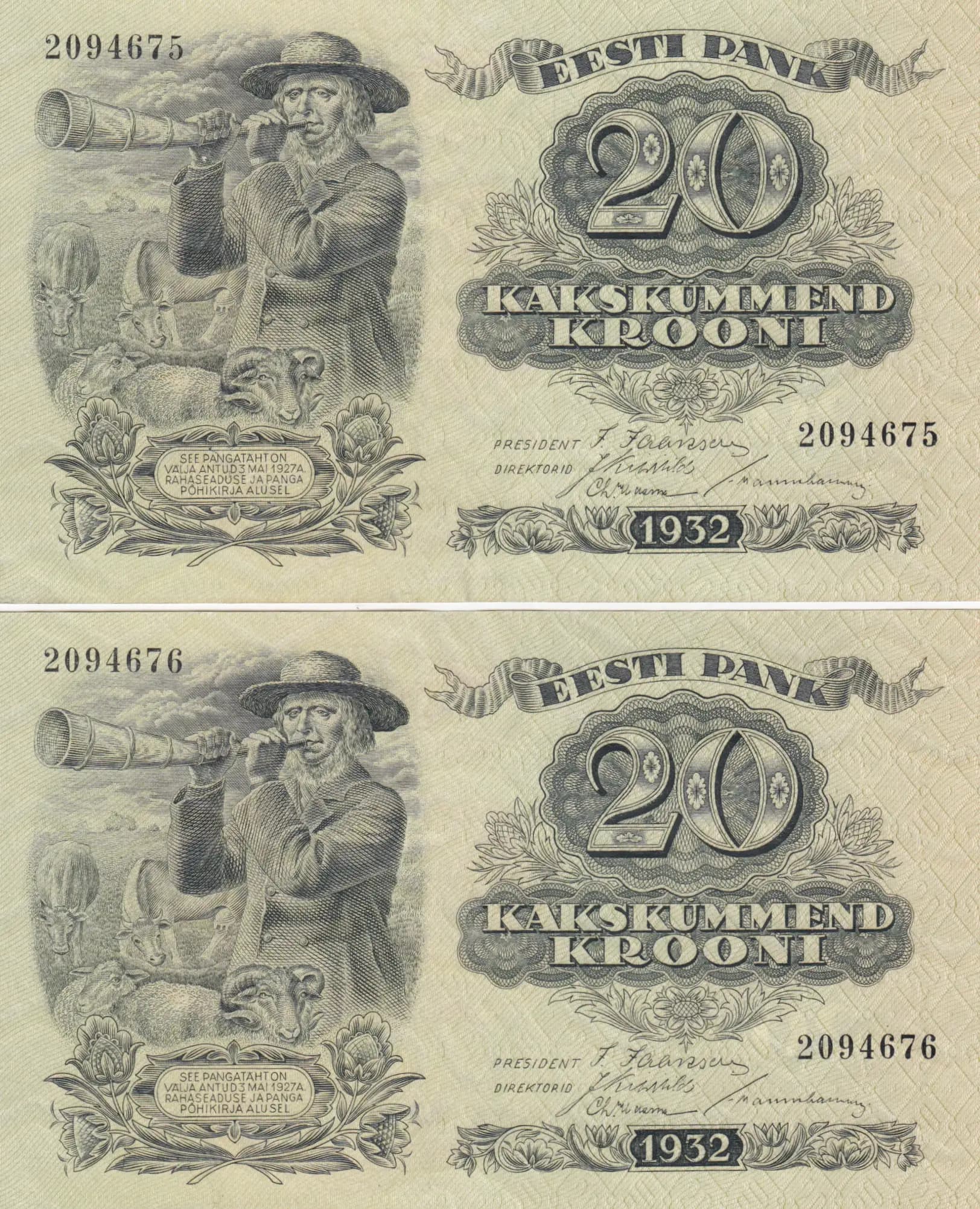
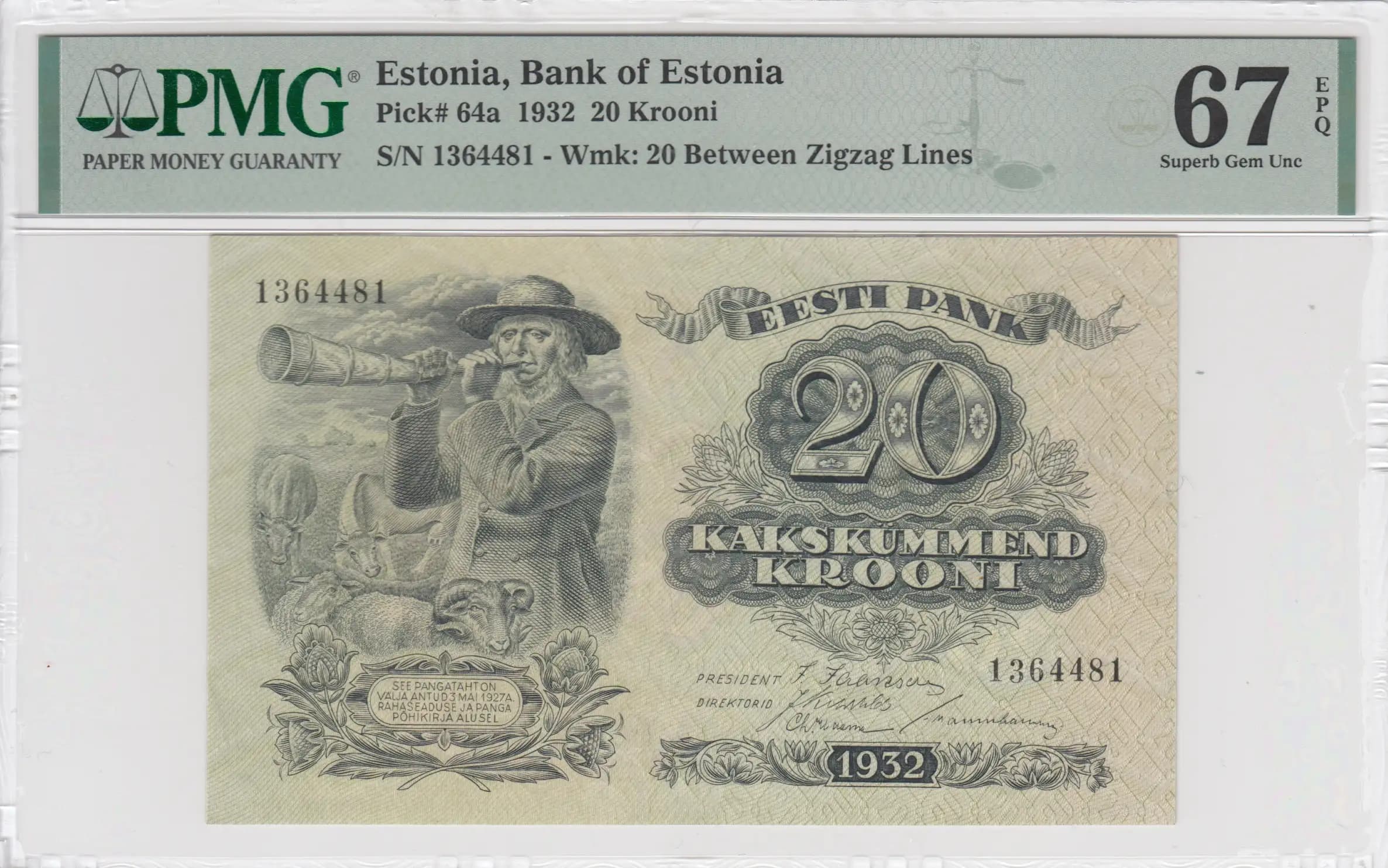
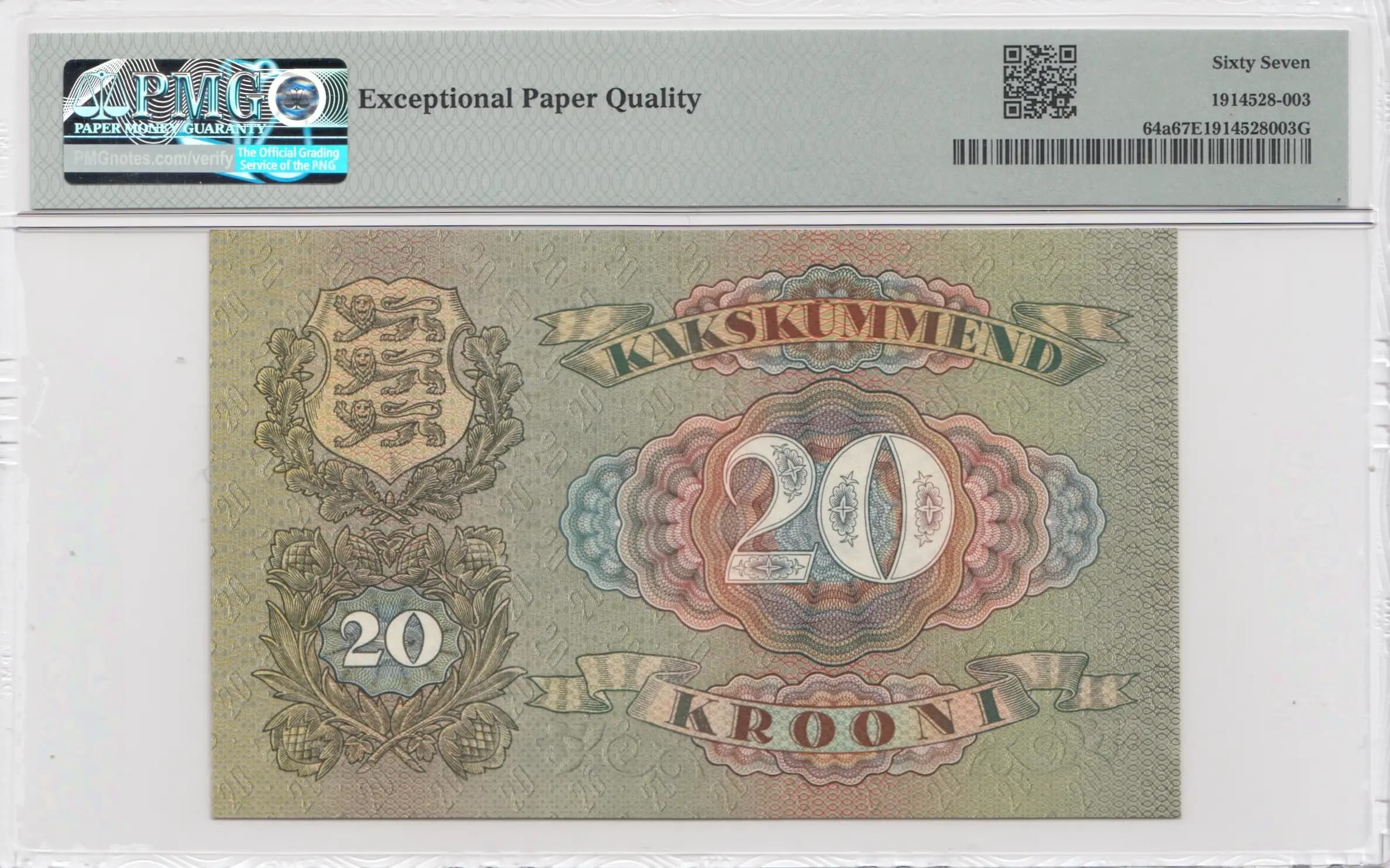
This is an exceptional example of Estonia's 1932 20 Krooni banknote, graded PMG 67 EPQ (Superb Gem Uncirculated). The note displays vibrant multicolored design work on the reverse with crisp engraving throughout and no visible wear, folds, or stains. The obverse features a bearded figure in period clothing with a surveying instrument in cream and black tones, while the reverse showcases the Estonian coat of arms and elaborate decorative frames in red, pink, blue, and green—representing the height of interwar Estonian currency design.
Common. The 1932 20 Krooni circulated widely during its period of issue and remains relatively available in the collector market. eBay sales data shows consistent trading across multiple condition grades, with PMG 67 specimens selling in the $130-$275 range historically—indicating steady but not exceptional demand. Regular issue notes from this denomination and period were produced in sufficient quantities for normal circulation needs.
Issued by Eesti Pank (Bank of Estonia) in 1932, this note represents the currency of the independent Estonian Republic during the interwar period, a time of national consolidation following independence from Russia in 1918. The prominent display of the three-lion Estonian coat of arms on the reverse symbolizes national sovereignty and pride during this formative era. The figure depicted with surveying instruments on the obverse may represent the nation-building and modernization efforts characteristic of 1930s Estonia, reflecting the country's emphasis on infrastructure and technical progress.
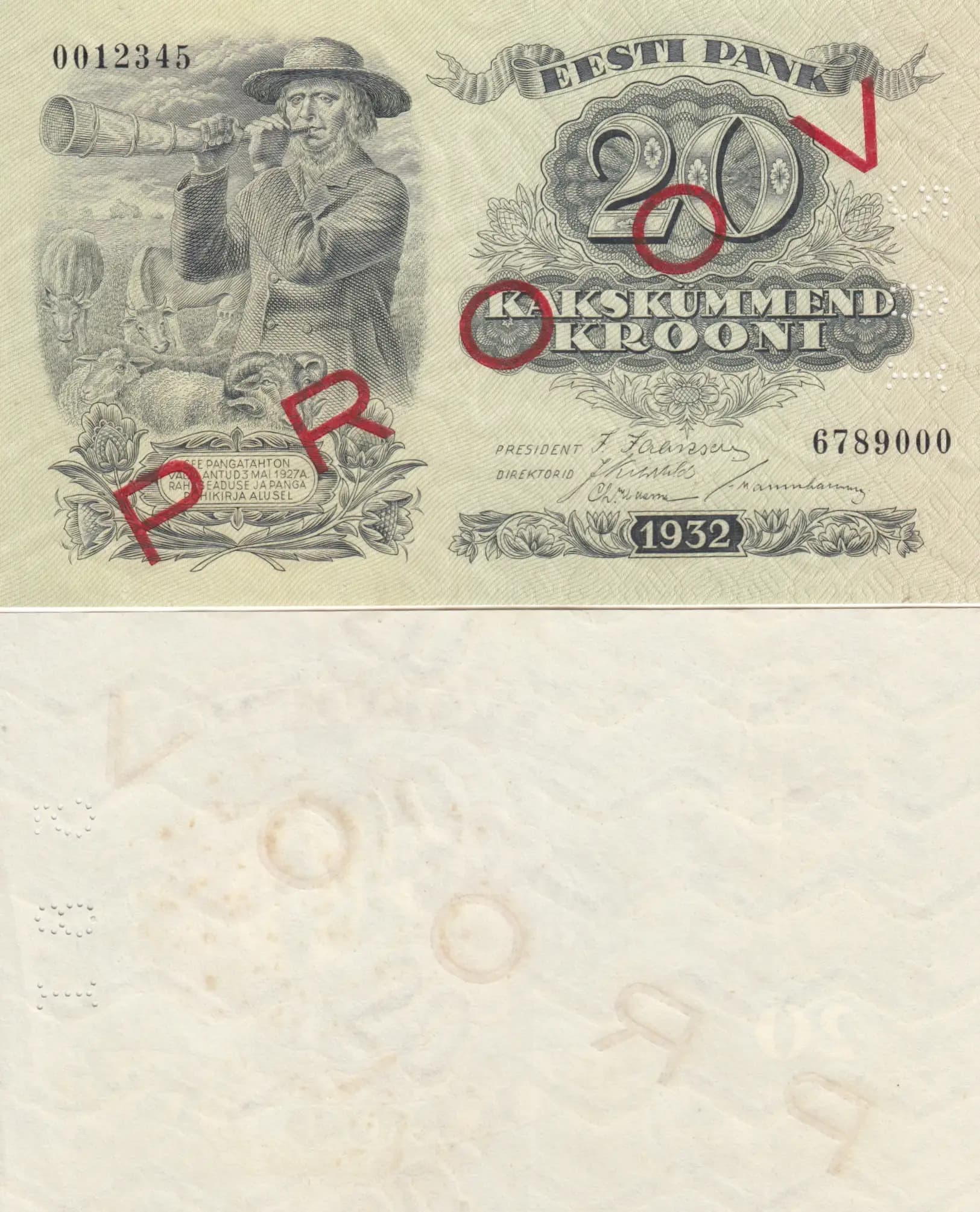
The obverse features a bearded man in late 19th/early 20th century dress holding a surveying telescope or transit instrument, positioned on the left side—likely representing an engineer, surveyor, or scientist emblematic of national progress. The denomination '20' appears in large ornate numerals within an elaborate decorative frame on the right. Ornate scrollwork, floral wreaths, and botanical elements frame the design in cream and black tones. The reverse displays the Estonian coat of arms (three lions passant in a shield) on the left side, with the denomination '20' in large ornate numerals within an elaborate scalloped decorative frame rendered in multicolor (red, pink, blue, green, and yellow) on a cream underprint. Both sides feature intricate line work and fine engraving characteristic of high-quality currency production.
Front side: 'EESTI PANK' (Bank of Estonia); '20' (denomination); 'KAKSKUMMEND KROONI' (Twenty Kroons); 'PRESIDENT' (President signature line); 'DIREKTOR' (Director signature line); 'SEE PANGAKAHT ON VALJAARITUD JA MAHASFADUSE JA PANGA POHKRJA ALUSEL' (This banknote is issued in accordance with the Bank Law and the Bank's articles); '1932' (year of issue); Serial number '1364481'. Back side: 'KAKSKUMMEND' (Twenty); '20' (denomination numeral); 'KROONI' (Kroons).
Intaglio engraving (steel plate engraving), the standard security printing method for banknotes of this era. The complex line work, fine details in the ornamental frames, and multicolor printing on the reverse (achieved through separate plate passes) are consistent with professional banknote production by a specialized European security printer, likely De La Rue or a similar establishment contracted by Eesti Pank.
The Pick catalog recognizes variant P-64a and P-64s for the base 20 Krooni 1932 type. The observed specimen with serial number 1364481 and the visible signatures for President and Director represents the standard regular issue variety. The watermark noted as '20 between zigzag lines' is a consistent security feature across specimens of this type.