20 kopikat 1913
About This Note
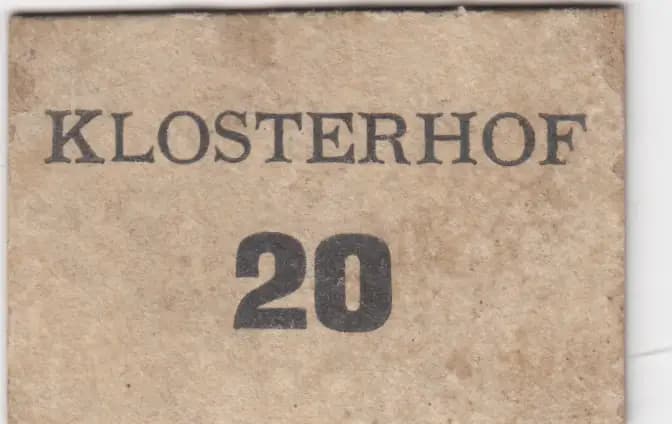
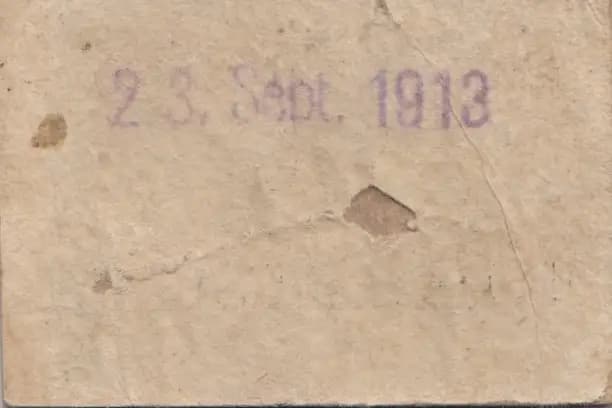
This is a rare emergency banknote issued by Kloostri (Klosterhof) village in western Estonia during 1913, denominated in 20 kopikat. The note features a minimalist, text-based design typical of local emergency currency with tan/beige paper stock showing considerable aging and foxing consistent with its 110+ year history. The reverse bears a date stamp of September 25, 1913, and exhibits significant deterioration including water staining and a small perforation, placing it solidly in VF condition despite evident circulation wear.
Very rare. This note is unlisted in the Pick catalog, indicating it was not formally recognized in standard numismatic references, and likely represents a hyper-local emergency issue with an extremely limited print run. The issuer (a single Estonian village) and the complete lack of any security features or standardized production suggest minimal circulation and few surviving examples. Such local emergency notes from the Russian Empire period are highly sought by specialized collectors.
This note represents a fascinating artifact from Estonia's period under Russian Imperial rule, when local communities occasionally issued emergency currency to facilitate commerce. The use of German language ('Klosterhof') reflects the significant Baltic German influence in western Estonia during this era. The 1913 date places this issue during the final years before World War I would dramatically transform the region's political and economic landscape.
This is an exceptionally plain emergency banknote with virtually no decorative elements, portraits, landmarks, or symbolic imagery. The design consists primarily of typographic text identifying the issuer (Kloostri village, rendered as 'Klosterhof' in German) and the denomination (20 kopikat) prominently displayed on the front. The reverse contains only a date stamp in purple or blue ink marking the note's authorization date of September 25, 1913. The paper is unbleached, natural tan/beige stock with no watermarks or visible security features, reflecting the crude, emergency nature of local currency production.
Front: 'KLOSTERHOF' (Cloister Court/Estate in German), '20' (denomination in kopikat). Back: '25. Sept. 1913' (September 25, 1913 in German date format).
Letterpress printing on plain paper stock, typical of small-scale municipal or village emergency currency. No security printer or advanced techniques are evident. The date marking on the reverse appears to be hand-stamped or mechanically stamped rather than printed, suggesting a simple authorization process.
The specific variety is identified by the September 25, 1913 date stamp on the reverse. As a local emergency issue, no documented varieties (signatures, serial numbers, or overprints) are evident. The unlisted Pick status suggests this may be one of the few recorded surviving examples.