1000 marka 1922 specimen
About This Note
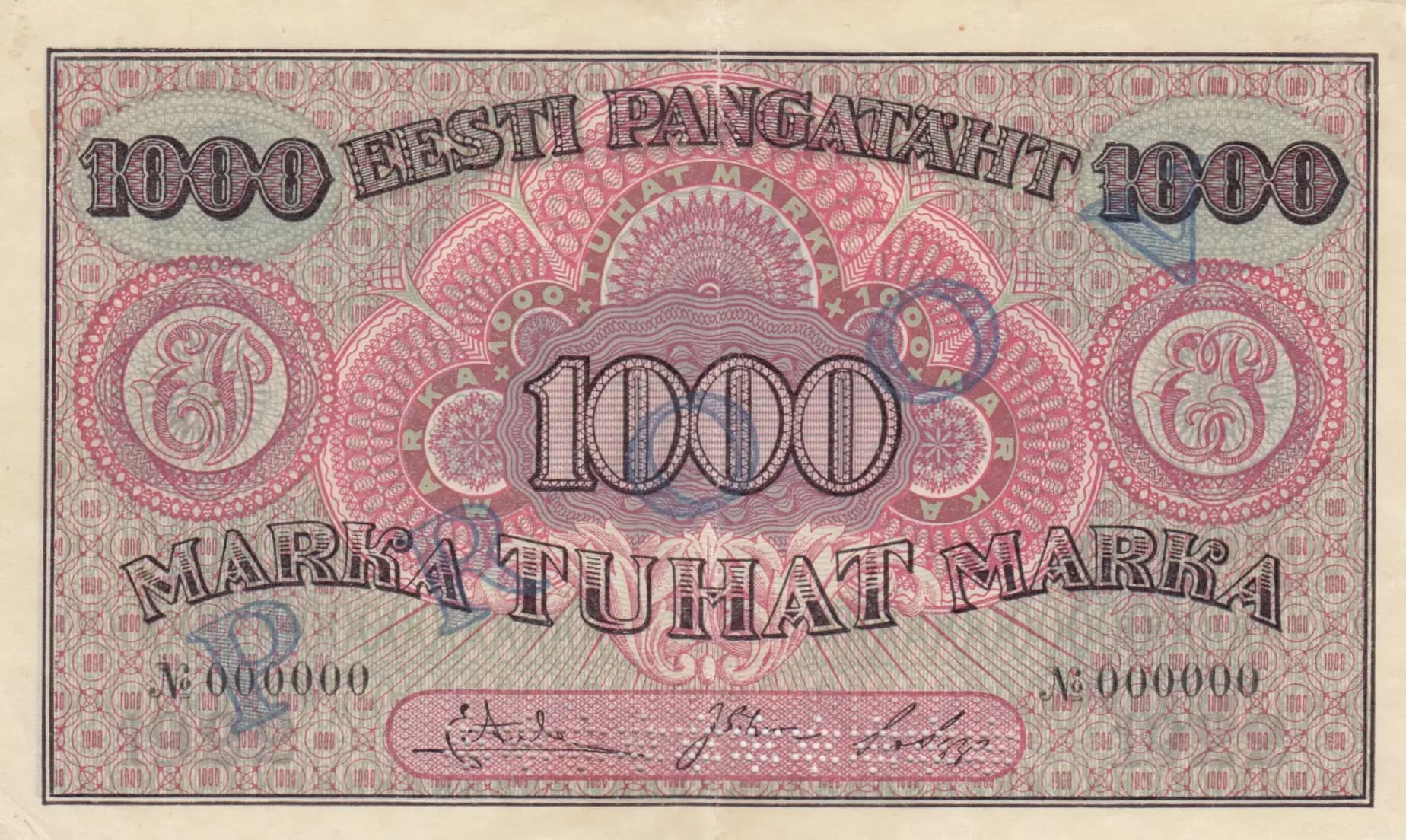
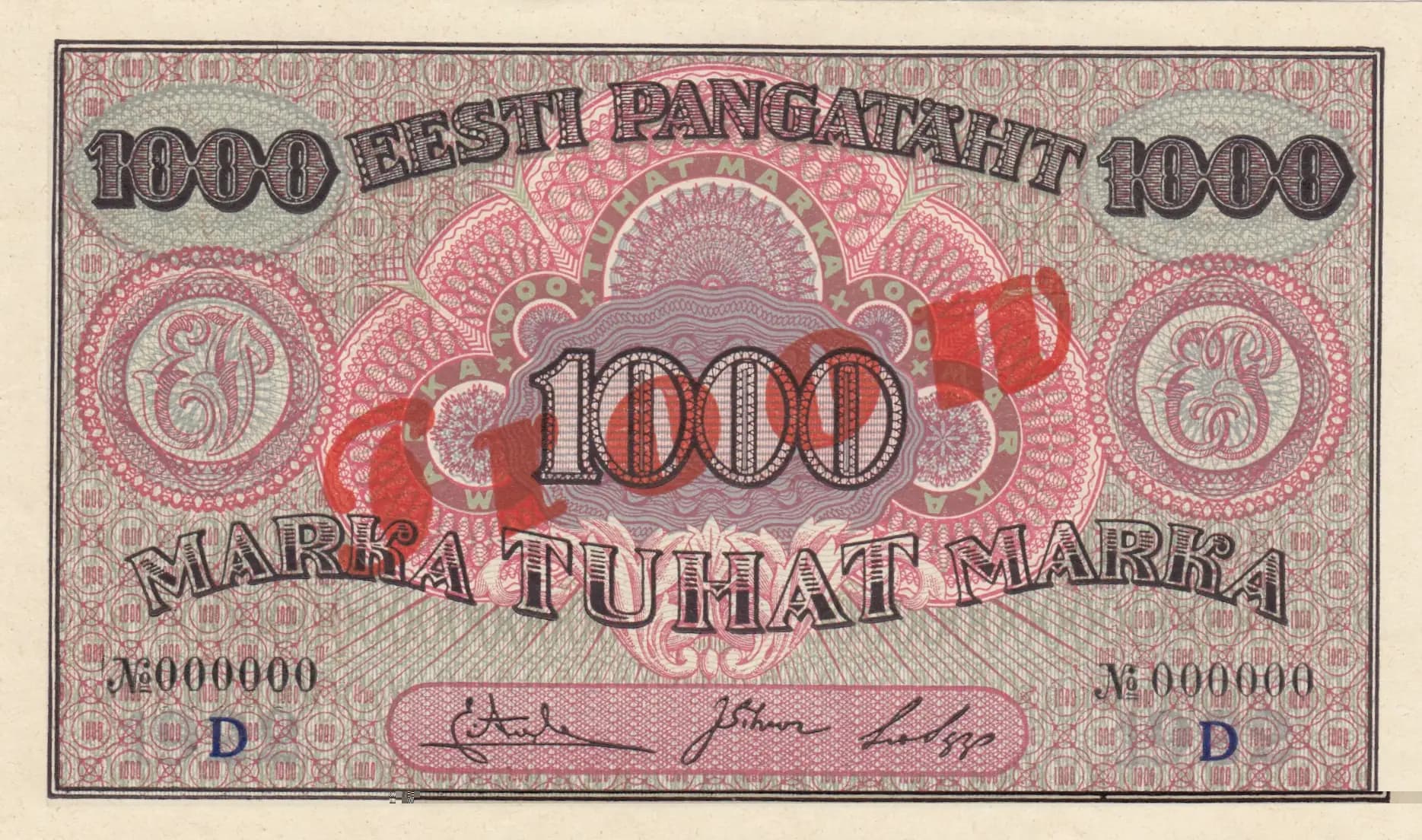
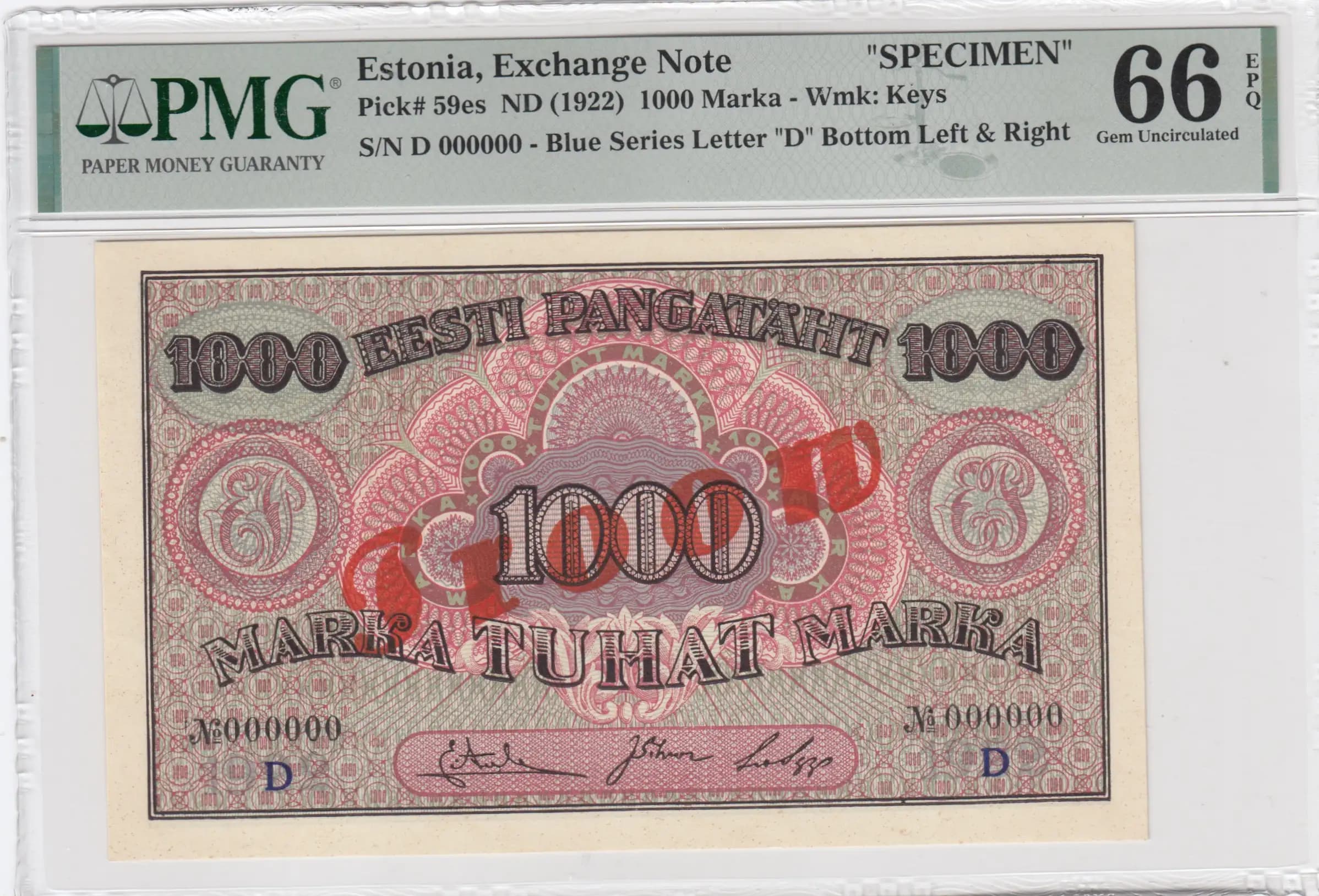
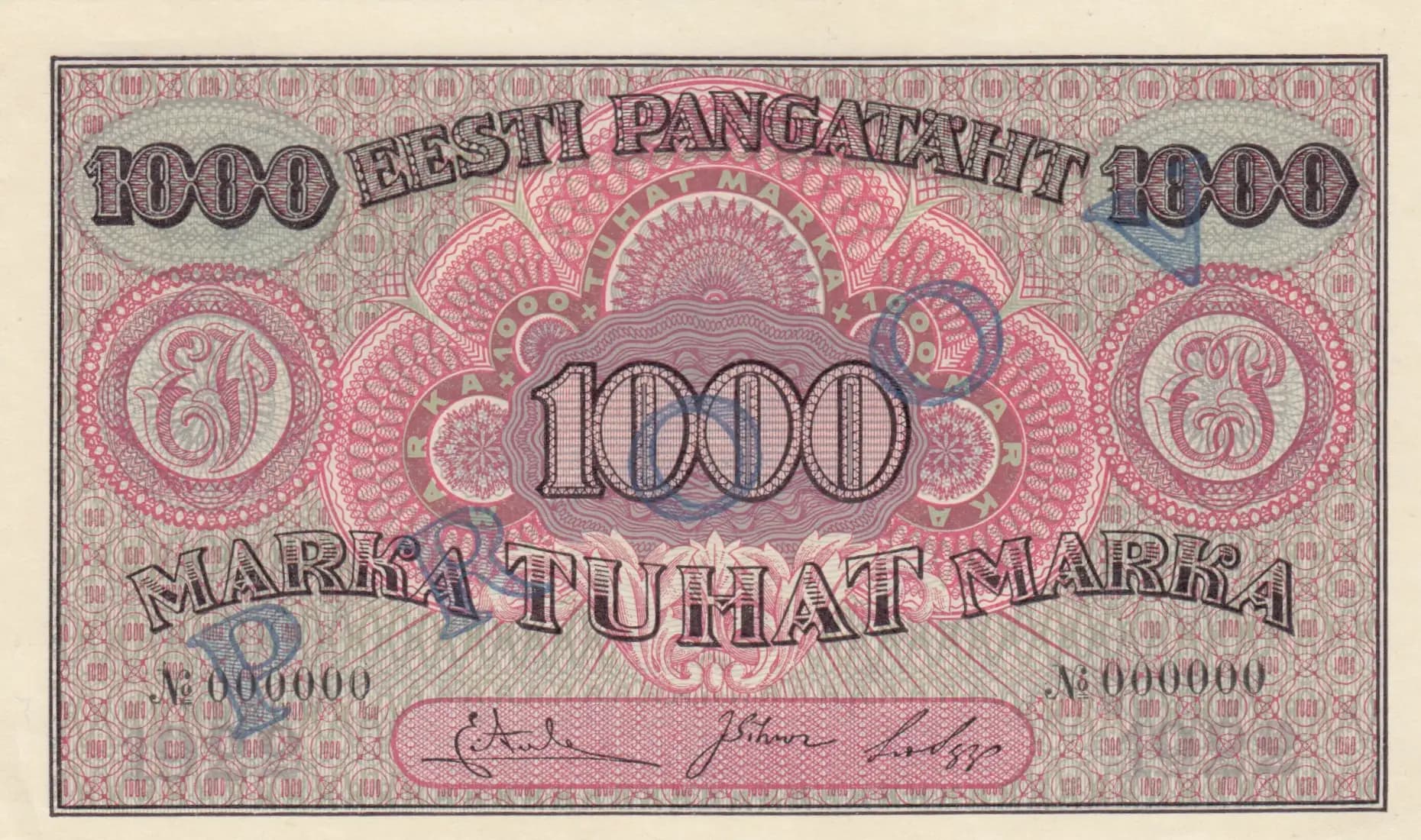
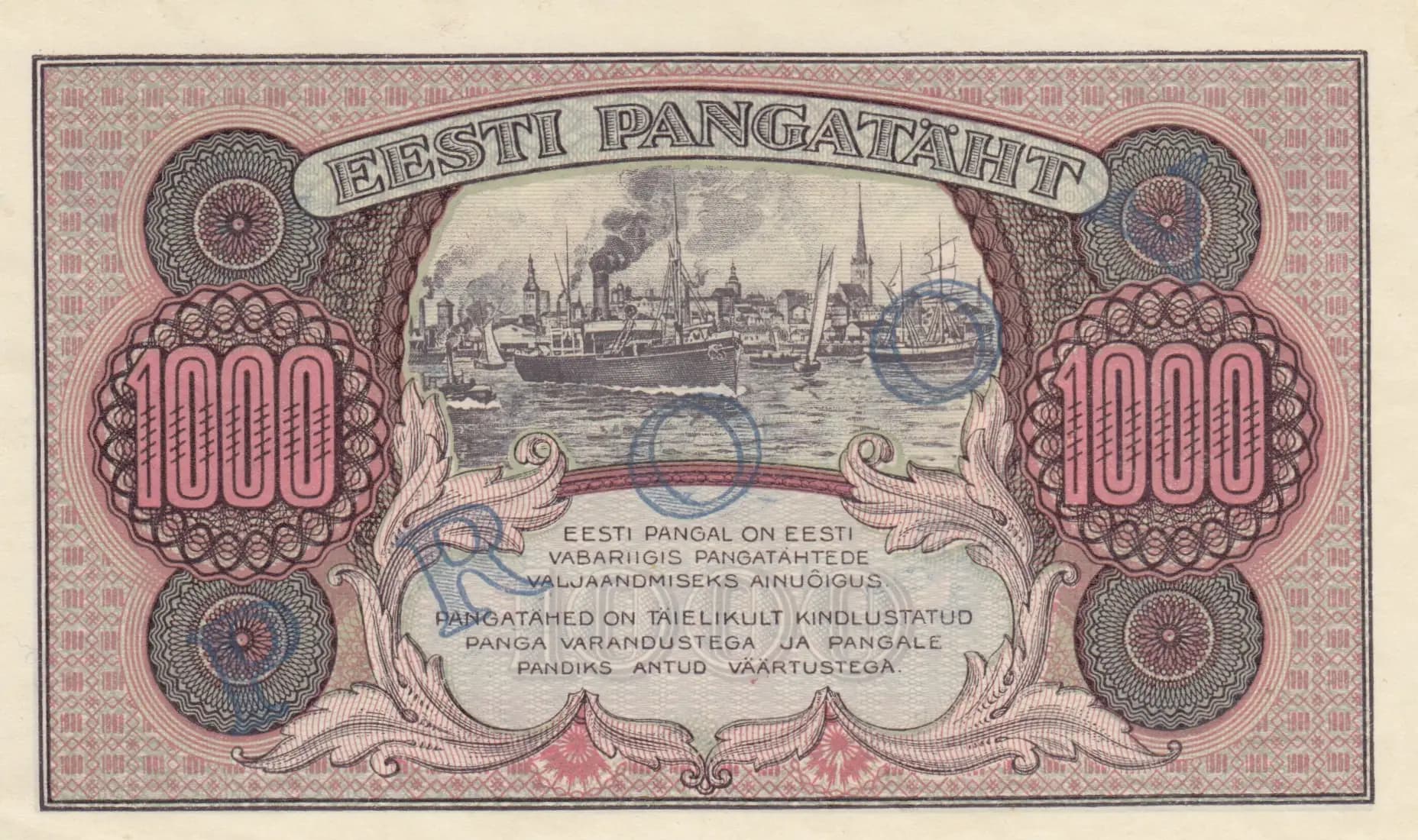
This 1000 Marka specimen note from Estonia's 1922 Treasury issue presents an exceptional example of early Estonian monetary design in uncirculated condition. The banknote features striking pink and gray ornamental typography with elaborate sunburst and rosette motifs on the front, while the reverse showcases a detailed harbor vignette depicting Tallinn's port with steamships and industrial cityscape. The blue specimen stamps and absence of wear confirm this is an original production specimen, making it a significant artifact of Estonia's brief independent monetary period.
Common. This is a specimen note from a major denomination of Estonia's 1922 currency series. Specimen notes, while not in general circulation, were produced in quantities sufficient for distribution to banks and institutions. The 1000 Marka denomination represents the higher end of this series but not an extreme rarity. Specimen versions (indicated by the 'as2' designation and 000000 serial) were standard production items with blue stamps applied during manufacturing. Unless specific print run data indicates severely limited production, specimen banknotes of major denominations from established early-state issues such as this typically remain common in the collector market.
Issued in 1922 during Estonia's early years of independence following the Russian Revolution, this 1000 Marka note represents the newly established Treasury of Estonia's assertion of monetary sovereignty. The back's prominent depiction of the Port of Tallinn (Reval) reflects the nation's economic foundation in Baltic maritime trade and industrial development during the interwar period. This denomination and design series were part of Estonia's effort to establish a stable, visually distinctive currency for the nascent Estonian Republic.
This note exemplifies early 20th-century Estonian banknote artistry with symmetrical, ornate design elements typical of the period. The front features elaborate geometric sunburst and rosette patterns arranged around central denomination framing, with intricate filigree scrollwork characteristic of security engraving. The reverse presents a detailed maritime vignette of Tallinn's harbor, featuring a prominent steamship, sailing vessels, church spires dominating the skyline, and smoking industrial chimneys—all rendered in fine-line engraving against the gray-pink background. The harbor scene serves dual purposes as both a patriotic emblem and anti-counterfeiting security feature, while the circular rosette designs in all corners provide additional ornamental security elements.
Front: 'EESTI PANGATÄHT' (Estonian Banknote), 'MARKA TUHAT MARKA' (Thousand Marka), denomination numerals '1000' (upper corners and center), specimen serial '№ 000000'. Back: 'EESTI PANGATÄHT' (Estonian Banknote), denomination '1000' (left and right frames), 'EESTI PANGAL ON EESTI VABARIIGIS PANGATÄHTE DE VÄLJAARNDIMISEKS AINUÕIGUS. PANGATAHED ON TAIELIKULT KINDLUSTATÜD PANGA VARANDUSTEGG JA PANGALE PANDIKS ANTUD VÄÄRTUSTEGG' (The Bank of Estonia has the sole right to issue banknotes in the Estonian Republic. Banknotes are fully secured by the Bank's assets and securities pledged to the Bank).
Intaglio (engraved) printing on banknote stock, utilizing fine-line engraving and microprint techniques throughout. The piece exhibits characteristic depth and precise detail consistent with security-grade banknote production of the 1920s. No specific printer attribution is definitively established for Pick 59as2, though the technical execution suggests production by a reputable European security printer contracted by the Treasury of Estonia. The blue specimen stamps appear to be applied post-printing as standard specimen marking.
This note is identified as a specimen variety (Pick 59as2) distinguished by the printed blue circular specimen stamps and the universal serial number '000000' replacing a numbered serial. The specimen designation indicates this was a production sample or distribution sample for banking institutions rather than a circulating note. No significant variations in signature, overprint, or serial prefix are noted within the specimen category, suggesting this represents the standard specimen production for the 1000 Marka 1922 issue.