1000 marka 1922 specimen
“serie D”
Market Prices
About This Note
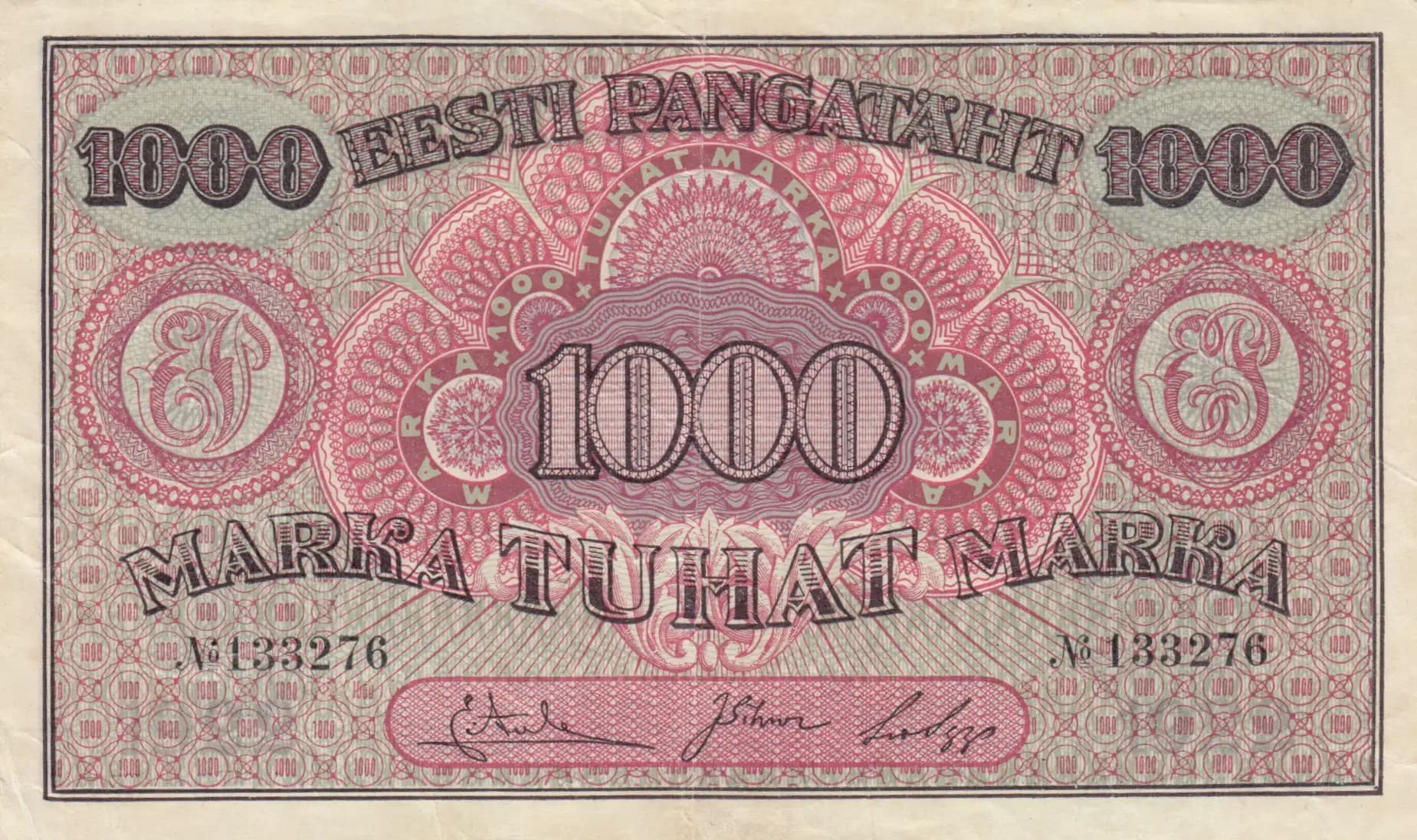
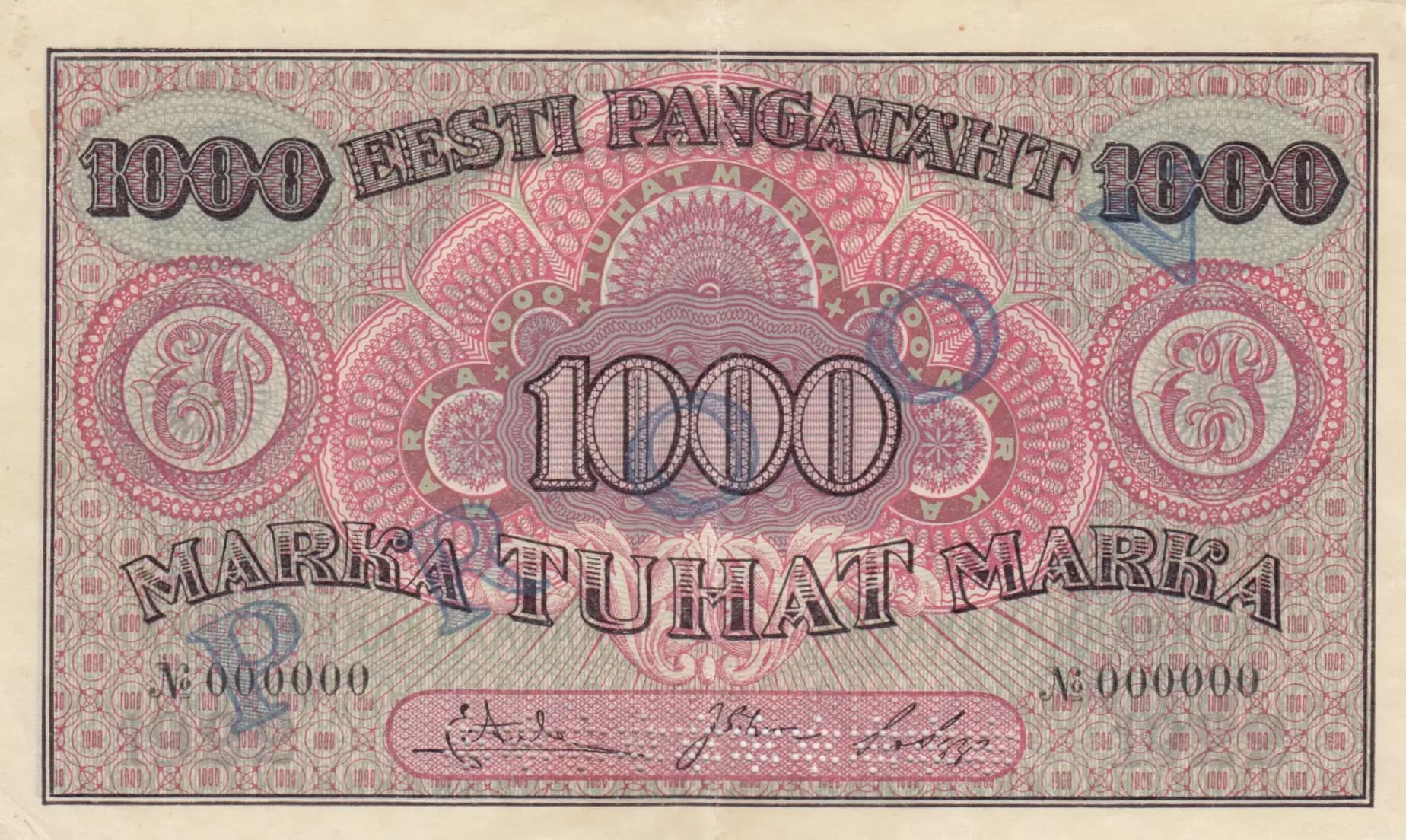
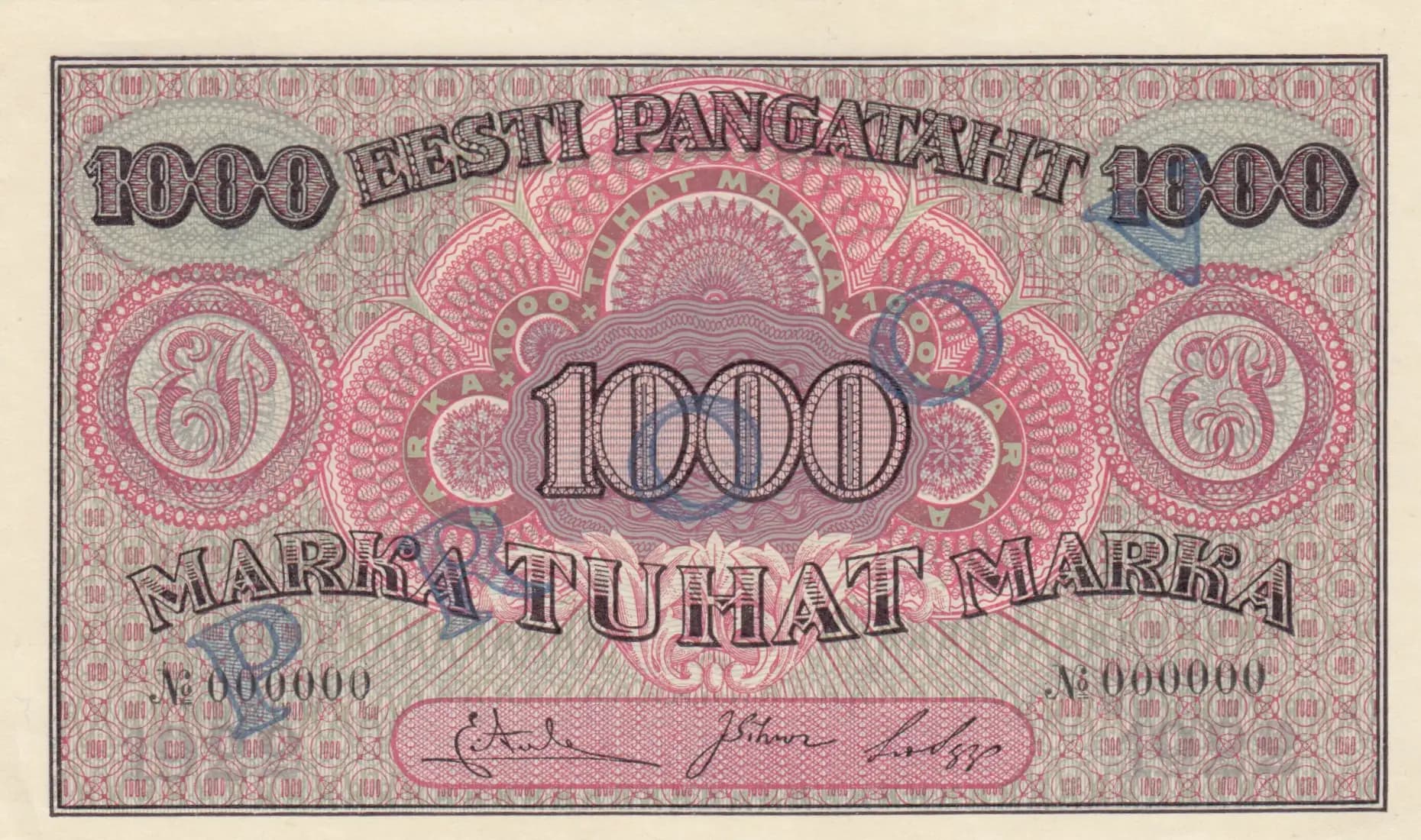
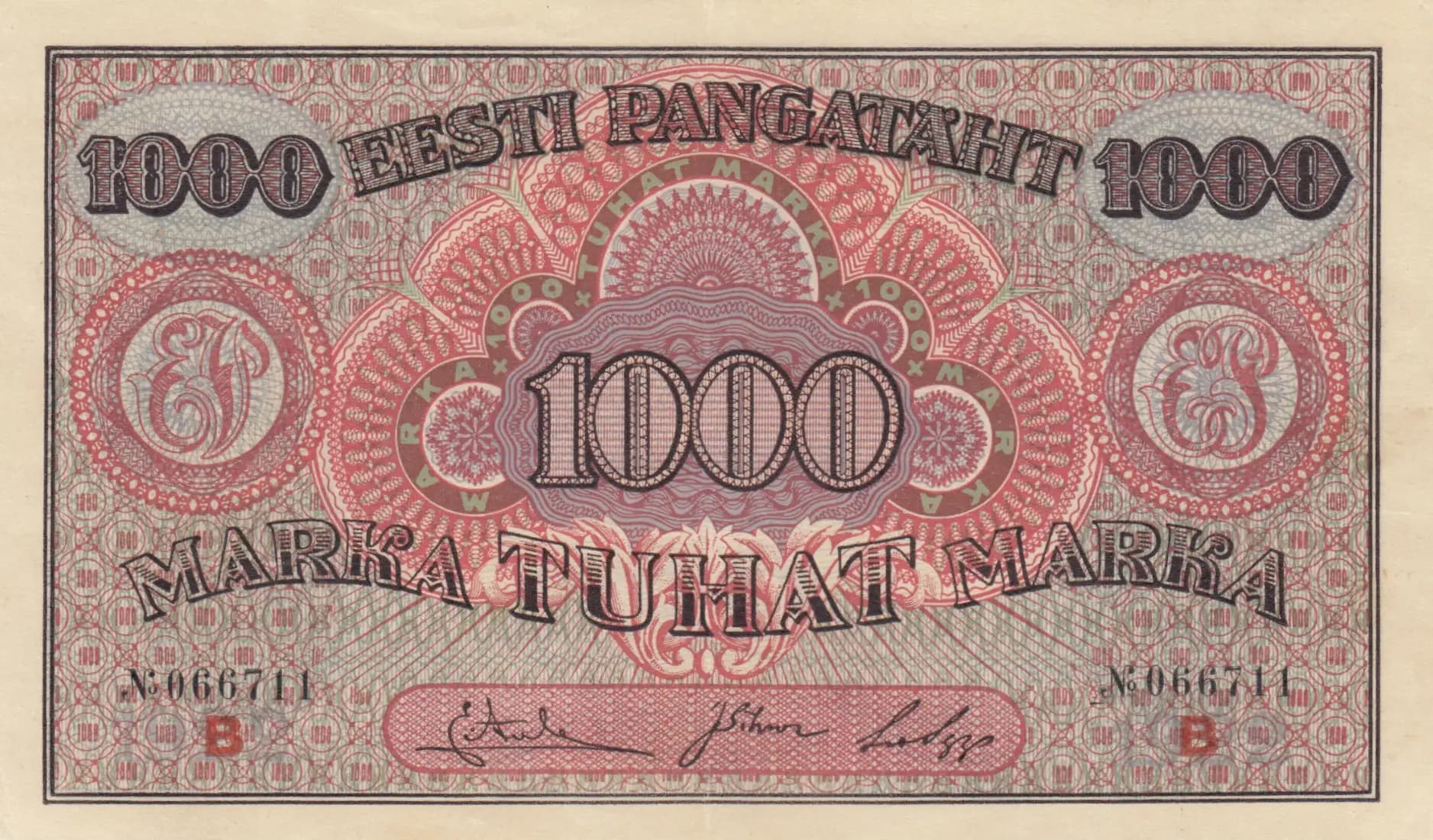
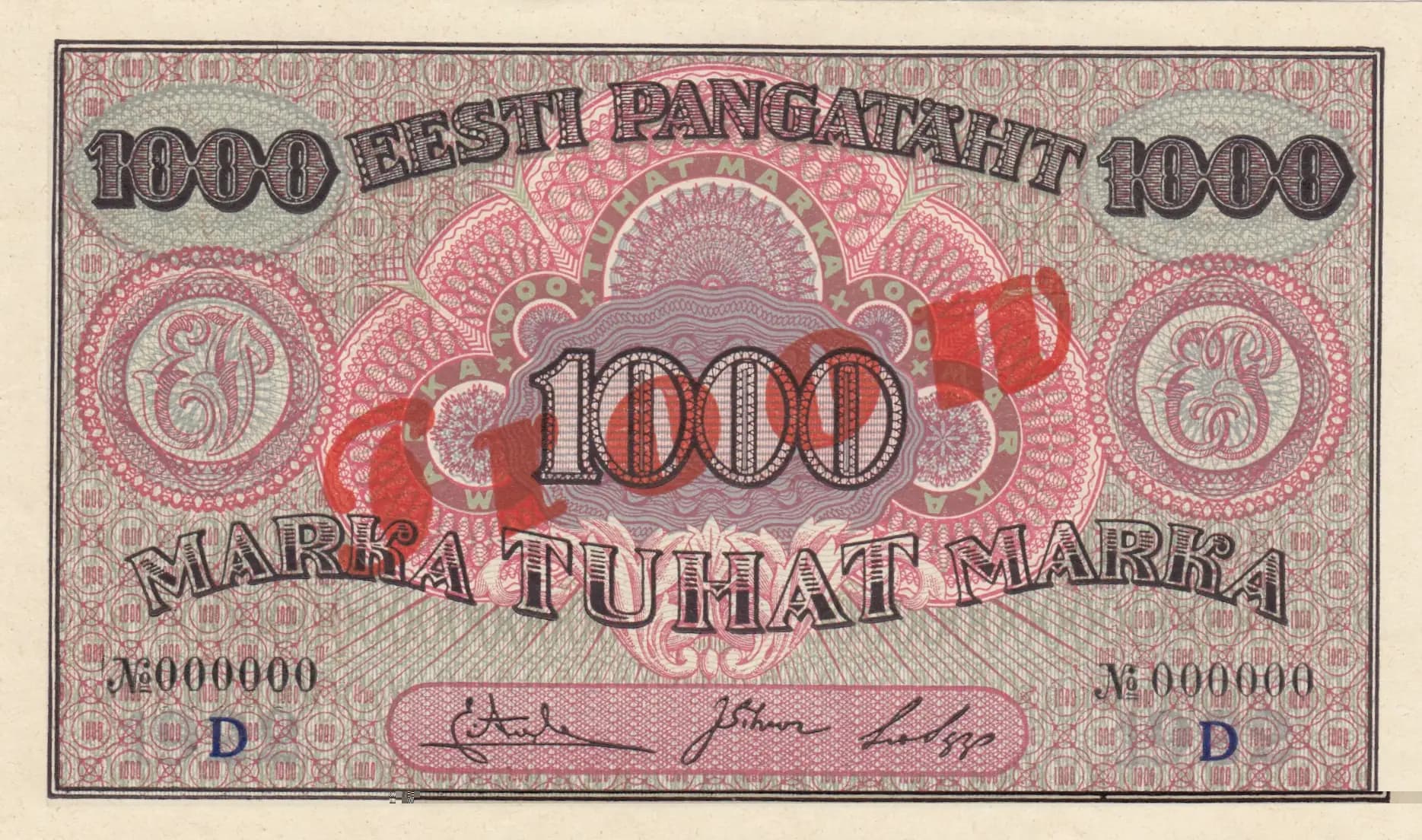
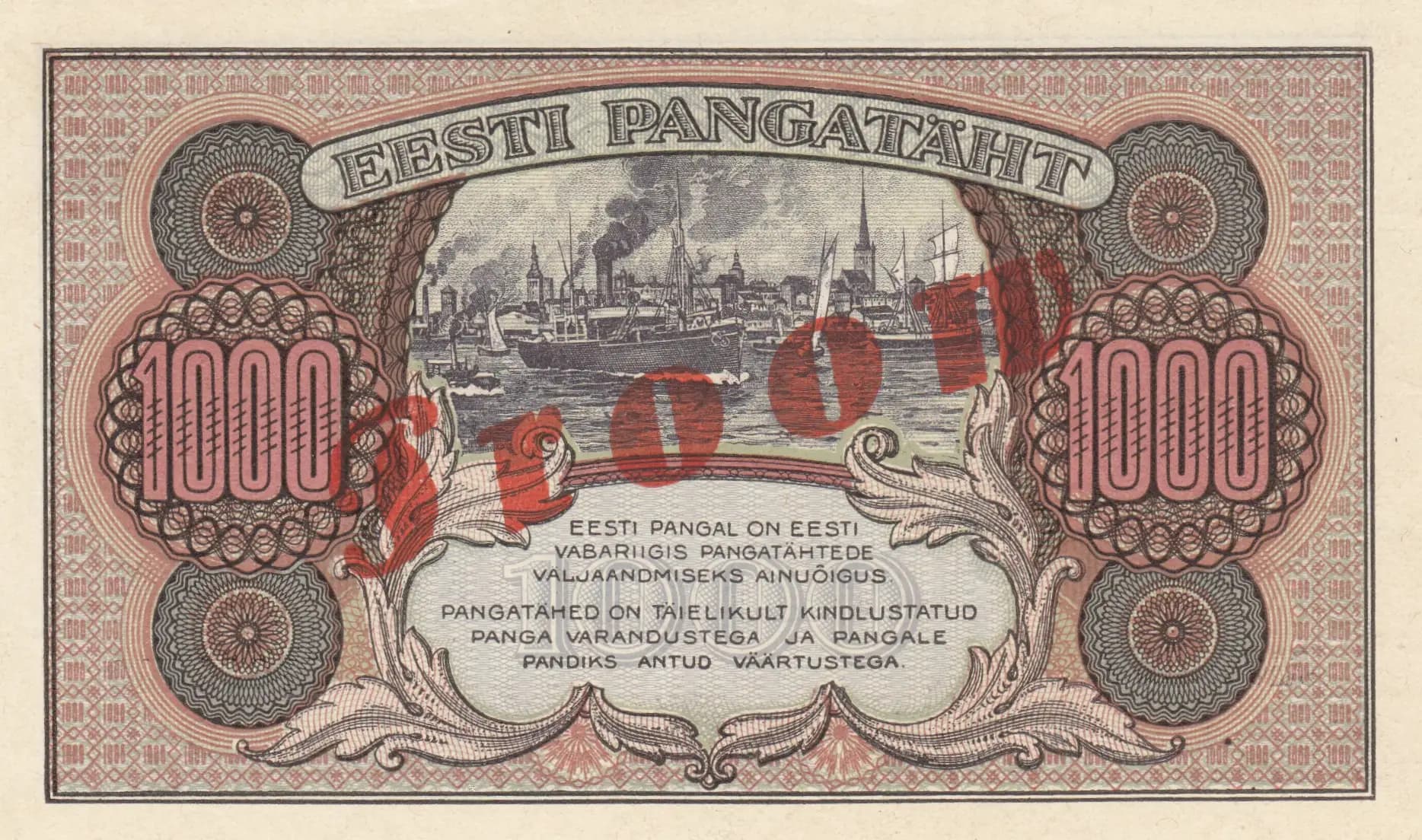
This is an exceptional 1922 Estonian 1000 Marka specimen note in uncirculated condition, featuring the Treasury of Estonia's distinctive red and green color scheme with ornate Art Nouveau-style decorative patterns. The reverse depicts a detailed engraved harbor scene of Tallinn (Reval) with sailing vessels and waterfront architecture, characteristic of Estonia's early independence period coinage and currency design. As a specimen note with series D designation and zero serial numbers, this is a non-circulating example of historical significance to Estonian numismatics.
Common. While the 1922 Estonian 1000 Marka series is historically significant as an early independence-period issue, the Pick P-59 variants were produced in substantial quantities for regular circulation and specimen distribution. The eBay market data shows UNC specimens trading in the $135-$177 range on average, with 2016 catalog values of $1500 UNC representing nostalgic pricing rather than rarity-driven scarcity. The availability of multiple catalogued variants (P-59a, P-59c, P-59e) and the prevalence of this note in collector markets confirm its common status, even in specimen condition.
This note was issued during Estonia's early years as an independent republic (1922), following independence from the Russian Empire. The prominent harbor scene depicting Tallinn reflects the nation's maritime trade importance and connection to its Baltic heritage, while the Estonian language inscriptions ('EESTI PANGATÄHT') emphasize national sovereignty in currency matters. The note's issuance by the Treasury of Estonia represents the establishment of the country's monetary system during the volatile post-World War I period.
The 1000 Marka features a classical design typical of early 20th-century European banknotes. The front displays elaborate Art Nouveau ornamental elements with red and green geometric and floral patterns, rosette medallions in the corners, and multiple denomination numerals arranged prominently in the top corners and center. The back presents a masterwork of bank note engraving: a detailed black and white vignette of Tallinn's historic harbor from the water, featuring multiple sailing vessels, church spires, and waterfront buildings with smokestacks—capturing the city's role as a major Baltic port. The composition is framed by matching red and cream decorative borders with circular rosette patterns, creating a symmetric and balanced design. No portraits appear on either side, focusing instead on architectural and maritime symbols of Estonian national identity.
Front: 'EESTI PANGATÄHT' (Estonian banknote); '1000' and 'MARKA TUHAT MARKA' (Mark thousand mark); Series designation 'D' in lower corners; Serial number format '#000000' (specimen). Back: 'EESTI PANGATÄHT' (Estonian banknote); '1000' (denomination in decorative frames); 'EESTI PANGAL ON ESTI VABARIIIGIS PANGATÄHTEDE VÄLJANDMISEKS AINUÕIGUS' (The Estonian Bank has the exclusive right to issue banknotes in the Estonian Republic); 'PANGATAHED ON TAIELIKULT KINDLUSTATUD PANGA VARAANDUSEGA JA PANGA PANDIKS ANTUD VÄÄRUSTE GA' (Banknotes are fully secured by the bank's assets and pledged valuables).
Intaglio engraving (copperplate/steel plate printing) combined with letterpress for the text and denomination elements. The detailed harbor vignette on the reverse and the fine geometric patterns throughout demonstrate the high-quality intaglio work characteristic of security banknote production of the 1920s. The color application (red and green) was achieved through multi-stage printing, typical of the period's security printing standards.
This specimen represents the series D variant with zero serial numbers ('000000'), consistent with non-circulating specimen notes prepared for distribution to banks and international institutions. The PMG population report identifies P-59a, P-59c, and P-59e as catalogued variants, all with key watermarks. This note's specific characteristics—the 'D' series designation in the lower corners, the 000000 serial number format, and the specimen-grade preservation—indicate it is likely to fall within one of these documented varieties, though the exact PMG subvariant classification would require additional documentation or grading.