1000 marka 1922 specimen
About This Note
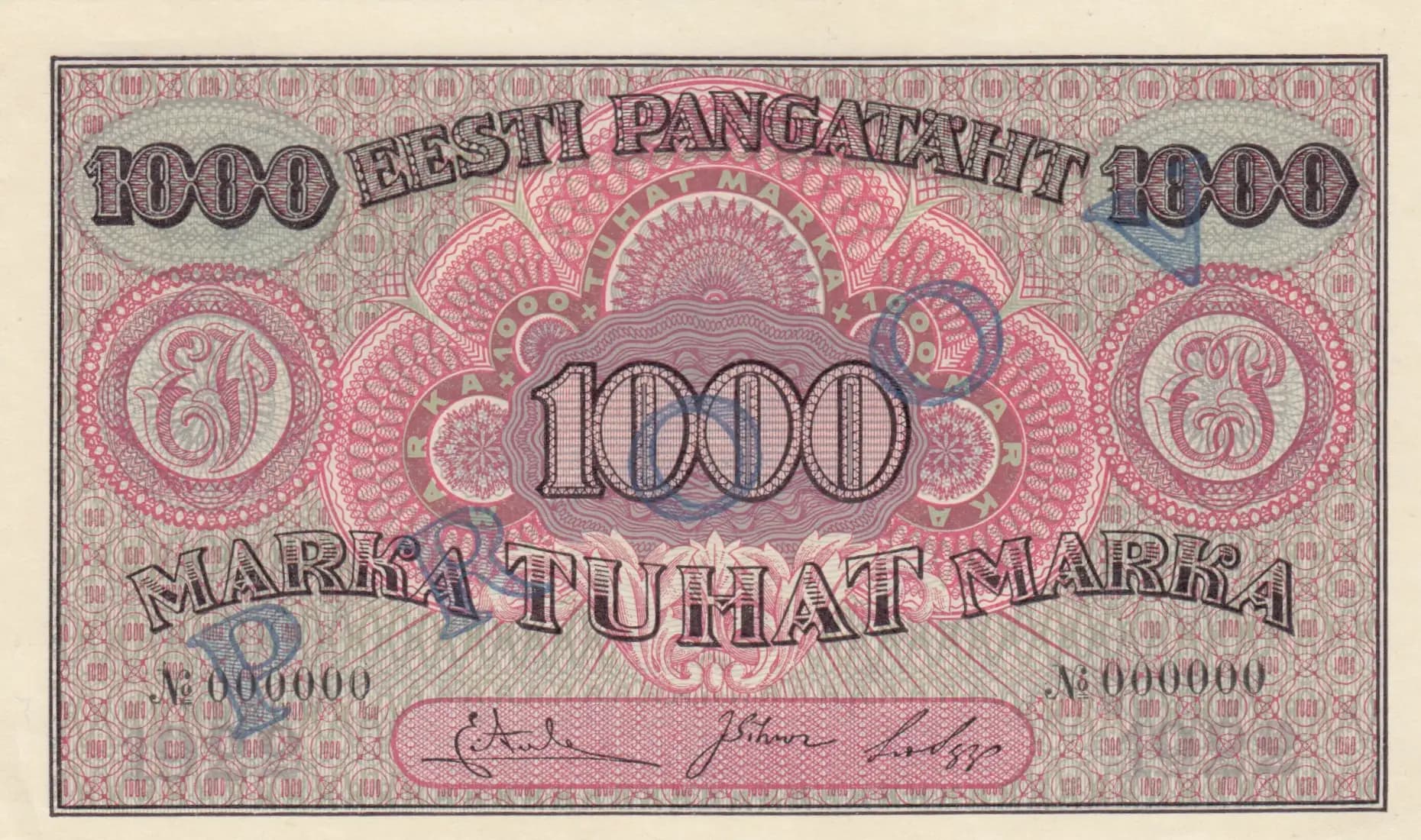
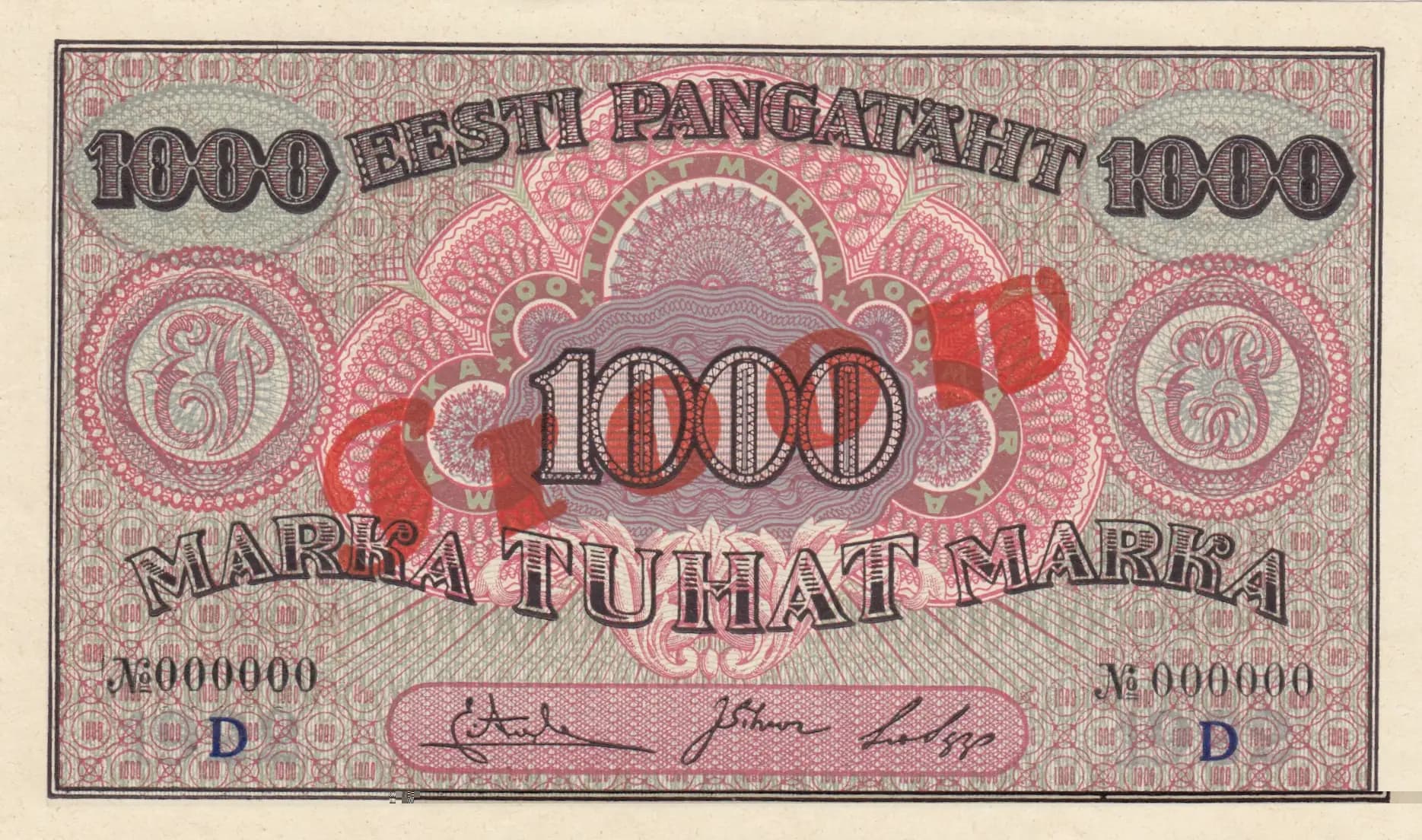
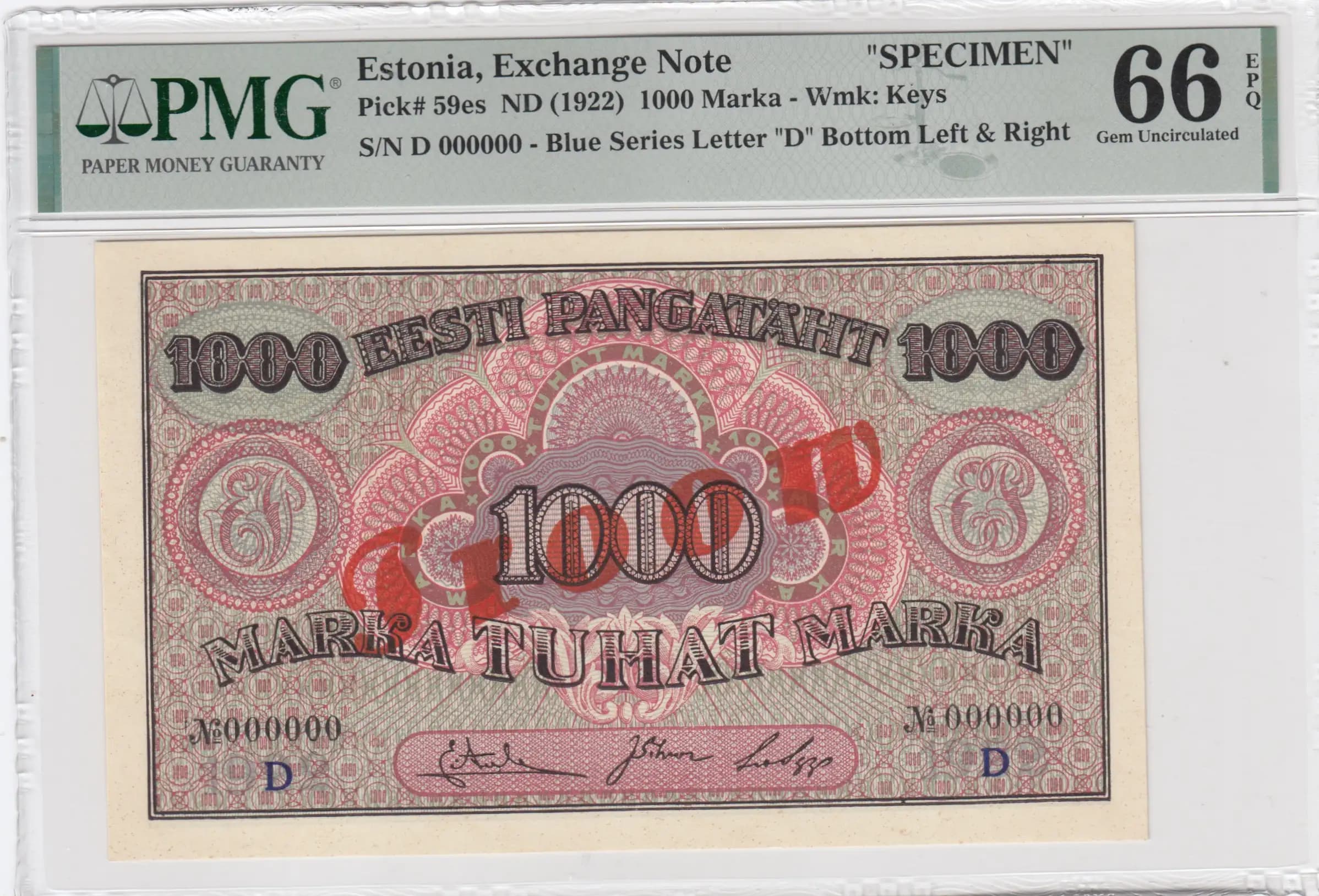
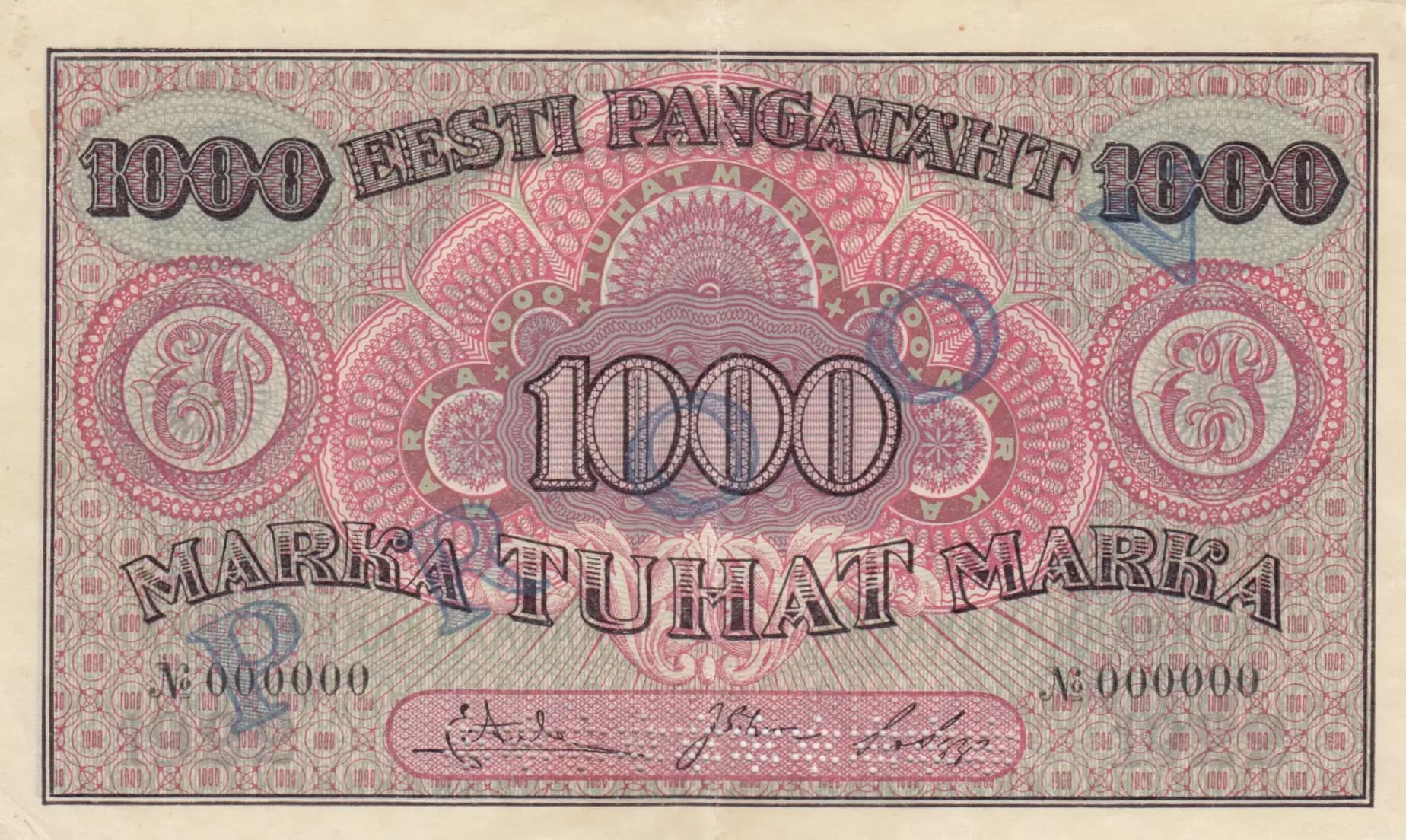
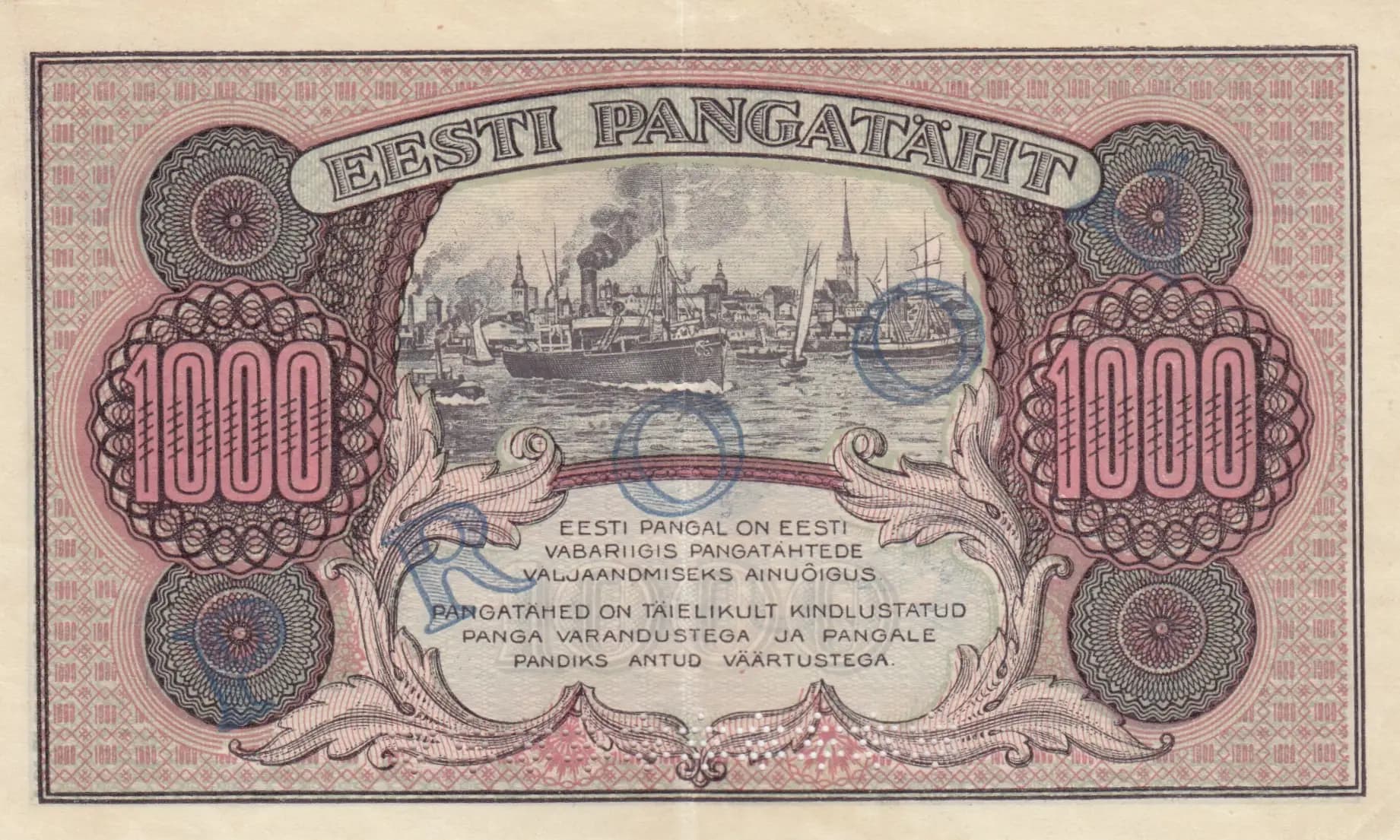
This is a specimen note of Estonia's 1000 Marka from 1922, graded EF, representing the early currency of the newly independent Estonian Republic. The note features distinctive pink and cream coloring with ornate Art Deco-influenced ornamental designs on the obverse and a detailed engraved harbor scene on the reverse depicting the Port of Tallinn. As a specimen note with serial number 000000, this piece carries historical significance as evidence of the Treasury of Estonia's currency production during the nation's first years of independence.
Common. The 1000 Marka denomination from 1922 was part of the standard currency circulation of early Estonian independence and no evidence of limited print runs, recalls, or extreme scarcity exists in numismatic literature. Specimen notes of this type, while somewhat less frequently encountered than circulated examples, were produced in sufficient quantities for archival and banking purposes and regularly appear in the market. The EF condition grade is typical for specimen notes, which were handled minimally and stored carefully.
The 1000 Marka note was issued in 1922 by the Treasury of Estonia during the brief period of Estonian independence between World War I and Soviet annexation (1918-1940). The reverse design's depiction of the Port of Tallinn with steamships and industrial smokestacks reflects Estonia's importance as a Baltic trading hub in the early 20th century. The ornate denominations and security-conscious design elements demonstrate the care taken by the nascent Estonian state to establish a credible national currency during a period of significant economic and political transition.
The front features a striking sunburst medallion design with radiating geometric patterns in the center, surrounded by ornamental scrollwork and corner flourishes typical of early 20th-century security printing. The color scheme of pink/rose and cream provides distinctive visual appeal while the complex repeating circular patterns serve as anti-counterfeiting measures. The reverse depicts an historically significant engraved scene of Tallinn's maritime commerce, with a prominent steamship as the focal point, accompanied by sailboats, church spires, and industrial smokestacks of the Estonian capital's skyline. The denomination '1000' is framed in ornate rosette cartouches on both sides. The cartouche inscription on the back conveys the backing and authority of the Estonian Bank, reassuring holders of the note's security during a period of economic uncertainty.
FRONT SIDE: 'EESTI PANGATÄHT' (Estonian Banknote) - arced text across top; '1000' - large denomination numerals at corners; 'MARKA TUHAT MARKA' (Thousand Mark/Mark Thousand Mark) - text below central medallion; 'N° 000000' - specimen serial number at bottom. BACK SIDE: 'EESTI PANGATÄHT' (Estonian Banknote) - arced text across top; '1000' - large denomination in ornate rosettes at left and right; Full text cartouche reads: 'EESTI PANGAL ON EESTI VABARIIGIS PANGATÄHTEDE VÄLJASTAMISE ÕIGUS. PANGATÄHED ON TÄIELIKULT KINDLUSTATUD PANGA VARANDUSEGA JA PANGALE PANDIKS ANTUD VÄRTUSSTEGA.' Translation: 'The Estonian Bank has the right to issue banknotes in the Estonian Republic. Banknotes are fully secured by the bank's property and by valuables pledged to the bank.'
Steel plate intaglio engraving (recess printing), a standard security printing technique for high-denomination banknotes of this era. The fine line work visible in the harbor scene, combined with the ornate guillochè background patterns and complex geometric designs, are characteristic of banknote-grade engraving. The color registration between the pink/rose and black elements, along with the subtle gray/blue shading in the engraved illustration, indicates a multi-pass printing process typical of European security printers of the 1920s. The specific printer for this issue has not been definitively identified in standard catalogs, though it was likely either a German or Nordic security printer contracted by the Estonian Treasury.
This is cataloged as Pick P-59as1, specifically denoting a specimen note. The 's1' designation indicates the first specimen variety. The serial number 000000 and specimen markings/stamps visible on the note confirm its status as a specimen rather than a circulation issue. No alternative signatures, date variations, or prefix variations are noted for this denomination, as the 1922 issue appears to have been produced as a single standard type.