1000 marka 1922
Market Prices
About This Note
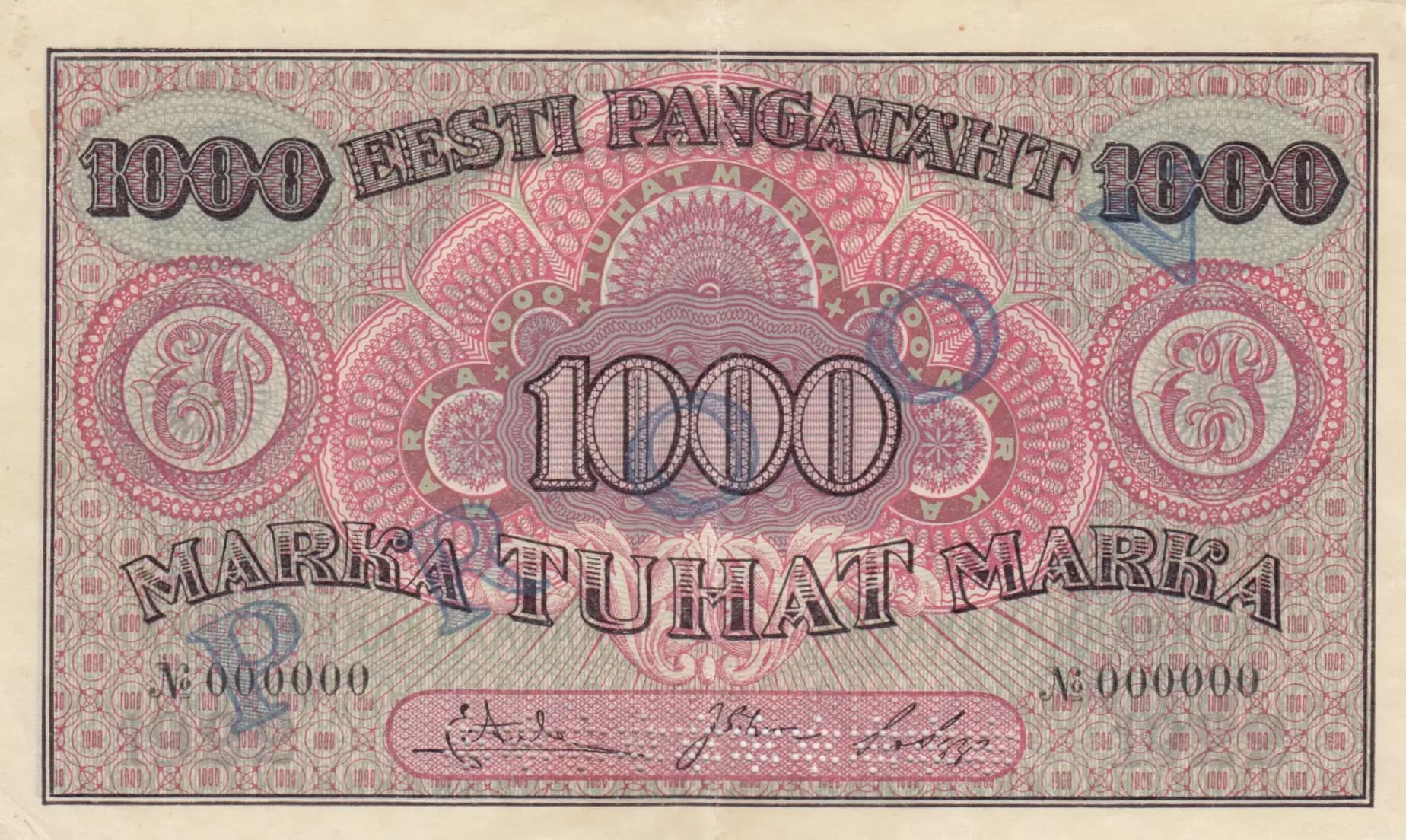
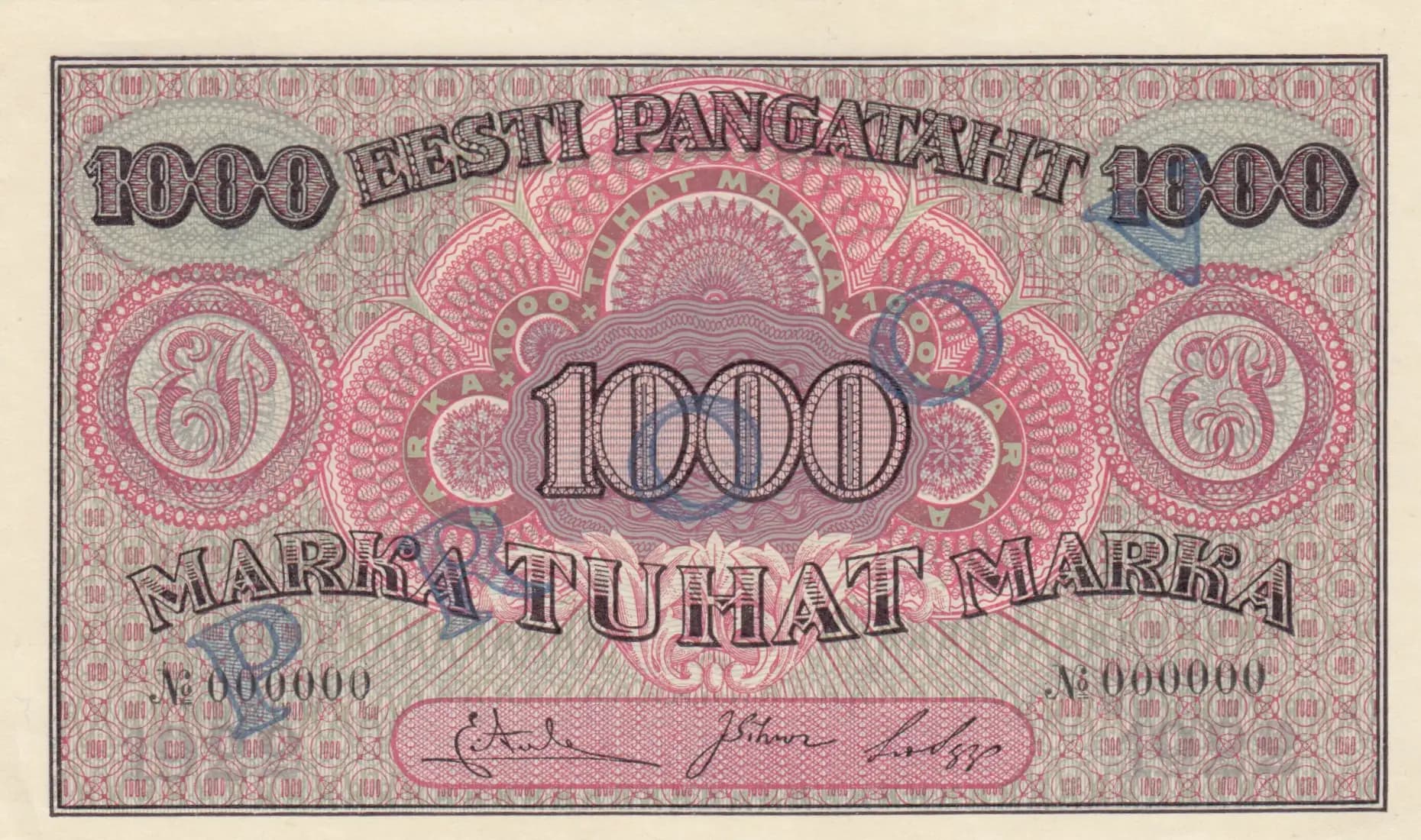
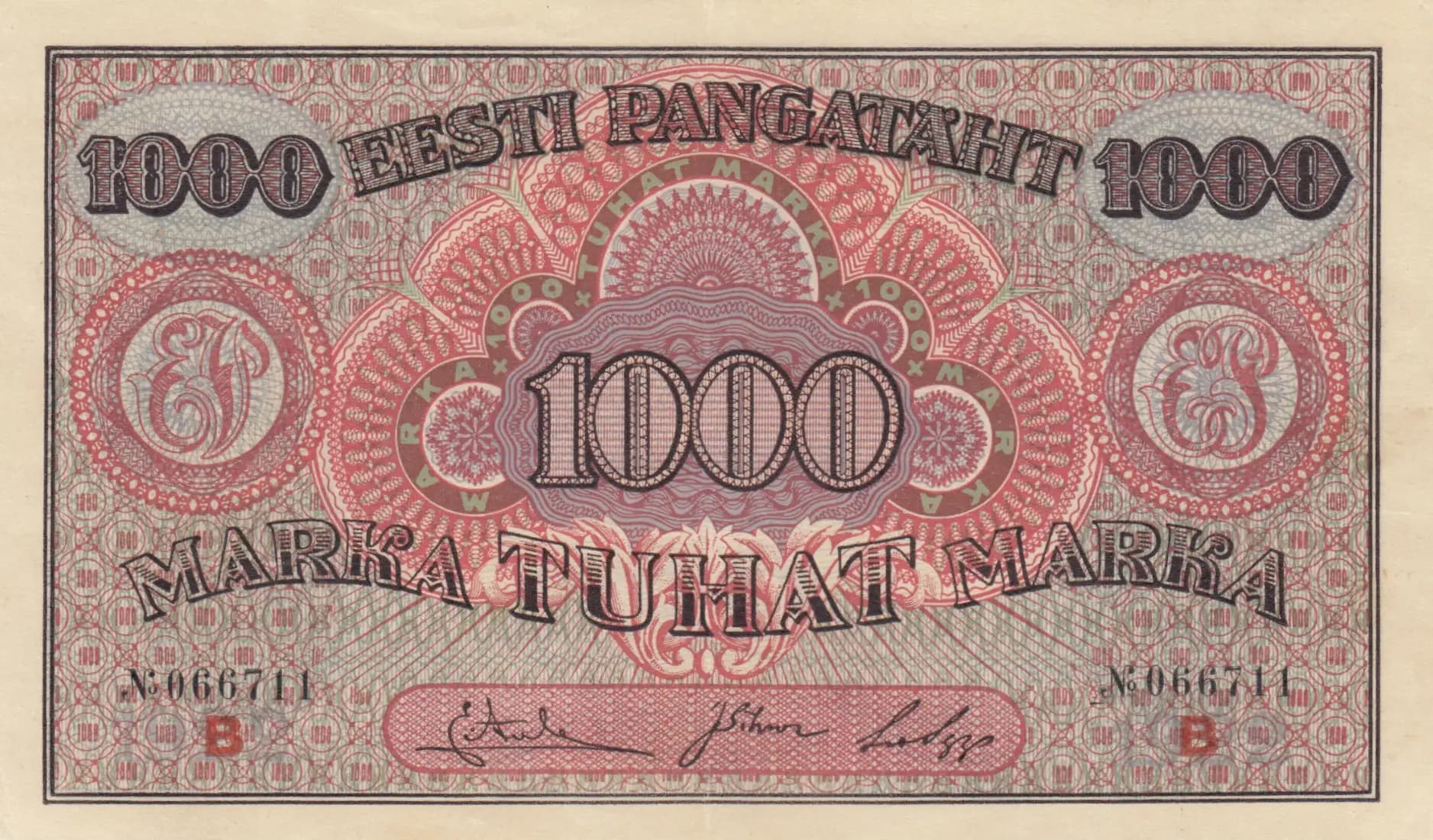
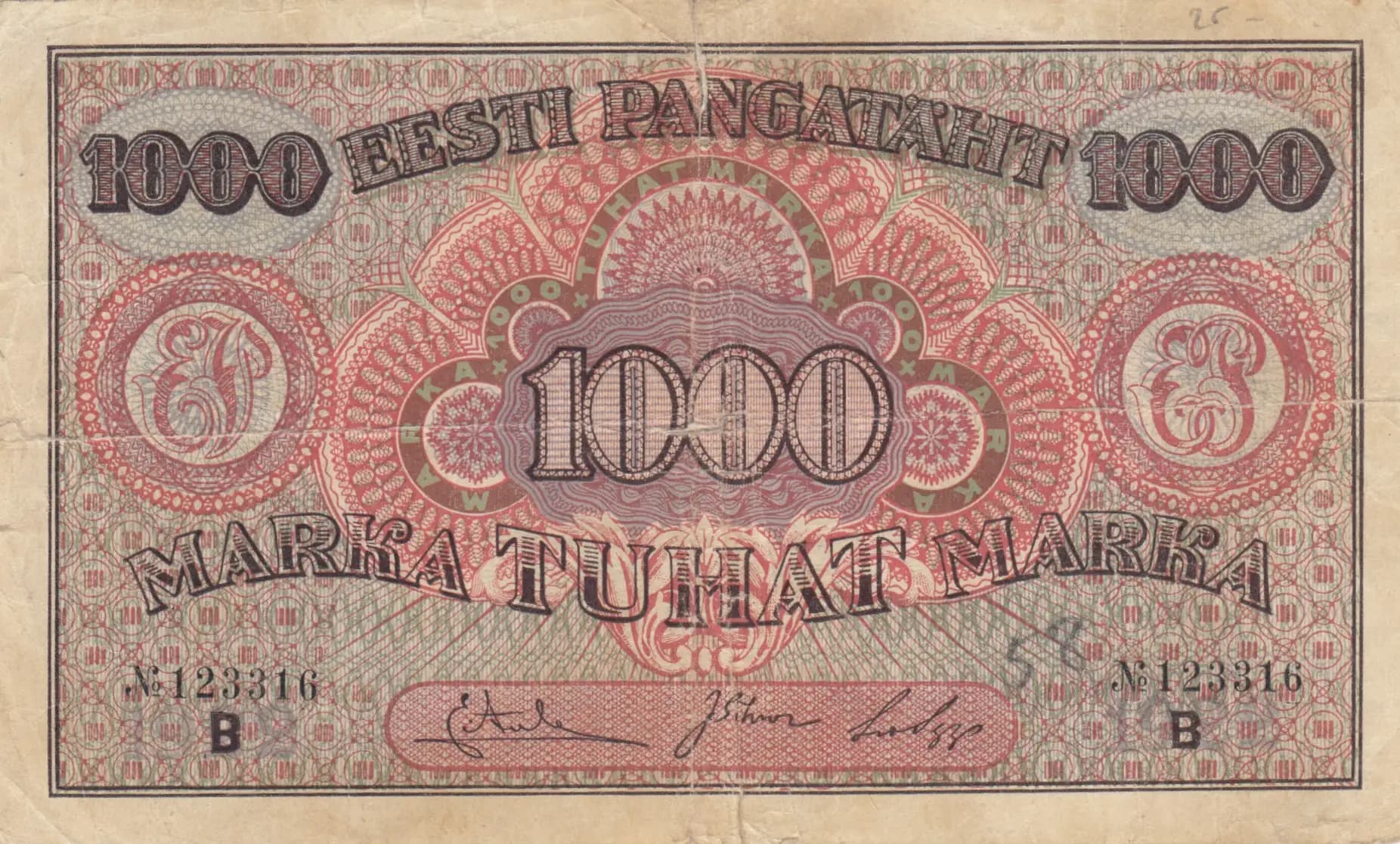
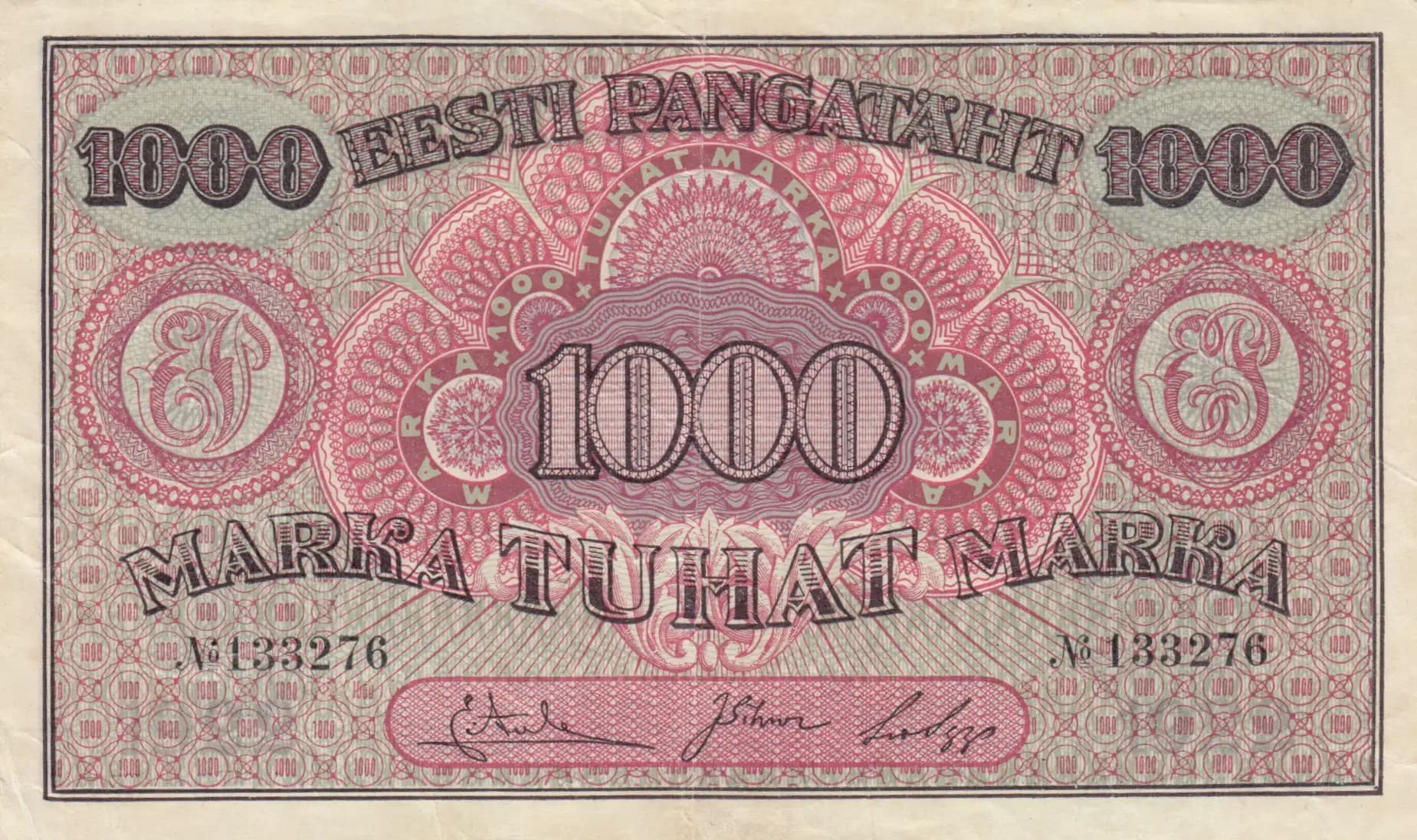
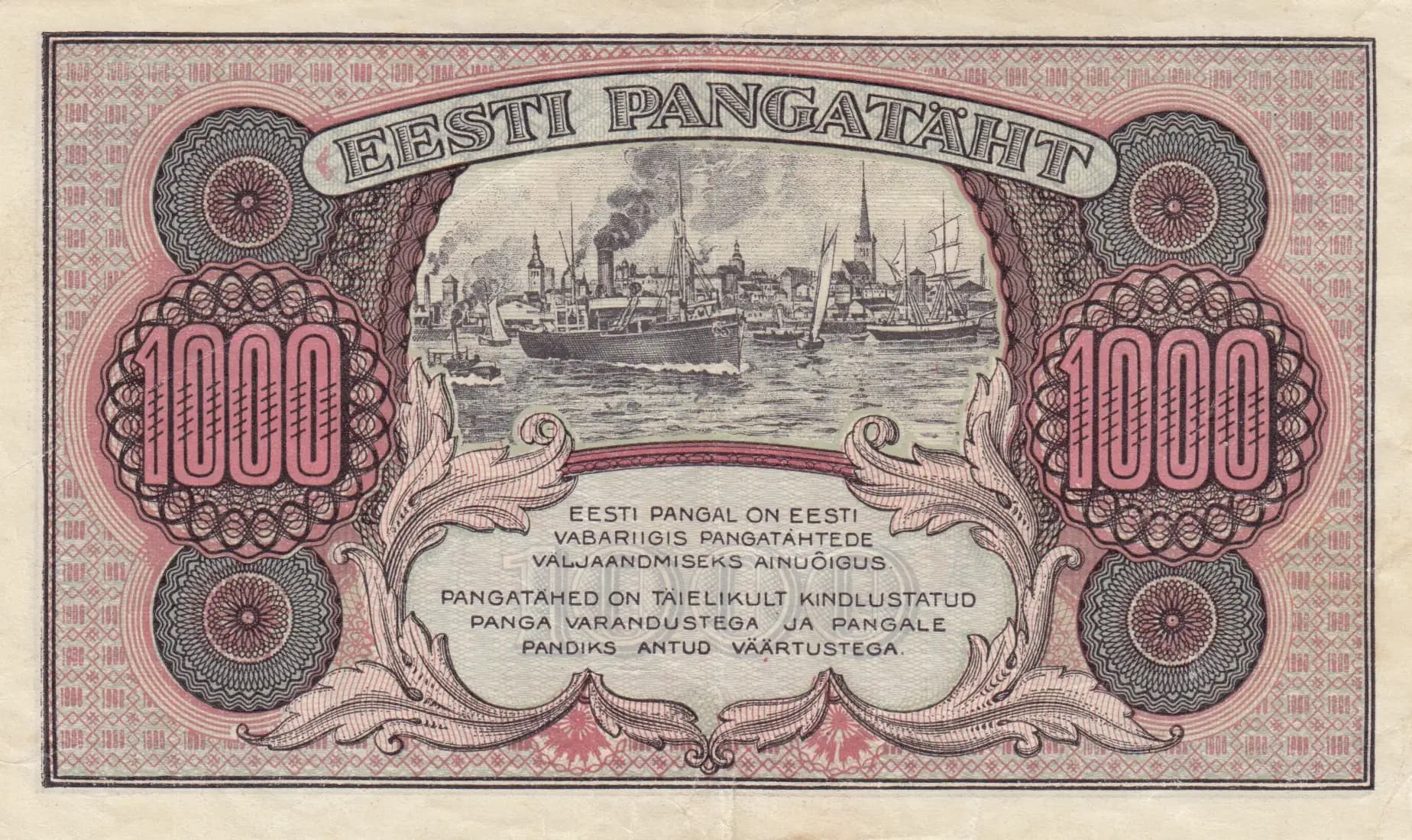
This 1000 Marka note from Estonia's 1922 issue presents a magnificent example of early Estonian monetary design, featuring ornate Art Nouveau-influenced decoration with pink and green coloring throughout. The front showcases intricate geometric rosette patterns and floral motifs framing the large denomination numerals, while the reverse depicts a detailed harbor vignette of Tallinn with period steamships and the city's distinctive church spires—a fitting symbol of Estonia's newly independent statehood. The specimen examined exhibits VF condition with sharp printing, clean surfaces, and well-preserved detail, making it a desirable example of this historically significant series.
Common. Despite its historical significance and aesthetic appeal, this note remains relatively common in the numismatic market. eBay market data shows VF examples trading in the $79-$82 range, indicating steady but modest collector demand without scarcity premium. The 2016 catalog value of $700 VF appears elevated relative to current market prices, suggesting the note has not appreciated substantially or supply exceeds demand. The existence of three cataloged variants (P-59a, P-59c, P-59e) within this Pick number further distributes collector interest across varieties. Print runs during Estonia's early independence were substantial enough to ensure availability in today's secondary market, and the note does not exhibit characteristics of rarity such as short-lived issue status or recall conditions.
Issued in 1922 by the Treasury of Estonia during the nation's early independence following World War I, this banknote represents the young Estonian Republic's assertion of monetary sovereignty and economic identity. The reverse's depiction of Tallinn's port—one of the Baltic's most important commercial harbors—symbolizes Estonia's maritime heritage and integration into European trade networks during the interwar period. The note's ornate design and security features reflect the craftsmanship standards of 1920s European currency production, underscoring the importance placed on establishing confidence in the new nation's financial institutions.
The 1000 Marka presents a harmonious Art Nouveau composition split between ornamental front and pictorial reverse designs. The obverse features a formal layout with the denomination prominently displayed in large numerals within an ornate oval cartouche at center, flanked by the text 'TUHAT MARKA' (one thousand marka), with additional denomination numerals in the upper corners. The entire field is populated with fine geometric rosette patterns, floral arabesques, and decorative corner flourishes executed in black on a lilac-pink and green underprint. The reverse shifts to a narrative composition, featuring an engraved vignette of Tallinn Harbor (Reval) as the dominant design element—a bustling Baltic port scene rendered in fine detail showing steamships, sailing vessels, and the city skyline with its characteristic medieval church spires and towers rising above merchant buildings. This vignette is surrounded by ornamental framing with scalloped cartouches containing denomination numerals on either side, and the authoritative text regarding the Estonian Bank's monopoly on currency issuance positioned below. The color scheme employs pink/magenta with gray and cream highlights throughout, creating a distinctive aesthetic characteristic of early Estonian banknote design.
FRONT SIDE: 'EESTI PANGATÄHTE' (Estonian banknote) appears across the top in a banner format. The denomination is expressed as '1000' with 'TUHAT' (thousand) and 'MARKA' (marka, the currency unit) positioned in the central oval frame and flanking positions. Serial number 'No 183276' appears at bottom left and right. BACK SIDE: 'EESTI PANGATAHIT' (Estonian banknote) appears in the top banner. The denomination '1000' is repeated in two ornate scalloped side panels. A substantial text block below the central vignette reads: 'EESTI PANGAL ON EESTI VABARIGIS PANGATAHTE VALJAAANDMISEKS AINUOIGUS PANGATAHTED ON TAIELIKULT KINDLUSTATUD PANGA VARANDUSTEGA JA PANGALE PANDIKS ANTUD VAARTUSTEGA' (The Estonian Bank has the sole right to issue banknotes in the Estonian Republic. The banknotes are fully secured by the bank's assets and valuables pledged to the bank.)
This note was produced using intaglio (engraving) printing, the standard security printing method for banknotes of this era. The fine line work visible in both the intricate geometric patterns on the obverse and the detailed harbor vignette on the reverse—particularly in the rendering of the ships, architectural details, and ornamental borders—is characteristic of steel plate engraving. The depth and clarity of impression, combined with the precision of the multi-color registration (pink, green, black, and cream elements), indicates professional bank note company production. While the specific printer is not definitively documented in the provided references, the quality and technique are consistent with Tallinn-based or German security printers active in post-WWI Baltic currency production.
This specimen is cataloged as Pick 59a, characterized by the watermark of light and dark keys and absence of a serial letter prefix—distinguishing it from varieties P-59c and P-59e. The observed serial number 'No 183276' lacks the letter designation found in later variants, confirming the P-59a classification. The pink/lilac and green color scheme and specific ornamental design elements match the standard obverse and reverse layouts documented for this base Pick number. No overprints, date variations, or signature differences are apparent that would constitute additional sub-variety designation.